



Southern Europe Intimate Apparel Market Size 2026-2030
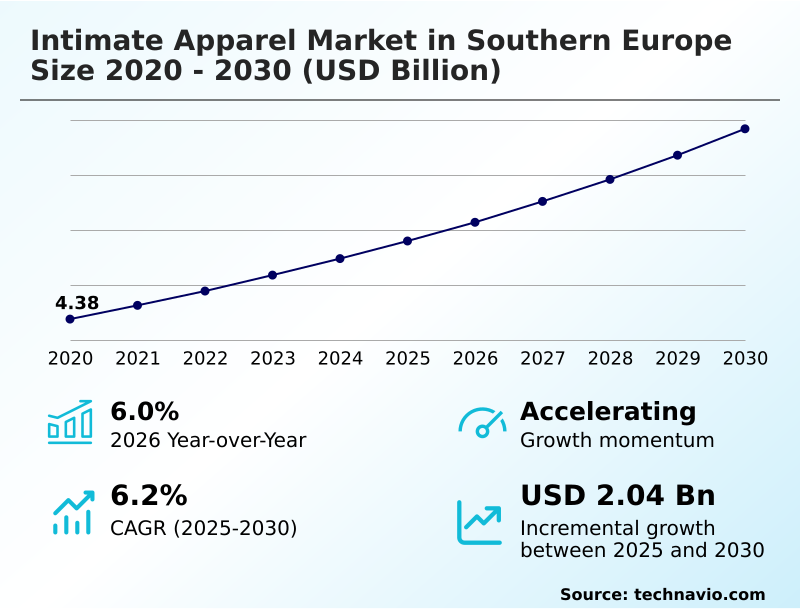
The southern europe intimate apparel market size is valued to increase by USD 2.04 billion, at a CAGR of 6.2% from 2025 to 2030. Technological innovation in textile engineering and comfort will drive the southern europe intimate apparel market.
Major Market Trends & Insights
- By Product - Lower innerwear segment was valued at USD 1.66 billion in 2024
- By Distribution Channel - Offline segment accounted for the largest market revenue share in 2024
Market Size & Forecast
- Market Opportunities: USD 3.46 billion
- Market Future Opportunities: USD 2.04 billion
- CAGR from 2025 to 2030 : 6.2%
Market Summary
- The intimate apparel market in Southern Europe is undergoing a significant transformation, moving beyond traditional aesthetics to embrace functionality, wellness, and sustainability. Key drivers include technological advancements in textile engineering, resulting in high-performance materials that offer superior comfort and durability.
- This shift is mirrored by a growing consumer demand for sustainable and ethical production, pushing manufacturers toward circular economy principles, the use of bio-based textiles like recycled polyamide, and greater supply chain transparency. A key trend is the convergence of intimate apparel with versatile outerwear, reflecting a desire for multi-functional wardrobes.
- As a business scenario, consider a manufacturer implementing a digital product passport system. This not only meets upcoming regulatory requirements for transparency but also builds consumer trust by verifying the origin of its recycled yarns and ergonomic design principles, ultimately strengthening its brand position.
- Body inclusivity and hyper-personalization through data-driven sizing are also reshaping product development, making personalized fit a key competitive differentiator.
What will be the Size of the Southern Europe Intimate Apparel Market during the forecast period?
Get Key Insights on Market Forecast (PDF) Get Free Sample
How is the Southern Europe Intimate Apparel Market Segmented?
The southern europe intimate apparel industry research report provides comprehensive data (region-wise segment analysis), with forecasts and estimates in "USD million" for the period 2026-2030, as well as historical data from 2020-2024 for the following segments.
- Product
- Lower innerwear
- Upper innerwear
- Sleepwear and loungewear
- Thermal wear
- Others
- Distribution channel
- Offline
- Online
- Gender
- Female
- Male
- Geography
- Southern Europe
By Product Insights
The lower innerwear segment is estimated to witness significant growth during the forecast period.
The lower innerwear segment is evolving beyond basic essentials, driven by consumer demand for anatomical health and comfort-driven design. Manufacturers are leveraging advanced materials like fine gauge cotton and seaweed-based fibers to enhance moisture-wicking properties and skin feel.
Key innovations include laser-cutting technology and seamless construction, which eliminate irritation and improve garment lines, supporting the trend of body confidence. This focus on technical textiles is crucial for differentiation.
However, reliance on specialized inputs makes the segment vulnerable; recent maritime route adjustments led to a 20% increase in transit times for critical components like premium lace, impacting production schedules and highlighting the need for resilient sourcing strategies that support local production.
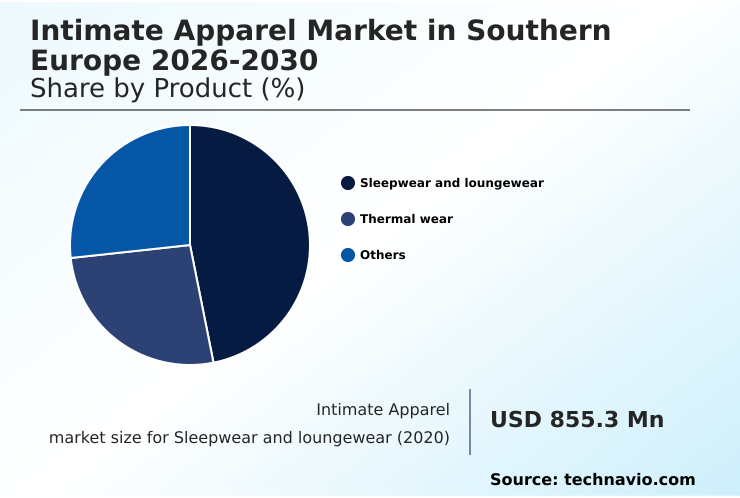
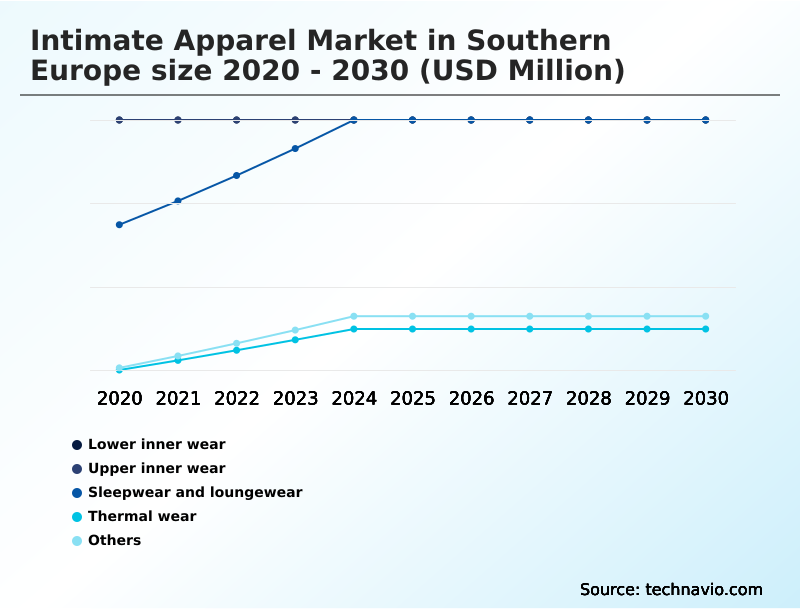
The Lower innerwear segment was valued at USD 1.66 billion in 2024 and showed a gradual increase during the forecast period.
Market Dynamics
Our researchers analyzed the data with 2025 as the base year, along with the key drivers, trends, and challenges. A holistic analysis of drivers will help companies refine their marketing strategies to gain a competitive advantage.
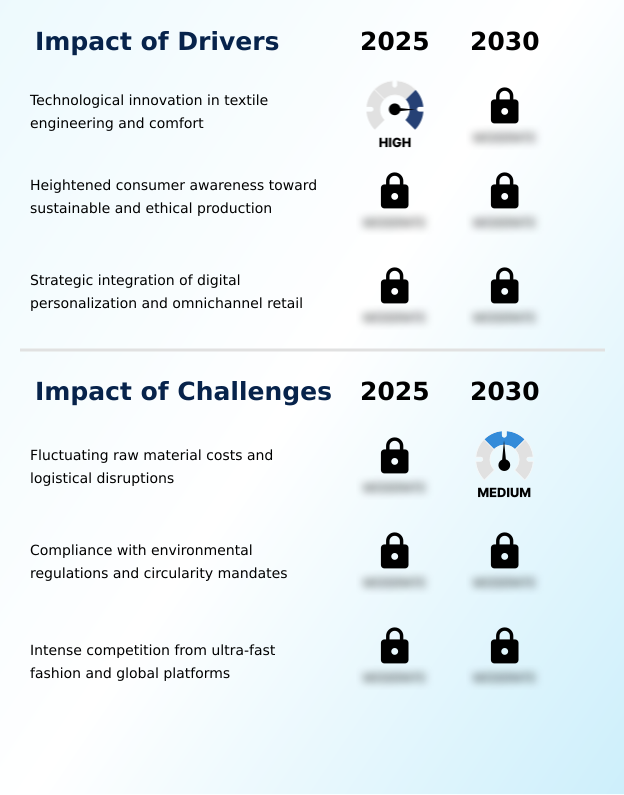
- A strategic analysis of the intimate apparel market in southern europe 2026-2030 reveals several interconnected themes dictating success. The impact of textile engineering on garment comfort is a foundational driver, closely followed by heightened consumer awareness of ethical production. This necessitates the strategic integration of digital retail personalization within a cohesive omnichannel retail strategy.
- We observe a proliferation of bio-based materials in apparel as the role of circular economy in textile waste reduction becomes a regulatory and consumer mandate. The convergence of intimate apparel with outerwear is creating new product categories, while hyper-personalization through AI and computer vision is solving long-standing fit issues.
- Firms are now using 3d body-mapping for creating custom-fit bras and integrating antimicrobial threads in maternity wear. Advanced material science is exploring everything from using graphene-infused fibers for thermal regulation to developing bio-compatible elastomers from agricultural waste and using seaweed-based fibers for enhanced moisture absorption.
- However, challenges persist, including fluctuating raw material costs in textiles and the need for compliance with environmental circularity mandates, especially in a market facing intense competition from ultra-fast fashion platforms. Technological innovation in comfort engineering, coupled with applying seamless knitting for shapewear support and understanding the sustainability of recycled polyamide fiber use, remains critical.
- Businesses mastering these complexities are outperforming peers by a significant margin.
What are the key market drivers leading to the rise in the adoption of Southern Europe Intimate Apparel Industry?
- Technological innovation in textile engineering and comfort is a primary driver, enhancing product functionality and addressing consumer demands for superior performance and wearability.
- Market growth is significantly propelled by advancements in digital technology and a heightened focus on sustainability. The strategic use of digital personalization within an omnichannel retail framework is critical, with technologies like 3D body-mapping enhancing the customer experience.
- The adoption of virtual fitting rooms has proven effective, with some brands improving fit accuracy by 25% and reducing returns.
- A major driver is the heightened consumer awareness toward sustainable and ethical production, which has accelerated the transition to responsible fashion. This includes greater supply chain transparency and the implementation of garment recycling programs.
- This focus on ethics and technology allows brands to meet the dual consumer demands for high-performance products and transparent, sustainable practices, solidifying their market position.
What are the market trends shaping the Southern Europe Intimate Apparel Industry?
- A key trend is the proliferation of bio-based materials and the comprehensive integration of circular economy principles. This industry-wide shift addresses growing environmental regulations and consumer demand for sustainability.
- Key trends are reshaping product design and consumer expectations, centered on sustainability and multi-functionality. The industry is rapidly adopting circular economy principles, with a focus on bio-based textiles and the development of a compostable elastic band to facilitate end-of-life processing. Innovations in mono-material garments are critical for simplifying recycling, with some new processes improving material biodegradability by 40%.
- The innerwear-as-outerwear movement is driving demand for versatile outerwear with architectural silhouettes and premium embellishments. This convergence is supported by an enduring loungewear aesthetic that prioritizes both style and comfort. Concurrently, hyper-personalization is becoming a standard expectation, making a personalized fit through advanced technology a key competitive advantage. These trends collectively push the industry toward more innovative and responsible practices.
What challenges does the Southern Europe Intimate Apparel Industry face during its growth?
- Fluctuating raw material costs and ongoing logistical disruptions present a significant challenge, impacting supply chain stability and profitability across the industry.
- The market faces significant operational and regulatory hurdles that challenge profitability and growth. The mandate for a digital product passport and the push for upcycling of textile waste are increasing compliance complexity, with associated costs raising operational expenditures by an estimated 15% for some smaller enterprises.
- Manufacturers must navigate these requirements while securing sources for high-quality recycled polymers, which remain in short supply. This transition to a circular model demands substantial investment in new technologies.
- Simultaneously, the industry grapples with intense competition from global platforms and the persistent issue of fluctuating raw material costs, which can erode margins by as much as 10% in a single quarter. These combined pressures require businesses to be exceptionally agile and innovative to maintain a competitive edge.
Exclusive Technavio Analysis on Customer Landscape
The southern europe intimate apparel market forecasting report includes the adoption lifecycle of the market, covering from the innovator’s stage to the laggard’s stage. It focuses on adoption rates in different regions based on penetration. Furthermore, the southern europe intimate apparel market report also includes key purchase criteria and drivers of price sensitivity to help companies evaluate and develop their market growth analysis strategies.
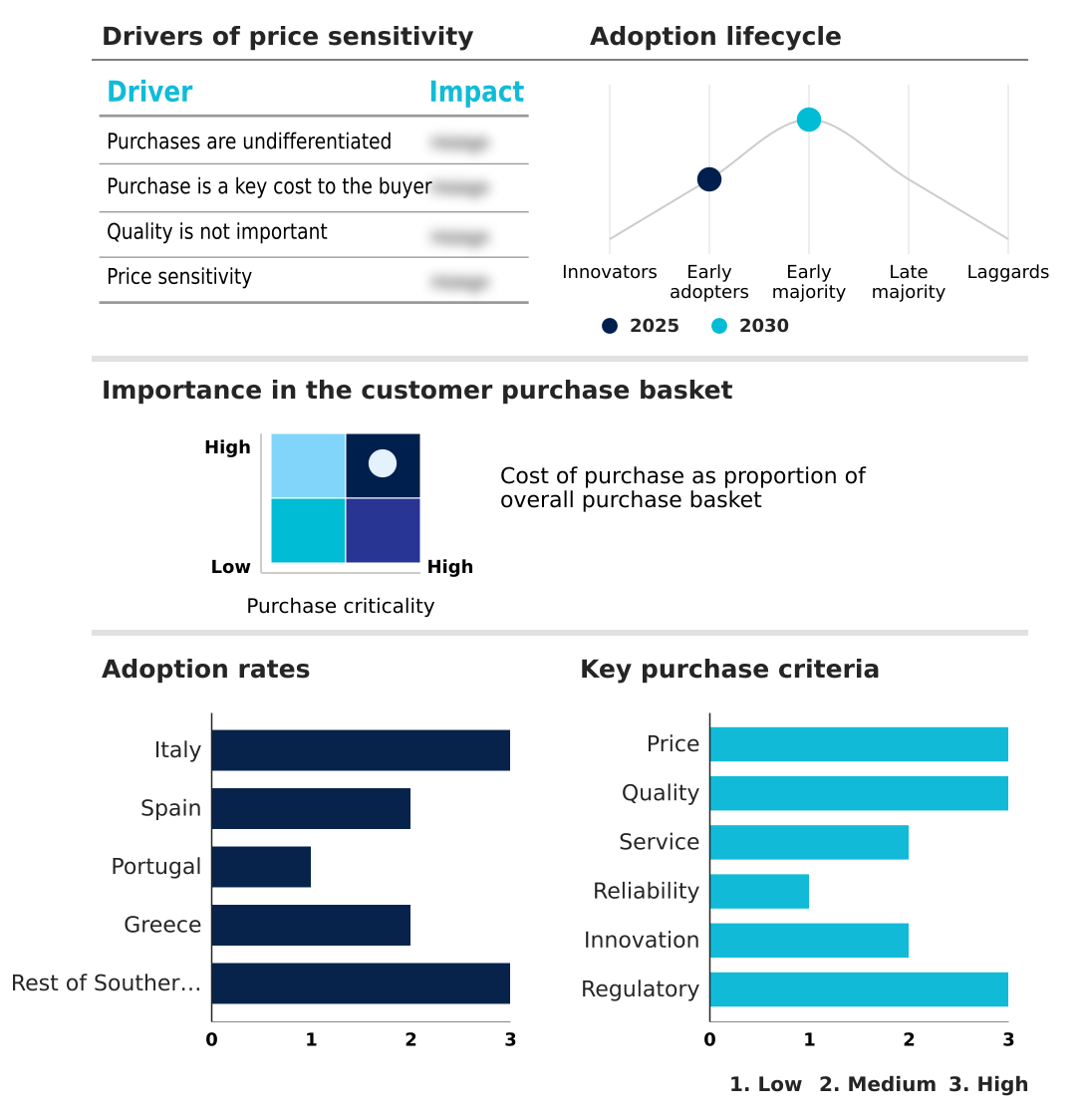
Customer Landscape of Southern Europe Intimate Apparel Industry
Competitive Landscape
Companies are implementing various strategies, such as strategic alliances, southern europe intimate apparel market forecast, partnerships, mergers and acquisitions, geographical expansion, and product/service launches, to enhance their presence in the industry.
Calvin Klein USA - Designs modern, minimalist apparel and iconic underwear, reinforcing brand prestige through diverse retail and digital channels.
The industry research and growth report includes detailed analyses of the competitive landscape of the market and information about key companies, including:
- Calvin Klein USA
- Chantelle Lingerie Inc.
- ETAM
- Fruit of the Loom Inc.
- Hanesbrands Inc.
- Hanro
- Hennes and Mauritz AB
- Hunkemoller B.V.
- Intimissimi
- Jockey International Inc.
- La Perla Global UK Ltd.
- Lise Charmel
- Marks and Spencer Group
- Oysho
- Simone Perele
- Triumph Intertrade AG
- UNIQLO Co
- Victorias Secret and Co.
- wolford
- WomenSecret
Qualitative and quantitative analysis of companies has been conducted to help clients understand the wider business environment as well as the strengths and weaknesses of key industry players. Data is qualitatively analyzed to categorize companies as pure play, category-focused, industry-focused, and diversified; it is quantitatively analyzed to categorize companies as dominant, leading, strong, tentative, and weak.
Recent Development and News in Southern europe intimate apparel market
- In June 2025, a Spanish fashion consortium inaugurated a new regional certification program that verifies the carbon-neutral status of intimate apparel production facilities across the Iberian Peninsula.
- In May 2025, the Italian textile conglomerate Gruppo Albini announced a strategic partnership with a biotechnology firm to implement a novel bio-based dyeing process across its intimate apparel fabric production lines.
- In April 2025, a specialized Portuguese textile research center unveiled a prototype for a fully compostable elastic band intended for high-performance intimate apparel, addressing a key challenge in recycling.
- In October 2025, a leading European software firm released an advanced 3D body-scanning application for mobile integration within the digital storefronts of Southern European lingerie retailers.
Dive into Technavio’s robust research methodology, blending expert interviews, extensive data synthesis, and validated models for unparalleled Southern Europe Intimate Apparel Market insights. See full methodology.
| Market Scope | |
|---|---|
| Page number | 205 |
| Base year | 2025 |
| Historic period | 2020-2024 |
| Forecast period | 2026-2030 |
| Growth momentum & CAGR | Accelerate at a CAGR of 6.2% |
| Market growth 2026-2030 | USD 2039.5 million |
| Market structure | Fragmented |
| YoY growth 2025-2026(%) | 6.0% |
| Key countries | Italy, Spain, Portugal, Greece and Rest of Southern Europe |
| Competitive landscape | Leading Companies, Market Positioning of Companies, Competitive Strategies, and Industry Risks |
Research Analyst Overview
- The strategic landscape is being reshaped by a deep focus on material science and manufacturing innovation. Boardroom decisions now center on investments in textile engineering to develop advanced materials with features like natural breathability and moisture regulation. The adoption of sustainable textiles, including bio-based textiles and recycled yarns, is no longer optional.
- We see the integration of smart textiles, graphene-infused fibers, and antimicrobial threads moving from niche to mainstream. Production is evolving with seamless knitting, circular knitting systems, and laser-cutting technology, which, when combined with ergonomic design principles, create superior products. These innovations allow for the creation of mono-material garments and even a compostable elastic band, aligning with circular economy principles.
- The use of micro-encapsulation techniques and bio-based dyes further enhances product value. This focus on advanced manufacturing has enabled some firms to achieve a 15% reduction in material waste. The market is also embracing high-performance materials like recycled polyamide, organic silk, tencel fibers, fine gauge cotton, and various modal fabrics, all contributing to a more sophisticated and responsible industry.
What are the Key Data Covered in this Southern Europe Intimate Apparel Market Research and Growth Report?
-
What is the expected growth of the Southern Europe Intimate Apparel Market between 2026 and 2030?
-
USD 2.04 billion, at a CAGR of 6.2%
-
-
What segmentation does the market report cover?
-
The report is segmented by Product (Lower innerwear, Upper innerwear, Sleepwear and loungewear, Thermal wear, and Others), Distribution Channel (Offline, and Online), Gender (Female, and Male) and Geography (Southern Europe)
-
-
Which regions are analyzed in the report?
-
Southern Europe
-
-
What are the key growth drivers and market challenges?
-
Technological innovation in textile engineering and comfort, Fluctuating raw material costs and logistical disruptions
-
-
Who are the major players in the Southern Europe Intimate Apparel Market?
-
Calvin Klein USA, Chantelle Lingerie Inc., ETAM, Fruit of the Loom Inc., Hanesbrands Inc., Hanro, Hennes and Mauritz AB, Hunkemoller B.V., Intimissimi, Jockey International Inc., La Perla Global UK Ltd., Lise Charmel, Marks and Spencer Group, Oysho, Simone Perele, Triumph Intertrade AG, UNIQLO Co, Victorias Secret and Co., wolford and WomenSecret
-
Market Research Insights
- Market dynamics are increasingly shaped by a focus on consumer wellness and digital personalization. The strategic adoption of an omnichannel retail model is proving essential, with data-driven sizing tools improving customer satisfaction. A clear trend toward body positivity is driving demand for a wider range of sizes and styles that promote body confidence.
- This digital maturation has enabled some brands to improve fit accuracy by 25%, directly impacting loyalty. Meanwhile, the demand for versatile outerwear and a loungewear aesthetic continues to influence design, with firms that successfully integrate these trends seeing a 15% higher customer retention rate.
- The emphasis on artisanal quality and premium embellishments remains strong, particularly in the luxury segment where it is a key differentiator.
We can help! Our analysts can customize this southern europe intimate apparel market research report to meet your requirements.
 RIA -
RIA - 
