
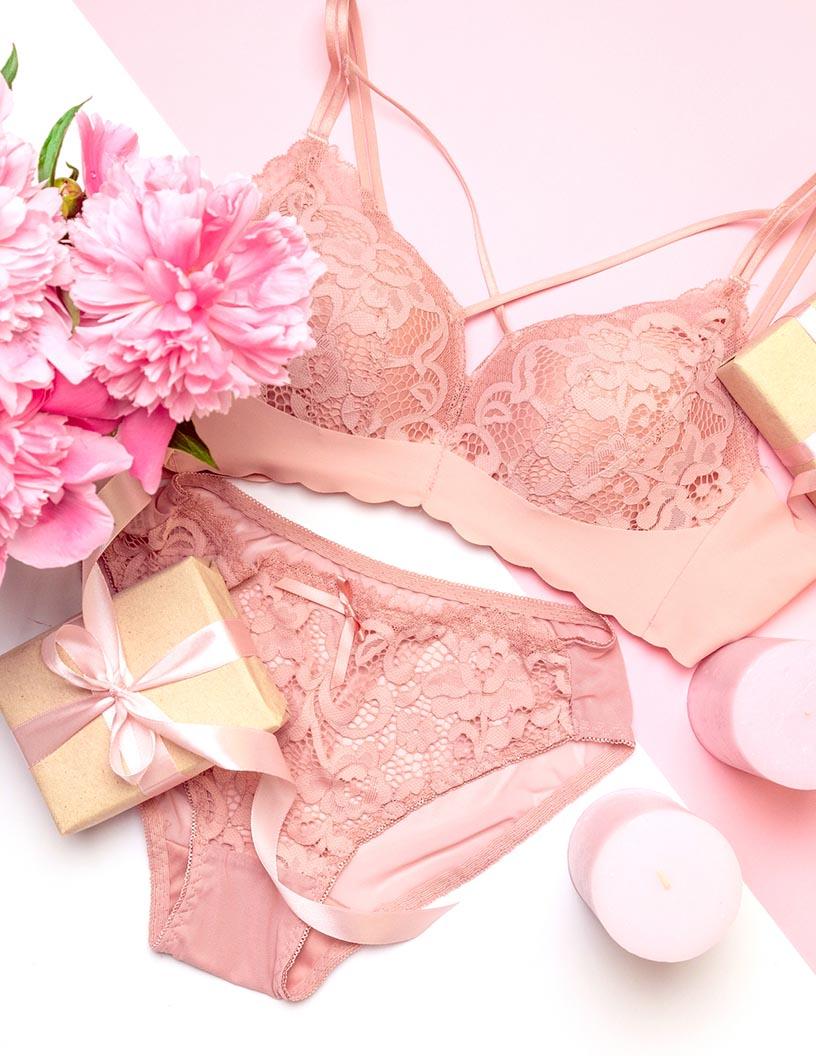


Intimate Apparel Market Size 2025-2029
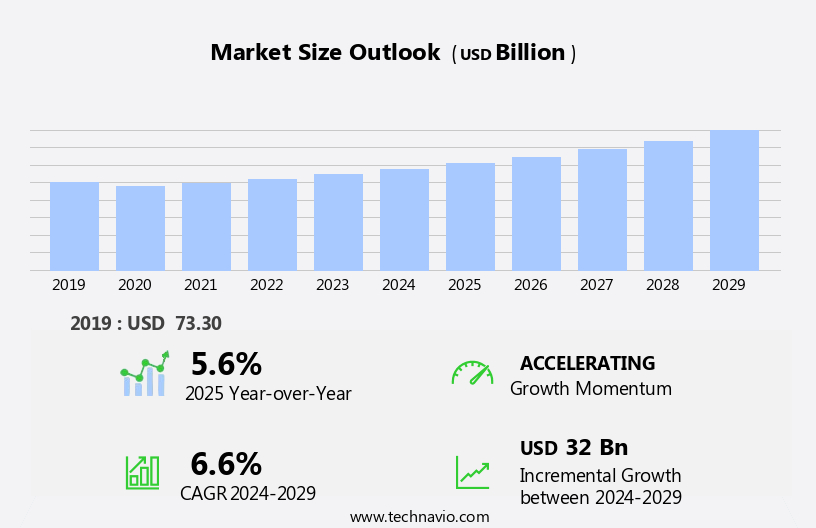
The intimate apparel market size is forecast to increase by USD 32 billion at a CAGR of 6.6% between 2024 and 2029.
- The market is driven by the increasing preference for visually appealing and fashionable intimate apparel, particularly among women who prioritize comfort and style. This trend is further amplified by the rising popularity of athleisure in the intimate apparel industry, as consumers seek versatile and functional garments suitable for various activities. However, this market landscape also presents challenges for key players. The fewer barriers to entry in the intimate apparel industry result in intense competition among established brands, requiring companies to innovate and differentiate themselves to maintain market share. The market is experiencing significant growth, driven by the increasing preference for visually appealing fast fashion and intimate apparel, particularly among women.
- To capitalize on opportunities and navigate challenges effectively, market participants must focus on offering unique designs, superior quality, and competitive pricing, while also investing in digital marketing and omnichannel sales strategies to reach and engage customers. To capitalize on this market opportunity, companies should focus on understanding the evolving preferences of their customers and staying abreast of the latest trends in the apparel industry.
What will be the Size of the Intimate Apparel Market during the forecast period?
- The market continues to evolve, shaped by various dynamics and applications across diverse sectors. Seamless underwear, designer lingerie, and e-commerce retailers dominate the landscape, with brand building and customer satisfaction at the forefront. Price point and value proposition remain crucial factors, as digital marketing and personalized recommendations drive sales. Innovations in technology, such as 3D body scanning and virtual fitting, enhance the user experience and cater to diverse consumer needs. Sustainable materials, including organic cotton and recycled fabrics, are increasingly prioritized, reflecting the importance of eco-consciousness and brand loyalty. Influencer marketing, body positivity, and size inclusivity further shape the market, with technological advancements streamlining retail operations and supply chain management. Maternity wear and maternity bras, adjustable straps, and size charts are essential offerings for expectant mothers.
- Seasonal collections, maternity wear, luxury lingerie, sports bras, and compression garments cater to diverse target audiences, while data analytics and social media marketing provide competitive advantages. The ongoing unfolding of market activities reveals evolving patterns and trends, as the industry continues to adapt and innovate. Lounge wear, pajama sets, and sleep shirts offer comfort and convenience. Seamless technology, front closure, and convertible bras provide flexibility and ease.
How is this Intimate Apparel Industry segmented?
The intimate apparel industry research report provides comprehensive data (region-wise segment analysis), with forecasts and estimates in "USD billion" for the period 2025-2029, as well as historical data from 2019-2023 for the following segments.
- Product
- Lower inner wear
- Upper inner wear
- Sleepwear and loungewear
- Thermal wear
- Others
- Gender
- Female
- Male
- Distribution Channel
- Offline
- Online
- Material
- Cotton
- Silk
- Satin
- Nylon
- Others
- Geography
- North America
- US
- Canada
- Europe
- France
- Germany
- UK
- APAC
- China
- India
- Japan
- South Korea
- Rest of World (ROW)
- North America
By Product Insights
The lower inner wear segment is estimated to witness significant growth during the forecast period. In the market, consumer preferences prioritize comfort and innovation. Seamless underwear, especially panties, are gaining popularity due to their comfort and suitability for various clothing styles, particularly in the workplace. Younger generations favor full-coverage panties over thongs, while the rise of working women contributes to the demand for seamless options. Intimate apparel brands cater to this trend by offering affordable packaged deals, allowing customers to purchase multiple items at once. Diversity and inclusion are essential, leading to an expansion of size inclusivity and body positivity campaigns. Fashion trends influence purchasing patterns, with sustainable materials, eco-friendly lingerie, and recycled fabrics becoming increasingly popular. Lingerie styles range from push-up bras, underwire bras, non-padded bras, strapless bras, corset tops, and thong underwear.
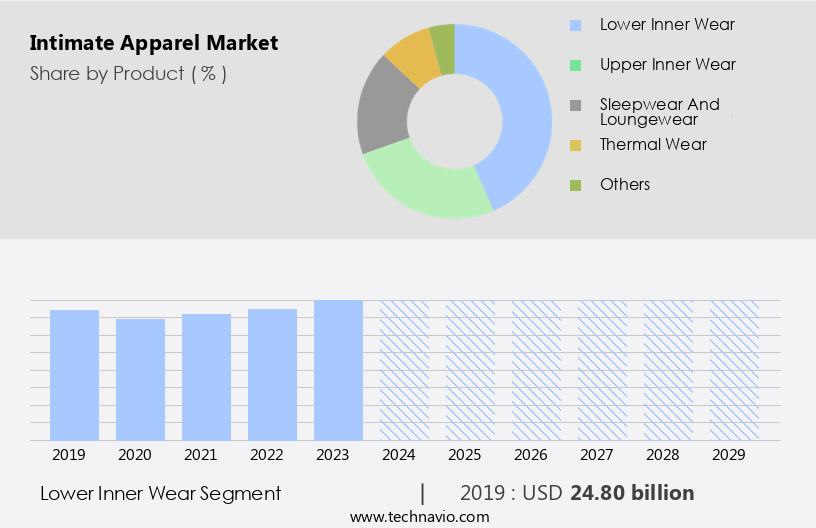
The Lower inner wear segment was valued at USD 24.80 billion in 2019 and showed a gradual increase during the forecast period. Consumers are looking for bras that provide support and comfort during workouts, as well as seamless designs that reduce visible lines under clothing. Digital marketing strategies, including personalized recommendations and social media marketing, are crucial for reaching the target audience. Technological advancements, such as 3D body scanning and virtual fitting, enhance the user experience and improve customer satisfaction. Brand building through designer collaborations and luxury lingerie lines adds value to the market. Seasonal collections and fashion trends continue to drive sales, while maternity wear and compression garments cater to specific consumer needs. Retail operations and supply chain management are optimized through data analytics and e-commerce platforms. Overall, the market is dynamic, with a focus on comfort, innovation, and inclusivity. As the trend of wearing athletic clothing beyond gym sessions continues to grow, the demand for sports bras and active wear is expected to rise accordingly.
Regional Analysis
APAC is estimated to contribute 48% to the growth of the global market during the forecast period. Technavio's analysts have elaborately explained the regional trends and drivers that shape the market during the forecast period.
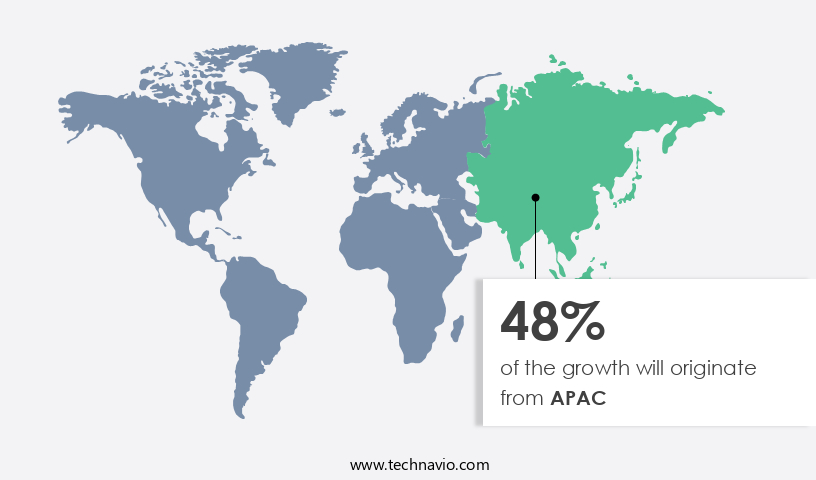
The market in the region experiences continuous growth, driven by population expansion, rising income levels, and Westernized buying habits. India and China serve as preferred destinations for international competitors due to their large consumer bases. Price consciousness is a significant factor influencing consumer behavior, leading some brands to introduce affordable lines. The increasing number of working women has resulted in higher demand for trendy and premium intimate apparel products. High-end brands from L Brands, Victoria's Secret, and Triumph International are gaining popularity among consumers. Competitors cater to local preferences by offering customized products, including seamless underwear, designer lingerie, maternity wear, and sports bras.
Innovations in technology, such as 3D body scanning, virtual fitting, and size inclusivity, enhance the user experience. Sustainable materials, eco-friendly lingerie, and recycled fabrics are gaining traction due to consumer awareness and the desire for brand loyalty. Digital marketing, social media engagement, and influencer collaborations are essential strategies for customer acquisition and retention. Retail operations and supply chain management are undergoing technological advancements, while data analytics and personalized recommendations improve customer experience. Brands focus on fabric innovation, product quality, and competitive pricing to differentiate themselves in the market.
Market Dynamics
Our researchers analyzed the data with 2024 as the base year, along with the key drivers, trends, and challenges. A holistic analysis of drivers will help companies refine their marketing strategies to gain a competitive advantage.
What are the key market drivers leading to the rise in the adoption of Intimate Apparel Industry?
- Fashion-conscious consumers, particularly women, hold a strong preference for visually appealing intimate apparel, driving the market's growth. Intimate apparel, encompassing seamless underwear and designer lingerie, continues to be a significant market with a strong focus on customer satisfaction. With an increasing number of women seeking visually appealing and functional undergarments, the market is witnessing robust growth. Seamless underwear, designed for comfort under formal wear, is a noteworthy trend. Brands are investing in brand building and innovation to cater to the diverse needs of consumers. Digital marketing plays a pivotal role in customer engagement, with personalized recommendations based on 3D body scanning technology becoming increasingly popular.
- Sustainable materials and fabric innovation are also key factors driving the market. Competitors are focusing on price point and value proposition to attract and retain customers. As the market becomes more competitive, companies are differentiating themselves through unique features and superior quality.
What are the market trends shaping the Intimate Apparel Industry?
- The rising trend in the intimate apparel industry is the increasing popularity of athleisure wear. This market trend signifies a shift towards comfortable and functional garments that can be worn both for workout sessions and everyday activities. Intimate apparel, once considered a basic necessity, has transformed into a fashionable and functional category, particularly for women. Brands are capitalizing on this evolution by expanding their offerings beyond traditional lingerie to include versatile and stylish innerwear. Sports bras, a popular athleisure clothing product, exemplify this trend. With their superior comfort, functionality, and fashion appeal, many women are making the switch from regular bras. Brand loyalty is a significant factor in the market, with consumers seeking eco-friendly and sustainable lingerie options. Influencer marketing plays a crucial role in promoting body positivity and size inclusivity, driving growth in the plus-size lingerie segment.
- Retail operations are adapting to consumer preferences by implementing data analytics and virtual fitting technologies to enhance the shopping experience. Intimate apparel brands are leveraging these market dynamics to innovate and cater to the evolving needs of consumers. Sustainable materials and production methods are becoming increasingly important, as are size inclusivity and virtual fitting solutions. Retail lingerie stores are embracing these trends to remain competitive and meet the demands of modern consumers.
What challenges does the Intimate Apparel Industry face during its growth?
- The intense competition among key brands in the industry is a significant challenge, as fewer barriers to entry allow for an influx of new competitors, thereby hindering industry growth. The market is characterized by a vast array of key players, including established names such as AEO Management, Berkshire Hathaway, Hanesbrands, Jockey International, PVH, and L Brands. Over the past five years, the market has witnessed an influx of new entrants, including e-retailers and private labels, as well as start-ups like ADOREME.COM, which offer luxury lingerie at competitive prices via e-commerce platforms. This intensified competition has led to price wars, making product differentiation crucial. Manufacturers distinguish their offerings through factors such as comfort level, fabric quality, and variety.
- Technological advancements have played a significant role in the market, with the integration of recycled materials, organic cotton, and compression garments becoming increasingly popular. Social media marketing and customer experience have also emerged as key drivers, shaping the market dynamics.
Exclusive Customer Landscape
The intimate apparel market forecasting report includes the adoption lifecycle of the market, covering from the innovator's stage to the laggard's stage. It focuses on adoption rates in different regions based on penetration. Furthermore, the intimate apparel market report also includes key purchase criteria and drivers of price sensitivity to help companies evaluate and develop their market growth analysis strategies.
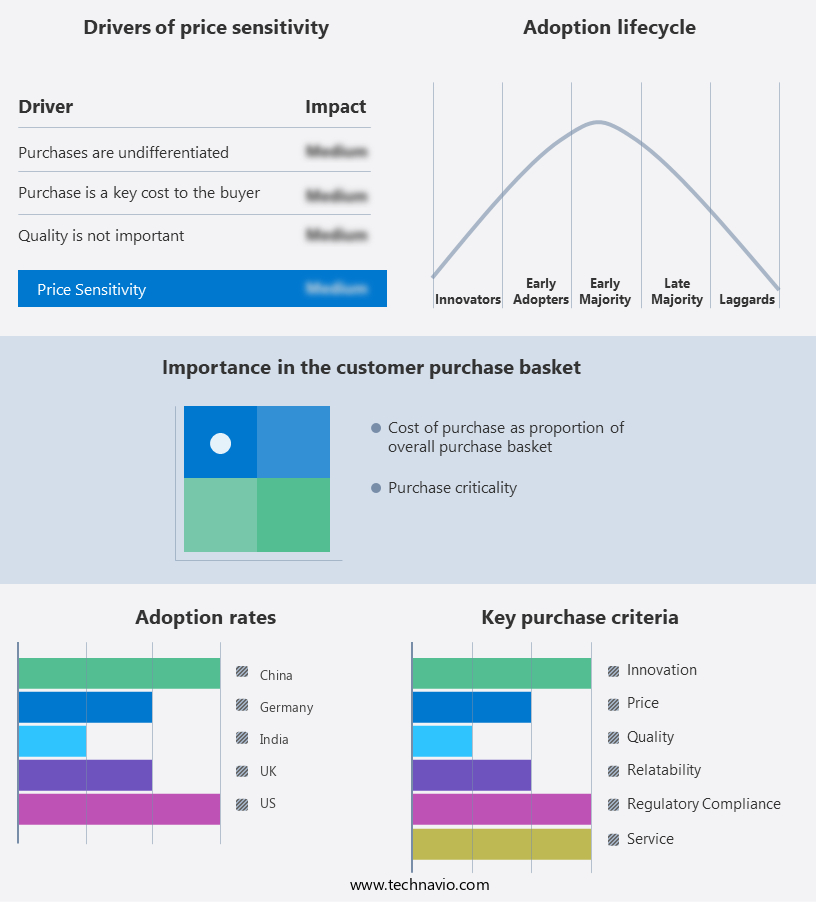
Customer Landscape
Key Companies & Market Insights
Companies are implementing various strategies, such as strategic alliances, intimate apparel market forecast, partnerships, mergers and acquisitions, geographical expansion, and product/service launches, to enhance their presence in the industry.
American Eagle Outfitters Inc. - The company specializes in the production and distribution of intimate apparel, including bras and panties, under the brand name Aerie.
The industry research and growth report includes detailed analyses of the competitive landscape of the market and information about key companies, including:
- American Eagle Outfitters Inc.
- BAREWEB INC.
- Chantelle SA
- Debenhams Plc
- Embry Holdings Ltd.
- Hanesbrands Inc.
- Hanky Panky Ltd.
- Jockey International Inc.
- Lise Charmel
- Marks and Spencer Group plc
- MAS Holdings Pvt. Ltd.
- PVH Corp.
- Shenzhen Huijie Group Co. Ltd.
- Sockkobe Co. Ltd.
- Stella McCartney Ltd.
- Triumph Intertrade AG
- Urban Outfitters Inc.
- Victorias Secret and Co.
- Wacoal Holdings Corp.
- Zivame Platform
Qualitative and quantitative analysis of companies has been conducted to help clients understand the wider business environment as well as the strengths and weaknesses of key industry players. Data is qualitatively analyzed to categorize companies as pure play, category-focused, industry-focused, and diversified; it is quantitatively analyzed to categorize companies as dominant, leading, strong, tentative, and weak.
Recent Development and News in Intimate Apparel Market
- In February 2024, Victoria's Secret, a leading player in the market, announced the launch of its new "Body by Victoria" collection, focusing on size inclusivity and diversity, aiming to cater to a broader customer base (Victoria's Secret press release, 2024).
- In October 2025, HanesBrands Inc. and shapewear brand Spanx entered into a strategic partnership to expand HanesBrands' shapewear offerings, combining HanesBrands' manufacturing capabilities with Spanx's design expertise (HanesBrands Inc. SEC filing, 2025).
- In March 2024, Wacoal International Ltd. completed the acquisition of Maidenform Brands Inc., significantly expanding its market presence and strengthening its position in the North American market (Wacoal International Ltd. Press release, 2024).
- In July 2025, the European Union passed new regulations requiring intimate apparel manufacturers to label their products with detailed information on materials, care instructions, and composition, enhancing transparency and consumer safety (European Parliament press release, 2025).
Research Analyst Overview
The market is experiencing dynamic shifts, with a focus on performance fabrics and innovative materials taking center stage. Biodegradable materials and sustainable manufacturing practices are gaining traction, aligning with the circular economy trend. Ethical lingerie, embracing body acceptance and fair trade practices, is resonating with consumers seeking authenticity. Smart textiles, including body mapping and fitting algorithms, offer comfort and personalized styling services. Social proof, such as online reviews and customer testimonials, influences purchasing decisions. Augmented reality and virtual try-on technology enhance the in-store experience, while data-driven marketing and omnichannel retailing cater to modern consumers' needs. Inclusivity initiatives and personalized sizing further strengthen brand storytelling. AI and seamless technology streamline operations and elevate the industry, shaping the future of intimate apparel.
Dive into Technavio's robust research methodology, blending expert interviews, extensive data synthesis, and validated models for unparalleled Intimate Apparel Market insights. See full methodology.
|
Market Scope |
|
|
Report Coverage |
Details |
|
Page number |
245 |
|
Base year |
2024 |
|
Historic period |
2019-2023 |
|
Forecast period |
2025-2029 |
|
Growth momentum & CAGR |
Accelerate at a CAGR of 6.6% |
|
Market growth 2025-2029 |
USD 32 billion |
|
Market structure |
Fragmented |
|
YoY growth 2024-2025(%) |
5.6 |
|
Key countries |
China, Japan, India, Germany, UK, South Korea, Saudi Arabia, US, France, and Canada |
|
Competitive landscape |
Leading Companies, Market Positioning of Companies, Competitive Strategies, and Industry Risks |
What are the Key Data Covered in this Intimate Apparel Market Research and Growth Report?
- CAGR of the Intimate Apparel industry during the forecast period
- Detailed information on factors that will drive the growth and forecasting between 2025 and 2029
- Precise estimation of the size of the market and its contribution of the industry in focus to the parent market
- Accurate predictions about upcoming growth and trends and changes in consumer behaviour
- Growth of the market across APAC, Europe, North America, South America, and Middle East and Africa
- Thorough analysis of the market's competitive landscape and detailed information about companies
- Comprehensive analysis of factors that will challenge the intimate apparel market growth of industry companies
We can help! Our analysts can customize this intimate apparel market research report to meet your requirements.
 RIA -
RIA - 
