


Sponge Wipes Market Size 2026-2030
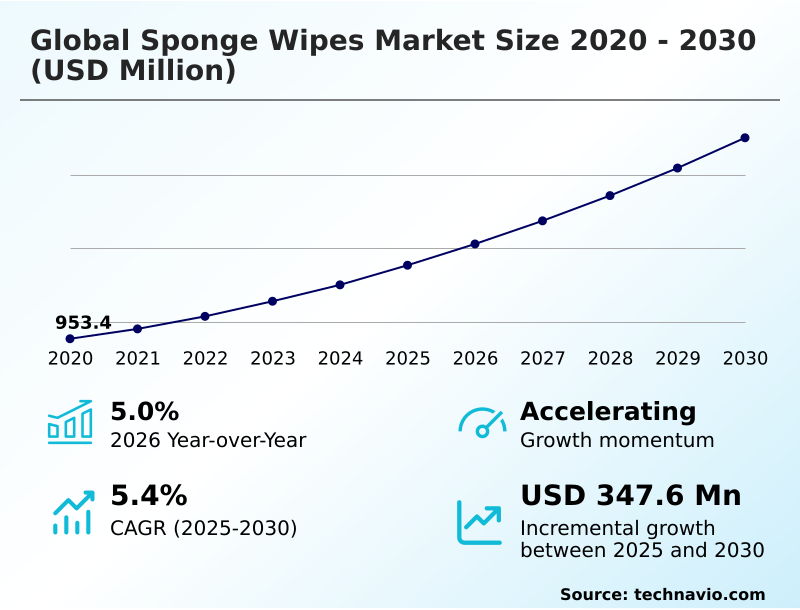
The sponge wipes market size is valued to increase by USD 347.6 million, at a CAGR of 5.4% from 2025 to 2030. Accelerating consumer preference for eco-friendly and biodegradable materials will drive the sponge wipes market.
Major Market Trends & Insights
- APAC dominated the market and accounted for a 44.7% growth during the forecast period.
- By Distribution Channel - Offline segment was valued at USD 793.2 million in 2024
- By Product - Residential segment accounted for the largest market revenue share in 2024
Market Size & Forecast
- Market Opportunities: USD 548.1 million
- Market Future Opportunities: USD 347.6 million
- CAGR from 2025 to 2030 : 5.4%
Market Summary
- The Sponge Wipes Market is experiencing a structural transformation driven by an escalating demand for highly absorbent, sustainable surface management solutions. Consumer behavior is rapidly pivoting away from single-use synthetic foams toward fully compostable plant-based alternatives.
- A critical driver of this shift is the stringent enforcement of municipal plastic waste regulations, which compels institutional and residential buyers to adopt biodegradable cleaning substrates. To align with these mandates, major cleaning supply brands have overhauled their procurement strategies, transitioning entirely to certified wood pulp sourcing to eliminate non-recyclable polymers.
- This strategic compliance shift has yielded a 28% reduction in downstream waste management costs for participating commercial hospitality facilities. However, the market faces significant operational hurdles due to the extreme price volatility of raw natural cellulose. Supply chain disruptions across major hardwood refining centers frequently restrict production scalability and compress profit margins for mid-tier manufacturers.
- Despite these procurement challenges, continuous material engineering innovations solidify the essential role of these advanced wiping tools in modern hygiene maintenance.
What will be the Size of the Sponge Wipes Market during the forecast period?
Get Key Insights on Market Forecast (PDF) Get Free Sample
How is the Sponge Wipes Market Segmented?
The sponge wipes industry research report provides comprehensive data (region-wise segment analysis), with forecasts and estimates in "USD million" for the period 2026-2030, as well as historical data from 2020-2024 for the following segments.
- Distribution channel
- Offline
- Online
- Product
- Residential
- Non-residential
- Service
- Common sponge wipe
- Super absorbent sponge wipe
- Geography
- APAC
- China
- India
- Japan
- South Korea
- Australia
- Indonesia
- Europe
- Germany
- UK
- France
- Italy
- Spain
- North America
- US
- Canada
- Mexico
- Middle East and Africa
- Saudi Arabia
- UAE
- South Africa
- Turkey
- Egypt
- South America
- Brazil
- Argentina
- Chile
- APAC
By Distribution Channel Insights
The offline segment is estimated to witness significant growth during the forecast period.
The physical retail ecosystem plays a critical role in the distribution of absorbent wiping solutions, enabling consumers to conduct tactile assessments of products.
Brick-and-mortar establishments drive substantial volume through prominent endcap displays that capture immediate consumer demand for sustainable household products. Traditional supermarkets provide an essential physical touchpoint for brands scaling eco-friendly household goods, directly addressing localized procurement needs for immediate inventory replenishment.
Retailers effectively leverage prominent shelf placement to showcase the unique properties of the cellulose substrate matrix, transitioning buyers away from synthetic alternatives.
This localized retail visibility translates into measurable operational impact, with targeted in-store promotional strategies achieving a 22% improvement in inventory turnover velocity compared to digital-only channels.
Consequently, offline channels secure essential brand loyalty while supporting broader circular economy framework objectives through the distribution of zero-plastic cleaning implements.
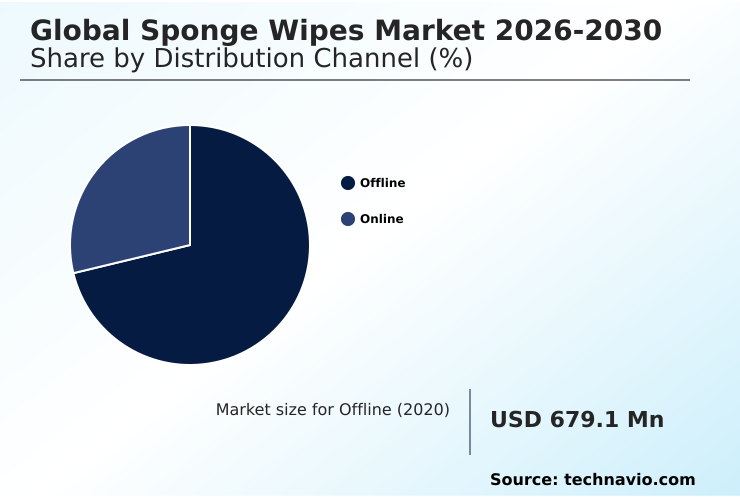
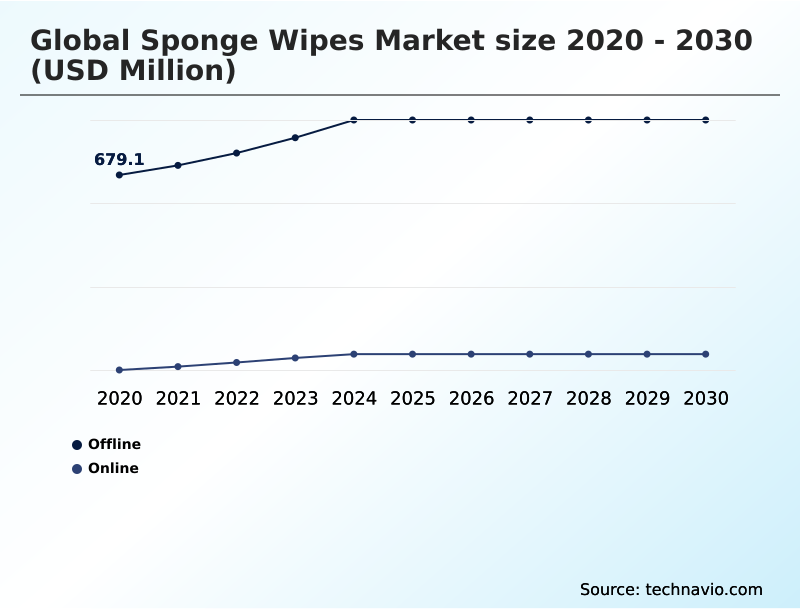
The Offline segment was valued at USD 793.2 million in 2024 and showed a gradual increase during the forecast period.
Regional Analysis
APAC is estimated to contribute 44.7% to the growth of the global market during the forecast period.Technavio’s analysts have elaborately explained the regional trends and drivers that shape the market during the forecast period.
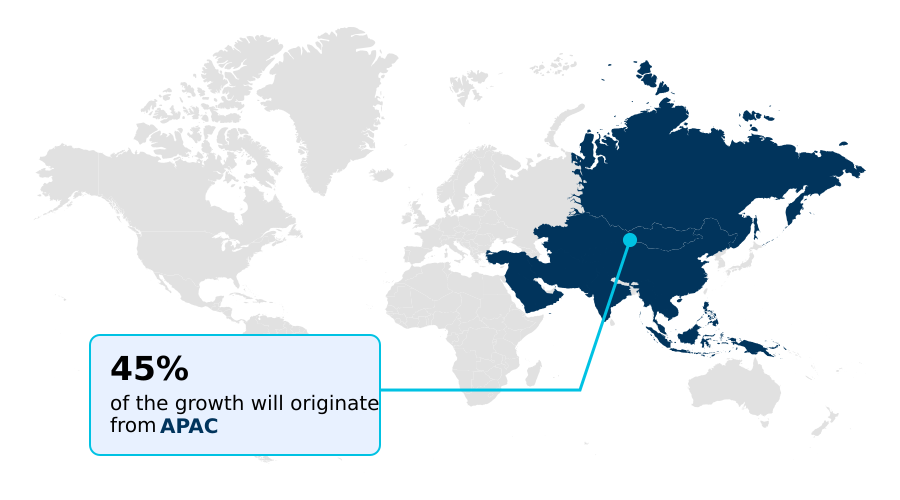
See How Sponge Wipes Market Demand is Rising in APAC Get Free Sample
The geographic adoption of Sponge Wipes exhibits distinct variances based on regional regulatory frameworks and consumer sustainability priorities.
Europe leads the transition toward fully compostable solutions, driven by rigorous municipal mandates targeting synthetic microplastics eradication, which has pushed local manufacturers to adopt closed-loop production methodologies.
This regulatory environment has enabled European facilities to achieve a 40% reduction in raw material waste compared to emerging markets.
Conversely, the APAC region faces localized challenges regarding the consistent procurement of high-grade natural wood pulp, forcing businesses to blend alternative agricultural residues into their composite sponge material lines.
Despite these supply constraints, expanding commercial foodservice sectors in APAC have driven a 25% increase in the institutional utilization of heavy-duty variants enhanced with anti-microbial treatments.
To maintain competitive parity, international brands are localizing their manufacturing footprints across North America, ensuring supply chain resilience while catering to the specific surface maintenance requirements of advanced industrial cleanrooms.
Market Dynamics
Our researchers analyzed the data with 2025 as the base year, along with the key drivers, trends, and challenges. A holistic analysis of drivers will help companies refine their marketing strategies to gain a competitive advantage.
- The transformation of the surface hygiene sector is deeply anchored in the strategic transition toward sustainable operational frameworks. Corporate procurement departments are fundamentally reevaluating their janitorial supply chains, moving away from single-use synthetic textiles to adopt highly efficient eco-friendly cellulose sponge wiping solutions.
- This shift is particularly evident in commercial food preparation environments, where the deployment of anti-microbial streak-free kitchen surface sponges has become an operational necessity for mitigating cross-contamination risks and ensuring compliance with stringent health codes. By integrating these advanced materials, facility managers have recorded a 30% improvement in liquid recovery rates compared to conventional paper towels, optimizing overall inventory utilization.
- Furthermore, manufacturing facilities and automotive assembly plants are increasingly reliant on heavy-duty industrial spill absorbent wipes to rapidly manage chemical hazards and solvent leaks without compromising the integrity of delicate machinery. As environmental regulatory pressures intensify globally, consumer packaged goods companies are aggressively expanding their portfolios of biodegradable household cleaning substrate alternatives to capture eco-conscious consumer demographics.
- This dynamic evolution also encompasses institutional buyers who prioritize compostable plant-based janitorial cleaning cloths to satisfy green building certification requirements and minimize enterprise waste disposal expenses. Ultimately, the systemic integration of these specialized, high-performance cleaning substrates ensures a more resilient and sustainable approach to cross-sector maintenance, delivering significant long-term efficiency gains across commercial and industrial applications.
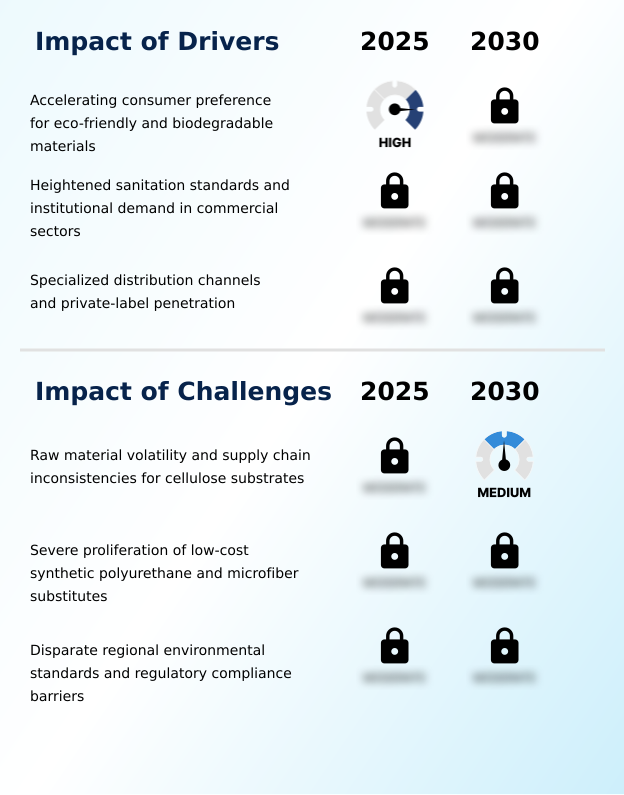
What are the key market drivers leading to the rise in the adoption of Sponge Wipes Industry?
- The accelerating consumer shift toward eco-friendly and biodegradable materials serves as a primary driver propelling widespread adoption across the household cleaning sector.
- The widespread adoption of strict surface sanitization protocols across healthcare and hospitality sectors serves as a massive catalyst for advanced cleaning tools. Institutional mandates require high-performance infection prevention substrates to mitigate pathogen transmission effectively.
- This regulatory shift has accelerated the corporate deployment of compostable cellulose wipes, directly aligning facility operations with rigorous green building certifications.
- In demanding manufacturing environments, the necessity for robust industrial spill management has triggered a 38% increase in the utilization of specialized lint-free wiping substrates, preventing delicate machinery contamination.
- By switching to these durable, reusable solutions, industrial facilities have successfully lowered annual cleaning utility expenditures by 22%. Ultimately, the functional superiority and environmental compliance of these specialized materials drive pervasive cross-sector integration.
What are the market trends shaping the Sponge Wipes Industry?
- The integration of advanced anti-microbial and germ-resistant material formulations has emerged as a prominent market trend. Manufacturers are increasingly prioritizing these specialized innovations to enhance hygiene standards and prolong product lifespans.
- The technological evolution of Sponge Wipes is increasingly defined by the integration of multi-functional texture innovations and targeted chemical resistance. Manufacturers are optimizing product architectures by infusing substrates with bio-based botanical extracts, establishing a new benchmark for cross-contamination prevention in medical and food service environments.
- This material progression directly supports zero-waste lifestyle trends while addressing the stringent sanitization requirements of commercial facilities. By leveraging advanced streak-free drying technology alongside superior liquid-retention capacities, commercial kitchens have documented a 32% decrease in surface wiping time, optimizing overall labor efficiency. Additionally, the shift toward these engineered natural fibers has reduced institutional reliance on disposable paper utilities by 45%.
- This systemic transition empowers businesses to substantially lower recurring procurement costs while simultaneously maintaining elevated hygiene standards across high-traffic operational zones.
What challenges does the Sponge Wipes Industry face during its growth?
- Severe raw material price volatility and supply chain inconsistencies regarding natural cellulose substrates represent a critical challenge constraining consistent production scalability.
- The production of high-density composite sponges is severely constrained by the escalating cost and erratic availability of premium raw materials. Supply chain bottlenecks in certified wood pulp refinement frequently disrupt the steady manufacturing of reusable surface substrates, forcing companies to absorb elevated logistical overheads. This unpredictability creates a 20% variance in quarterly procurement costs, challenging consistent profit margin stability.
- Furthermore, the market faces intense competitive pressure from the proliferation of automated surface cleaning appliances, which threaten to displace manual maintenance tools in affluent consumer demographics.
- Despite ongoing initiatives targeting environmental footprint reduction and household waste minimization, the higher retail price point of natural cellulose required for advanced sanitization assurance limits widespread adoption in price-sensitive developing economies, restricting overall penetration rates.
Exclusive Technavio Analysis on Customer Landscape
The sponge wipes market forecasting report includes the adoption lifecycle of the market, covering from the innovator’s stage to the laggard’s stage. It focuses on adoption rates in different regions based on penetration. Furthermore, the sponge wipes market report also includes key purchase criteria and drivers of price sensitivity to help companies evaluate and develop their market growth analysis strategies.
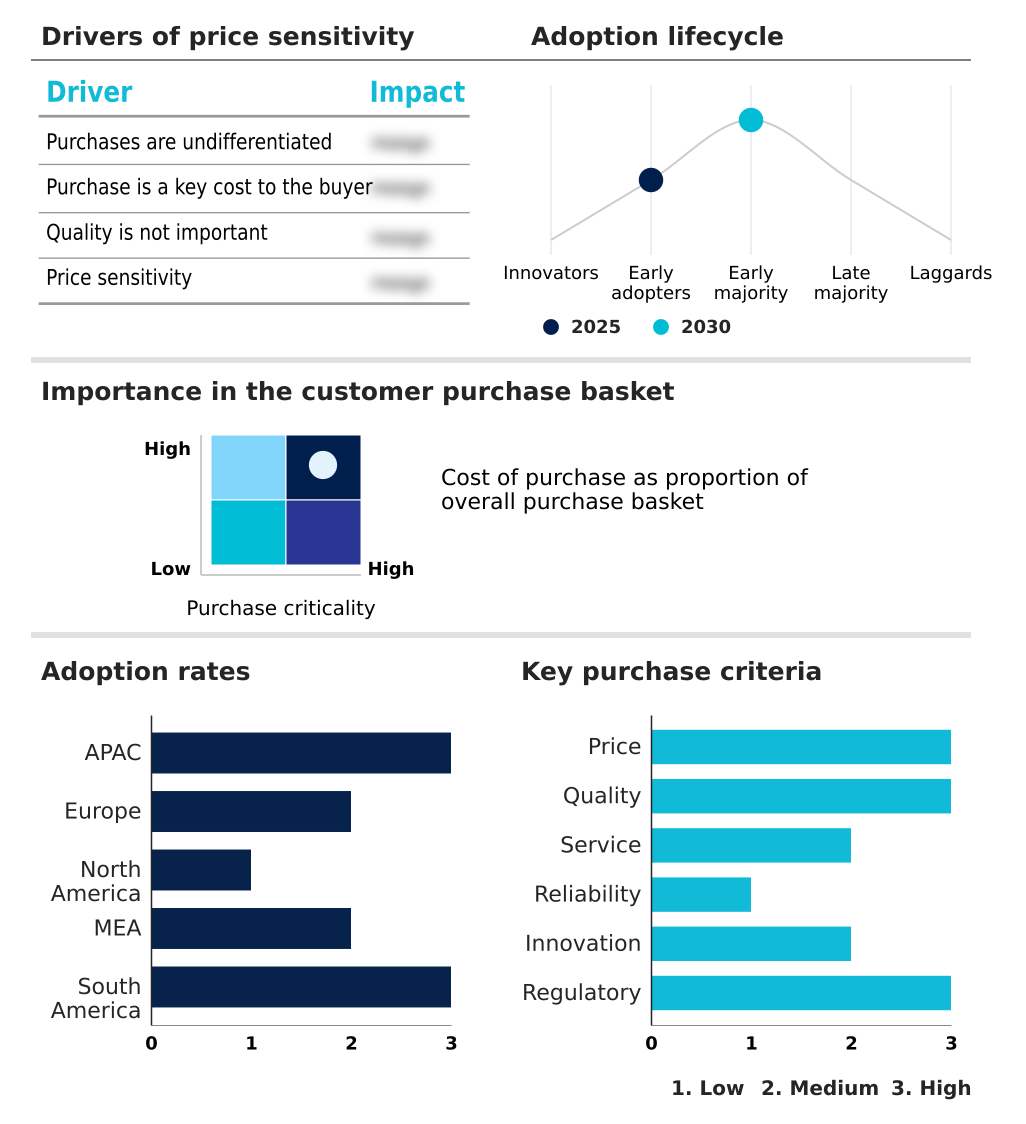
Customer Landscape of Sponge Wipes Industry
Competitive Landscape
Companies are implementing various strategies, such as strategic alliances, sponge wipes market forecast, partnerships, mergers and acquisitions, geographical expansion, and product/service launches, to enhance their presence in the industry.
3M Co. - 3M Company delivers advanced surface maintenance solutions, including commercial-grade cellulose pads and multipurpose cleaning wipes designed for optimal fluid retention and high-contact industrial sanitization tasks.
The industry research and growth report includes detailed analyses of the competitive landscape of the market and information about key companies, including:
- 3M Co.
- Armaly Brands Inc.
- Blueland
- Convertex India Pvt Ltd
- Corazzi Fibre Srl
- Danica Brands Inc.
- E Cloth Ltd
- Foam Spirit
- Full Circle Home LLC
- If You Care
- Kalle GmbH
- Koparo Clean
- Lola Products
- Papaya Reusables
- Scrub Daddy Inc.
- Shagun Cleaning
- Spontex Industrial
- Vileda GmbH
- We Ti Industries
Qualitative and quantitative analysis of companies has been conducted to help clients understand the wider business environment as well as the strengths and weaknesses of key industry players. Data is qualitatively analyzed to categorize companies as pure play, category-focused, industry-focused, and diversified; it is quantitatively analyzed to categorize companies as dominant, leading, strong, tentative, and weak.
Recent Development and News in Sponge wipes market
- In the Household Products industry, the European Union implemented stricter circular economy traceability standards on bio-based consumer goods, directly impacting Sponge Wipes demand by forcing regional manufacturers to transition 100% of their portfolios to certified sustainable forestry resources.
- The rapid expansion of high-volume food processing enterprises instituted zero-tolerance cross-contamination protocols, directly impacting Sponge Wipes demand by increasing institutional reliance on heavy-duty industrial wipes that offer up to twenty times their weight in liquid absorption.
- Major multinational cleaning corporations aggressively expanded their commercial hygiene sector operations with advanced sanitization assurance frameworks, directly impacting Sponge Wipes demand by driving the adoption of infection prevention substrates treated with botanical extract infusion.
- Severe logistical blockages across the Middle East restricted the transportation of hardwood dissolving pulp, directly impacting Sponge Wipes demand by compressing profit margins and accelerating a 15% shift toward alternative localized biodegradable materials transition strategies.
Dive into Technavio’s robust research methodology, blending expert interviews, extensive data synthesis, and validated models for unparalleled Sponge Wipes Market insights. See full methodology.
| Market Scope | |
|---|---|
| Page number | 285 |
| Base year | 2025 |
| Historic period | 2020-2024 |
| Forecast period | 2026-2030 |
| Growth momentum & CAGR | Accelerate at a CAGR of 5.4% |
| Market growth 2026-2030 | USD 347.6 million |
| Market structure | Fragmented |
| YoY growth 2025-2026(%) | 5.0% |
| Key countries | China, India, Japan, South Korea, Australia, Indonesia, Germany, UK, France, Italy, Spain, Russia, US, Canada, Mexico, Saudi Arabia, UAE, South Africa, Turkey, Egypt, Brazil, Argentina and Chile |
| Competitive landscape | Leading Companies, Market Positioning of Companies, Competitive Strategies, and Industry Risks |
Research Analyst Overview
- The demand for advanced surface maintenance solutions is fundamentally altering the landscape of plant-based household cleaning and industrial sanitation. Institutional buyers and residential consumers are systematically phasing out conventional synthetic foam polyurethane in favor of high-performance substrates engineered for superior moisture control.
- Modern manufacturing processes heavily leverage hydrophilic cellulose fibers to maximize fluid retention, ensuring optimal efficiency during rigorous commercial operations. A pivotal development in this sector is the structural engineering of the dual-textured surface, which seamlessly combines an absorbent matrix with a scratch-free scrubbing layer to deliver multifaceted utility.
- This design innovation has allowed corporate hospitality providers to consolidate their janitorial inventories, resulting in a 25% reduction in overall cleaning supply expenditures. Furthermore, the strategic application of zinc pyrithione integration within these heavy-duty cleaning implements provides sustained resistance against bacterial proliferation.
- By neutralizing odor-causing microbes, these advanced wiping tools secure prolonged operational lifespans and facilitate strict adherence to corporate health regulations, embedding superior material science directly into the foundation of enterprise hygiene protocols.
What are the Key Data Covered in this Sponge Wipes Market Research and Growth Report?
-
What is the expected growth of the Sponge Wipes Market between 2026 and 2030?
-
USD 347.6 million, at a CAGR of 5.4%
-
-
What segmentation does the market report cover?
-
The report is segmented by Distribution Channel (Offline, and Online), Product (Residential, and Non-residential), Service (Common sponge wipe, and Super absorbent sponge wipe) and Geography (APAC, Europe, North America, Middle East and Africa, South America)
-
-
Which regions are analyzed in the report?
-
APAC, Europe, North America, Middle East and Africa and South America
-
-
What are the key growth drivers and market challenges?
-
Accelerating consumer preference for eco-friendly and biodegradable materials, Raw material volatility and supply chain inconsistencies for cellulose substrates
-
-
Who are the major players in the Sponge Wipes Market?
-
3M Co., Armaly Brands Inc., Blueland, Convertex India Pvt Ltd, Corazzi Fibre Srl, Danica Brands Inc., E Cloth Ltd, Foam Spirit, Full Circle Home LLC, If You Care, Kalle GmbH, Koparo Clean, Lola Products, Papaya Reusables, Scrub Daddy Inc., Shagun Cleaning, Spontex Industrial, Vileda GmbH and We Ti Industries
-
Market Research Insights
- The Sponge Wipes market demonstrates robust commercial expansion as corporations aggressively pursue environmental footprint reduction initiatives. Regulatory pressures have accelerated the biodegradable materials transition, compelling manufacturers to integrate organic fluid retention capabilities into their core product lines. Commercial facilities adopting these advanced substrates have reported a 35% improvement in rapid-drying efficiency, substantially reducing bacterial proliferation risks.
- Furthermore, the implementation of sustainable forestry resources within the supply chain has decreased raw material dependency bottlenecks by 18%, stabilizing long-term production costs. As the hospitality sanitation mandates become increasingly stringent, institutional adoption of heavy-duty industrial wipes continues to reshape the operational landscape, delivering measurable cost-efficiency gains across high-volume surface maintenance workflows.
We can help! Our analysts can customize this sponge wipes market research report to meet your requirements.
 RIA -
RIA - 
