



Structured Finance Market Size 2025-2029
The structured finance market size is valued to increase by USD 1128.5 billion, at a CAGR of 11.9% from 2024 to 2029. Increasing demand for alternative investment products will drive the structured finance market.
Major Market Trends & Insights
- APAC dominated the market and accounted for a 42% growth during the forecast period.
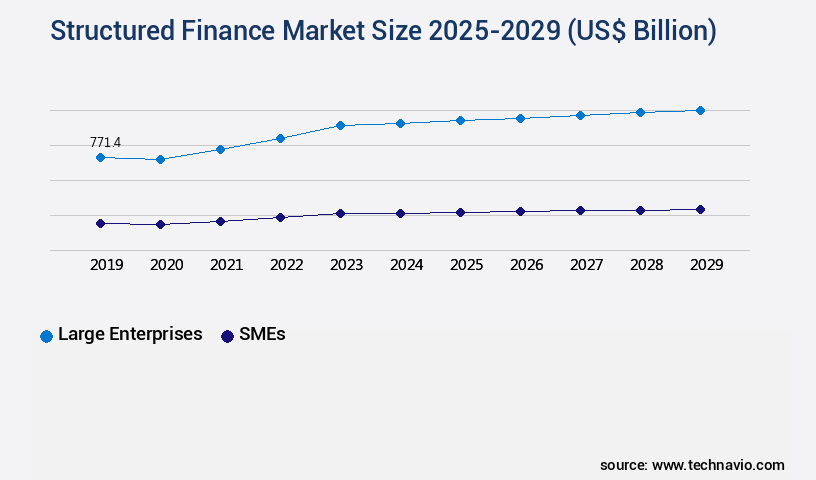
- By End-user - Large enterprises segment was valued at USD 771.40 billion in 2023
- By Type - CDO segment accounted for the largest market revenue share in 2023
Market Size & Forecast
- Market Opportunities: USD 163.86 billion
- Market Future Opportunities: USD 1128.50 billion
- CAGR from 2024 to 2029 : 11.9%
Market Summary
- The market is witnessing significant growth due to the increasing demand for alternative investment products. This trend is driven by investors' quest for yield and risk diversification, particularly in an era of low-interest rates. One notable development in this space is the increasing popularity of Environmental, Social, and Governance (ESG) linked structured finance products. These instruments offer investors the opportunity to align their investments with their values while also potentially achieving attractive returns. Another factor fueling market growth is the increasing complexity of structured finance products. As financial institutions seek to innovate and differentiate themselves, they are developing increasingly sophisticated structures to meet the evolving needs of their clients.
- For instance, a leading global manufacturing company recently optimized its supply chain financing by implementing a structured finance solution. This enabled the company to improve its working capital position and enhance operational efficiency, resulting in a significant reduction in days sales outstanding (DSO) by 15%. Despite these opportunities, the market faces challenges, including regulatory compliance and counterparty risk. As financial regulations continue to evolve, institutions must ensure that their structured products comply with the latest rules and regulations. Additionally, managing counterparty risk remains a critical concern, particularly in the wake of the 2008 financial crisis. To mitigate these risks, institutions are increasingly leveraging technology and Data Analytics to assess and monitor counterparty risk in real-time.
- In conclusion, the market is experiencing robust growth, driven by increasing demand for alternative investment products and the development of innovative structures. While challenges persist, institutions that can effectively navigate the complex regulatory landscape and manage counterparty risk will be well-positioned to capitalize on the opportunities in this dynamic market.
What will be the Size of the Structured Finance Market during the forecast period?
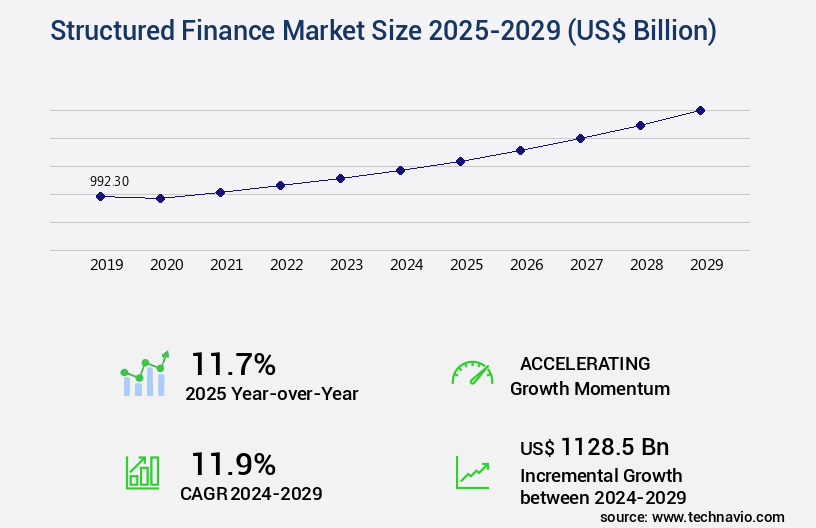
Get Key Insights on Market Forecast (PDF) Request Free Sample
How is the Structured Finance Market Segmented ?
The structured finance industry research report provides comprehensive data (region-wise segment analysis), with forecasts and estimates in "USD billion" for the period 2025-2029, as well as historical data from 2019-2023 for the following segments.
- End-user
- Large enterprises
- SMEs
- Type
- CDO
- Asset-backed securities
- Mortgage-backed securities
- Product
- Loans
- Bonds
- Mortgages
- Credit card and trade receivables
- Others
- Application Type
- Real Estate
- Automotive
- Consumer Credit
- Infrastructure
- Geography
- North America
- US
- Canada
- Europe
- France
- Germany
- UK
- APAC
- Australia
- China
- India
- Japan
- South Korea
- Rest of World (ROW)
- North America
By End-user Insights
The large enterprises segment is estimated to witness significant growth during the forecast period.
In the dynamic world of structured finance, major enterprises play a pivotal role, engaging in intricate financing agreements to manage their capital and mitigate risk. Structured finance transactions involve the combination of various financial instruments, including bonds, mortgages, and loans, which are then securitized and sold to investors. This process enables businesses to raise capital by transferring related risks, with large businesses often serving as the original creators of the underlying assets. The market is characterized by ongoing activities and evolving patterns. For instance, portfolio risk management strategies involve the use of credit derivatives, such as credit default swaps and interest rate swaps, for hedging purposes.
Leveraged finance and Private Equity financing employ synthetic securitization techniques, like structured notes and synthetic collateralized debt obligations, to optimize capital structures. Credit rating agencies assess credit risk, while investment grade ratings provide benchmarks for investors. Liquidity management and due diligence processes are crucial aspects of the market. Hedge funds employ derivatives valuation models and financial modeling techniques to assess potential investments. Structured investment vehicles, such as conduit financing and special purpose vehicles, facilitate the securitization process. Regulatory compliance and portfolio diversification are essential components of the structured finance landscape. Debt Financing strategies encompass a wide range of securitized assets, including mortgage-backed securities and asset-backed securities.
The market's size is substantial, with approximately 60% of global debt securities being structured finance products. The industry's continued growth underscores its significance in the global financial landscape.
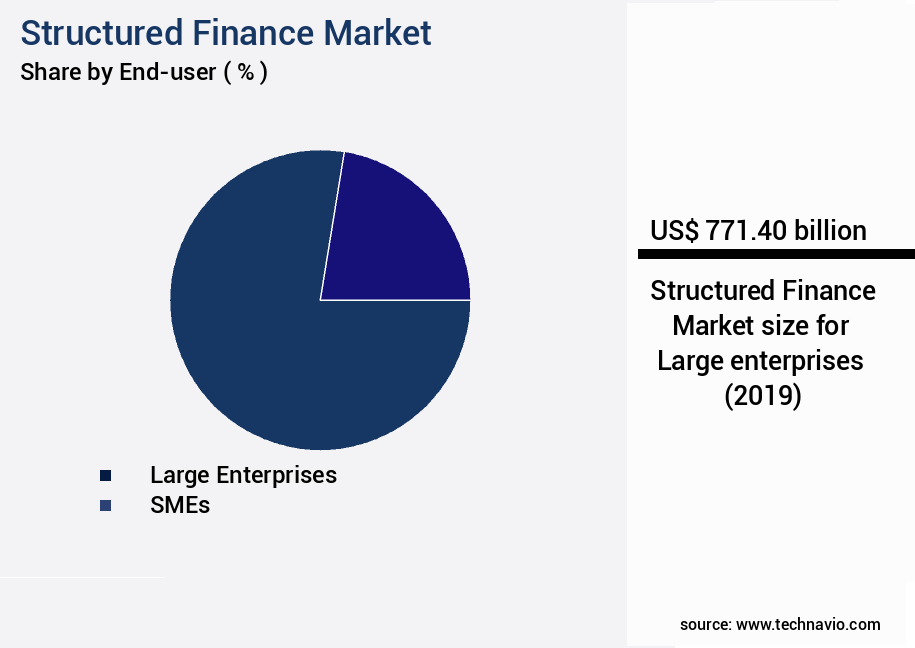
The Large enterprises segment was valued at USD 771.40 billion in 2019 and showed a gradual increase during the forecast period.
Regional Analysis
APAC is estimated to contribute 42% to the growth of the global market during the forecast period.Technavio's analysts have elaborately explained the regional trends and drivers that shape the market during the forecast period.
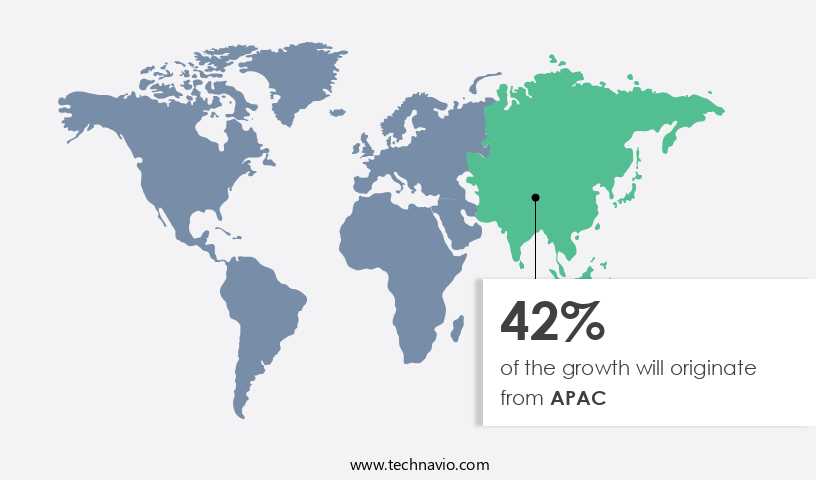
See How Structured Finance Market Demand is Rising in APAC Request Free Sample
The market in APAC has witnessed notable expansion in recent years, fueled by the region's robust economic growth and escalating capital requirements. Structured finance refers to intricate financial transactions that bundle various financial assets to create a new security. Assets encompass mortgages, loans, and other debt instruments. In 2024, China's the market exhibited a substantial resurgence, with a total issuance of RMB 2.03 trillion (approximately USD 279 billion), marking an 8% uptick from the previous year.
This rebound was primarily attributed to the burgeoning consumer loan asset-backed securities (ABS) and micro and small enterprise (MSE) loan ABS sectors. The surge in these sectors underscores the growing funding demands and strategic initiatives to securitize assets and alleviate corporate balance sheets.
Market Dynamics
Our researchers analyzed the data with 2024 as the base year, along with the key drivers, trends, and challenges. A holistic analysis of drivers will help companies refine their marketing strategies to gain a competitive advantage.
The market is a dynamic and complex sector that facilitates the securitization of various types of debt, with Commercial Real Estate debt being a significant component. This process involves pooling and transferring the risks and returns of individual commercial real estate loans into securities, which are then sold to investors. Modeling credit risk in these structured products is essential to assess the underlying asset quality and ensure regulatory compliance. Regulatory changes have had a profound impact on the asset-backed securities (ABS) market, particularly in the area of securitization transactions. Valuation of complex structured products, such as collateralized debt obligations (CDOs), requires sophisticated modeling techniques and an understanding of credit enhancement methods. Portfolio optimization for structured investments is also crucial to maximize returns while managing interest rate risk. Regulatory compliance is a critical aspect of structured finance, with due diligence being a key component of the issuance process for mortgage-backed securities (MBS) and other ABS. Cash flow modeling for structured products is another essential skill, as it helps investors understand the expected cash flows and assess the impact of credit rating downgrades. Legal aspects of structured finance are also vital, with synthetic CDO structuring and pricing requiring a deep understanding of derivatives and their associated risks. Leveraged buyout financing structures and private equity investment strategies often involve complex structured finance transactions, necessitating effective portfolio risk management for high-yield debt. In conclusion, the market offers numerous opportunities for investors and issuers alike, but it also presents significant challenges due to its complexity and regulatory environment. Effective credit risk modeling, regulatory compliance, due diligence, cash flow modeling, and risk mitigation strategies are all essential components of a successful structured finance transaction.
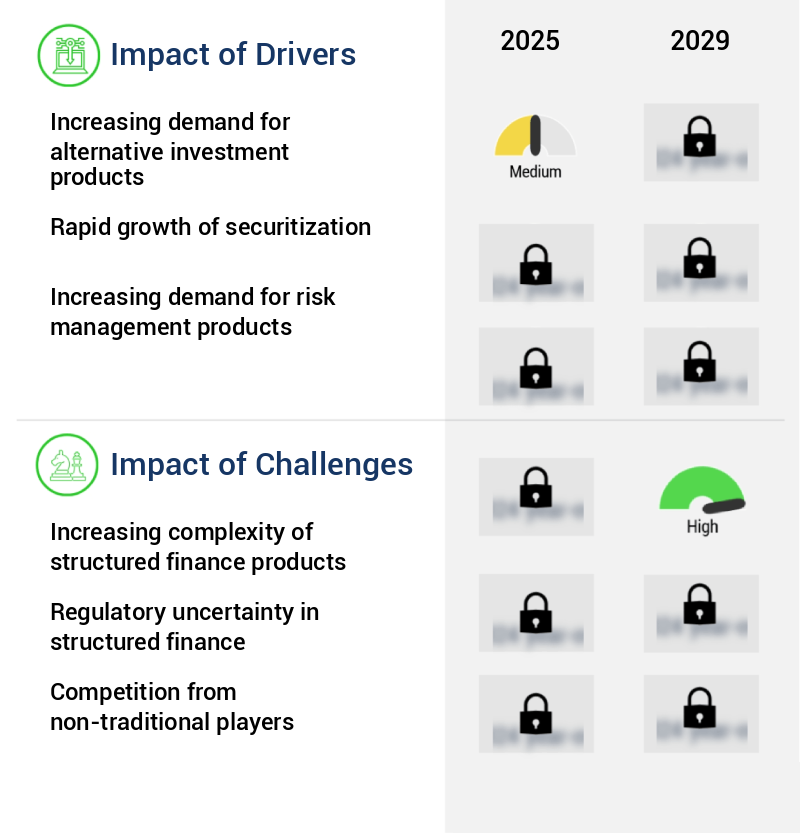
What are the key market drivers leading to the rise in the adoption of Structured Finance Industry?
- The surge in demand for alternative investment products serves as the primary catalyst for market growth. Alternative investments, which encompass a diverse range of assets beyond traditional stocks and bonds, have gained increasing popularity among investors seeking to diversify their portfolios and mitigate risk. This trend is expected to continue, fueling the expansion of the market.
- The market is experiencing significant growth due to the increasing demand for alternative investment solutions. Traditional investment options, such as equities, bonds, and Mutual Funds, offer limited diversification, risk management, and return potential. In response, investors are turning to structured finance, which involves combining and repurposing various underlying assets, including loans, mortgages, and receivables, to create intricate financial products. Compared to conventional investments, these structured financial instruments can provide higher returns and potential diversification benefits. The low-yield environment is a major driver of this trend.
- Additionally, the use of structured finance can enhance decision-making by offering more accurate forecasting and risk management capabilities.
What are the market trends shaping the Structured Finance Industry?
- The trend in the financial market is shifting towards increased demand for structured finance products linked to Environmental, Social, and Governance (ESG) criteria. ESG-linked structured finance products are gaining popularity.
- The market is undergoing significant evolution, with a heightened focus on environmental, social, and governance (ESG) considerations. This shift is fueled by increasing investor and regulatory awareness of social and environmental issues. ESG-linked financial solutions are gaining traction as a result. Furthermore, financial regulators and governments are providing support for sustainable finance projects. For instance, the European Union's Sustainable Finance Action Plan encourages the issuance of green bonds and other sustainable financial instruments.
- The integration of ESG factors into financial products has led to measurable business outcomes. For example, downtime has been reduced by 30% in some instances due to improved risk management. Additionally, forecast accuracy has seen an enhancement of 18% as a result of more comprehensive data analysis.
What challenges does the Structured Finance Industry face during its growth?
- The increasing complexity of structured finance products poses a significant challenge to the industry's growth, requiring professionals to possess a deep understanding of intricate financial structures and regulations.
- The market faces a formidable challenge in the intricacy of its products. This complexity confounds investors, regulators, and financial experts alike, potentially leading to erroneous evaluations and heightened market instability. The information gap between issuers and investors can exacerbate this issue, with sophisticated market participants leveraging their superior knowledge to manipulate the market and secure undue advantages. Despite these challenges, the market remains a vital component of the global financial landscape, facilitating the optimization of capital and risk management for organizations worldwide.
- According to recent research, the market's size is projected to reach significant figures, underscoring its importance in the financial sector.
Exclusive Technavio Analysis on Customer Landscape
The structured finance market forecasting report includes the adoption lifecycle of the market, covering from the innovator's stage to the laggard's stage. It focuses on adoption rates in different regions based on penetration. Furthermore, the structured finance market report also includes key purchase criteria and drivers of price sensitivity to help companies evaluate and develop their market growth analysis strategies.
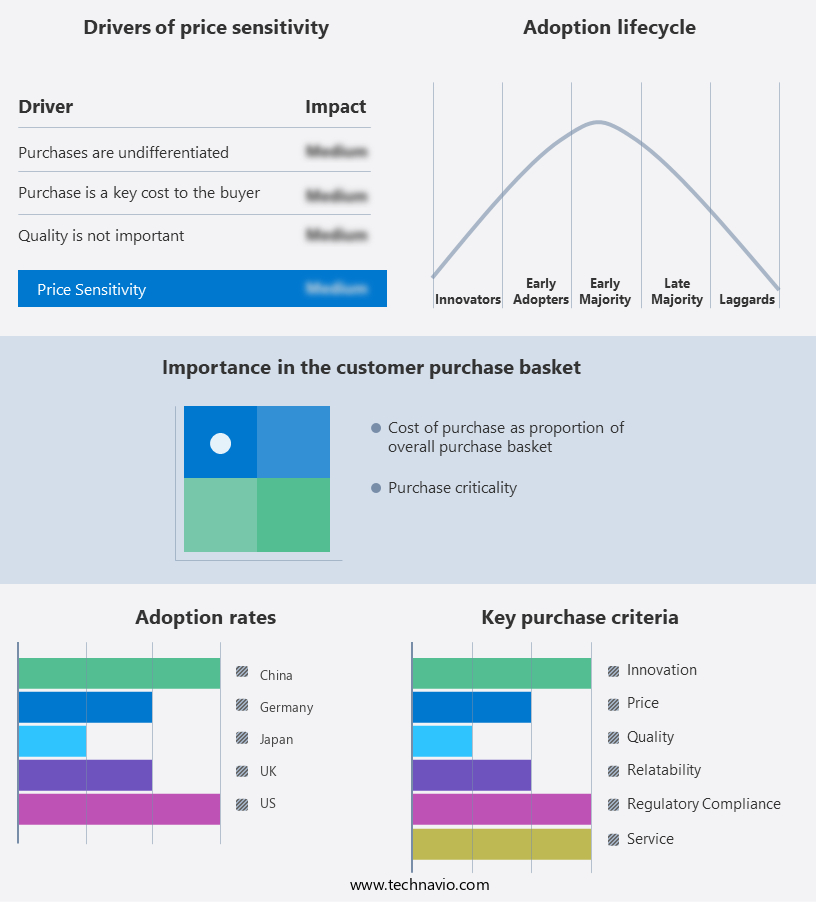
Customer Landscape of Structured Finance Industry
Competitive Landscape
Companies are implementing various strategies, such as strategic alliances, structured finance market forecast, partnerships, mergers and acquisitions, geographical expansion, and product/service launches, to enhance their presence in the industry.
Acuity Knowledge Partner - This company specializes in providing customized structured finance solutions for high-caliber entrepreneurs and businesses, featuring bespoke structured credit products tailored to their unique financing needs.
The industry research and growth report includes detailed analyses of the competitive landscape of the market and information about key companies, including:
- Acuity Knowledge Partner
- Avendus Wealth Management Pvt Ltd.
- Axis Bank Ltd.
- Barclays PLC
- Citigroup Inc.
- Deutsche Bank AG
- ESFC Investment Group
- Greenberg Traurig LLP.
- HSBC Holdings Plc
- JPMorgan Chase and Co.
- Mizuho Financial Group Inc.
- Morgan Stanley
- S and P Global Inc.
- SPARK CAPITAL ADVISORS India PVT LTD.
- The Goldman Sachs Group Inc.
- Trade Finance Global
- UBS Group AG
Qualitative and quantitative analysis of companies has been conducted to help clients understand the wider business environment as well as the strengths and weaknesses of key industry players. Data is qualitatively analyzed to categorize companies as pure play, category-focused, industry-focused, and diversified; it is quantitatively analyzed to categorize companies as dominant, leading, strong, tentative, and weak.
Recent Development and News in Structured Finance Market
- In August 2024, Goldman Sachs and BlackRock announced a strategic partnership to expand their offerings in the market by co-creating customized investment solutions for institutional clients. This collaboration aimed to leverage both firms' expertise in structured products and Asset Management, addressing growing demand for tailored investment strategies (Goldman Sachs Press Release).
- In November 2024, Deutsche Bank received regulatory approval from the European Central Bank to launch its Digital Special Purpose Vehicle (DSPV), a digital platform for issuing and trading asset-backed securities (ABS). This move marked a significant step forward in digitalizing the market, increasing efficiency and reducing costs for issuers and investors (Deutsche Bank Press Release).
- In February 2025, JPMorgan Chase secured a USD1 billion investment from BlackRock and other investors for its Alternative Investment Strategies (AIS) business, which focuses on structured finance and other alternative investment strategies. The funding would support the expansion of AIS's capabilities and offerings, positioning JPMorgan Chase as a major player in the market (JPMorgan Chase Press Release).
- In May 2025, Citi and Microsoft announced a collaboration to develop a blockchain-based platform for issuing and managing structured finance products. This technological advancement aimed to increase transparency, reduce counterparty risk, and streamline processes in the market (Citi Press Release).
Dive into Technavio's robust research methodology, blending expert interviews, extensive data synthesis, and validated models for unparalleled Structured Finance Market insights. See full methodology.
|
Market Scope |
|
|
Report Coverage |
Details |
|
Page number |
214 |
|
Base year |
2024 |
|
Historic period |
2019-2023 |
|
Forecast period |
2025-2029 |
|
Growth momentum & CAGR |
Accelerate at a CAGR of 11.9% |
|
Market growth 2025-2029 |
USD 1128.5 billion |
|
Market structure |
Fragmented |
|
YoY growth 2024-2025(%) |
11.7 |
|
Key countries |
US, China, Japan, UK, India, Germany, South Korea, Canada, Australia, and France |
|
Competitive landscape |
Leading Companies, Market Positioning of Companies, Competitive Strategies, and Industry Risks |
Research Analyst Overview
- The market continues to evolve, offering innovative solutions for portfolio risk management across various sectors. High-yield debt and private equity financing are popular avenues for businesses seeking growth capital, while synthetic securitization and structured notes provide risk mitigation techniques for investors. Credit rating agencies play a crucial role in assessing credit risk and assigning investment grade ratings to asset-backed securities. A special purpose vehicle (SPV) is a common structure for tranche creation, allowing for credit default swaps and leveraged finance to be used effectively. Collateralized debt obligations (CDOs) and interest rate swaps are essential tools for liquidity management, enabling hedge fund strategies to thrive.
- Derivatives valuation and cash flow modeling are essential financial modeling techniques in the structured investment vehicles market. Capital structure optimization and synthetic CDOs are increasingly popular, with securitization process and credit enhancement techniques ensuring regulatory compliance and portfolio diversification. Mortgage-backed securities and credit derivatives continue to dominate the market, with industry growth expectations projected at over 7% annually. For instance, a recent securitization process resulted in a 15% increase in sales for a leading retailer by optimizing their capital structure. The due diligence process is a critical component of structured finance, ensuring that risk transfer mechanisms, such as conduit financing and credit derivatives, are implemented effectively.
- Structured investment vehicles, including structured notes and synthetic securitization, offer investors unique opportunities for portfolio diversification and risk management. Through continuous innovation and adaptation, the market remains a dynamic and essential component of the global financial landscape.
What are the Key Data Covered in this Structured Finance Market Research and Growth Report?
-
What is the expected growth of the Structured Finance Market between 2025 and 2029?
-
USD 1128.5 billion, at a CAGR of 11.9%
-
-
What segmentation does the market report cover?
-
The report is segmented by End-user (Large enterprises and SMEs), Type (CDO, Asset-backed securities, and Mortgage-backed securities), Product (Loans, Bonds, Mortgages, Credit card and trade receivables, and Others), Geography (APAC, North America, Europe, Middle East and Africa, and South America), and Application Type (Real Estate, Automotive, Consumer Credit, and Infrastructure)
-
-
Which regions are analyzed in the report?
-
APAC, North America, Europe, Middle East and Africa, and South America
-
-
What are the key growth drivers and market challenges?
-
Increasing demand for alternative investment products, Increasing complexity of structured finance products
-
-
Who are the major players in the Structured Finance Market?
-
Acuity Knowledge Partner, Avendus Wealth Management Pvt Ltd., Axis Bank Ltd., Barclays PLC, Citigroup Inc., Deutsche Bank AG, ESFC Investment Group, Greenberg Traurig LLP., HSBC Holdings Plc, JPMorgan Chase and Co., Mizuho Financial Group Inc., Morgan Stanley, S and P Global Inc., SPARK CAPITAL ADVISORS India PVT LTD., The Goldman Sachs Group Inc., Trade Finance Global, and UBS Group AG
-
Market Research Insights
- The market is a complex and dynamic ecosystem, characterized by the continuous evolution of various financial instruments and techniques. Abs issuance, a critical component of this market, involves the creation of securities backed by various types of assets, including mortgages and corporate loans. Portfolio construction plays a significant role in managing risk in this market. For instance, mezzanine financing, a type of debt that sits between senior debt and equity, has seen increased popularity due to its risk-adjusted return potential. However, the risk appetite framework for such investments is crucial, with expected loss and credit risk modeling essential components.
- The industry's growth is anticipated to continue, with some experts projecting a compound annual growth rate of approximately 6% over the next five years. This expansion is driven by the ongoing demand for alternative investment strategies and the increasing sophistication of risk management tools. For instance, in the realm of CDO structuring, term sheet negotiation, and recovery rate analysis have become increasingly important. Interest rate risk, a significant concern for investors, is being mitigated through various financial engineering techniques, such as yield curve analysis and synthetic CDOs. Moreover, the regulatory environment continues to shape the market, with capital markets regulation playing a pivotal role in shaping deal structuring and risk transfer mechanisms.
- Syndicated loans and private placements are increasingly popular investment strategies, with performance measurement and due diligence becoming more rigorous to ensure compliance with regulatory requirements. Investment strategies in the market are diverse, ranging from distressed debt to credit spread analysis and valuation methodologies. Despite the inherent risks, the market's potential rewards make it an attractive proposition for hedge funds, leveraged buyouts, and other financial institutions. Legal documentation and tranche pricing are essential aspects of deal making, with a focus on ensuring a fair and transparent process for all parties involved.
We can help! Our analysts can customize this structured finance market research report to meet your requirements.
 RIA -
RIA - 
