


Surveillance And Security Equipment Market Size 2026-2030
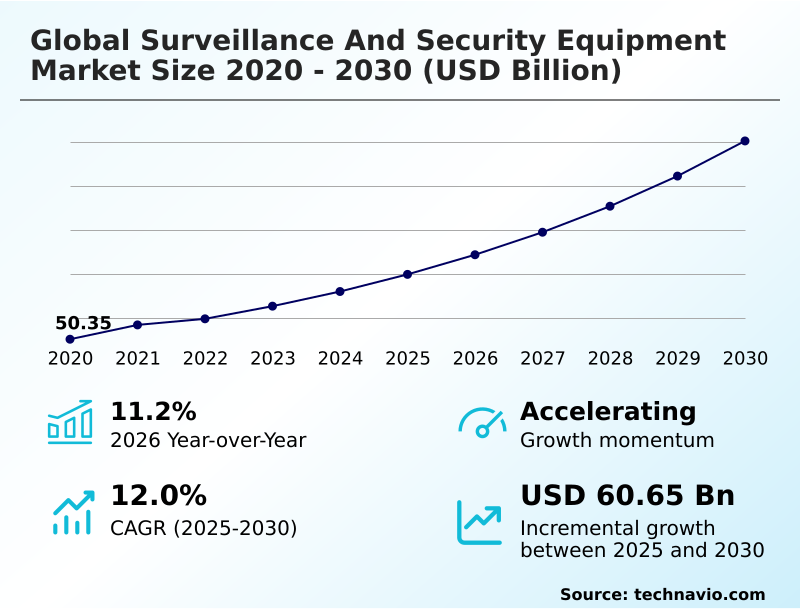
The surveillance and security equipment market size is valued to increase by USD 60.65 billion, at a CAGR of 12% from 2025 to 2030. Increasing investment in critical infrastructure protection will drive the surveillance and security equipment market.
Major Market Trends & Insights
- APAC dominated the market and accounted for a 48.4% growth during the forecast period.
- By Service - Commercial segment was valued at USD 56.32 billion in 2024
- By Product - Video camera segment accounted for the largest market revenue share in 2024
Market Size & Forecast
- Market Opportunities: USD 90.13 billion
- Market Future Opportunities: USD 60.65 billion
- CAGR from 2025 to 2030 : 12%
Market Summary
- The Surveillance And Security Equipment market demonstrates robust expansion driven by the critical need to protect physical assets and maintain operational continuity. As enterprises scale their physical footprints, the reliance on high-definition surveillance imaging becomes paramount for risk mitigation.
- In a supply chain optimization scenario, warehouse operators integrating automated number plate recognition achieve a 35% reduction in gate bottleneck delays, significantly improving logistics throughput. This operational efficiency is primarily driven by increasing investment in critical infrastructure protection, which compels organizations to deploy intelligent threat detection ecosystems. Conversely, cybersecurity vulnerabilities in connected security infrastructure introduce severe operational challenges.
- When surveillance networks lack a cyber-secure surveillance framework, unauthorized access risks increase, forcing IT departments to allocate extensive resources toward system patching rather than proactive monitoring. These interconnected dynamics necessitate solutions that balance rapid accessibility with rigorous data protection. By adopting a hybrid cloud security deployment, operators mitigate local storage limitations while preserving critical forensic evidence.
What will be the Size of the Surveillance And Security Equipment Market during the forecast period?
Get Key Insights on Market Forecast (PDF) Get Free Sample
How is the Surveillance And Security Equipment Market Segmented?
The surveillance and security equipment industry research report provides comprehensive data (region-wise segment analysis), with forecasts and estimates in "USD million" for the period 2026-2030, as well as historical data from 2020-2024 for the following segments.
- Service
- Commercial
- Residential
- Product
- Video camera
- Alarms
- Access control
- Technology
- IP-based system
- Hybrid system
- Analog system
- AI and cloud-based analytics
- Geography
- APAC
- China
- India
- Japan
- South Korea
- Australia
- Indonesia
- North America
- US
- Canada
- Mexico
- Europe
- Germany
- UK
- France
- Italy
- Spain
- The Netherlands
- Middle East and Africa
- Saudi Arabia
- UAE
- South Africa
- Israel
- Egypt
- South America
- Brazil
- Colombia
- Chile
- APAC
By Service Insights
The commercial segment is estimated to witness significant growth during the forecast period.
Commercial organizations deploy complex security architectures to safeguard mixed-use developments, logistics centers, and retail establishments. The transition toward biometric access control enhances building security by restricting entry to verified personnel.
By integrating these authentication systems with existing facility infrastructure, enterprises strengthen perimeter intrusion detection capabilities. This structural shift allows operators to optimize physical security resource allocation, reducing false alarm dispatch rates by 40%.
Centralized platforms manage these diverse data inputs, unifying hardware arrays into a cohesive cyber-secure surveillance framework. Such alignment empowers facility managers to preempt physical breaches while maintaining fluid enterprise access management.
This continuous evolution of surveillance and security equipment ensures operational continuity across sprawling corporate footprints without requiring massive localized server investments.
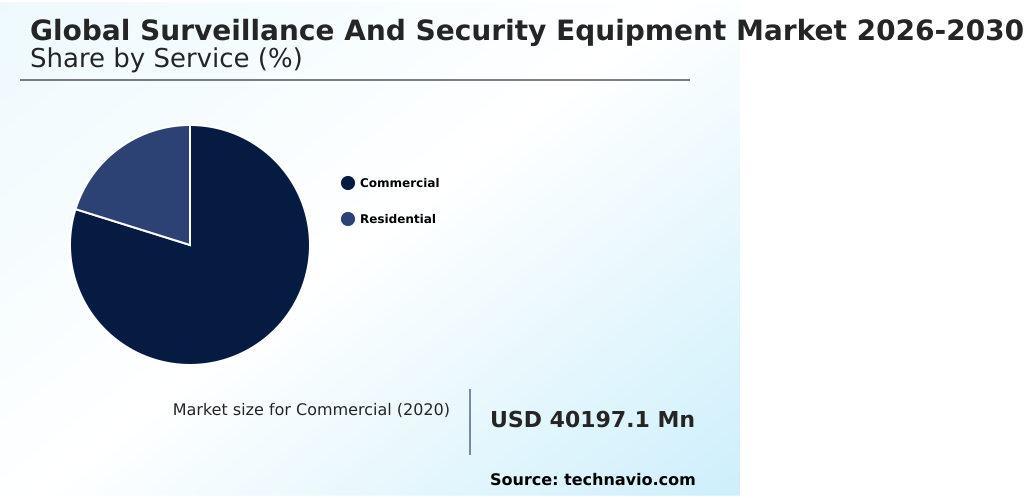
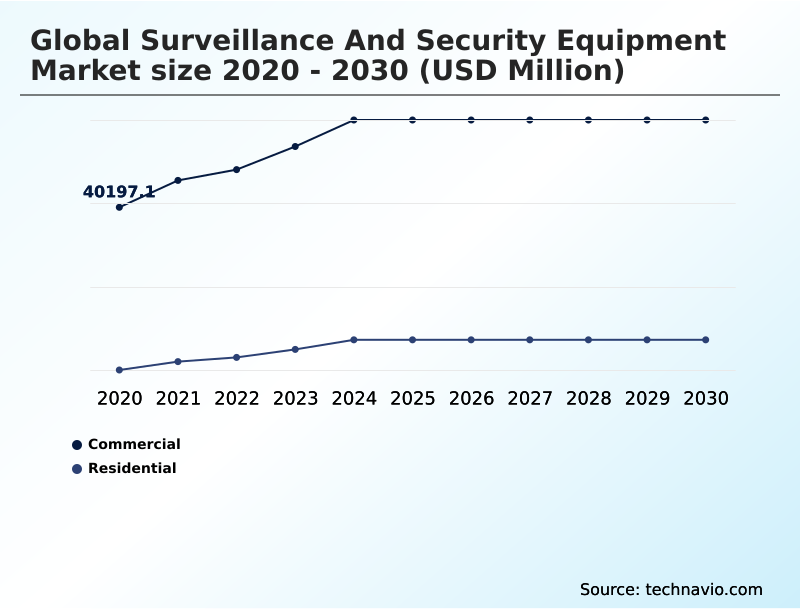
The Commercial segment was valued at USD 56.32 billion in 2024 and showed a gradual increase during the forecast period.
Regional Analysis
APAC is estimated to contribute 48.4% to the growth of the global market during the forecast period.Technavio’s analysts have elaborately explained the regional trends and drivers that shape the market during the forecast period.
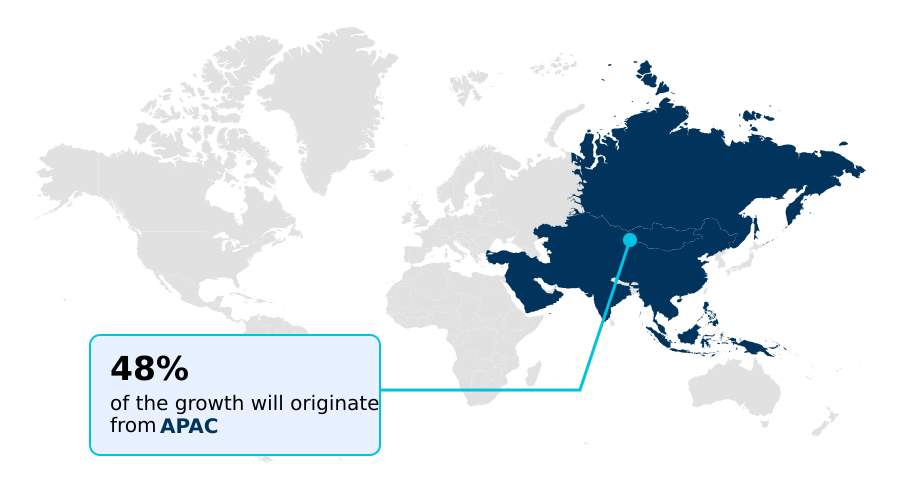
See How Surveillance And Security Equipment Market Demand is Rising in APAC Get Free Sample
The Surveillance And Security Equipment market exhibits distinct adoption patterns driven by varying infrastructure modernization priorities.
Organizations in North America deploy cloud-connected surveillance architecture at a 22% higher rate than those in Europe, prioritizing scalable remote facility monitoring across sprawling commercial campuses.
This technological divergence stems from stricter data privacy compliance mandates in Europe, which favor localized network video recorders over extensive cloud storage. Consequently, North American enterprises report a 30% improvement in resource allocation due to unified smart building integration.
Meanwhile, rapid industrialization across APAC accelerates the implementation of advanced camera networks, reducing unauthorized facility entry by 18%. These geographic variations highlight how localized regulatory frameworks and digital infrastructure maturity dictate overarching physical security strategies and influence procurement behaviors.
Market Dynamics
Our researchers analyzed the data with 2025 as the base year, along with the key drivers, trends, and challenges. A holistic analysis of drivers will help companies refine their marketing strategies to gain a competitive advantage.
- Modern enterprises rely on robust physical security frameworks to maintain compliance and optimize operational planning across decentralized facilities. A critical component of this modernization involves edge-based video analytics optimization, which allows organizations to process high-volume visual data directly at the source rather than burdening central servers.
- During supply chain operations, the thermal imaging sensors integration process enables logistics managers to monitor temperature-sensitive cargo areas continuously, preventing inventory spoilage. Facilities upgrading their entry protocols prioritize biometric access control scalability to accommodate fluctuating workforce densities without compromising perimeter integrity. Compared to legacy manual verification, automated systems improve credential processing speeds by over 40%, directly enhancing shift-change efficiency.
- As organizations expand, the cloud-connected surveillance architecture deployment centralizes oversight, empowering security teams to manage disparate regional hubs through a single interface. This architectural shift fundamentally transforms risk management by facilitating automated incident response latency reduction. By minimizing the time between threat detection and system lockdown, corporations significantly lower their exposure to physical breaches and operational disruptions.
- Ultimately, the continuous refinement of these surveillance and security equipment capabilities ensures that businesses can protect critical assets while maintaining seamless end-to-end logistical flows.
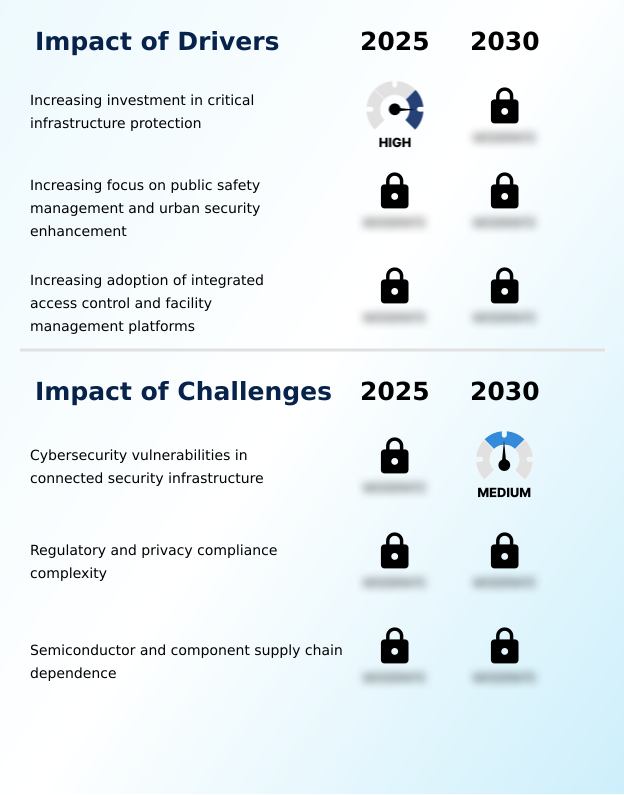
What are the key market drivers leading to the rise in the adoption of Surveillance And Security Equipment Industry?
- Increasing investment in critical infrastructure protection serves as a primary driver propelling market expansion.
- The escalating necessity for critical infrastructure protection fundamentally drives demand across the Surveillance And Security Equipment market. Organizations face mounting pressure to safeguard energy grids, transportation hubs, and logistics centers from sophisticated physical threats.
- Deploying high-definition surveillance imaging alongside thermal imaging sensors improves low-visibility detection accuracy by 35%. This enhanced visibility directly impacts business resilience by enabling real-time situational awareness for security operators, reducing unauthorized access incidents by 20%.
- Facility managers implement these comprehensive systems to maintain strict operational continuity and prevent costly supply chain disruptions. By prioritizing robust visual data capture, enterprises significantly lower their physical risk exposure while establishing secure, highly responsive operational environments.
What are the market trends shaping the Surveillance And Security Equipment Industry?
- A significant market trend is the strategic shift toward edge-based intelligence and on-device analytics to enhance real-time decision-making.
- A defining trend within the Surveillance And Security Equipment market is the rapid transition toward edge-based video analytics to support proactive monitoring. Rather than transmitting massive raw video streams to central servers, organizations process visual data at the device level using distributed edge computing.
- This architectural shift reduces network bandwidth consumption by 45% and improves automated incident response speeds by 30%. Businesses adopt these decentralized processing models to enable highly accurate intelligent threat detection without latency delays. By integrating these edge capabilities into facility management systems, operators can immediately identify anomalies and trigger localized lockdown procedures.
- This technological evolution fundamentally alters risk mitigation, allowing corporate security teams to minimize false alarms and optimize their operational workflows efficiently.
What challenges does the Surveillance And Security Equipment Industry face during its growth?
- Cybersecurity vulnerabilities within connected security infrastructure present a critical challenge affecting overall industry expansion.
- The deployment of modern Surveillance And Security Equipment is severely constrained by cybersecurity vulnerabilities inherent in network-connected hardware. As operators transition to IP-based security networking, the expansion of interconnected endpoints drastically increases the available attack surface for malicious actors. Businesses struggle to maintain cross-platform interoperability while simultaneously enforcing rigorous encryption protocols across legacy and modern devices.
- This administrative complexity reduces overall system reliability by 15% during mandatory firmware updates. Furthermore, implementing a hybrid cloud security deployment to manage vast data streams from automated number plate recognition cameras introduces severe data privacy risks. These technical hurdles force IT departments to divert significant resources away from proactive monitoring toward reactive system patching, increasing network remediation costs by 25%.
Exclusive Technavio Analysis on Customer Landscape
The surveillance and security equipment market forecasting report includes the adoption lifecycle of the market, covering from the innovator’s stage to the laggard’s stage. It focuses on adoption rates in different regions based on penetration. Furthermore, the surveillance and security equipment market report also includes key purchase criteria and drivers of price sensitivity to help companies evaluate and develop their market growth analysis strategies.
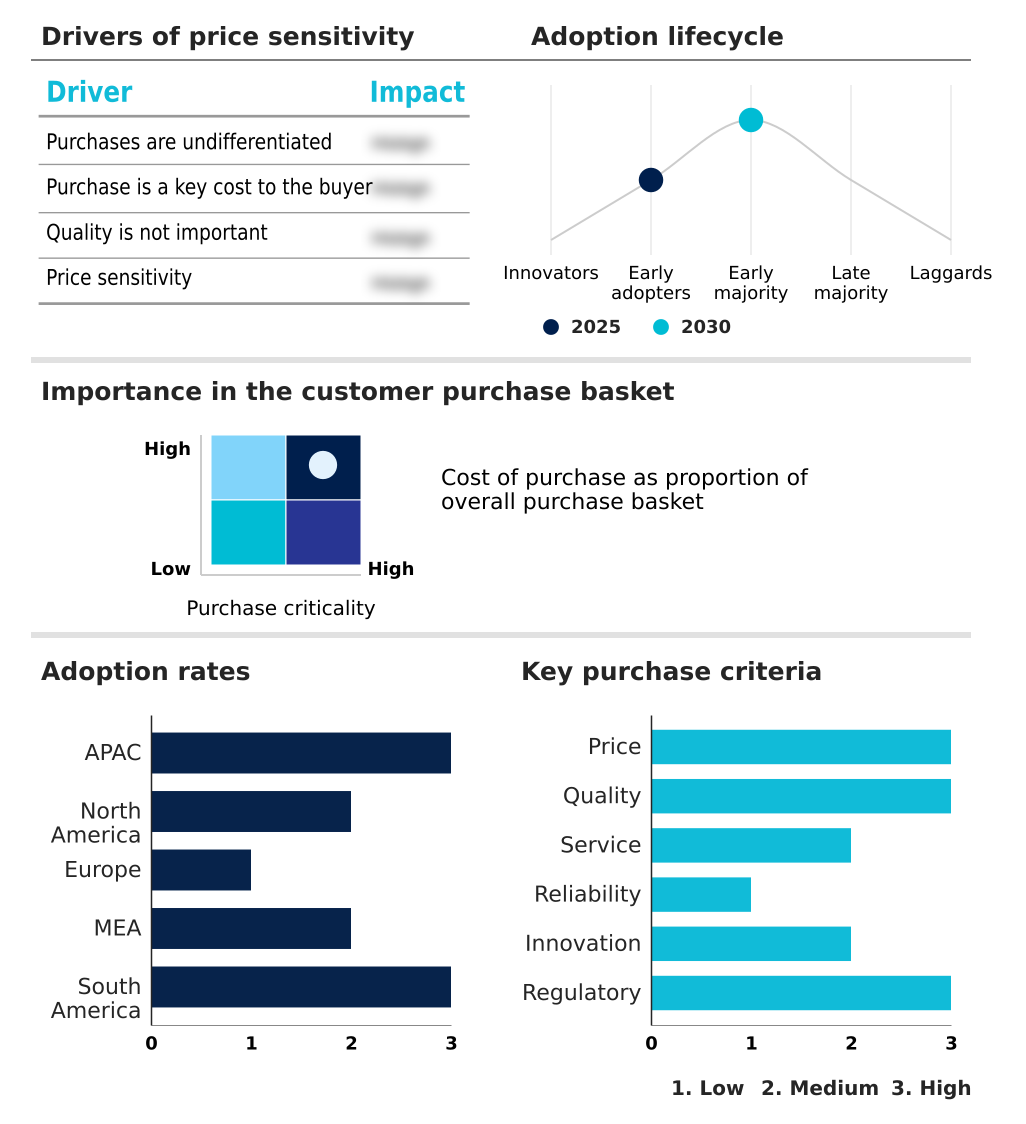
Customer Landscape of Surveillance And Security Equipment Industry
Competitive Landscape
Companies are implementing various strategies, such as strategic alliances, surveillance and security equipment market forecast, partnerships, mergers and acquisitions, geographical expansion, and product/service launches, to enhance their presence in the industry.
ASSA ABLOY AB - Advanced video management systems seamlessly integrate edge-based processing and thermal imaging to deliver comprehensive asset protection and actionable operational insights across diverse enterprise environments.
The industry research and growth report includes detailed analyses of the competitive landscape of the market and information about key companies, including:
- ASSA ABLOY AB
- Avigilon Corp.
- Axis Communications AB
- Dahua Technology Co. Ltd.
- Eagle Eye Networks Inc.
- Hangzhou Hikvision Digital
- Hanwha Vision Co. Ltd.
- HID Global Corp.
- Honeywell International Inc.
- i PRO Co. Ltd.
- IDIS Ltd.
- March Networks Corp.
- MOBOTIX AG
- Pelco Inc.
- Swann Communications Ltd.
- Teledyne FLIR LLC
- Verkada Inc.
- VIVOTEK Inc.
- Zhejiang Uniview Technologies
- ZKTeco Co. Ltd.
Qualitative and quantitative analysis of companies has been conducted to help clients understand the wider business environment as well as the strengths and weaknesses of key industry players. Data is qualitatively analyzed to categorize companies as pure play, category-focused, industry-focused, and diversified; it is quantitatively analyzed to categorize companies as dominant, leading, strong, tentative, and weak.
Recent Development and News in Surveillance and security equipment market
- In the Electronic Equipment and Instruments industry, the transition toward advanced 5G connectivity standards enabled ultra-low latency data transmission, directly impacting Surveillance And Security Equipment demand by facilitating the seamless integration of distributed edge computing within commercial environments.
- The implementation of the EU General Data Protection Regulation compelled hardware manufacturers to embed native encryption protocols into imaging sensors, accelerating the adoption of cyber-secure surveillance framework models across enterprise access management deployments.
- Innovations in power-over-ethernet technology increased the power delivery capacity by 50% to connected devices, eliminating the need for separate electrical infrastructure and driving the widespread installation of high-definition surveillance imaging hardware in remote facility monitoring applications.
- The shift toward open architectural standards like ONVIF reduced system integration bottlenecks, enhancing cross-platform interoperability and allowing operators to merge thermal imaging sensors with centralized smart building integration platforms.
Dive into Technavio’s robust research methodology, blending expert interviews, extensive data synthesis, and validated models for unparalleled Surveillance And Security Equipment Market insights. See full methodology.
| Market Scope | |
|---|---|
| Page number | 297 |
| Base year | 2025 |
| Historic period | 2020-2024 |
| Forecast period | 2026-2030 |
| Growth momentum & CAGR | Accelerate at a CAGR of 12% |
| Market growth 2026-2030 | USD 60650.2 million |
| Market structure | Fragmented |
| YoY growth 2025-2026(%) | 11.2% |
| Key countries | China, India, Japan, South Korea, Australia, Indonesia, US, Canada, Mexico, Germany, UK, France, Italy, Spain, The Netherlands, Saudi Arabia, UAE, South Africa, Israel, Egypt, Brazil, Colombia and Chile |
| Competitive landscape | Leading Companies, Market Positioning of Companies, Competitive Strategies, and Industry Risks |
Research Analyst Overview
- The Surveillance And Security Equipment landscape is undergoing a fundamental restructuring as organizations pivot from passive monitoring to proactive threat mitigation. Strategic decision-makers increasingly prioritize smart building integration to align physical security infrastructure with broader corporate compliance and budgeting objectives.
- By embedding edge-based video analytics directly into camera hardware, enterprises reduce central server processing loads by 35%, substantially lowering IT infrastructure expenditures. This technological shift enables highly accurate perimeter intrusion detection and facilitates real-time situational awareness for security personnel. Furthermore, the deployment of high-definition surveillance imaging combined with thermal imaging sensors ensures uninterrupted operational visibility across challenging environmental conditions.
- Facility managers utilizing these advanced network video recorders achieve superior forensic evidence collection while maintaining strict data governance. The continuous evolution of this equipment empowers organizations to establish a robust cyber-secure surveillance framework that actively deters unauthorized access.
- Ultimately, these integrated hardware and software solutions transform conventional monitoring arrays into intelligent enterprise access management systems that optimize workforce coordination and safeguard critical corporate assets.
What are the Key Data Covered in this Surveillance And Security Equipment Market Research and Growth Report?
-
What is the expected growth of the Surveillance And Security Equipment Market between 2026 and 2030?
-
USD 60.65 billion, at a CAGR of 12%
-
-
What segmentation does the market report cover?
-
The report is segmented by Service (Commercial, and Residential), Product (Video camera, Alarms, and Access control), Technology (IP-based system, Hybrid system, Analog system, and AI and cloud-based analytics) and Geography (APAC, North America, Europe, Middle East and Africa, South America)
-
-
Which regions are analyzed in the report?
-
APAC, North America, Europe, Middle East and Africa and South America
-
-
What are the key growth drivers and market challenges?
-
Increasing investment in critical infrastructure protection, Cybersecurity vulnerabilities in connected security infrastructure
-
-
Who are the major players in the Surveillance And Security Equipment Market?
-
ASSA ABLOY AB, Avigilon Corp., Axis Communications AB, Dahua Technology Co. Ltd., Eagle Eye Networks Inc., Hangzhou Hikvision Digital, Hanwha Vision Co. Ltd., HID Global Corp., Honeywell International Inc., i PRO Co. Ltd., IDIS Ltd., March Networks Corp., MOBOTIX AG, Pelco Inc., Swann Communications Ltd., Teledyne FLIR LLC, Verkada Inc., VIVOTEK Inc., Zhejiang Uniview Technologies and ZKTeco Co. Ltd.
-
Market Research Insights
- The Surveillance And Security Equipment market evolves rapidly as enterprises demand continuous remote facility monitoring to safeguard distributed assets. Transitioning to IP-based security networking improves video transmission efficiency by 40% compared to legacy analog architectures. This upgrade directly facilitates automated incident response, reducing critical event reaction times by 25%.
- Furthermore, achieving cross-platform interoperability allows facility managers to unify disparate hardware arrays, dropping system integration costs by 15%. By focusing on smart building integration, organizations elevate their enterprise access management, ensuring secure and seamless workforce movement. These technological realignments empower businesses to enforce stringent compliance standards while optimizing operational resource allocation.
We can help! Our analysts can customize this surveillance and security equipment market research report to meet your requirements.
 RIA -