



Sustainability Management Software Market Size 2026-2030
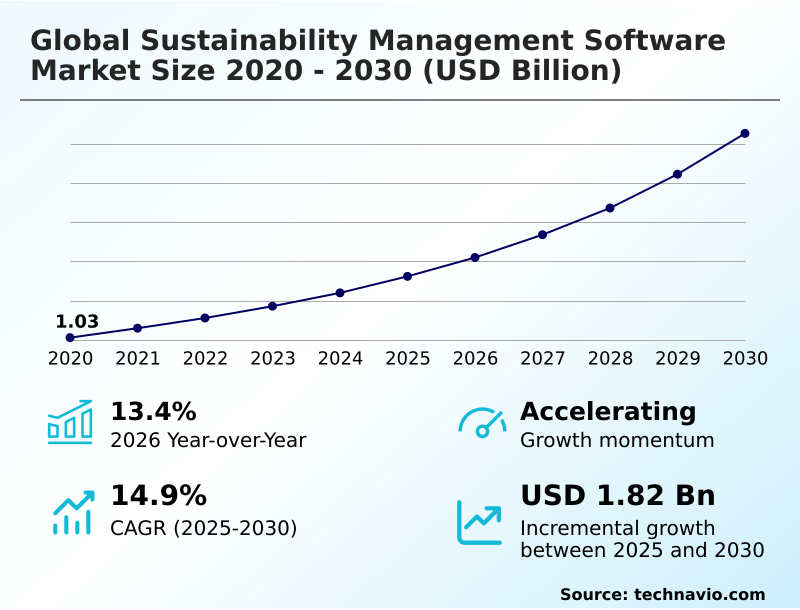
The sustainability management software market size is valued to increase by USD 1.82 billion, at a CAGR of 14.9% from 2025 to 2030. Regulatory compliance and industrialization of audit-ready reporting frameworks will drive the sustainability management software market.
Major Market Trends & Insights
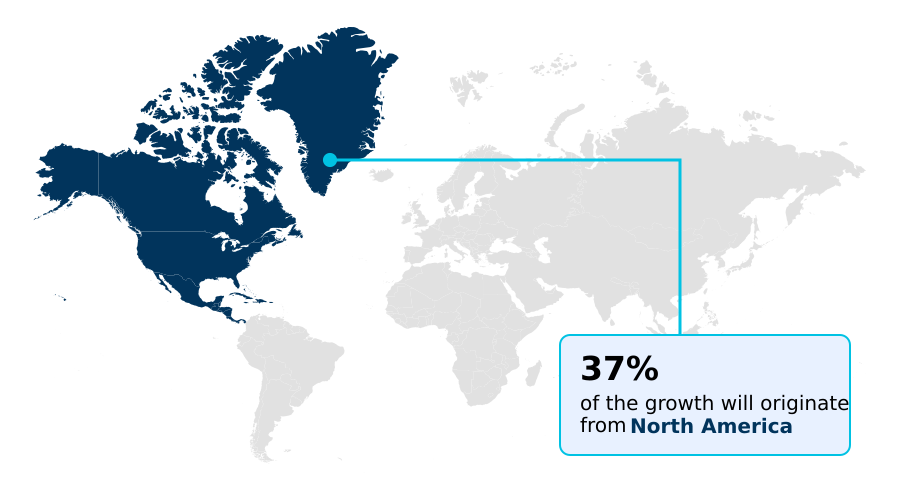
- North America dominated the market and accounted for a 36.9% growth during the forecast period.
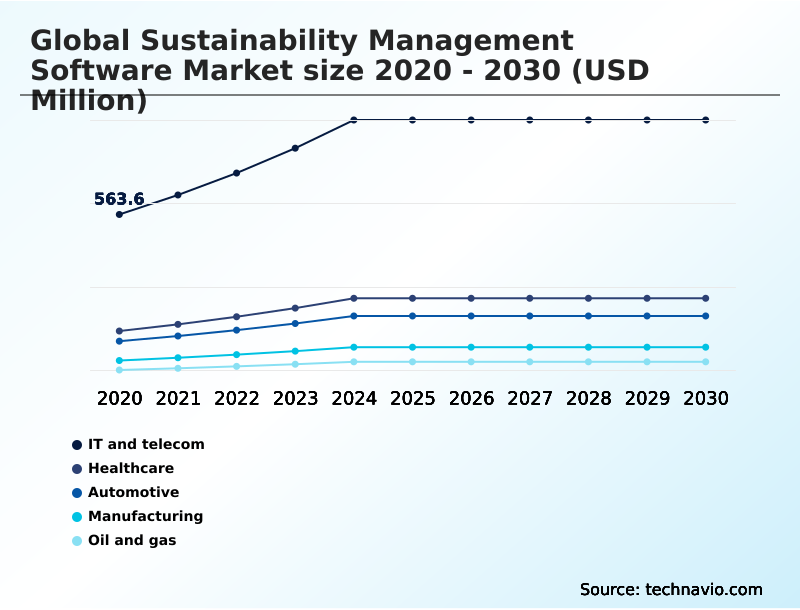
- By Application - IT and telecom segment was valued at USD 872.9 million in 2024
- By Deployment - Cloud segment accounted for the largest market revenue share in 2024
Market Size & Forecast
- Market Opportunities: USD 2.59 billion
- Market Future Opportunities: USD 1.82 billion
- CAGR from 2025 to 2030 : 14.9%
Market Summary
- The sustainability management software market is undergoing a transformative shift, moving beyond basic compliance to become a strategic engine for enterprise resilience. This evolution is driven by the urgent need for audit-ready reporting frameworks that satisfy mandates like the Corporate Sustainability Reporting Directive (CSRD).
- Organizations are now required to perform double materiality assessments and provide transparent climate risk disclosures, which necessitates sophisticated ESG data management. For instance, a multinational manufacturing firm utilizes a carbon accounting platform to automate its scope 3 emissions tracking across a fragmented global supply chain.
- By integrating life cycle assessment (LCA) tools, it calculates the product carbon footprint (PCF) for each SKU, preparing for the advent of digital product passports (DPP).
- This move from manual spreadsheets to an integrated ESG reporting platform not only ensures GHG protocol compliance but also provides actionable insights for decarbonization, demonstrating how sustainability performance tracking has become integral to core business strategy and competitive positioning.
What will be the Size of the Sustainability Management Software Market during the forecast period?
Get Key Insights on Market Forecast (PDF) Get Free Sample
How is the Sustainability Management Software Market Segmented?
The sustainability management software industry research report provides comprehensive data (region-wise segment analysis), with forecasts and estimates in "USD million" for the period 2026-2030, as well as historical data from 2020-2024 for the following segments.
- Application
- IT and telecom
- Healthcare
- Automotive
- Manufacturing
- Oil and gas
- Deployment
- Cloud
- On-premises
- Type
- Sustainability reporting and management
- Utility data management
- Carbon reporting and management
- Energy optimization
- Others
- Geography
- North America
- US
- Canada
- Mexico
- Europe
- Germany
- UK
- France
- APAC
- China
- Japan
- India
- South America
- Brazil
- Argentina
- Middle East and Africa
- Saudi Arabia
- UAE
- South Africa
- Rest of World (ROW)
- North America
By Application Insights
The it and telecom segment is estimated to witness significant growth during the forecast period.
The IT and telecom segment leverages specialized platforms to manage the significant energy demands of data centers and network infrastructures.
Organizations use corporate sustainability software for energy consumption monitoring and to manage the carbon footprint of high-density computing, tracking metrics like real-time power usage effectiveness. These tools support a decarbonization pathway analysis and facilitate a shift toward renewable energy.
Beyond energy, the software aids in managing the hardware lifecycle, including e-waste recycling rate tracking, and ensures supply chain sustainability solutions adhere to circular economy principles.
As 5G deployment grows, the demand for scalable, cloud-based sustainability performance tracking tools with AI-powered ESG reporting and predictive emissions modeling is rising.
This allows for seamless enterprise resource planning integration and helps leaders align infrastructure expansion with net-zero commitments, supporting environmental compliance software needs.
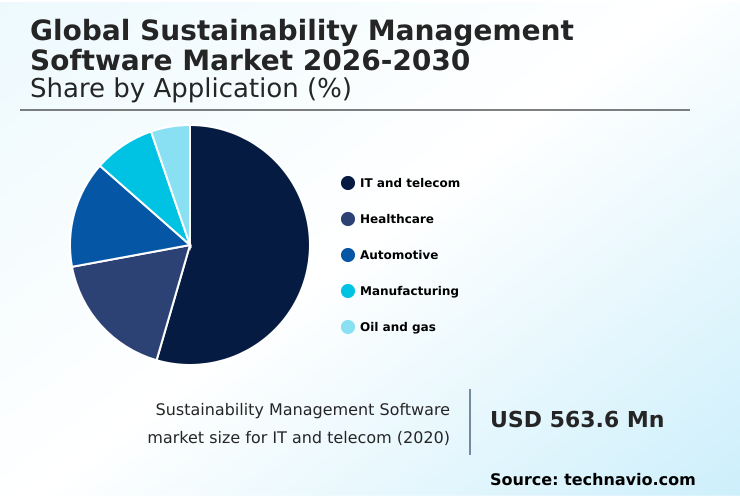
The IT and telecom segment was valued at USD 872.9 million in 2024 and showed a gradual increase during the forecast period.
Regional Analysis
North America is estimated to contribute 36.9% to the growth of the global market during the forecast period.Technavio’s analysts have elaborately explained the regional trends and drivers that shape the market during the forecast period.
See How Sustainability Management Software Market Demand is Rising in North America Get Free Sample
North America leads the global market, with a 36.9% share of the incremental growth, driven by a mature regulatory environment and intense investor pressure for ESG transparency.
Firms leverage corporate ESG platforms for GHG emissions calculation software and comprehensive climate risk disclosure. In Europe, which accounts for over 29% of the growth, mandates like the Carbon Border Adjustment Mechanism compel industries to adopt advanced compliance monitoring tools.
Software adoption is also high for managing supplier ESG scorecards and sustainable procurement software. The APAC region is the fastest-growing geography, where EHS management software is critical for tracking industrial outputs.
Across all regions, specialized modules for greenhouse gas emissions monitoring, methane leak detection, and water stewardship metrics are becoming standard as organizations use geospatial data analysis to refine their ESG risk management software strategies.
Market Dynamics
Our researchers analyzed the data with 2025 as the base year, along with the key drivers, trends, and challenges. A holistic analysis of drivers will help companies refine their marketing strategies to gain a competitive advantage.
- Organizations are increasingly adopting specialized platforms to address complex sustainability challenges, moving beyond simple data collection. A primary focus is finding effective software for scope 3 emissions data collection, as this represents the largest and most difficult portion of a company's carbon footprint.
- In parallel, CSRD compliance reporting software tools have become non-negotiable in Europe, compelling firms to enhance their data governance. The rise of AI for automated sustainability reporting is a critical enabler, reducing manual effort and improving accuracy. Another key area is digital product passport implementation software, which creates transparency at the SKU level.
- This is often linked to technology for life cycle assessment for product carbon footprint, giving consumers and regulators a clear view of a product's impact. For holistic risk management, firms are investing in TNFD reporting and biodiversity tracking platforms. A significant technical hurdle remains the process of integrating ESG data with ERP systems, a task essential for real-time decision-making.
- To manage value chain risks, companies are using supplier sustainability performance evaluation tools. The market also sees divergence in needs, with demand for the best sustainability software for manufacturing differing from the requirements of carbon accounting software for financial institutions. Other growing segments include software for real-time energy optimization and tools for managing climate risk with ESG software.
- Automation is a recurring theme, evident in solutions for automating double materiality assessments. The ultimate goal for many is to understand how to achieve audit-ready esg disclosures. This has led to a varied technology landscape, seen in the cloud vs on-premise esg software comparison, and the emergence of sustainability management software for smes.
- Finally, platforms are offering specific tools for tracking science-based targets and specialized ESG data platforms for private equity, alongside new tools for circular economy management and reporting on water stewardship metrics. Firms leveraging these integrated tools report a two-fold increase in the speed of responding to investor inquiries compared to those using siloed systems.
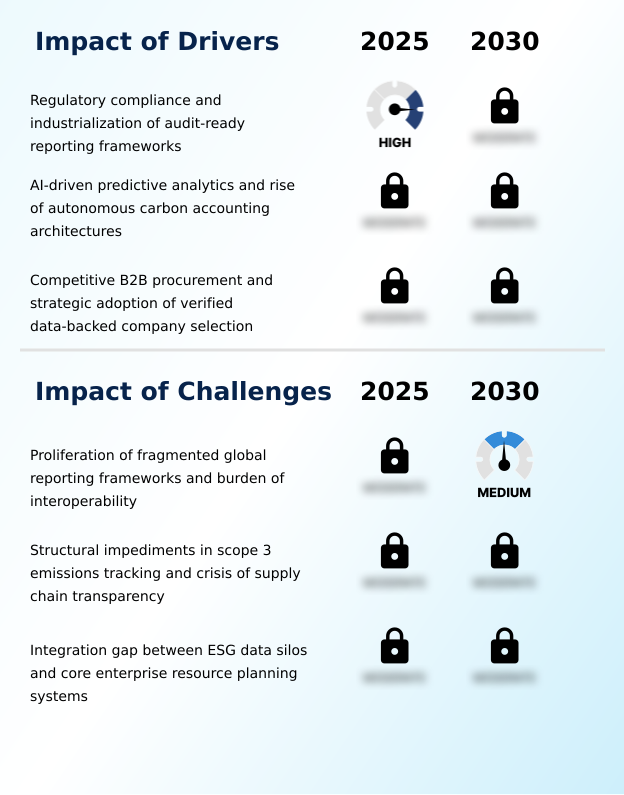
What are the key market drivers leading to the rise in the adoption of Sustainability Management Software Industry?
- The transition toward mandatory regulatory compliance and the industrialization of audit-ready reporting frameworks are the primary drivers propelling market growth.
- Regulatory mandates like the Corporate Sustainability Reporting Directive (CSRD) are a primary market driver, compelling firms to adopt corporate sustainability software for regulatory compliance automation. Automated ESG data collection has reduced manual data entry by over 60% for early adopters.
- A second key driver is the rise of AI-powered ESG reporting and autonomous carbon accounting, which transforms sustainability data analytics from a reactive tool to a predictive engine.
- These carbon accounting solutions enable deep decarbonization pathway analysis and use spend-based emission proxies to fill data gaps. The evolution of B2B procurement is a third driver, with buyers demanding verified data.
- Over 10,000 companies have validated targets with the Science Based Targets initiative (SBTi), making verified performance from utility data management software a competitive necessity and driving ESG data aggregation.
What are the market trends shaping the Sustainability Management Software Industry?
- The institutionalization of nature-related financial disclosures and the integration of biodiversity metrics into core enterprise reporting represent a structural market realignment.
- Market trends are shifting toward the institutionalization of nature-related financial disclosures, with platforms now incorporating biodiversity metrics and environmental DNA (eDNA) data. This move beyond carbon aligns with frameworks like the TNFD.
- The emergence of Digital Product Passports (DPP) is another key trend, with product sustainability tools now essential for cradle-to-gate emissions tracking; adoption of carbon footprint management software has helped firms reduce reporting errors by up to 25%.
- A third major trend is the expansion of the continuous digital audit twin, which provides an always-on system for governance and has been shown to improve compliance verification speeds by 40%. These autonomous systems help automate double materiality assessment and enhance carbon credit management, moving firms toward audit-ready reporting frameworks and a robust net-zero strategy platform.
What challenges does the Sustainability Management Software Industry face during its growth?
- The proliferation of fragmented global reporting frameworks and the resulting burden of interoperability pose a significant challenge to software implementation and adoption.
- A primary market challenge is the difficulty of accurate Scope 3 emissions tracking, with over 55% of enterprises citing unreliable supplier data as a key obstacle, hindering full GHG protocol compliance and requiring better supply chain transparency tools. A second challenge is the integration gap between specialized ESG platforms and legacy enterprise resource planning (ERP) systems.
- The demand for green ERP solutions is high, but the lack of standardized taxonomies impedes the flow of data for functions like life cycle assessment (LCA) and predictive emissions modeling. A third restraint is the fragmented global reporting landscape.
- While bodies like the International Sustainability Standards Board (ISSB) aim for harmony, regional variations complicate ESG metrics tracking, social impact reporting, and specialized EHS management software functions like e-waste recycling rate tracking.
Exclusive Technavio Analysis on Customer Landscape
The sustainability management software market forecasting report includes the adoption lifecycle of the market, covering from the innovator’s stage to the laggard’s stage. It focuses on adoption rates in different regions based on penetration. Furthermore, the sustainability management software market report also includes key purchase criteria and drivers of price sensitivity to help companies evaluate and develop their market growth analysis strategies.
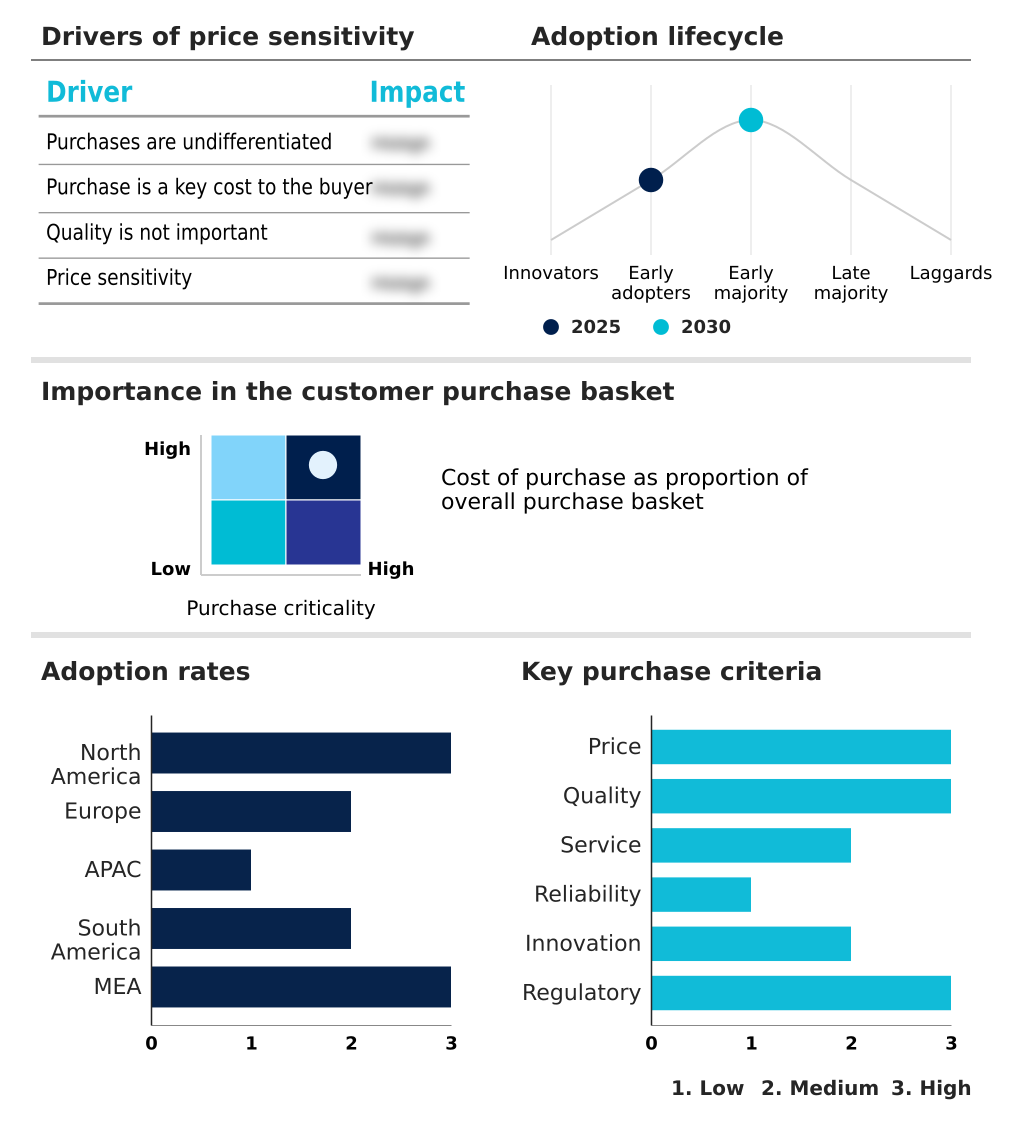
Customer Landscape of Sustainability Management Software Industry
Competitive Landscape
Companies are implementing various strategies, such as strategic alliances, sustainability management software market forecast, partnerships, mergers and acquisitions, geographical expansion, and product/service launches, to enhance their presence in the industry.
Benchmark Digital Partners LLC - Delivers unified software for ESG reporting, environmental compliance, and data-driven sustainability performance tracking to manage complex EHSQ requirements and ensure audit-readiness for enterprises.
The industry research and growth report includes detailed analyses of the competitive landscape of the market and information about key companies, including:
- Benchmark Digital Partners LLC
- Cority Software Inc.
- Diligent Corp.
- EcoVadis SAS
- Emitwise Ltd.
- IBM Corp.
- Intelex Technologies ULC
- Measurabl Inc.
- Microsoft Corp.
- NAVEX Global Inc.
- Novata Inc.
- OneTrust LLC
- Persefoni AI Inc.
- Salesforce Inc.
- SAP SE
- Sphera Solutions Inc.
- UL LLC
- VelocityEHS Holdings Inc.
- Wolters Kluwer NV
- Workiva Inc.
Qualitative and quantitative analysis of companies has been conducted to help clients understand the wider business environment as well as the strengths and weaknesses of key industry players. Data is qualitatively analyzed to categorize companies as pure play, category-focused, industry-focused, and diversified; it is quantitatively analyzed to categorize companies as dominant, leading, strong, tentative, and weak.
Recent Development and News in Sustainability management software market
- In August, 2024, SAP SE announced an update to its Sustainability Control Tower, integrating advanced AI for autonomous carbon accounting to help enterprises automate Scope 3 emissions calculations and scenario modeling.
- In November, 2024, Microsoft Corp. formed a strategic partnership with a leading geospatial data firm to integrate satellite-based biodiversity and land-use metrics into its Cloud for Sustainability, enhancing TNFD-aligned reporting capabilities.
- In February, 2025, Workiva Inc. launched its ESRS Transition Accelerator, a solution designed to help organizations navigate the updated Corporate Sustainability Reporting Directive (CSRD) by automating gap analysis and streamlining audit-ready disclosures.
- In May, 2025, Salesforce Inc. acquired a specialized Product Carbon Footprint (PCF) analytics startup, integrating its lifecycle assessment tools directly into the Net Zero Cloud to support digital product passport initiatives.
Dive into Technavio’s robust research methodology, blending expert interviews, extensive data synthesis, and validated models for unparalleled Sustainability Management Software Market insights. See full methodology.
| Market Scope | |
|---|---|
| Page number | 312 |
| Base year | 2025 |
| Historic period | 2020-2024 |
| Forecast period | 2026-2030 |
| Growth momentum & CAGR | Accelerate at a CAGR of 14.9% |
| Market growth 2026-2030 | USD 1819.4 million |
| Market structure | Fragmented |
| YoY growth 2025-2026(%) | 13.4% |
| Key countries | US, Canada, Mexico, Germany, UK, France, Italy, Spain, The Netherlands, China, Japan, India, South Korea, Australia, Indonesia, Brazil, Argentina, Chile, Saudi Arabia, UAE, South Africa, Israel and Turkey |
| Competitive landscape | Leading Companies, Market Positioning of Companies, Competitive Strategies, and Industry Risks |
Research Analyst Overview
- The sustainability management software market is maturing rapidly, driven by the need for enterprise-grade platforms that handle ESG data management and provide a clear decarbonization pathway analysis. At a boardroom level, decisions are now centered on achieving regulatory compliance automation for mandates like the Corporate Sustainability Reporting Directive (CSRD) and the Carbon Border Adjustment Mechanism.
- This requires a sophisticated carbon accounting platform capable of detailed scope 3 emissions tracking and life cycle assessment (LCA) to generate an accurate Product Carbon Footprint (PCF). The focus is shifting to autonomous carbon accounting and predictive emissions modeling, where an AI-powered ESG reporting system functions as a continuous digital audit twin.
- Leading firms have seen a 30% reduction in data validation errors by using such systems. This technology is crucial for adhering to standards from the International Sustainability Standards Board (ISSB) and the Science Based Targets initiative (SBTi). Furthermore, platforms must now integrate biodiversity metrics for TNFD reporting, manage carbon credit management, and support Digital Product Passports (DPP).
- This involves everything from methane leak detection and water stewardship metrics to e-waste recycling rate tracking and enterprise resource planning integration, all underpinned by GHG protocol compliance, geospatial data analysis, and robust supplier ESG scorecards for verifiable climate risk disclosure.
What are the Key Data Covered in this Sustainability Management Software Market Research and Growth Report?
-
What is the expected growth of the Sustainability Management Software Market between 2026 and 2030?
-
USD 1.82 billion, at a CAGR of 14.9%
-
-
What segmentation does the market report cover?
-
The report is segmented by Application (IT and telecom, Healthcare, Automotive, Manufacturing, and Oil and gas), Deployment (Cloud, and On-premises), Type (Sustainability reporting and management, Utility data management, Carbon reporting and management, Energy optimization, and Others) and Geography (North America, Europe, APAC, South America, Middle East and Africa)
-
-
Which regions are analyzed in the report?
-
North America, Europe, APAC, South America and Middle East and Africa
-
-
What are the key growth drivers and market challenges?
-
Regulatory compliance and industrialization of audit-ready reporting frameworks, Proliferation of fragmented global reporting frameworks and burden of interoperability
-
-
Who are the major players in the Sustainability Management Software Market?
-
Benchmark Digital Partners LLC, Cority Software Inc., Diligent Corp., EcoVadis SAS, Emitwise Ltd., IBM Corp., Intelex Technologies ULC, Measurabl Inc., Microsoft Corp., NAVEX Global Inc., Novata Inc., OneTrust LLC, Persefoni AI Inc., Salesforce Inc., SAP SE, Sphera Solutions Inc., UL LLC, VelocityEHS Holdings Inc., Wolters Kluwer NV and Workiva Inc.
-
Market Research Insights
- The market is defined by a shift from retrospective reporting to proactive, data-driven strategy. Organizations are adopting integrated platforms for ESG data aggregation and comprehensive sustainability performance tracking to meet complex regulatory demands. The use of environmental compliance software has enabled firms to align with new mandates, achieving a 95% audit-readiness rate within the first year of implementation.
- Meanwhile, carbon footprint management software is critical for developing a credible net-zero strategy platform, with automated GHG emissions calculation software reducing reporting cycle times by up to 40%.
- The demand for supply chain transparency tools is also surging as part of broader EHS management software ecosystems, with leading companies reporting a 15% improvement in identifying upstream risks through enhanced climate disclosure software.
We can help! Our analysts can customize this sustainability management software market research report to meet your requirements.
 RIA -
RIA - 
