



Switching Transformer Market Size 2024-2028
The switching transformer market size is forecast to increase by USD 407.4 million, at a CAGR of 3.7% between 2023 and 2028.
- The market is witnessing significant growth, driven by the increasing demand for these transformers in medical devices. The advancement of technology and the rising usage of medical equipment that require high power and precision have fueled this demand. Additionally, modernization and smart grid initiatives are creating new opportunities for switching transformers in various industries, including power generation and distribution. However, the market faces challenges due to fluctuations in the prices of raw materials, such as steel and copper. These materials are essential components of switching transformers, and their price volatility can impact the overall cost structure of the market.
- Companies must navigate this challenge by implementing efficient supply chain strategies and exploring alternative materials or manufacturing locations to mitigate the impact on their bottom line.
What will be the Size of the Switching Transformer Market during the forecast period?
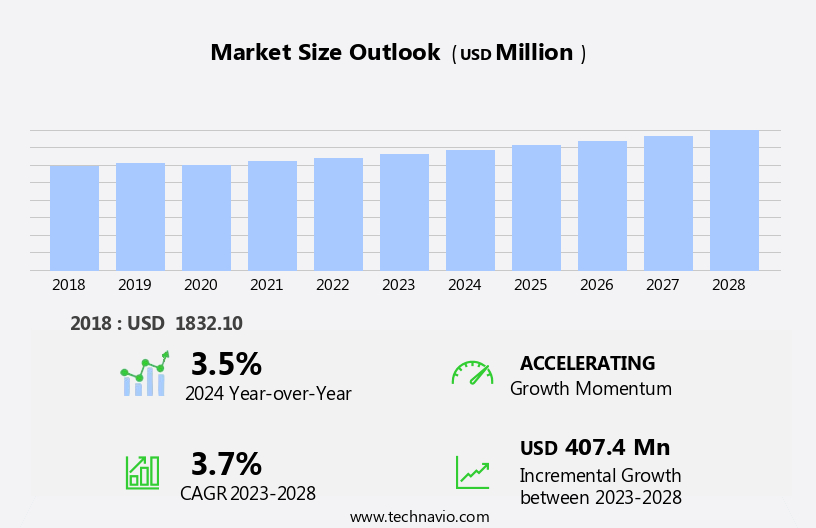
Explore in-depth regional segment analysis with market size data - historical 2018-2022 and forecasts 2024-2028 - in the full report.
Request Free Sample
The transformer market continues to evolve, driven by the dynamic interplay of various factors. Power factor correction and impedance management remain crucial considerations in optimizing power transmission efficiency. Transformer recycling is gaining traction as a sustainable solution for reducing waste and conserving resources. Step-down transformers find extensive applications in various sectors, including industrial automation, power distribution, and renewable energy. The transformer life cycle, from manufacturing to disposal, is a critical aspect of the market's sustainability narrative. Transformer monitoring and maintenance are essential for ensuring reliability and safety, with advanced technologies enabling real-time data analysis and predictive maintenance. Harmonics mitigation and voltage regulation are vital components of transformer design, particularly in the context of power electronics and smart grid applications.
Liquid-immersed transformers dominate the market, with cooling systems and transformer oil playing essential roles in their performance and longevity. Transformer regulations and standards continue to evolve, addressing safety, environmental, and efficiency concerns. Transformer selection and tap changer implementation are key decisions in power transmission systems, requiring careful consideration of various factors, including transformer sizing, efficiency, and application-specific requirements. Voltage regulation, transformer reactance, and isolation transformers are integral components of the power transmission infrastructure, ensuring stable and reliable power delivery. Transformer testing and commissioning are essential steps in ensuring optimal performance and longevity. Transformer losses, noise, protection, and insulation are critical aspects of transformer design and operation, with ongoing research and development aimed at improving efficiency and reducing environmental impact.
The transformer market's continuous evolution reflects the dynamic nature of the power industry, with applications spanning from industrial automation and power distribution to renewable energy and electric vehicles. The ongoing unfolding of market activities and evolving patterns underscores the importance of staying informed and adaptive in this ever-changing landscape.
How is this Switching Transformer Industry segmented?
The switching transformer industry research report provides comprehensive data (region-wise segment analysis), with forecasts and estimates in "USD million" for the period 2024-2028, as well as historical data from 2018-2022 for the following segments.
- Type
- Non-isolated transformers
- Isolated transformers
- Application
- Consumer electronics
- Industrial automation
- IT and telecommunication
- Others
- Geography
- North America
- US
- Canada
- Europe
- France
- Germany
- UK
- APAC
- Australia
- China
- India
- Japan
- South Korea
- Rest of World (ROW)
- North America
.
By Type Insights
The non-isolated transformers segment is estimated to witness significant growth during the forecast period.
The market is witnessing significant growth, particularly in the non-isolated transformer segment. These transformers, known for their simplicity, cost-effectiveness, and high efficiency, are ideal for low-power applications. They are commonly used in power supplies for consumer electronics and small appliances, where both cost and efficiency are crucial. The automotive industry's shift towards electric vehicles (EVs) is driving the demand for non-isolated transformers. They play a vital role in EV charging stations, enabling efficient power conversion for battery charging systems. In 2023, approximately 14 million electric cars were sold worldwide, with 90% of these sales taking place in China, Europe, and the US.
Transformer reliability and safety are essential considerations in power transmission. Transformers must adhere to strict regulations to ensure they operate efficiently and safely. Transformer monitoring and harmonics mitigation are crucial to maintain optimal performance and prevent potential issues. Three-phase transformers are widely used in power transmission and distribution, as well as in renewable energy applications. Transformer life cycle management, including maintenance, testing, and recycling, is increasingly important to minimize downtime and reduce environmental impact. Transformer cooling and insulation are essential aspects of design, ensuring the transformer operates at optimal temperature and prevents electrical insulation failure. Transformer selection, sizing, and installation are critical factors in power distribution applications.
Power factor correction and voltage regulation are essential to maintain efficient power transmission. Transformer tap changers and current regulation are used to adjust voltage levels and maintain power quality. Power electronics and industrial automation applications rely on transformers for various functions, including current regulation, isolation, and power conversion. Transformer bushings and winding are essential components in transformer design and manufacturing. High-voltage applications require specialized transformers, such as liquid-immersed and dry-type transformers, to ensure safety and efficiency. Smart grid integration and transformer efficiency are key trends in the market, with transformer standards and regulations evolving to accommodate these advancements. Transformer protection and noise reduction are essential considerations in transformer design and operation.
Transformer oil, a crucial component in liquid-immersed transformers, is subject to strict regulations to ensure safety and environmental sustainability. Transformer commissioning and testing are essential to ensure proper functioning and prevent potential issues. Transformer losses, including core and winding losses, are a significant concern in transformer design and operation. Minimizing these losses is essential to maintain efficiency and reduce operating costs. Variable transformers and transformer regulation are used to optimize power output and maintain voltage stability. In conclusion, the market is dynamic and evolving, driven by various factors such as the increasing demand for EVs, the shift towards renewable energy, and the need for efficient power transmission and distribution.
Transformers play a vital role in various industries, from consumer electronics to power transmission and distribution, and their design, manufacturing, and operation must adhere to strict regulations and standards to ensure safety, reliability, and efficiency.
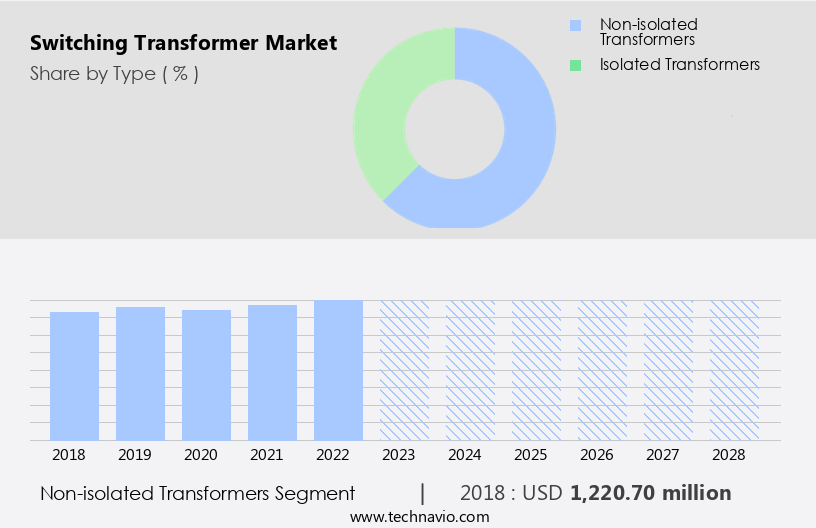
The Non-isolated transformers segment was valued at USD 1220.70 million in 2018 and showed a gradual increase during the forecast period.
Regional Analysis
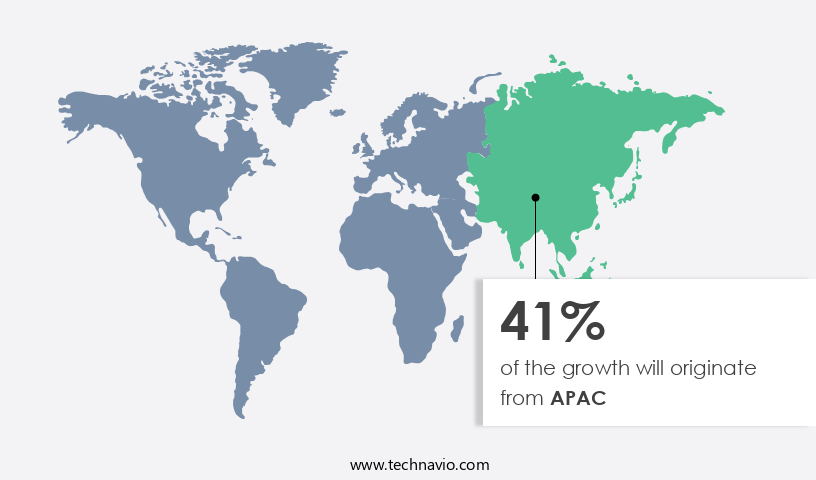
APAC is estimated to contribute 41% to the growth of the global market during the forecast period.Technavio's analysts have elaborately explained the regional trends and drivers that shape the market during the forecast period.
The market is experiencing significant growth, particularly in the APAC region, with India emerging as a key player. Rapid industrial expansion in sectors such as automobiles, food and beverage, pharmaceuticals, data centers, and textiles is driving the demand for efficient and reliable power solutions. Mitsubishi Electric's recent investment in a new manufacturing facility in Maharashtra, India, is a testament to this trend. Transformers play a crucial role in power transmission and distribution, ensuring voltage regulation, current regulation, and power factor correction. They come in various types, including step-down and step-up transformers, three-phase transformers, and isolation transformers.
Transformer life cycle management, monitoring, and maintenance are essential to ensure their reliability and safety. Transformer design and manufacturing considerations include transformer impedance, reactance, winding, core, bushings, and insulation. Transformer regulations and standards ensure safety and efficiency, while harmonics mitigation and cooling systems address specific challenges. Transformers are also used in renewable energy applications, power electronics, and industrial automation. Transformer tap changers and voltage regulation systems enable adjustments to meet varying power requirements. Transformer testing and commissioning are crucial to ensure optimal performance. Transformer recycling and oil reuse are important sustainability initiatives. Electric vehicles and data centers are emerging applications for transformers, adding to the market's diversity.
Transformer efficiency and losses are critical factors in evaluating their overall performance. The market's future trends include smart grid integration, variable transformers, and transformer regulation technologies.
Market Dynamics
Our researchers analyzed the data with 2023 as the base year, along with the key drivers, trends, and challenges. A holistic analysis of drivers will help companies refine their marketing strategies to gain a competitive advantage.
What are the key market drivers leading to the rise in the adoption of Switching Transformer Industry?
- The rising demand for switching transformers in the medical devices sector serves as the primary market driver.
- The market is experiencing notable growth due to the increasing demand for advanced technology in various industries, particularly in medical devices. Switching transformers play a crucial role in providing efficient and reliable power conversion, ensuring the safe and effective operation of sensitive medical equipment. Their ability to handle high-frequency switching makes them ideal for compact and lightweight designs, which are essential for portable and space-constrained medical applications. One of the primary advantages of switching transformers in industrial automation and power distribution is their excellent isolation and protection against electrical noise. This feature is vital for maintaining the accuracy and reliability of various applications, including medical diagnostics and treatments, by preventing interference that could compromise equipment performance.
- Additionally, transformer sizing and design have become increasingly important to optimize transformer efficiency and reduce energy losses in high-voltage applications. Variable transformers, a type of switching transformer, have gained popularity due to their ability to regulate output voltage and frequency, making them suitable for various applications in industrial automation and power distribution. Transformer bushings, an essential component of transformer design, ensure proper insulation and prevent electrical leakage. The transformer core, another critical component, is designed to minimize energy losses and improve overall transformer efficiency. In conclusion, The market is expected to continue growing due to the increasing demand for efficient and reliable power conversion solutions in various industries, including medical devices, industrial automation, and power distribution.
- The ability of switching transformers to handle high-frequency switching, provide excellent isolation and protection against electrical noise, and optimize transformer efficiency make them an indispensable component in modern technology applications.
What are the market trends shaping the Switching Transformer Industry?
- The trend in the market is shifting towards modernization and the implementation of smart grid initiatives. These initiatives encompass advanced technologies and systems designed to improve the efficiency, reliability, and sustainability of power grids.
- The market is experiencing notable expansion due to extensive modernization initiatives and the integration of smart grid technologies. A significant catalyst for this growth is the U.S. Department of Energy's Smart Grid Grants program, launched in 2021, which aims to improve grid flexibility, efficiency, and reliability by investing up to USD3 billion by 2026. This investment focuses on advanced technologies and solutions that strengthen grid resilience. Another supporting program is the Grid Resilience and Innovation Partnerships (GRIP) Program, announced in November 2023, which offers up to USD3 billion in funding to further enhance grid infrastructure.
- These programs emphasize the importance of power factor correction, transformer impedance, and transformer harmonics to ensure optimal power transmission and transformer reliability. Transformer tap changers and transformer monitoring systems are essential components of these modern grid systems, ensuring transformer safety and longevity. Additionally, transformer recycling plays a crucial role in minimizing environmental impact and reducing resource consumption throughout the transformer life cycle.
What challenges does the Switching Transformer Industry face during its growth?
- The volatile pricing of raw materials poses a significant challenge to the industry's growth trajectory.
- The market experiences volatility due to fluctuating raw material prices, particularly steel. Between 2015 and 2023, steel prices averaged USD 452 per ton and peaked at USD 1,612 per ton, demonstrating significant price swings. The initial demand decline during the COVID-19 pandemic resulted in a drop in prices. However, a rapid recovery in late 2021 caused prices to surge, with supply struggling to meet renewed demand. Geopolitical events, such as the war in Ukraine, have also impacted the market, causing panic over pig iron supplies and historic price spikes. Transformer regulations, including voltage regulation and harmonics mitigation, play a crucial role in the market's growth.
- The increasing adoption of renewable energy sources and the rise of electric vehicles necessitate advanced transformer technologies. Three-phase transformers and step-up transformers are in high demand for data centers and other large-scale power applications. Transformer cooling systems are also essential for ensuring efficient and reliable performance. Transformer maintenance is a critical aspect of the market, with regular inspections and repairs necessary to maintain optimal performance and extend the life of transformers. Isolation transformers are used to prevent electrical interference and ensure power quality. In conclusion, the market faces challenges from raw material price volatility but continues to grow due to the increasing demand for advanced transformer technologies in various industries, including renewable energy, electric vehicles, and data centers.
- Proper transformer maintenance and regulatory compliance are essential for ensuring the reliability and efficiency of these critical power components.
Exclusive Customer Landscape
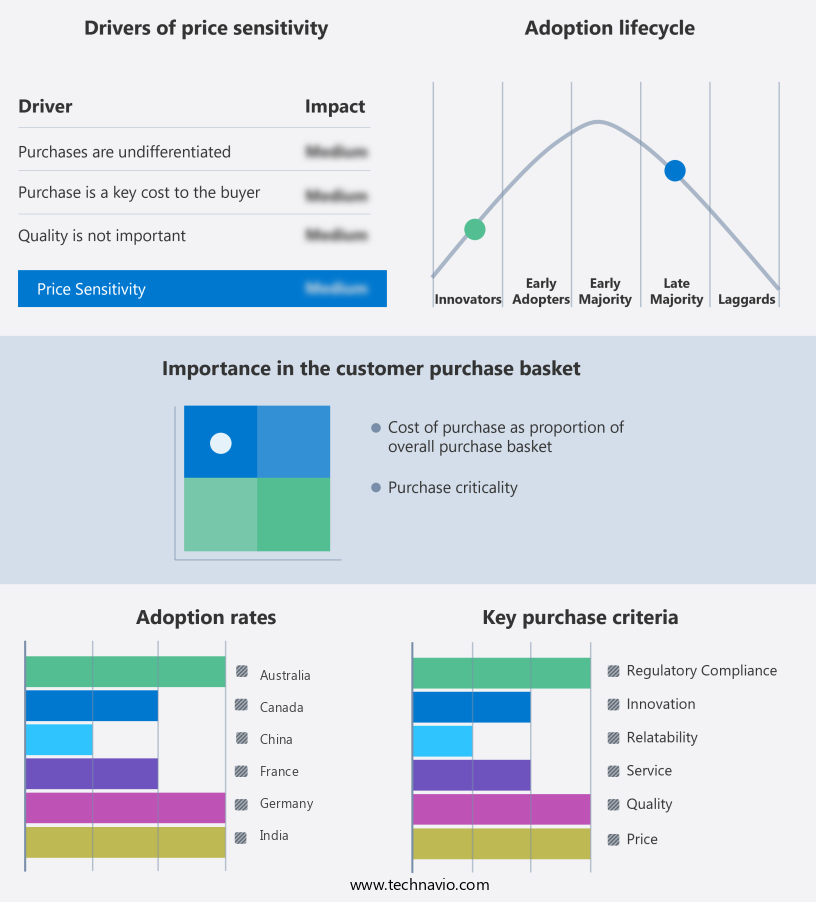
The switching transformer market forecasting report includes the adoption lifecycle of the market, covering from the innovator's stage to the laggard's stage. It focuses on adoption rates in different regions based on penetration. Furthermore, the switching transformer market report also includes key purchase criteria and drivers of price sensitivity to help companies evaluate and develop their market growth analysis strategies.
Customer Landscape
Key Companies & Market Insights
Companies are implementing various strategies, such as strategic alliances, switching transformer market forecast, partnerships, mergers and acquisitions, geographical expansion, and product/service launches, to enhance their presence in the industry.
Badger Magnetics Inc - This company specializes in the production of custom-designed switching transformers for medical applications.
The industry research and growth report includes detailed analyses of the competitive landscape of the market and information about key companies, including:
- Badger Magnetics Inc
- BHOOMI ELECTRONICS
- Coilcraft Inc
- Custom Coils
- Dezhou Sanhe Electric Co Ltd
- FCW Technologies
- G.K Electronics
- Getwell Electronic HUIZHOUCO Ltd
- GT elektronik GmbH and Co. KG
- HangTung electronic co. LTD
- Miracle Electronics Devices Pvt. Ltd.
- Parker Overseas Pvt Ltd
- Shaanxi Gold-Stone Electronics Co. Ltd.
- Shah Electronics
- SHIVANI TRANSFORMERS
- Triple M Auto Electronics Private Limited
- Vijaya Electronics
- Vritti Associates
- West Coast Magnetics
Qualitative and quantitative analysis of companies has been conducted to help clients understand the wider business environment as well as the strengths and weaknesses of key industry players. Data is qualitatively analyzed to categorize companies as pure play, category-focused, industry-focused, and diversified; it is quantitatively analyzed to categorize companies as dominant, leading, strong, tentative, and weak.
Recent Development and News in Switching Transformer Market
- In March 2024, Siemens Energy announced the launch of its new 125 MVA, 550 kV AirCore EHV transformer, setting a new industry standard for large power transformers with enhanced efficiency and reduced environmental impact (Siemens Energy press release, 2024).
- In July 2024, ABB and Hitachi Energy formed a strategic partnership to jointly develop and market gas-insulated switchgear and transformer solutions, aiming to strengthen their positions in the global power transmission market (ABB press release, 2024).
- In October 2024, General Electric (GE) completed the acquisition of Bharat Heavy Electricals Limited's (BHEL) power transformer business, expanding GE's footprint in the Indian power sector and enhancing its product portfolio (GE press release, 2024).
- In February 2025, the European Union (EU) announced a â¬3 billion investment in grid infrastructure and energy storage solutions, including the deployment of advanced switching transformers to improve the efficiency and resilience of the EU power grid (European Commission press release, 2025).
Research Analyst Overview
- The transformer industry is witnessing significant advancements in technology and regulations, with transformer efficiency standards gaining prominence to reduce energy losses and minimize environmental impact. Transformer manufacturers are innovating to meet these standards, introducing high-performance transformers with improved ratings and capacity. Simultaneously, transformer repair and maintenance practices are evolving, with a focus on transformer lifecycle management and condition assessment to ensure optimal performance and extend asset life. Transformer fault protection and overcurrent protection systems are becoming essential to prevent downtime and ensure grid reliability. Transformers with advanced monitoring systems enable real-time data analysis, facilitating predictive maintenance and proactive replacement.
- The transformer market is witnessing a shift towards transformer replacement with new, more efficient models, driven by the need for increased capacity and cost savings. Transformer trends include the integration of renewable energy sources and the adoption of smart grid technologies, necessitating transformers with higher KVA ratings and advanced surge protection capabilities. Transformer grounding practices are also under scrutiny, with a focus on reducing ground faults and improving safety. The transformer industry's future outlook is promising, with continued investment in research and development and a growing demand for sustainable, efficient transformer solutions.
Dive into Technavio's robust research methodology, blending expert interviews, extensive data synthesis, and validated models for unparalleled Switching Transformer Market insights. See full methodology.
|
Market Scope |
|
|
Report Coverage |
Details |
|
Page number |
198 |
|
Base year |
2023 |
|
Historic period |
2018-2022 |
|
Forecast period |
2024-2028 |
|
Growth momentum & CAGR |
Accelerate at a CAGR of 3.7% |
|
Market growth 2024-2028 |
USD 407.4 million |
|
Market structure |
Fragmented |
|
YoY growth 2023-2024(%) |
3.5 |
|
Key countries |
US, China, India, Germany, Japan, UK, South Korea, Canada, France, and Australia |
|
Competitive landscape |
Leading Companies, Market Positioning of Companies, Competitive Strategies, and Industry Risks |
What are the Key Data Covered in this Switching Transformer Market Research and Growth Report?
- CAGR of the Switching Transformer industry during the forecast period
- Detailed information on factors that will drive the growth and forecasting between 2024 and 2028
- Precise estimation of the size of the market and its contribution of the industry in focus to the parent market
- Accurate predictions about upcoming growth and trends and changes in consumer behaviour
- Growth of the market across APAC, North America, Europe, Middle East and Africa, and South America
- Thorough analysis of the market's competitive landscape and detailed information about companies
- Comprehensive analysis of factors that will challenge the switching transformer market growth of industry companies
We can help! Our analysts can customize this switching transformer market research report to meet your requirements.
 RIA -
RIA - 
