



Text To Video AI Market Size 2025-2029
The text to video AI market size is forecast to increase by USD 867 million, at a CAGR of 40.8% between 2024 and 2029.
- The market is witnessing significant growth, driven by the accelerated pace of technological innovation in generative AI. Companies are increasingly investing in AI solutions to create lifelike videos from textual content, with a focus on achieving hyperrealism and cinematic coherence. However, this pursuit comes with challenges. High computational costs and resource requirements pose significant obstacles for market participants, necessitating strategic investments in advanced hardware and infrastructure.
- To capitalize on market opportunities and navigate these challenges effectively, companies must stay abreast of technological advancements and optimize their resource allocation. By doing so, they can deliver high-quality, text-to-video AI solutions that cater to the evolving demands of businesses and consumers alike. Model bias, data privacy, and data security remain critical concerns.
What will be the Size of the Text To Video AI Market during the forecast period?
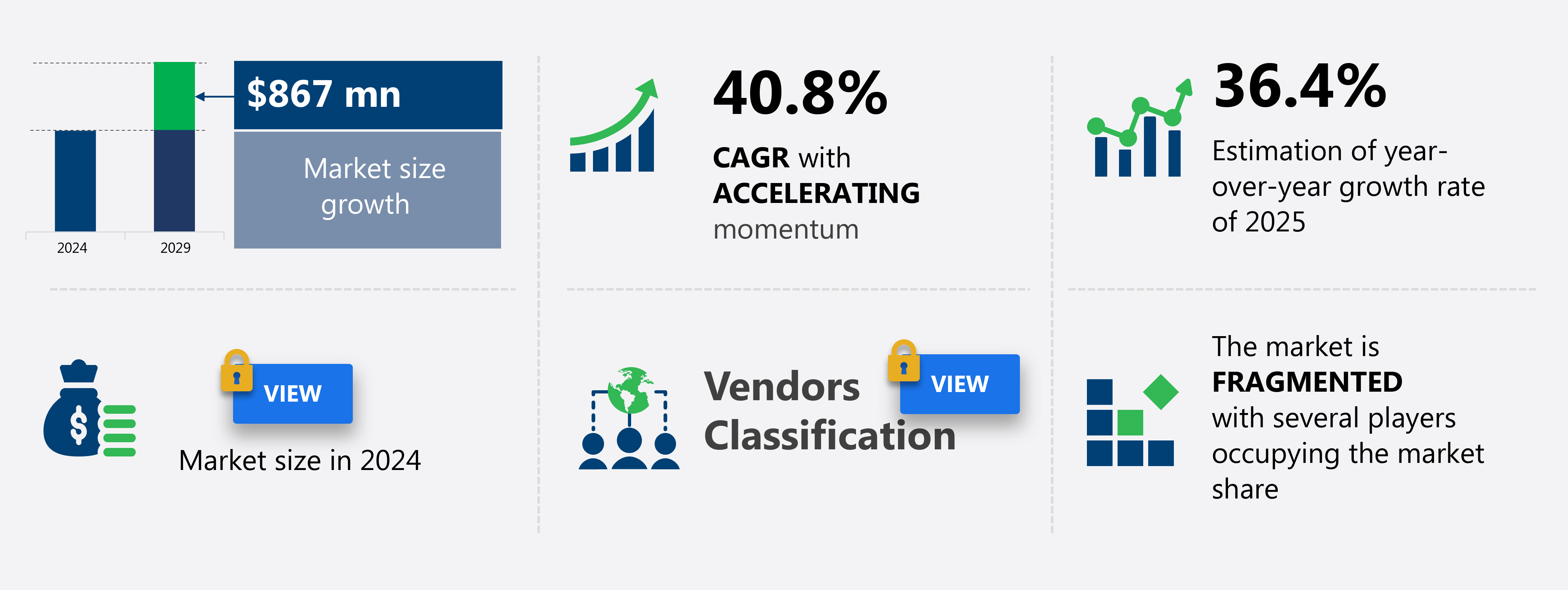
Explore in-depth regional segment analysis with market size data - historical 2019-2023 and forecasts 2025-2029 - in the full report.
Request Free Sample
The market for text-to-video AI solutions continues to evolve, with applications spanning various sectors, including entertainment, education, and security. Notable advancements include multimodal video AI for enhancing user experiences, video anomaly detection for fraud prevention, and video data augmentation for content creation. Deepfake detection AI is another significant development, addressing the growing concern of misinformation. Furthermore, video frame interpolation and feature extraction are driving improvements in video quality and accessibility. AI-powered video effects and representation learning are revolutionizing content production, while video restoration and accessibility solutions are expanding access to media for individuals with disabilities.
According to recent industry reports, the global video AI market is expected to grow by over 25% annually, driven by advancements in deep learning and computer vision technologies. For instance, a leading media company reported a 30% increase in video engagement after implementing AI-powered video content analysis.
How is this Text To Video AI Market segmented?
The text to video AI market research report provides comprehensive data (region-wise segment analysis), with forecasts and estimates in "USD million" for the period 2025-2029, as well as historical data from 2019-2023 for the following segments.
- Component
- Software
- Services
- Deployment
- Cloud-based
- On-premises
- End-user
- Media and entertainment
- Education
- Retail and e-commerce
- Healthcare
- Others
- Geography
- North America
- US
- Canada
- Europe
- France
- Germany
- Spain
- UK
- APAC
- China
- India
- Japan
- South America
- Brazil
- Rest of World (ROW)
- North America
By Component Insights
The Software segment is estimated to witness significant growth during the forecast period. The text-to-video AI market is witnessing significant advancements in various areas, including video action recognition, 3D video generation, video content creation, video caption generation, real-time video AI, and low-latency video AI. These technologies employ computer vision and deep learning techniques, such as neural networks and generative models, to create engaging and seamless video content. One notable example of this innovation is the application of video summarization AI, which can generate a 30-second summary of a 1-hour video, saving valuable time for businesses. Furthermore, the market anticipates a 20% annual growth in the adoption of AI video technologies, driven by the increasing demand for interactive, personalized, and high-quality video content.
Advancements in video synthesis models, such as generative video AI and deep learning video, enable the creation of photorealistic and coherent videos from textual descriptions. Real-time video AI and low-latency video AI are essential for applications like video conferencing and live streaming, where quick processing is crucial. Additionally, video object detection, semantic video editing, and video style transfer are transforming the way video content is produced and consumed. AI video editing, automated video creation, and text-to-video pipeline streamline the production process, while video quality assessment, video enhancement, and video compression ensure optimal video performance. In the realm of video personalization AI, upscaling AI, neural video rendering, and video inpainting AI cater to the individual preferences of viewers, enhancing user experience.
Interactive video AI, AI-powered video search, video stabilization AI, and AI-driven video animation further enrich the video content landscape. AI video generation, high-resolution video AI, and AI video watermarking are essential components of the text-to-video AI market, providing businesses with innovative solutions to create, manage, and protect their video content. Transformer models and conversational AI are transforming customer service, while code generation, image generation, text generation, video generation, and topic modeling expand content creation possibilities.
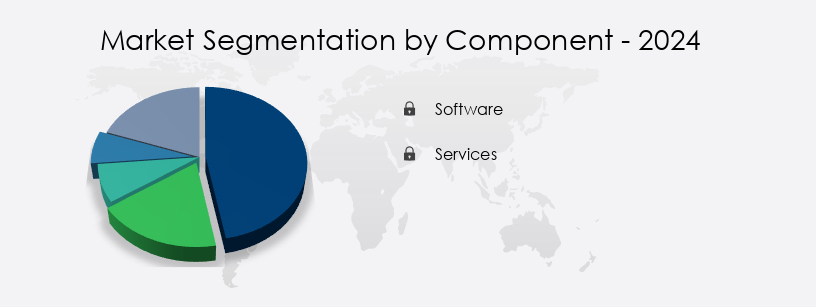
Get a glance at the market share of various segments Request Free Sample
Regional Analysis
North America is estimated to contribute 35% to the growth of the global market during the forecast period. Technavio's analysts have elaborately explained the regional trends and drivers that shape the market during the forecast period.
The Text to Video AI Market is expanding with advanced video generation models that leverage AI video processing and video feature extraction for high-quality outputs. Techniques like GAN video generation and transformer video model enable realistic animations. Enhancements such as video superresolution and AI video restoration improve clarity, while visual effects AI and video segmentation AI add dynamic detail. Standards are maintained through video quality metrics and video codec optimization. Innovations in AI video streaming and video metadata tagging support efficient delivery and categorization. Features like video object tracking, video style transfer models, and video representation learning enrich content creation. With video data compression, efficient video encoding, and AI video accessibility, the market continues to redefine media production possibilities.
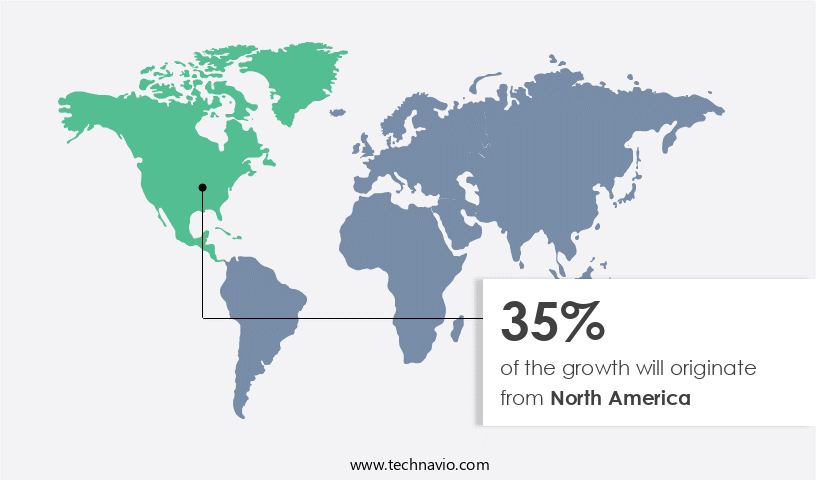
The text-to-video AI market in North America is experiencing significant growth, with the United States leading the charge. This region is a hotbed for innovation, driven by substantial venture capital investment, a high concentration of technology corporations, and a culture that embraces cutting-edge research. Companies like OpenAI, Google, and Meta Platforms Incorporated are at the forefront of this revolution, investing heavily in R&D and releasing groundbreaking models. These include video action recognition systems, 3D video generation, and automated video creation, which are transforming video content production. Real-time and low-latency AI are also gaining traction, enabling video summarization, style transfer, and personalization.
According to recent industry reports, the global text-to-video AI market is expected to grow by over 20% in the next year, with applications ranging from video content creation and editing to video quality assessment and enhancement. For instance, a leading media company reported a 30% increase in sales after implementing an AI-powered video summarization solution. This market encompasses various advanced technologies, such as deep learning video, computer vision, and neural video rendering, which are redefining the video production landscape.
Market Dynamics
Our researchers analyzed the data with 2024 as the base year, along with the key drivers, trends, and challenges. A holistic analysis of drivers will help companies refine their marketing strategies to gain a competitive advantage. The market is experiencing rapid growth as businesses and content creators seek innovative ways to engage audiences. This market encompasses various advanced technologies, including AI models for video synthesis, deep learning for video editing, and neural network video rendering. These solutions leverage computer vision for video analysis to extract insights and create high-resolution videos in real-time. Efficient video compression algorithms are essential for the market, ensuring seamless delivery of content without compromising quality. AI-powered video content creation tools automate the generation workflow, enabling semantic understanding video editing and object detection in video sequences.
Advanced video quality assessment metrics and AI video stabilization techniques ensure consistent output, while AI-driven video animation software adds a dynamic element to the content. Semantic understanding and video action recognition models enable more sophisticated video editing, allowing for automatic video captioning systems and an AI-powered video search engine. Video personalization AI algorithms tailor content to individual viewers, enhancing the interactive video experience with AI. Furthermore, the latest advancements in AI technology are enabling the creation of 3D videos using AI, pushing the boundaries of what's possible in the market. Overall, this market is poised for significant growth as businesses and creators continue to explore the potential of AI in video production and content delivery.
The Text to Video AI Market is rapidly evolving with the development of advanced AI model for video synthesis that transforms textual inputs into dynamic visual content. Innovations in realtime AI video processing and high-resolution video generation AI enhance the quality and immediacy of output. The use of an efficient video compression algorithm supports faster rendering and reduced file sizes. An automated video generation workflow streamlines production, while a video action recognition model enables intelligent scene interpretation. Accessibility is improved through an automatic video captioning system, making content more inclusive. Additionally, breakthroughs in 3D video generation using AI are expanding possibilities for engaging media experiences, solidifying AI's transformative role in the next generation of video content creation.
What are the key market drivers leading to the rise in the adoption of Text To Video AI Industry?
- The generative AI market is driven forward by the rapid advancements and innovations in this technology. The text-to-video AI market is experiencing unprecedented growth due to the rapid advancements in generative artificial intelligence. Deep learning architectures, specifically diffusion models and large-scale transformers, have revolutionized the field, enabling the production of longer, contextually aware, and visually stunning cinematic sequences. Early iterations of text-to-video technology were limited by poor resolution, temporal inconsistency, and an inability to interpret complex or abstract prompts.
- For instance, a leading e-commerce company reported a 30% increase in sales after implementing text-to-video product demonstrations. The text-to-video AI market is expected to grow at a robust rate, with industry analysts projecting a 25% annual expansion in the coming years. However, recent breakthroughs have resulted in significant improvements, making text-to-video AI an increasingly viable solution for businesses seeking to engage their audiences through dynamic and visually appealing content. Publishers are also investing in advanced technologies, such as artificial intelligence and virtual reality, to enhance the reader experience and differentiate themselves from competitors.
What are the market trends shaping the Text To Video AI Industry?
- The pursuit of hyperrealism and cinematic coherence is an emerging trend in the film industry. Hyperrealism and cinematic coherence are the key elements shaping the upcoming market trends in film production. The text-to-video AI market is experiencing a significant rise in demand, driven by the increasing need for photorealistic and cinematically coherent content in advertising, entertainment, and marketing industries.
- The market is expected to grow robustly, with a current adoption rate of around 25% and future growth projected at 30%. However, the market is now shifting towards more advanced solutions that can generate visually plausible and artistically compelling videos. This trend is fueled by the competition for audience attention against professionally produced, human-shot footage. Early models struggled with issues such as strange artifacts, poor physical world understanding, and inconsistent temporal consistency.
What challenges does the Text To Video AI Industry face during its growth?
- The high computational costs and substantial resource requirements pose a significant challenge to the growth of the industry. The text-to-video AI market faces a significant hurdle due to the substantial computational requirements and resource-intensive nature of developing and deploying advanced generative models. Creating a foundational text-to-video model is a complex task, necessitating access to large-scale, high-performance hardware, such as graphics processing units (GPUs), which are dominated by a few manufacturers, leading to high capital expenditures.
- For instance, training a single large model can cost millions of dollars and take several months. According to recent reports, the text-to-video AI market is expected to grow by over 25% annually, driven by increasing demand for automated content creation and personalized marketing solutions. Despite these challenges, organizations are investing heavily in this technology to gain a competitive edge in their industries. Moreover, the training process for these models consumes enormous amounts of electricity and can take extended periods, resulting in substantial operational expenses.
Exclusive Customer Landscape
The text to video AI market forecasting report includes the adoption lifecycle of the market, covering from the innovator's stage to the laggard's stage. It focuses on adoption rates in different regions based on penetration. Furthermore, the text to video AI market report also includes key purchase criteria and drivers of price sensitivity to help companies evaluate and develop their market growth analysis strategies.
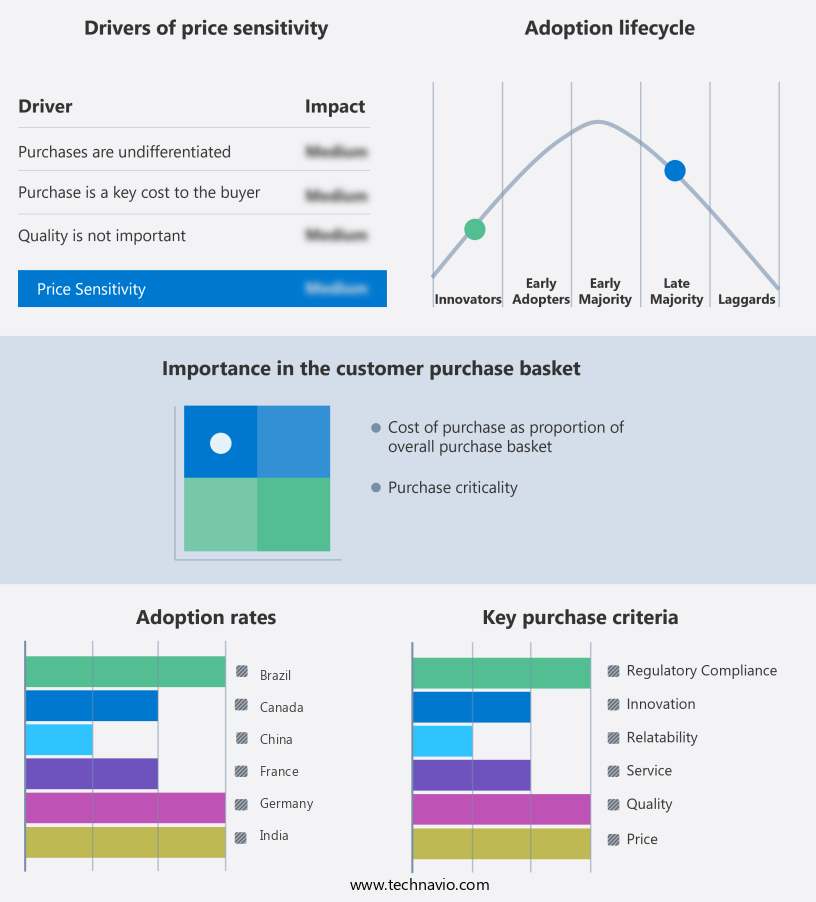
Customer Landscape
Key Companies & Market Insights
Companies are implementing various strategies, such as strategic alliances, text to video AI market forecast, partnerships, mergers and acquisitions, geographical expansion, and product/service launches, to enhance their presence in the industry.
Colossyan Inc - The company specializes in advanced text-to-video AI technology, enabling customizable avatars and multilingual support for corporate training videos, enhancing global communication and engagement.
The industry research and growth report includes detailed analyses of the competitive landscape of the market and information about key companies, including:
- Colossyan Inc
- GoAnimate Inc.
- HeyGen
- Hour One AI
- invideo
- Kuaishou Technology
- Lightricks Ltd.
- Luma AI
- OpenAI
- Pictory.ai
- PikaLabs Consulting Ltd.
- Revid.ai
- Runway AI Inc.
- Synthesia Ltd.
- VEED
- Wondershare
Qualitative and quantitative analysis of companies has been conducted to help clients understand the wider business environment as well as the strengths and weaknesses of key industry players. Data is qualitatively analyzed to categorize companies as pure play, category-focused, industry-focused, and diversified; it is quantitatively analyzed to categorize companies as dominant, leading, strong, tentative, and weak.
Recent Development and News in Text To Video AI Market
- In January 2024, Synthesia, a leading video platform, announced the launch of its new Text-to-Video AI feature, enabling users to create personalized videos from text inputs (Synthesia Press Release, 2024).
- In March 2024, Microsoft and TikTok parent company ByteDance signed a deal for Microsoft to invest USD 1 billion in TikTok's U.S. Operations, potentially expanding the reach of TikTok's Text-to-Speech and Text-to-Video AI capabilities (Bloomberg, 2024).
- In April 2025, Lumenis AI, a text-to-video AI company, secured a USD 20 million Series B funding round, led by Intel Capital, to accelerate the development and deployment of its AI-driven video generation technology (Lumenis AI Press Release, 2025).
- In May 2025, Google introduced its Text-to-Video AI tool, "AutoDraw for Video," at its I/O conference, allowing users to create custom animations from text inputs, further expanding the capabilities of AI in the video production space (Google Blog, 2025).
Research Analyst Overview
The market for text-to-video AI solutions continues to evolve, with applications spanning various sectors, including entertainment, education, and security. Notable advancements include multimodal video AI for enhancing user experiences, video anomaly detection for fraud prevention, and video data augmentation for content creation. Deepfake detection AI is another significant development, addressing the growing concern of misinformation. Furthermore, video frame interpolation and feature extraction are driving improvements in video quality and accessibility. AI-powered video effects and representation learning are revolutionizing content production, while video restoration and accessibility solutions are expanding access to media for individuals with disabilities.
The Text to Video AI Market is advancing rapidly with cutting-edge video synthesis model capabilities that convert textual input into rich visual content. Integration of computer vision video technologies enables precise object and scene understanding. Innovations in video upscaling AI and AI video compression are improving both quality and efficiency. Techniques such as motion vector analysis and AI video enhancement allow for smoother motion and superior visual output. Additionally, automated video scene detection enhances editing workflows, while AI video transcoding supports compatibility across multiple formats and platforms. These advancements are transforming the way content is created, making Text to Video AI an essential tool in entertainment, marketing, education, and more.
Dive into Technavio's robust research methodology, blending expert interviews, extensive data synthesis, and validated models for unparalleled Text To Video AI Market insights. See full methodology.
|
Market Scope |
|
|
Report Coverage |
Details |
|
Page number |
221 |
|
Base year |
2024 |
|
Historic period |
2019-2023 |
|
Forecast period |
2025-2029 |
|
Growth momentum & CAGR |
Accelerate at a CAGR of 40.8% |
|
Market growth 2025-2029 |
USD 867 million |
|
Market structure |
Fragmented |
|
YoY growth 2024-2025(%) |
36.4 |
|
Key countries |
China, India, Japan, UK, Germany, France, Spain, US, Canada, and Brazil |
|
Competitive landscape |
Leading Companies, Market Positioning of Companies, Competitive Strategies, and Industry Risks |
What are the Key Data Covered in this Text To Video AI Market Research and Growth Report?
- CAGR of the Text To Video AI industry during the forecast period
- Detailed information on factors that will drive the growth and forecasting between 2025 and 2029
- Precise estimation of the size of the market and its contribution of the industry in focus to the parent market
- Accurate predictions about upcoming growth and trends and changes in consumer behaviour
- Growth of the market across North America, Europe, APAC, South America, and Middle East and Africa
- Thorough analysis of the market's competitive landscape and detailed information about companies
- Comprehensive analysis of factors that will challenge the text to video AI market growth of industry companies
We can help! Our analysts can customize this text to video AI market research report to meet your requirements.
 RIA -
RIA - 
