
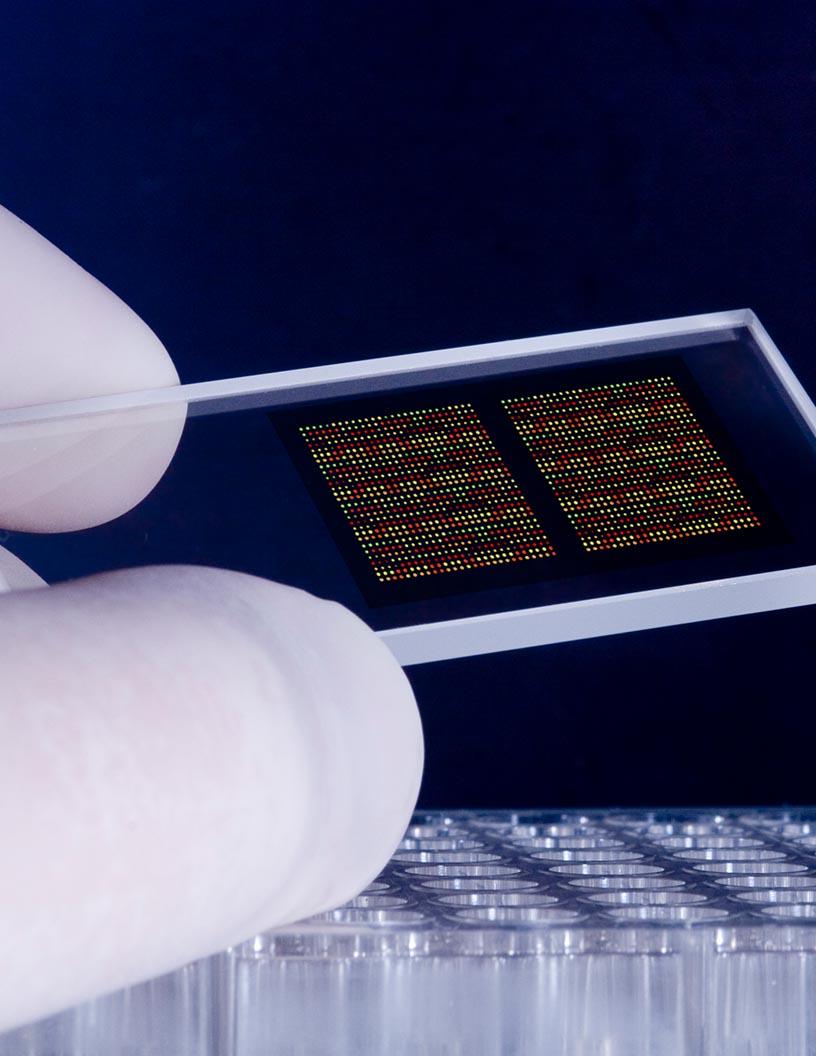


Tissue Microarray Market Size 2024-2028
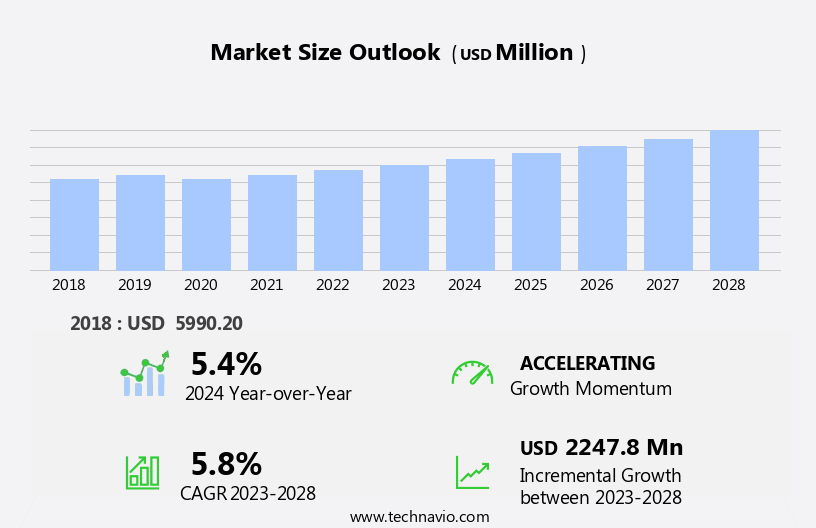
The tissue microarray market size is forecast to increase by USD 2.25 billion at a CAGR of 5.8% between 2023 and 2028.
What will be the Size of the Tissue Microarray Market During the Forecast Period?
How is this Tissue Microarray Industry segmented and which is the largest segment?
The tissue microarray industry research report provides comprehensive data (region-wise segment analysis), with forecasts and estimates in "USD million" for the period 2024-2028, as well as historical data from 2018-2022 for the following segments.
- End-user
- Hospitals
- Clinics
- Diagnostics centers
- Geography
- North America
- Canada
- US
- Europe
- Germany
- UK
- Asia
- China
- Rest of World (ROW)
- North America
By End-user Insights
- The hospitals segment is estimated to witness significant growth during the forecast period.
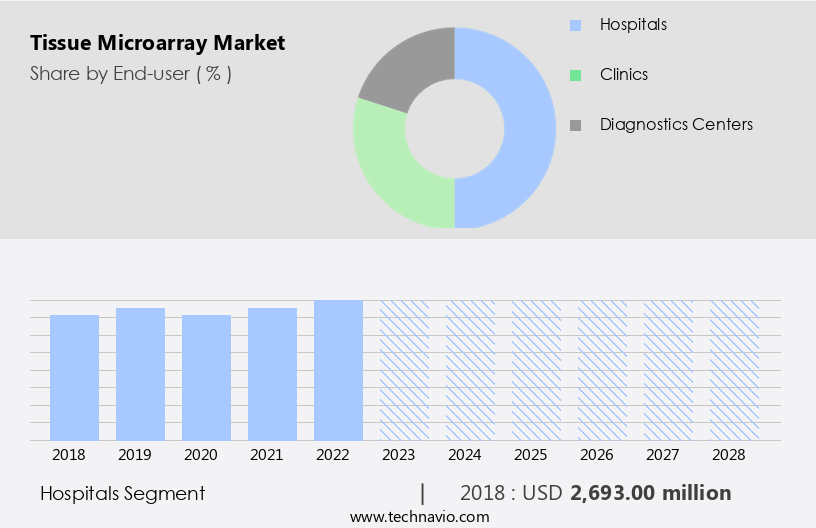
The hospitals segment represents a substantial end-user base In the market due to their crucial role in cancer diagnosis and research. Tissue microarrays enable hospitals to analyze multiple tumor samples concurrently on a single slide, accelerating high-throughput examination of proteins and genes vital for cancer diagnosis. This feature is indispensable in oncology, where timely and precise assessment of biomarkers influences therapeutic decisions. Furthermore, hospitals preserve archival tissue blocks for extended durations, often up to 20 years, offering a vast reservoir of samples for tissue microarray construction. This extensive availability of samples bolsters the potential for retrospective studies linked to clinical outcomes, reinforcing the significance of tissue microarrays in clinical settings.
Tissue microarrays facilitate molecular pathology, including gene expression analysis, protein localization, and molecular marker identification. They are instrumental in oncology research, tumor heterogeneity studies, and drug efficacy assessments. Incorporating automation, imaging techniques, data analysis, and precision medicine, tissue microarrays contribute to cancer incidence reduction, biomarker research, drug development, and clinical trials. Applications include antibodies, digital pathology, neurology, cardiology, infectious diseases, and immunohistochemistry. Tissue microarrays consist of paraffin blocks, tissue cores, and DNA analysis, enabling mRNA analysis, protein levels assessment, and automated analysis. They cater to cancer prevalence studies, diagnostic methods, and array-based technology, focusing on disease genes, heterogeneous cancers, and cancer patient cases.
Tissue microarrays are integral to proteomics and genomics, microarray techniques, lead discovery, clinical assessment, and fluorescent in-situ hybridization. They support frozen tissue array, DNA microarray, next-generation sequencing, Northern blotting, Western blotting, gene expression profiling, SNP detection, comparative genomic hybridization, sequencing bioinformatics, and drug discovery applications. Tissue microarrays play a pivotal role in cancer treatment, enhancing diagnostic capabilities and facilitating personalized medicine.
Get a glance at the Tissue Microarray Industry report of share of various segments Request Free Sample
The Hospitals segment was valued at USD 2.69 billion in 2018 and showed a gradual increase during the forecast period.
Regional Analysis
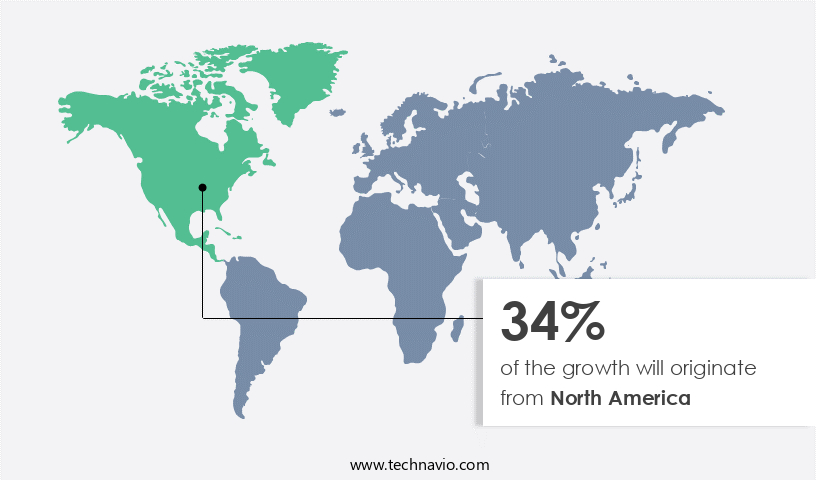
- North America is estimated to contribute 34% to the growth of the global market during the forecast period.
Technavio’s analysts have elaborately explained the regional trends and drivers that shape the market during the forecast period.
For more insights on the market share of various regions, Request Free Sample
The Tissue Microarray (TMA) market in North America is experiencing significant growth due to substantial investments in healthcare research and testing In the US. Pharmaceutical companies' increasing focus on drug discovery and development is another driving factor. With a high incidence of chronic diseases, particularly cancer, the demand for cancer research and diagnostics is increasing, necessitating the use of advanced molecular biology techniques such as TMAs. TMAs play a crucial role in molecular pathology, including gene expression analysis, protein localization, and biomarker discovery. They are used extensively in oncology research, clinical outcomes assessment, therapeutic targets identification, and prognostic indicators determination.
TMAs facilitate high-throughput screening, imaging techniques, data analysis, and precision medicine, contributing to cancer prevalence studies and diagnostic methods development. Array-based technology, including DNA and mRNA analysis, protein levels assessment, and automated analysis, are integral to TMA applications. The market is also driven by the need for personalized medicine, cancer patient case studies, and the integration of proteomics and genomics in drug discovery and clinical assessment. TMAs are utilized in various clinical settings, including cancer burden assessment, drug efficacy testing, and biologics development. Immunohistochemistry (IHC), Next-Generation Sequencing (NGS), and digital pathology are some of the key techniques used in TMA applications.
The market encompasses various sectors, including biomarker research, drug development, clinical trials, antibodies, and diagnostic facilities. Tissue microarrays are essential tools for healthcare diagnostic facilities, enabling the analysis of paraffin blocks, tissue cores, DNA, and mRNA. The market is poised for continued growth due to the increasing importance of tissue microarrays in cancer research, biopsy, drug discovery, and cancer treatment.
Market Dynamics
Our researchers analyzed the data with 2023 as the base year, along with the key drivers, trends, and challenges. A holistic analysis of drivers will help companies refine their marketing strategies to gain a competitive advantage.
What are the key market drivers leading to the rise In the adoption of Tissue Microarray Industry?
Growing number of cancer cases worldwide is the key driver of the market.
What are the market trends shaping the Tissue Microarray Industry?
Rising popularity of personalized medicines is the upcoming market trend.
What challenges does the Tissue Microarray Industry face during its growth?
High cost of instruments is a key challenge affecting the industry growth.
Exclusive Customer Landscape
The tissue microarray market forecasting report includes the adoption lifecycle of the market, covering from the innovator’s stage to the laggard’s stage. It focuses on adoption rates in different regions based on penetration. Furthermore, the tissue microarray market report also includes key purchase criteria and drivers of price sensitivity to help companies evaluate and develop their market growth analysis strategies.
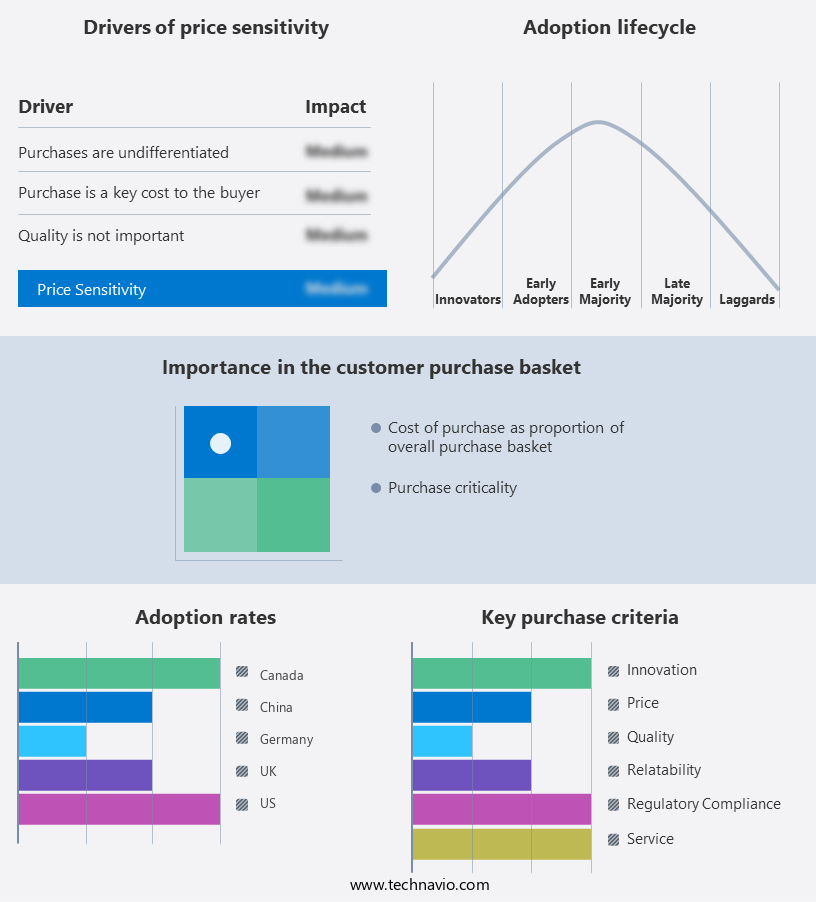
Customer Landscape
Key Companies & Market Insights
Companies are implementing various strategies, such as strategic alliances, tissue microarray market forecast, partnerships, mergers and acquisitions, geographical expansion, and product/service launches, to enhance their presence In the industry.
Agilent Technologies Inc. - The company introduces tissue microarrays featuring a genome-wide median probe spacing of 2.1 KB and expanded coverage on key regions, including genes, promoters, miRNAs, PAR, and telomeric areas. This product line, marketed under the brand name SurePrint G3 Human CGH, delivers enhanced precision and comprehensive gene expression analysis.
The industry research and growth report includes detailed analyses of the competitive landscape of the market and information about key companies, including:
- Agilent Technologies Inc.
- Arrayit Corp.
- Bio Rad Laboratories Inc.
- Bio Techne Corp.
- Enzo Biochem Inc.
- Illumina Inc.
- Molecular Device LLC
- OriGene Technologies Inc.
- Pantomics Inc.
- Perkin Elmer Inc.
- PhalanxBio Inc.
- Thermo Fisher Scientific Inc.
Qualitative and quantitative analysis of companies has been conducted to help clients understand the wider business environment as well as the strengths and weaknesses of key industry players. Data is qualitatively analyzed to categorize companies as pure play, category-focused, industry-focused, and diversified; it is quantitatively analyzed to categorize companies as dominant, leading, strong, tentative, and weak.
Research Analyst Overview
Tissue microarrays (TMAs) have emerged as a valuable tool in molecular pathology, facilitating the analysis of gene expression and protein localization in various clinical settings. These arrays allow for the simultaneous assessment of multiple tissue samples, enabling researchers to investigate tumor heterogeneity and identify biomarkers with potential clinical applications. The use of TMAs in molecular pathology is driven by the growing demand for precision and personalized medicine. TMAs enable the analysis of molecular markers related to genetic abnormalities, clinical outcomes, drug efficacy, and therapeutic targets in various cancer types, including oncology research and prostate cancer. TMAs have been instrumental in advancing our understanding of cancer prevalence and disease progression.
They have been employed In the discovery and development of biomarkers for various clinical applications, including diagnostics, drug development, and clinical trials. TMAs have also been utilized In the analysis of protein expression, antibodies, and immunostaining, among other techniques. Automation and high-throughput screening have significantly increased the sample throughput and efficiency of TMA-based research. Imaging techniques, such as spectroscopic analysis and digital pathology, have further enhanced the capabilities of TMAs in data analysis and precision medicine. TMAs have applications beyond oncology research, including neurology, cardiology, and infectious diseases. They have been used In the analysis of genetic abnormalities, heterogeneous cancers, and cancer patient cases, as well as In the development of lead discovery and clinical assessment.
The use of TMAs in molecular diagnostics and biotechnology has led to the identification of disease genes and the development of new diagnostic methods. Array-based technology, including DNA microarray and next-generation sequencing, have been employed In the analysis of tissue samples for various applications, including SNP detection, comparative genomic hybridization, and sequencing bioinformatics. The advancements in TMA technology have significant implications for pharmaceutical companies, biomarker research, and drug development. TMAs have been used in drug testing and the identification of biologics, providing valuable insights into drug discovery applications and cancer treatment. In conclusion, TMAs have become an essential tool in molecular pathology, enabling the analysis of gene expression, protein localization, and molecular markers in various clinical settings.
The technology's ability to facilitate high-throughput screening, automation, and data analysis has led to significant advancements in cancer research, diagnostics, and drug development. The potential applications of TMAs extend beyond oncology research, making it a valuable technology in various fields of healthcare diagnostic facilities.
|
Market Scope |
|
|
Report Coverage |
Details |
|
Page number |
139 |
|
Base year |
2023 |
|
Historic period |
2018-2022 |
|
Forecast period |
2024-2028 |
|
Growth momentum & CAGR |
Accelerate at a CAGR of 5.8% |
|
Market growth 2024-2028 |
USD 2247.8 million |
|
Market structure |
Concentrated |
|
YoY growth 2023-2024(%) |
5.4 |
|
Key countries |
US, Canada, Germany, China, and UK |
|
Competitive landscape |
Leading Companies, Market Positioning of Companies, Competitive Strategies, and Industry Risks |
What are the Key Data Covered in this Tissue Microarray Market Research and Growth Report?
- CAGR of the Tissue Microarray industry during the forecast period
- Detailed information on factors that will drive the growth and forecasting between 2024 and 2028
- Precise estimation of the size of the market and its contribution of the industry in focus to the parent market
- Accurate predictions about upcoming growth and trends and changes in consumer behaviour
- Growth of the market across North America, Europe, Asia, and Rest of World (ROW)
- Thorough analysis of the market’s competitive landscape and detailed information about companies
- Comprehensive analysis of factors that will challenge the tissue microarray market growth of industry companies
We can help! Our analysts can customize this tissue microarray market research report to meet your requirements.
 RIA -
RIA - 
