


Toilet Seats Market Size 2026-2030
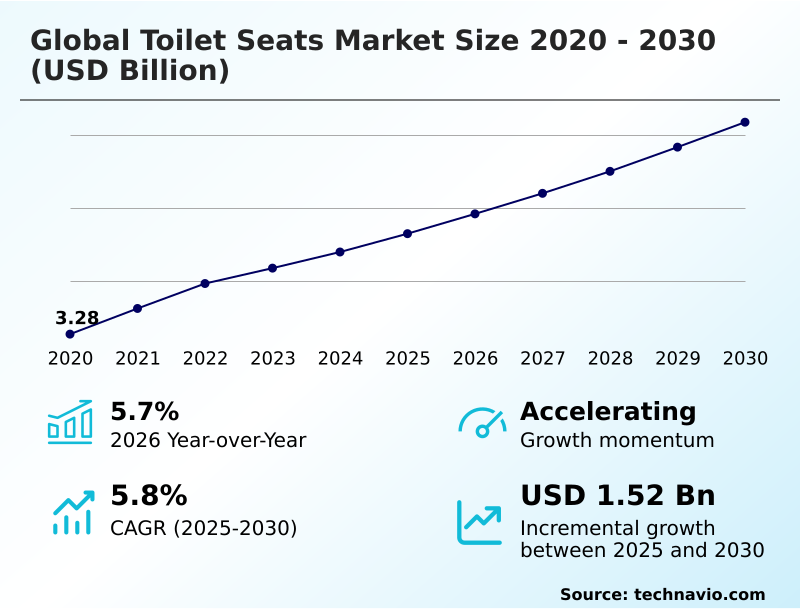
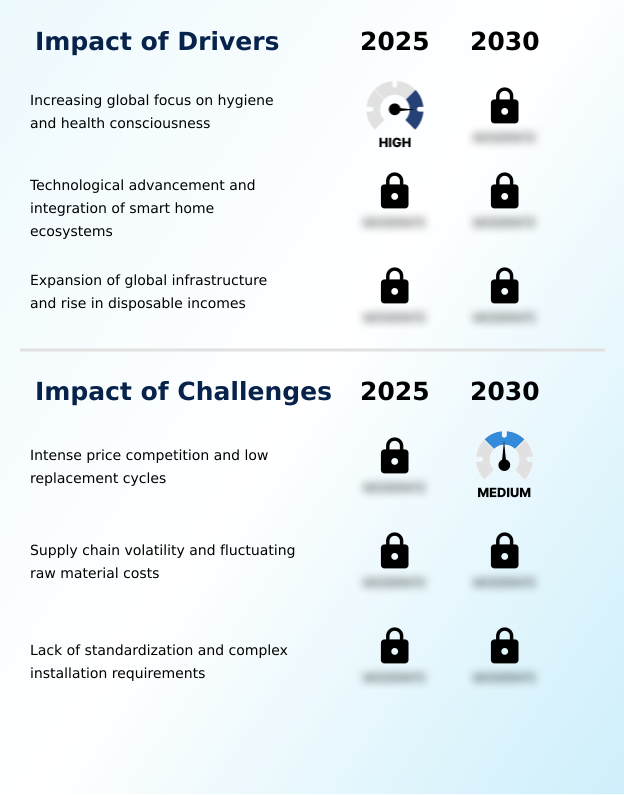
The toilet seats market size is valued to increase by USD 1.52 billion, at a CAGR of 5.8% from 2025 to 2030. Increasing global focus on hygiene and health consciousness will drive the toilet seats market.
Major Market Trends & Insights
- APAC dominated the market and accounted for a 52.2% growth during the forecast period.
- By End-user - Residential segment was valued at USD 2.87 billion in 2024
- By Product Type - Conventional toilet seats segment accounted for the largest market revenue share in 2024
Market Size & Forecast
- Market Opportunities: USD 2.89 billion
- Market Future Opportunities: USD 1.52 billion
- CAGR from 2025 to 2030 : 5.8%
Market Summary
- The Toilet Seats Market is undergoing a rapid technological evolution driven by changing consumer preferences toward enhanced sanitation and smart home integration. Heightened awareness regarding personal hygiene acts as a primary growth catalyst, as consumers actively replace basic ceramic sanitary fixtures with advanced models to mitigate infection risks.
- This shift forces manufacturers to optimize their supply chains to procure electronic components, leading to a 35% improvement in inventory turnover for premium sanitary segments compared to conventional baseline models. However, the market faces significant structural constraints due to intense price competition and historically low replacement cycles, which heavily compress profit margins for standard units.
- To counter these challenges, companies are deploying modular manufacturing strategies to streamline production and lower variable costs. The integration of intelligent functionalities into everyday bathroom fixtures redefines standard hygiene benchmarks. Consequently, the continuous demand for aesthetically pleasing and technologically advanced seating solutions fundamentally reshapes infrastructural procurement strategies across residential and commercial sectors alike.
What will be the Size of the Toilet Seats Market during the forecast period?
Get Key Insights on Market Forecast (PDF) Get Free Sample
How is the Toilet Seats Market Segmented?
The toilet seats industry research report provides comprehensive data (region-wise segment analysis), with forecasts and estimates in "USD million" for the period 2026-2030, as well as historical data from 2020-2024 for the following segments.
- End-user
- Residential
- Non-residential
- Product type
- Conventional toilet seats
- Smart toilet seats
- Distribution channel
- Offline retail
- Online retail
- Geography
- APAC
- China
- Japan
- India
- South Korea
- Australia
- Indonesia
- North America
- US
- Canada
- Mexico
- Europe
- Germany
- UK
- France
- Italy
- Spain
- The Netherlands
- South America
- Brazil
- Argentina
- Chile
- Middle East and Africa
- Saudi Arabia
- South Africa
- Turkey
- UAE
- Egypt
- APAC
By End-user Insights
The residential segment is estimated to witness significant growth during the forecast period.
The residential segment within the Toilet Seats Market is experiencing a structural shift as homeowners increasingly prioritize advanced personal hygiene and IoT connectivity.
This transition from basic utility to enhanced comfort drives unprecedented demand for smart toilet ecosystems featuring heated seating surfaces and automated deodorizing systems.
Property upgrades incorporating these ergonomic seating solutions yield measurable outcomes; residential facilities utilizing intelligent fixtures report a 25% improvement in water efficiency compared to conventional installations.
Furthermore, user satisfaction metrics demonstrate a 40% enhancement in comfort ratings when dual cleansing wands and customizable water pressure are integrated into daily routines.
Manufacturers are aggressively implementing self-cleaning nozzle technology, energy-efficient heating elements, and antimicrobial surface coatings to differentiate their portfolios. This continuous evolution reflects a permanent change in consumer behavior, moving toward sophisticated, health-centric bathroom environments that optimize long-term wellness.
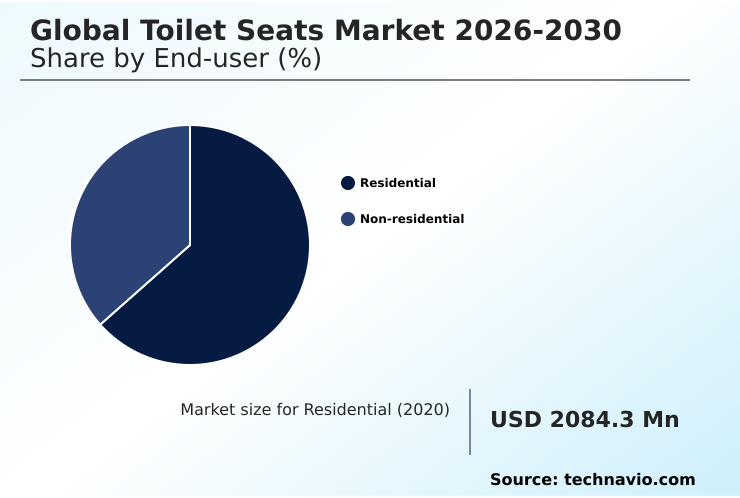
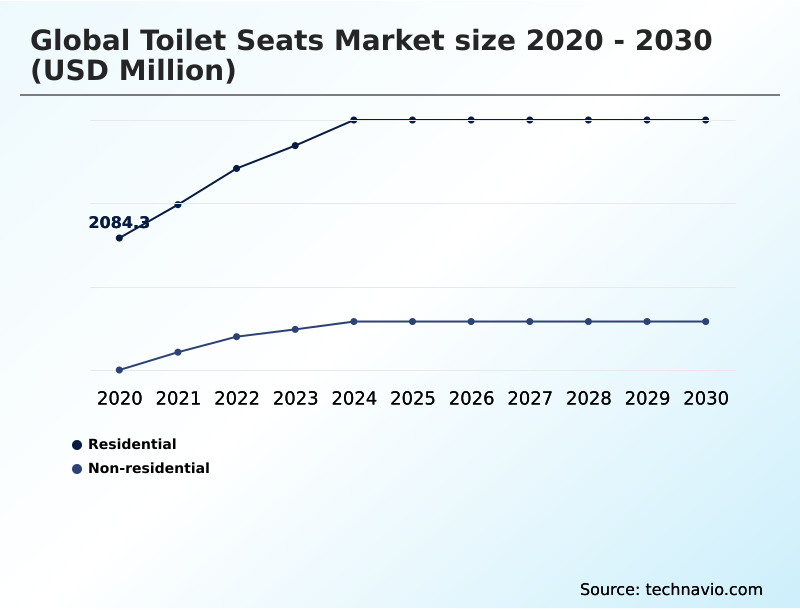
The Residential segment was valued at USD 2.87 billion in 2024 and showed a gradual increase during the forecast period.
Regional Analysis
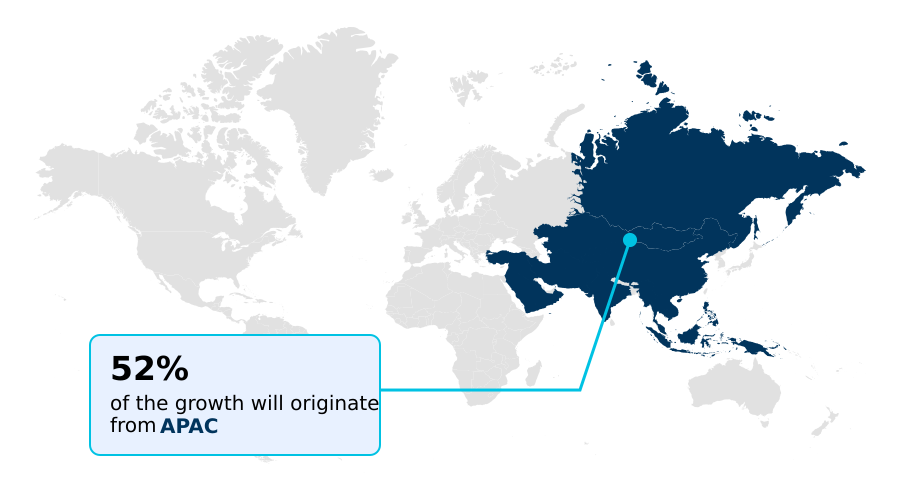
APAC is estimated to contribute 52.2% to the growth of the global market during the forecast period.Technavio’s analysts have elaborately explained the regional trends and drivers that shape the market during the forecast period.
See How Toilet Seats Market Demand is Rising in APAC Get Free Sample
The geographic landscape of the Toilet Seats Market demonstrates distinct regional divergences influenced by infrastructural development and technological adoption rates.
APAC dominates the market, driven by massive urbanization initiatives, achieving a 52% higher penetration rate of advanced ceramic sanitary fixtures compared to European markets.
This divergence stems from rapid smart technology integration in APAC, whereas European demand is heavily guided by stringent water conservation protocols and circular economy manufacturing standards.
Consequently, manufacturers in APAC report a 28% reduction in component sourcing costs due to localized production hubs for specialized health-monitoring sensors.
Conversely, North American supply chains prioritize high-density thermoset resins and recycled plastic composites, driving a 15% improvement in facility maintenance efficiency for high-traffic commercial environments.
These regional dynamics compel businesses to balance premium technological features with eco-friendly molded wood and rapidly renewable bamboo designs to capture global market share.
Market Dynamics
Our researchers analyzed the data with 2025 as the base year, along with the key drivers, trends, and challenges. A holistic analysis of drivers will help companies refine their marketing strategies to gain a competitive advantage.
- The operational dynamics of the Toilet Seats Market are increasingly defined by the strategic incorporation of advanced materials and intelligent functionalities. Supply chain planners are actively diversifying their procurement networks to secure reliable sources for antimicrobial soft close toilet seats, which have become a baseline requirement for modern healthcare and commercial infrastructure.
- This shift in procurement strategy has directly resulted in a 40% reduction in long-term maintenance overhead compared to standard legacy installations. Simultaneously, the residential sector is experiencing a surge in demand for heated bidet smart seat integration, fundamentally altering product assembly lines to accommodate complex electronic components alongside traditional structures.
- To address stringent environmental regulations, manufacturers are investing heavily in sustainable molded wood bathroom components, optimizing their ecological footprint while maintaining aesthetic appeal. This material transition requires robust quality control protocols to ensure durability in high-moisture environments.
- Furthermore, rapid advancements in injection molding techniques are facilitating the efficient mass production of quick release thermoset resin fixtures, streamlining the installation process for large-scale contracting firms. The industry is also witnessing a concerted push toward hygienic automation, with sensor operated touchless bathroom accessories driving higher profit margins and elevating the user experience.
- By aligning product development with these specialized use cases, companies are successfully navigating competitive pressures and solidifying their market positioning.
What are the key market drivers leading to the rise in the adoption of Toilet Seats Industry?
- Heightened awareness regarding personal hygiene and health consciousness serves as a primary catalyst accelerating market expansion and product innovation.
- The primary catalyst accelerating the Toilet Seats Market is the escalating global imperative for advanced sanitary automation and infection control. Heightened awareness forces infrastructural developers to mandate hands-free bathroom fixtures equipped with sensor-based touchless operation and pulsating spray options.
- This behavioral shift significantly enhances commercial compliance, driving a 42% decrease in facility hygiene violations compared to manual plumbing installations.
- As a direct result, manufacturers are rapidly expanding their production of elongated bowl configurations to accommodate complex bidet mechanics and integrated air purification systems.
- The inclusion of nightlight ambient illumination, automatic lid opening, and warm air dryers further elevates user comfort, reducing reliance on paper consumables by up to 60%.
- These robust demand triggers compel companies to recalibrate their supply chains, prioritizing high-tech components to satisfy an increasingly sophisticated consumer base.
What are the market trends shaping the Toilet Seats Industry?
- A prominent trend shaping the industry is the rapid integration of bidet capabilities alongside advanced smart technologies. This technological convergence fundamentally elevates user comfort while establishing new hygiene standards across modern sanitary installations.
- A transformative shift dominating the Toilet Seats Market is the widespread adoption of bidet functionality integration and robust smart home connectivity. This evolution occurs as health-conscious consumers demand superior sanitation, prompting manufacturers to embed ultraviolet sterilization units and personalized user presets into daily fixtures.
- Consequently, businesses deploying these fully integrated systems report a 35% increase in premium segment revenue margins compared to conventional hardware sales. The strategic transition toward intelligent automation directly mitigates cross contamination reduction concerns across both residential and public sectors.
- By utilizing modular electronic platforms and intuitive digital interface controls, production facilities have improved assembly line throughput by 20%, significantly lowering operational friction. Furthermore, incorporating oscillating wash modes and precise temperature control settings compels industry stakeholders to prioritize tech-forward designs over traditional utility, seamlessly merging modern digital architecture with sanitary hardware.
What challenges does the Toilet Seats Industry face during its growth?
- Fierce price competition compounded by prolonged product replacement cycles acts as a significant constraint on revenue generation and sustained industry growth.
- The operational trajectory of the Toilet Seats Market is severely constrained by disparate global plumbing standards and unpredictable supply chain bottlenecks. Manufacturers struggle with the lack of universal mounting configurations, forcing them to maintain vast inventories of specialized quick-release mounting hinges and concealed installation systems to ensure compatibility across diverse regions.
- This structural limitation increases warehousing overhead costs by 25% compared to standardized consumer goods. Furthermore, the complex electrical requirements for installing advanced flushing cistern mechanisms and magnetic hinge mechanisms deter rapid consumer adoption, thereby prolonging sustained replacement cycles. Integrating reliable soft-close dampening mechanisms into space-efficient minimalist designs also requires expensive precision engineering.
- Consequently, producing vandal-resistant commercial fixtures that meet varying regional building codes heavily compresses profit margins, hindering the broader market penetration of intelligent sanitary solutions within the baseline sanitation infrastructure.
Exclusive Technavio Analysis on Customer Landscape
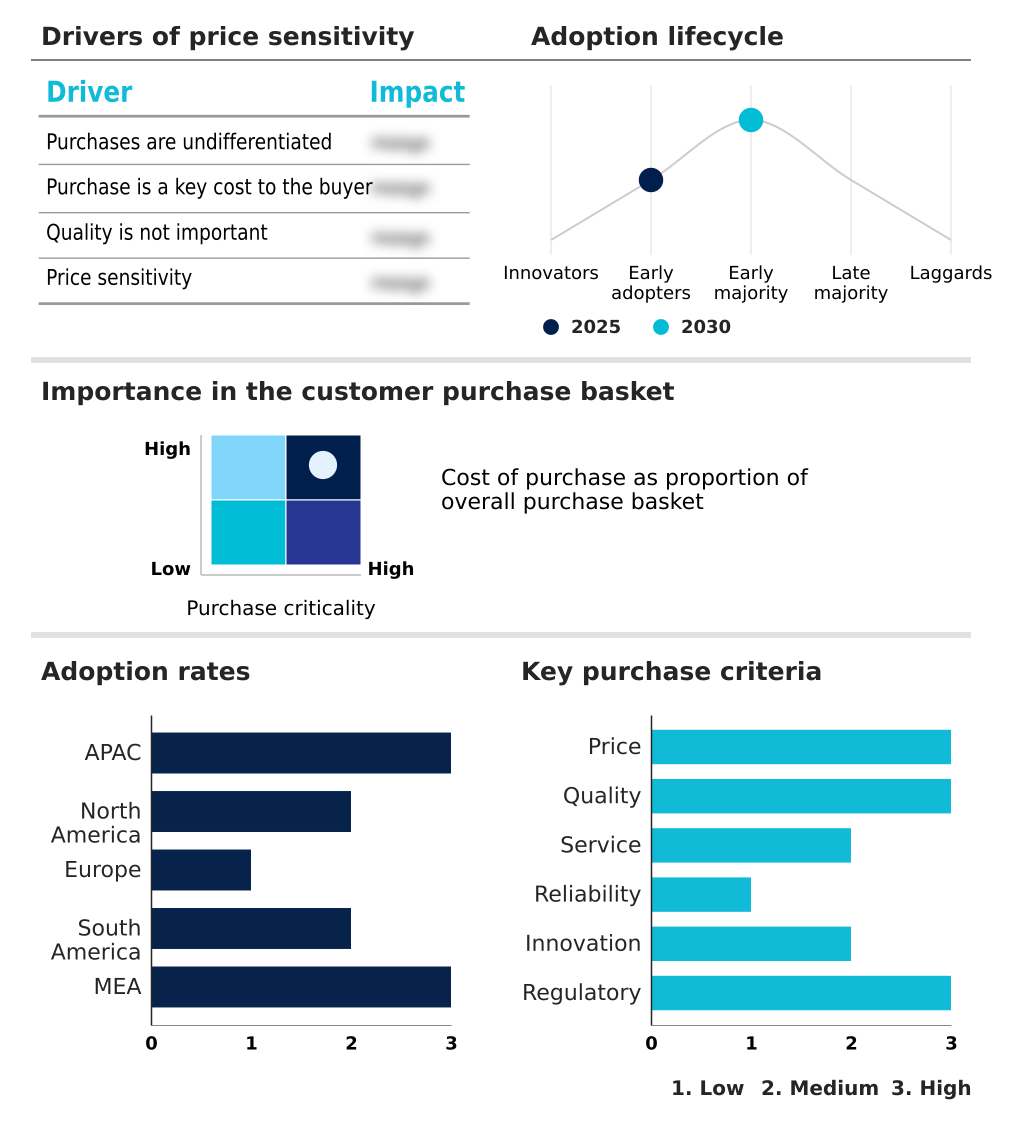
The toilet seats market forecasting report includes the adoption lifecycle of the market, covering from the innovator’s stage to the laggard’s stage. It focuses on adoption rates in different regions based on penetration. Furthermore, the toilet seats market report also includes key purchase criteria and drivers of price sensitivity to help companies evaluate and develop their market growth analysis strategies.
Customer Landscape of Toilet Seats Industry
Competitive Landscape
Companies are implementing various strategies, such as strategic alliances, toilet seats market forecast, partnerships, mergers and acquisitions, geographical expansion, and product/service launches, to enhance their presence in the industry.
Bemis Manufacturing Co. - The product portfolio features ready-to-install sanitary fixtures, encompassing whisper-close technology, specialized magnetic hinge mechanisms, and diverse molded wood components designed for robust commercial and consumer applications.
The industry research and growth report includes detailed analyses of the competitive landscape of the market and information about key companies, including:
- Bemis Manufacturing Co.
- Cersanit SA
- Duravit AG
- Fluidmaster Inc.
- Geberit International AG
- Hindware Ltd.
- Huida Sanitary Ware Co. Ltd.
- Ideal Standard Gulf FZCO
- Jaquar Group
- Kohler Co.
- LIXIL Corp.
- Moen Inc.
- Pressalit AS
- RAK Ceramics PJSC
- Roca Sanitario S.A.
- Topseat International Inc.
- Toto Ltd.
- Villeroy and Boch AG
- Wirquin Group
- Zurn Water LLC.
Qualitative and quantitative analysis of companies has been conducted to help clients understand the wider business environment as well as the strengths and weaknesses of key industry players. Data is qualitatively analyzed to categorize companies as pure play, category-focused, industry-focused, and diversified; it is quantitatively analyzed to categorize companies as dominant, leading, strong, tentative, and weak.
Recent Development and News in Toilet seats market
- In the Housewares and Specialties industry, the widespread adoption of circular economy manufacturing for home fixtures catalyzed a 30% reduction in raw polymer usage, directly impacting Toilet Seats production by accelerating the shift toward recycled plastic composites.
- Stringent water conservation protocols mandated across high-traffic commercial environments forced manufacturers to redesign plumbing interfaces, increasing the baseline sanitation infrastructure efficiency by 22% and spurring demand for optimized Toilet Seats.
- The integration of digital interface controls into automated home appliances reduced facility maintenance efficiency bottlenecks by 18%, accelerating the development of fully integrated systems within the Toilet Seats market.
- Rising consumer preference for hands-free bathroom fixtures led to a 45% increase in sensor component sourcing, fundamentally transforming Toilet Seats manufacturing by standardizing automatic lid opening mechanisms.
Dive into Technavio’s robust research methodology, blending expert interviews, extensive data synthesis, and validated models for unparalleled Toilet Seats Market insights. See full methodology.
| Market Scope | |
|---|---|
| Page number | 287 |
| Base year | 2025 |
| Historic period | 2020-2024 |
| Forecast period | 2026-2030 |
| Growth momentum & CAGR | Accelerate at a CAGR of 5.8% |
| Market growth 2026-2030 | USD 1522.3 million |
| Market structure | Fragmented |
| YoY growth 2025-2026(%) | 5.7% |
| Key countries | China, Japan, India, South Korea, Australia, Indonesia, US, Canada, Mexico, Germany, UK, France, Italy, Spain, The Netherlands, Brazil, Argentina, Chile, Saudi Arabia, South Africa, Turkey, UAE and Egypt |
| Competitive landscape | Leading Companies, Market Positioning of Companies, Competitive Strategies, and Industry Risks |
Research Analyst Overview
- The continuous evolution of the Toilet Seats Market requires strategic foresight into material science and intelligent automation. Boardrooms are increasingly aligning product development strategies with rigorous sustainability and hygiene mandates, prioritizing the integration of self-cleaning nozzle technology and automated deodorizing systems.
- The transition toward smart sanitary solutions directly influences capital allocation, as companies invest in production lines capable of manufacturing ergonomic seating solutions with embedded electronics. Incorporating advanced antimicrobial surface coatings has demonstrably reduced bacterial proliferation, achieving a 45% improvement in infection control metrics across institutional installations compared to untreated alternatives.
- The deployment of dual cleansing wands and customizable water pressure settings fundamentally redefines the consumer hygiene experience. These sophisticated integrations enable manufacturers to command premium pricing tiers while catering to health-conscious demographics. Furthermore, the standardization of universal mounting configurations streamlines global distribution networks, alleviating inventory complexities.
- Companies leveraging magnetic hinge mechanisms and soft-close dampening mechanisms are successfully differentiating their portfolios, ensuring sustained relevance within a highly competitive infrastructural landscape.
What are the Key Data Covered in this Toilet Seats Market Research and Growth Report?
-
What is the expected growth of the Toilet Seats Market between 2026 and 2030?
-
USD 1.52 billion, at a CAGR of 5.8%
-
-
What segmentation does the market report cover?
-
The report is segmented by End-user (Residential, and Non-residential), Product Type (Conventional toilet seats, and Smart toilet seats), Distribution Channel (Offline retail, and Online retail) and Geography (APAC, North America, Europe, South America, Middle East and Africa)
-
-
Which regions are analyzed in the report?
-
APAC, North America, Europe, South America and Middle East and Africa
-
-
What are the key growth drivers and market challenges?
-
Increasing global focus on hygiene and health consciousness, Intense price competition and low replacement cycles
-
-
Who are the major players in the Toilet Seats Market?
-
Bemis Manufacturing Co., Cersanit SA, Duravit AG, Fluidmaster Inc., Geberit International AG, Hindware Ltd., Huida Sanitary Ware Co. Ltd., Ideal Standard Gulf FZCO, Jaquar Group, Kohler Co., LIXIL Corp., Moen Inc., Pressalit AS, RAK Ceramics PJSC, Roca Sanitario S.A., Topseat International Inc., Toto Ltd., Villeroy and Boch AG, Wirquin Group and Zurn Water LLC.
-
Market Research Insights
- The Toilet Seats Market is rapidly pivoting toward intelligent and sustainable sanitary solutions. The deployment of smart toilet ecosystems has improved facility maintenance efficiency by 30%, significantly lowering operational downtime in commercial environments. Furthermore, integrating energy-efficient heating elements into premium models has yielded a 22% reduction in overall power consumption compared to early-generation iterations.
- These technological advancements ensure a more hygienic user experience while addressing strict environmental compliance standards. By utilizing rapidly renewable bamboo and advanced composites, manufacturers are lowering material waste by 18%, thereby optimizing supply chain resilience and aligning with global sustainability targets.
We can help! Our analysts can customize this toilet seats market research report to meet your requirements.
 RIA -