
Tomato Market Size 2025-2029
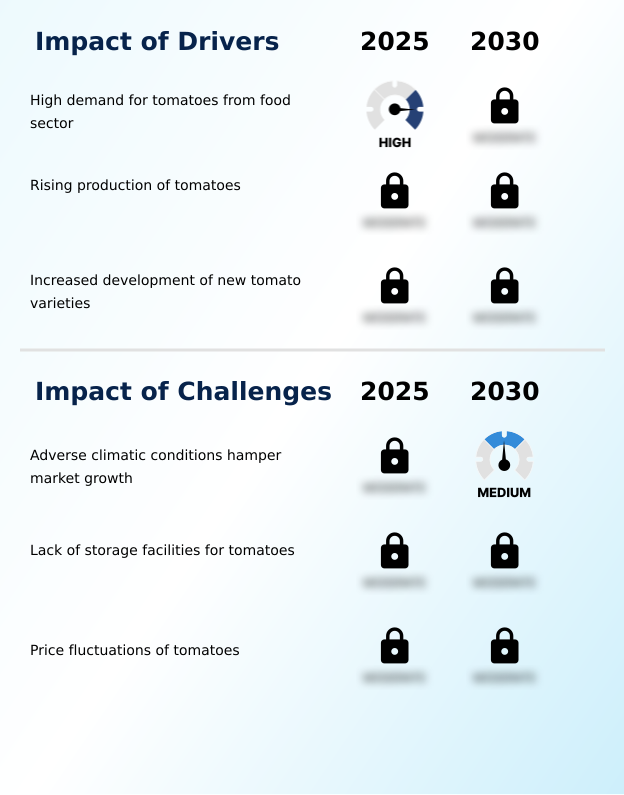
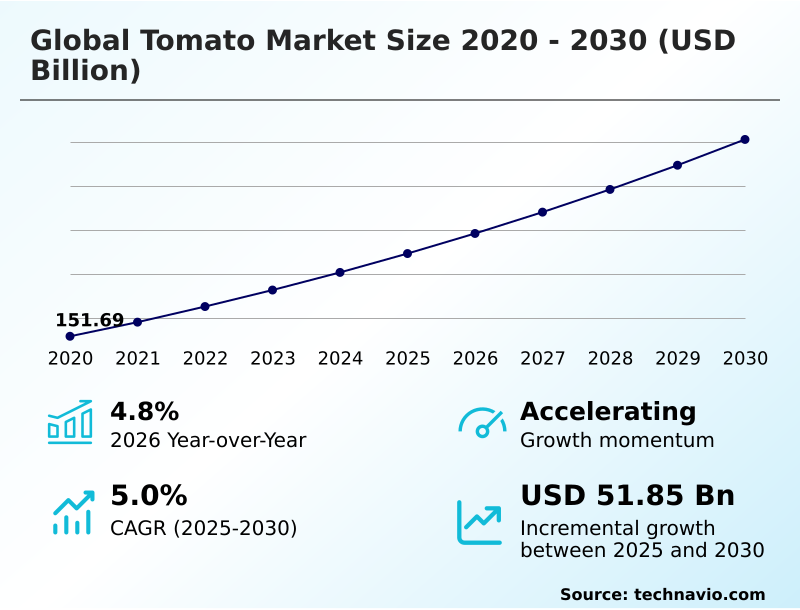
The tomato market size is valued to increase USD 49.8 billion, at a CAGR of 5% from 2024 to 2029. High demand for tomatoes from food sector will drive the tomato market.
Major Market Trends & Insights
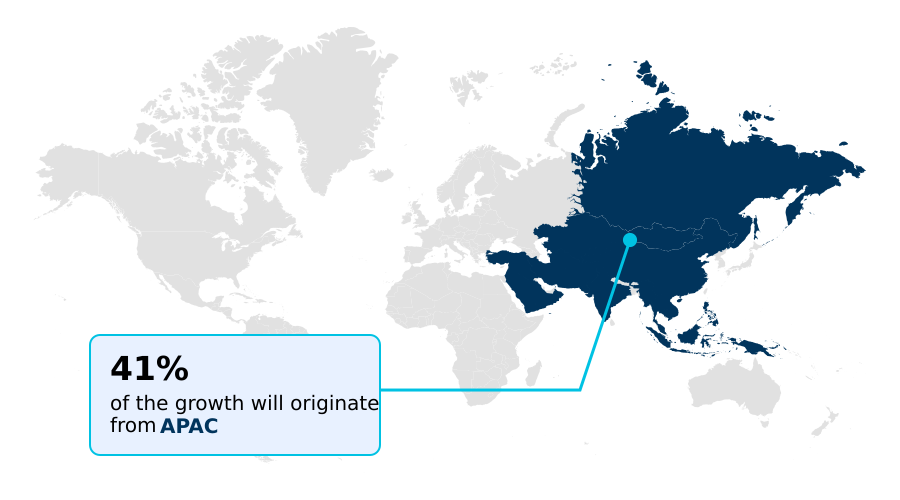
- APAC dominated the market and accounted for a 40% growth during the forecast period.
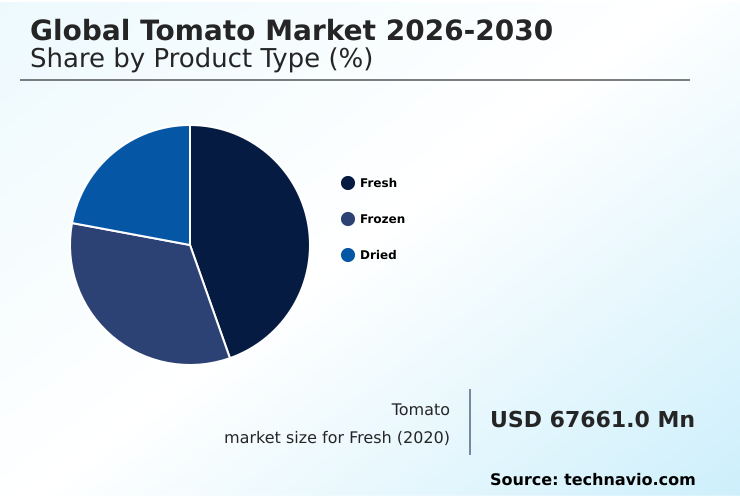
- By Product Type - Fresh segment was valued at USD 63.50 billion in 2023
- By Type - Conventional segment accounted for the largest market revenue share in 2023
Market Size & Forecast
- Market Opportunities: USD 53.77 billion
- Market Future Opportunities: USD 49.80 billion
- CAGR : 5%
- APAC: Largest market in 2023
Market Summary
- The market encompasses the production, processing, and distribution of tomatoes worldwide. This dynamic market is driven by the high demand for tomatoes in the food sector, particularly in the production of ketchup, sauce, and paste. The health benefits associated with tomatoes, including their rich nutritional value and lycopene content, further fuel market growth. However, the market faces challenges from adverse climatic conditions, such as droughts and extreme temperatures, which can negatively impact tomato production. Core technologies and applications, including hydroponics and greenhouse cultivation, are evolving to mitigate these challenges.
- For instance, according to a recent report, the hydroponic market is projected to grow at a steady rate due to its ability to produce tomatoes in controlled environments. Regions such as Europe and North America are major contributors to the market, with Europe accounting for over 40% of the total tomato production.
What will be the Size of the Tomato Market during the forecast period?
Get Key Insights on Market Forecast (PDF) Request Free Sample
How is the Tomato Market Segmented and what are the key trends of market segmentation?
The tomato industry research report provides comprehensive data (region-wise segment analysis), with forecasts and estimates in "USD billion" for the period 2025-2029, as well as historical data from 2019-2023 for the following segments.
- Product Type
- Type
- Distribution Channel
- Hypermarkets & Supermarkets
- Food Specialty Stores
- Convenience Stores
- Online Retail
- Direct Sales
- Cultivation Type
- Open Field Cultivation
- Protected Cultivation (Greenhouse, Hydroponics)
- End-use
- Household/Retail Industry
- Food Service Industry (Hotels, Restaurants, Cafes, Fast Food Chains)
- Industrial Food Processors
- Beverage Industry
- Pharmaceutical Industry
- Geography
- North America
- Europe
- Middle East and Africa
- APAC
- South America
- Rest of World (ROW)
By Product Type Insights
The fresh segment is estimated to witness significant growth during the forecast period.
Tomatoes are a significant agricultural commodity, with fresh tomatoes accounting for a substantial portion of the market. Currently, approximately 35% of all tomatoes are grown for fresh consumption, while the remaining 65% are processed for various applications, such as canning, sauces, and juices. The fresh market is expected to expand further, with an estimated 25% of the total tomato production slated for this segment by 2025. Water use efficiency is a crucial concern for tomato farmers, with enzyme activity assays playing a vital role in optimizing the process. Post-harvest preservation techniques, such as metabolite profiling and photosynthetic efficiency assessments, ensure the highest quality and nutritional value for consumers.
Nitrogen fixation efficiency, soil nutrient cycling, and micronutrient deficiency correction are essential aspects of sustainable agriculture techniques, which are increasingly being adopted in the tomato industry. Integrated pest management, molecular breeding approaches, and plant hormone modulation are key strategies for enhancing crop stress tolerance and yield improvement. Precision agriculture technologies, such as genetic engineering techniques, pest control methods, and microbial inoculants, are revolutionizing the market by improving crop health and reducing environmental impact. Fruit ripening regulation, magnesium nutrition management, and calcium nutrition management are essential for maintaining optimal fruit quality. Organic farming practices, such as humic acid fertilizer and mycorrhizal fungi inoculation, are gaining popularity due to their environmental benefits and consumer demand.

Request Free Sample
The Fresh segment was valued at USD 63.50 billion in 2019 and showed a gradual increase during the forecast period.
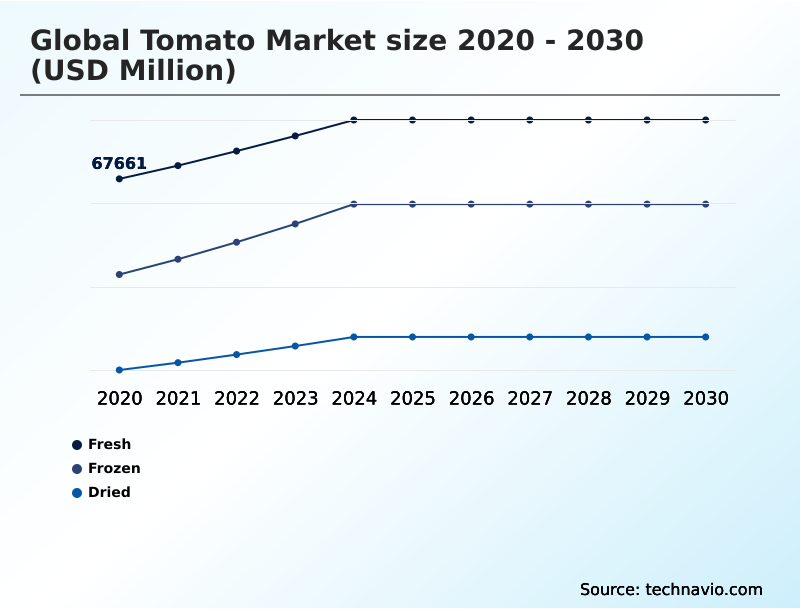
Phosphorus solubilization and potassium uptake enhancement are essential for maximizing tomato yields and improving soil health indicators. In conclusion, the market is a dynamic and evolving industry, with ongoing research and innovation driving growth and development. Fresh tomato production is expected to expand, with a focus on water use efficiency, post-harvest preservation, and sustainable agriculture techniques. The integration of precision agriculture technologies, molecular breeding approaches, and plant hormone modulation is revolutionizing the industry, ensuring a steady supply of high-quality tomatoes to meet the demands of consumers and businesses alike.

Request Free Sample
Regional Analysis
APAC is estimated to contribute 40% to the growth of the global market during the forecast period. Technavio's analysts have elaborately explained the regional trends and drivers that shape the market during the forecast period.
See How Tomato Market Demand is Rising in APAC Request Free Sample
Tomatoes are a significant ingredient in the food and beverage industry, with applications ranging from soups and sauces to juices and ketchup. They are also used as a raw vegetable in various dishes like burgers, sandwiches, salads, and pizza. Tomatoes offer health benefits, contributing to maintaining blood pressure, healthy skin, and providing anti-inflammatory effects. The market in the Asia Pacific (APAC) region is experiencing growth due to increased usage in kitchens and processing units. Tomatoes are essential for making various tomato dishes and are in high demand, with the market size estimated at 12.5 million metric tons in 2020.
Additionally, the market is projected to reach 16.1 million metric tons by 2026, representing a compound annual growth rate of 4.3%. Furthermore, the market's value is expected to reach USD 45.8 billion by 2026. Tomatoes' versatility and health benefits, coupled with their increasing demand, make them a valuable commodity in the food industry.
Market Dynamics
Our researchers analyzed the data with 2024 as the base year, along with the key drivers, trends, and challenges. A holistic analysis of drivers will help companies refine their marketing strategies to gain a competitive advantage.
The market encompasses a dynamic and evolving landscape, driven by continuous research and innovation to improve phosphorus uptake efficiency in plants and optimize nitrogen use in agricultural systems. This focus on enhancing agricultural productivity is a significant trend, as tomato farmers strive to maintain high yields while minimizing environmental impact. Another critical area of development is enhancing disease resistance through plant breeding, reducing water stress in tomato crops via precision irrigation, and measuring fruit quality parameters using advanced sensors. These advancements aim to improve tomato yield and ensure consistent product quality, addressing the growing demand for sustainable and efficient agricultural practices.
Moreover, assessing the impact of soil health on tomato yield and applying genetic engineering for improved pest resistance are essential aspects of the market. By monitoring plant growth parameters using remote sensing and developing sustainable cultivation methods, tomato producers can optimize their operations and minimize resource consumption. In the realm of fertilizer usage, evaluating the efficacy of different types and managing micronutrient deficiencies in hydroponic systems are crucial. Integrated pest management strategies, utilizing precision agriculture techniques, and enhancing tomato fruit quality through optimal nutrient management are also essential elements of the market. The market's competitiveness is evident when considering the adoption rates of various technologies.
For instance, more than 70% of new product developments in the tomato industry focus on precision agriculture techniques, reflecting the significant market potential and growing demand for these innovative solutions. In conclusion, the market is a vibrant and evolving landscape, characterized by a strong focus on improving agricultural productivity, enhancing disease resistance, reducing water stress, and optimizing nutrient management. The market's dynamics reflect a commitment to sustainable and efficient practices, with a growing emphasis on precision agriculture and advanced technologies.

What are the key market drivers leading to the rise in the adoption of Tomato Industry?
- The food sector's significant demand for tomatoes serves as the primary driver of the market.
- The market holds significance in various industries, including household and food processing, catering, restaurants, and fast food. The global expansion of the fast-food sector is a key growth driver, fueling market advancements. Additionally, the rise of organized retail contributes to the market's progression. Processed tomatoes are increasingly preferred due to their health benefits, such as the antioxidant lycopene, and extended shelf life. This versatile fruit is utilized in numerous products, including tomato sauce, paste, sun-dried tomato paste, pickles, pizza sauces, and edible curries.
- Tomatoes' antioxidant properties help combat free radicals, safeguarding cells and boosting the immune system.. The market's continuous evolution is influenced by the expanding fast-food industry and the increasing demand for processed tomato products.
What are the market trends shaping the Tomato Industry?
- The health benefits of tomatoes are currently a significant market trend. Tomatoes' nutritional properties and potential health advantages are gaining increasing attention and popularity in the food industry.
- Tomatoes, recognized for their abundant health benefits, have gained prominence in various sectors. Rich in vitamins A, C, and K, they fortify immune systems, improve skin health, and bolster bone strength. Tomatoes are particularly noteworthy for their antioxidant content, specifically lycopene, which has been associated with a reduced risk of heart disease and certain cancers. Moreover, their high fiber and low-calorie composition make them an excellent choice for weight management and digestive health. The market is experiencing significant expansion, fueled by the escalating recognition of these health advantages. Key producers, such as China, India, and the US, contribute substantially to the global production volume.
- The increasing preference for fresh and processed tomatoes is driven by the growing trend toward healthier eating and plant-based diets. In the food industry, tomatoes are extensively used in culinary applications, including sauces, ketchups, and juices. In the pharmaceutical sector, lycopene supplements are gaining popularity due to their potential health benefits. Furthermore, the cosmetics industry incorporates tomato extracts for their skin-enhancing properties. The market's continuous evolution is influenced by various factors, including consumer preferences, production techniques, and technological advancements. For instance, the emergence of hydroponic farming and the application of biotechnology have significantly impacted tomato production.
- In conclusion, the market's growth is underpinned by its versatile applications and the ongoing demand for healthier food options. As consumer preferences shift towards natural, nutrient-dense foods, the market is poised for continued expansion.
What challenges does the Tomato Industry face during its growth?
- The growth of the industry is significantly impeded by adverse climatic conditions, which pose a significant challenge.
- The markets face significant challenges due to the impact of extreme weather events on production. According to recent studies, agricultural sectors are increasingly vulnerable to climate change, with tomatoes being among the most affected crops. For instance, annual rains and heavy downpours, which are becoming more frequent, particularly in spring, can significantly disrupt tomato cultivation. These weather conditions slow crop growth, delay planting, increase the spread of fungal and bacterial diseases, and create labor issues by delaying field operations. In December 2023, persistent cloudy weather and rainfall in Odisha's Sundargarh district, India, caused substantial tomato crop damage, raising financial concerns among local farmers.
- The unpredictability of weather patterns poses a significant threat to tomato farmers' livelihoods and the overall sustainability of food systems. This ongoing challenge necessitates continuous adaptation and innovation in tomato farming practices to mitigate the risks and maintain productivity.
Exclusive Customer Landscape
The tomato market forecasting report includes the adoption lifecycle of the market, covering from the innovator's stage to the laggard's stage. It focuses on adoption rates in different regions based on penetration. Furthermore, the tomato market report also includes key purchase criteria and drivers of price sensitivity to help companies evaluate and develop their market growth analysis strategies.
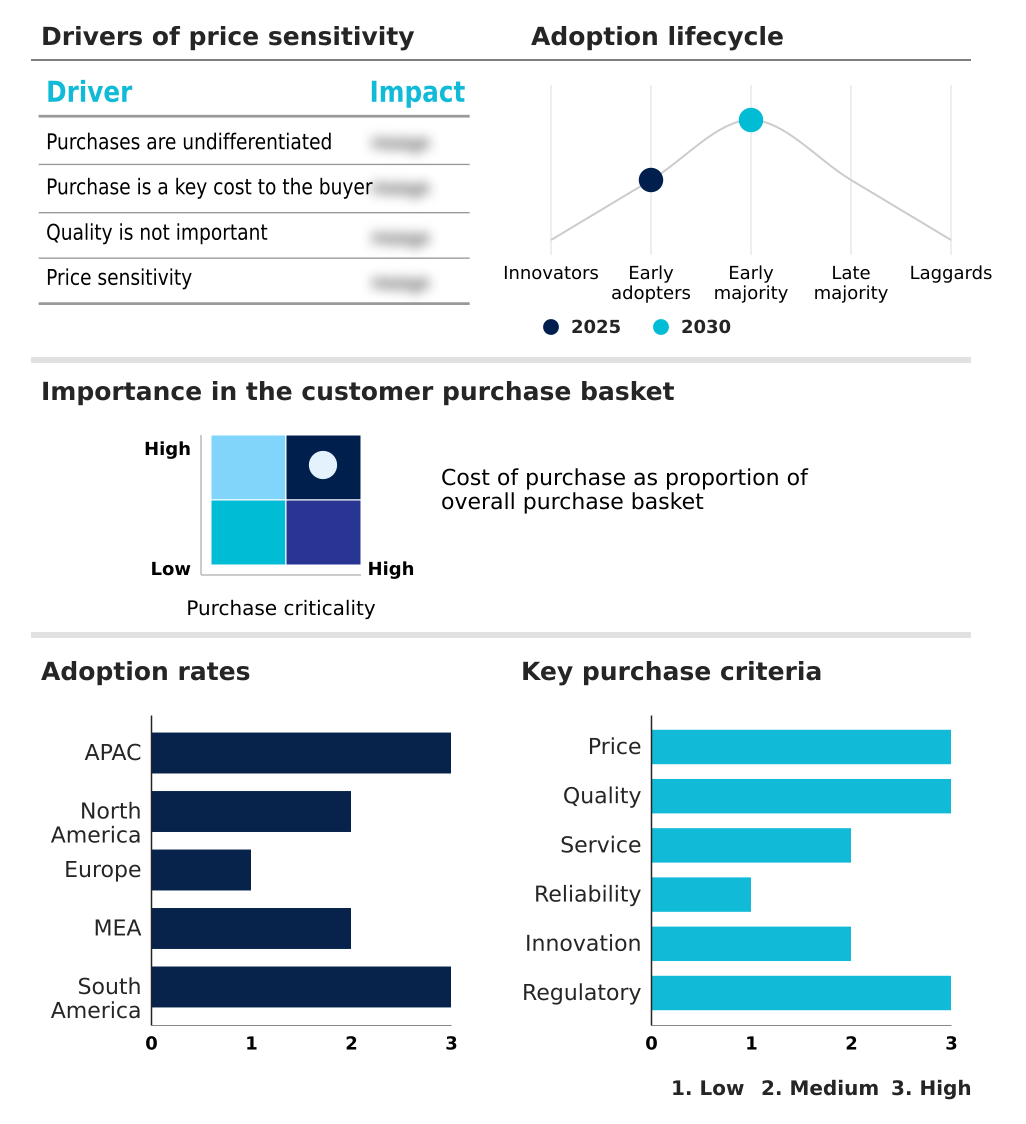
Customer Landscape of Tomato Industry
Competitive Landscape & Market Insights
Companies are implementing various strategies, such as strategic alliances, tomato market forecast, partnerships, mergers and acquisitions, geographical expansion, and product/service launches, to enhance their presence in the industry.
Aylmer Family Farm - The company specializes in the production and processing of high-quality tomatoes, including Pomì Tomatoes, utilizing sustainable farming methods.
The industry research and growth report includes detailed analyses of the competitive landscape of the market and information about key companies, including:
- Aylmer Family Farm
- BASF SE
- Bayer AG
- Blue River Produce
- Campbell Soup Company
- Casalasco Società Agricola S.p.A.
- COFCO Tunhe Tomato Co., Ltd.
- Conagra Brands, Inc.
- Del Monte Foods, Inc.
- Dole Food Company
- Duijvestijn Tomaten BV
- East-West Seed
- Houweling's
- Ingomar Packing Company LLC
- Kraft Heinz Company
- Mucci Int'l Mrktg Inc.
- Mutti S.p.A.
- Rijk Zwaan Zaadteelt en Zaadhandel BV
- Sahyadri Farms Post Harvest Care Ltd.
- Syngenta Group
- The Morning Star Company
- Tomato Growers Supply Company
- West Coast Tomato LLC
- Xinjiang Chalkis Company Ltd.
- Zia-Pia, Inc.
Qualitative and quantitative analysis of companies has been conducted to help clients understand the wider business environment as well as the strengths and weaknesses of key industry players. Data is qualitatively analyzed to categorize companies as pure play, category-focused, industry-focused, and diversified; it is quantitatively analyzed to categorize companies as dominant, leading, strong, tentative, and weak.
Recent Development and News in Tomato Market
- In January 2024, Syngenta, a leading agribusiness company, announced the launch of a new tomato variety, 'SunSweet Cherry Red,' engineered for improved disease resistance and enhanced sweetness (Syngenta Press Release, 2024).
- In March 2024, Monsanto and BASF Agricultural Solutions entered into a strategic collaboration to co-develop and commercialize vegetable seeds, including tomatoes, marking a significant move in the seed industry consolidation (Monsanto Press Release, 2024).
- In April 2025, the European Commission approved the use of a new tomato cultivation technique, 'Vertical Farming,' which allows for year-round production and reduced water usage, signifying a key regulatory approval for the sustainable agriculture sector (European Commission Press Release, 2025).
- In May 2025, Tomato Growers of California, a cooperative of over 40 tomato growers, raised USD 50 million in funding to expand their operations and increase market share, demonstrating the ongoing investment in the market (Tomato Growers of California Press Release, 2025).
Dive into Technavio's robust research methodology, blending expert interviews, extensive data synthesis, and validated models for unparalleled Tomato Market insights. See full methodology.
|
Market Scope
|
|
Report Coverage
|
Details
|
|
Page number
|
185
|
|
Base year
|
2024
|
|
Historic period
|
2019-2023 |
|
Forecast period
|
2025-2029
|
|
Growth momentum & CAGR
|
Accelerate at a CAGR of 5%
|
|
Market growth 2025-2029
|
USD 49.8 billion
|
|
Market structure
|
Fragmented
|
|
YoY growth 2024-2025(%)
|
4.8
|
|
Key countries
|
US, Canada, Germany, UK, Italy, France, China, India, Japan, Brazil, Egypt, UAE, Oman, Argentina, KSA, UAE, Brazil, and Rest of World (ROW)
|
|
Competitive landscape
|
Leading Companies, Market Positioning of Companies, Competitive Strategies, and Industry Risks
|
Request Free Sample
Research Analyst Overview
- In the dynamic and evolving market, various research initiatives are ongoing to enhance water use efficiency and improve fruit quality. One such area of focus is the exploration of enzyme activity assays for optimizing post-harvest preservation. These assays help assess the ripening process and ensure the production of high-quality tomatoes. Moreover, metabolite profiling plays a crucial role in understanding the complex biochemical processes that influence tomato growth and development. By analyzing the metabolomic profiles of tomato plants, researchers can identify key factors affecting photosynthetic efficiency, nitrogen fixation efficiency, and soil nutrient cycling. Microbial inoculants, such as mycorrhizal fungi, are increasingly being adopted to improve crop stress tolerance and enhance yield.
- These beneficial microorganisms facilitate nutrient uptake optimization, particularly for essential micronutrients like magnesium and calcium. Integrated pest management strategies, employing plant hormone modulation and growth regulator applications, are essential for managing pests and diseases while minimizing the use of synthetic chemicals. Precision agriculture techniques, including genetic engineering and molecular breeding approaches, are also being explored to develop tomato varieties with enhanced disease resistance mechanisms and improved fruit ripening regulation. Sustainable agriculture practices, such as organic farming and the use of humic acid fertilizers, contribute to the overall health of tomato plants and the environment. Phosphorus solubilization and potassium uptake enhancement are essential aspects of nutrient management, ensuring optimal plant growth and fruit development.
- In the realm of quality control procedures, fruit maturity assessment and harvest maturity indexing are critical for ensuring consistent product quality and consumer satisfaction. The market continues to evolve, with ongoing research and innovation aimed at addressing challenges and improving the efficiency and sustainability of tomato production.
What are the Key Data Covered in this Tomato Market Research and Growth Report?
-
What is the expected growth of the Tomato Market between 2025 and 2029?
-
What segmentation does the market report cover?
-
The report segmented by Product Type (Fresh, Frozen, and Dried), Type (Conventional and Organic), Geography (APAC, North America, Europe, Middle East and Africa, and South America), Distribution Channel (Hypermarkets & Supermarkets, Food Specialty Stores, Convenience Stores, Online Retail, and Direct Sales), Cultivation Type (Open Field Cultivation and Protected Cultivation (Greenhouse, Hydroponics)), and End-use (Household/Retail Industry, Food Service Industry (Hotels, Restaurants, Cafes, Fast Food Chains), Industrial Food Processors, Beverage Industry, and Pharmaceutical Industry)
-
Which regions are analyzed in the report?
-
APAC, North America, Europe, Middle East and Africa, and South America
-
What are the key growth drivers and market challenges?
-
Who are the major players in the Tomato Market?
-
Key Companies Aylmer Family Farm, BASF SE, Bayer AG, Blue River Produce, Campbell Soup Company, Casalasco Società Agricola S.p.A., COFCO Tunhe Tomato Co., Ltd., Conagra Brands, Inc., Del Monte Foods, Inc., Dole Food Company, Duijvestijn Tomaten BV, East-West Seed, Houweling's, Ingomar Packing Company LLC, Kraft Heinz Company, Mucci Int'l Mrktg Inc., Mutti S.p.A., Rijk Zwaan Zaadteelt en Zaadhandel BV, Sahyadri Farms Post Harvest Care Ltd., Syngenta Group, The Morning Star Company, Tomato Growers Supply Company, West Coast Tomato LLC, Xinjiang Chalkis Company Ltd., and Zia-Pia, Inc.
Market Research Insights
- The market is a dynamic and complex ecosystem, characterized by ongoing innovation and adaptation to meet evolving consumer demands and environmental challenges. Two key areas of focus are sustainability and productivity. In terms of sustainability, there is growing interest in reducing the carbon footprint of tomato production through the adoption of efficient fertilizer application methods, such as variable rate fertilization, and the integration of precision irrigation and sensor networks. This approach not only minimizes resource usage but also enhances economic viability. In terms of productivity, advancements in plant tissue culture, yield prediction models, and disease diagnostics have led to significant improvements in tomato crop yields.
- For instance, the implementation of hydroponic cultivation techniques has resulted in an average yield increase of 30% compared to traditional soil-based farming. Furthermore, the use of smart farming solutions, such as climate-smart agriculture and integrated crop management, enables farmers to optimize irrigation scheduling and implement soil amendment techniques to mitigate water stress and nutrient deficiencies. These strategies not only boost yields but also enhance the overall quality of the tomatoes produced.
We can help! Our analysts can customize this tomato market research report to meet your requirements.
Get in touch
1 Executive Summary
- 1.1 Market overview
- Executive Summary - Chart on Market Overview
- Executive Summary - Data Table on Market Overview
- Executive Summary - Chart on Global Market Characteristics
- Executive Summary - Chart on Market by Geography
- Executive Summary - Chart on Market Segmentation by Product Type
- Executive Summary - Chart on Market Segmentation by Type
- Executive Summary - Chart on Incremental Growth
- Executive Summary - Data Table on Incremental Growth
- Executive Summary - Chart on Company Market Positioning
2 Technavio Analysis
- 2.1 Analysis of price sensitivity, lifecycle, customer purchase basket, adoption rates, and purchase criteria
- Analysis of price sensitivity, lifecycle, customer purchase basket, adoption rates, and purchase criteria
- 2.2 Criticality of inputs and Factors of differentiation
- Overview on criticality of inputs and factors of differentiation
- 2.3 Factors of disruption
- Overview on factors of disruption
- 2.4 Impact of drivers and challenges
- Impact of drivers and challenges in 2024 and 2029
3 Market Landscape
- 3.1 Market ecosystem
- Parent Market
- Data Table on - Parent Market
- 3.2 Market characteristics
- Market characteristics analysis
4 Market Sizing
- 4.1 Market definition
- Offerings of companies included in the market definition
- 4.2 Market segment analysis
- 4.4 Market outlook: Forecast for 2024-2029
- Chart on Global - Market size and forecast 2024-2029 ($ billion)
- Data Table on Global - Market size and forecast 2024-2029 ($ billion)
- Chart on Global Market: Year-over-year growth 2024-2029 (%)
- Data Table on Global Market: Year-over-year growth 2024-2029 (%)
5 Historic Market Size
- 5.1 Global Tomato Market 2019 - 2023
- Historic Market Size - Data Table on Global Tomato Market 2019 - 2023 ($ billion)
- 5.2 Product Type segment analysis 2019 - 2023
- Historic Market Size - Product Type Segment 2019 - 2023 ($ billion)
- 5.3 Type segment analysis 2019 - 2023
- Historic Market Size - Type Segment 2019 - 2023 ($ billion)
- 5.4 Geography segment analysis 2019 - 2023
- Historic Market Size - Geography Segment 2019 - 2023 ($ billion)
- 5.5 Country segment analysis 2019 - 2023
- Historic Market Size - Country Segment 2019 - 2023 ($ billion)
6 Qualitative Analysis
- 6.1 Impact of AI on the Global Tomato Market
7 Five Forces Analysis
- 7.1 Five forces summary
- Five forces analysis - Comparison between 2024 and 2029
- 7.2 Bargaining power of buyers
- Bargaining power of buyers - Impact of key factors 2024 and 2029
- 7.3 Bargaining power of suppliers
- Bargaining power of suppliers - Impact of key factors in 2024 and 2029
- 7.4 Threat of new entrants
- Threat of new entrants - Impact of key factors in 2024 and 2029
- 7.5 Threat of substitutes
- Threat of substitutes - Impact of key factors in 2024 and 2029
- 7.6 Threat of rivalry
- Threat of rivalry - Impact of key factors in 2024 and 2029
- 7.7 Market condition
- Chart on Market condition - Five forces 2024 and 2029
8 Market Segmentation by Product Type
- 8.1 Market segments
- Chart on Product Type - Market share (2024-2029) (%)
- Data Table on Product Type - Market share (2024-2029) (%)
- 8.2 Comparison by Product Type
- Chart on Comparison by Product Type
- Data Table on Comparison by Product Type
- 8.3 Fresh - Market size and forecast (2024-2029)
- Chart on Fresh - Market size and forecast (2024-2029) ($ billion)
- Data Table on Fresh - Market size and forecast (2024-2029) ($ billion)
- Chart on Fresh - Year-over-year growth (2024-2029) (%)
- Data Table on Fresh - Year-over-year growth (2024-2029) (%)
- 8.4 Frozen - Market size and forecast (2024-2029)
- Chart on Frozen - Market size and forecast (2024-2029) ($ billion)
- Data Table on Frozen - Market size and forecast (2024-2029) ($ billion)
- Chart on Frozen - Year-over-year growth (2024-2029) (%)
- Data Table on Frozen - Year-over-year growth (2024-2029) (%)
- 8.5 Dried - Market size and forecast (2024-2029)
- Chart on Dried - Market size and forecast (2024-2029) ($ billion)
- Data Table on Dried - Market size and forecast (2024-2029) ($ billion)
- Chart on Dried - Year-over-year growth (2024-2029) (%)
- Data Table on Dried - Year-over-year growth (2024-2029) (%)
- 8.6 Market opportunity by Product Type
- Market opportunity by Product Type ($ billion)
- Data Table on Market opportunity by Product Type ($ billion)
9 Market Segmentation by Type
- 9.1 Market segments
- Chart on Type - Market share (2024-2029) (%)
- Data Table on Type - Market share (2024-2029) (%)
- 9.2 Comparison by Type
- Chart on Comparison by Type
- Data Table on Comparison by Type
- 9.3 Conventional - Market size and forecast (2024-2029)
- Chart on Conventional - Market size and forecast (2024-2029) ($ billion)
- Data Table on Conventional - Market size and forecast (2024-2029) ($ billion)
- Chart on Conventional - Year-over-year growth (2024-2029) (%)
- Data Table on Conventional - Year-over-year growth (2024-2029) (%)
- 9.4 Organic - Market size and forecast (2024-2029)
- Chart on Organic - Market size and forecast (2024-2029) ($ billion)
- Data Table on Organic - Market size and forecast (2024-2029) ($ billion)
- Chart on Organic - Year-over-year growth (2024-2029) (%)
- Data Table on Organic - Year-over-year growth (2024-2029) (%)
- 9.5 Market opportunity by Type
- Market opportunity by Type ($ billion)
- Data Table on Market opportunity by Type ($ billion)
10 Market Segmentation by Distribution Channel
- 10.1 Market segments
- Chart on Distribution Channel - Market share (2024-2029) (%)
- Data Table on Distribution Channel - Market share (2024-2029) (%)
- 10.2 Comparison by Distribution Channel
- Chart on Comparison by Distribution Channel
- Data Table on Comparison by Distribution Channel
- 10.3 Hypermarkets & Supermarkets - Market size and forecast (2024-2029)
- Chart on Hypermarkets & Supermarkets - Market size and forecast (2024-2029) ($ billion)
- Data Table on Hypermarkets & Supermarkets - Market size and forecast (2024-2029) ($ billion)
- Chart on Hypermarkets & Supermarkets - Year-over-year growth (2024-2029) (%)
- Data Table on Hypermarkets & Supermarkets - Year-over-year growth (2024-2029) (%)
- 10.4 Food Specialty Stores - Market size and forecast (2024-2029)
- Chart on Food Specialty Stores - Market size and forecast (2024-2029) ($ billion)
- Data Table on Food Specialty Stores - Market size and forecast (2024-2029) ($ billion)
- Chart on Food Specialty Stores - Year-over-year growth (2024-2029) (%)
- Data Table on Food Specialty Stores - Year-over-year growth (2024-2029) (%)
- 10.5 Convenience Stores - Market size and forecast (2024-2029)
- Chart on Convenience Stores - Market size and forecast (2024-2029) ($ billion)
- Data Table on Convenience Stores - Market size and forecast (2024-2029) ($ billion)
- Chart on Convenience Stores - Year-over-year growth (2024-2029) (%)
- Data Table on Convenience Stores - Year-over-year growth (2024-2029) (%)
- 10.6 Online Retail - Market size and forecast (2024-2029)
- Chart on Online Retail - Market size and forecast (2024-2029) ($ billion)
- Data Table on Online Retail - Market size and forecast (2024-2029) ($ billion)
- Chart on Online Retail - Year-over-year growth (2024-2029) (%)
- Data Table on Online Retail - Year-over-year growth (2024-2029) (%)
- 10.7 Direct Sales - Market size and forecast (2024-2029)
- Chart on Direct Sales - Market size and forecast (2024-2029) ($ billion)
- Data Table on Direct Sales - Market size and forecast (2024-2029) ($ billion)
- Chart on Direct Sales - Year-over-year growth (2024-2029) (%)
- Data Table on Direct Sales - Year-over-year growth (2024-2029) (%)
- 10.8 Market opportunity by Distribution Channel
- Market opportunity by Distribution Channel ($ billion)
- Data Table on Market opportunity by Distribution Channel ($ billion)
11 Market Segmentation by Cultivation Type
- 11.1 Market segments
- Chart on Cultivation Type - Market share (2024-2029) (%)
- Data Table on Cultivation Type - Market share (2024-2029) (%)
- 11.2 Comparison by Cultivation Type
- Chart on Comparison by Cultivation Type
- Data Table on Comparison by Cultivation Type
- 11.3 Open Field Cultivation - Market size and forecast (2024-2029)
- Chart on Open Field Cultivation - Market size and forecast (2024-2029) ($ billion)
- Data Table on Open Field Cultivation - Market size and forecast (2024-2029) ($ billion)
- Chart on Open Field Cultivation - Year-over-year growth (2024-2029) (%)
- Data Table on Open Field Cultivation - Year-over-year growth (2024-2029) (%)
- 11.4 Protected Cultivation (Greenhouse, Hydroponics) - Market size and forecast (2024-2029)
- Chart on Protected Cultivation (Greenhouse, Hydroponics) - Market size and forecast (2024-2029) ($ billion)
- Data Table on Protected Cultivation (Greenhouse, Hydroponics) - Market size and forecast (2024-2029) ($ billion)
- Chart on Protected Cultivation (Greenhouse, Hydroponics) - Year-over-year growth (2024-2029) (%)
- Data Table on Protected Cultivation (Greenhouse, Hydroponics) - Year-over-year growth (2024-2029) (%)
- 11.5 Market opportunity by Cultivation Type
- Market opportunity by Cultivation Type ($ billion)
- Data Table on Market opportunity by Cultivation Type ($ billion)
12 Market Segmentation by End-use
- 12.1 Market segments
- Chart on End-use - Market share (2024-2029) (%)
- Data Table on End-use - Market share (2024-2029) (%)
- 12.2 Comparison by End-use
- Chart on Comparison by End-use
- Data Table on Comparison by End-use
- 12.3 Household/Retail Industry - Market size and forecast (2024-2029)
- Chart on Household/Retail Industry - Market size and forecast (2024-2029) ($ billion)
- Data Table on Household/Retail Industry - Market size and forecast (2024-2029) ($ billion)
- Chart on Household/Retail Industry - Year-over-year growth (2024-2029) (%)
- Data Table on Household/Retail Industry - Year-over-year growth (2024-2029) (%)
- 12.4 Food Service Industry (Hotels, Restaurants, Cafes, Fast Food Chains) - Market size and forecast (2024-2029)
- Chart on Food Service Industry (Hotels, Restaurants, Cafes, Fast Food Chains) - Market size and forecast (2024-2029) ($ billion)
- Data Table on Food Service Industry (Hotels, Restaurants, Cafes, Fast Food Chains) - Market size and forecast (2024-2029) ($ billion)
- Chart on Food Service Industry (Hotels, Restaurants, Cafes, Fast Food Chains) - Year-over-year growth (2024-2029) (%)
- Data Table on Food Service Industry (Hotels, Restaurants, Cafes, Fast Food Chains) - Year-over-year growth (2024-2029) (%)
- 12.5 Industrial Food Processors - Market size and forecast (2024-2029)
- Chart on Industrial Food Processors - Market size and forecast (2024-2029) ($ billion)
- Data Table on Industrial Food Processors - Market size and forecast (2024-2029) ($ billion)
- Chart on Industrial Food Processors - Year-over-year growth (2024-2029) (%)
- Data Table on Industrial Food Processors - Year-over-year growth (2024-2029) (%)
- 12.6 Beverage Industry - Market size and forecast (2024-2029)
- Chart on Beverage Industry - Market size and forecast (2024-2029) ($ billion)
- Data Table on Beverage Industry - Market size and forecast (2024-2029) ($ billion)
- Chart on Beverage Industry - Year-over-year growth (2024-2029) (%)
- Data Table on Beverage Industry - Year-over-year growth (2024-2029) (%)
- 12.7 Pharmaceutical Industry - Market size and forecast (2024-2029)
- Chart on Pharmaceutical Industry - Market size and forecast (2024-2029) ($ billion)
- Data Table on Pharmaceutical Industry - Market size and forecast (2024-2029) ($ billion)
- Chart on Pharmaceutical Industry - Year-over-year growth (2024-2029) (%)
- Data Table on Pharmaceutical Industry - Year-over-year growth (2024-2029) (%)
- 12.8 Market opportunity by End-use
- Market opportunity by End-use ($ billion)
- Data Table on Market opportunity by End-use ($ billion)
13 Customer Landscape
- 13.1 Customer landscape overview
- Analysis of price sensitivity, lifecycle, customer purchase basket, adoption rates, and purchase criteria
14 Geographic Landscape
- 14.1 Geographic segmentation
- Chart on Market share by geography 2024-2029 (%)
- Data Table on Market share by geography 2024-2029 (%)
- 14.2 Geographic comparison
- Chart on Geographic comparison
- Data Table on Geographic comparison
- 14.3 APAC - Market size and forecast 2024-2029
- Chart on APAC - Market size and forecast 2024-2029 ($ billion)
- Data Table on APAC - Market size and forecast 2024-2029 ($ billion)
- Chart on APAC - Year-over-year growth 2024-2029 (%)
- Data Table on APAC - Year-over-year growth 2024-2029 (%)
- 14.4 North America - Market size and forecast 2024-2029
- Chart on North America - Market size and forecast 2024-2029 ($ billion)
- Data Table on North America - Market size and forecast 2024-2029 ($ billion)
- Chart on North America - Year-over-year growth 2024-2029 (%)
- Data Table on North America - Year-over-year growth 2024-2029 (%)
- 14.5 Europe - Market size and forecast 2024-2029
- Chart on Europe - Market size and forecast 2024-2029 ($ billion)
- Data Table on Europe - Market size and forecast 2024-2029 ($ billion)
- Chart on Europe - Year-over-year growth 2024-2029 (%)
- Data Table on Europe - Year-over-year growth 2024-2029 (%)
- 14.6 Middle East and Africa - Market size and forecast 2024-2029
- Chart on Middle East and Africa - Market size and forecast 2024-2029 ($ billion)
- Data Table on Middle East and Africa - Market size and forecast 2024-2029 ($ billion)
- Chart on Middle East and Africa - Year-over-year growth 2024-2029 (%)
- Data Table on Middle East and Africa - Year-over-year growth 2024-2029 (%)
- 14.7 South America - Market size and forecast 2024-2029
- Chart on South America - Market size and forecast 2024-2029 ($ billion)
- Data Table on South America - Market size and forecast 2024-2029 ($ billion)
- Chart on South America - Year-over-year growth 2024-2029 (%)
- Data Table on South America - Year-over-year growth 2024-2029 (%)
- 14.8 China - Market size and forecast 2024-2029
- Chart on China - Market size and forecast 2024-2029 ($ billion)
- Data Table on China - Market size and forecast 2024-2029 ($ billion)
- Chart on China - Year-over-year growth 2024-2029 (%)
- Data Table on China - Year-over-year growth 2024-2029 (%)
- 14.9 US - Market size and forecast 2024-2029
- Chart on US - Market size and forecast 2024-2029 ($ billion)
- Data Table on US - Market size and forecast 2024-2029 ($ billion)
- Chart on US - Year-over-year growth 2024-2029 (%)
- Data Table on US - Year-over-year growth 2024-2029 (%)
- 14.10 India - Market size and forecast 2024-2029
- Chart on India - Market size and forecast 2024-2029 ($ billion)
- Data Table on India - Market size and forecast 2024-2029 ($ billion)
- Chart on India - Year-over-year growth 2024-2029 (%)
- Data Table on India - Year-over-year growth 2024-2029 (%)
- 14.11 Indonesia - Market size and forecast 2024-2029
- Chart on Indonesia - Market size and forecast 2024-2029 ($ billion)
- Data Table on Indonesia - Market size and forecast 2024-2029 ($ billion)
- Chart on Indonesia - Year-over-year growth 2024-2029 (%)
- Data Table on Indonesia - Year-over-year growth 2024-2029 (%)
- 14.12 Spain - Market size and forecast 2024-2029
- Chart on Spain - Market size and forecast 2024-2029 ($ billion)
- Data Table on Spain - Market size and forecast 2024-2029 ($ billion)
- Chart on Spain - Year-over-year growth 2024-2029 (%)
- Data Table on Spain - Year-over-year growth 2024-2029 (%)
- 14.13 Japan - Market size and forecast 2024-2029
- Chart on Japan - Market size and forecast 2024-2029 ($ billion)
- Data Table on Japan - Market size and forecast 2024-2029 ($ billion)
- Chart on Japan - Year-over-year growth 2024-2029 (%)
- Data Table on Japan - Year-over-year growth 2024-2029 (%)
- 14.14 Germany - Market size and forecast 2024-2029
- Chart on Germany - Market size and forecast 2024-2029 ($ billion)
- Data Table on Germany - Market size and forecast 2024-2029 ($ billion)
- Chart on Germany - Year-over-year growth 2024-2029 (%)
- Data Table on Germany - Year-over-year growth 2024-2029 (%)
- 14.15 UK - Market size and forecast 2024-2029
- Chart on UK - Market size and forecast 2024-2029 ($ billion)
- Data Table on UK - Market size and forecast 2024-2029 ($ billion)
- Chart on UK - Year-over-year growth 2024-2029 (%)
- Data Table on UK - Year-over-year growth 2024-2029 (%)
- 14.16 Brazil - Market size and forecast 2024-2029
- Chart on Brazil - Market size and forecast 2024-2029 ($ billion)
- Data Table on Brazil - Market size and forecast 2024-2029 ($ billion)
- Chart on Brazil - Year-over-year growth 2024-2029 (%)
- Data Table on Brazil - Year-over-year growth 2024-2029 (%)
- 14.17 France - Market size and forecast 2024-2029
- Chart on France - Market size and forecast 2024-2029 ($ billion)
- Data Table on France - Market size and forecast 2024-2029 ($ billion)
- Chart on France - Year-over-year growth 2024-2029 (%)
- Data Table on France - Year-over-year growth 2024-2029 (%)
- 14.18 Market opportunity by geography
- Market opportunity by geography ($ billion)
- Data Tables on Market opportunity by geography ($ billion)
- 14.19 Canada - Market size and forecast (2024-2029)
- Chart on Canada - Market size and forecast (2024-2029) ($ billion)
- Data Table on Canada - Market size and forecast (2024-2029) ($ billion)
- Chart on Canada - Year-over-year growth (2024-2029) (%)
- Data Table on Canada - Year-over-year growth (2024-2029) (%)
- 14.20 Italy - Market size and forecast (2024-2029)
- Chart on Italy - Market size and forecast (2024-2029) ($ billion)
- Data Table on Italy - Market size and forecast (2024-2029) ($ billion)
- Chart on Italy - Year-over-year growth (2024-2029) (%)
- Data Table on Italy - Year-over-year growth (2024-2029) (%)
- 14.21 Egypt - Market size and forecast (2024-2029)
- Chart on Egypt - Market size and forecast (2024-2029) ($ billion)
- Data Table on Egypt - Market size and forecast (2024-2029) ($ billion)
- Chart on Egypt - Year-over-year growth (2024-2029) (%)
- Data Table on Egypt - Year-over-year growth (2024-2029) (%)
- 14.22 UAE - Market size and forecast (2024-2029)
- Chart on UAE - Market size and forecast (2024-2029) ($ billion)
- Data Table on UAE - Market size and forecast (2024-2029) ($ billion)
- Chart on UAE - Year-over-year growth (2024-2029) (%)
- Data Table on UAE - Year-over-year growth (2024-2029) (%)
- 14.23 Oman - Market size and forecast (2024-2029)
- Chart on Oman - Market size and forecast (2024-2029) ($ billion)
- Data Table on Oman - Market size and forecast (2024-2029) ($ billion)
- Chart on Oman - Year-over-year growth (2024-2029) (%)
- Data Table on Oman - Year-over-year growth (2024-2029) (%)
- 14.24 Argentina - Market size and forecast (2024-2029)
- Chart on Argentina - Market size and forecast (2024-2029) ($ billion)
- Data Table on Argentina - Market size and forecast (2024-2029) ($ billion)
- Chart on Argentina - Year-over-year growth (2024-2029) (%)
- Data Table on Argentina - Year-over-year growth (2024-2029) (%)
- 14.25 KSA - Market size and forecast (2024-2029)
- Chart on KSA - Market size and forecast (2024-2029) ($ billion)
- Data Table on KSA - Market size and forecast (2024-2029) ($ billion)
- Chart on KSA - Year-over-year growth (2024-2029) (%)
- Data Table on KSA - Year-over-year growth (2024-2029) (%)
- 14.26 Rest of World (ROW) - Market size and forecast (2024-2029)
- Chart on Rest of World (ROW) - Market size and forecast (2024-2029) ($ billion)
- Data Table on Rest of World (ROW) - Market size and forecast (2024-2029) ($ billion)
- Chart on Rest of World (ROW) - Year-over-year growth (2024-2029) (%)
- Data Table on Rest of World (ROW) - Year-over-year growth (2024-2029) (%)
15 Drivers, Challenges, and Opportunity/Restraints
- 15.3 Impact of drivers and challenges
- Impact of drivers and challenges in 2024 and 2029
- 15.4 Market opportunities/restraints
16 Competitive Landscape
- 16.2 Competitive Landscape
- Overview on criticality of inputs and factors of differentiation
- 16.3 Landscape disruption
- Overview on factors of disruption
- 16.4 Industry risks
- Impact of key risks on business
17 Competitive Analysis
- 17.2 Market positioning of companies
- Matrix on companies position and classification
- 17.3 Aylmer Family Farm
- Aylmer Family Farm - Overview
- Aylmer Family Farm - Product / Service
- Aylmer Family Farm - Key offerings
- 17.4 BASF SE
- BASF SE - Overview
- BASF SE - Product / Service
- BASF SE - Key offerings
- 17.5 Bayer AG
- Bayer AG - Overview
- Bayer AG - Product / Service
- Bayer AG - Key offerings
- 17.6 Blue River Produce
- Blue River Produce - Overview
- Blue River Produce - Product / Service
- Blue River Produce - Key offerings
- 17.7 Campbell Soup Company
- Campbell Soup Company - Overview
- Campbell Soup Company - Product / Service
- Campbell Soup Company - Key offerings
- 17.8 Casalasco Società Agricola S.p.A.
- Casalasco Società Agricola S.p.A. - Overview
- Casalasco Società Agricola S.p.A. - Product / Service
- Casalasco Società Agricola S.p.A. - Key offerings
- 17.9 COFCO Tunhe Tomato Co., Ltd.
- COFCO Tunhe Tomato Co., Ltd. - Overview
- COFCO Tunhe Tomato Co., Ltd. - Product / Service
- COFCO Tunhe Tomato Co., Ltd. - Key offerings
- 17.10 Conagra Brands, Inc.
- Conagra Brands, Inc. - Overview
- Conagra Brands, Inc. - Product / Service
- Conagra Brands, Inc. - Key offerings
- 17.11 Del Monte Foods, Inc.
- Del Monte Foods, Inc. - Overview
- Del Monte Foods, Inc. - Product / Service
- Del Monte Foods, Inc. - Key offerings
- 17.12 Dole Food Company
- Dole Food Company - Overview
- Dole Food Company - Product / Service
- Dole Food Company - Key offerings
- 17.13 Duijvestijn Tomaten BV
- Duijvestijn Tomaten BV - Overview
- Duijvestijn Tomaten BV - Product / Service
- Duijvestijn Tomaten BV - Key offerings
- 17.14 East-West Seed
- East-West Seed - Overview
- East-West Seed - Product / Service
- East-West Seed - Key offerings
- 17.15 Houweling's
- Houweling's - Overview
- Houweling's - Product / Service
- Houweling's - Key offerings
- 17.16 Ingomar Packing Company LLC
- Ingomar Packing Company LLC - Overview
- Ingomar Packing Company LLC - Product / Service
- Ingomar Packing Company LLC - Key offerings
- 17.17 Kraft Heinz Company
- Kraft Heinz Company - Overview
- Kraft Heinz Company - Product / Service
- Kraft Heinz Company - Key offerings
- 17.18 Mucci Int'l Mrktg Inc.
- Mucci Int'l Mrktg Inc. - Overview
- Mucci Int'l Mrktg Inc. - Product / Service
- Mucci Int'l Mrktg Inc. - Key offerings
- 17.19 Mutti S.p.A.
- Mutti S.p.A. - Overview
- Mutti S.p.A. - Product / Service
- Mutti S.p.A. - Key offerings
- 17.20 Rijk Zwaan Zaadteelt en Zaadhandel BV
- Rijk Zwaan Zaadteelt en Zaadhandel BV - Overview
- Rijk Zwaan Zaadteelt en Zaadhandel BV - Product / Service
- Rijk Zwaan Zaadteelt en Zaadhandel BV - Key offerings
- 17.21 Sahyadri Farms Post Harvest Care Ltd.
- Sahyadri Farms Post Harvest Care Ltd. - Overview
- Sahyadri Farms Post Harvest Care Ltd. - Product / Service
- Sahyadri Farms Post Harvest Care Ltd. - Key offerings
- 17.22 Syngenta Group
- Syngenta Group - Overview
- Syngenta Group - Product / Service
- Syngenta Group - Key offerings
- 17.23 The Morning Star Company
- The Morning Star Company - Overview
- The Morning Star Company - Product / Service
- The Morning Star Company - Key offerings
- 17.24 Tomato Growers Supply Company
- Tomato Growers Supply Company - Overview
- Tomato Growers Supply Company - Product / Service
- Tomato Growers Supply Company - Key offerings
- 17.25 West Coast Tomato LLC
- West Coast Tomato LLC - Overview
- West Coast Tomato LLC - Product / Service
- West Coast Tomato LLC - Key offerings
- 17.26 Xinjiang Chalkis Company Ltd.
- Xinjiang Chalkis Company Ltd. - Overview
- Xinjiang Chalkis Company Ltd. - Product / Service
- Xinjiang Chalkis Company Ltd. - Key offerings
- 17.27 Zia-Pia, Inc.
- Zia-Pia, Inc. - Overview
- Zia-Pia, Inc. - Product / Service
- Zia-Pia, Inc. - Key offerings
- 17.28 Casalasco Societa Agricola S.p.A.
- Casalasco Societa Agricola S.p.A. - Overview
- Casalasco Societa Agricola S.p.A. - Product / Service
- Casalasco Societa Agricola S.p.A. - Key offerings
- 17.29 Duijvestijn Tomaten
- Duijvestijn Tomaten - Overview
- Duijvestijn Tomaten - Product / Service
- Duijvestijn Tomaten - Key offerings
- 17.30 Global Green Co. Ltd.
- Global Green Co. Ltd. - Overview
- Global Green Co. Ltd. - Product / Service
- Global Green Co. Ltd. - Key offerings
- 17.31 Hilda and Alice Inc.
- Hilda and Alice Inc. - Overview
- Hilda and Alice Inc. - Product / Service
- Hilda and Alice Inc. - Key offerings
- 17.32 Houwelings Tomatoes
- Houwelings Tomatoes - Overview
- Houwelings Tomatoes - Product / Service
- Houwelings Tomatoes - Key offerings
- 17.33 Ingomar Packing Co.
- Ingomar Packing Co. - Overview
- Ingomar Packing Co. - Product / Service
- Ingomar Packing Co. - Key offerings
- 17.34 Kagome Co. Ltd.
- Kagome Co. Ltd. - Overview
- Kagome Co. Ltd. - Product / Service
- Kagome Co. Ltd. - Key offerings
- 17.35 Los Gatos Tomato Products
- Los Gatos Tomato Products - Overview
- Los Gatos Tomato Products - Product / Service
- Los Gatos Tomato Products - Key offerings
- 17.36 Magic Sun
- Magic Sun - Overview
- Magic Sun - Product / Service
- Magic Sun - Key offerings
- 17.37 Mucci Intl Mrktg Inc.
- Mucci Intl Mrktg Inc. - Overview
- Mucci Intl Mrktg Inc. - Product / Service
- Mucci Intl Mrktg Inc. - Key offerings
- 17.38 Ontario Processing Vegetable Growers
- Ontario Processing Vegetable Growers - Overview
- Ontario Processing Vegetable Growers - Product / Service
- Ontario Processing Vegetable Growers - Key offerings
- 17.39 R and L Holt Ltd.
- R and L Holt Ltd. - Overview
- R and L Holt Ltd. - Product / Service
- R and L Holt Ltd. - Key offerings
- 17.40 REDSTAR Sales BV
- REDSTAR Sales BV - Overview
- REDSTAR Sales BV - Product / Service
- REDSTAR Sales BV - Key offerings
- 17.41 Royalpride
- Royalpride - Overview
- Royalpride - Product / Service
- Royalpride - Key offerings
- 17.42 Sahyadri Farms Post Harvest Care Ltd.
- Sahyadri Farms Post Harvest Care Ltd. - Overview
- Sahyadri Farms Post Harvest Care Ltd. - Product / Service
- Sahyadri Farms Post Harvest Care Ltd. - Key offerings
- 17.43 Sunrise Fruits Co.
- Sunrise Fruits Co. - Overview
- Sunrise Fruits Co. - Product / Service
- Sunrise Fruits Co. - Key offerings
- 17.44 The Morning Star Co.
- The Morning Star Co. - Overview
- The Morning Star Co. - Product / Service
- The Morning Star Co. - Key offerings
- 17.45 Tomato Growers Supply Co.
- Tomato Growers Supply Co. - Overview
- Tomato Growers Supply Co. - Product / Service
- Tomato Growers Supply Co. - Key offerings
- 17.46 West Coast Tomato LLC
- West Coast Tomato LLC - Overview
- West Coast Tomato LLC - Product / Service
- West Coast Tomato LLC - Key offerings
- 17.47 Xinjiang Chalkis Co. Ltd.
- Xinjiang Chalkis Co. Ltd. - Overview
- Xinjiang Chalkis Co. Ltd. - Product / Service
- Xinjiang Chalkis Co. Ltd. - Key offerings
18 Appendix
- 18.2 Inclusions and exclusions checklist
- Inclusions checklist
- Exclusions checklist
- 18.3 Currency conversion rates for US$
- Currency conversion rates for US$
- 18.4 Research methodology
- 18.7 Validation techniques employed for market sizing
- Validation techniques employed for market sizing
- 18.9 360 degree market analysis
- 360 degree market analysis
- 18.10 List of abbreviations