



Tonic Water Market Size 2024-2028
The tonic water market size is forecast to increase by USD 627.6 million, at a CAGR of 6.36% between 2023 and 2028.
- The market is experiencing significant growth, driven by the rising trend of gin consumption and the increasing number of product launches. The popularity of gin, an alcoholic spirit traditionally served with tonic water, has surged in recent years, fueling the demand for this mixer. The health issues associated with quinine, a key ingredient in tonic water, pose a challenge for market growth. Quinine, which provides tonic water its characteristic bitter taste and is responsible for its medicinal properties, has been linked to health concerns such as hemolysis and hypoglycemia. This has led to the development of alternative sweeteners and quinine-free tonic waters, presenting an opportunity for innovation and differentiation in the market.
- Companies seeking to capitalize on this trend can focus on developing premium, high-quality tonic waters with unique flavors and natural ingredients to cater to the growing consumer demand for healthier and more flavorful options. Additionally, partnerships and collaborations with gin brands can help increase market presence and consumer reach. Navigating the challenges of health concerns and competition from alternative mixers requires strategic planning and a focus on product innovation and consumer education.
What will be the Size of the Tonic Water Market during the forecast period?
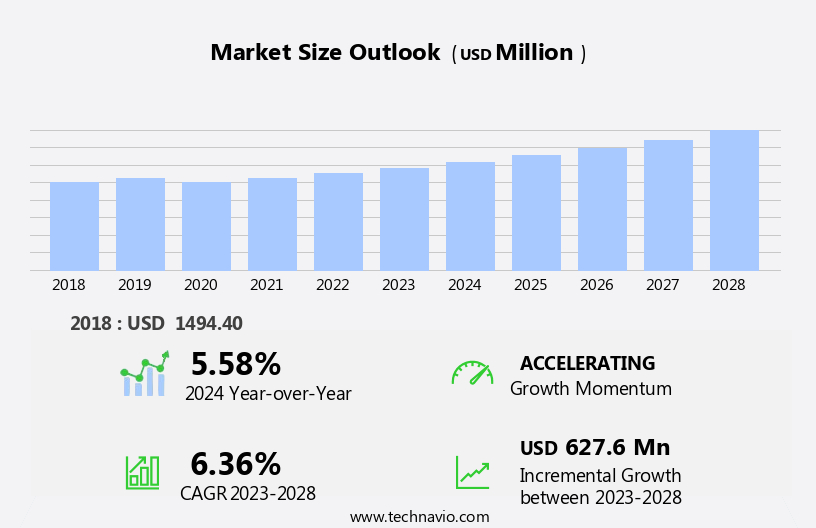
Explore in-depth regional segment analysis with market size data - historical 2018-2022 and forecasts 2024-2028 - in the full report.
Request Free Sample
The market continues to evolve, with dynamic market dynamics shaping its growth and application across various sectors. Value pricing remains a crucial factor, as manufacturers strive to offer competitive prices while maintaining high-quality standards. Packaging design plays a significant role in differentiating brands and appealing to consumers. Import and export regulations pose challenges and opportunities for market participants, requiring adherence to stringent preservation techniques and shelf stability standards. Sensory evaluation and health claims are increasingly important, with ethical sourcing and natural flavors becoming key selling points. Regulatory compliance is a continuous process, with labeling regulations, fair trade certification, and sustainability initiatives shaping market trends.
Consumer behavior and preferences influence pricing strategies, with premium pricing and food service segments experiencing growth. Distribution networks and supply chain management are critical for ensuring product availability and quality control. Competitor analysis and marketing campaigns shape brand loyalty, with glass bottles, botanical extracts, and carbonation levels differentiating offerings. Consumer testing and new product development drive innovation, with organic certification, online sales, and target demographics shaping market trends. Purity standards and taste profiles are essential considerations, with water treatment and cocktail recipes adding value to the market. Nutritional information and premium ingredients are key selling points, with storage conditions and consumer preferences influencing sales patterns.
Aluminum cans and artificial sweeteners are alternative packaging and formulation options, while citric acid and ingredient sourcing impact product quality and pricing. Market participants must navigate these evolving trends and patterns to remain competitive, with ongoing regulatory compliance, garnish options, and distribution channels shaping their strategies.
How is this Tonic Water Industry segmented?
The tonic water industry research report provides comprehensive data (region-wise segment analysis), with forecasts and estimates in "USD million" for the period 2024-2028, as well as historical data from 2018-2022 for the following segments.
- Application
- Alcohol drinks mixer
- Direct consumption
- Geography
- North America
- US
- Canada
- Europe
- Spain
- UK
- APAC
- China
- Rest of World (ROW)
- North America
By Application Insights
The alcohol drinks mixer segment is estimated to witness significant growth during the forecast period.
In the dynamic market, value pricing remains a crucial strategy for businesses to attract consumers. Packaging design plays a significant role in market differentiation, with various brands opting for glass bottles, PET bottles, or aluminum cans. Import and export regulations are essential considerations for companies looking to expand globally. Tonic water's preservation techniques ensure shelf stability, enabling long-term storage and distribution through intricate supply chain management. Sensory evaluation and health claims are essential factors in consumer decision-making. Ethical sourcing and natural flavors are increasingly popular, with fair trade certification and consumer testing gaining traction.
Sustainability initiatives and consumer behavior trends favor premium pricing, driving demand for tonic water in food service and retail sales. Product differentiation is key, with brands focusing on unique flavor profiles, botanical extracts, and carbonation levels. Brand loyalty is strong, with consumers seeking quality control and marketing campaigns that resonate. Regulatory compliance is essential, with labeling regulations, nutritional information, and purity standards shaping the market. Competitor analysis is ongoing, with citric acid, artificial sweeteners, and other ingredients under constant scrutiny. New product development and product innovation continue to shape the market, with taste profiles and water treatment techniques evolving to meet consumer preferences.
Cocktail recipes and consumer preferences influence market trends, with online sales and retail sales offering diverse distribution channels. Storage conditions and distribution networks are crucial for maintaining tonic water's quality, with pricing strategies varying to cater to diverse target demographics. Overall, the market is characterized by a focus on premium ingredients, regulatory compliance, and consumer preferences, with innovation and sustainability driving growth.
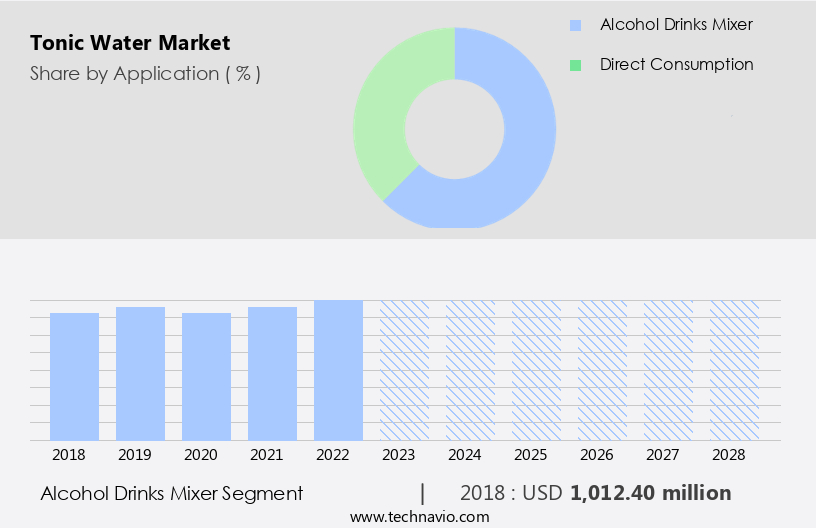
The Alcohol drinks mixer segment was valued at USD 1012.40 million in 2018 and showed a gradual increase during the forecast period.
Regional Analysis
North America is estimated to contribute 46% to the growth of the global market during the forecast period. Technavio's analysts have elaborately explained the regional trends and drivers that shape the market during the forecast period.
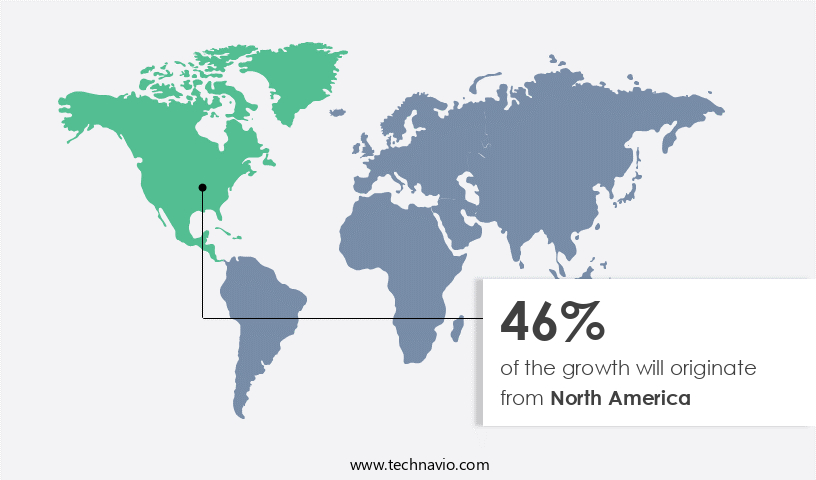
The market in North America is currently the largest revenue generator in the global industry. This growth can be attributed to the increasing popularity of tonic water as a mixer for gin and other alcoholic beverages. New product launches and continuous innovation are also significant drivers in the market. Companies are introducing new flavors to cater to evolving consumer preferences, further fueling market expansion. The US and Canada are the primary markets in the region, with a strong focus on premium pricing and food service. Regulatory compliance is crucial in the market, with strict import and export regulations governing the industry.
Preservation techniques and shelf stability are essential to maintain product quality and ensure consumer safety. Sensory evaluation and health claims are key factors influencing consumer behavior. Ethical sourcing and sustainable initiatives are becoming increasingly important, with a growing emphasis on natural flavors and fair trade certification. Brand loyalty is a significant factor in the market, with consumers often preferring established brands. Distributors play a crucial role in reaching retail sales channels, while supply chain management and pricing strategies are essential for market success. Quality control and marketing campaigns are also essential to differentiate products and build brand recognition.
The market is dynamic, with ongoing trends including the use of glass bottles, botanical extracts, and carbonation levels. Premium ingredients, such as citric acid and artificial sweeteners, are also popular. The market is increasingly moving towards online sales and organic certification, targeting specific demographics with new product development and product innovation. Storage conditions and competitor analysis are also critical factors in the market's evolution.
Market Dynamics
Our researchers analyzed the data with 2023 as the base year, along with the key drivers, trends, and challenges. A holistic analysis of drivers will help companies refine their marketing strategies to gain a competitive advantage.
What are the key market drivers leading to the rise in the adoption of Tonic Water Industry?
- The significant increase in product launches serves as the primary catalyst for market growth.
- The market is experiencing growth due to the continuous new product development and product innovation. Companies are launching new offerings to cater to evolving consumer preferences, which in turn, is increasing revenue and market share. For instance, in May 2021, Fentimans introduced a 200ml mixers and tonic collection, which includes Tonic Water, Ginger Beer, and Rose Lemonade. These mixers are produced using Fentimans' century-old artisanal approach and offer a range of colored and flavored tonics, suitable for mixing with various spirits. Moreover, the increasing demand for organic and healthier beverage options is driving the market. Consumers are looking for tonic water with organic certification, which is free from artificial flavors, preservatives, and additives.
- This trend is leading to the development of tonic water with premium ingredients and purity standards. Online sales are also gaining popularity in the market as consumers prefer the convenience of shopping from the comfort of their homes. Additionally, the availability of cocktail recipes and nutritional information online is helping consumers make informed choices. Overall, the market is witnessing significant growth, driven by new product development, consumer preferences, and the shift towards online sales.
What are the market trends shaping the Tonic Water Industry?
- The consumption of gin is experiencing significant growth and is emerging as the latest market trend. This upward trend in gin sales reflects the increasing preference for this spirit among consumers.
- The market growth is driven by the rising consumption of gin, a primary mixer for this beverage. In 2021, gin experienced a significant increase in annual value sales, fueling the demand for tonic water. The gin sector has been expanding steadily since 2008, particularly in the UK. Tonic water's market value is influenced by various factors, including packaging design, preservation techniques, and sensory evaluation. Compliance with import and export regulations is crucial for market entry and growth. Ethical sourcing of natural flavors and adherence to regulatory compliance are essential for maintaining shelf stability and consumer trust.
- Garnish options add value to the product, catering to diverse consumer preferences. Pricing strategies, such as value pricing, play a significant role in market competitiveness. The market is dynamic, requiring a robust distribution network and continuous regulatory compliance.
What challenges does the Tonic Water Industry face during its growth?
- The consumption of quinine poses significant health concerns, which represents a substantial challenge to the industry's growth trajectory.
- The market faces challenges due to health concerns surrounding the consumption of quinine, an ingredient found in many tonic water products. Consumers have reported various symptoms such as fever, chills, body aches, flu symptoms, sore mouth and throat, easy bruising, unusual bleeding, headache with chest pain, severe dizziness, fainting, fast or pounding heartbeats, sudden numbness or weakness, sudden severe headache, slurred speech, problems with balance, chest pain, sudden cough, wheezing, rapid breathing, and coughing up blood. These health issues hinder market growth. To differentiate and cater to health-conscious consumers, companies are focusing on fair trade certification, consumer testing, and sustainability initiatives.
- Premium pricing is a strategy employed to target food service establishments and consumers seeking high-quality tonic water. Proper storage conditions are crucial to maintain the flavor profiles and preserve the product's quality. Competitor analysis plays a significant role in the market, with companies focusing on citric acid as a quinine alternative and innovative ingredient sourcing. Distribution channels are expanding to cater to diverse consumer preferences, ensuring tonic water is accessible to a broad audience. As the market evolves, companies are emphasizing product innovation and consumer behavior trends to stay competitive.
Exclusive Customer Landscape
The tonic water market forecasting report includes the adoption lifecycle of the market, covering from the innovator's stage to the laggard's stage. It focuses on adoption rates in different regions based on penetration. Furthermore, the tonic water market report also includes key purchase criteria and drivers of price sensitivity to help companies evaluate and develop their market growth analysis strategies.

Customer Landscape
Key Companies & Market Insights
Companies are implementing various strategies, such as strategic alliances, tonic water market forecast, partnerships, mergers and acquisitions, geographical expansion, and product/service launches, to enhance their presence in the industry.
Asahi Group Holdings Ltd. - The Wilkinson brand from the company produces tonic water, an essential mixer for spirits, suitable for both direct consumption and cocktail creation. Its unique taste profile enhances the flavors of various spirits, making it a popular choice among mixologists and consumers alike.
The industry research and growth report includes detailed analyses of the competitive landscape of the market and information about key companies, including:
- Asahi Group Holdings Ltd.
- Artisan drinks Co. Ltd
- Bon Accord Soft Drinks
- Britvic plc
- East Imperial Beverages Corp.
- Fentimans Ltd.
- Fevertree Drinks Plc
- Franklin and Sons Ltd
- Halewood International Ltd.
- INDI ESSENCES SL
- Keurig Dr Pepper
- La Galvanina Spa
- Llanllyr Water Co. Ltd.
- Nestle SA
- Percival and Co.
- Q Tonic LLC
- Summerhouse Drinks Ltd
- The Coca Cola Co.
- Thomas Henry GmbH
- Zevia LLC
Qualitative and quantitative analysis of companies has been conducted to help clients understand the wider business environment as well as the strengths and weaknesses of key industry players. Data is qualitatively analyzed to categorize companies as pure play, category-focused, industry-focused, and diversified; it is quantitatively analyzed to categorize companies as dominant, leading, strong, tentative, and weak.
Recent Development and News in Tonic Water Market
- In January 2024, Fever-Tree Drinks, a leading tonic water producer, announced a strategic partnership with Diageo, the world's largest spirits company (Diageo press release, 2024). This collaboration aimed to expand the distribution of Fever-Tree's premium tonic water range in key markets, including the US and Europe.
- In March 2024, QC Laboratories, a prominent tonic water manufacturer, secured a significant investment of USD15 million in a Series B funding round led by S2G Ventures (S2G Ventures press release, 2024). This funding will be used to expand production capacity and support the development of new tonic water flavors and product lines.
- In April 2025, the European Union approved the use of stevia as a sweetener in tonic water, marking a significant policy change for the industry (European Commission press release, 2025). This approval is expected to lead to increased demand for low-sugar tonic water options and new product innovations.
- In May 2025, Schweppes, a leading beverage company, announced the launch of a new premium tonic water line, Schweppes 1783, in the US market (Schweppes press release, 2025). This new product line is positioned as a premium offering with a focus on natural ingredients and unique flavors, targeting the growing demand for high-quality tonic water options.
Research Analyst Overview
- The market exhibits dynamic trends, with key players focusing on local production to reduce carbon footprint and water usage. Herbal extracts and color additives are increasingly incorporated into production processes, aligning with consumer preferences for natural ingredients. Digital marketing and retail partnerships are essential strategies for brands seeking to expand their reach. Wholesale distribution and canning lines ensure efficient production capacity and timely delivery to retailers. Sustainability practices, such as waste management and energy consumption reduction, are crucial for maintaining brand positioning in the competitive landscape. Geographic distribution strategies expand market reach, while social media marketing and e-commerce platforms facilitate direct-to-consumer sales.
- Sales promotion and promotional offers are effective tools for managing customer relationship management during seasonal demand fluctuations. The import and export market plays a significant role in the global supply chain, with sugar substitutes and fruit juices complementing tonic water offerings. Marketing strategy innovation and brand differentiation are vital for success in this evolving market.
Dive into Technavio's robust research methodology, blending expert interviews, extensive data synthesis, and validated models for unparalleled Tonic Water Market insights. See full methodology.
|
Market Scope |
|
|
Report Coverage |
Details |
|
Page number |
146 |
|
Base year |
2023 |
|
Historic period |
2018-2022 |
|
Forecast period |
2024-2028 |
|
Growth momentum & CAGR |
Accelerate at a CAGR of 6.36% |
|
Market growth 2024-2028 |
USD 627.6 million |
|
Market structure |
Fragmented |
|
YoY growth 2023-2024(%) |
5.58 |
|
Key countries |
US, UK, Spain, Canada, and China |
|
Competitive landscape |
Leading Companies, Market Positioning of Companies, Competitive Strategies, and Industry Risks |
What are the Key Data Covered in this Tonic Water Market Research and Growth Report?
- CAGR of the Tonic Water industry during the forecast period
- Detailed information on factors that will drive the growth and forecasting between 2024 and 2028
- Precise estimation of the size of the market and its contribution of the industry in focus to the parent market
- Accurate predictions about upcoming growth and trends and changes in consumer behaviour
- Growth of the market across North America, Europe, APAC, South America, and Middle East and Africa
- Thorough analysis of the market's competitive landscape and detailed information about companies
- Comprehensive analysis of factors that will challenge the tonic water market growth of industry companies
We can help! Our analysts can customize this tonic water market research report to meet your requirements.
 RIA -
RIA - 
