



Toys And Games Market Size 2025-2029
The toys and games market size is valued to increase USD 86.2 billion, at a CAGR of 8.6% from 2024 to 2029. Increasing personal disposable income and rising middle-class population will drive the toys and games market.
Major Market Trends & Insights
- APAC dominated the market and accounted for a 33% growth during the forecast period.
- By Product - Activity and ride-on toys segment was valued at USD 42.80 billion in 2023
- By Distribution Channel - Offline segment accounted for the largest market revenue share in 2023
Market Size & Forecast
- Market Opportunities: USD 104.49 billion
- Market Future Opportunities: USD 86.20 billion
- CAGR from 2024 to 2029 : 8.6%
Market Summary
- The market is a dynamic and ever-evolving industry, fueled by increasing consumer disposable income and a growing global middle class. The market's value was projected to reach USD 91.3 billion in 2021. This growth can be attributed to various factors, including the emergence of innovative technologies such as three-dimensional (3D) printing, which allows for the creation of customized and personalized toys. Additionally, seasonal demand and the short life cycle of merchandise and collectibles contribute to the market's continuous expansion.
- However, challenges persist, including the need for sustainable production methods and the increasing importance of digital and interactive toys in response to changing consumer preferences. Despite these hurdles, the market remains a thriving sector, driven by creativity, innovation, and a relentless pursuit of providing enjoyable experiences for consumers of all ages.
What will be the Size of the Toys And Games Market during the forecast period?
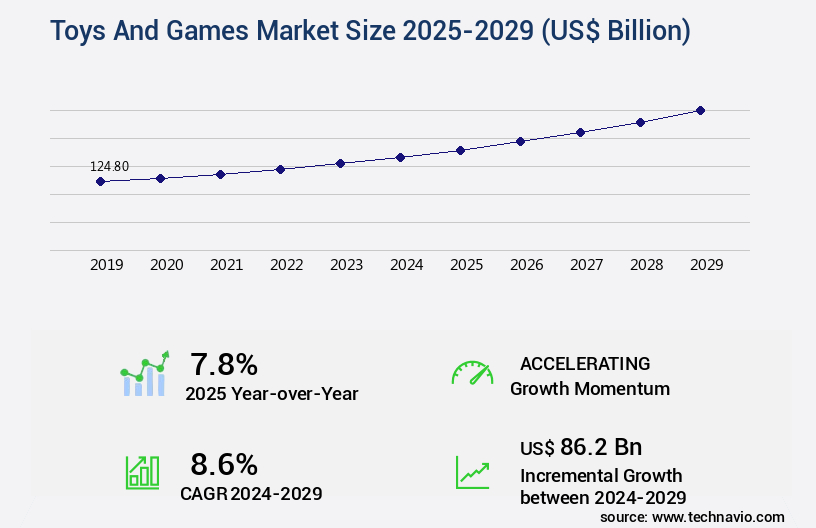
Get Key Insights on Market Forecast (PDF) Request Free Sample
How is the Toys And Games Market Segmented ?
The toys and games industry research report provides comprehensive data (region-wise segment analysis), with forecasts and estimates in "USD billion" for the period 2025-2029, as well as historical data from 2019-2023 for the following segments.
- Product
- Activity and ride-on toys
- Infant and pre-school toys
- Games and puzzles
- Plush toys
- Others
- Distribution Channel
- Offline
- Online
- Application
- Up to 8 years
- 9 to 15 years
- Type
- Creativity
- STEM skills
- Social-emotional development
- Problem-solving
- Geography
- North America
- US
- Canada
- Europe
- France
- Germany
- UK
- APAC
- Australia
- China
- India
- Japan
- South America
- Brazil
- Rest of World (ROW)
- North America
By Product Insights
The activity and ride-on toys segment is estimated to witness significant growth during the forecast period.
The market continues to evolve, with various segments experiencing dynamic growth. For instance, the collectible toy value is projected to reach USD 30 billion by 2027, driven by the increasing popularity of limited-edition figurines and action figures. In the realm of educational games, innovative game mechanics engage children in learning through interactive experiences. Toy manufacturing processes have evolved, with 3D printing technology enabling the creation of personalized toys and prototypes. Playtesting methodologies and game user experience remain crucial in the game development pipeline, ensuring high-quality products. Sustainable toy materials and interactive toy design are gaining traction, as consumers prioritize eco-friendly and engaging playthings.
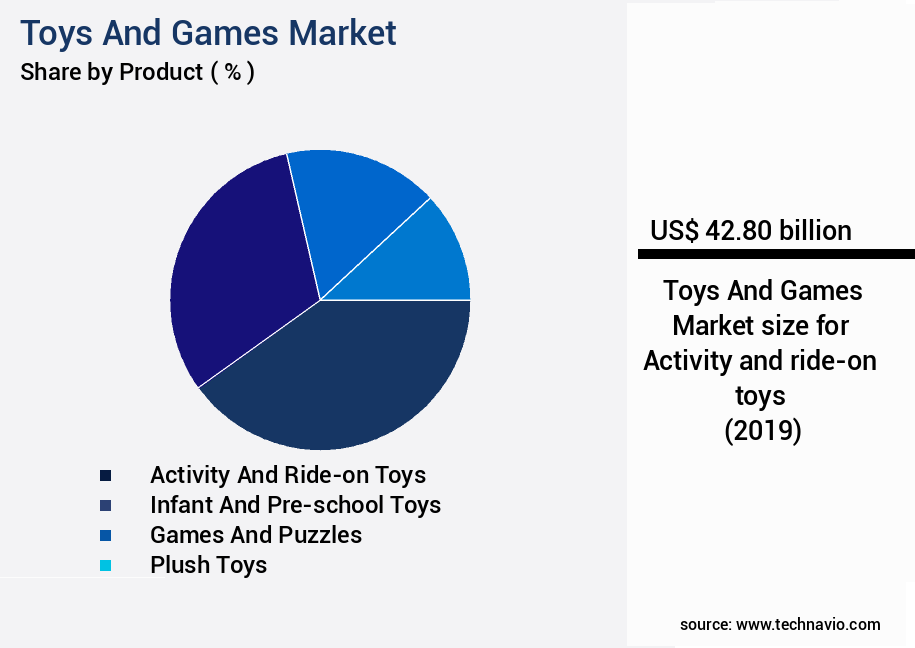
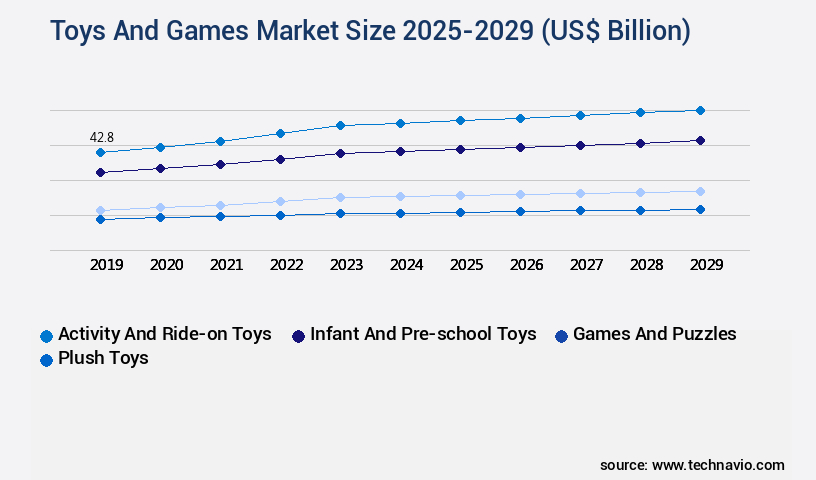
The Activity and ride-on toys segment was valued at USD 42.80 billion in 2019 and showed a gradual increase during the forecast period.
The e-commerce toy sales sector is thriving, with online platforms offering vast inventories and competitive pricing. Character animation software and augmented reality gaming are revolutionizing the way children engage with toys and games. Toy safety regulations are stringently enforced, while game AI programming, game engine optimization, game level design, and game audio engineering ensure top-notch gaming experiences. The market's future looks bright, with mobile game monetization, digital game distribution, game development software, video game marketing, virtual reality gaming, and online gaming platforms shaping the industry's future landscape. According to recent studies, the toy industry generates approximately 25 billion dollars in revenue annually, underscoring its enduring appeal and significance.
Regional Analysis
APAC is estimated to contribute 33% to the growth of the global market during the forecast period. Technavio's analysts have elaborately explained the regional trends and drivers that shape the market during the forecast period.
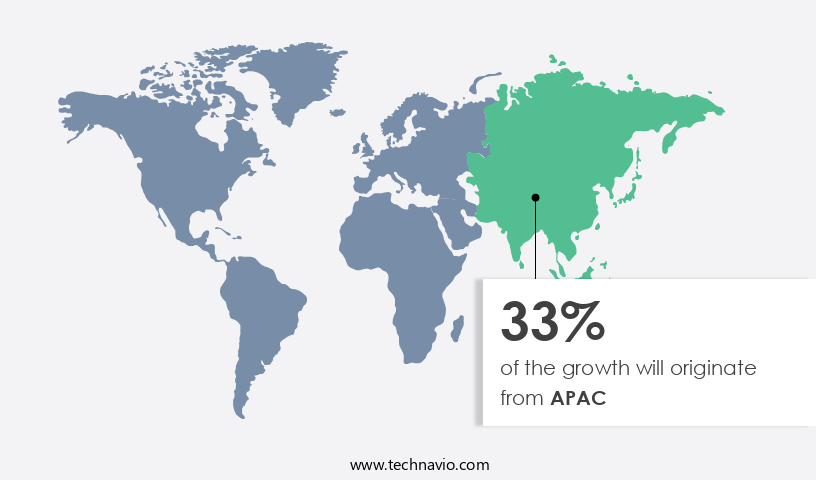
See How Toys And Games Market Demand is Rising in APAC Request Free Sample
The North American region holds a significant position in the market, with the US and Canada being the leading contributors. The market in North America is experiencing a notable expansion during the forecast period. In Canada, the demand for both affordable and premium toys has seen a rise. Mid-priced toys have witnessed modest sales, resulting in increased discounts. Despite this, discounted sales of mid-priced toys based on popular animated series or movie themes remain high in Canada, fueling the market's growth.
The US continues to dominate the North American market, while Canada's market growth is driven by the increasing popularity of discounted mid-priced toys.
Market Dynamics
Our researchers analyzed the data with 2024 as the base year, along with the key drivers, trends, and challenges. A holistic analysis of drivers will help companies refine their marketing strategies to gain a competitive advantage.
The market is a dynamic and innovative industry, continually evolving to meet the changing demands of consumers. One key trend influencing player retention is the impact of game difficulty, with many developers balancing challenges to keep players engaged without becoming frustrating. Augmented reality (AR) technology is also transforming the way toys engage children, overlapping digital elements onto the physical world for a more immersive experience. Artificial intelligence (AI) is increasingly playing a role in game development, from creating realistic non-player characters to personalizing game content for individual players. Custom toy manufacturing is being revolutionized by 3D printing, allowing for unique and intricate designs that cater to specific markets. Playtesting is a crucial part of the game design process, providing valuable insights into user experience and helping to refine game mechanics. User interface design in mobile gaming is another critical area of focus, ensuring intuitive and visually appealing experiences that keep players engaged. Educational elements are being integrated into toy design to promote learning and development, while the comparison of different game engine technologies continues to drive innovation and efficiency. Game narrative plays a significant role in player experience, with compelling stories helping to draw players into the game world. Virtual reality (VR) technology is being explored for its potential to create truly immersive gaming experiences, while player behavior in online gaming platforms is being studied to optimize game design and monetization strategies. Sustainability is also a growing concern, with the exploration of toy material sustainability options becoming increasingly important. Game asset pipeline optimization and effective game monetization methods are essential for developers to remain competitive, while game balancing techniques help to maintain fairness and engagement in online games. Interactive storytelling experiences in games are becoming more sophisticated, providing players with deeper and more personalized narratives. Performance metrics are being assessed to understand their impact on user engagement, while children's game psychology is being evaluated to create more effective and enjoyable experiences for young players. Game audio is another critical component, with the right sound design helping to enhance immersion and overall player experience. Supply chain management challenges are a significant consideration for toys and games companies, requiring effective strategies to ensure timely and cost-effective production and distribution. By staying abreast of these trends and challenges, the market continues to thrive and innovate.
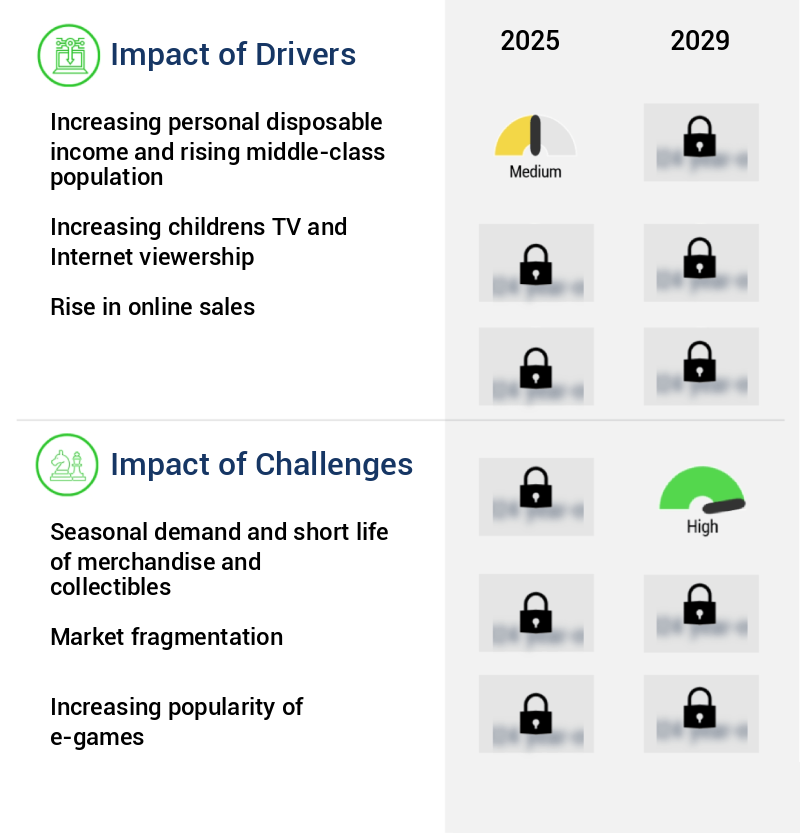
What are the key market drivers leading to the rise in the adoption of Toys And Games Industry?
- The market's growth is primarily fueled by the convergence of two significant factors: the expansion of personal disposable income and the rise in the size of the middle-class population.
- In the contemporary business landscape, the influence of urbanization and rising consumer purchasing power on various markets has been significant. This trend is not limited to developed economies but is also prevalent in emerging markets like Russia, China, and India. According to the United Nations, approximately 55% of the world's population resided in urban areas in 2018, with this figure projected to reach 68% by 2050. The increase in urbanization has led to a shift in consumer preferences and behaviors. For instance, the number of families with children under age 18 in the US stood at 32.7 million in 2024, representing nearly two-fifths of all families.
- This demographic shift has resulted in growing demand for goods and services catering to the needs of urban consumers. Simultaneously, the purchasing power of consumers in emerging markets has witnessed a substantial rise. In India and China, for example, the disposable income of households has increased, enabling them to spend more on non-essential items. This trend has opened up new opportunities for market companies, contributing to their revenue growth. In conclusion, the interplay of urbanization and consumer purchasing power has led to a transformative impact on markets worldwide. This dynamic duo has brought about shifts in consumer preferences and behaviors, creating new opportunities for businesses to tap into.
What are the market trends shaping the Toys And Games Industry?
- The emergence of three-dimensional (3D) printing represents a significant market trend in the contemporary business landscape. This innovative technology is gaining increasing recognition and adoption for its ability to produce complex and customized products.
- The 3D printing market poses a significant challenge for toy manufacturers and license providers due to its ability to enable consumers to create customized toys based on their favorite characters. This trend increases the risk of copyright and trademark infringements, as 3D prints of licensed toys can be easily obtained. As 3D printers become increasingly affordable, the market for collectible and counterfeit toys is expected to expand. In response, licensors are exploring strategies to monetize do-it-yourself merchandise and toys, ensuring they maintain intellectual property rights.
- Companies like Sesame Workshop and Hasbro Inc. They are among those actively addressing this issue, seeking to legitimize 3D printed toys and generate revenue from this evolving market trend. The ongoing dynamics of 3D printing in the toy industry highlight the importance of licensors' adaptability and proactive approaches to protect their intellectual property and capitalize on the technology's potential.
What challenges does the Toys And Games Industry face during its growth?
- The seasonal demand for merchandise and collectibles, coupled with their short lifespan, poses a significant challenge to the industry's growth trajectory.
- Toy and game retailers face the challenge of managing merchandise effectively due to the dynamic nature of consumer demand. This variability necessitates accurate demand forecasting for product procurement. The toy and game manufacturing industry comprises numerous companies, adding complexity to merchandise sourcing. Popularity of TV and movie properties and associated toys often wanes, requiring retailers to adapt swiftly by extending or discontinuing product categories.
- The market's fragmentation amplifies the need for agile merchandise management strategies. Adjusting to shifting consumer preferences and trends is crucial for maintaining a competitive edge.
Exclusive Technavio Analysis on Customer Landscape
The toys and games market forecasting report includes the adoption lifecycle of the market, covering from the innovator's stage to the laggard's stage. It focuses on adoption rates in different regions based on penetration. Furthermore, the toys and games market report also includes key purchase criteria and drivers of price sensitivity to help companies evaluate and develop their market growth analysis strategies.
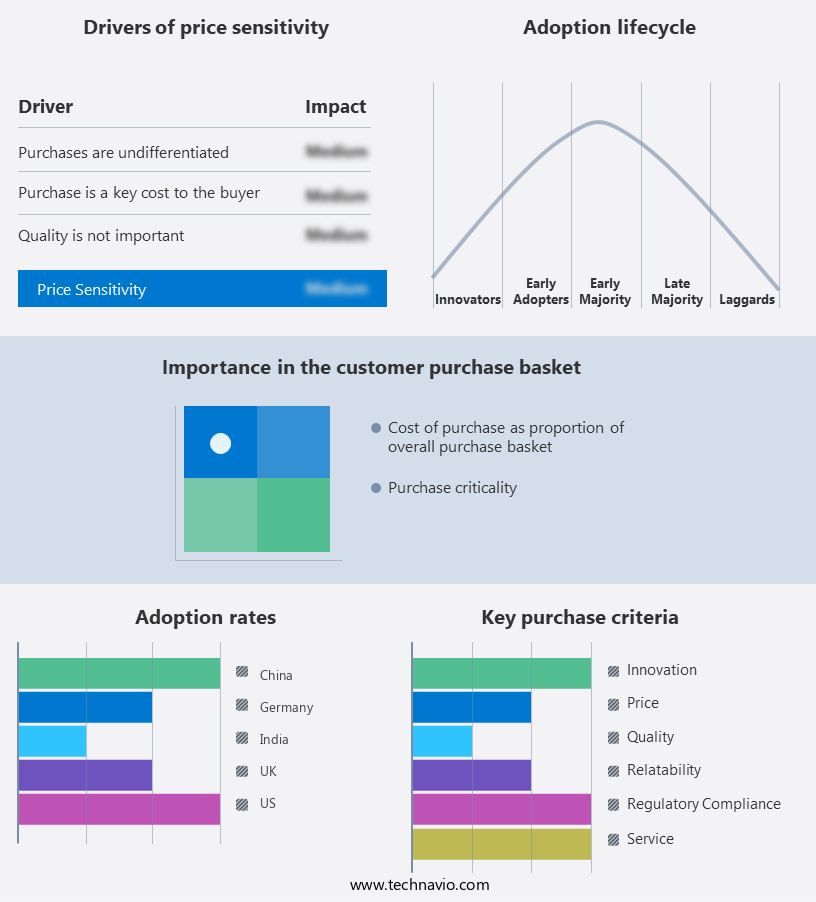
Customer Landscape of Toys And Games Industry
Competitive Landscape
Companies are implementing various strategies, such as strategic alliances, toys and games market forecast, partnerships, mergers and acquisitions, geographical expansion, and product/service launches, to enhance their presence in the industry.
4M Industrial Development Ltd. - This company specializes in providing a diverse range of toys and games, including electronic options, catering to various age groups and interests. .
The industry research and growth report includes detailed analyses of the competitive landscape of the market and information about key companies, including:
- 4M Industrial Development Ltd.
- Atlas Games
- Clementoni Spa
- Elenco Electronics Inc.
- Franckh Kosmos Verlags GmbH and Co. KG
- Goliath Games LLC
- Hasbro Inc.
- JAKKS Pacific Inc.
- Kids2 Inc.
- Learning Resources Ltd.
- LEGO System AS
- Mattel Inc.
- MGA Entertainment Inc.
- Playmates Holdings Ltd.
- Ravensburger AG
- Simba Dickie Group GmbH
- Smartivity Labs Pvt. Ltd.
- Spin Master Corp.
- Takara Tomy Co. Ltd.
- VTech Holdings Ltd.
Qualitative and quantitative analysis of companies has been conducted to help clients understand the wider business environment as well as the strengths and weaknesses of key industry players. Data is qualitatively analyzed to categorize companies as pure play, category-focused, industry-focused, and diversified; it is quantitatively analyzed to categorize companies as dominant, leading, strong, tentative, and weak.
Recent Development and News in Toys And Games Market
- In January 2024, LEGO Group, a leading toy manufacturer, introduced a new line of interactive, augmented reality (AR) building sets, named LEGO AR-Starter Cube, in collaboration with Google. This strategic partnership aimed to blend physical and digital play experiences for children (Business Wire, 2024).
- In March 2024, Hasbro Inc., a prominent player in the market, acquired Peppa Pig Company Ltd. From Entertainment One for approximately USD 4.3 billion. This acquisition expanded Hasbro's portfolio with the popular preschool brand and its merchandise offerings (The Wall Street Journal, 2024).
- In May 2024, Mattel, Inc. announced a significant investment of USD 100 million in its Fisher-Price brand to enhance its product development capabilities and expand its manufacturing capacity. This initiative aimed to strengthen Mattel's market position and meet growing consumer demand (Business Wire, 2024).
- In February 2025, Spin Master Corp., a Canadian toy manufacturer, entered the Indian market through a strategic partnership with Reliance Brands Limited. This geographic expansion allowed Spin Master to tap into the growing demand for toys in India and expand its global footprint (Business Standard, 2025).
Dive into Technavio's robust research methodology, blending expert interviews, extensive data synthesis, and validated models for unparalleled Toys And Games Market insights. See full methodology.
|
Market Scope |
|
|
Report Coverage |
Details |
|
Page number |
241 |
|
Base year |
2024 |
|
Historic period |
2019-2023 |
|
Forecast period |
2025-2029 |
|
Growth momentum & CAGR |
Accelerate at a CAGR of 8.6% |
|
Market growth 2025-2029 |
USD 86.2 billion |
|
Market structure |
Fragmented |
|
YoY growth 2024-2025(%) |
7.8 |
|
Key countries |
US, Germany, China, UK, Canada, India, Brazil, Japan, France, and Australia |
|
Competitive landscape |
Leading Companies, Market Positioning of Companies, Competitive Strategies, and Industry Risks |
Research Analyst Overview
- The market continues to evolve, with innovative products and technologies shaping consumer preferences and industry trends. The toy product lifecycle, once linear, now encompasses collectible toys whose value can appreciate over time. Educational game mechanics, integrated into toys and games, foster learning and cognitive development. Toy manufacturing processes have evolved, with 3D printing enabling customization and rapid prototyping. Game development pipelines incorporate playtesting methodologies to ensure optimal game user experience. Plastic toy manufacturing remains prevalent, but sustainable materials are gaining traction. E-commerce sales dominate the toy industry, with mobile game monetization models inspiring new revenue streams.
- Character animation software and augmented reality gaming bring toys to life, while game AI programming and game engine optimization enhance gameplay. Game level design, game audio engineering, and game audio engineering contribute to immersive gaming experiences. Interactive toy design and personalized game content cater to individual preferences. Children's game psychology informs game development, while board game publishing maintains a strong presence. Industry growth is expected to reach double-digit percentages, driven by technological advancements and consumer demand for innovative toys and games. For instance, sales of interactive toys increased by 25% last year, reflecting this trend.
- Toy safety regulations ensure consumer protection, while virtual reality gaming and online gaming platforms expand the market's reach. Toy packaging design and retail strategy are crucial aspects of the industry, with digital game distribution and game development software enabling seamless access to content. The market's dynamism offers ample opportunities for businesses to innovate and grow.
What are the Key Data Covered in this Toys And Games Market Research and Growth Report?
-
What is the expected growth of the Toys And Games Market between 2025 and 2029?
-
USD 86.2 billion, at a CAGR of 8.6%
-
-
What segmentation does the market report cover?
-
The report is segmented by Product (Activity and ride-on toys, Infant and pre-school toys, Games and puzzles, Plush toys, and Others), Distribution Channel (Offline and Online), Application (Up to 8 years and 9 to 15 years), Type (Creativity, STEM skills, Social-emotional development, and Problem-solving), and Geography (North America, Europe, APAC, South America, and Middle East and Africa)
-
-
Which regions are analyzed in the report?
-
North America, Europe, APAC, South America, and Middle East and Africa
-
-
What are the key growth drivers and market challenges?
-
Increasing personal disposable income and rising middle-class population, Seasonal demand and short life of merchandise and collectibles
-
-
Who are the major players in the Toys And Games Market?
-
4M Industrial Development Ltd., Atlas Games, Clementoni Spa, Elenco Electronics Inc., Franckh Kosmos Verlags GmbH and Co. KG, Goliath Games LLC, Hasbro Inc., JAKKS Pacific Inc., Kids2 Inc., Learning Resources Ltd., LEGO System AS, Mattel Inc., MGA Entertainment Inc., Playmates Holdings Ltd., Ravensburger AG, Simba Dickie Group GmbH, Smartivity Labs Pvt. Ltd., Spin Master Corp., Takara Tomy Co. Ltd., and VTech Holdings Ltd.
-
Market Research Insights
- The market for toys and games is a dynamic and ever-evolving industry, with continuous advancements in technology and consumer preferences shaping its landscape. According to industry reports, the market is anticipated to grow at a steady pace, with a projected expansion of around 3% annually. One notable trend in the market is the increasing popularity of digital toys and games. For instance, in-app purchases have seen significant growth, with sales increasing by over 25% in the past year.
- This trend is driven by the rising demand for immersive gaming experiences and the convenience of accessing content directly through digital platforms. Moreover, the industry is expected to witness continued innovation, with advancements in areas such as educational game design, game difficulty curves, and game testing frameworks. These developments aim to enhance the overall user experience and cater to the diverse needs of consumers.
We can help! Our analysts can customize this toys and games market research report to meet your requirements.
 RIA -
RIA - 
