


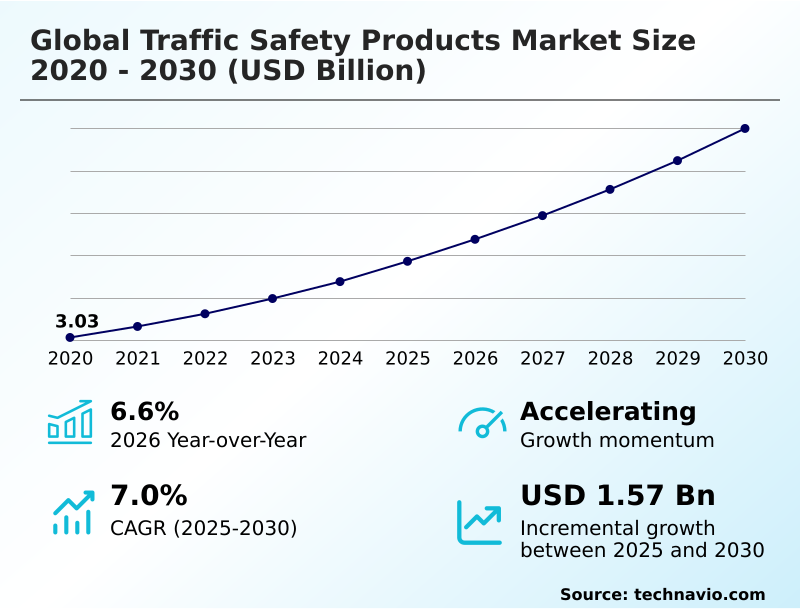
Traffic Safety Products Market Size and Growth Forecast 2026-2030
The Traffic Safety Products Market size was valued at USD 3.93 billion in 2025 growing at a CAGR of 7% during the forecast period 2026-2030.
APAC accounts for 31.4% of incremental growth during the forecast period. The Traffic vests and rainwear segment by Product was valued at USD 2.27 billion in 2024, while the Municipal segment holds the largest revenue share by End-user.
The market is projected to grow by USD 2.47 billion from 2020 to 2030, with USD 1.57 billion of the growth expected during the forecast period of 2025 to 2030.
Get Key Insights on Market Forecast (PDF) Request Free Sample
Traffic Safety Products Market Overview
The traffic safety products market is evolving from a focus on passive safety hardware to an ecosystem of intelligent, connected roadway safety infrastructure. This shift is driven by global Vision Zero initiatives and the integration of intelligent transportation systems (ITS) to mitigate human error. Advanced driver-assistance systems (ADAS) and vehicle-to-infrastructure (V2I) communication are compelling upgrades to physical infrastructure, including smart road markings and energy-absorbent barriers that are machine-readable. In a typical smart city integration, a municipality deploys a smart pedestrian crossing system using thermal sensors and AI-powered surveillance to adjust signal timing in real time, a measure that can reduce pedestrian incidents at high-risk intersections. As urban density increases, the demand for modular safety barriers and sophisticated traffic calming measures for vulnerable road user protection is accelerating, with the APAC region alone projected to contribute over 31% of the market's incremental growth.
Drivers, Trends, and Challenges in the Traffic Safety Products Market
Strategic decision-making in the traffic safety products market is increasingly complex, influenced by the total cost of ownership and evolving regulations. A cost-benefit analysis of smart crosswalks, for example, must now factor in long-term data management and cybersecurity for ITS, a consideration absent from traditional passive systems.
The lifecycle assessment of recycled plastic barricades is becoming a key vendor qualification criterion under new ESG mandates in procurement, with some municipalities requiring a minimum percentage of post-consumer content. A primary challenge in deploying automated enforcement is navigating data privacy rules under frameworks like GDPR, which affects the regulatory compliance for AI in traffic monitoring.
This has spurred innovation in edge computing in traffic safety to process data locally.
A state department of transportation evaluating new highway barriers may find that while the upfront cost of a MASH-compliant hardware system is higher than a conventional concrete barrier, its superior energy absorption and reduced repair time lead to lower lifecycle costs, demonstrating the effectiveness of different traffic calming designs.
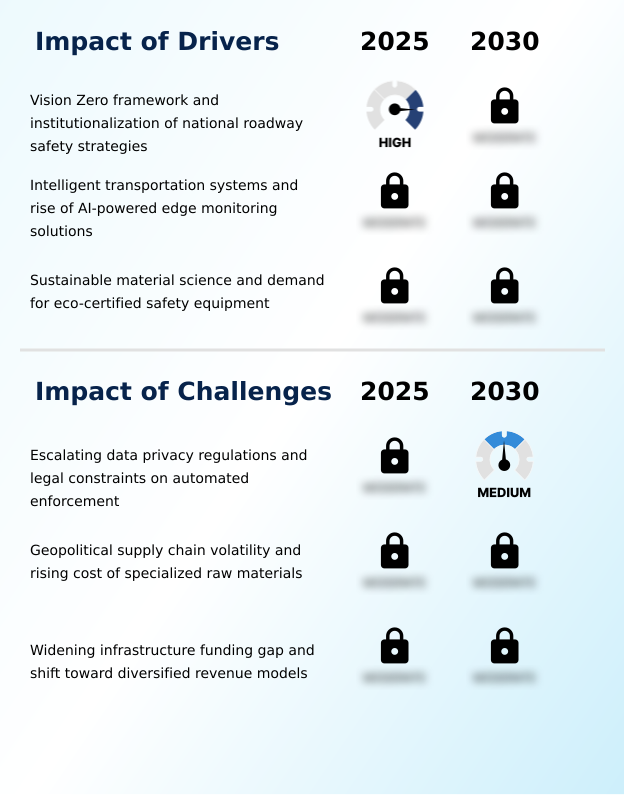
Primary Growth Driver: The adoption of the Vision Zero framework, coupled with the institutionalization of national roadway safety strategies, serves as a primary driver for the market.
Market growth is primarily propelled by three core drivers. First, the global adoption of Vision Zero initiatives is creating sustained, policy-driven demand for proven roadway safety infrastructure and energy-absorbent barriers.
Second, the rapid integration of intelligent transportation systems (ITS), including AI-powered surveillance and V2I communication, is transforming traditional hardware into high-performance data nodes for real-time incident detection.
This is particularly prevalent in North America, which accounts for a significant share of the market.
Third, a strong push towards sustainable material science, driven by ESG mandates, is fueling demand for eco-certified equipment like traffic cones and barricades made from recycled plastics and bio-based polymers, establishing environmental credentials as a key competitive differentiator.
Emerging Market Trend: A key market trend is the proliferation of autonomous road maintenance and infrastructure monitoring systems. This involves integrating unmanned aerial vehicles and robotic service units for hazardous tasks like bridge inspections and deploying temporary safety markers.
Key market trends are centered on the integration of automation and intelligence into roadway infrastructure. The proliferation of autonomous maintenance systems, using drones and robotics for inspections, is reducing human exposure to hazardous work zones. Concurrently, advancements in active safety systems are prioritizing vulnerable road user protection through enhanced sensor fusion in vehicles.
A critical trend is the strategic expansion of smart road markings and digital-ready infrastructure, where thermoplastic pavement markings are engineered for machine readability by advanced driver-assistance systems (ADAS). This ensures that physical safety products remain compatible with the future of automated transport, creating a standardized environment for both human drivers and intelligent vehicle systems.
This move is instrumental in making roadways safer and more efficient.
Key Industry Challenge: Escalating data privacy regulations and associated legal constraints on automated enforcement technologies present a significant challenge to market growth.
The market faces significant structural challenges that could temper growth. Escalating data privacy regulations, such as the EU's GDPR, impose stringent legal constraints on the use of automated enforcement solutions and AI-powered surveillance, increasing compliance costs and slowing deployment.
Geopolitical volatility creates supply chain fragility, leading to rising costs for specialized raw materials like high-impact polymers and retroreflective sheeting, which are essential for high-visibility apparel and other products. Furthermore, a widening infrastructure funding gap in mature markets like North America, where declining fuel tax revenues threaten road maintenance budgets, is a critical issue.
This fiscal pressure can lead to deferred safety upgrades and a preference for low-cost, less durable products over long-term, high-performance solutions.
Explore Full Market Dynamics Analysis Request Free Sample
Traffic Safety Products Market Segmentation
The traffic safety products industry research report provides comprehensive data including region-wise segment analysis, with forecasts and analysis for the period 2026-2030, as well as historical data from 2020-2024 for the following segments.
Product Segment Analysis
The traffic vests and rainwear segment is estimated to witness significant growth during the forecast period.
The traffic vests and rainwear segment is foundational to the traffic safety products market, driven by stringent occupational safety regulations such as OSHA and ANSI/ISEA 107.
Procurement decisions in this segment, which accounts for a substantial portion of the market, are increasingly influenced by advancements in sustainable material science, with a shift toward high-performance fabrics made from recycled polyesters.
These materials must maintain specified levels of retroreflectivity and fluorescence for high-visibility apparel after prolonged UV exposure and industrial laundering.
The integration of smart textiles with haptic feedback for proximity warnings represents a key innovation area, moving beyond passive safety hardware to active worker protection in high-risk environments like roadway construction and emergency response.
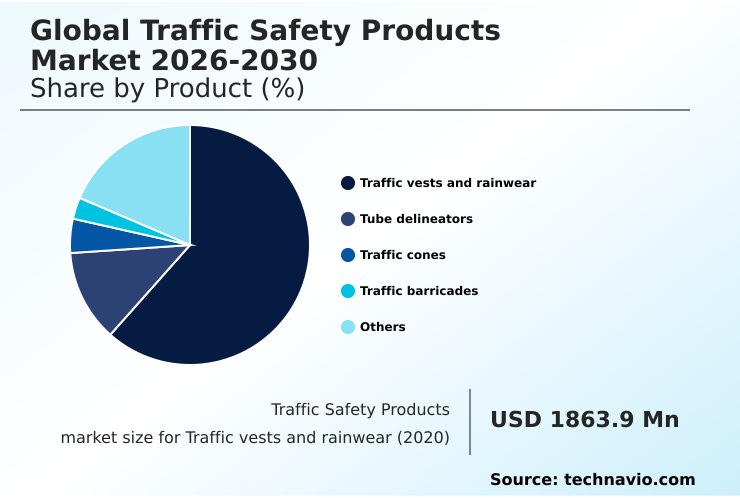
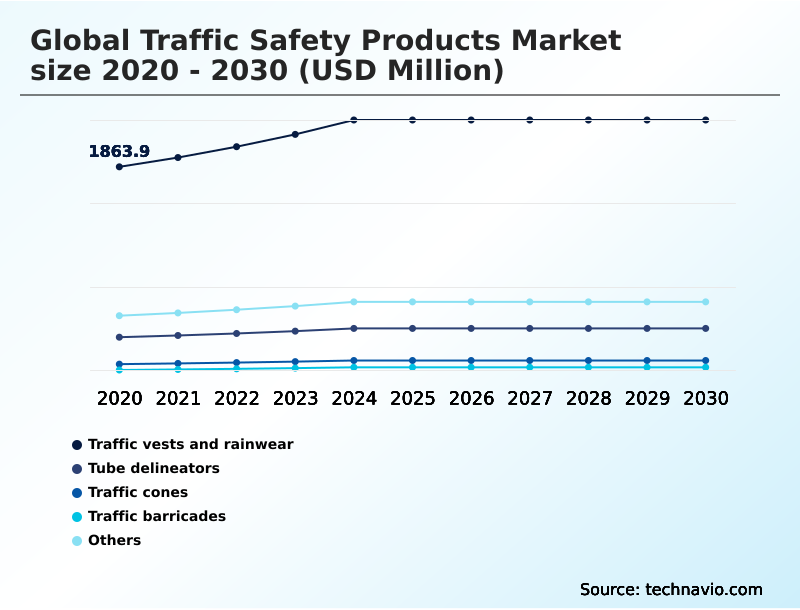
The Traffic vests and rainwear segment was valued at USD 2.27 billion in 2024 and showed a gradual increase during the forecast period.
Traffic Safety Products Market by Region: APAC Leads with 31.4% Growth Share
APAC is estimated to contribute 31.4% to the growth of the global market during the forecast period.
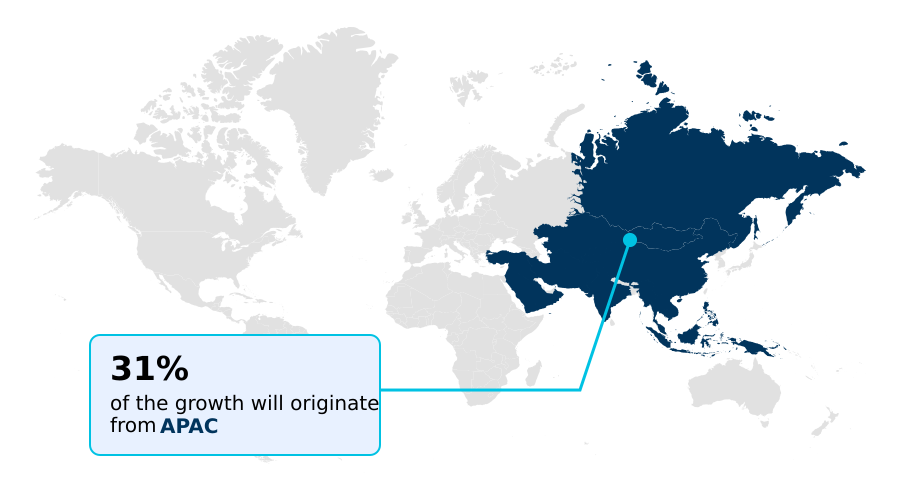
The geographic landscape of the traffic safety products market is characterized by varied regional priorities and growth rates. APAC is the fastest-growing region, contributing approximately 31.4% of the market's growth, driven by massive infrastructure projects in China and India.
This region has a high demand for solutions addressing dense urban traffic and two-wheeler safety.
In contrast, North America and Europe are mature markets focusing on upgrading existing roadway safety infrastructure with advanced technology like AI-powered surveillance and V2I communication to support Vision Zero initiatives.
These regions lead in the adoption of MASH-compliant hardware and sustainable materials. The Middle East is investing heavily in smart city integration for prestige projects, while South America focuses on modernizing highways with durable, cost-effective passive safety hardware.
Customer Landscape Analysis for the Traffic Safety Products Market
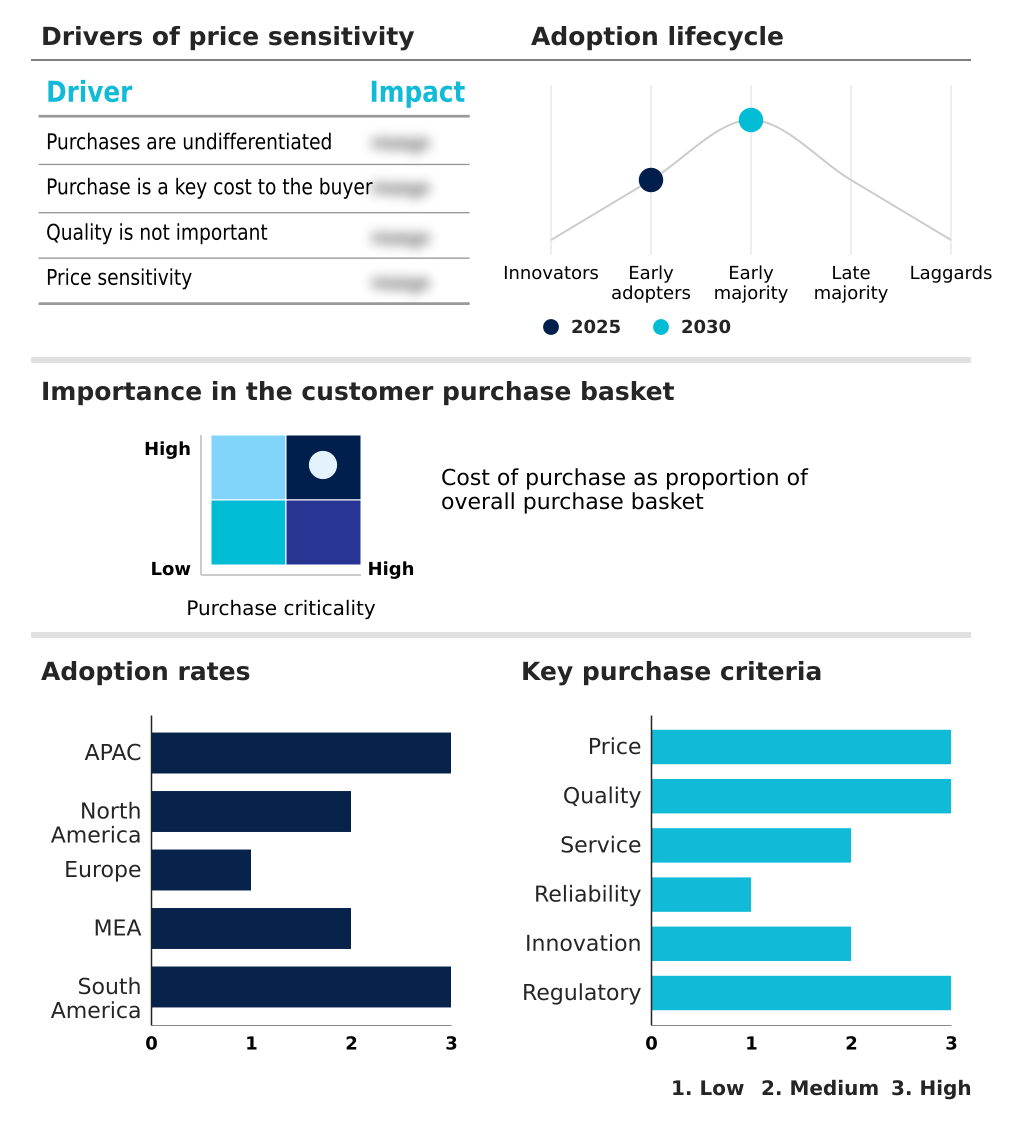
The traffic safety products market forecasting report includes the adoption lifecycle of the market, covering from the innovator’s stage to the laggard’s stage. It focuses on adoption rates in different regions based on penetration. Furthermore, the traffic safety products market report also includes key purchase criteria and drivers of price sensitivity to help companies evaluate and develop their market growth analysis strategies.
Competitive Landscape of the Traffic Safety Products Market
Companies are implementing various strategies, such as strategic alliances, partnerships, mergers and acquisitions, geographical expansion, and product/service launches, to enhance their presence in the traffic safety products market industry.
3M Co. - Offerings include advanced materials for enhanced visibility, such as reflective films and vehicle conspicuity solutions for transportation and industrial safety applications.
The industry research and growth report includes detailed analyses of the competitive landscape of the market and information about key companies, including:
- 3M Co.
- Arcosa Inc.
- Avery Dennison Corp.
- Brite Line Inc.
- Hill and Smith Inc.
- Horizon Signal Technologies Inc.
- JSP Ltd.
- Lindsay Corp.
- Melba Swintex
- Nippon Carbide Industries Co. Ltd.
- ORAFOL Europe GmbH
- Oxford Plastic Systems Ltd.
- PEXCO
- Plasticade
- Solar Technology
- SWARCO AG
- TrafFix Devices Inc.
- Valmont Industries Inc.
- Ver Mac
- Wanco Inc.
Qualitative and quantitative analysis of companies has been conducted to help clients understand the wider business environment as well as the strengths and weaknesses of key industry players. Data is qualitatively analyzed to categorize companies as pure play, category-focused, industry-focused, and diversified; it is quantitatively analyzed to categorize companies as dominant, leading, strong, tentative, and weak.
Recent Developments in the Traffic Safety Products Market
- In May 2025, the New South Wales government commenced a USD 720 million upgrade to Richmond Road in Western Sydney, incorporating smart civil engineering with dedicated cyclist paths and the installation of modern roadway safety infrastructure.
- In March 2025, Lindsay Corporation launched its AlphaGuard Channelizing Device, a next-generation modular safety barrier made from impact-resistant polyethylene, designed for rapid deployment in construction zones and featuring an interlocking, water-ballasted design for stability.
- In January 2025, Avery Dennison began advocating for the use of Digital Product Passports to track material provenance, helping contractors comply with American-made material requirements for federally funded infrastructure projects.
- In November 2024, Hill and Smith Inc. appointed a new Vice President of Sales and Marketing to scale its resilient infrastructure projects and integrated traffic solutions across North America.
Research Analyst Overview: Traffic Safety Products Market
The traffic safety products market is undergoing a structural transformation as digital-ready infrastructure becomes a primary focus. Boardroom decisions are now centered on R&D investment in vehicle-to-infrastructure (V2I) communication and active safety systems, moving beyond the traditional manufacturing of passive safety hardware.
The institutionalization of Vision Zero initiatives compels municipalities to adopt a systemic approach, driving demand for intelligent transportation systems (ITS) and advanced driver-assistance systems (ADAS). For instance, deploying AI-powered surveillance for automated enforcement solutions requires significant capital, but it aligns with federal mandates tied to infrastructure funding.
The market is defined by a pivot towards technology-enabled assets like crash cushions with integrated sensors and smart road markings readable by autonomous vehicles. With the municipal segment representing the largest end-user base, vendors are aligning product roadmaps with smart city integration and vulnerable road user protection protocols, which are becoming standard in public tenders.
Dive into Technavio’s robust research methodology, blending expert interviews, extensive data synthesis, and validated models for unparalleled Traffic Safety Products Market insights. See full methodology.
| Market Scope | |
|---|---|
| Page number | 302 |
| Base year | 2025 |
| Historic period | 2020-2024 |
| Forecast period | 2026-2030 |
| Growth momentum & CAGR | Accelerate at a CAGR of 7% |
| Market growth 2026-2030 | USD 1571.5 million |
| Market structure | Fragmented |
| YoY growth 2025-2026(%) | 6.6% |
| Key countries | China, India, Japan, South Korea, Australia, Indonesia, US, Canada, Mexico, Germany, UK, France, Italy, Spain, The Netherlands, Saudi Arabia, UAE, South Africa, Turkey, Israel, Brazil, Chile and Argentina |
| Competitive landscape | Leading Companies, Market Positioning of Companies, Competitive Strategies, and Industry Risks |
Traffic Safety Products Market: Key Questions Answered in This Report
-
What is the expected growth of the Traffic Safety Products Market between 2026 and 2030?
-
The Traffic Safety Products Market is expected to grow by USD 1.57 billion during 2026-2030, registering a CAGR of 7%. Year-over-year growth in 2026 is estimated at 6.6%%. This acceleration is shaped by vision zero framework and institutionalization of national roadway safety strategies, which is intensifying demand across multiple end-use verticals covered in the report.
-
-
What segmentation does the market report cover?
-
The report is segmented by Product (Traffic vests and rainwear, Tube delineators, Traffic cones, Traffic barricades, and Others), End-user (Municipal, and Industrial and commercial), Application (Highways and expressways, Urban roads and streets, Pedestrian zones, and Parking and industrial areas) and Geography (APAC, North America, Europe, Middle East and Africa, South America). Among these, the Traffic vests and rainwear segment is estimated to witness significant growth during the forecast period, driven by rising adoption across key application areas. Each segment includes detailed qualitative and quantitative analysis, along with historical data from 2020-2024 and forecasts through 2030 with year-over-year growth rates.
-
-
Which regions are analyzed in the report?
-
The report covers APAC, North America, Europe, Middle East and Africa and South America. APAC is estimated to contribute 31.4% to market growth during the forecast period. Country-level analysis includes China, India, Japan, South Korea, Australia, Indonesia, US, Canada, Mexico, Germany, UK, France, Italy, Spain, The Netherlands, Saudi Arabia, UAE, South Africa, Turkey, Israel, Brazil, Chile and Argentina, with dedicated market size tables and year-over-year growth for each.
-
-
What are the key growth drivers and market challenges?
-
The primary driver is vision zero framework and institutionalization of national roadway safety strategies, which is accelerating investment and industry demand. The main challenge is escalating data privacy regulations and legal constraints on automated enforcement, creating operational barriers for key market participants. The report quantifies the impact of each driver and challenge across 2026 and 2030 with comparative analysis.
-
-
Who are the major players in the Traffic Safety Products Market?
-
Key vendors include 3M Co., Arcosa Inc., Avery Dennison Corp., Brite Line Inc., Hill and Smith Inc., Horizon Signal Technologies Inc., JSP Ltd., Lindsay Corp., Melba Swintex, Nippon Carbide Industries Co. Ltd., ORAFOL Europe GmbH, Oxford Plastic Systems Ltd., PEXCO, Plasticade, Solar Technology, SWARCO AG, TrafFix Devices Inc., Valmont Industries Inc., Ver Mac and Wanco Inc.. The report provides qualitative and quantitative analysis categorizing companies as dominant, leading, strong, tentative, and weak based on their market positioning. Company profiles include business segment analysis, SWOT assessment, key offerings, and recent strategic developments.
-
Traffic Safety Products Market Research Insights
Market dynamics are increasingly shaped by the convergence of technology and regulatory pressure. The push for smart city integration is driving demand for IoT-enabled traffic management and real-time incident detection, moving beyond traditional traffic control.
For instance, municipal end-users, who constitute the largest segment, are prioritizing ESG mandates in procurement, favoring solar-powered LED signage and products aligned with circular economy principles. This contrasts with the industrial and commercial sector's focus on durable, MASH-compliant hardware for work zone safety.
Compliance with data privacy frameworks like GDPR now dictates the design of automated enforcement solutions, requiring features such as edge computing to process sensitive data locally. This complex interplay of factors is compelling vendors to offer integrated, data-driven safety ecosystems.
We can help! Our analysts can customize this traffic safety products market research report to meet your requirements.
 RIA -
RIA - 
