



Traffic Sensors Market Size 2024-2028
The traffic sensors market size is forecast to increase by USD 235.9 million at a CAGR of 10.03% between 2023 and 2028. The market is experiencing notable growth due to the expanding transport infrastructure and the rising focus on enhancing cycling infrastructure. Bicycle counting sensors are gaining popularity as part of intelligent transportation systems, which utilize IoT technology for smart traffic management. The increasing urban population and the integration of autonomous vehicles into transportation systems are further driving market growth. Additionally, the rise in e-commerce and postal and logistics industries is leading to an increased demand for efficient traffic management solutions. However, the high costs of installation and maintenance remain a significant challenge for market growth. In summary, the market is experiencing significant expansion due to urbanization, road safety norms, and the integration of technology into transportation systems, despite the challenges posed by high installation and maintenance costs.
What will be the Size of the Market During the Forecast Period?
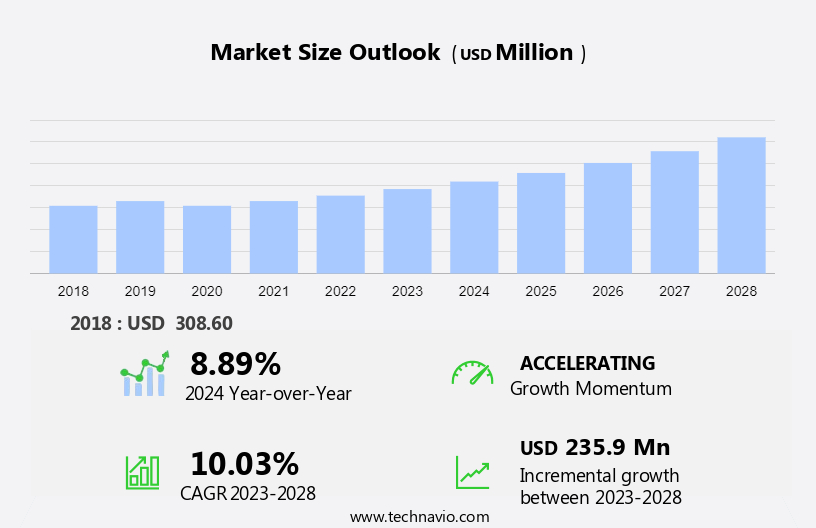
The market witnessing significant growth due to the increasing demand for advanced traffic control solutions and the integration of IoT technology in transport infrastructure. These sensors play a crucial role in managing and optimizing traffic flow, ensuring road safety, and improving the overall efficiency of transportation systems. Traffic sensors come in various types, including infrared sensors, magnetic sensors, acoustic sensors, bending plate sensors, and imaging sensors. Infrared sensors, for instance, are used for detecting the presence and movement of vehicles, while magnetic sensors are employed for detecting the weight and size of vehicles.
Acoustic sensors, on the other hand, are utilized for detecting the sound of approaching vehicles, and bending plate sensors are designed to detect the weight and axle count of vehicles. Imaging sensors, a more advanced technology, can identify vehicles, bicycles, and even pedestrians, providing valuable data for smart traffic management and cycling infrastructure. The integration of artificial intelligence and edge computing in traffic sensors is revolutionizing the industry. AI algorithms enable real-time analysis of traffic data, allowing for quicker response times and more efficient traffic management. Edge computing, on the other hand, enables data processing at the source, reducing latency and improving overall system performance.
Market Segmentation
The market research report provides comprehensive data (region-wise segment analysis), with forecasts and estimates in "USD million" for the period 2024-2028, as well as historical data from 2018-2022 for the following segments.
- Application
- Vehicle measurement and profiling
- Traffic monitoring
- Weigh in motion
- Automated tolling
- Geography
- North America
- US
- Europe
- Germany
- UK
- APAC
- China
- Japan
- South America
- Middle East and Africa
- North America
By Application Insights
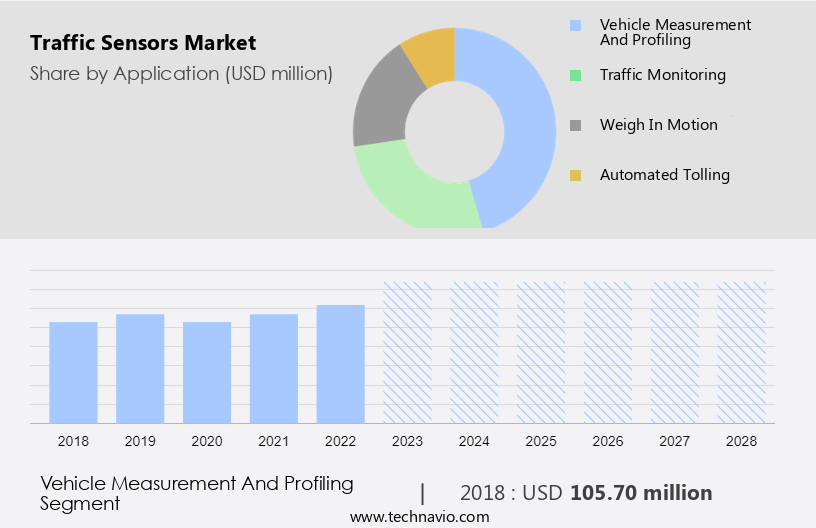
The vehicle measurement and profiling segment is estimated to witness significant growth during the forecast period. Traffic sensors play a crucial role in the development of advanced transport infrastructure, including cycling infrastructure, by providing real-time data for intelligent transportation systems. The integration of IoT technology and smart traffic management systems enables the efficient monitoring of urban populations and the seamless integration of autonomous vehicles into transportation networks. Vehicle measurement and profiling is an essential component of this infrastructure, used for toll systems, bridge height alerts, and highway weigh stations. With the expansion of transport infrastructure, particularly in the context of surging logistics activities and the growth of e-commerce, the demand for vehicle measurement and profiling systems is expected to increase significantly.
Get a glance at the market share of various segments Request Free Sample
The vehicle measurement and profiling segment accounted for USD 105.70 million in 2018 and showed a gradual increase during the forecast period.
Regional Insights
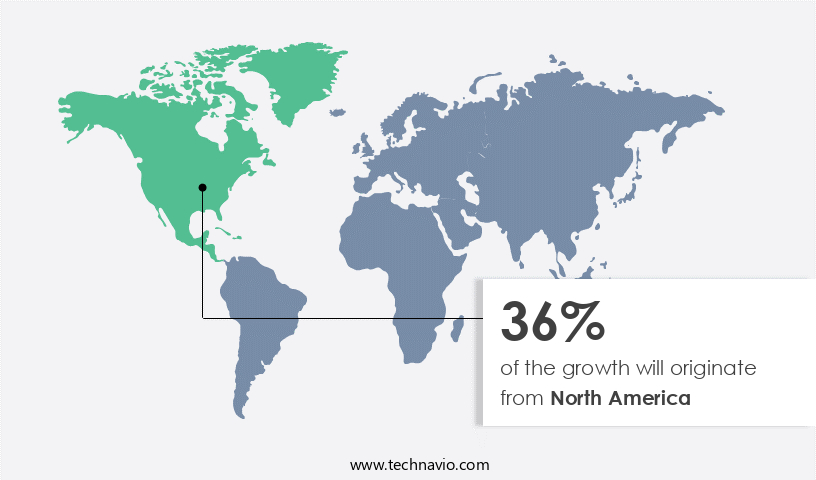
North America is estimated to contribute 36% to the growth of the global market during the forecast period. Technavio's analysts have elaborately explained the regional trends and drivers that shape the market during the forecast period.
For more insights on the market share of various regions Request Free Sample
In North America, traffic sensors hold a significant market share due to the high population density in urban areas, with approximately 80% of the population residing in cities in the US and Canada. The pressing need to manage traffic efficiently in these densely populated regions has led to the increased adoption of advanced traffic management systems. These systems incorporate various types of sensors, including Inductive Loop Sensors, Magnetic Sensors, Radar Sensors, Lidar Sensors, Thermal Sensors, and 3D Sensors, to monitor and manage traffic flow. Moreover, the US and Canadian governments are actively engaged in internal and external research and development to innovate new traffic sensors, enhancing the functionality, ease of use, safety, and dependability of existing sensors.
Key technologies like RFID, GSM, Weigh in Motion, and 3D Sensors are being explored to expand the applications of traffic sensors and improve overall traffic management.
Our researchers analyzed the data with 2023 as the base year, along with the key drivers, trends, and challenges. A holistic analysis of drivers will help companies refine their marketing strategies to gain a competitive advantage.
Market Driver
Rapid urbanization and increasing emphasis on road safety norms is the key driver of the market. The urban population in the United States and globally is experiencing substantial growth, with an increasing number of people moving into cities. According to data from the United Nations, the urban population in the US and worldwide stood at 51.3% and 56.1%, respectively, in 2021, up from 46.72% and 46.72%, respectively, in 2000. This demographic shift poses significant challenges in managing traffic flow, particularly in major cities. Traffic congestion is a growing concern in urban areas, impacting both private and professional mobility. The increasing urbanization and population density have led to higher traffic volumes, making commuting more challenging for residents.
Moreover, the expansion of businesses within cities and their partnerships with external entities is expected to boost transportation volumes further. To address these challenges, municipalities and private entities are turning to advanced technologies such as Automated Tolling, Traffic management, and Traffic flow optimization. These solutions enable efficient Congestion management, enhance Road safety, and improve Emergency response times. Additionally, Digital twin applications and Edge computing are gaining traction in Smart city projects to monitor and manage traffic in real-time. In conclusion, the growing urban population necessitates the adoption of advanced traffic management solutions to ensure seamless mobility, enhance public safety, and optimize transportation systems.
Market Trends
Traffic monitoring to witness significant growth is the upcoming trend in the market. Traffic sensors play a crucial role in monitoring and analyzing vehicle movement and interactions within traffic systems in the United States. This data is essential for optimizing traffic management and reducing congestion. With the growing number of commercial vehicles on the road, there is a heightened demand for advanced traffic control solutions. Innovative traffic monitoring systems are being developed and tested using cutting-edge technologies.
For example, researchers at the Indian Institute of Technology (IIT) Mandi have created a smart road monitoring system designed to minimize the risk of road accidents. This system employs various sensors, including infrared sensors, non-intrusive bicycle counting beams, and 3D technology. By analyzing this data, traffic authorities can make informed decisions to improve traffic flow and ensure road safety. These advanced systems will continue to evolve as technology advances, providing even more efficient and effective traffic management solutions.
Market Challenge
High costs of installation and maintenance is a key challenge affecting the market growth. Traffic sensors play a crucial role in managing and monitoring road traffic efficiently. These systems utilize advanced software and various hardware components, such as imaging sensors, bending plates, inductive loops, magnetic sensors, and infrared sensors, to gather real-time data. Edge devices and IoT solutions facilitate seamless communication and data processing. However, the high cost of installing and maintaining these systems, including the sensors, communication devices, and control systems, poses a challenge to the market expansion.
Nonintrusive sensors, like imaging sensors, microwave sensors, and acoustic sensors, have minimal impact on road traffic but may raise safety concerns. Their effectiveness depends on the mounting location and facing angles, as they require significant vertical and horizontal clearances. Despite these challenges, the market continues to grow due to the increasing demand for intelligent transportation systems and the need for real-time traffic monitoring and management.
Exclusive Customer Landscape
The market forecasting report includes the adoption lifecycle of the market, covering from the innovator's stage to the laggard's stage. It focuses on adoption rates in different regions based on penetration. Furthermore, the report also includes key purchase criteria and drivers of price sensitivity to help companies evaluate and develop their market growth analysis strategies.
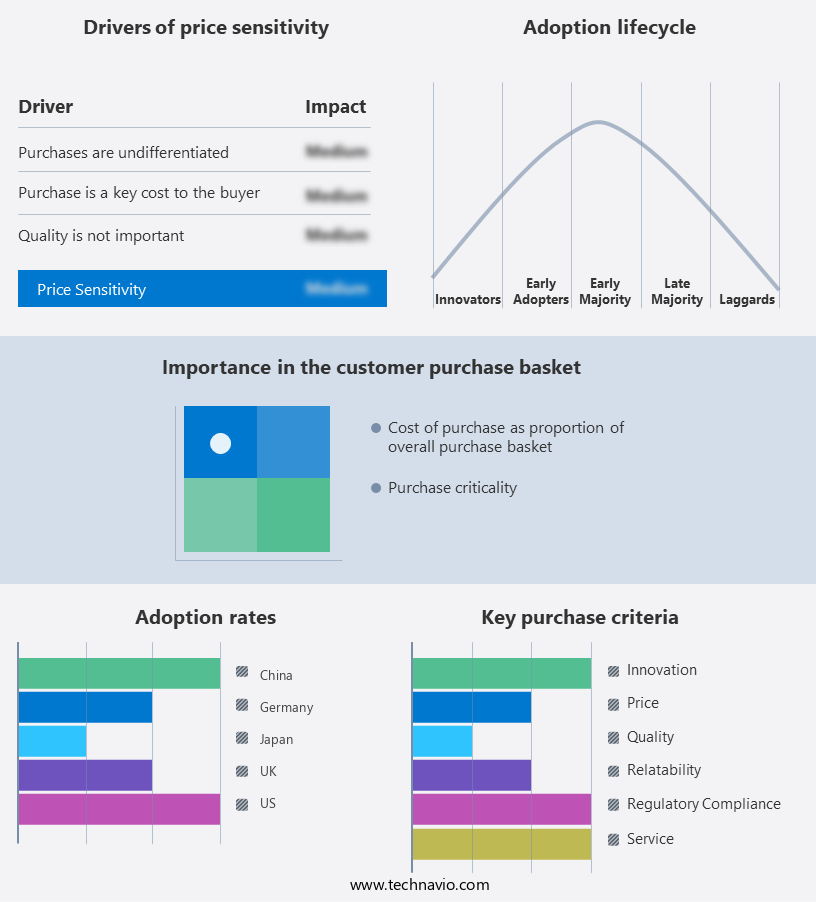
Customer Landscape
Key Companies & Market Insights
Companies are implementing various strategies, such as strategic alliances, partnerships, mergers and acquisitions, geographical expansion, and product/service launches, to enhance their presence in the market.
AGD Systems Ltd. - The company provides traffic management software solutions, encompassing design, provision, installation, and operation.
The market research and growth report includes detailed analyses of the competitive landscape of the market and information about key companies, including:
- Axis Communications AB
- CROSS Zlin AS
- EFKON GmbH
- Kapsch TrafficCom AG
- Kistler Group
- LeddarTech Inc.
- Q Free ASA
- Qaurterhill Inc.
- RTX Corp.
- S.m.s Smart Microwave Sensors GmbH
- Sensys Networks Inc.
- SICK AG
- Siemens AG
- Smats Traffic Solutions Inc.
- SWARCO AG
- TE Connectivity Ltd.
- Teledyne Technologies Inc.
- Traffic Sensor Corp.
- TransCore
Qualitative and quantitative analysis of companies has been conducted to help clients understand the wider business environment as well as the strengths and weaknesses of key market players. Data is qualitatively analyzed to categorize companies as pure play, category-focused, industry-focused, and diversified; it is quantitatively analyzed to categorize companies as dominant, leading, strong, tentative, and weak.
Research Analyst Overview
Traffic sensors play a crucial role in managing and optimizing transport infrastructure for various industries, including intelligent transportation systems, e-commerce, postal and logistics, restaurant aggregators, and food delivery companies. These sensors utilize advanced technologies such as non-intrusive sensors, infrared sensors, induction loops, AI, 3D technology, IoT technology, and smart traffic management solutions to monitor and manage traffic flow, reduce congestion, enhance road safety, and improve emergency response times. Bicycle counting sensors, using technologies like bicycle counting beams and 2D or 3D sensors, help municipalities and urban areas better understand cycling infrastructure usage and optimize it accordingly.
Further, various sensor types, including image sensors, microwave sensors, acoustic sensors, piezoelectric sensors, bending plate sensors, inductive loop sensors, magnetic sensors, radar sensors, Lidar sensors, thermal sensors, and RFID, are employed to cater to diverse traffic monitoring needs. Edge computing and imaging sensors enable real-time data processing, ensuring efficient traffic flow optimization and congestion management. These sensors contribute significantly to the digital twin applications of transport infrastructure, enhancing the overall performance and safety of the system.
|
Market Scope |
|
|
Report Coverage |
Details |
|
Page number |
141 |
|
Base year |
2023 |
|
Historic period |
2018-2022 |
|
Forecast period |
2024-2028 |
|
Growth momentum & CAGR |
Accelerate at a CAGR of 10.03% |
|
Market Growth 2024-2028 |
USD 235.9 million |
|
Market structure |
Fragmented |
|
YoY growth 2023-2024(%) |
8.89 |
|
Regional analysis |
North America, Europe, APAC, South America, and Middle East and Africa |
|
Performing market contribution |
North America at 36% |
|
Key countries |
US, Japan, China, UK, and Germany |
|
Competitive landscape |
Leading Companies, Market Positioning of Companies, Competitive Strategies, and Industry Risks |
|
Key companies profiled |
AGD Systems Ltd., Axis Communications AB, CROSS Zlin AS, EFKON GmbH, Kapsch TrafficCom AG, Kistler Group, LeddarTech Inc., Q Free ASA, Qaurterhill Inc., RTX Corp., S.m.s Smart Microwave Sensors GmbH, Sensys Networks Inc., SICK AG, Siemens AG, Smats Traffic Solutions Inc., SWARCO AG, TE Connectivity Ltd., Teledyne Technologies Inc., Traffic Sensor Corp., and TransCore |
|
Market dynamics |
Parent market analysis, market growth inducers and obstacles, market forecast, fast-growing and slow-growing segment analysis, COVID-19 impact and recovery analysis and future consumer dynamics, market condition analysis for the forecast period |
|
Customization purview |
If our market report has not included the data that you are looking for, you can reach out to our analysts and get segments customized. |
What are the Key Data Covered in this Market Research and Growth Report?
- CAGR of the market during the forecast period
- Detailed information on factors that will drive the market growth and forecasting between 2024 and 2028
- Precise estimation of the size of the market and its contribution of the market in focus to the parent market
- Accurate predictions about upcoming market growth and trends and changes in consumer behaviour
- Growth of the market across North America, Europe, APAC, South America, and Middle East and Africa
- Thorough analysis of the market's competitive landscape and detailed information about companies
- Comprehensive analysis of factors that will challenge the growth of market companies
We can help! Our analysts can customize this market research report to meet your requirements.
 RIA -
RIA - 
