
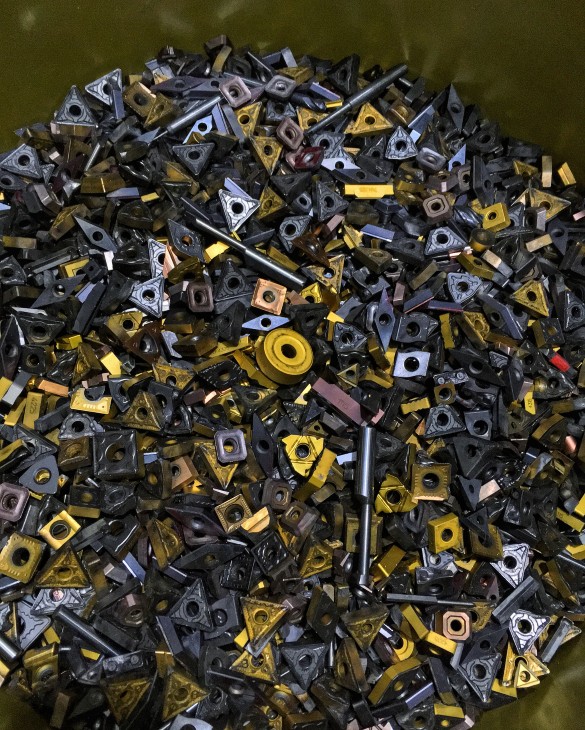


Tungsten Carbide Market Size 2026-2030
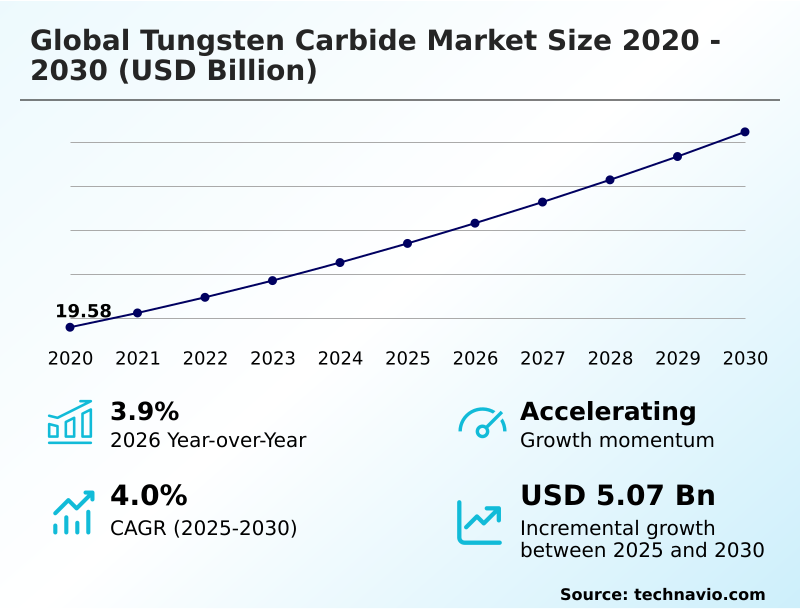
The tungsten carbide market size is valued to increase by USD 5.07 billion, at a CAGR of 4% from 2025 to 2030. Demand for micro machining in semiconductor and medical will drive the tungsten carbide market.
Major Market Trends & Insights
- APAC dominated the market and accounted for a 44.5% growth during the forecast period.
- By Application - Machine components and tools segment was valued at USD 7.42 billion in 2024
- By End-user - Mining and construction segment accounted for the largest market revenue share in 2024
Market Size & Forecast
- Market Opportunities: USD 8.89 billion
- Market Future Opportunities: USD 5.07 billion
- CAGR from 2025 to 2030 : 4%
Market Summary
- The Tungsten Carbide exhibits robust structural expansion driven by intensifying industrial automation and the escalating demand for high-durability tooling across precision engineering sectors. Surging requirements for highly precise micro-machining components in the semiconductor and medical device industries act as a primary catalyst for demand.
- Manufacturing facilities now utilize advanced micro-drills to process high-density printed circuit boards, reducing tool deflection and improving operational output by up to 25% compared to conventional high-speed steel alternatives. A real-world business scenario involves automotive manufacturers redesigning production lines for electric vehicle components, where integrating specialized carbide cutting tools drastically minimizes machine downtime during the machining of abrasive aluminum-silicon alloys.
- Conversely, the extreme geographic concentration of raw material extraction poses a severe structural challenge. Downstream tool fabricators face significant supply chain bottlenecks and volatile pricing when primary producing nations enforce stringent export quotas on essential chemical inputs.
- To counteract these limitations, major industrial players are heavily investing in localized secondary recycling programs to reclaim high-purity powders from spent tooling, stabilizing operational overhead and ensuring sustainable material flows.
What will be the Size of the Tungsten Carbide Market during the forecast period?
Get Key Insights on Market Forecast (PDF) Get Free Sample
How is the Tungsten Carbide Market Segmented?
The tungsten carbide industry research report provides comprehensive data (region-wise segment analysis), with forecasts and estimates in "USD million" for the period 2026-2030, as well as historical data from 2020-2024 for the following segments.
- Application
- Machine components and tools
- Cutting and drilling tools
- Dies and punches
- Abrasives
- Others
- End-user
- Mining and construction
- Automotive
- Power generation
- Oil and gas
- Others
- Product type
- Cemented carbide
- Coatings
- Alloys and powders
- Geography
- APAC
- China
- Japan
- India
- South Korea
- Australia
- Indonesia
- Europe
- Germany
- UK
- France
- Italy
- Spain
- The Netherlands
- North America
- US
- Canada
- Mexico
- South America
- Brazil
- Argentina
- Chile
- Middle East and Africa
- Saudi Arabia
- UAE
- South Africa
- Israel
- Turkey
- APAC
By Application Insights
The machine components and tools segment is estimated to witness significant growth during the forecast period.
The machine components and tools segment within the Tungsten Carbide industry exhibits a continuous structural shift driven by high-stress industrial environments demanding extended operational lifecycles.
By integrating ultrafine grain configurations and specialized cemented carbide substrates, these components withstand severe mechanical wear much better than conventional steel variants.
Consequently, semiconductor fabrication facilities utilizing advanced micro machining components report that equipment downtime decreases by approximately 15% due to superior resistance to abrasive friction.
As automated manufacturing processes run at higher cycle rates, the reliance on powder metallurgy techniques and binder jetting machinery becomes critical to preventing catastrophic failure.
Compared to standard tooling materials, metal cutting inserts and additive manufacturing powders deliver up to a 20% improvement in continuous operational longevity, significantly lowering maintenance overhead for aerospace component fabrication and intricate robotic medical interventions.
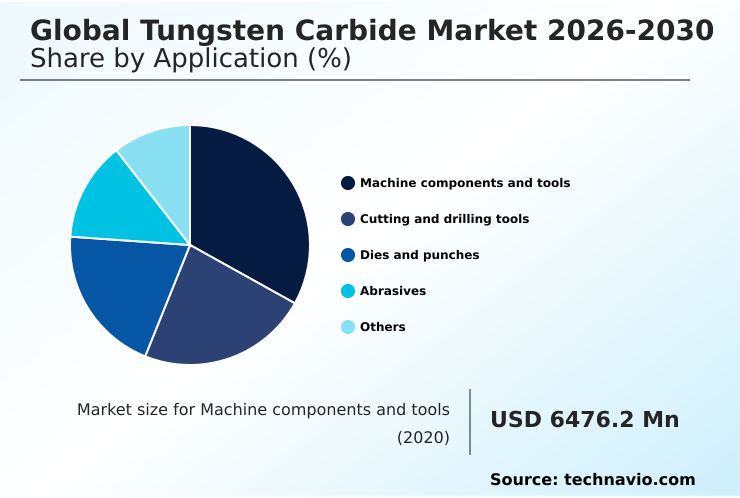
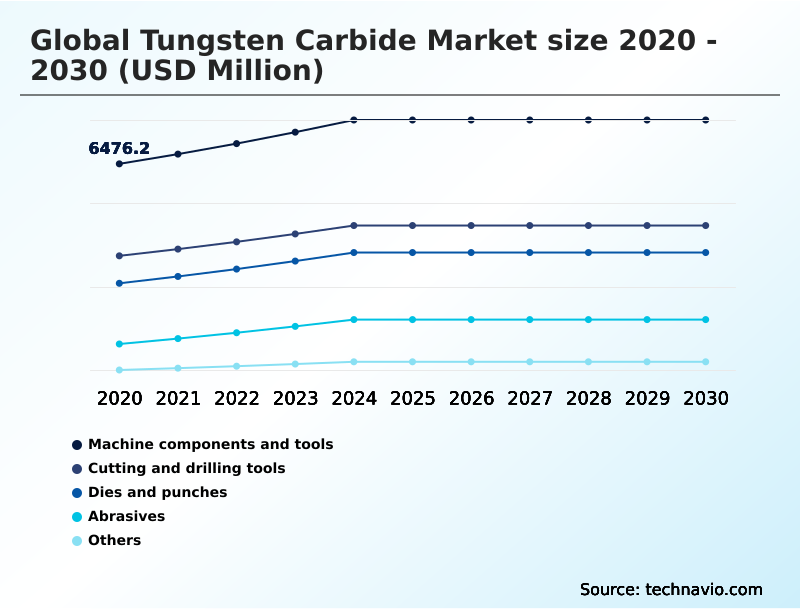
The Machine components and tools segment was valued at USD 7.42 billion in 2024 and showed a gradual increase during the forecast period.
Regional Analysis
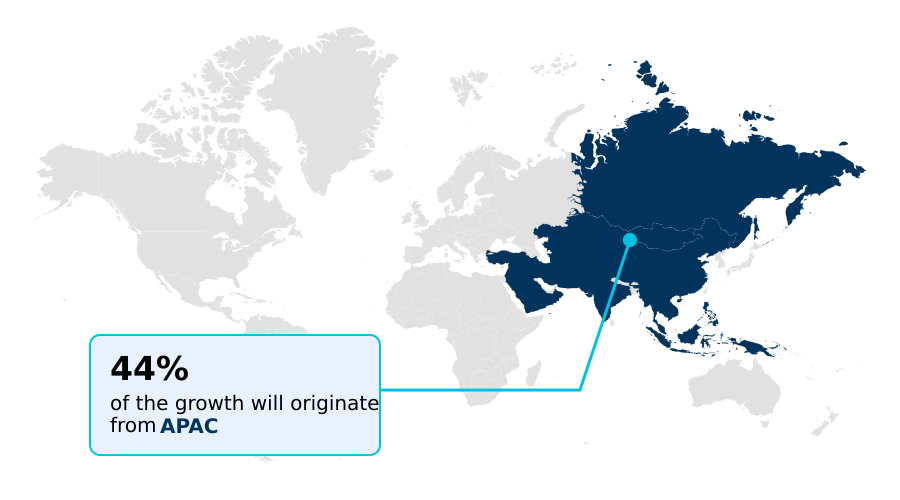
APAC is estimated to contribute 44.5% to the growth of the global market during the forecast period.Technavio’s analysts have elaborately explained the regional trends and drivers that shape the market during the forecast period.
See How Tungsten Carbide Market Demand is Rising in APAC Get Free Sample
The geographic distribution of the Tungsten Carbide industry reveals a pronounced divergence in industrial capacity, with APAC driving an exceptional 44.5% of the overall incremental momentum compared to North America.
APAC benefits significantly from proximity to raw material reserves, allowing local tool fabricators utilizing automated machining centers to lower procurement latency by approximately 20% and rapidly scale drivetrain component machining.
In contrast, North America heavily prioritizes advanced fabrication methods like laser powder bed fusion to create tools with internal conformal cooling channels, offsetting import reliance.
Facilities applying chemical vapor deposition and physical vapor deposition in US automotive hubs experience a 25% extension in continuous machining uptime, driving demand for premium thermal deformation resistance.
Meanwhile, the aggressive expansion of prototype automotive engineering across East Asia ensures sustained volume growth, as manufacturers adopt titanium aluminum nitride layers to minimize defect rates by up to 15% during complex battery housing fabrication.
Market Dynamics
Our researchers analyzed the data with 2025 as the base year, along with the key drivers, trends, and challenges. A holistic analysis of drivers will help companies refine their marketing strategies to gain a competitive advantage.
- As industrial manufacturing transitions toward extreme-tolerance environments, the integration of specialized tooling materials has fundamentally altered production economics. Organizations require ultra precision micro machining components to process intricate electronic substrates and complex medical implants without sacrificing dimensional accuracy.
- When comparing contemporary procurement strategies, operations that pivot from standard steel implements to submicron grain cemented carbide inserts report nearly a 40% reduction in unplanned maintenance interventions, significantly streamlining supply chain planning and inventory management.
- The continuous evolution of custom tool fabrication has also accelerated the adoption of additive manufacturing tungsten carbide powders, which allow engineers to design complex geometric profiles with internal cooling pathways that were previously impossible to achieve through conventional pressing techniques.
- Furthermore, stringent environmental compliance mandates and volatile raw material pricing are compelling large-scale industrial fabricators to adopt recycled tungsten carbide tooling solutions. By capturing and refining scrap materials, companies secure a predictable pipeline of secondary feedstock, shielding their operational budgets from sudden commodity spikes.
- In parallel, surface engineering advancements have optimized tool resilience, with physical vapor deposition coated carbides offering unparalleled resistance to abrasive friction and thermal cratering during high-speed metal cutting operations. This shift ensures that heavy machinery and automotive manufacturers can maintain continuous, high-volume production cycles while concurrently lowering the overall cost per machined unit.
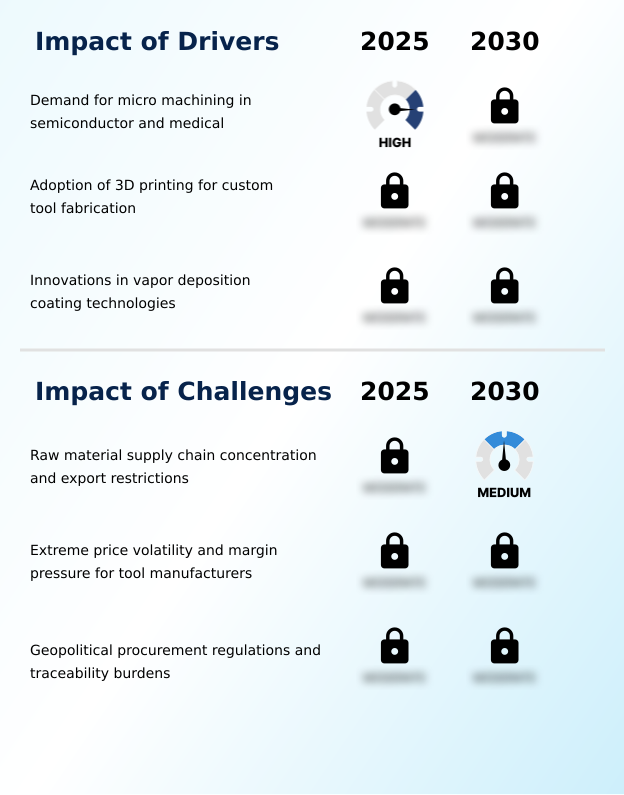
What are the key market drivers leading to the rise in the adoption of Tungsten Carbide Industry?
- Surging requirements for precision micro-machining solutions across the semiconductor and medical device sectors act as a primary catalyst for market expansion.
- The surging demand for highly complex, impact-resistant tools in the mining and energy sectors acts as a massive driver for the Tungsten Carbide industry.
- As drilling depths accelerate, operators rely on polycrystalline diamond compacts and specialized matrix body drill bits to execute flawless extractions. By utilizing these ultra-durable implements alongside rotary blast hole bits, extraction facilities have improved penetration accuracy by 25%.
- This precision prevents catastrophic tool deflection, effectively reducing material waste by approximately 15% during heavy-duty operations. Furthermore, optimizing cobalt binder content within strong fracture toughness matrices grants the necessary rigidity to process abrasive rock formations rapidly.
- To secure material flows for indexable carbide inserts, industries are widely adopting powder metallurgy recycling and closed loop reclamation. This resource strategy, coupled with digital supply chain traceability, ensures that production meets escalating global infrastructure requirements without interrupting operational continuity.
What are the market trends shaping the Tungsten Carbide Industry?
- Escalating demand from the aerospace and defense sectors represents a prominent trend shaping market dynamics. The necessity for high-performance materials in these critical industries continues to drive continuous innovation and expanded product utilization.
- The rapid transformation of heavy infrastructure and high-tech manufacturing constitutes a major trend reshaping the Tungsten Carbide landscape. Industries are overhauling equipment to process abrasive environments, requiring exceptionally durable tools to withstand extreme friction. By deploying advanced titanium carbonitride coatings and aluminum oxide layers, facilities have reduced tool failure rates by 22% during continuous rock crushing operations.
- This shift allows contractors optimizing heavy duty earthmoving and tunnel boring cutters to improve overall excavation throughput by nearly 18%. The integration of nanostructured coating techniques creates highly effective thermal barrier mechanisms that significantly enhance abrasive wear resistance.
- As operations scale, the deployment of secondary resource pipelines through mine tailing recycling secures vital ammonium paratungstate feedstock, drastically minimizing scheduled downtime and directly boosting production efficiency for precision components like autonomous driving sensors.
What challenges does the Tungsten Carbide Industry face during its growth?
- The extreme concentration of raw material supply chains, coupled with stringent export restrictions, presents a significant structural challenge hindering consistent industry growth.
- The extreme geographic concentration of raw material extraction and rapid price volatility represent a critical structural challenge limiting the Tungsten Carbide industry. As primary producing nations enforce stringent trade quotas, downstream tool manufacturers encounter disrupted inventory forecasting and high acquisition costs.
- This instability forces fabricators of solid carbide end mills and structural wear plates to absorb inflated expenses or face production delays. To mitigate these bottlenecks, companies are engineering advanced materials like spherical tungsten powder and submicron grain sizing to maximize the efficiency of every tool produced.
- By integrating gradient structured substrates and nickel chromium alternatives, operators have lowered replacement costs by up to 20% compared to utilizing traditional alloys. However, implementing complex application methods such as high velocity oxygen fuel for thermal spray hardfacing on downhole drilling tools increases administrative overhead by roughly 15%, squeezing profit margins.
Exclusive Technavio Analysis on Customer Landscape
The tungsten carbide market forecasting report includes the adoption lifecycle of the market, covering from the innovator’s stage to the laggard’s stage. It focuses on adoption rates in different regions based on penetration. Furthermore, the tungsten carbide market report also includes key purchase criteria and drivers of price sensitivity to help companies evaluate and develop their market growth analysis strategies.
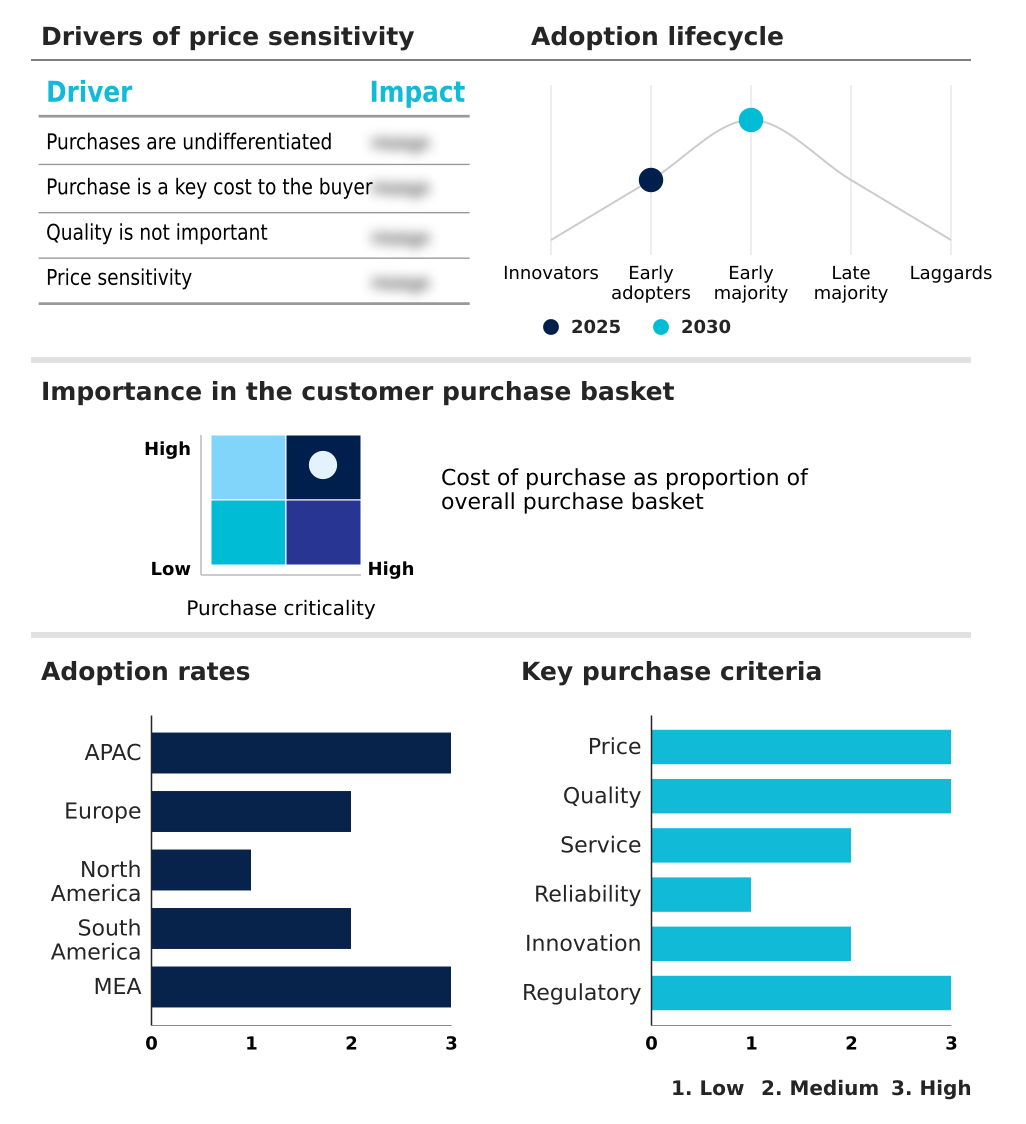
Customer Landscape of Tungsten Carbide Industry
Competitive Landscape
Companies are implementing various strategies, such as strategic alliances, tungsten carbide market forecast, partnerships, mergers and acquisitions, geographical expansion, and product/service launches, to enhance their presence in the industry.
American Elements Inc. - American Elements provides high-purity tungsten and engineered powder derivatives, including nanosized and macrocrystalline grades, tailored for advanced material science applications and robust industrial manufacturing processes.
The industry research and growth report includes detailed analyses of the competitive landscape of the market and information about key companies, including:
- American Elements Inc.
- Buffalo Tungsten Inc.
- CERATIZIT SA
- EXTRAMET AG
- Federal Carbide Co.
- Global Tungsten and Powders
- HC Starck Tungstena GmbH
- Hyperion Materials and Technologies
- Iljin Diamond Co. Ltd.
- Japan New Metals Co. Ltd.
- Kennametal Inc.
- Mitsubishi Materials Corp.
- Seco Tools AB
- Sumitomo Electric Industries
- TaeguTec LTD.
- Tungco INC.
- Umicore SA
- Wendt India Ltd.
- Zigong Cemented Carbide Co. Ltd.
Qualitative and quantitative analysis of companies has been conducted to help clients understand the wider business environment as well as the strengths and weaknesses of key industry players. Data is qualitatively analyzed to categorize companies as pure play, category-focused, industry-focused, and diversified; it is quantitatively analyzed to categorize companies as dominant, leading, strong, tentative, and weak.
Recent Development and News in Tungsten carbide market
- In the Diversified Metals and Mining industry, the accelerated integration of closed loop extraction processes has optimized the recovery of critical minerals, directly impacting Tungsten Carbide demand by increasing the availability of secondary raw material feedstocks.
- The global transition toward electric vehicle architecture has mandated the extraction of high-strength battery metals, pulling Tungsten Carbide demand upward for highly durable rock crushing implements, surging consumption of heavy-duty tunneling equipment by nearly 18%.
- Stringent environmental mandates such as the EU Critical Raw Materials Act have forced extraction companies to adopt advanced tailing management systems, expanding the secondary supply chain for Tungsten Carbide manufacturing and improving material yield ratios by over 12%.
- The aggressive modernization of defense manufacturing across North America has heightened the requirement for advanced ballistic and armor materials, spurring Tungsten Carbide demand for specialized alloy processing networks and expanding localized refining capacity by 30%.
Dive into Technavio’s robust research methodology, blending expert interviews, extensive data synthesis, and validated models for unparalleled Tungsten Carbide Market insights. See full methodology.
| Market Scope | |
|---|---|
| Page number | 315 |
| Base year | 2025 |
| Historic period | 2020-2024 |
| Forecast period | 2026-2030 |
| Growth momentum & CAGR | Accelerate at a CAGR of 4% |
| Market growth 2026-2030 | USD 5070.7 million |
| Market structure | Fragmented |
| YoY growth 2025-2026(%) | 3.9% |
| Key countries | China, Japan, India, South Korea, Australia, Indonesia, Germany, UK, France, Italy, Spain, The Netherlands, US, Canada, Mexico, Brazil, Argentina, Chile, Saudi Arabia, UAE, South Africa, Israel and Turkey |
| Competitive landscape | Leading Companies, Market Positioning of Companies, Competitive Strategies, and Industry Risks |
Research Analyst Overview
- The Tungsten Carbide is undergoing a profound structural transformation as precision manufacturing demands uncompromising material resilience. Industrial stakeholders are systematically replacing legacy cutting instruments with advanced composite substrates to withstand severe mechanical stress during continuous production cycles.
- The strategic adoption of laser-based fusion and binder-driven machinery allows engineers to fabricate complex tools with optimized internal geometries, directly influencing corporate product strategy by enabling rapid prototyping without massive retooling costs. By implementing these advanced manufacturing techniques, companies have achieved a 30% reduction in processing time for custom components.
- Furthermore, the application of sophisticated vapor deposition and nanostructured surface treatments creates highly effective thermal barriers that prevent catastrophic edge failure. This surface optimization empowers automotive and aerospace fabricators to run automated systems at significantly higher speeds.
- Incorporating superior tough matrices ensures that precision tools resist abrasive wear, ultimately elevating production throughput and lowering the total cost of ownership across high-stress industrial applications.
What are the Key Data Covered in this Tungsten Carbide Market Research and Growth Report?
-
What is the expected growth of the Tungsten Carbide Market between 2026 and 2030?
-
USD 5.07 billion, at a CAGR of 4%
-
-
What segmentation does the market report cover?
-
The report is segmented by Application (Machine components and tools, Cutting and drilling tools, Dies and punches, Abrasives, and Others), End-user (Mining and construction, Automotive, Power generation, Oil and gas, and Others), Product Type (Cemented carbide, Coatings, and Alloys and powders) and Geography (APAC, Europe, North America, South America, Middle East and Africa)
-
-
Which regions are analyzed in the report?
-
APAC, Europe, North America, South America and Middle East and Africa
-
-
What are the key growth drivers and market challenges?
-
Demand for micro machining in semiconductor and medical, Raw material supply chain concentration and export restrictions
-
-
Who are the major players in the Tungsten Carbide Market?
-
American Elements Inc., Buffalo Tungsten Inc., CERATIZIT SA, EXTRAMET AG, Federal Carbide Co., Global Tungsten and Powders, HC Starck Tungstena GmbH, Hyperion Materials and Technologies, Iljin Diamond Co. Ltd., Japan New Metals Co. Ltd., Kennametal Inc., Mitsubishi Materials Corp., Seco Tools AB, Sumitomo Electric Industries, TaeguTec LTD., Tungco INC., Umicore SA, Wendt India Ltd. and Zigong Cemented Carbide Co. Ltd.
-
Market Research Insights
- The Tungsten Carbide is rapidly advancing as precision engineering environments demand greater resilience and thermal stability. Operations leveraging advanced material synthesis report a 30% reduction in thermal degradation during high-speed cutting applications.
- Furthermore, the integration of advanced vapor deposition methods on tooling surfaces has extended operational lifecycles by up to 40% compared to uncoated alternatives, directly improving manufacturing return on investment. By deploying sophisticated tracking systems, industrial fabricators have increased procurement compliance efficiency by 22%, mitigating risks associated with raw material sourcing.
- These strategic shifts enable automotive and aerospace sectors to enhance production output while maintaining strict dimensional tolerances.
We can help! Our analysts can customize this tungsten carbide market research report to meet your requirements.
 RIA -