
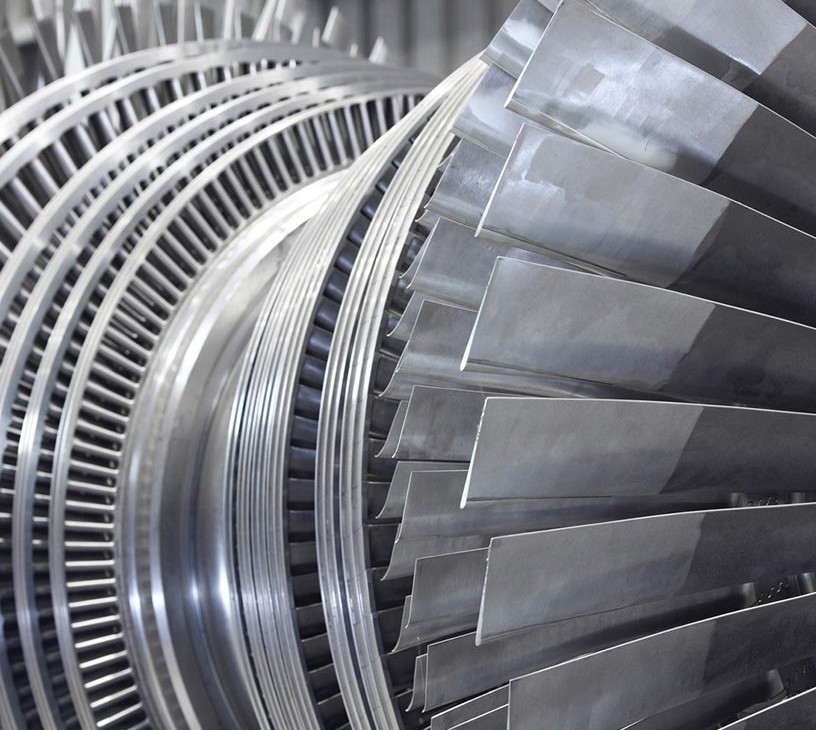


Turbo Expanders Market Size 2026-2030
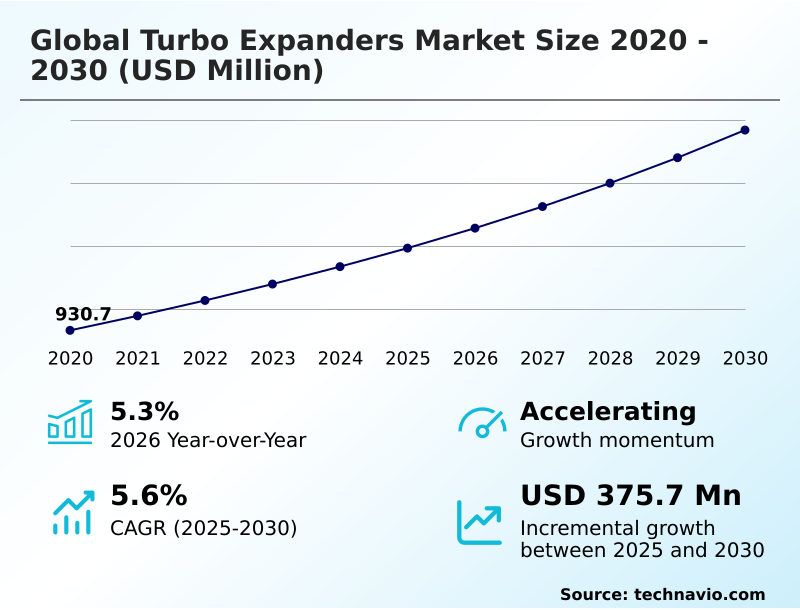
The turbo expanders market size is valued to increase by USD 375.7 million, at a CAGR of 5.6% from 2025 to 2030. Expansion of global natural gas and liquefied natural gas infrastructure will drive the turbo expanders market.
Major Market Trends & Insights
- APAC dominated the market and accounted for a 40.8% growth during the forecast period.
- By Product Type - Radial flow segment was valued at USD 661.3 million in 2024
- By Type - Compressor coupled segment accounted for the largest market revenue share in 2024
Market Size & Forecast
- Market Opportunities: USD 637.3 million
- Market Future Opportunities: USD 375.7 million
- CAGR from 2025 to 2030 : 5.6%
Market Summary
- The turbo expanders market is undergoing significant evolution, driven by the intensification of liquefied natural gas production and the emerging requirements of the hydrogen economy. These sophisticated machines are indispensable for industrial gas processing, converting the high pressure of a gas stream into useful mechanical work while enabling cryogenic liquefaction.
- Industrial operators are prioritizing energy recovery systems to enhance thermodynamic efficiency, reducing operational expenses and aligning with sustainability mandates. For instance, a modern petrochemical facility can replace legacy Joule-Thomson valves with high-efficiency turbo expanders to capture previously wasted energy, improving the site's energy balance.
- The industry's technical focus is shifting toward the adoption of active magnetic bearings and sophisticated digital monitoring for predictive maintenance, addressing historical concerns about reliability. Beyond traditional oil and gas applications, demand is rising in the medical and scientific sectors for cryogenic services.
- As the industrial sector transitions toward lower-carbon energy, the role of turbo expanders in carbon capture utilization and storage is also expanding, positioning the technology as a cornerstone of future energy architecture and industrial decarbonization.
What will be the Size of the Turbo Expanders Market during the forecast period?
Get Key Insights on Market Forecast (PDF) Get Free Sample
How is the Turbo Expanders Market Segmented?
The turbo expanders industry research report provides comprehensive data (region-wise segment analysis), with forecasts and estimates in "USD million" for the period 2026-2030, as well as historical data from 2020-2024 for the following segments.
- Product type
- Radial flow
- Axial flow
- Hybrid
- Type
- Compressor coupled
- Generator coupled
- Hydraulic
- End-user
- Oil and gas
- Industrial gases
- Power generation
- Others
- Geography
- APAC
- China
- India
- Japan
- North America
- US
- Canada
- Mexico
- Europe
- Germany
- UK
- France
- Middle East and Africa
- Saudi Arabia
- UAE
- South Africa
- South America
- Brazil
- Argentina
- Rest of World (ROW)
- APAC
By Product Type Insights
The radial flow segment is estimated to witness significant growth during the forecast period.
The radial flow segment is foundational in cryogenic gas processing, driven by its application in hydrocarbon recovery. These machines, featuring a specialized radial flow impeller, are engineered for high-pressure ratios, making them ideal for the liquefaction of industrial gases.
The design allows for a significant pressure drop across a single stage, which optimizes the overall thermodynamic efficiency.
In applications like an air separation unit, which supports heavy industrial sectors, radial designs are prioritized for their mechanical simplicity and lower maintenance, reducing interruptions by up to 15%.
As industries move toward decentralized energy recovery systems, demand is high, supported by advancements in materials science for cryogenic temperatures and the need for efficient gas stream expansion to produce mechanical work for grid stabilization.
The technology is also key for shale gas resources.
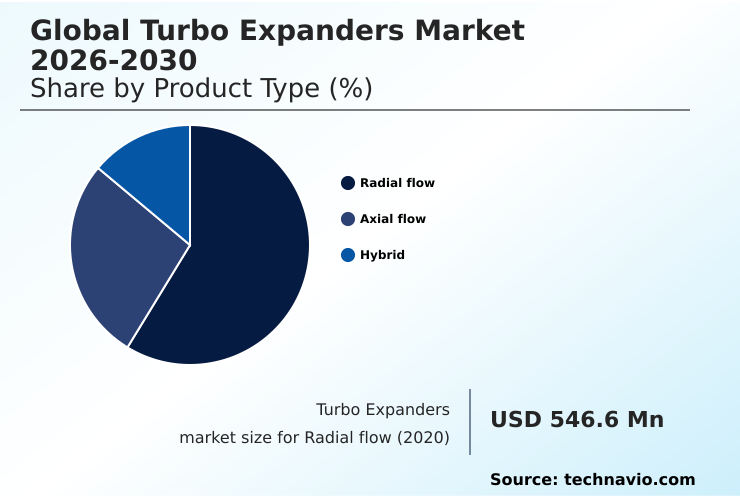
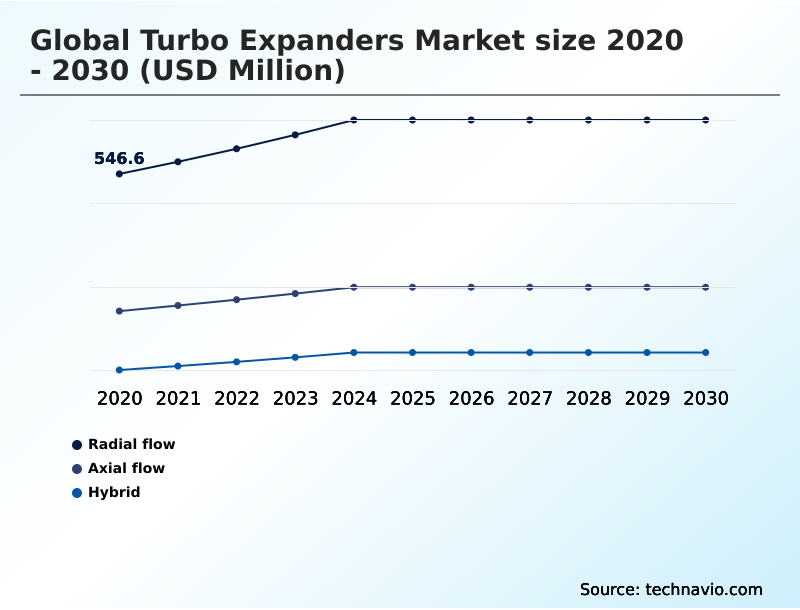
The Radial flow segment was valued at USD 661.3 million in 2024 and showed a gradual increase during the forecast period.
Regional Analysis
APAC is estimated to contribute 40.8% to the growth of the global market during the forecast period.Technavio’s analysts have elaborately explained the regional trends and drivers that shape the market during the forecast period.
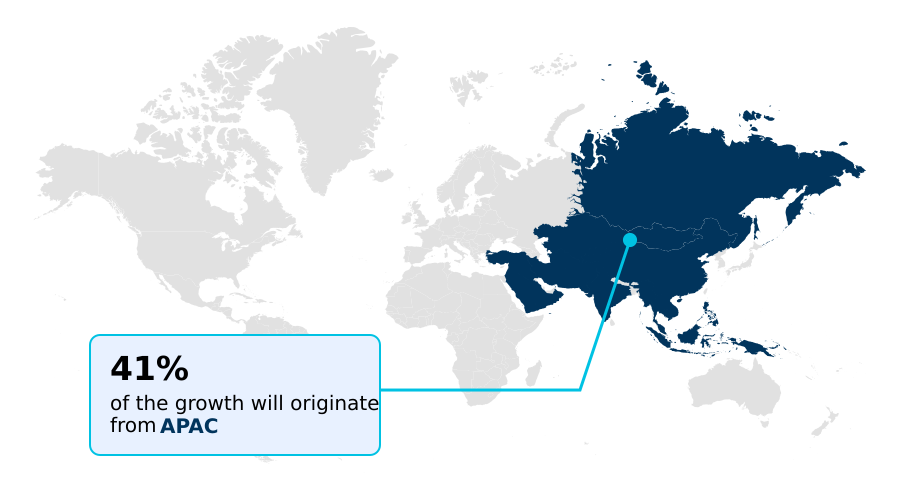
See How Turbo Expanders Market Demand is Rising in APAC Get Free Sample
The geographic landscape is shifting, with APAC accounting for over 40% of incremental growth due to massive industrialization and investment in carbon capture utilization and storage.
North America remains vital, leveraging axial flow turbine technology for large-scale power generation and geothermal energy conversion.
Europe’s market, driven by stringent targets, promotes hydraulic braking in niche applications and waste heat recovery, with some sites improving thermal efficiency by 25% via organic rankine cycle integration in waste gas energy recovery.
The global demand for compressor coupled systems is growing, supporting liquefaction plant development and renewable energy integration. This industrial decarbonization push requires sophisticated solutions for supercritical carbon dioxide handling and supports the build-out of a robust hydrogen value chain.
Market Dynamics
Our researchers analyzed the data with 2025 as the base year, along with the key drivers, trends, and challenges. A holistic analysis of drivers will help companies refine their marketing strategies to gain a competitive advantage.
- Strategic decision-making in the turbo expanders market is increasingly focused on specialized applications and comparative performance. Evaluating a radial vs axial flow turbo expander is crucial, as radial designs are often preferred for their robustness in turbo expander in natural gas processing, while axial flow is superior for high-volume power generation.
- The push for oil-free turbo expander with magnetic bearings technology is driven by the need for process purity, especially in a turbo expander for hydrogen liquefaction, where contamination is unacceptable.
- Energy recovery with turbo expander systems is a key investment criterion, with a turbo expander generator for pressure reduction in gas grids offering a return on investment that is over 30% faster than older pressure-reducing valve systems. For industrial gas production, a cryogenic turbo expander for air separation is essential.
- Engineers now rely on advanced modeling for predicting turbo expander performance, optimizing the isentropic efficiency of turbo expanders. A multi-stage turbo expander design is critical for achieving deep cryogenic temperatures in a turbo expander compressor in lng plants. Innovations like a high-speed direct-drive turbo expander are improving footprint and reliability.
- The technology is also pivotal for a turbo expander for geothermal power and in emerging turbo expander in carbon capture schemes.
- The axial flow turbine for power generation from waste heat, hydraulic brake turbo expander application in labs, and use in turbo expander in hydrocarbon dew pointing demonstrate the technology's versatility, including in small-scale lng turbo expander and turbo expander for ethylene production.
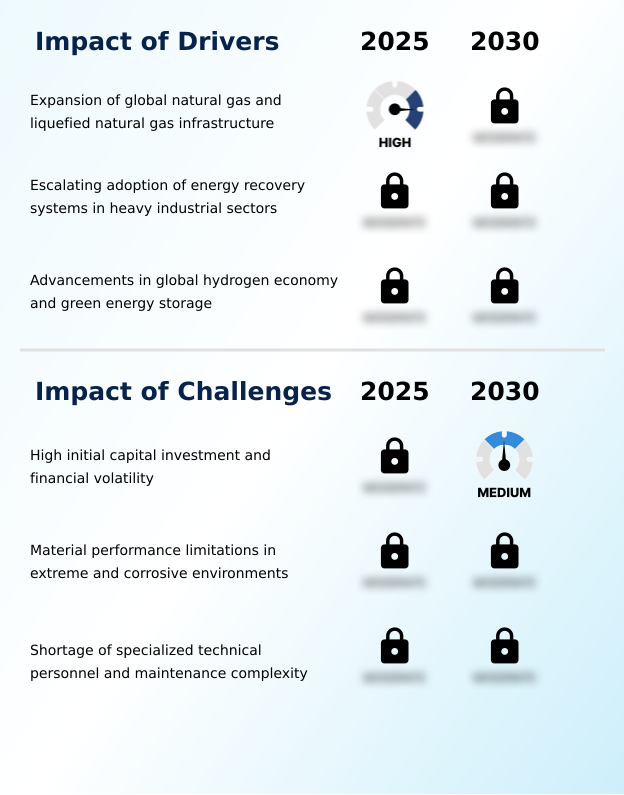
What are the key market drivers leading to the rise in the adoption of Turbo Expanders Industry?
- The expansion of global natural gas and liquefied natural gas infrastructure serves as a key driver stimulating market growth.
- The market is driven by the global expansion of natural gas liquids infrastructure and the escalating adoption of energy recovery in industrial gas processing.
- Turbo expanders are essential for the cryogenic liquefaction required for transport and the recovery of valuable liquids. Unlike traditional Joule-Thomson valves, these systems convert pressure enthalpy into power.
- For example, integrating power recovery units in pressure let-down stations for industrial use can generate enough electricity to reduce site energy costs by over 10%.
- Advancements in the green energy storage sector, such as long-duration energy storage, also rely on this technology. The expansion of regasification terminals and modular turbo expanders is crucial.
- The use of a centrifugal compressor coupled with an expander improves overall plant efficiency and supports the growing demand from clean energy infrastructure.
What are the market trends shaping the Turbo Expanders Industry?
- The digitalization and integration of digital twin technology are emerging as a prominent market trend, enhancing operational monitoring and predictive maintenance capabilities.
- A key trend is the accelerated adoption of digital twin technology and oil-free operation, which enhance predictive maintenance. Systems using active magnetic bearings eliminate process contamination, a critical factor for hydrogen liquefaction, and can increase rotational speeds, improving the isentropic efficiency of multi-stage expansion by up to 5%. This shift is vital for the emerging hydrogen value chain.
- The implementation of high-speed rotating machinery with advanced aerodynamic performance monitoring offers operators automated insights, optimizing processes under varying loads and reducing unplanned downtime by over 20%. The convergence of mechanical engineering and data science is making the next generation of generator coupled systems more intelligent, a pivotal change for the energy transition and decarbonization efforts.
- This is also important for refinery modernization.
What challenges does the Turbo Expanders Industry face during its growth?
- High initial capital investment and financial volatility present a significant challenge affecting the industry's growth trajectory.
- Significant challenges persist, including high initial capital investment for bespoke machinery like integrally geared compressors and material performance limitations. For instance, projects involving subsea applications can see capital costs increase by over 40% compared to onshore installations. Maintaining integrity during fluid catalytic cracking or in high-purity environments requires advanced metallurgy, impacting rotor dynamics and blade profile optimization.
- The shortage of specialized personnel for maintaining systems in remote geothermal power plants leads to extended downtime. The complexity of dissipated-load expanders and dry gas seal systems adds to the operational burden, creating a high threshold for technical success in sectors managing blast furnace exhaust or requiring precise process cooling and gas decompression.
Exclusive Technavio Analysis on Customer Landscape
The turbo expanders market forecasting report includes the adoption lifecycle of the market, covering from the innovator’s stage to the laggard’s stage. It focuses on adoption rates in different regions based on penetration. Furthermore, the turbo expanders market report also includes key purchase criteria and drivers of price sensitivity to help companies evaluate and develop their market growth analysis strategies.
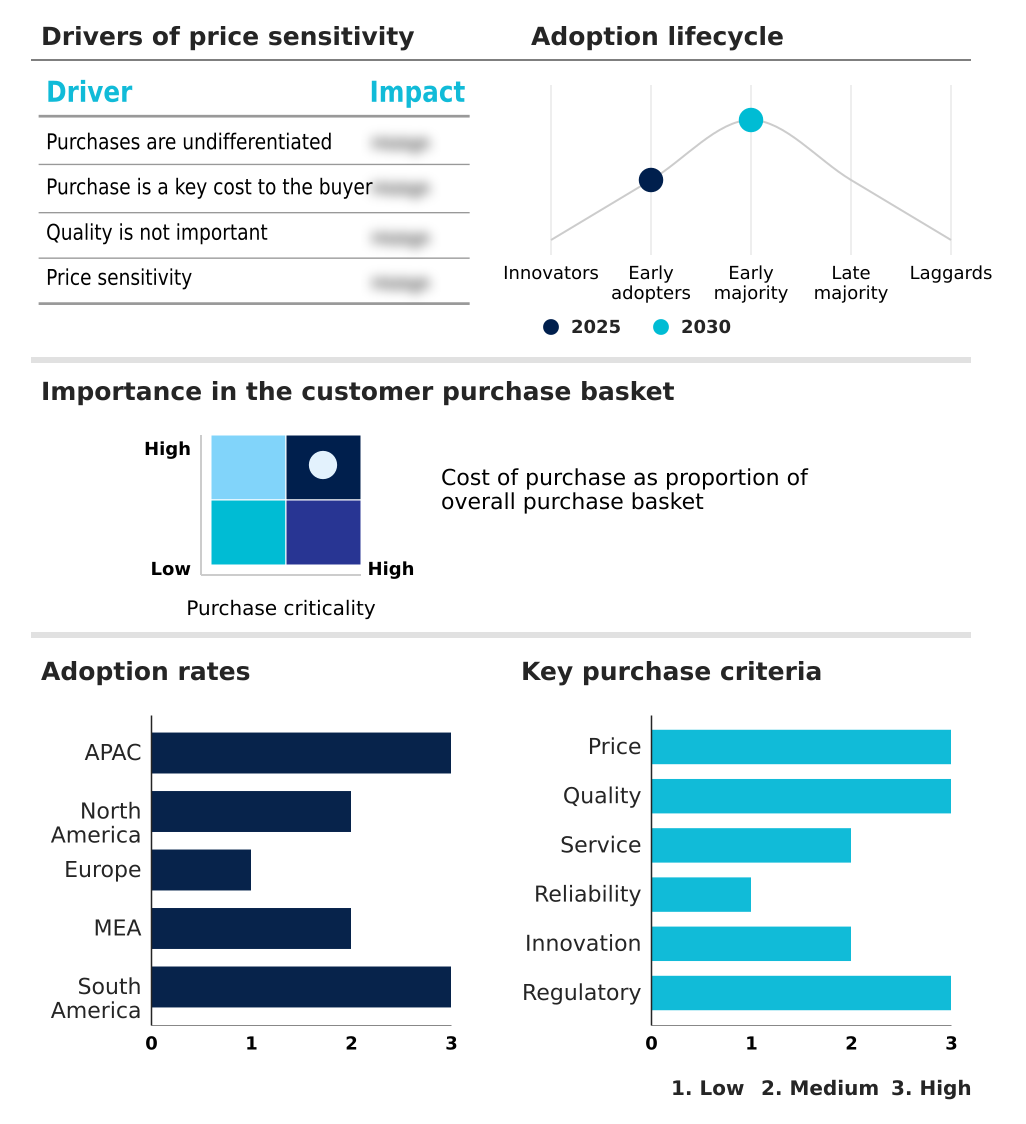
Customer Landscape of Turbo Expanders Industry
Competitive Landscape
Companies are implementing various strategies, such as strategic alliances, turbo expanders market forecast, partnerships, mergers and acquisitions, geographical expansion, and product/service launches, to enhance their presence in the industry.
Air Liquide SA - Expertise in delivering advanced turbo expander solutions for complex industrial gas and energy transition applications, ensuring high performance and reliability.
The industry research and growth report includes detailed analyses of the competitive landscape of the market and information about key companies, including:
- Air Liquide SA
- Air Products and Chem Inc.
- ARANER
- Atlas Copco AB
- Baker Hughes Co.
- BORSIG GmbH
- Calnetix Technologies LLC
- Chart Industries Inc.
- Cryostar
- Elliott Company
- Flowserve Corp.
- Honeywell International Inc.
- IHI Corp.
- Kobe Steel Ltd.
- MAN Energy Solutions SE
- Mitsubishi Heavy Industries
- Nikkiso Cryogenic Industries
- PBS Group AS
- Rotor Tech Inc
- Siemens Energy AG
- TURBOGAZ PRJSC
Qualitative and quantitative analysis of companies has been conducted to help clients understand the wider business environment as well as the strengths and weaknesses of key industry players. Data is qualitatively analyzed to categorize companies as pure play, category-focused, industry-focused, and diversified; it is quantitatively analyzed to categorize companies as dominant, leading, strong, tentative, and weak.
Recent Development and News in Turbo expanders market
- In May 2025, QatarEnergy announced the integration of advanced turbo expander technology within its North Field South expansion project to maximize the recovery of liquid hydrocarbons.
- In September 2025, ArcelorMittal inaugurated a state-of-the-art waste gas energy recovery system at a primary European steel manufacturing site, utilizing a top gas recovery turbine to capture energy.
- In January 2025, Linde Engineering successfully commissioned a large-scale hydrogen liquefaction plant in East Asia, which incorporates high-speed radial turbo expanders for extreme cryogenic requirements.
- In February 2025, Baker Hughes introduced an updated version of its Cordant digital suite, featuring a specialized module for monitoring the thermal efficiency and aerodynamic performance of high-speed rotating machinery.
Dive into Technavio’s robust research methodology, blending expert interviews, extensive data synthesis, and validated models for unparalleled Turbo Expanders Market insights. See full methodology.
| Market Scope | |
|---|---|
| Page number | 308 |
| Base year | 2025 |
| Historic period | 2020-2024 |
| Forecast period | 2026-2030 |
| Growth momentum & CAGR | Accelerate at a CAGR of 5.6% |
| Market growth 2026-2030 | USD 375.7 million |
| Market structure | Fragmented |
| YoY growth 2025-2026(%) | 5.3% |
| Key countries | China, India, Japan, South Korea, Australia, Indonesia, US, Canada, Mexico, Germany, Russia, UK, France, Italy, Norway, Saudi Arabia, UAE, South Africa, Egypt, Turkey, Brazil, Argentina and Chile |
| Competitive landscape | Leading Companies, Market Positioning of Companies, Competitive Strategies, and Industry Risks |
Research Analyst Overview
- The turbo expanders market is defined by its critical role in enhancing thermodynamic efficiency across energy-intensive industries. Boardroom decisions increasingly center on adopting these systems to meet sustainability mandates and reduce operational costs. The integration of power recovery technology, for instance, has demonstrated a reduction in plant energy consumption by over 15% in certain applications.
- A significant trend is the shift from conventional designs to advanced systems featuring active magnetic bearings for oil-free operation, which is paramount for hydrogen liquefaction and high-purity gas stream expansion. The use of digital twins to monitor rotor dynamics and aerodynamic performance of high-speed rotating machinery is becoming standard.
- These machines are essential for cryogenic gas processing, hydrocarbon recovery, and are replacing inefficient Joule-Thomson valves. Innovations in multi-stage expansion, blade profile optimization, and integrally geared compressors are enabling higher isentropic efficiency, especially as the industry moves toward subsea applications and manages challenging processes like fluid catalytic cracking and waste heat recovery.
- The technology, including generator coupled and compressor coupled configurations, is fundamental to handling supercritical carbon dioxide and achieving deep cryogenic temperatures for the entire energy value chain.
What are the Key Data Covered in this Turbo Expanders Market Research and Growth Report?
-
What is the expected growth of the Turbo Expanders Market between 2026 and 2030?
-
USD 375.7 million, at a CAGR of 5.6%
-
-
What segmentation does the market report cover?
-
The report is segmented by Product Type (Radial flow, Axial flow, and Hybrid), Type (Compressor coupled, Generator coupled, and Hydraulic), End-user (Oil and gas, Industrial gases, Power generation, and Others) and Geography (APAC, North America, Europe, Middle East and Africa, South America)
-
-
Which regions are analyzed in the report?
-
APAC, North America, Europe, Middle East and Africa and South America
-
-
What are the key growth drivers and market challenges?
-
Expansion of global natural gas and liquefied natural gas infrastructure, High initial capital investment and financial volatility
-
-
Who are the major players in the Turbo Expanders Market?
-
Air Liquide SA, Air Products and Chem Inc., ARANER, Atlas Copco AB, Baker Hughes Co., BORSIG GmbH, Calnetix Technologies LLC, Chart Industries Inc., Cryostar, Elliott Company, Flowserve Corp., Honeywell International Inc., IHI Corp., Kobe Steel Ltd., MAN Energy Solutions SE, Mitsubishi Heavy Industries, Nikkiso Cryogenic Industries, PBS Group AS, Rotor Tech Inc, Siemens Energy AG and TURBOGAZ PRJSC
-
Market Research Insights
- Market dynamics are shaped by the dual pressures of industrial decarbonization and the high capital costs of advanced machinery. The push for green energy storage and renewable energy integration drives the adoption of energy recovery systems, with facilities reporting up to a 20% reduction in external power purchases by leveraging waste gas energy recovery.
- However, the high initial outlay for modular turbo expanders and refinery modernization projects remains a barrier. The shift toward the hydrogen value chain and long-duration energy storage is creating new demand verticals, especially in high-purity environments.
- Stakeholders are focused on technologies that support the broader energy transition and clean energy infrastructure, where the integration of advanced turbines can improve the efficiency of a liquefaction plant by over 15% compared to conventional methods. The development of shale gas resources and regasification terminals continues to fuel demand, balancing the challenges of financial volatility.
We can help! Our analysts can customize this turbo expanders market research report to meet your requirements.
 RIA -
RIA - 
