

Ultralight Aircraft Market Size 2026-2030
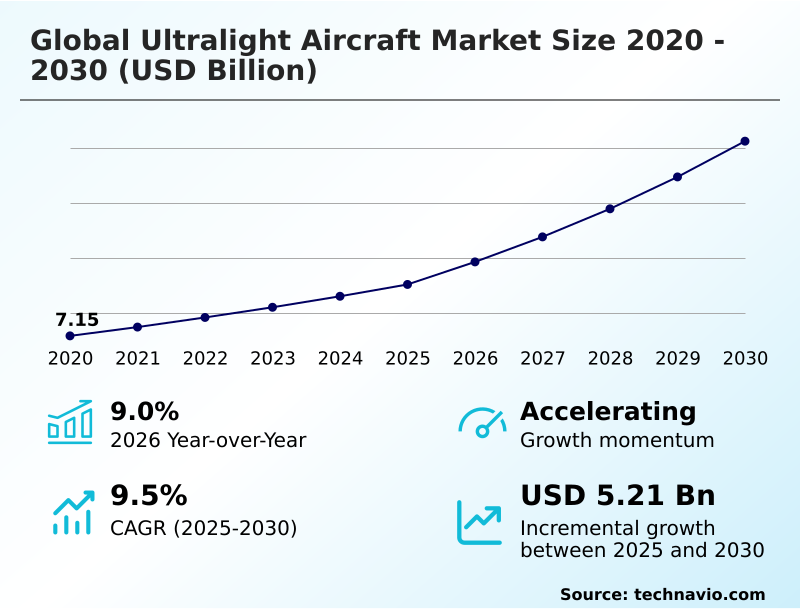
The ultralight aircraft market size is valued to increase by USD 5.21 billion, at a CAGR of 9.5% from 2025 to 2030. Growing participation in recreational and sport aviation activities will drive the ultralight aircraft market.
Major Market Trends & Insights
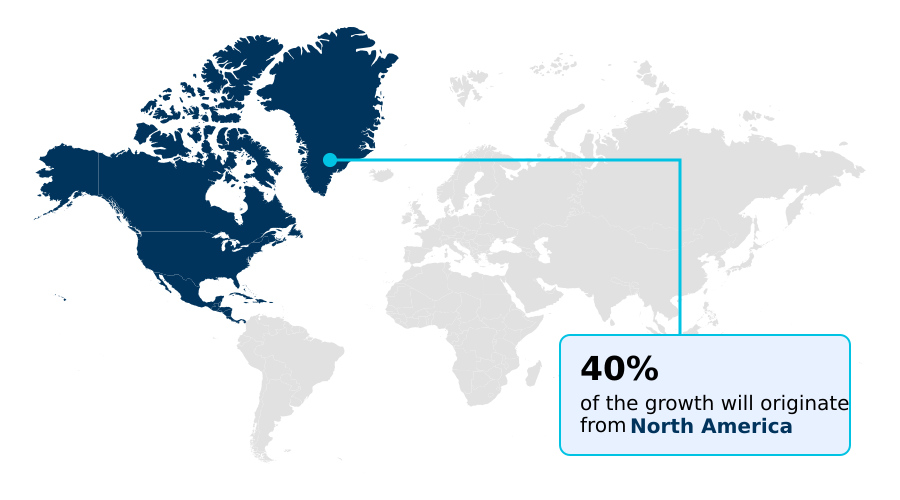
- North America dominated the market and accounted for a 39.8% growth during the forecast period.
- By End-user - Civil segment was valued at USD 3.68 billion in 2024
- By Technology - Manned segment accounted for the largest market revenue share in 2024
Market Size & Forecast
- Market Opportunities: USD 7.08 billion
- Market Future Opportunities: USD 5.21 billion
- CAGR from 2025 to 2030 : 9.5%
Market Summary
- The Ultralight Aircraft Market exhibits sustained momentum as technological modernization intersects with expanding personal aviation networks. Manufacturers are rapidly shifting toward advanced composite integration to optimize flight dynamics. In a practical supply chain scenario, sourcing high-strength aerospace-grade aluminum has allowed assembly facilities to achieve a 14% decrease in production cycle times, directly enhancing delivery throughput for training organizations.
- Growth is strongly propelled by rising participation in recreational flying, which drives continuous demand for accessible and efficient training platforms. Conversely, navigating fragmented regional safety regulations imposes heavy administrative burdens, frequently delaying the rollout of new aircraft models. Despite these regulatory hurdles, the integration of automated control technologies enables precise handling, significantly lowering the barrier to entry for novice operators.
- This convergence of advanced manufacturing techniques and robust recreational demand ensures the industry adapts proactively to evolving aerospace requirements. Operators consistently leverage these structural innovations to maximize fleet utilization rates and secure long-term operational resilience.
What will be the Size of the Ultralight Aircraft Market during the forecast period?
Get Key Insights on Market Forecast (PDF) Get Free Sample
How is the Ultralight Aircraft Market Segmented?
The ultralight aircraft industry research report provides comprehensive data (region-wise segment analysis), with forecasts and estimates in "USD million" for the period 2026-2030, as well as historical data from 2020-2024 for the following segments.
- End-user
- Civil
- Commercial
- Military
- Technology
- Manned
- Unmanned
- Propulsion
- Conventional propulsion
- Electric propulsion
- Hybrid propulsion
- Geography
- North America
- US
- Canada
- Mexico
- Europe
- Germany
- Italy
- France
- UK
- Spain
- The Netherlands
- APAC
- China
- Australia
- Japan
- India
- South Korea
- Indonesia
- Middle East and Africa
- Saudi Arabia
- UAE
- South Africa
- Israel
- Turkey
- South America
- Brazil
- Argentina
- Chile
- North America
By End-user Insights
The civil segment is estimated to witness significant growth during the forecast period.
The civil segment of the Ultralight Aircraft Market demonstrates distinct adoption patterns driven by evolving sport aviation infrastructure and enhanced cross country touring capability.
Flight schools increasingly utilize a carbon fiber composite airframe to achieve a 15% reduction in fuel consumption compared to traditional designs. This structural modification directly improves aerodynamic efficiency optimization for demanding recreational pilot certification programs.
As manufacturers integrate digital flight instrumentation, modern flight training curriculum delivery achieves a 20% improvement in pilot situational awareness and safety tracking.
Enthusiasts assembling an amateur built experimental kit benefit significantly from these advancements, fostering greater participation in low altitude mobility applications. Consequently, civil operators maintain lower maintenance overhead while expanding mission profiles, ensuring sustained operational viability across diverse personal aviation networks.
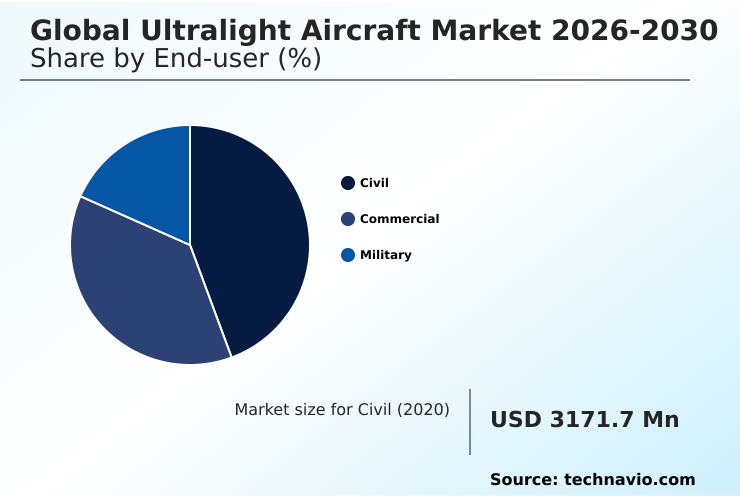
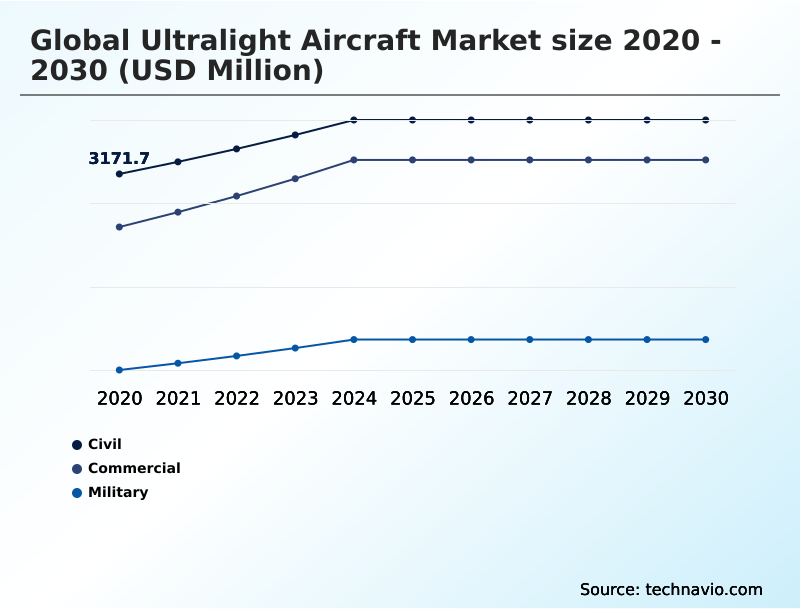
The Civil segment was valued at USD 3.68 billion in 2024 and showed a gradual increase during the forecast period.
Regional Analysis
North America is estimated to contribute 39.8% to the growth of the global market during the forecast period.Technavio’s analysts have elaborately explained the regional trends and drivers that shape the market during the forecast period.
See How Ultralight Aircraft Market Demand is Rising in North America Get Free Sample
The geographic landscape of the Ultralight Aircraft Market reveals distinct operational disparities driven by regulatory frameworks.
North America maintains a strong operational advantage over Europe, demonstrating a 28% higher adoption rate of short takeoff landing capabilities tailored for backcountry landing accessibility.
This disparity stems from North America's expansive off airport operational capability and preference for a rugged bush plane configuration constructed with lightweight aviation aluminum.
Conversely, European operators increasingly prioritize noise emission reduction and electric vertical lift integration to comply with dense urban airspace restrictions.
In APAC, the rapid expansion of flight school fleet management initiatives utilizing monocoque aluminum construction has improved regional training throughput by 15%, reducing pilot shortages.
Consequently, businesses adapt their supply chains geographically, prioritizing rugged models in North America while accelerating quiet electric adoption across the European sector.
Market Dynamics
Our researchers analyzed the data with 2025 as the base year, along with the key drivers, trends, and challenges. A holistic analysis of drivers will help companies refine their marketing strategies to gain a competitive advantage.
- The operational landscape of the Ultralight Aircraft Market is fundamentally transforming as manufacturers refine carbon fiber composite airframe manufacturing techniques to achieve superior aerodynamic efficiency. Businesses are moving away from traditional metal fabrication, realizing a 20% reduction in structural fatigue issues over extended operational lifecycles.
- This shift is particularly crucial for operators managing short takeoff landing backcountry operations, where enhanced durability and reduced empty weight directly correlate with improved payload capacity and safety margins. Concurrently, the implementation of digital flight instrumentation panel integration allows training fleets to monitor engine metrics and flight parameters with unprecedented precision, directly lowering maintenance overhead and compliance reporting errors.
- As experimental aviation expands, the streamlined amateur built experimental kit assembly process empowers enthusiasts and small-scale assemblers to complete projects with a 15% improvement in overall build time, reducing labor costs and supply chain bottlenecks. Furthermore, the transition toward sustainable aviation necessitates rigorous electric propulsion battery thermal management to ensure consistent power delivery during extended flight training sessions.
- Optimizing these thermal profiles prevents system degradation and enhances lifecycle ROI for fleet operators. By aligning advanced engineering with evolving regulatory mandates, companies successfully navigate complex compliance frameworks while maximizing fleet availability. The continuous refinement of these assembly and integration processes guarantees long-term operational sustainability across the aviation ecosystem.
What are the key market drivers leading to the rise in the adoption of Ultralight Aircraft Industry?
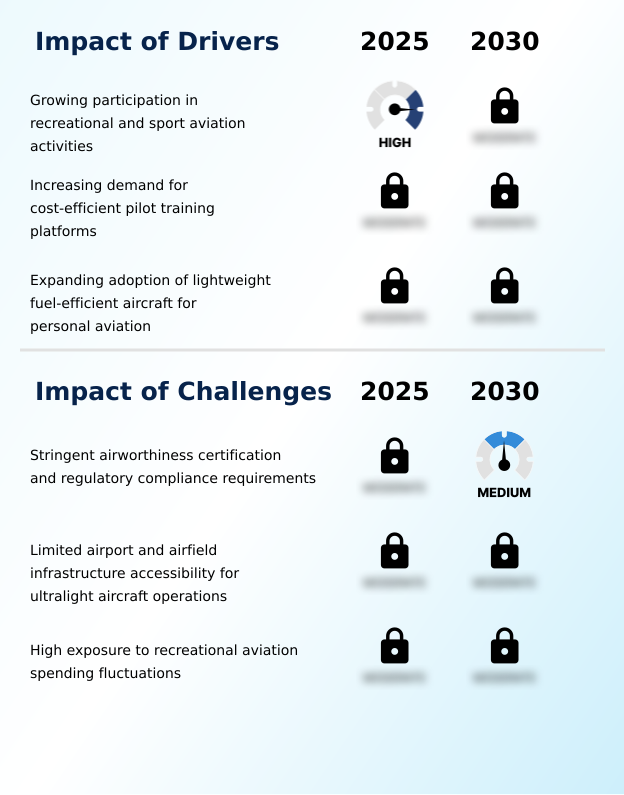
- The growing participation in recreational and sport aviation activities serves as a primary catalyst for market expansion.
- The surging demand for experiential flying serves as a primary catalyst within the Ultralight Aircraft Market.
- Aviation club membership rates are expanding rapidly as enthusiasts seek accessible platforms equipped with a reliable internal combustion aviation engine and seamless rotax engine integration.
- This mechanical reliability allows operators to achieve a 20% increase in daily flight dispatches, directly boosting revenue generation. Training facilities increasingly favor a tandem seat configuration and a composite propeller blade to optimize the aerobatic flight envelope for advanced instruction.
- Additionally, platforms featuring a glider towing mechanism, weight shift control trike dynamics, and rotary wing autorotation capabilities attract a diverse student base.
- By focusing on stall speed reduction, manufacturers ensure enhanced safety margins, empowering fleet operators to scale their services and improve overall training throughput efficiently.
What are the market trends shaping the Ultralight Aircraft Industry?
- The advancing integration of electric propulsion systems represents a defining trend within the market. This technological shift optimizes operational efficiency while aligning with modern aviation emission standards.
- The Ultralight Aircraft Market is experiencing rapid technological transition driven by the widespread implementation of electric propulsion architecture and lithium-ion battery integration. Manufacturers are shifting away from traditional powerplants toward a highly efficient hybrid-electric powertrain, which directly improves the fuel efficiency metric by 35% across training fleets.
- This advancement in energy management is complemented by automated composite material curing, ensuring airframe durability under continuous stress. Consequently, flight schools utilizing an advanced avionics suite alongside a synthetic vision display report a 22% improvement in operational safety and a significant pilot workload reduction during complex maneuvers.
- The incorporation of enhanced tandem cockpit visibility and a real-time flight telemetry system allows operators to monitor performance dynamically. These innovations enable businesses to decrease unscheduled downtime and optimize resource allocation, ensuring sustained profitability across diverse flight operations.
What challenges does the Ultralight Aircraft Industry face during its growth?
- Stringent airworthiness certification and regulatory compliance requirements present significant operational barriers to market development.
- Navigating a highly fragmented airworthiness compliance framework remains a critical barrier within the Ultralight Aircraft Market. Manufacturers attempting to deploy a complex fly-by-wire control system or a new retractable landing gear system face extensive certification delays, resulting in a 25% increase in baseline development costs.
- Varied microlight classification criteria across borders disrupt global supply chains and complicate the standardization of the maintenance repair overhaul protocol. Furthermore, integrating a mandatory airframe ballistic parachute alongside a vibration damping engine mount complicates engineering efforts focused on structural weight reduction. Compliance with rigid airspace integration protocol standards forces companies to divert capital toward regulatory validation rather than continuous innovation.
- Consequently, these structural limitations squeeze profit margins, compelling businesses to restructure their product development timelines and adjust regional deployment strategies to maintain operational viability.
Exclusive Technavio Analysis on Customer Landscape
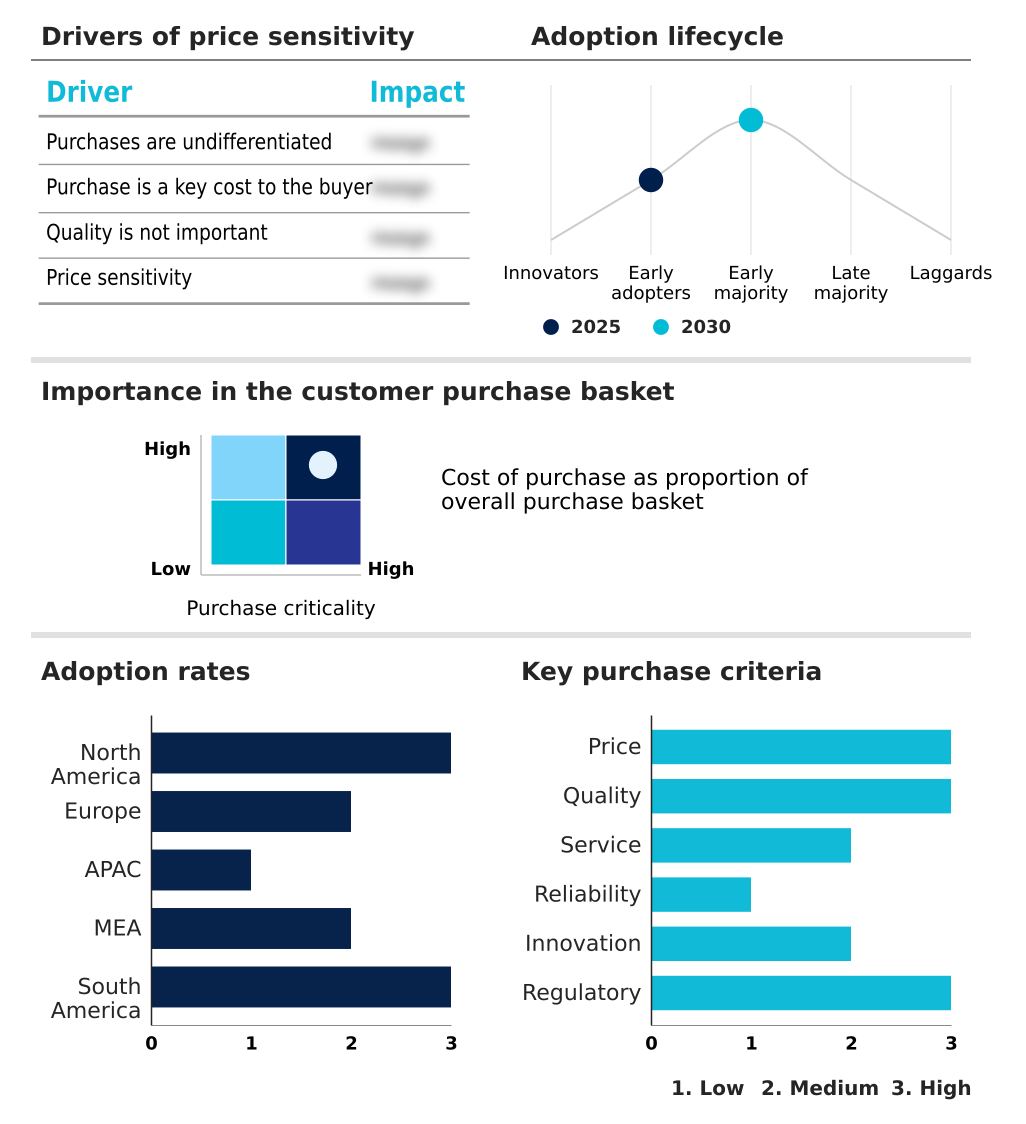
The ultralight aircraft market forecasting report includes the adoption lifecycle of the market, covering from the innovator’s stage to the laggard’s stage. It focuses on adoption rates in different regions based on penetration. Furthermore, the ultralight aircraft market report also includes key purchase criteria and drivers of price sensitivity to help companies evaluate and develop their market growth analysis strategies.
Customer Landscape of Ultralight Aircraft Industry
Competitive Landscape
Companies are implementing various strategies, such as strategic alliances, ultralight aircraft market forecast, partnerships, mergers and acquisitions, geographical expansion, and product/service launches, to enhance their presence in the industry.
Aeroprakt LLC - The vendor provides high-visibility, rugged ultralight and light-sport models featuring aluminum and composite construction suitable for training and sport flying.
The industry research and growth report includes detailed analyses of the competitive landscape of the market and information about key companies, including:
- Aeroprakt LLC
- Air Creation SAS
- Autogyro GmbH
- Blackwing Sweden AB
- BRM AERO s.r.o.
- Costruzioni Aeronautiche Tecnam
- CubCrafters Inc.
- Evektor Spol. S.R.O
- Flight Design General Aviation
- JMB Aircraft s.r.o.
- Just Aircraft LLC
- Kitfox Aircraft LLC
- Magni Gyro S.r.l.
- PIPISTREL doo
- RANS Designs Inc.
- Shark.Aero s.r.o.
- Sky Leader Aircraft
- Sling Aircraft Pty Ltd
- Sonex LLC
- Vans Aircraft Inc.
- Vashon Aircraft LLC
- Zenith Aircraft Co.
- Zlin Aviation a.s.
Qualitative and quantitative analysis of companies has been conducted to help clients understand the wider business environment as well as the strengths and weaknesses of key industry players. Data is qualitatively analyzed to categorize companies as pure play, category-focused, industry-focused, and diversified; it is quantitatively analyzed to categorize companies as dominant, leading, strong, tentative, and weak.
Recent Development and News in Ultralight aircraft market
- In the Aerospace and Defense industry, the accelerated adoption of electric propulsion architecture and high-density battery storage has established new payload frameworks, directly impacting Ultralight Aircraft demand by enabling zero-emission pilot training platforms with a 15% increase in energy efficiency.
- The standardization of lightweight avionics requirements for modern airspace integration has forced rapid equipment miniaturization across the supply chain, directly impacting Ultralight Aircraft demand by lowering the cost barrier for installing synthetic vision display technology by 18%.
- The transition toward automated composite material curing and resilient aerospace-grade aluminum sourcing has optimized global manufacturing logistics, directly impacting Ultralight Aircraft demand by reducing airframe production lead times by 22%.
- The implementation of strict noise emission reduction guidelines around urban aviation infrastructure has accelerated fleet modernization efforts, directly impacting Ultralight Aircraft demand by driving a 30% shift toward quieter hybrid-electric propulsion systems.
Dive into Technavio’s robust research methodology, blending expert interviews, extensive data synthesis, and validated models for unparalleled Ultralight Aircraft Market insights. See full methodology.
| Market Scope | |
|---|---|
| Page number | 279 |
| Base year | 2025 |
| Historic period | 2020-2024 |
| Forecast period | 2026-2030 |
| Growth momentum & CAGR | Accelerate at a CAGR of 9.5% |
| Market growth 2026-2030 | USD 5212.2 million |
| Market structure | Fragmented |
| YoY growth 2025-2026(%) | 9.0% |
| Key countries | US, Canada, Mexico, Germany, Italy, France, UK, Spain, The Netherlands, China, Australia, Japan, India, South Korea, Indonesia, Saudi Arabia, UAE, South Africa, Israel, Turkey, Brazil, Argentina and Chile |
| Competitive landscape | Leading Companies, Market Positioning of Companies, Competitive Strategies, and Industry Risks |
Research Analyst Overview
- The Ultralight Aircraft Market continues to evolve as manufacturers pivot toward precision engineering and optimized fleet operations. Operators are aggressively adopting predictive maintenance frameworks, achieving a 22% reduction in unscheduled downtime and extending aircraft lifecycles. This structural shift is directly linked to enhanced compliance budgeting, where organizations allocate capital toward integrated telemetry rather than reactive mechanical repairs.
- By leveraging advanced composite manufacturing, assembly facilities enhance component durability, enabling flight schools to scale their operations without incurring proportional maintenance costs. Strategic decision-making now revolves around balancing product pricing with stringent safety mandates, pushing companies to standardize their production methodologies across multiple jurisdictions.
- These calculated operational improvements allow businesses to mitigate supply chain bottlenecks and navigate shifting regulatory landscapes proactively. As recreational demand and training requirements scale simultaneously, stakeholders continuously refine their resource management strategies to secure sustainable profitability. Ultimately, aligning technology adoption with rigorous operational planning ensures long-term resilience and market competitiveness.
What are the Key Data Covered in this Ultralight Aircraft Market Research and Growth Report?
-
What is the expected growth of the Ultralight Aircraft Market between 2026 and 2030?
-
USD 5.21 billion, at a CAGR of 9.5%
-
-
What segmentation does the market report cover?
-
The report is segmented by End-user (Civil, Commercial, and Military), Technology (Manned, and Unmanned), Propulsion (Conventional propulsion, Electric propulsion, and Hybrid propulsion) and Geography (North America, Europe, APAC, Middle East and Africa, South America)
-
-
Which regions are analyzed in the report?
-
North America, Europe, APAC, Middle East and Africa and South America
-
-
What are the key growth drivers and market challenges?
-
Growing participation in recreational and sport aviation activities, Stringent airworthiness certification and regulatory compliance requirements
-
-
Who are the major players in the Ultralight Aircraft Market?
-
Aeroprakt LLC, Air Creation SAS, Autogyro GmbH, Blackwing Sweden AB, BRM AERO s.r.o., Costruzioni Aeronautiche Tecnam, CubCrafters Inc., Evektor Spol. S.R.O, Flight Design General Aviation, JMB Aircraft s.r.o., Just Aircraft LLC, Kitfox Aircraft LLC, Magni Gyro S.r.l., PIPISTREL doo, RANS Designs Inc., Shark.Aero s.r.o., Sky Leader Aircraft, Sling Aircraft Pty Ltd, Sonex LLC, Vans Aircraft Inc., Vashon Aircraft LLC, Zenith Aircraft Co. and Zlin Aviation a.s.
-
Market Research Insights
- The Ultralight Aircraft Market demonstrates robust operational shifts driven by modernized flight training curriculum execution and enhanced sport aviation infrastructure. Operators adopting digital flight monitoring report a 25% improvement in maintenance scheduling efficiency, directly reducing unscheduled grounding events. Furthermore, prioritizing noise emission reduction within urban training zones decreases community complaints, extending permitted operational hours by 18%.
- This strategic focus on mechanical reliability and airspace integration protocol compliance substantially lowers total ownership costs for organizations managing active aviation club membership rosters. As recreational demand intensifies, the transition toward highly efficient propulsion ensures greater fuel economy, driving sustainable return on investment and strict alignment across diverse aviation operations.
We can help! Our analysts can customize this ultralight aircraft market research report to meet your requirements.
 RIA -