


Wastewater Treatment Plant Market Size 2025-2029
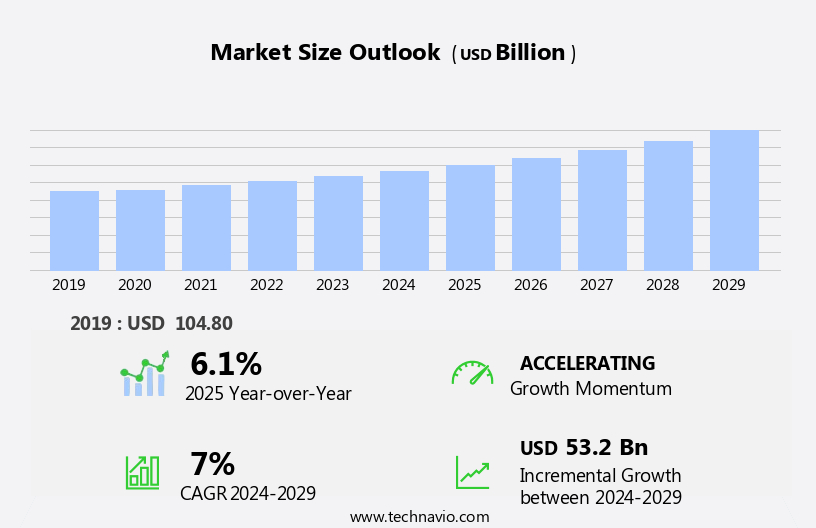
The wastewater treatment plant market size is forecast to increase by USD 53.2 billion, at a CAGR of 7% between 2024 and 2029.
- The market is experiencing significant growth due to the increasing number of wastewater treatment projects worldwide. Governments and private organizations are investing heavily in upgrading and expanding existing infrastructure to address the growing demand for clean water and stricter regulations on wastewater discharge. Additionally, companies are adopting inorganic growth strategies such as mergers and acquisitions to expand their market presence and enhance their technological capabilities. However, the wastewater treatment industry faces operational challenges that hinder market growth. The demand for water purification solutions is also rising as part of this effort to ensure cleaner, safer water for various applications.
- These challenges include high operational costs, complex regulatory frameworks, and the need for advanced technologies to meet stringent effluent discharge standards. To overcome these challenges, companies must focus on optimizing their operations through process automation, energy recovery, and the adoption of innovative technologies such as membrane filtration and anaerobic digestion. By addressing these challenges and capitalizing on the growing demand for wastewater treatment solutions, companies can effectively navigate the market landscape and capture new opportunities.
What will be the Size of the Wastewater Treatment Plant Market during the forecast period?
- The market encompasses the production and implementation of technologies and chemicals used to address industrial and municipal water contamination. This market is driven by growing concerns over water scarcity, environmental pollution, and health risks associated with untreated wastewater. Industrial sectors, particularly pulp and paper, contribute significantly to the demand for advanced treatment methods such as membrane separation, chemical treatment, and biological processes. Municipal organizations also invest in wastewater treatment infrastructure to meet stricter water quality standards and manage agricultural wastewater. Green technologies, including membrane bioreactors and advanced oxidation processes, are gaining popularity due to their ability to recover freshwater resources and reduce groundwater pollution.
- Infrastructure expenditure is expected to continue as wastewater treatment becomes increasingly essential for sustainable water management and international water law compliance. Wastewater treatment plants employ various techniques, including settling operations, secondary and tertiary treatment, and UV disinfection, to ensure effluent quality meets regulatory requirements. The market's growth is further influenced by the increasing importance of reclaimed wastewater for industrial processes and the expanding use of electrochemical technology for water treatment.
How is this Wastewater Treatment Plant Industry segmented?
The wastewater treatment plant industry research report provides comprehensive data (region-wise segment analysis), with forecasts and estimates in "USD billion" for the period 2025-2029, as well as historical data from 2019-2023 for the following segments.
- Type
- Secondary treatment
- Primary treatment
- Tertiary treatment
- Sludge treatment
- End-user
- Municipal
- Industrial
- Commercial
- Agricultural
- Service Type
- Turnkey projects
- Design and build
- Operation and maintenance services
- Geography
- APAC
- Australia
- China
- India
- Japan
- North America
- US
- Canada
- Europe
- France
- Germany
- Russia
- UK
- Middle East and Africa
- South America
- APAC
By Type Insights
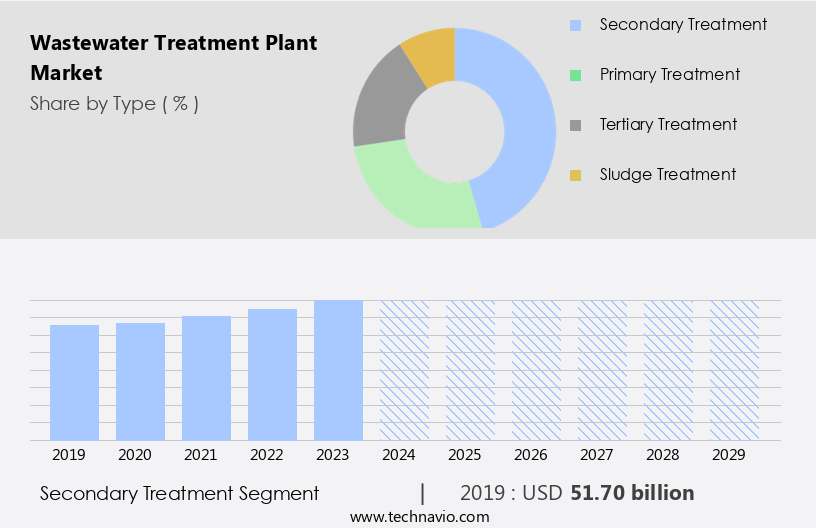
The secondary treatment segment is estimated to witness significant growth during the forecast period. Wastewater treatment plants play a crucial role in improving the quality of effluent from industrial and municipal sources. Secondary treatment is a vital process in this regard, removing dissolved and suspended biological matter to enhance the effluent's quality before its disposal or further treatment. In Bangalore, India, the Bangalore Water Supply and Sewage Board (BWSSB) demonstrates the significance of secondary treatment. The board currently supplies 18 Million Liters per Day (MLD) of treated water for industrial and commercial use, sourced from 24 secondary sewage treatment plants (STPs) and four tertiary sewage treatment plants (TTPs). The promotion of treated water from these facilities underscores the importance of secondary treatment in providing a dependable source of water for non-potable applications.
Water scarcity and environmental pollution are pressing concerns, necessitating advanced water treatment technologies. Industrial wastewater, in particular, poses challenges due to its high contaminant levels. Green technologies, such as membrane separation and membrane bioreactors, have emerged as effective solutions for wastewater treatment. Ultraviolet (UV) disinfection and advanced oxidation processes are other advanced water treatment technologies that ensure effluent quality. Integrated water management, including water reuse technologies and smart water management, is essential for sustainable water management. Water quality standards and regulations are increasingly stringent, necessitating upgrades to existing wastewater treatment plants and the adoption of energy-recovering technologies.
Get a glance at the market report of share of various segments Request Free Sample
The secondary treatment segment was valued at USD 51.70 billion in 2019 and showed a gradual increase during the forecast period.
Regional Analysis
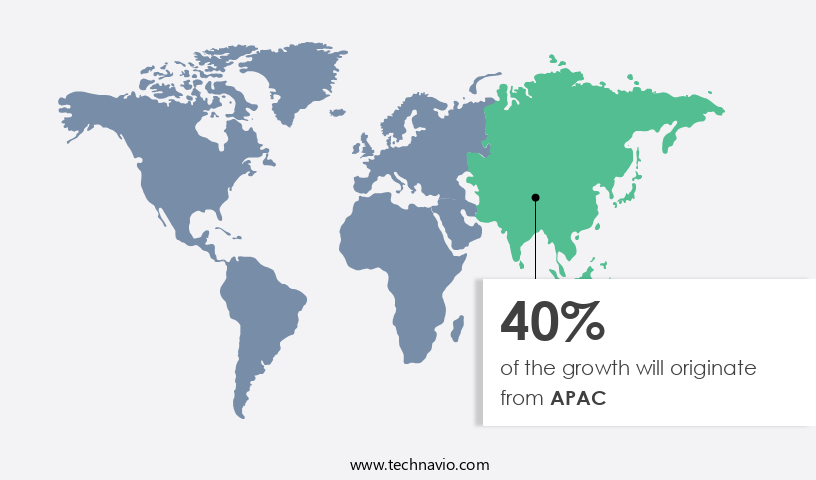
APAC is estimated to contribute 40% to the growth of the global market during the forecast period. Technavio's analysts have elaborately explained the regional trends and drivers that shape the market during the forecast period.
For more insights on the market size of various regions, Request Free Sample
The Asia Pacific (APAC) region is experiencing notable growth in The market due to urbanization, industrialization, and stringent environmental regulations. One significant development in India occurred in October 2024 when the Noida Authority inaugurated a modern tertiary wastewater treatment plant in Noida, with a capacity to process wastewater effectively. This plant utilizes advanced chemical and physical processes to eliminate contaminants, significantly enhancing the quality of the treated water. The treated water, which will flow into the Yamuna and Hindon rivers, is also intended for irrigation purposes. This project underscores the importance of wastewater treatment in addressing water scarcity, environmental pollution, and health risks.
The APAC market is also witnessing innovation in water recovery technologies, such as membrane separation and advanced oxidation processes, to promote sustainable water management and circular economy water use. Key players in this market are focusing on plant upgrades, energy recovery, and integrated water management to meet water quality standards and cater to the increasing water demand from urban populations.
Market Dynamics
Our researchers analyzed the data with 2024 as the base year, along with the key drivers, trends, and challenges. A holistic analysis of drivers will help companies refine their marketing strategies to gain a competitive advantage.
What are the key market drivers leading to the rise in the adoption of the Wastewater Treatment Plant Industry?
- Increasing wastewater treatment projects is the key driver of the market. The market is experiencing notable growth due to the increasing emphasis on enhancing sanitation infrastructure. This trend is reflected in the initiatives of both public and private entities to address the escalating demand for effective wastewater management solutions. One significant development is the Private Investment Promotion Agency's plans to award seven major wastewater treatment projects by the end of 2025, with an investment of approximately USD 1.1 billion (excluding VAT).
- These projects, to be awarded through a Co-financed Private Initiative (CPI) under the Public-Private Partnership (PPP) scheme, will benefit residents in various regions, including Chincha, Cajamarca, Huancayo, San Martin, Puerto Maldonado, Trujillo, and Cusco. These initiatives underscore the commitment to improving wastewater management and contributing to sustainable development.
What are the market trends shaping the Wastewater Treatment Plant Industry?
- Increasing inorganic growth strategies among companies is the upcoming market trend. The global wastewater treatment market is experiencing a significant trend towards inorganic growth strategies among market participants. Companies are leveraging mergers and acquisitions to expand their reach, enhance capabilities, and integrate advanced technologies. In July 2023, Kurita Europe GmbH announced the acquisition of Arcade Engineering Group (AEG), a renowned player in water treatment and processing plants for the semiconductor industry.
- This acquisition included the transfer of 100% ownership of Arcade Engineering GmbH, Arcade Engineering AG, Arcade Industrie SAS, and Arcade Engineering Pte Ltd. By integrating AEG's expertise, Kurita Europe aims to strengthen its market position and diversify its service offerings. This strategic move underscores the growing importance of inorganic growth in the wastewater treatment market.
What challenges does the Wastewater Treatment Plant Industry face during its growth?
- Operational challenges associated with it are a key challenge affecting the industry's growth. The market encounters substantial challenges in managing operational costs and addressing sustainability concerns. One notable instance occurred in March 2024, where residents of a community faced considerable financial burdens due to a new project, with estimated annual additional costs amounting to approximately USD 725 per household. This represents a significant cost overrun compared to the initial estimate.
- Moreover, the market is witnessing a shift towards the use of higher-concentration chemicals to address sustainability concerns. This trend is motivated by the desire to minimize transport costs, reduce emissions, and decrease the size of dosing systems. This shift signifies a crucial development in the industry as it strives to maintain environmental responsibility while managing operational expenses.
Exclusive Customer Landscape
The wastewater treatment plant market forecasting report includes the adoption lifecycle of the market, covering from the innovator's stage to the laggard's stage. It focuses on adoption rates in different regions based on penetration. Furthermore, the wastewater treatment plant market report also includes key purchase criteria and drivers of price sensitivity to help companies evaluate and develop their market growth analysis strategies.
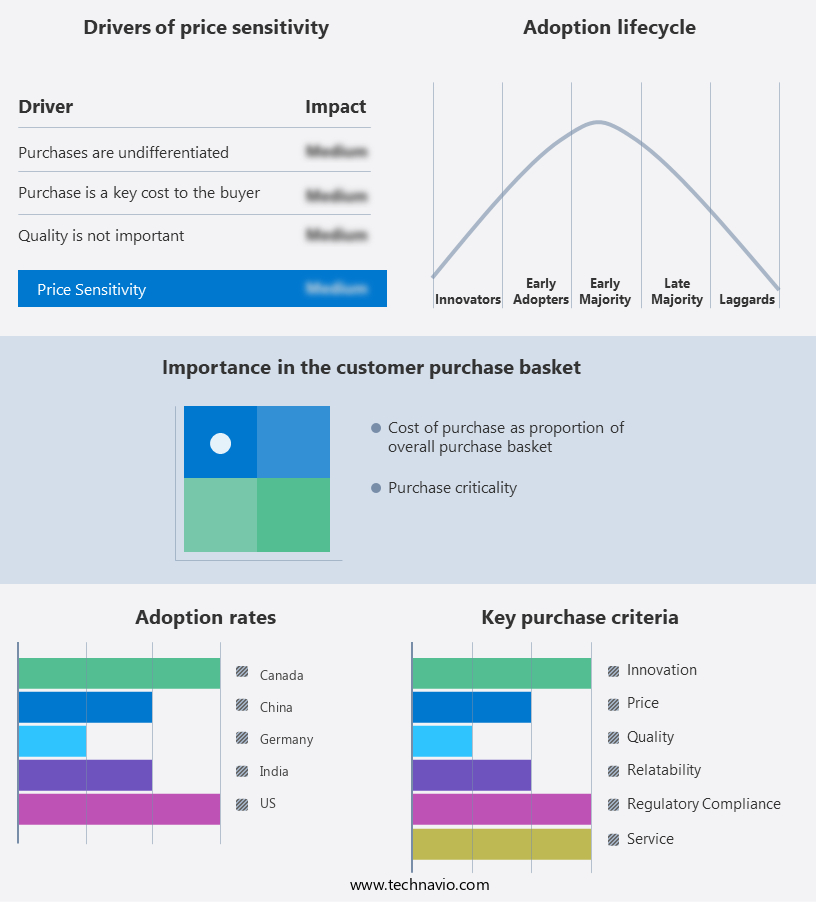
Customer Landscape
Key Companies & Market Insights
Companies are implementing various strategies, such as strategic alliances, wastewater treatment plant market forecast, partnerships, mergers and acquisitions, geographical expansion, and product/service launches, to enhance their presence in the industry.
Aquacare Solution Enviro Engineers - The company offers wastewater treatment that eliminates hardness and mineral salts from water, hence improving its quality.
The industry research and growth report includes detailed analyses of the competitive landscape of the market and information about key companies, including:
- aquashakti water solution
- CleanTech Water
- ECOfluid Systems Inc
- Ecolab Inc.
- Envicare
- Evoqua Water Technologies LLC
- Fluence Corp. Ltd.
- Hydro International Ltd.
- Ion Exchange India Ltd.
- Kurita Europe GmbH
- Mitsubishi Heavy Industries Ltd.
- Organica Water, Inc.
- Paramount Ltd
- Pranjali Water Solution Technology
- Shree Water Tech
- SUEZ SA
- Trity Environ Solutions
- Triveni Engineering and Industries Ltd.
- Veolia Water Technologies
Qualitative and quantitative analysis of companies has been conducted to help clients understand the wider business environment as well as the strengths and weaknesses of key industry players. Data is qualitatively analyzed to categorize companies as pure play, category-focused, industry-focused, and diversified; it is quantitatively analyzed to categorize companies as dominant, leading, strong, tentative, and weak.
Research Analyst Overview
The market encompasses a range of technologies and processes designed to address the growing challenge of managing industrial and municipal wastewater. This market is driven by the increasing awareness of water scarcity and the need to mitigate environmental pollution and health risks associated with untreated wastewater. Industrial treatment plays a crucial role in ensuring the sustainability of manufacturing processes and reducing the environmental impact of industries. Green technologies, such as membrane separation and advanced oxidation processes, are gaining popularity due to their ability to minimize the use of chemicals and energy in the treatment process. Water recovery is another key trend in the market.
Membrane separation technologies, such as membrane bioreactors, enable the recovery of valuable resources, including water and nutrients, from wastewater. This not only reduces the demand for freshwater resources but also contributes to a circular economy. Water scarcity and environmental pollution are major concerns in many parts of the world, leading to stringent water quality standards and regulations. It plants play a vital role in ensuring compliance with these standards and protecting freshwater resources. However, the aging municipal water infrastructure and urban population growth pose significant challenges to the effective management of wastewater. The water industry is also grappling with the issue of groundwater pollution, which is a major source of contamination in many regions.
Integrated water management, which involves the coordinated management of water resources, is gaining traction as a solution to this problem. Water pricing and sustainable water management are crucial aspects of water governance, which is essential for ensuring water access and equity. Smart water management systems, which leverage advanced technologies to optimize water usage and reduce wastage, are becoming increasingly important in this context. Water sanitation is another critical issue that it plants address. Ultraviolet (UV) disinfection and other disinfection systems are used to ensure the removal of pathogens from wastewater before it is released back into the environment.
|
Market Scope |
|
|
Report Coverage |
Details |
|
Page number |
227 |
|
Base year |
2024 |
|
Historic period |
2019-2023 |
|
Forecast period |
2025-2029 |
|
Growth momentum & CAGR |
Accelerate at a CAGR of 7% |
|
Market Growth 2025-2029 |
USD 53.2 billion |
|
Market structure |
Fragmented |
|
YoY growth 2024-2025(%) |
6.1 |
|
Key countries |
US, China, India, Germany, Japan, UK, Canada, Australia, Russia, and France |
|
Competitive landscape |
Leading Companies, Market Positioning of Companies, Competitive Strategies, and Industry Risks |
What are the Key Data Covered in this Wastewater Treatment Plant Market Research and Growth Report?
- CAGR of the Wastewater Treatment Plant industry during the forecast period
- Detailed information on factors that will drive the market growth and forecasting between 2025 and 2029
- Precise estimation of the size of the market and its contribution of the industry in focus to the parent market
- Accurate predictions about upcoming growth and trends and changes in consumer behaviour
- Growth of the market across APAC, North America, Europe, Middle East and Africa, and South America
- Thorough analysis of the market's competitive landscape and detailed information about companies
- Comprehensive analysis of factors that will challenge the wastewater treatment plant market growth of industry companies
We can help! Our analysts can customize this wastewater treatment plant market research report to meet your requirements.
 RIA -
RIA - 
