



Water Enhancer Market Size 2024-2028
The water enhancer market size is forecast to increase by USD 1.69 billion, at a CAGR of 10.03% between 2023 and 2028.
- The market is witnessing significant growth, driven by the increasing consumer preference for healthier beverage options. This trend is fueled by the rising awareness of the importance of hydration and maintaining an active lifestyle. Sugars and additives are being replaced with natural alternatives, such as amino acids, protein, and herbal additives, to cater to the health-conscious consumer. Companies are responding to this demand by introducing new flavors and product ranges to cater to diverse consumer preferences. However, the market faces challenges related to consumer concerns over the quality of ingredients and packaging. As consumers become more health-conscious, they are demanding natural and organic ingredients, free from artificial additives. Additionally, there is a growing emphasis on sustainable packaging solutions to reduce environmental impact.
- Companies that can successfully address these challenges by offering high-quality, natural, and eco-friendly water enhancers will be well-positioned to capitalize on the market's growth opportunities. The strategic landscape of the market is dynamic, with companies continually innovating to meet evolving consumer demands and navigate regulatory requirements. Companies seeking to succeed in this market must stay informed of the latest trends and consumer preferences, while also addressing the challenges related to ingredient quality and sustainable packaging.
What will be the Size of the Water Enhancer Market during the forecast period?
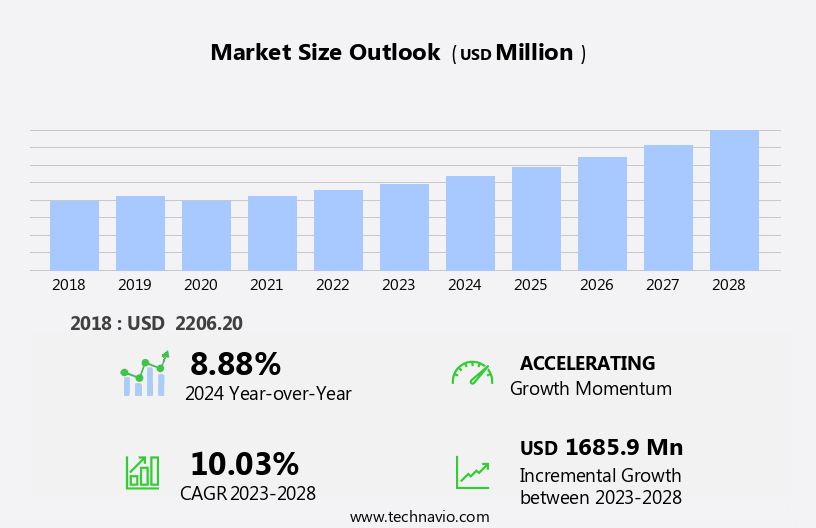
Explore in-depth regional segment analysis with market size data - historical 2018-2022 and forecasts 2024-2028 - in the full report.
Request Free Sample
The market continues to evolve, driven by advancements in technology and consumer preferences. Mineral composition analysis plays a crucial role in ensuring the optimal balance of essential minerals, while water deionization systems remove ions to enhance water quality. Conductivity measurement is integral to monitoring the efficiency of deionization processes, and UV sterilization methods eradicate harmful microorganisms. Turbidity reduction processes clarify water, and pressure regulation systems maintain consistent water flow. Water softening processes mitigate hardness, and health benefit assessments evaluate the nutritional value of enhanced water. Quality control testing, odor reduction techniques, and filtration media selection further refine water purification systems.
Enhanced water solubility and taste improvement methods cater to consumer preferences, while water dispensing systems ensure convenient access. Dissolved solids content, water filtration membranes, and reverse osmosis systems contribute to water purification capacity. Microbial contamination control, pipeline material selection, and water quality metrics ensure safety and efficiency in distribution networks. Electrolyte balance control, ph level adjustment, hydration optimization processes, and chemical treatment processes further refine water enhancement. Oxidant application methods disinfect water, and mineral enhancement technology optimizes water composition. Membrane fouling control maintains system efficiency, ensuring continuous improvement and innovation in the market.
How is this Water Enhancer Industry segmented?
The water enhancer industry research report provides comprehensive data (region-wise segment analysis), with forecasts and estimates in "USD million" for the period 2024-2028, as well as historical data from 2018-2022 for the following segments.
- Type
- Flavored water enhancer
- Energy water and fitness drops
- Workout drops
- Distribution Channel
- Supermarkets & Hypermarkets
- Online Retail
- Convenience Stores
- Pharmacies
- Formulation
- Liquid Concentrates
- Powder Sachets
- Tablets
- Consumer Preference
- Sugar-Free
- Organic
- Natural Flavors
- Functional Benefits
- Geography
- North America
- US
- Canada
- Europe
- France
- Germany
- Italy
- UK
- Middle East and Africa
- Egypt
- KSA
- Oman
- UAE
- APAC
- China
- India
- Japan
- South America
- Argentina
- Brazil
- Rest of World (ROW)
- North America
By Type Insights
The flavored water enhancer segment is estimated to witness significant growth during the forecast period.
The market for flavored water is gaining traction as consumers seek healthier alternatives to sugary beverages. This category of water includes naturally and artificially flavored variants, sometimes fortified with vitamins, minerals, and electrolytes. Flavored water is available in two main forms: still and sparkling. The rise in childhood health concerns, linked to the excessive consumption of carbonated drinks, is driving the demand for flavored water. Consumers appreciate its refreshing and hydrating qualities, making it a popular choice over plain water. Mineral composition analysis ensures the optimal balance of essential minerals in flavored water. Water deionization systems remove minerals and contaminants, enhancing the water's purity.
Conductivity measurement and UV sterilization methods ensure water quality and safety. Turbidity reduction processes clarify the water, while pressure regulation systems maintain consistent water pressure. Water softening processes improve the water's taste by reducing hardness. Health benefit assessments and quality control testing ensure the product's safety and efficacy. Odor reduction techniques eliminate unwanted smells, while filtration media selection optimizes the water's filtration process. Enhanced water solubility and taste improvement methods make flavored water more appealing. Water dispensing systems provide convenience, and consumer water preference influences product development. Dissolved solids content and water filtration membranes are crucial factors in maintaining water quality.
Reverse osmosis systems and microbial contamination control ensure the water's purity. Pipeline material selection and water quality metrics are essential for maintaining the water's integrity throughout the distribution network. Electrolyte balance control, water hardness reduction, and pH level adjustment are essential for optimal hydration. Chemical treatment processes and oxidant application methods sanitize and disinfect the water. Mineral enhancement technology and membrane fouling control maintain the water's consistency and quality.
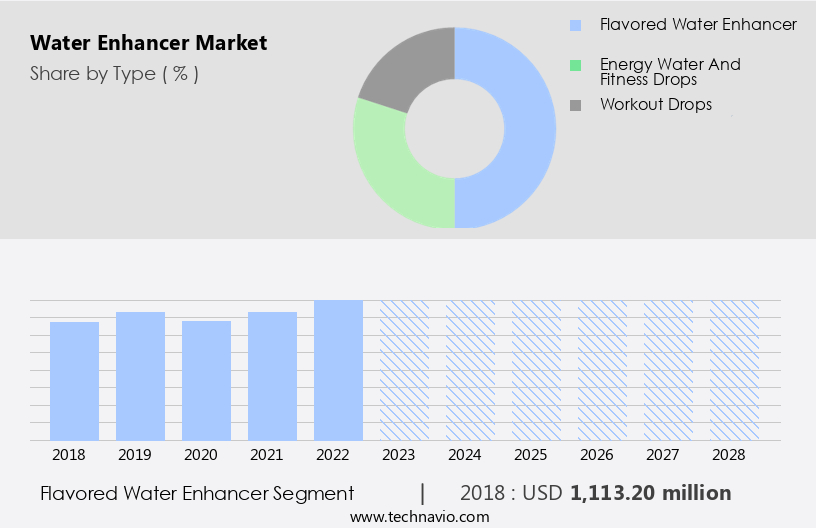
The Flavored water enhancer segment was valued at USD 1.11 billion in 2018 and showed a gradual increase during the forecast period.
Regional Analysis
North America is estimated to contribute 40% to the growth of the global market during the forecast period.Technavio's analysts have elaborately explained the regional trends and drivers that shape the market during the forecast period.

The market in North America is experiencing significant growth due to increasing consumer preference for healthier beverage options. These enhancers, which contain minerals, vitamins, natural flavors, and plant-based products, cater to the health-conscious demographic. The rising obesity rates and related health concerns are further fueling this trend. In the US, consumers prioritize product differentiation and have easy access to various product categories. Water enhancers undergo rigorous quality control testing, including mineral composition analysis, conductivity measurement, and turbidity reduction processes. To ensure consumer safety, they are subjected to microbial contamination control and odor reduction techniques. Filtration media selection plays a crucial role in enhancing water solubility and improving taste.
Reverse osmosis systems and water filtration membranes are commonly used to remove dissolved solids and impurities. Water deionization systems and pressure regulation systems are essential components in the production process. Electrolyte balance control and ph level adjustment are crucial for maintaining optimal hydration. The water purification system's capacity is enhanced through chemical treatment processes, oxidant application methods, and mineral enhancement technology. Membrane fouling control is also a critical consideration to ensure consistent product quality. The distribution network's efficiency is vital for meeting consumer demand. Pipeline material selection is crucial to ensure product safety and maintain water quality metrics. Overall, the market is driven by consumer preference, health benefits, and technological advancements in water purification systems.
Market Dynamics
The Global water enhancer market is experiencing significant expansion, driven by evolving water enhancer market trends and a growing consumer desire for healthy beverage alternatives. A key driver is the demand for sugar-free water enhancers and zero-calorie water enhancers, catering to health-conscious individuals. Liquid water enhancers remain dominant, but powder water enhancers are gaining traction, offering convenient on-the-go hydration. Consumers increasingly seek functional benefits, favoring electrolyte water enhancers, vitamin water enhancers, and energy water enhancers. The market's dynamism is evident in continuous new product launches water enhancers, often featuring natural flavor water enhancers and innovative water enhancer drops. The Global water enhancer market size is propelled by rising consumer preferences water enhancers for easy hydration solutions, making them popular sports drink alternatives and even catering to the specific needs of children's water enhancers.
Our researchers analyzed the data with 2023 as the base year, along with the key drivers, trends, and challenges. A holistic analysis of drivers will help companies refine their marketing strategies to gain a competitive advantage.
What are the key market drivers leading to the rise in the adoption of Water Enhancer Industry?
- Consumers' growing emphasis on health and wellness is the primary catalyst fueling market expansion.
- Water enhancers have gained significant traction in the market due to consumers' increasing focus on health and wellness. With the rise in health issues such as obesity, cardiovascular diseases, and diabetes, there is a growing preference for hydration solutions that offer dietary benefits without the added sugars and carbonation found in soft drinks. Water enhancers provide an alternative by adding flavor to water while maintaining its purity. These products contain essential vitamins, minerals, electrolytes, and proteins, making them an ideal choice for individuals seeking to optimize their hydration process. Moreover, the chemical treatment process and oxidant application methods used in water enhancers ensure water hardness reduction and ph level adjustment, making them suitable for various palates.
- The membrane fouling control technology used in these products maintains the efficiency of distribution networks, ensuring a consistent and high-quality product. As contamination levels in drinking water continue to rise, water enhancers offer a clean, bacteria-free alternative, further boosting their popularity.
What are the market trends shaping the Water Enhancer Industry?
- The introduction of new flavors and product ranges is a current market trend. Professionals in the industry are continually expanding their offerings to cater to evolving consumer preferences.
- The market is experiencing significant growth due to increasing consumer preference for flavored and healthier beverage options. To cater to this demand, market participants are focusing on product innovation, introducing various flavors such as raspberry, strawberry, pineapple, cucumber, watermelon, and rose water-infused H2ROSE. Manufacturers in the flavored water and fitness/energy drink sectors are also expanding their product lines to stay competitive. Coca-Cola, for instance, has entered the market with DASANI Drops, while Kraft Foods' MiO Fit remains a notable competitor.
- To ensure product quality and consumer safety, water enhancer manufacturers employ various technologies, including mineral composition analysis, water deionization systems, conductivity measurement, UV sterilization methods, turbidity reduction processes, and pressure regulation systems. Additionally, health benefit assessments are conducted to fortify these products with essential vitamins and minerals. These enhancements not only cater to consumer health concerns but also provide a unique selling proposition for market players.
What challenges does the Water Enhancer Industry face during its growth?
- The quality of ingredients and packaging represents a significant challenge for the industry, as concerns in these areas can negatively impact growth.
- Water enhancers have gained popularity as consumers seek to improve the taste and quality of their drinking water. However, concerns over the use of additives and low-quality ingredients, particularly propylene glycol as a preservative, have arisen. Consumption of water enhancers containing high quantities of these additives can lead to health issues such as acidosis and kidney failure. Furthermore, the use of plastic in packaging for water enhancers has become a subject of controversy due to the environmental impact of plastic waste and the release of harmful greenhouse gases. In response, governments are increasingly regulating the water enhancers industry to ensure quality control testing and the implementation of odor reduction techniques and filtration media selection.
- Consumers' growing preference for enhanced water solubility and taste improvement methods, as well as the use of advanced water dispensing systems, are driving market growth. However, the environmental concerns surrounding plastic packaging and the potential health risks associated with certain additives may hinder market expansion.
Exclusive Customer Landscape
The water enhancer market forecasting report includes the adoption lifecycle of the market, covering from the innovator's stage to the laggard's stage. It focuses on adoption rates in different regions based on penetration. Furthermore, the water enhancer market report also includes key purchase criteria and drivers of price sensitivity to help companies evaluate and develop their market growth analysis strategies.

Customer Landscape
Key Companies & Market Insights
Companies are implementing various strategies, such as strategic alliances, water enhancer market forecast, partnerships, mergers and acquisitions, geographical expansion, and product/service launches, to enhance their presence in the industry.
AriZona Beverages USA LLC - This company specializes in providing a range of water enhancers, including Lemon Iced Tea, Green Tea, Arnold Palmer, and Mucho Mango, enhancing hydration with natural flavors. These beverages cater to diverse consumer preferences, contributing to the growing market demand for flavored water options.
The industry research and growth report includes detailed analyses of the competitive landscape of the market and information about key companies, including:
- AriZona Beverages USA LLC
- Beyond Water
- H2WOW
- Dyla Brands
- GNC Holdings LLC
- Heartland Food Products Group LLC
- Keurig Dr Pepper Inc.
- Nestle SA
- Netrition Inc.
- PepsiCo Inc.
- Primo Water Corp.
- RASNA PVT. LTD.
- Refresco Group BV
- sKoya
- Sunkist Growers Inc.
- Target Corp.
- The Coca Cola Co.
- The Jel Sert Co.
- The Kraft Heinz Co.
- Wisdom Natural Brands
Qualitative and quantitative analysis of companies has been conducted to help clients understand the wider business environment as well as the strengths and weaknesses of key industry players. Data is qualitatively analyzed to categorize companies as pure play, category-focused, industry-focused, and diversified; it is quantitatively analyzed to categorize companies as dominant, leading, strong, tentative, and weak.
Recent Development and News in Water Enhancer Market
- In January 2024, Nestle Waters, a leading global bottled water company, introduced a new line of water enhancers under its Pure Life brand. These drops contain natural flavors and sweeteners, aiming to cater to the growing demand for flavored water beverages (Source: Nestle Waters Press Release).
- In March 2024, Danone, a leading food and beverage company, announced a strategic partnership with Bio-Techne Corporation to develop and commercialize Bio-Techne's proprietary water soluble vitamins for use in Danone's water enhancer products. This collaboration aims to enhance the nutritional value of Danone's offerings (Source: Danone Press Release).
- In May 2024, S.Pellegrino, a premium bottled water brand, secured a major distribution deal with Amazon, making its water enhancer products available for purchase on the e-commerce giant's platform in the United States. This expansion is expected to significantly increase S.Pellegrino's reach and market share (Source: S.Pellegrino Press Release).
- In April 2025, Coca-Cola, the world's largest beverage company, completed the acquisition of BodyArmor, a leading sports drink brand that also offers water enhancers. The acquisition is expected to strengthen Coca-Cola's position in the growing market for functional beverages (Source: Coca-Cola Company SEC Filing).
Research Analyst Overview
- The market is witnessing significant advancements in water purity improvement through the integration of advanced filtration technology. Efficient water systems are gaining traction, enhancing hydration effects and ensuring water safety protocols. Electrolyte enhancement is a key trend, as consumers seek optimized water ph and mineral absorption rates. Water purification stages, such as water disinfection methods and water treatment technology, are essential components of these systems. Water distribution networks benefit from improved water clarity and reduced odor, while mineral content increases provide additional health benefits. Membrane life extension and energy efficiency upgrades are crucial for sustainable water practices.
- Consumer sensory testing plays a vital role in ensuring water taste enhancement and meeting water quality standards. Water desalination processes are also gaining popularity, offering solutions for water scarcity in certain regions. Water softening techniques and filtration system design continue to evolve, addressing the diverse needs of businesses and households. Water quality monitoring and water safety protocols are paramount in maintaining consumer trust and confidence. Overall, the market is driven by the demand for cleaner, safer, and more efficient water solutions.
Dive into Technavio's robust research methodology, blending expert interviews, extensive data synthesis, and validated models for unparalleled Water Enhancer Market insights. See full methodology.
|
Market Scope |
|
|
Report Coverage |
Details |
|
Page number |
148 |
|
Base year |
2023 |
|
Historic period |
2018-2022 |
|
Forecast period |
2024-2028 |
|
Growth momentum & CAGR |
Accelerate at a CAGR of 10.03% |
|
Market growth 2024-2028 |
USD 1685.9 million |
|
Market structure |
Fragmented |
|
YoY growth 2023-2024(%) |
8.88 |
|
Key countries |
US, Canada, Germany, UK, Italy, France, China, India, Japan, Brazil, Egypt, UAE, Oman, Argentina, KSA, UAE, Brazil, and Rest of World (ROW) |
|
Competitive landscape |
Leading Companies, Market Positioning of Companies, Competitive Strategies, and Industry Risks |
What are the Key Data Covered in this Water Enhancer Market Research and Growth Report?
- CAGR of the Water Enhancer industry during the forecast period
- Detailed information on factors that will drive the growth and forecasting between 2024 and 2028
- Precise estimation of the size of the market and its contribution of the industry in focus to the parent market
- Accurate predictions about upcoming growth and trends and changes in consumer behaviour
- Growth of the market across North America, Europe, APAC, South America, and Middle East and Africa
- Thorough analysis of the market's competitive landscape and detailed information about companies
- Comprehensive analysis of factors that will challenge the water enhancer market growth of industry companies
We can help! Our analysts can customize this water enhancer market research report to meet your requirements.
 RIA -
RIA - 
