



Wind Turbine Condition Monitoring System Market Size 2026-2030
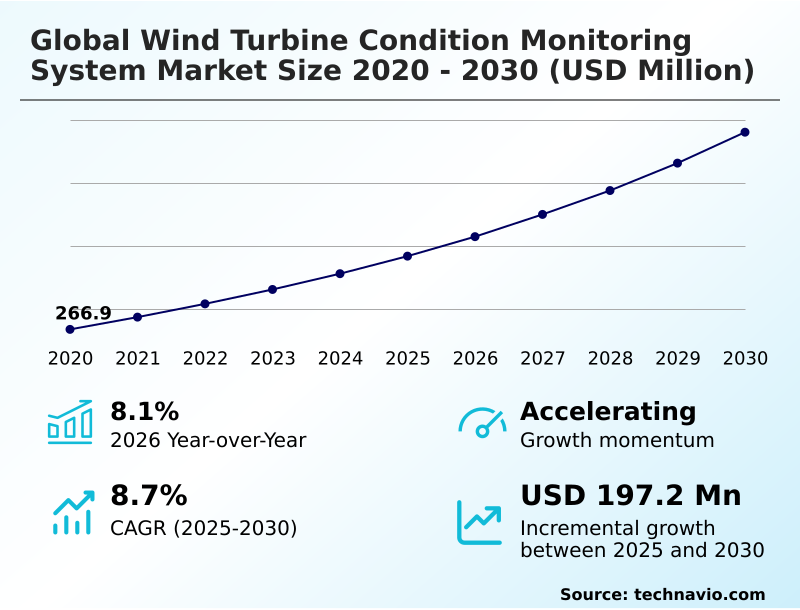
The wind turbine condition monitoring system market size is valued to increase by USD 197.2 million, at a CAGR of 8.7% from 2025 to 2030. Rising adoption of SCADA in wind turbine systems will drive the wind turbine condition monitoring system market.
Major Market Trends & Insights
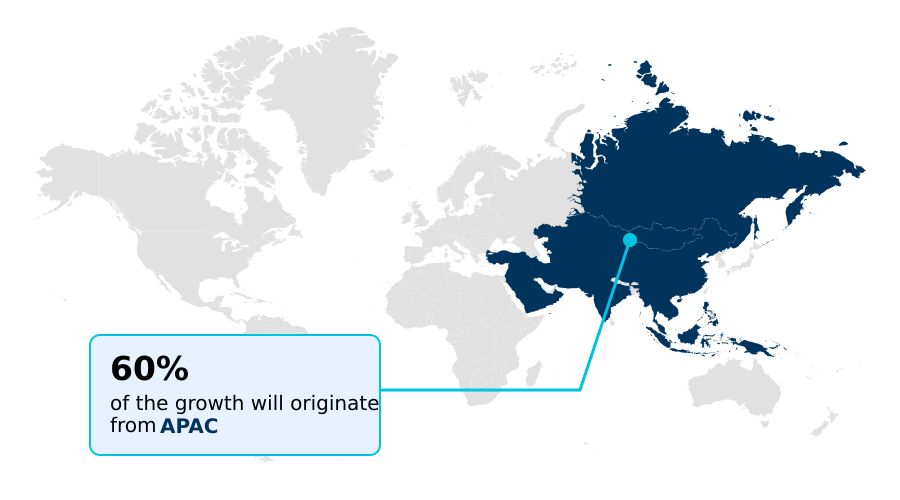
- APAC dominated the market and accounted for a 60.5% growth during the forecast period.
- By Type - Equipment segment was valued at USD 217.4 million in 2024
- By Application - Onshore wind turbines segment accounted for the largest market revenue share in 2024
Market Size & Forecast
- Market Opportunities: USD 313.7 million
- Market Future Opportunities: USD 197.2 million
- CAGR from 2025 to 2030 : 8.7%
Market Summary
- The wind turbine condition monitoring system market is fundamentally shaped by the pursuit of operational excellence and asset longevity in the renewable energy sector. The integration of sophisticated technologies is pivotal, driven by the need to minimize downtime and transition from reactive to predictive maintenance strategies.
- For instance, a wind farm operator can leverage integrated systems to analyze real-time data streams from multiple turbines, enabling optimized maintenance scheduling that reduces operational expenditures by preventing catastrophic failures before they occur. This data-driven approach is becoming standard practice, especially with the expansion of large-scale offshore projects where manual inspections are logistically complex and costly.
- Core trends include the adoption of the Industrial Internet of Things (IIoT) for enhanced connectivity and the application of machine learning for more accurate fault prediction. However, challenges related to data interoperability between different OEM platforms and the high initial capital outlay for retrofitting older assets persist, requiring strategic investment planning to achieve a positive return.
What will be the Size of the Wind Turbine Condition Monitoring System Market during the forecast period?
Get Key Insights on Market Forecast (PDF) Get Free Sample
How is the Wind Turbine Condition Monitoring System Market Segmented?
The wind turbine condition monitoring system industry research report provides comprehensive data (region-wise segment analysis), with forecasts and estimates in "USD million" for the period 2026-2030, as well as historical data from 2020-2024 for the following segments.
- Type
- Equipment
- Software
- Application
- Onshore wind turbines
- Offshore wind turbines
- Service type
- Remote monitoring
- On-site monitoring
- Technology
- Vibration monitoring
- Thermal monitoring
- Oil condition monitoring
- Ultrasound monitoring
- Geography
- APAC
- China
- Japan
- India
- Europe
- Germany
- UK
- France
- North America
- US
- Canada
- Mexico
- South America
- Brazil
- Argentina
- Middle East and Africa
- South Africa
- Saudi Arabia
- UAE
- Rest of World (ROW)
- APAC
By Type Insights
The equipment segment is estimated to witness significant growth during the forecast period.
The equipment segment is foundational to comprehensive asset integrity management, encompassing a suite of hardware for vital data collection.
This includes accelerometers for main bearing monitoring and early gearbox fault detection, alongside temperature sensors and pressure sensors for generator health assessment. Advanced systems also integrate corrosion detection capabilities crucial for offshore applications.
The effective use of this hardware underpins both offline oil analysis and advanced online oil monitoring, enabling detailed structural load monitoring and tower integrity analysis.
Proper high-voltage equipment inspection tools complete the hardware ecosystem, with advanced sensor arrays improving fault detection accuracy by over 15% and directly contributing to enhanced operational safety and asset longevity across the fleet.
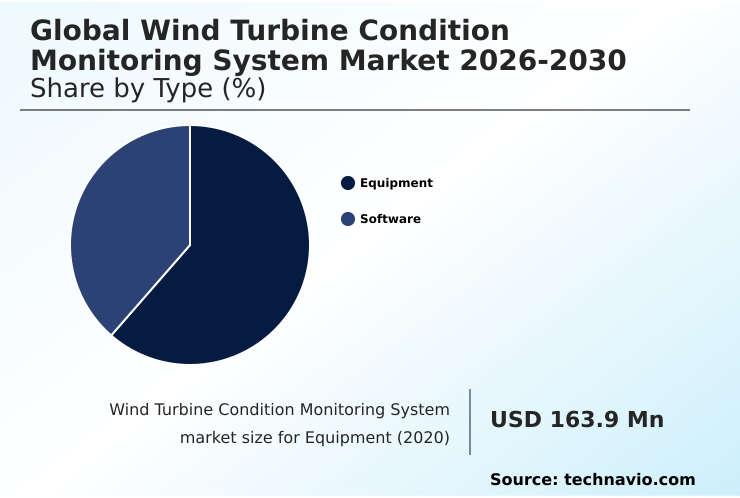
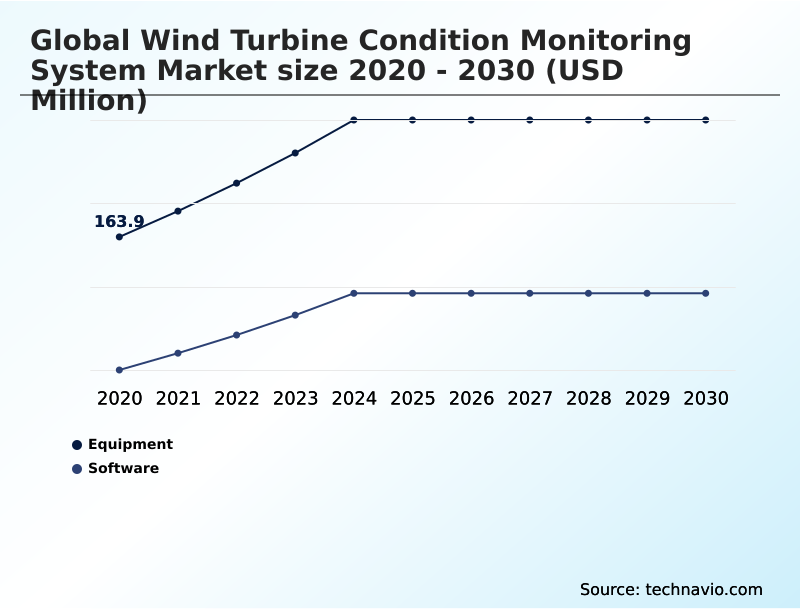
The Equipment segment was valued at USD 217.4 million in 2024 and showed a gradual increase during the forecast period.
Regional Analysis
APAC is estimated to contribute 60.5% to the growth of the global market during the forecast period.Technavio’s analysts have elaborately explained the regional trends and drivers that shape the market during the forecast period.
See How Wind Turbine Condition Monitoring System Market Demand is Rising in APAC Get Free Sample
The geographic landscape is characterized by concentrated growth in key regions, driven by distinct policy and investment dynamics. APAC leads, contributing over 40% of new installations, largely due to ambitious national energy targets and massive offshore developments.
In these projects, sophisticated vibration monitoring and thermal monitoring are standard for ensuring asset performance management.
Europe remains a mature market focused on optimizing its aging fleet and expanding its North Sea capacity, where oil condition monitoring and ultrasound monitoring are critical. North America is experiencing accelerated growth, with investments spurred by federal incentives.
This has increased demand for systems that provide high fault detection accuracy.
Across these regions, the Industrial Internet of Things (IIoT) is enabling better connectivity for technologies like acoustic emission monitors and rotational speed sensors, essential for subsea cable surveillance and mooring line surveillance in offshore environments.
Market Dynamics
Our researchers analyzed the data with 2025 as the base year, along with the key drivers, trends, and challenges. A holistic analysis of drivers will help companies refine their marketing strategies to gain a competitive advantage.
- The strategic implementation of condition monitoring is evolving beyond simple fault alerts to a holistic approach aimed at optimizing asset performance and reducing wind turbine operational expenditure. Key to this evolution is the use of advanced vibration analysis for drivetrains, which allows for precise wind turbine gearbox fault prediction and preemptive action.
- For the rapidly expanding offshore sector, ensuring offshore wind turbine structural health is paramount, involving sophisticated wind turbine foundation monitoring techniques and constant wind turbine blade integrity monitoring. The application of predictive maintenance for onshore turbines is also maturing, with a strong focus on improving turbine availability with CMS platforms.
- The integration of AI in wind turbine performance analytics, which leverages SCADA data for wind farm optimization, is becoming standard. Specialized methods like ultrasonic inspection for turbine blades and thermal imaging for generator faults are now common. This is complemented by real-time oil debris monitoring systems, which are crucial for both geared and direct drive turbines.
- Digital twin for offshore wind assets allows for complex simulations, while wireless sensor networks in wind turbines simplify deployment. Ultimately, the goal is mitigating turbine downtime through monitoring, with a clear cost-benefit analysis of turbine CMS driving investment decisions. Integrating CMS with asset management software and enabling remote diagnostics for isolated wind farms creates a comprehensive, data-driven operational framework.
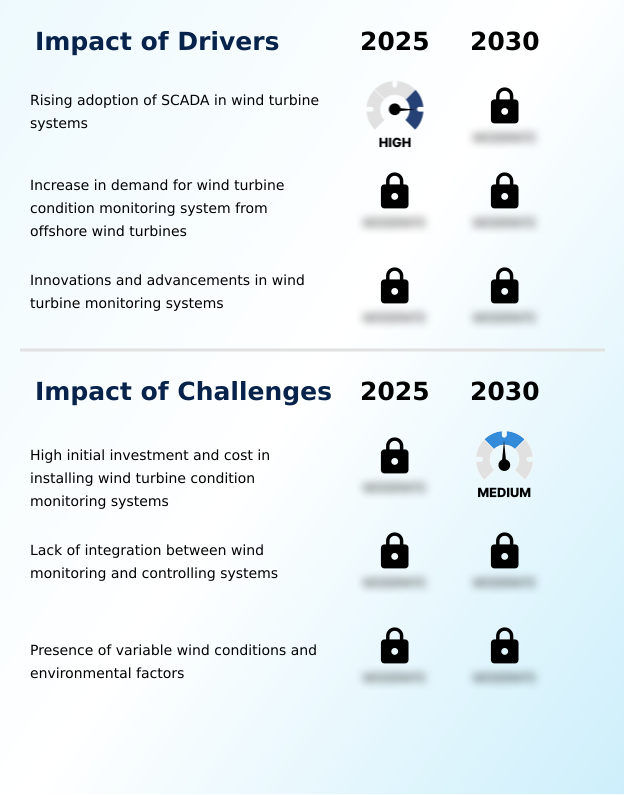
What are the key market drivers leading to the rise in the adoption of Wind Turbine Condition Monitoring System Industry?
- The rising adoption of Supervisory Control and Data Acquisition (SCADA) systems within wind turbine operations is a key driver for market growth.
- Market growth is significantly propelled by technological innovation and the increasing scale of wind energy projects, particularly offshore. The rising adoption of advanced sensor technology and sophisticated data acquisition hardware is fundamental to enhancing operational efficiency improvement.
- The integration of SCADA system integration provides fleet-wide condition visibility, enabling centralized control centers to manage assets more effectively. This supports a shift toward condition-based maintenance (CBM), which can extend asset lifecycle extension by up to five years.
- Innovations in turbine control, such as dynamic blade pitch control and yaw control systems informed by lidar technology integration, maximize energy capture.
- The use of electrical signature analysis offers another layer of diagnostic data, reinforcing a data-driven decision making culture that prioritizes performance and reliability across the entire operational portfolio.
What are the market trends shaping the Wind Turbine Condition Monitoring System Industry?
- The increasing necessity for remote and electronic monitoring of wind turbines is a prominent upcoming market trend. This shift is driven by the need for cost-effective, continuous observation of assets, especially in offshore and isolated locations.
- Key market trends are centered on the digitalization and automation of asset management to boost energy output optimization. The adoption of AI-driven analytics and sophisticated machine learning models is enabling a transition from preventive to prescriptive maintenance strategies, with some platforms improving forecast accuracy by over 99%.
- This shift is powered by advanced predictive maintenance algorithms that utilize real-time data processing for automated fault detection. The use of digital twin modeling allows operators to simulate performance and test predictive control algorithms in a virtual environment, facilitating real-time adjustments to operational parameters.
- Furthermore, the expansion of remote monitoring solutions and e-monitoring capabilities provides centralized oversight, which is critical for managing geographically dispersed fleets and implementing effective remote diagnostics, ultimately increasing turbine availability.
What challenges does the Wind Turbine Condition Monitoring System Industry face during its growth?
- The high initial investment and installation costs associated with wind turbine condition monitoring systems present a key challenge impacting industry growth.
- Key challenges center on the technical complexity and financial implications of deploying and maintaining advanced monitoring systems. The high initial maintenance cost reduction remains a significant barrier, especially for retrofitting older assets. Integrating disparate systems, such as wireless sensor networks with legacy platforms, introduces operational risk mitigation challenges.
- Furthermore, achieving accurate remaining useful life (RUL) prediction requires extensive historical data and sophisticated advanced data analytics, which can be resource-intensive. The technical difficulty of implementing certain technologies, like fiber optic sensing for structural health monitoring or high-frequency acoustic sensing for incipient fault detection, adds to the complexity.
- These factors are critical considerations during end-of-warranty assessments, where operators must balance the cost of advanced drivetrain monitoring and lube oil analysis against the long-term benefits of enhanced reliability.
Exclusive Technavio Analysis on Customer Landscape
The wind turbine condition monitoring system market forecasting report includes the adoption lifecycle of the market, covering from the innovator’s stage to the laggard’s stage. It focuses on adoption rates in different regions based on penetration. Furthermore, the wind turbine condition monitoring system market report also includes key purchase criteria and drivers of price sensitivity to help companies evaluate and develop their market growth analysis strategies.
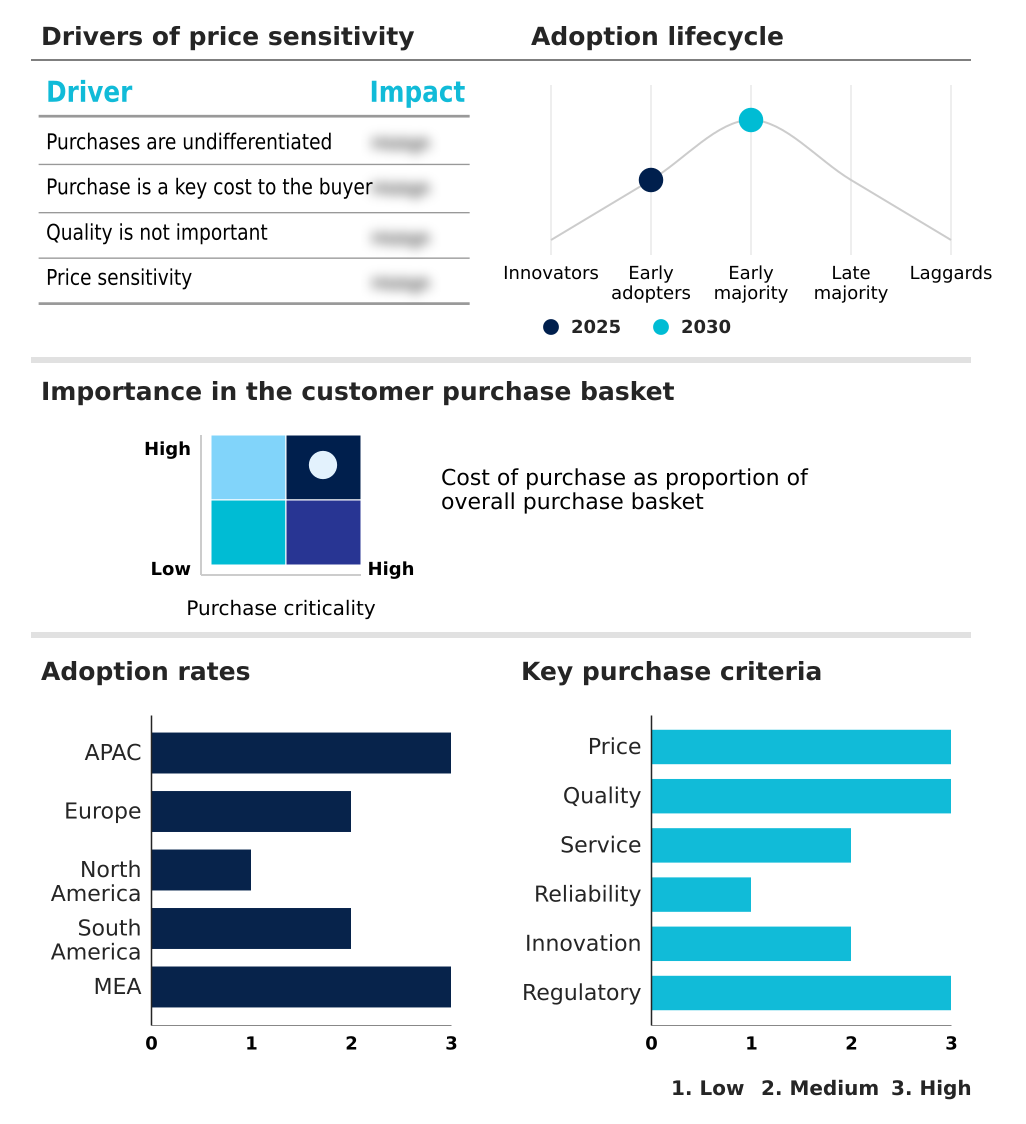
Customer Landscape of Wind Turbine Condition Monitoring System Industry
Competitive Landscape
Companies are implementing various strategies, such as strategic alliances, wind turbine condition monitoring system market forecast, partnerships, mergers and acquisitions, geographical expansion, and product/service launches, to enhance their presence in the industry.
AB SKF - Delivers real-time mechanical condition assessment through continuous monitoring of turbine components, enabling proactive maintenance strategies and enhancing asset performance.
The industry research and growth report includes detailed analyses of the competitive landscape of the market and information about key companies, including:
- AB SKF
- Advantech Co. Ltd.
- American Superconductor Corp.
- Avnet Inc.
- Bachmann electronic GmbH
- Baker Hughes Co.
- Emerson Electric Co.
- ENERCON GmbH
- Envision Group
- Flender GmbH
- Fluke Corp.
- General Electric Co.
- Hansford Sensors Ltd.
- HIMA Paul Hildebrandt GmbH
- ifm electronic gmbh
- James Fisher and Sons Plc
- Nordex SE
- NSK Ltd.
- ONYX Insight
- Siemens AG
- TUV SUD
- Yokogawa Electric Corp.
Qualitative and quantitative analysis of companies has been conducted to help clients understand the wider business environment as well as the strengths and weaknesses of key industry players. Data is qualitatively analyzed to categorize companies as pure play, category-focused, industry-focused, and diversified; it is quantitatively analyzed to categorize companies as dominant, leading, strong, tentative, and weak.
Recent Development and News in Wind turbine condition monitoring system market
- In March 2025, HIMA Paul Hildebrandt GmbH secured a significant SCADA contract from Equinor to implement advanced control and monitoring systems for its offshore wind turbine fleet in the UK.
- In January 2025, Yokogawa Electric Corp. was selected to provide comprehensive remote operation and monitoring systems for the newly commissioned Ishikari Bay New Port offshore wind farm.
- In November 2024, General Electric Co. announced the successful deployment of its AI-powered predictive maintenance platform across a major North American wind fleet, demonstrating a 20% reduction in unscheduled downtime through early gearbox fault detection.
- In September 2024, the Government of India launched a strategic incentive program to boost domestic manufacturing of high-tech wind turbine components, including critical sensors and data acquisition hardware for condition monitoring systems.
Dive into Technavio’s robust research methodology, blending expert interviews, extensive data synthesis, and validated models for unparalleled Wind Turbine Condition Monitoring System Market insights. See full methodology.
| Market Scope | |
|---|---|
| Page number | 311 |
| Base year | 2025 |
| Historic period | 2020-2024 |
| Forecast period | 2026-2030 |
| Growth momentum & CAGR | Accelerate at a CAGR of 8.7% |
| Market growth 2026-2030 | USD 197.2 million |
| Market structure | Fragmented |
| YoY growth 2025-2026(%) | 8.1% |
| Key countries | China, Japan, India, South Korea, Indonesia, Australia, Germany, UK, France, Italy, Spain, The Netherlands, US, Canada, Mexico, Brazil, Argentina, Chile, South Africa, Saudi Arabia, UAE, Egypt and Nigeria |
| Competitive landscape | Leading Companies, Market Positioning of Companies, Competitive Strategies, and Industry Risks |
Research Analyst Overview
- The market's evolution is defined by a convergence of advanced technologies aimed at maximizing asset value. A core focus is comprehensive drivetrain monitoring, which leverages vibration monitoring, thermal monitoring, and oil condition monitoring, including both lube oil analysis and electrical signature analysis for holistic generator health assessment. Innovations such as non-destructive testing (NDT), ultrasound monitoring, and acoustic emission monitors provide deeper insights.
- For mechanical components, main bearing monitoring and gearbox fault detection are enhanced by data from accelerometers, temperature sensors, and pressure sensors. Advanced sensor technology, including wireless sensor networks with edge computing capabilities and fiber optic sensing, enables precise structural health monitoring and rotational speed sensors inform blade pitch control and yaw control systems.
- The integration of lidar technology integration is enhancing predictive capabilities. On the software side, SCADA system integration with data acquisition hardware underpins AI-driven analytics and machine learning models. These predictive maintenance algorithms facilitate remote diagnostics and automated fault detection, leading to sophisticated asset performance management.
- Firms adopting these integrated systems report a 25% improvement in maintenance resource allocation, a critical factor influencing budgeting decisions at the executive level.
What are the Key Data Covered in this Wind Turbine Condition Monitoring System Market Research and Growth Report?
-
What is the expected growth of the Wind Turbine Condition Monitoring System Market between 2026 and 2030?
-
USD 197.2 million, at a CAGR of 8.7%
-
-
What segmentation does the market report cover?
-
The report is segmented by Type (Equipment, and Software), Application (Onshore wind turbines, and Offshore wind turbines), Service Type (Remote monitoring, and On-site monitoring), Technology (Vibration monitoring, Thermal monitoring, Oil condition monitoring, and Ultrasound monitoring) and Geography (APAC, Europe, North America, South America, Middle East and Africa)
-
-
Which regions are analyzed in the report?
-
APAC, Europe, North America, South America and Middle East and Africa
-
-
What are the key growth drivers and market challenges?
-
Rising adoption of SCADA in wind turbine systems, High initial investment and cost in installing wind turbine condition monitoring systems
-
-
Who are the major players in the Wind Turbine Condition Monitoring System Market?
-
AB SKF, Advantech Co. Ltd., American Superconductor Corp., Avnet Inc., Bachmann electronic GmbH, Baker Hughes Co., Emerson Electric Co., ENERCON GmbH, Envision Group, Flender GmbH, Fluke Corp., General Electric Co., Hansford Sensors Ltd., HIMA Paul Hildebrandt GmbH, ifm electronic gmbh, James Fisher and Sons Plc, Nordex SE, NSK Ltd., ONYX Insight, Siemens AG, TUV SUD and Yokogawa Electric Corp.
-
Market Research Insights
- Market dynamics are increasingly influenced by the strategic push for enhanced operational efficiency and asset lifecycle extension. The adoption of advanced data analytics and remote monitoring solutions delivers measurable outcomes, with some operators achieving a 30% reduction in maintenance costs. This shift toward data-driven decision making is critical for managing large, geographically dispersed fleets.
- Furthermore, the implementation of condition-based maintenance (CBM) strategies, which improve fault detection accuracy by over 20% compared to traditional methods, provides a clear competitive advantage. Effective asset integrity management is now a primary focus, supported by e-monitoring capabilities that offer real-time adjustments to turbine operations.
- This focus on optimizing performance underpins the financial viability of both new and existing wind power installations.
We can help! Our analysts can customize this wind turbine condition monitoring system market research report to meet your requirements.
 RIA -
RIA - 
