



Wind Turbine Inspection Drones Market Size 2026-2030
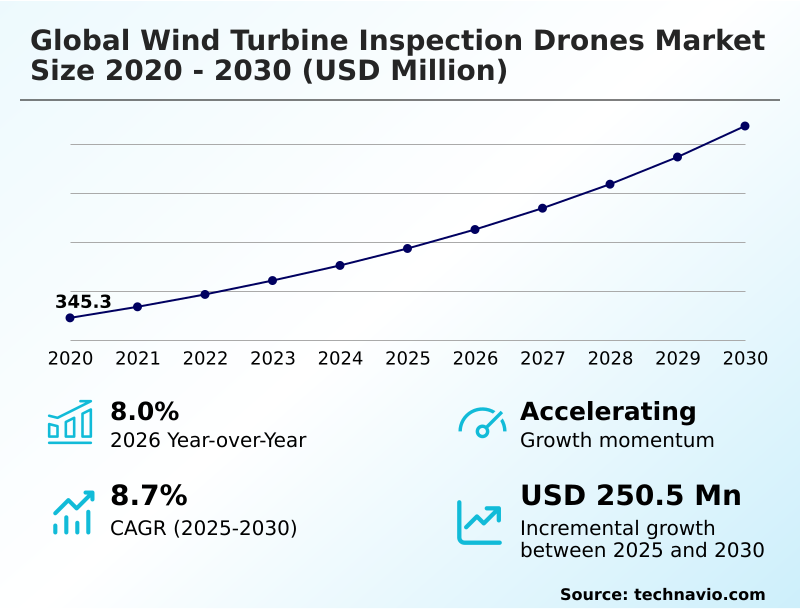
The wind turbine inspection drones market size is valued to increase by USD 250.5 million, at a CAGR of 8.7% from 2025 to 2030. Integration of advanced sensors and imaging technologies in inspection drones will drive the wind turbine inspection drones market.
Major Market Trends & Insights
- North America dominated the market and accounted for a 40.2% growth during the forecast period.
- By Application - Onshore wind energy segment was valued at USD 264.7 million in 2024
- By Type - Remotely piloted segment accounted for the largest market revenue share in 2024
Market Size & Forecast
- Market Opportunities: USD 392.4 million
- Market Future Opportunities: USD 250.5 million
- CAGR from 2025 to 2030 : 8.7%
Market Summary
- The Wind Turbine Inspection Drones Market is fundamentally transforming renewable energy asset management by addressing the high costs and safety risks of traditional maintenance methods. A primary market driver is the integration of advanced sensor payloads, including high-resolution RGB cameras and thermal imaging sensors, which enable precise subsurface delamination detection and structural health monitoring.
- This shift is essential as wind farms expand into remote and harsh environments. A key trend is the adoption of predictive maintenance strategies, where data analytics integration and digital twin technology are used to forecast component failures and optimize operations.
- For instance, an operator can use autonomous data acquisition from a fleet of multi-rotor drones to model blade condition analysis across hundreds of turbines, reducing inspection time by over 70% compared to manual methods. However, the industry faces challenges related to data security and privacy and the need for stringent regulatory compliance for beyond visual line of sight (BVLOS) operations.
- The evolution toward drone-in-a-box solutions and automated defect recognition (ADR) further highlights the market’s move toward fully autonomous O&M workflows, which are critical for improving efficiency and reducing the levelized cost of energy (LCOE).
What will be the Size of the Wind Turbine Inspection Drones Market during the forecast period?
Get Key Insights on Market Forecast (PDF) Get Free Sample
How is the Wind Turbine Inspection Drones Market Segmented?
The wind turbine inspection drones industry research report provides comprehensive data (region-wise segment analysis), with forecasts and estimates in "USD million" for the period 2026-2030, as well as historical data from 2020-2024 for the following segments.
- Application
- Onshore wind energy
- Offshore wind energy
- Type
- Remotely piloted
- Fully autonomous
- Optionally piloted
- Component
- Hardware
- Software
- Services
- Geography
- APAC
- China
- Japan
- India
- North America
- US
- Canada
- Mexico
- Europe
- Germany
- UK
- France
- Middle East and Africa
- Saudi Arabia
- UAE
- South Africa
- South America
- Brazil
- Argentina
- Rest of World (ROW)
- APAC
By Application Insights
The onshore wind energy segment is estimated to witness significant growth during the forecast period.
The onshore wind energy segment is driven by the need to optimize operations and maintenance (O&M) workflows and lower the levelized cost of energy (LCOE).
Operators are leveraging advanced flight planning software for autonomous data acquisition to conduct comprehensive blade condition analysis and composite blade inspection. These non-intrusive inspection methods improve asset integrity management by detecting issues like leading edge erosion early.
The integration of automated defect recognition (ADR) into data analysis is a key factor, with some platforms achieving 95% accuracy in automatically categorizing blade defects from drone-captured imagery.
This high precision significantly reduces the time required for manual data review, allowing for quicker and more informed maintenance decisions that enhance overall turbine performance and longevity.
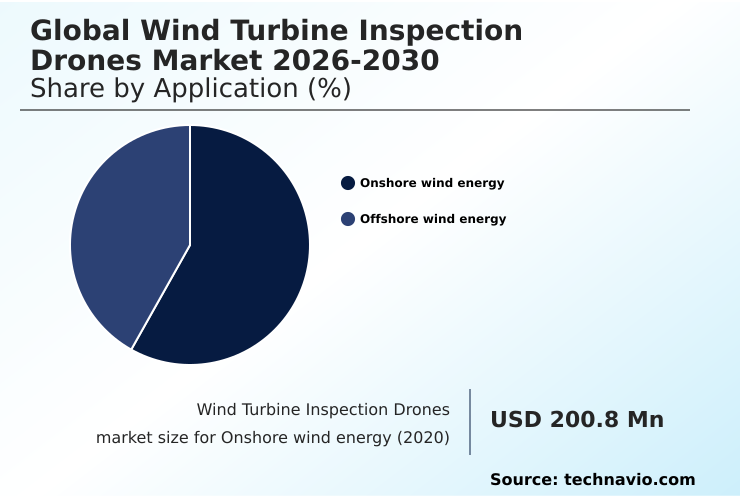
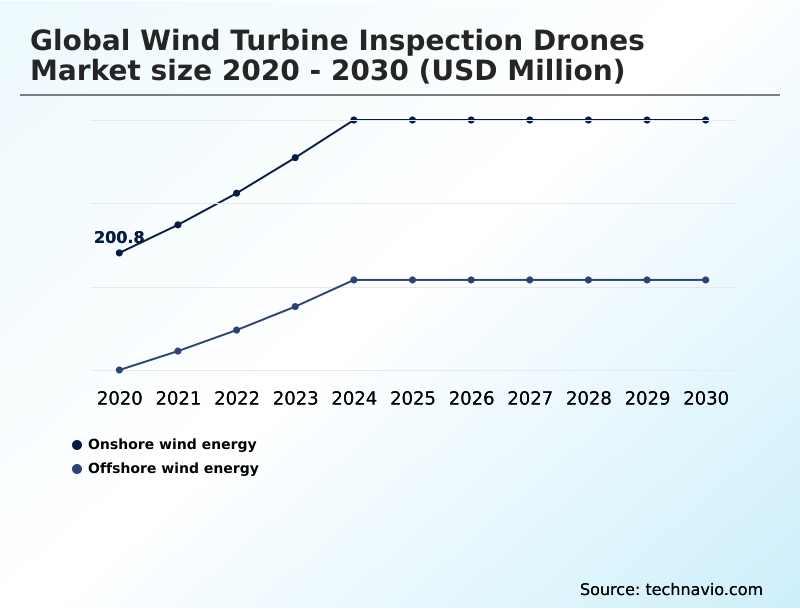
The Onshore wind energy segment was valued at USD 264.7 million in 2024 and showed a gradual increase during the forecast period.
Regional Analysis
North America is estimated to contribute 40.2% to the growth of the global market during the forecast period.Technavio’s analysts have elaborately explained the regional trends and drivers that shape the market during the forecast period.

See How Wind Turbine Inspection Drones Market Demand is Rising in North America Get Free Sample
The geographic landscape is diverse, with regional dynamics shaping technology adoption. In North America, which represents over 40% of the market opportunity, the focus is on integrating aerial data collection into enterprise asset management systems.
In contrast, colder climates like Canada and parts of Europe drive demand for specialized fixed-wing drones capable of ice accumulation detection.
The expansion of offshore wind in the North Sea has popularized the inspection-as-a-service (IaaS) model for complex nacelle and tower inspection tasks. Across all regions, operators are utilizing digital twin technology for precise structural integrity monitoring.
This technology allows asset managers to track degradation from afar, with data processing platforms enabling a shift toward proactive maintenance strategies. This approach is critical for managing assets in remote locations, where physical access is costly and logistically complex.
Market Dynamics
Our researchers analyzed the data with 2025 as the base year, along with the key drivers, trends, and challenges. A holistic analysis of drivers will help companies refine their marketing strategies to gain a competitive advantage.
- Strategic adoption of advanced aerial inspection technologies is becoming a competitive differentiator in the global wind turbine inspection drones market 2026-2030. A detailed drone inspection cost-benefit analysis consistently demonstrates superior returns compared to traditional methods, particularly for offshore turbine drone inspection, where safety and accessibility are primary concerns.
- The use of high-resolution imagery for cracks and specialized sensors for drone inspection for blade erosion allows operators to transition from reactive repairs to data-driven predictive maintenance. AI in turbine blade inspection and sophisticated software for defect classification are automating analysis, significantly reducing the time between data capture and actionable insights.
- The regulatory framework for drone inspections is evolving to support complex bvlos operations for wind farms, which is crucial for monitoring large-scale installations. As the industry matures, the comparison of drone vs rope access technicians shows a clear advantage for unmanned systems in both safety and efficiency, often completing inspections more than twice as fast.
- Key applications include drone quality control services during manufacturing and installation, as well as using lidar for structural analysis and thermal imaging for electrical faults. The ability to perform autonomous turbine drone inspection and integrate drone data with digital twins is setting new standards for asset management.
- This extends to emerging areas like using drones for floating wind turbines and deploying swarm robotics for wind farms, which further optimize data management for drone inspection and overall operational oversight.
What are the key market drivers leading to the rise in the adoption of Wind Turbine Inspection Drones Industry?
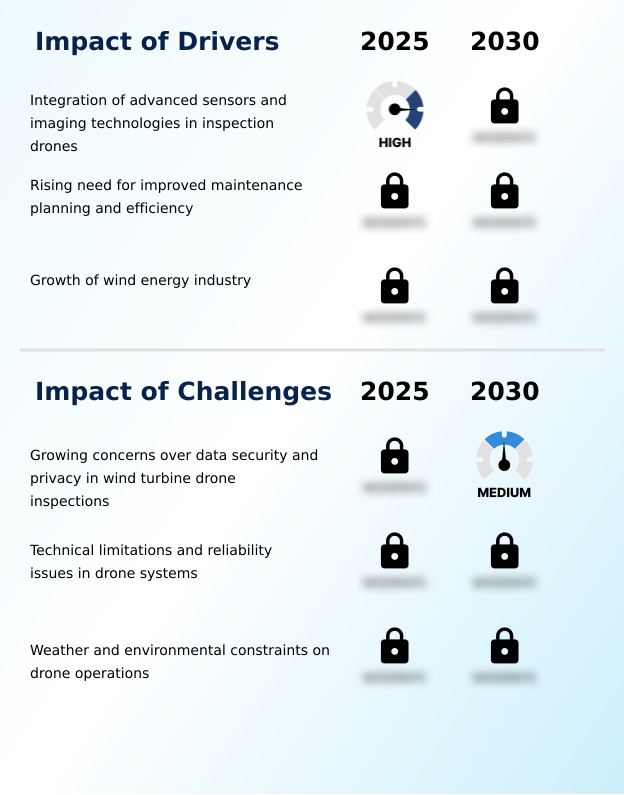
- The integration of advanced sensors and imaging technologies in inspection drones serves as a key market driver, enabling more accurate data collection and efficient maintenance planning.
- Key drivers are centered on technological advancements in data capture and the growing need for efficient wind asset management.
- The deployment of unmanned aerial vehicles (UAVs) equipped with high-resolution RGB cameras, thermal imaging sensors, and LiDAR modules provides unprecedented detail for structural health monitoring.
- These tools are critical for early subsurface delamination detection and assessing other forms of degradation, facilitating timely equipment maintenance and repair. This detailed data is integrated into enterprise asset management systems, creating a holistic view of infrastructure lifecycle management.
- With global wind power capacity additions projected to exceed 150 GW, the demand for scalable and accurate inspection methods is intensifying.
- The ability of these technologies to provide comprehensive data supports a proactive approach to maintenance, directly contributing to improved turbine availability and performance.
What are the market trends shaping the Wind Turbine Inspection Drones Industry?
- The increasing integration of artificial intelligence and machine learning in drone technology is an emerging trend. This advancement is enhancing the analytical capabilities and operational autonomy of inspection systems.
- The market is increasingly influenced by the convergence of automation and artificial intelligence, which is reshaping maintenance workflows. The adoption of drone-in-a-box solutions enables fully autonomous missions, including remote deployment and autonomous recharging, which drastically reduces manual intervention.
- This trend is complemented by advancements in beyond visual line of sight (BVLOS) operations, allowing for the inspection of large-scale wind farms more efficiently. The development of swarm drone solutions, where multiple drones operate in a coordinated manner, further enhances data collection capabilities. These technologies feed into advanced predictive maintenance strategies, supported by robust data analytics integration.
- As a result, operators are able to move from scheduled maintenance to a condition-based approach, leveraging data from condition monitoring systems to anticipate failures and optimize repair schedules, reducing downtime by up to 30%.
What challenges does the Wind Turbine Inspection Drones Industry face during its growth?
- Growing concerns over data security and privacy associated with wind turbine drone inspections present a significant challenge, potentially affecting the industry's growth trajectory.
- The market faces significant challenges related to technical limitations and regulatory hurdles. Concerns around data security and privacy are paramount, as the transmission and storage of sensitive asset data require robust protection against unauthorized access. From a technical standpoint, the operational endurance of multi-rotor drones is a constraint, with battery life and the need for autonomous recharging impacting mission duration.
- The effectiveness of sensor payloads is also subject to environmental resilience, as adverse weather can limit operational windows. Furthermore, achieving regulatory compliance for advanced operations necessitates comprehensive pilot training and certification, adding to operational overhead.
- These factors complicate wind farm logistics, especially for remote deployment, and require precise real-time kinematic (RTK) positioning to ensure safety and data accuracy, with operations often limited to wind speeds below 15 meters per second.
Exclusive Technavio Analysis on Customer Landscape
The wind turbine inspection drones market forecasting report includes the adoption lifecycle of the market, covering from the innovator’s stage to the laggard’s stage. It focuses on adoption rates in different regions based on penetration. Furthermore, the wind turbine inspection drones market report also includes key purchase criteria and drivers of price sensitivity to help companies evaluate and develop their market growth analysis strategies.
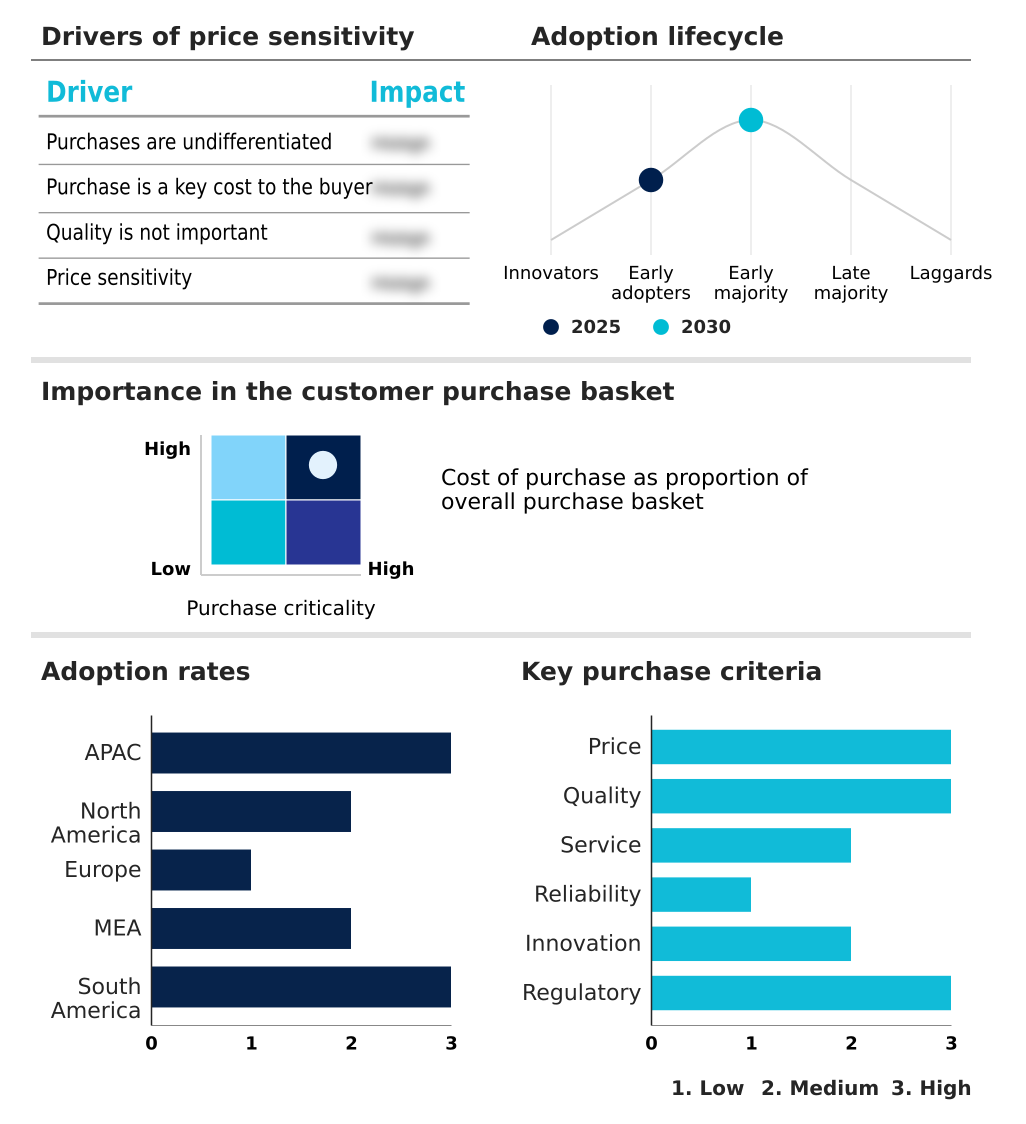
Customer Landscape of Wind Turbine Inspection Drones Industry
Competitive Landscape
Companies are implementing various strategies, such as strategic alliances, wind turbine inspection drones market forecast, partnerships, mergers and acquisitions, geographical expansion, and product/service launches, to enhance their presence in the industry.
Aerones Engineering - Providers offer robotic technology solutions for wind turbine blade maintenance, repair, and inspection, delivering comprehensive services to enhance asset performance and lifespan.
The industry research and growth report includes detailed analyses of the competitive landscape of the market and information about key companies, including:
- Aerones Engineering
- Airpix
- Cyberhawk Innovations
- DELAIR SAS
- Drone Volt SA
- Eagle Eye Innovations Ltd.
- Eagletronics Aviation Pvt. Ltd.
- Equinoxs Drones Pvt. Ltd.
- FORCE Technology
- Helvetis
- HighEye
- Iberdrola SA
- NEARTHLAB
- Perceptual Robotics Ltd.
- Skyfish Corp
- SkySpecs Inc.
- Sulzer and Schmid Laboratories
- SZ DJI Technology Co. Ltd.
- Terra Drone Corp.
- Voliro AG
Qualitative and quantitative analysis of companies has been conducted to help clients understand the wider business environment as well as the strengths and weaknesses of key industry players. Data is qualitatively analyzed to categorize companies as pure play, category-focused, industry-focused, and diversified; it is quantitatively analyzed to categorize companies as dominant, leading, strong, tentative, and weak.
Recent Development and News in Wind turbine inspection drones market
- In March, 2025, Goldwind, a major wind turbine manufacturer, launched a proprietary digital twin platform that ingests real-time data from inspection drones to model turbine performance and simulate weather impacts.
- In March, 2025, DJI Enterprise released the Matrice 400 RTK Wind Edition, a specialized multi-rotor drone platform designed to operate in high-wind environments up to 15 meters per second.
- In March, 2025, Egypt signed an agreement for a 500-megawatt wind power project in the Gulf of Suez, signaling a significant expansion of renewable energy capacity that will drive demand for inspection services.
- In April, 2025, Vestas Wind Systems announced a collaboration with an aerial artificial intelligence firm to deploy a standardized fleet of automated inspection drones across its North Sea operational sites.
Dive into Technavio’s robust research methodology, blending expert interviews, extensive data synthesis, and validated models for unparalleled Wind Turbine Inspection Drones Market insights. See full methodology.
| Market Scope | |
|---|---|
| Page number | 289 |
| Base year | 2025 |
| Historic period | 2020-2024 |
| Forecast period | 2026-2030 |
| Growth momentum & CAGR | Accelerate at a CAGR of 8.7% |
| Market growth 2026-2030 | USD 250.5 million |
| Market structure | Fragmented |
| YoY growth 2025-2026(%) | 8.0% |
| Key countries | China, Japan, India, South Korea, Australia, Indonesia, US, Canada, Mexico, Germany, UK, France, Italy, Spain, The Netherlands, Saudi Arabia, UAE, South Africa, Israel, Turkey, Brazil, Argentina and Chile |
| Competitive landscape | Leading Companies, Market Positioning of Companies, Competitive Strategies, and Industry Risks |
Research Analyst Overview
- The market is defined by a rapid technological evolution centered on automation and data intelligence. The deployment of unmanned aerial vehicles (UAVs) is no longer a niche capability but a core component of predictive maintenance strategies.
- Key technologies such as high-resolution RGB cameras, thermal imaging sensors, and LiDAR modules are becoming standard for comprehensive aerial data collection and blade condition analysis. The industry is advancing beyond simple data gathering with innovations like automated defect recognition (ADR) and advanced flight planning software, which enable precise autonomous data acquisition.
- A critical boardroom-level consideration is the integration of digital twin technology, which provides a virtual replica of assets for lifecycle monitoring. This allows for precise subsurface delamination detection and tracking of leading edge erosion. The adoption of such systems has led to tangible efficiency gains, with some operators reporting up to a 95% accuracy rate in automated fault identification.
- This shift from manual to automated workflows, including the use of drone-in-a-box solutions and BVLOS operations, is reshaping asset management and driving down operational costs.
What are the Key Data Covered in this Wind Turbine Inspection Drones Market Research and Growth Report?
-
What is the expected growth of the Wind Turbine Inspection Drones Market between 2026 and 2030?
-
USD 250.5 million, at a CAGR of 8.7%
-
-
What segmentation does the market report cover?
-
The report is segmented by Application (Onshore wind energy, and Offshore wind energy), Type (Remotely piloted, Fully autonomous, and Optionally piloted), Component (Hardware, Software, and Services) and Geography (APAC, North America, Europe, Middle East and Africa, South America)
-
-
Which regions are analyzed in the report?
-
APAC, North America, Europe, Middle East and Africa and South America
-
-
What are the key growth drivers and market challenges?
-
Integration of advanced sensors and imaging technologies in inspection drones, Growing concerns over data security and privacy in wind turbine drone inspections
-
-
Who are the major players in the Wind Turbine Inspection Drones Market?
-
Aerones Engineering, Airpix, Cyberhawk Innovations, DELAIR SAS, Drone Volt SA, Eagle Eye Innovations Ltd., Eagletronics Aviation Pvt. Ltd., Equinoxs Drones Pvt. Ltd., FORCE Technology, Helvetis, HighEye, Iberdrola SA, NEARTHLAB, Perceptual Robotics Ltd., Skyfish Corp, SkySpecs Inc., Sulzer and Schmid Laboratories, SZ DJI Technology Co. Ltd., Terra Drone Corp. and Voliro AG
-
Market Research Insights
- Market dynamics are increasingly shaped by the push for operational efficiency and data-driven decision-making. The adoption of autonomous flight paths and remote inspection services is streamlining wind farm logistics, with some providers inspecting up to 20 turbines per day, a significant increase over manual methods.
- This efficiency is amplified by robotic inspection technology, which delivers consistent data quality for better condition monitoring systems. A critical factor is data security and privacy, as operators must balance the benefits of remote deployment with the need for robust data protection. Furthermore, the complexities of environmental resilience and regulatory compliance require extensive pilot training and certification, impacting operational costs.
- The technical capabilities of multi-rotor drones are also a focal point, as their sensor payloads and capacity for autonomous recharging directly influence mission effectiveness and scalability, especially in challenging offshore environments.
We can help! Our analysts can customize this wind turbine inspection drones market research report to meet your requirements.
 RIA -
RIA - 
