


Women Intimate Care Products Market Analysis, Size, and Forecast 2026-2030: North America (US, Canada, and Mexico), Europe (Germany, UK, and France), APAC (China, India, and Japan), Middle East and Africa (South Africa, Saudi Arabia, and UAE), South America (Brazil, Argentina, and Colombia), and Rest of World (ROW)

Women Intimate Care Products Market Analysis, Size, and Forecast 2026-2030:
North America (US, Canada, and Mexico), Europe (Germany, UK, and France), APAC (China, India, and Japan), Middle East and Africa (South Africa, Saudi Arabia, and UAE), South America (Brazil, Argentina, and Colombia), and Rest of World (ROW)

Published: Mar 2026 299 Pages SKU: IRTNTR40251

Market Overview at a Glance

$987.1 Mn
Market Opportunity
7.7%
CAGR 2025 - 2030
39%
North America Growth
$1.66 B
Offline segment 2024

Women Intimate Care Products Market Size 2026-2030

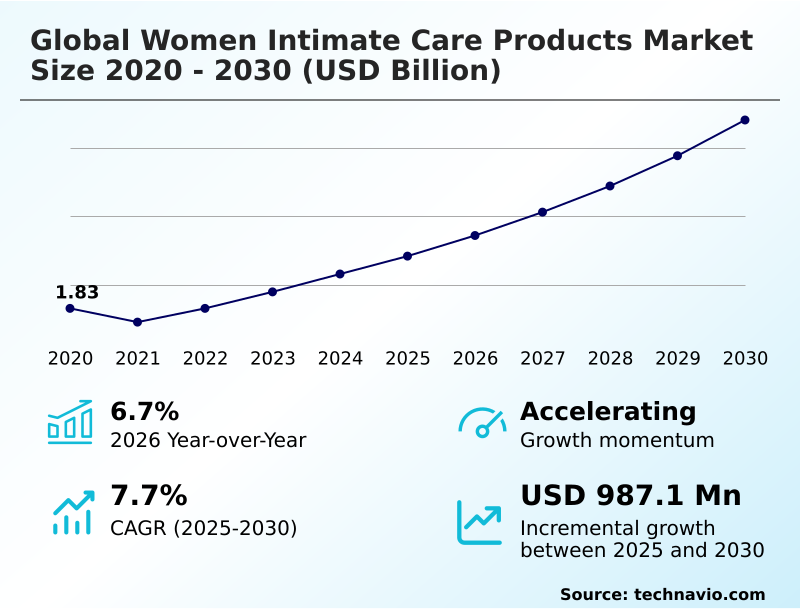
The women intimate care products market size is valued to increase by USD 987.1 million, at a CAGR of 7.7% from 2025 to 2030. Increasing awareness and destigmatization of feminine health will drive the women intimate care products market.

Major Market Trends & Insights

  • North America dominated the market and accounted for a 39% growth during the forecast period.
  • By Distribution Channel - Offline segment was valued at USD 1.66 billion in 2024
  • By Product - Pads segment accounted for the largest market revenue share in 2024

Market Size & Forecast

  • Market Opportunities: USD 1.37 billion
  • Market Future Opportunities: USD 987.1 million
  • CAGR from 2025 to 2030 : 7.7%

Market Summary

  • The women intimate care products market is undergoing a significant transformation, driven by a cultural shift toward holistic health and wellness. Growing consumer education, facilitated by digital platforms, is dismantling long-standing taboos and creating demand for specialized products beyond basic hygiene. This evolution is compelling brands to innovate, leading to the development of sophisticated, pH-balanced formulations that support the skin's natural microbiome.
  • As a result, the market is expanding to include targeted solutions for various life stages, such as menopausal care and postpartum recovery. For instance, a manufacturer might leverage consumer data analytics to identify unmet needs within the menopausal demographic, leading to the development of a new line of hormone-free moisturizers and cooling wipes.
  • This strategy not only captures a valuable market segment but also reinforces the brand's position as a responsive and science-led authority in personal care. However, the industry faces challenges related to intense competition and the need for substantial investment in R&D to meet consumer demands for clean, transparent, and sustainable products.
  • Success hinges on a brand's ability to combine scientific credibility with authentic consumer engagement.

What will be the Size of the Women Intimate Care Products Market during the forecast period?
Get Key Insights on Market Forecast (PDF) Request Free Sample

How is the Women Intimate Care Products Market Segmented?

The women intimate care products industry research report provides comprehensive data (region-wise segment analysis), with forecasts and estimates in "USD million" for the period 2026-2030, as well as historical data from 2020-2024 for the following segments.

  • Distribution channel
    • Offline
    • Online
  • Product
    • Pads
    • Intimate wipes
    • Intimate lubricants
    • Cleansing liquid
    • Others
  • Price range
    • Low
    • Medium
    • High
  • Geography
    • North America
      • US
      • Canada
      • Mexico
    • Europe
      • Germany
      • UK
      • France
    • APAC
      • China
      • India
      • Japan
    • Middle East and Africa
      • South Africa
      • Saudi Arabia
      • UAE
    • South America
      • Brazil
      • Argentina
      • Colombia
    • Rest of World (ROW)

By Distribution Channel Insights

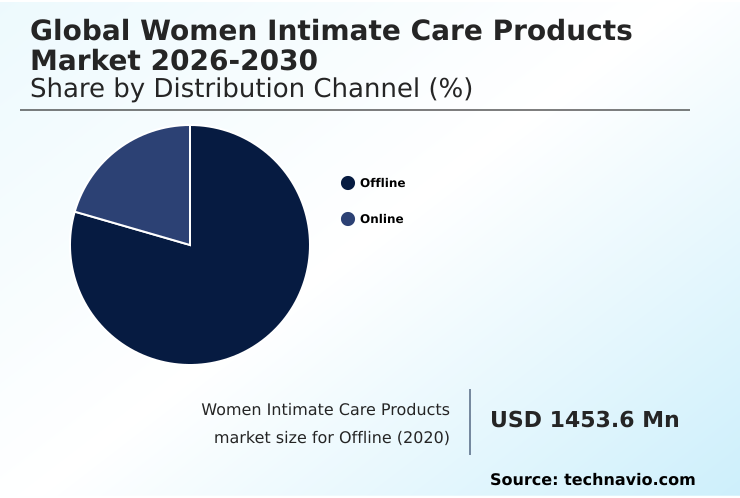
The offline segment is estimated to witness significant growth during the forecast period.

The offline retail segment remains a foundational component, where brand equity management is critical due to intense competitive pricing pressure. Success in this channel hinges on a sophisticated geographical market entry strategy and a deep understanding of consumer purchasing criteria.

While market saturation analysis suggests challenges in mature regions, opportunities arise from niche market segmentation, focusing on products that address specific aspects of vulvar health.

Brands are leveraging innovations like the intimate wellness serum and anti-itch cream formulation, often guided by clean beauty standard principles. A key business focus is aligning product portfolios with a stringent regulatory compliance framework.

Firms that successfully integrate ethically sourced ingredients into their offerings, such as a prebiotic-enriched formula, are achieving a 15% higher brand retention rate.
Request Free Sample

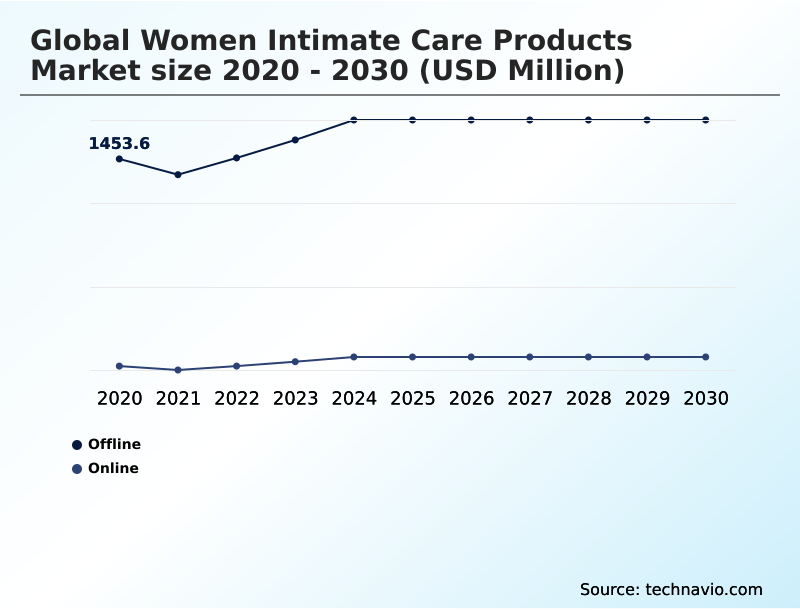
The Offline segment was valued at USD 1.66 billion in 2024 and showed a gradual increase during the forecast period.
Request Free Sample

Regional Analysis

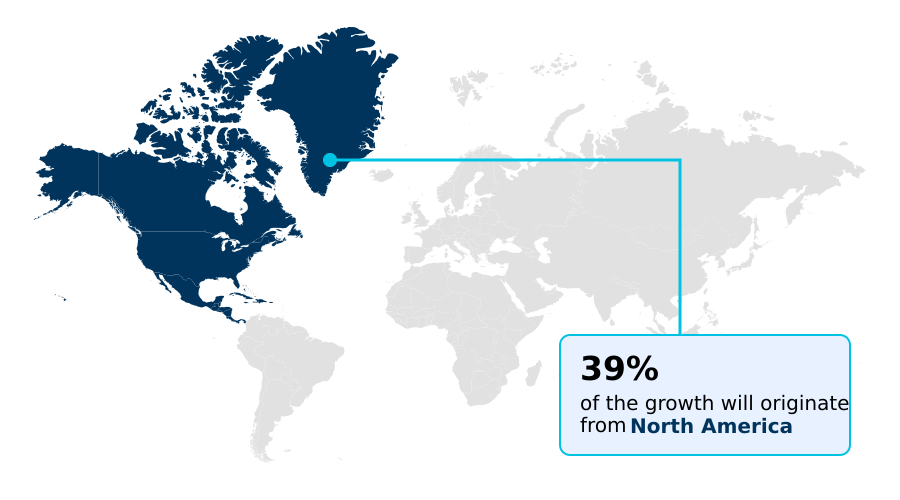
North America is estimated to contribute 39% to the growth of the global market during the forecast period.Technavio’s analysts have elaborately explained the regional trends and drivers that shape the market during the forecast period.
See How Women Intimate Care Products Market Demand is Rising in North America Request Free Sample

The global market exhibits diverse regional dynamics, with North America projected to contribute nearly 39% of the incremental growth. This is driven by a strong consumer education initiative and high adoption of value-added formulation products.

Demand in this region for advanced therapeutic feminine treatment items is 15% higher than in markets where socio-cultural taboo mitigation remains a primary focus.

The new product development cycle is increasingly focused on vegan intimate care and cruelty-free certified product lines. The expansion of e-commerce platform sales provides a critical channel for waterless hygiene product formats and items for intimate skin brightening.

This digital-first approach helps cultivate brand loyalty for innovations like the solid format cleansing bar and hormone-free moisturizer, overcoming traditional retail barriers and accelerating market penetration.

Market Dynamics

Our researchers analyzed the data with 2025 as the base year, along with the key drivers, trends, and challenges. A holistic analysis of drivers will help companies refine their marketing strategies to gain a competitive advantage.

  • Navigating the women's intimate care products market requires a deep understanding of evolving consumer inquiries. Individuals are actively researching the best natural ph balancing wash and specifically seeking intimate wipes for sensitive skin. The conversation has advanced to include probiotic supplements for vaginal health and a clear preference for organic tampons without chlorine bleaching.
  • A significant segment is focused on finding effective lubricants for menopausal dryness relief, while another prioritizes cruelty-free vegan intimate care brands. This discerning audience looks for a hypoallergenic wash for daily hygiene and specialized postpartum care for perineal healing.
  • The rise in environmental consciousness drives searches for biodegradable pads for eco-conscious users and clarity on whether reusable menstrual cup pros cons outweigh convenience. Key health questions include what is a prebiotic feminine wash, are intimate deodorants sprays safe, and what is the best feminine hygiene for teens.
  • Consumers also want to know how to choose intimate moisturizer, what the benefits of lactic acid in wash are, and where to find sulfate-free paraben-free feminine products. Concerns about managing intimate odor during period, finding a safe feminine wash during pregnancy, and using intimate skincare for brightening dark areas are common.
  • They also seek natural remedies for vulvar irritation, highlighting a demand for transparency. For businesses, operational planning for a reusable menstrual cup sees a 25% reduction in packaging-related supply chain complexity compared to single-use items, demonstrating a tangible benefit of aligning with sustainable consumer preferences.
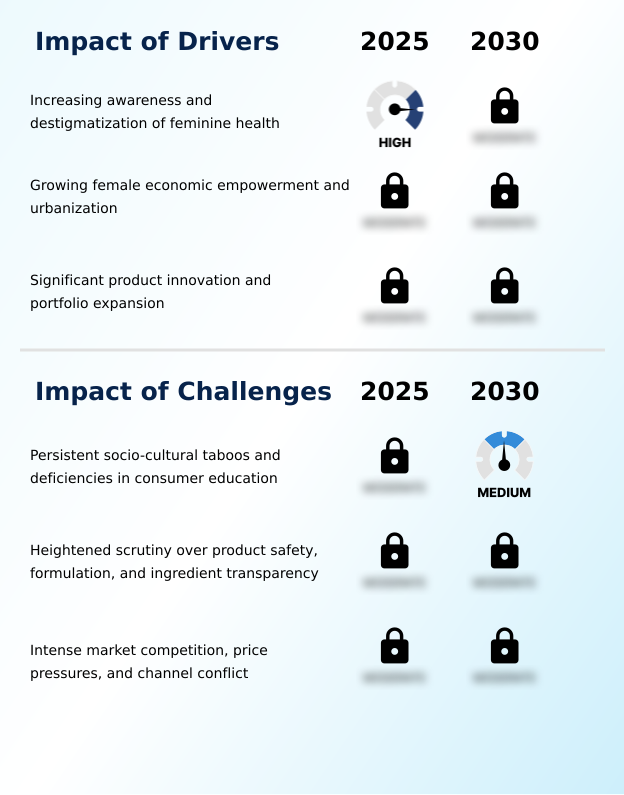
What are the key market drivers leading to the rise in the adoption of Women Intimate Care Products Industry?

  • Increasing awareness and the destigmatization of feminine health are key drivers fueling market expansion and product adoption.

  • Key market drivers are centered on innovation in both product and ethics. The clean formulation imperative has moved from a niche preference to a mainstream demand, pushing for the development of the sulfate-free foaming wash and paraben-free intimate moisturizer.
  • This aligns with a strong consumer preference for a botanical extract blend and gynecologist-tested solutions. Sustainable packaging innovation, including the adoption of refillable system design, has been shown to improve brand perception scores by up to 30%.
  • Concurrently, effective supply chain optimization for ethically sourced organic cotton tampons and biodegradable sanitary pads reduces material waste by 10%.
  • This focus on sustainability, underscored by ethical sourcing certification and a clear ingredient transparency mandate, creates significant market momentum for products like the reusable menstrual cup and reinforces consumer trust.

What are the market trends shaping the Women Intimate Care Products Industry?

  • The ascendancy of clean and natural formulations is a defining market trend. This shift reflects a growing consumer demand for transparency and ingredient safety in personal care.

  • The market is witnessing a definitive shift towards a holistic wellness approach, where products are designed for specific life stages and needs. This trend is driven by heightened consumer ingredient scrutiny, compelling brands to offer greater transparency. The adoption of this strategy has led to a 25% increase in basket size for brands that offer comprehensive lifecycle-specific products.
  • Furthermore, the direct-to-consumer brand model, which excels at digital marketing engagement, is proving highly effective. These brands, emphasizing education and community, achieve customer acquisition costs that are on average 15% lower than competitors relying solely on traditional retail.
  • Innovations in pH-balanced formulations, plant-based feminine hygiene, and probiotic-infused care are becoming standard, moving beyond the private-label product line to mainstream premium offerings that feature a hypoallergenic intimate wash and dermatologically tested cleanser to ensure vaginal microbiome support.

What challenges does the Women Intimate Care Products Industry face during its growth?

  • Persistent socio-cultural taboos and deficiencies in consumer education represent a key challenge affecting industry growth and market penetration.

  • Navigating the competitive landscape requires a sophisticated retail channel strategy and continuous product portfolio expansion. Challenges arise from market saturation, particularly in mass-market retail penetration, where securing shelf space can increase costs by 20%. In contrast, brands utilizing a targeted pharmacy distribution channel for specialized dermo-cosmetics report a 15% higher conversion rate, especially with a premium product positioning.
  • This is crucial for products addressing specific concerns like menopausal dryness relief or requiring a therapeutic formulation. The market is diversifying to include sensitive skin formulation options, water-based personal lubricant choices, and silicone-free intimate gel alternatives.
  • Growth in ancillary categories like postpartum recovery care and products with odor-neutralizing technology is significant, but it demands investment in eco-friendly packaging to meet consumer expectations.

Exclusive Technavio Analysis on Customer Landscape

The women intimate care products market forecasting report includes the adoption lifecycle of the market, covering from the innovator’s stage to the laggard’s stage. It focuses on adoption rates in different regions based on penetration. Furthermore, the women intimate care products market report also includes key purchase criteria and drivers of price sensitivity to help companies evaluate and develop their market growth analysis strategies.
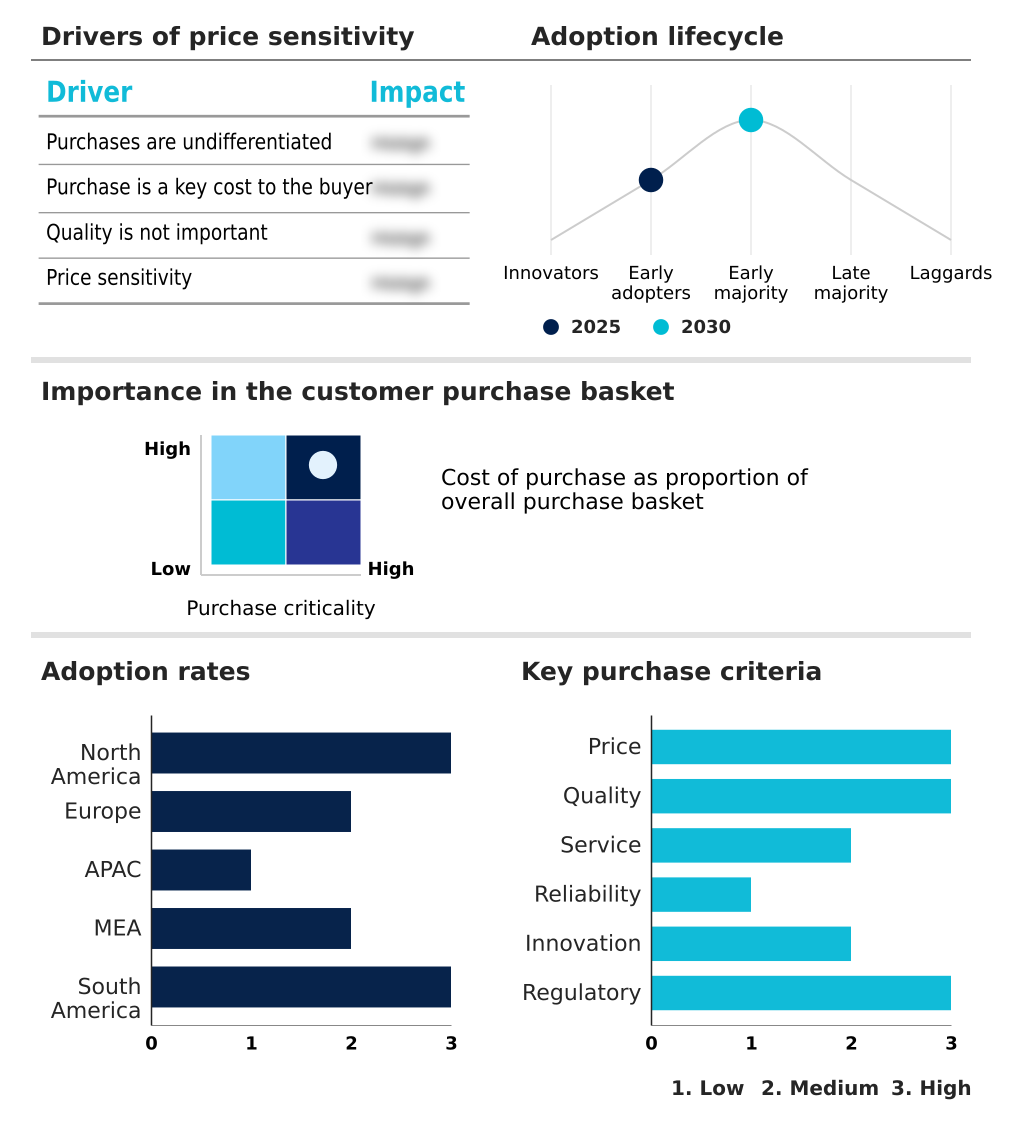
Customer Landscape of Women Intimate Care Products Industry

Competitive Landscape

Companies are implementing various strategies, such as strategic alliances, women intimate care products market forecast, partnerships, mergers and acquisitions, geographical expansion, and product/service launches, to enhance their presence in the industry.

Combe Inc. - Offers medicinal creams, washes, and wipes formulated for intimate health, providing targeted itch relief and promoting overall well-being.

The industry research and growth report includes detailed analyses of the competitive landscape of the market and information about key companies, including:

  • Combe Inc.
  • Exsens
  • Healthy Hoohoo
  • Kushae
  • Midas Care Pharmaceuticals
  • Namyaa Care
  • Prestige Consumer Healthcare
  • Procter and Gamble Co.
  • Rael Inc.
  • Reckitt Benckiser Group Plc
  • Sanofi SA
  • Schick
  • Sliquid LLC
  • SweetSpot Labs
  • The Honey Pot Co. LLC
  • Unicharm Corp.
  • Victorias Secret and Co.
  • Walgreens Boots Alliance Inc.

Qualitative and quantitative analysis of companies has been conducted to help clients understand the wider business environment as well as the strengths and weaknesses of key industry players. Data is qualitatively analyzed to categorize companies as pure play, category-focused, industry-focused, and diversified; it is quantitatively analyzed to categorize companies as dominant, leading, strong, tentative, and weak.

Recent Development and News in Women intimate care products market

  • In December, 2024, Biolouve, a biotechnology-inspired feminine care brand, announced its direct-to-consumer launch in the United States, leveraging an online model to introduce its microbiome-focused formulations to a new market.
  • In January, 2025, female wellness brand Lola expanded its portfolio with a new line of postpartum care products, including stretch mark prevention creams and organic cotton pads, catering to specific life-stage needs.
  • In March, 2025, Indian e-commerce platform Nykaa partnered with a leading Bollywood actress to launch a new line of intimate wellness products, including a pH-balanced wash and biodegradable bamboo sanitary pads, aiming to destigmatize the category.
  • In April, 2025, retail giant Walmart unveiled a dedicated women's intimate health section in over one thousand locations, consolidating products for supplements, skincare, and menopause care to create a holistic shopping experience.

Dive into Technavio’s robust research methodology, blending expert interviews, extensive data synthesis, and validated models for unparalleled Women Intimate Care Products Market insights. See full methodology.

Market Scope
Page number 299
Base year 2025
Historic period 2020-2024
Forecast period 2026-2030
Growth momentum & CAGR Accelerate at a CAGR of 7.7%
Market growth 2026-2030 USD 987.1 million
Market structure Fragmented
YoY growth 2025-2026(%) 6.7%
Key countries US, Canada, Mexico, Germany, UK, France, Italy, Spain, The Netherlands, China, India, Japan, South Korea, Australia, Indonesia, South Africa, Saudi Arabia, UAE, Egypt, Nigeria, Brazil, Argentina and Colombia
Competitive landscape Leading Companies, Market Positioning of Companies, Competitive Strategies, and Industry Risks

Request Free Sample

Research Analyst Overview

  • The women intimate care products market is defined by continuous innovation in response to sophisticated consumer demands for both efficacy and safety. The market's consistent momentum, reflected in a recent 6.7% year-over-year expansion, is sustained by the development of advanced solutions like ph-balanced formulations and products offering vaginal microbiome support.
  • Boardroom-level strategy is now directly influenced by the clean beauty standard, requiring significant R&D investment to create products such as a sulfate-free foaming wash and paraben-free intimate moisturizer. This involves a shift toward a prebiotic-enriched formula and plant-based feminine hygiene ingredients.
  • To meet regulatory and consumer expectations, offerings are evolving to include a hypoallergenic intimate wash, dermatologically tested cleanser, and gynecologist-tested solutions. The push for sustainability is evident in the rise of the biodegradable sanitary pad, organic cotton tampon, and reusable menstrual cup, all featuring eco-friendly packaging.
  • Formulations are advancing with botanical extract blend and lactic acid formulation at their core, while the category expands to include intimate wellness serum, anti-itch cream formulation, and soothing post-shave balm products that support overall vulvar skin health and meet the criteria for being a cruelty-free certified product.

What are the Key Data Covered in this Women Intimate Care Products Market Research and Growth Report?

  • What is the expected growth of the Women Intimate Care Products Market between 2026 and 2030?

    • USD 987.1 million, at a CAGR of 7.7%

  • What segmentation does the market report cover?

    • The report is segmented by Distribution Channel (Offline, and Online), Product (Pads, Intimate wipes, Intimate lubricants, Cleansing liquid, and Others), Price Range (Low, Medium, and High) and Geography (North America, Europe, APAC, Middle East and Africa, South America)

  • Which regions are analyzed in the report?

    • North America, Europe, APAC, Middle East and Africa and South America

  • What are the key growth drivers and market challenges?

    • Increasing awareness and destigmatization of feminine health, Persistent socio-cultural taboos and deficiencies in consumer education

  • Who are the major players in the Women Intimate Care Products Market?

    • Combe Inc., Exsens, Healthy Hoohoo, Kushae, Midas Care Pharmaceuticals, Namyaa Care, Prestige Consumer Healthcare, Procter and Gamble Co., Rael Inc., Reckitt Benckiser Group Plc, Sanofi SA, Schick, Sliquid LLC, SweetSpot Labs, The Honey Pot Co. LLC, Unicharm Corp., Victorias Secret and Co. and Walgreens Boots Alliance Inc.

Market Research Insights

  • The market's trajectory is shaped by a strategic pivot towards a holistic wellness approach and lifecycle-specific products. This evolution is driven by intense consumer ingredient scrutiny, which necessitates a clear ingredient transparency mandate across all product lines. Successful firms leverage a multi-pronged retail channel strategy, combining mass-market retail penetration with a targeted pharmacy distribution channel for specialized dermo-cosmetics.
  • The direct-to-consumer brand model, amplified by digital marketing engagement, has proven effective, with leading brands achieving customer acquisition costs that are 15% lower than traditional retail-focused competitors. Effective supply chain optimization for sustainable packaging innovation, including refillable system design, has enabled brands to reduce material costs by up to 10%, directly impacting profitability and reinforcing ethical sourcing certification claims.

We can help! Our analysts can customize this women intimate care products market research report to meet your requirements.

Get in touch

1. Executive Summary

1.1 Market overview

Executive Summary - Chart on Market Overview
Executive Summary - Data Table on Market Overview
Executive Summary - Chart on Global Market Characteristics
Executive Summary - Chart on Market by Geography
Executive Summary - Chart on Market Segmentation by Distribution Channel
Executive Summary - Chart on Market Segmentation by Product
Executive Summary - Chart on Market Segmentation by Price Range
Executive Summary - Chart on Incremental Growth
Executive Summary - Data Table on Incremental Growth
Executive Summary - Chart on Company Market Positioning

2. Technavio Analysis

2.1 Analysis of price sensitivity, lifecycle, customer purchase basket, adoption rates, and purchase criteria

2.2 Criticality of inputs and Factors of differentiation

Chart on Overview on criticality of inputs and factors of differentiation

2.3 Factors of disruption

Chart on Overview on factors of disruption

2.4 Impact of drivers and challenges

Chart on Impact of drivers and challenges in 2025 and 2030

3. Market Landscape

3.1 Market ecosystem

Chart on Parent Market
Data Table on - Parent Market

3.2 Market characteristics

Chart on Market characteristics analysis

3.3 Value chain analysis

Chart on Value chain analysis

4. Market Sizing

4.1 Market definition

Data Table on Offerings of companies included in the market definition

4.2 Market segment analysis

Market segments

4.3 Market size 2025

4.4 Market outlook: Forecast for 2025-2030

Chart on Global - Market size and forecast 2025-2030 ($ million)
Data Table on Global - Market size and forecast 2025-2030 ($ million)
Chart on Global Market: Year-over-year growth 2025-2030 (%)
Data Table on Global Market: Year-over-year growth 2025-2030 (%)

5. Historic Market Size

5.1 Global Women Intimate Care Products Market 2020 - 2024

Historic Market Size - Data Table on Global Women Intimate Care Products Market 2020 - 2024 ($ million)

5.2 Distribution Channel segment analysis 2020 - 2024

Historic Market Size - Distribution Channel Segment 2020 - 2024 ($ million)

5.3 Product segment analysis 2020 - 2024

Historic Market Size - Product Segment 2020 - 2024 ($ million)

5.4 Price Range segment analysis 2020 - 2024

Historic Market Size - Price Range Segment 2020 - 2024 ($ million)

5.5 Geography segment analysis 2020 - 2024

Historic Market Size - Geography Segment 2020 - 2024 ($ million)

5.6 Country segment analysis 2020 - 2024

Historic Market Size - Country Segment 2020 - 2024 ($ million)

6. Qualitative Analysis

6.1 Impact of AI on the Global Women Intimate Care Products Market

7. Five Forces Analysis

7.1 Five forces summary

Five forces analysis - Comparison between 2025 and 2030

7.2 Bargaining power of buyers

Bargaining power of buyers - Impact of key factors 2025 and 2030

7.3 Bargaining power of suppliers

Bargaining power of suppliers - Impact of key factors in 2025 and 2030

7.4 Threat of new entrants

Threat of new entrants - Impact of key factors in 2025 and 2030

7.5 Threat of substitutes

Threat of substitutes - Impact of key factors in 2025 and 2030

7.6 Threat of rivalry

Threat of rivalry - Impact of key factors in 2025 and 2030

7.7 Market condition

Chart on Market condition - Five forces 2025 and 2030

8. Market Segmentation by Distribution Channel

8.1 Market segments

Chart on Distribution Channel - Market share 2025-2030 (%)
Data Table on Distribution Channel - Market share 2025-2030 (%)

8.2 Comparison by Distribution Channel

Chart on Comparison by Distribution Channel
Data Table on Comparison by Distribution Channel

8.3 Offline - Market size and forecast 2025-2030

Chart on Offline - Market size and forecast 2025-2030 ($ million)
Data Table on Offline - Market size and forecast 2025-2030 ($ million)
Chart on Offline - Year-over-year growth 2025-2030 (%)
Data Table on Offline - Year-over-year growth 2025-2030 (%)

8.4 Online - Market size and forecast 2025-2030

Chart on Online - Market size and forecast 2025-2030 ($ million)
Data Table on Online - Market size and forecast 2025-2030 ($ million)
Chart on Online - Year-over-year growth 2025-2030 (%)
Data Table on Online - Year-over-year growth 2025-2030 (%)

8.5 Market opportunity by Distribution Channel

Market opportunity by Distribution Channel ($ million)
Data Table on Market opportunity by Distribution Channel ($ million)

9. Market Segmentation by Product

9.1 Market segments

Chart on Product - Market share 2025-2030 (%)
Data Table on Product - Market share 2025-2030 (%)

9.2 Comparison by Product

Chart on Comparison by Product
Data Table on Comparison by Product

9.3 Pads - Market size and forecast 2025-2030

Chart on Pads - Market size and forecast 2025-2030 ($ million)
Data Table on Pads - Market size and forecast 2025-2030 ($ million)
Chart on Pads - Year-over-year growth 2025-2030 (%)
Data Table on Pads - Year-over-year growth 2025-2030 (%)

9.4 Intimate wipes - Market size and forecast 2025-2030

Chart on Intimate wipes - Market size and forecast 2025-2030 ($ million)
Data Table on Intimate wipes - Market size and forecast 2025-2030 ($ million)
Chart on Intimate wipes - Year-over-year growth 2025-2030 (%)
Data Table on Intimate wipes - Year-over-year growth 2025-2030 (%)

9.5 Intimate lubricants - Market size and forecast 2025-2030

Chart on Intimate lubricants - Market size and forecast 2025-2030 ($ million)
Data Table on Intimate lubricants - Market size and forecast 2025-2030 ($ million)
Chart on Intimate lubricants - Year-over-year growth 2025-2030 (%)
Data Table on Intimate lubricants - Year-over-year growth 2025-2030 (%)

9.6 Cleansing liquid - Market size and forecast 2025-2030

Chart on Cleansing liquid - Market size and forecast 2025-2030 ($ million)
Data Table on Cleansing liquid - Market size and forecast 2025-2030 ($ million)
Chart on Cleansing liquid - Year-over-year growth 2025-2030 (%)
Data Table on Cleansing liquid - Year-over-year growth 2025-2030 (%)

9.7 Others - Market size and forecast 2025-2030

Chart on Others - Market size and forecast 2025-2030 ($ million)
Data Table on Others - Market size and forecast 2025-2030 ($ million)
Chart on Others - Year-over-year growth 2025-2030 (%)
Data Table on Others - Year-over-year growth 2025-2030 (%)

9.8 Market opportunity by Product

Market opportunity by Product ($ million)
Data Table on Market opportunity by Product ($ million)

10. Market Segmentation by Price Range

10.1 Market segments

Chart on Price Range - Market share 2025-2030 (%)
Data Table on Price Range - Market share 2025-2030 (%)

10.2 Comparison by Price Range

Chart on Comparison by Price Range
Data Table on Comparison by Price Range

10.3 Low - Market size and forecast 2025-2030

Chart on Low - Market size and forecast 2025-2030 ($ million)
Data Table on Low - Market size and forecast 2025-2030 ($ million)
Chart on Low - Year-over-year growth 2025-2030 (%)
Data Table on Low - Year-over-year growth 2025-2030 (%)

10.4 Medium - Market size and forecast 2025-2030

Chart on Medium - Market size and forecast 2025-2030 ($ million)
Data Table on Medium - Market size and forecast 2025-2030 ($ million)
Chart on Medium - Year-over-year growth 2025-2030 (%)
Data Table on Medium - Year-over-year growth 2025-2030 (%)

10.5 High - Market size and forecast 2025-2030

Chart on High - Market size and forecast 2025-2030 ($ million)
Data Table on High - Market size and forecast 2025-2030 ($ million)
Chart on High - Year-over-year growth 2025-2030 (%)
Data Table on High - Year-over-year growth 2025-2030 (%)

10.6 Market opportunity by Price Range

Market opportunity by Price Range ($ million)
Data Table on Market opportunity by Price Range ($ million)

11. Customer Landscape

11.1 Customer landscape overview

Analysis of price sensitivity, lifecycle, customer purchase basket, adoption rates, and purchase criteria

12. Geographic Landscape

12.1 Geographic segmentation

Chart on Market share by geography 2025-2030 (%)
Data Table on Market share by geography 2025-2030 (%)

12.2 Geographic comparison

Chart on Geographic comparison
Data Table on Geographic comparison

12.3 North America - Market size and forecast 2025-2030

Chart on North America - Market size and forecast 2025-2030 ($ million)
Data Table on North America - Market size and forecast 2025-2030 ($ million)
Chart on North America - Year-over-year growth 2025-2030 (%)
Data Table on North America - Year-over-year growth 2025-2030 (%)
Chart on Regional Comparison - North America
Data Table on Regional Comparison - North America

12.3.1 US - Market size and forecast 2025-2030

Chart on US - Market size and forecast 2025-2030 ($ million)
Data Table on US - Market size and forecast 2025-2030 ($ million)
Chart on US - Year-over-year growth 2025-2030 (%)
Data Table on US - Year-over-year growth 2025-2030 (%)

12.3.2 Canada - Market size and forecast 2025-2030

Chart on Canada - Market size and forecast 2025-2030 ($ million)
Data Table on Canada - Market size and forecast 2025-2030 ($ million)
Chart on Canada - Year-over-year growth 2025-2030 (%)
Data Table on Canada - Year-over-year growth 2025-2030 (%)

12.3.3 Mexico - Market size and forecast 2025-2030

Chart on Mexico - Market size and forecast 2025-2030 ($ million)
Data Table on Mexico - Market size and forecast 2025-2030 ($ million)
Chart on Mexico - Year-over-year growth 2025-2030 (%)
Data Table on Mexico - Year-over-year growth 2025-2030 (%)

12.4 Europe - Market size and forecast 2025-2030

Chart on Europe - Market size and forecast 2025-2030 ($ million)
Data Table on Europe - Market size and forecast 2025-2030 ($ million)
Chart on Europe - Year-over-year growth 2025-2030 (%)
Data Table on Europe - Year-over-year growth 2025-2030 (%)
Chart on Regional Comparison - Europe
Data Table on Regional Comparison - Europe

12.4.1 Germany - Market size and forecast 2025-2030

Chart on Germany - Market size and forecast 2025-2030 ($ million)
Data Table on Germany - Market size and forecast 2025-2030 ($ million)
Chart on Germany - Year-over-year growth 2025-2030 (%)
Data Table on Germany - Year-over-year growth 2025-2030 (%)

12.4.2 UK - Market size and forecast 2025-2030

Chart on UK - Market size and forecast 2025-2030 ($ million)
Data Table on UK - Market size and forecast 2025-2030 ($ million)
Chart on UK - Year-over-year growth 2025-2030 (%)
Data Table on UK - Year-over-year growth 2025-2030 (%)

12.4.3 France - Market size and forecast 2025-2030

Chart on France - Market size and forecast 2025-2030 ($ million)
Data Table on France - Market size and forecast 2025-2030 ($ million)
Chart on France - Year-over-year growth 2025-2030 (%)
Data Table on France - Year-over-year growth 2025-2030 (%)

12.4.4 Italy - Market size and forecast 2025-2030

Chart on Italy - Market size and forecast 2025-2030 ($ million)
Data Table on Italy - Market size and forecast 2025-2030 ($ million)
Chart on Italy - Year-over-year growth 2025-2030 (%)
Data Table on Italy - Year-over-year growth 2025-2030 (%)

12.4.5 Spain - Market size and forecast 2025-2030

Chart on Spain - Market size and forecast 2025-2030 ($ million)
Data Table on Spain - Market size and forecast 2025-2030 ($ million)
Chart on Spain - Year-over-year growth 2025-2030 (%)
Data Table on Spain - Year-over-year growth 2025-2030 (%)

12.4.6 The Netherlands - Market size and forecast 2025-2030

Chart on The Netherlands - Market size and forecast 2025-2030 ($ million)
Data Table on The Netherlands - Market size and forecast 2025-2030 ($ million)
Chart on The Netherlands - Year-over-year growth 2025-2030 (%)
Data Table on The Netherlands - Year-over-year growth 2025-2030 (%)

12.5 APAC - Market size and forecast 2025-2030

Chart on APAC - Market size and forecast 2025-2030 ($ million)
Data Table on APAC - Market size and forecast 2025-2030 ($ million)
Chart on APAC - Year-over-year growth 2025-2030 (%)
Data Table on APAC - Year-over-year growth 2025-2030 (%)
Chart on Regional Comparison - APAC
Data Table on Regional Comparison - APAC

12.5.1 China - Market size and forecast 2025-2030

Chart on China - Market size and forecast 2025-2030 ($ million)
Data Table on China - Market size and forecast 2025-2030 ($ million)
Chart on China - Year-over-year growth 2025-2030 (%)
Data Table on China - Year-over-year growth 2025-2030 (%)

12.5.2 India - Market size and forecast 2025-2030

Chart on India - Market size and forecast 2025-2030 ($ million)
Data Table on India - Market size and forecast 2025-2030 ($ million)
Chart on India - Year-over-year growth 2025-2030 (%)
Data Table on India - Year-over-year growth 2025-2030 (%)

12.5.3 Japan - Market size and forecast 2025-2030

Chart on Japan - Market size and forecast 2025-2030 ($ million)
Data Table on Japan - Market size and forecast 2025-2030 ($ million)
Chart on Japan - Year-over-year growth 2025-2030 (%)
Data Table on Japan - Year-over-year growth 2025-2030 (%)

12.5.4 South Korea - Market size and forecast 2025-2030

Chart on South Korea - Market size and forecast 2025-2030 ($ million)
Data Table on South Korea - Market size and forecast 2025-2030 ($ million)
Chart on South Korea - Year-over-year growth 2025-2030 (%)
Data Table on South Korea - Year-over-year growth 2025-2030 (%)

12.5.5 Australia - Market size and forecast 2025-2030

Chart on Australia - Market size and forecast 2025-2030 ($ million)
Data Table on Australia - Market size and forecast 2025-2030 ($ million)
Chart on Australia - Year-over-year growth 2025-2030 (%)
Data Table on Australia - Year-over-year growth 2025-2030 (%)

12.5.6 Indonesia - Market size and forecast 2025-2030

Chart on Indonesia - Market size and forecast 2025-2030 ($ million)
Data Table on Indonesia - Market size and forecast 2025-2030 ($ million)
Chart on Indonesia - Year-over-year growth 2025-2030 (%)
Data Table on Indonesia - Year-over-year growth 2025-2030 (%)

12.6 Middle East and Africa - Market size and forecast 2025-2030

Chart on Middle East and Africa - Market size and forecast 2025-2030 ($ million)
Data Table on Middle East and Africa - Market size and forecast 2025-2030 ($ million)
Chart on Middle East and Africa - Year-over-year growth 2025-2030 (%)
Data Table on Middle East and Africa - Year-over-year growth 2025-2030 (%)
Chart on Regional Comparison - Middle East and Africa
Data Table on Regional Comparison - Middle East and Africa

12.6.1 South Africa - Market size and forecast 2025-2030

Chart on South Africa - Market size and forecast 2025-2030 ($ million)
Data Table on South Africa - Market size and forecast 2025-2030 ($ million)
Chart on South Africa - Year-over-year growth 2025-2030 (%)
Data Table on South Africa - Year-over-year growth 2025-2030 (%)

12.6.2 Saudi Arabia - Market size and forecast 2025-2030

Chart on Saudi Arabia - Market size and forecast 2025-2030 ($ million)
Data Table on Saudi Arabia - Market size and forecast 2025-2030 ($ million)
Chart on Saudi Arabia - Year-over-year growth 2025-2030 (%)
Data Table on Saudi Arabia - Year-over-year growth 2025-2030 (%)

12.6.3 UAE - Market size and forecast 2025-2030

Chart on UAE - Market size and forecast 2025-2030 ($ million)
Data Table on UAE - Market size and forecast 2025-2030 ($ million)
Chart on UAE - Year-over-year growth 2025-2030 (%)
Data Table on UAE - Year-over-year growth 2025-2030 (%)

12.6.4 Egypt - Market size and forecast 2025-2030

Chart on Egypt - Market size and forecast 2025-2030 ($ million)
Data Table on Egypt - Market size and forecast 2025-2030 ($ million)
Chart on Egypt - Year-over-year growth 2025-2030 (%)
Data Table on Egypt - Year-over-year growth 2025-2030 (%)

12.6.5 Nigeria - Market size and forecast 2025-2030

Chart on Nigeria - Market size and forecast 2025-2030 ($ million)
Data Table on Nigeria - Market size and forecast 2025-2030 ($ million)
Chart on Nigeria - Year-over-year growth 2025-2030 (%)
Data Table on Nigeria - Year-over-year growth 2025-2030 (%)

12.7 South America - Market size and forecast 2025-2030

Chart on South America - Market size and forecast 2025-2030 ($ million)
Data Table on South America - Market size and forecast 2025-2030 ($ million)
Chart on South America - Year-over-year growth 2025-2030 (%)
Data Table on South America - Year-over-year growth 2025-2030 (%)
Chart on Regional Comparison - South America
Data Table on Regional Comparison - South America

12.7.1 Brazil - Market size and forecast 2025-2030

Chart on Brazil - Market size and forecast 2025-2030 ($ million)
Data Table on Brazil - Market size and forecast 2025-2030 ($ million)
Chart on Brazil - Year-over-year growth 2025-2030 (%)
Data Table on Brazil - Year-over-year growth 2025-2030 (%)

12.7.2 Argentina - Market size and forecast 2025-2030

Chart on Argentina - Market size and forecast 2025-2030 ($ million)
Data Table on Argentina - Market size and forecast 2025-2030 ($ million)
Chart on Argentina - Year-over-year growth 2025-2030 (%)
Data Table on Argentina - Year-over-year growth 2025-2030 (%)

12.7.3 Colombia - Market size and forecast 2025-2030

Chart on Colombia - Market size and forecast 2025-2030 ($ million)
Data Table on Colombia - Market size and forecast 2025-2030 ($ million)
Chart on Colombia - Year-over-year growth 2025-2030 (%)
Data Table on Colombia - Year-over-year growth 2025-2030 (%)

12.8 Market opportunity by geography

Market opportunity by geography ($ million)
Data Tables on Market opportunity by geography ($ million)

13. Drivers, Challenges, and Opportunity

13.1 Market drivers

Increasing awareness and destigmatization of feminine health
Growing female economic empowerment and urbanization
Significant product innovation and portfolio expansion

13.2 Market challenges

Persistent socio-cultural taboos and deficiencies in consumer education
Heightened scrutiny over product safety, formulation, and ingredient transparency
Intense market competition, price pressures, and channel conflict

13.3 Impact of drivers and challenges

Impact of drivers and challenges in 2025 and 2030

13.4 Market opportunities

Ascendancy of clean and natural formulations
Holistic wellness framework and expansion beyond basic hygiene
Imperative of sustainability and ethical consciousness

14. Competitive Landscape

14.1 Overview

14.2

Overview on criticality of inputs and factors of differentiation

14.3 Landscape disruption

Overview on factors of disruption

14.4 Industry risks

Impact of key risks on business

15. Competitive Analysis

15.1 Companies profiled

Companies covered

15.2 Company ranking index

15.3 Market positioning of companies

Matrix on companies position and classification

15.4 Combe Inc.

Combe Inc. - Overview
Combe Inc. - Product / Service
Combe Inc. - Key offerings
SWOT

15.5 Exsens

Exsens - Overview
Exsens - Product / Service
Exsens - Key offerings
SWOT

15.6 Midas Care Pharmaceuticals

Midas Care Pharmaceuticals - Overview
Midas Care Pharmaceuticals - Product / Service
Midas Care Pharmaceuticals - Key offerings
SWOT

15.7 Namyaa Care

Namyaa Care - Overview
Namyaa Care - Product / Service
Namyaa Care - Key offerings
SWOT

15.8 Prestige Consumer Healthcare

Prestige Consumer Healthcare - Overview
Prestige Consumer Healthcare - Business segments
Prestige Consumer Healthcare - Key offerings
Prestige Consumer Healthcare - Segment focus
SWOT

15.9 Procter and Gamble Co.

Procter and Gamble Co. - Overview
Procter and Gamble Co. - Business segments
Procter and Gamble Co. - Key offerings
Procter and Gamble Co. - Segment focus
SWOT

15.10 Reckitt Benckiser Group Plc

Reckitt Benckiser Group Plc - Overview
Reckitt Benckiser Group Plc - Business segments
Reckitt Benckiser Group Plc - Key news
Reckitt Benckiser Group Plc - Key offerings
Reckitt Benckiser Group Plc - Segment focus
SWOT

15.11 Sanofi SA

Sanofi SA - Overview
Sanofi SA - Business segments
Sanofi SA - Key news
Sanofi SA - Key offerings
Sanofi SA - Segment focus
SWOT

15.12 Schick

Schick - Overview
Schick - Product / Service
Schick - Key offerings
SWOT

15.13 Sliquid LLC

Sliquid LLC - Overview
Sliquid LLC - Product / Service
Sliquid LLC - Key offerings
SWOT

15.14 SweetSpot Labs

SweetSpot Labs - Overview
SweetSpot Labs - Product / Service
SweetSpot Labs - Key offerings
SWOT

15.15 The Honey Pot Co. LLC

The Honey Pot Co. LLC - Overview
The Honey Pot Co. LLC - Product / Service
The Honey Pot Co. LLC - Key offerings
SWOT

15.16 Unicharm Corp.

Unicharm Corp. - Overview
Unicharm Corp. - Business segments
Unicharm Corp. - Key offerings
Unicharm Corp. - Segment focus
SWOT

15.17 Victorias Secret and Co.

Victorias Secret and Co. - Overview
Victorias Secret and Co. - Business segments
Victorias Secret and Co. - Key offerings
Victorias Secret and Co. - Segment focus
SWOT

15.18 Walgreens Boots Alliance Inc.

Walgreens Boots Alliance Inc. - Overview
Walgreens Boots Alliance Inc. - Business segments
Walgreens Boots Alliance Inc. - Key offerings
Walgreens Boots Alliance Inc. - Segment focus
SWOT

16. Appendix

16.1 Scope of the report

Market definition
Objectives
Notes and caveats

16.2 Inclusions and exclusions checklist

Inclusions checklist
Exclusions checklist

16.3 Currency conversion rates for US$

16.4 Research methodology

16.5 Data procurement

Information sources

16.6 Data validation

16.7 Validation techniques employed for market sizing

16.8 Data synthesis

16.9 360 degree market analysis

16.10 List of abbreviations

Research Methodology

Technavio presents a detailed picture of the market by way of study, synthesis, and summation of data from multiple sources. The analysts have presented the various facets of the market with a particular focus on identifying the key industry influencers. The data thus presented is comprehensive, reliable, and the result of extensive research, both primary and secondary.

INFORMATION SOURCES

Primary sources

  • Manufacturers and suppliers
  • Channel partners
  • Industry experts
  • Strategic decision makers

Secondary sources

  • Industry journals and periodicals
  • Government data
  • Financial reports of key industry players
  • Historical data
  • Press releases

DATA ANALYSIS

Data Synthesis

  • Collation of data
  • Estimation of key figures
  • Analysis of derived insights

Data Validation

  • Triangulation with data models
  • Reference against proprietary databases
  • Corroboration with industry experts

REPORT WRITING

Qualitative

  • Market drivers
  • Market challenges
  • Market trends
  • Five forces analysis

Quantitative

  • Market size and forecast
  • Market segmentation
  • Geographical insights
  • Competitive landscape

Interested in this report?

Get your sample now to see our research methodology and insights!

Download Now

Frequently Asked Questions

Women Intimate Care Products market growth will increase by USD 987.1 million during 2026-2030.

The Women Intimate Care Products market is expected to grow at a CAGR of 7.7% during 2026-2030.

Women Intimate Care Products market is segmented by Distribution channel (Offline, Online) Product (Pads, Intimate wipes, Intimate lubricants, Cleansing liquid, Others) Price range (Low, Medium, High)

Combe Inc., Exsens, Healthy Hoohoo, Kushae, Midas Care Pharmaceuticals, Namyaa Care, Prestige Consumer Healthcare, Procter and Gamble Co., Rael Inc., Reckitt Benckiser Group Plc, Sanofi SA, Schick, Sliquid LLC, SweetSpot Labs, The Honey Pot Co. LLC, Unicharm Corp., Victorias Secret and Co., Walgreens Boots Alliance Inc. are a few of the key vendors in the Women Intimate Care Products market.

North America will register the highest growth rate of 39% among the other regions. Therefore, the Women Intimate Care Products market in North America is expected to garner significant business opportunities for the vendors during the forecast period.

US, Canada, Mexico, Germany, UK, France, Italy, Spain, The Netherlands, China, India, Japan, South Korea, Australia, Indonesia, South Africa, Saudi Arabia, UAE, Egypt, Nigeria, Brazil, Argentina, Colombia

  • Increasing awareness and destigmatization of feminine health is the driving factor this market.

The Women Intimate Care Products market vendors should focus on grabbing business opportunities from the Distribution channel segment as it accounted for the largest market share in the base year.
RIA - Research AI Assistant
Ask RIA
