



Yoga Mat Market Size 2026-2030
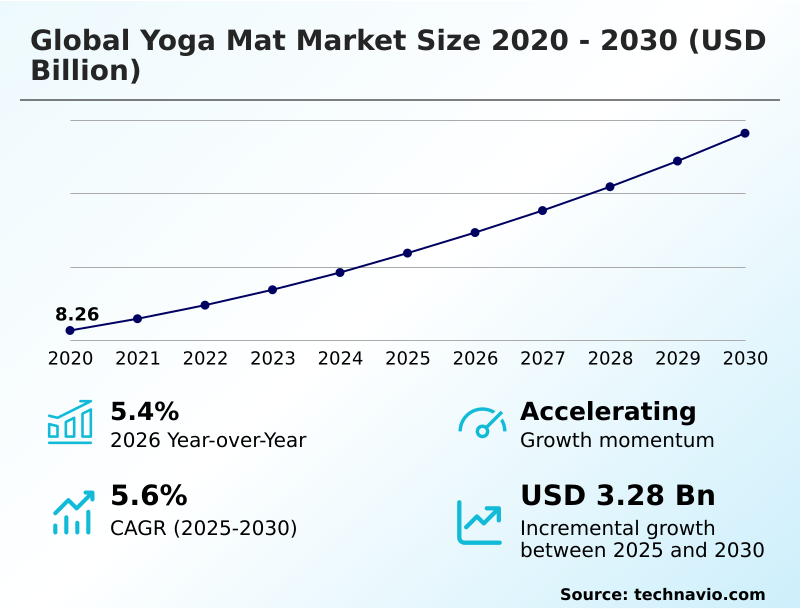
The yoga mat market size is valued to increase by USD 3.28 billion, at a CAGR of 5.6% from 2025 to 2030. Expansion of hybrid fitness memberships will drive the yoga mat market.
Major Market Trends & Insights
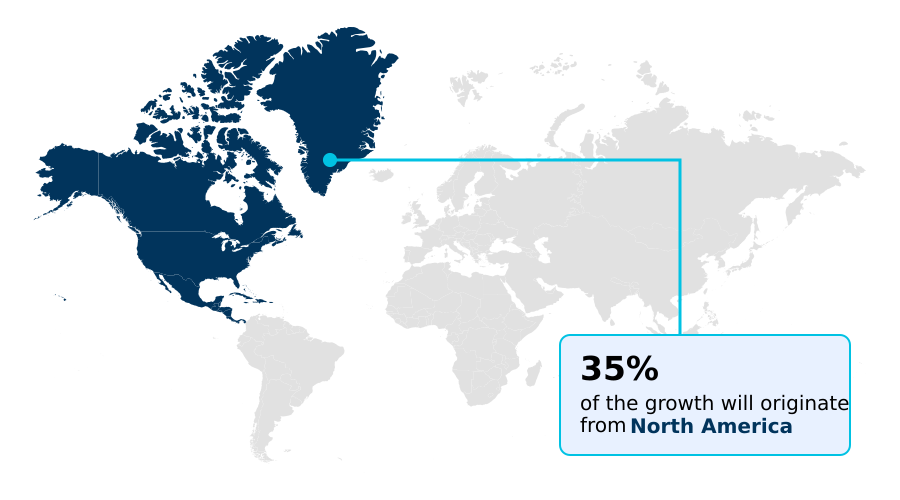
- North America dominated the market and accounted for a 34.9% growth during the forecast period.
- By Distribution Channel - Offline segment was valued at USD 8.19 billion in 2024
- By End-user - Personal segment accounted for the largest market revenue share in 2024
Market Size & Forecast
- Market Opportunities: USD 5.38 billion
- Market Future Opportunities: USD 3.28 billion
- CAGR from 2025 to 2030 : 5.6%
Market Summary
- The yoga mat market is a dynamic segment of the broader wellness industry, characterized by continuous innovation in material science and a growing emphasis on sustainability. Key drivers include the global expansion of corporate wellness programs and the surge in digital fitness platform subscriptions, which democratize access to practice and create demand for personal, high-quality equipment.
- A primary trend shaping the market is the shift toward eco-friendly materials such as sustainable cork material, natural rubber, and biodegradable polymers like thermoplastic elastomers (TPE). These materials are often featured in a professional-grade mat and offer benefits like superior natural rubber grip and antimicrobial properties.
- Manufacturers face the strategic challenge of balancing the high cost of these sustainable inputs against consumer price sensitivity. For instance, a decision to use natural rubber, which has volatile pricing, over a more stable but less eco-friendly synthetic involves complex supply chain and brand positioning trade-offs.
- Concurrently, technological advancements like laser-etched alignment systems and closed-cell construction are enhancing product functionality, transforming the simple mat into a sophisticated piece of performance yoga mat equipment that supports user safety and practice improvement.
What will be the Size of the Yoga Mat Market during the forecast period?
Get Key Insights on Market Forecast (PDF) Get Free Sample
How is the Yoga Mat Market Segmented?
The yoga mat industry research report provides comprehensive data (region-wise segment analysis), with forecasts and estimates in "USD million" for the period 2026-2030, as well as historical data from 2020-2024 for the following segments.
- Distribution channel
- Offline
- Online
- End-user
- Personal
- Health clubs
- Material
- PVC
- Rubber
- TPE
- Cotton
- Geography
- North America
- US
- Canada
- Mexico
- Europe
- Germany
- UK
- France
- APAC
- China
- India
- Japan
- South America
- Brazil
- Argentina
- Middle East and Africa
- South Africa
- UAE
- Turkey
- Rest of World (ROW)
- North America
By Distribution Channel Insights
The offline segment is estimated to witness significant growth during the forecast period.
The offline channel remains central to the yoga mat market, enabling tactile engagement that digital platforms cannot replicate.
Physical retail spaces allow consumers to directly assess key attributes like natural rubber grip, high-density cushioning, and the feel of a moisture-wicking surface, which is critical for selecting a professional-grade mat.
This hands-on experience is particularly important for products featuring advanced closed-cell construction or those made from thermoplastic elastomers (TPE). In-store expert consultation helps buyers differentiate between a standard biodegradable yoga mat and a specialized eco-friendly yoga mat with antimicrobial properties.
This guided selection process, which is often preferred for a non-slip yoga surface or a mat with extra-thick cushioning, significantly improves purchase satisfaction, with some retailers noting a reduction in product returns by over 20%.
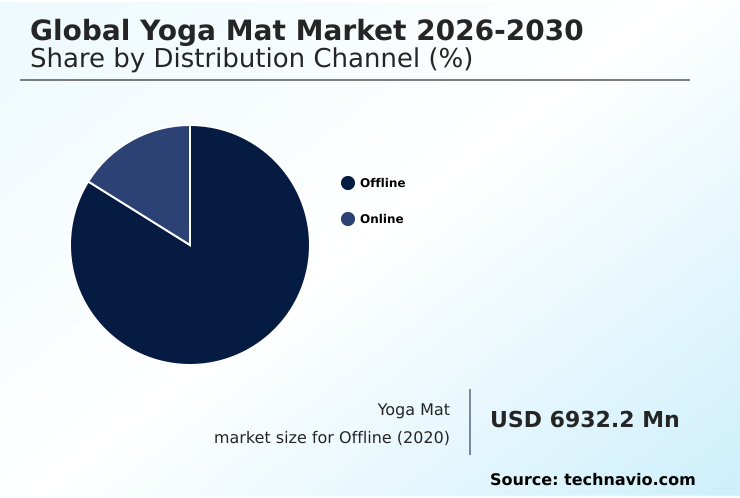
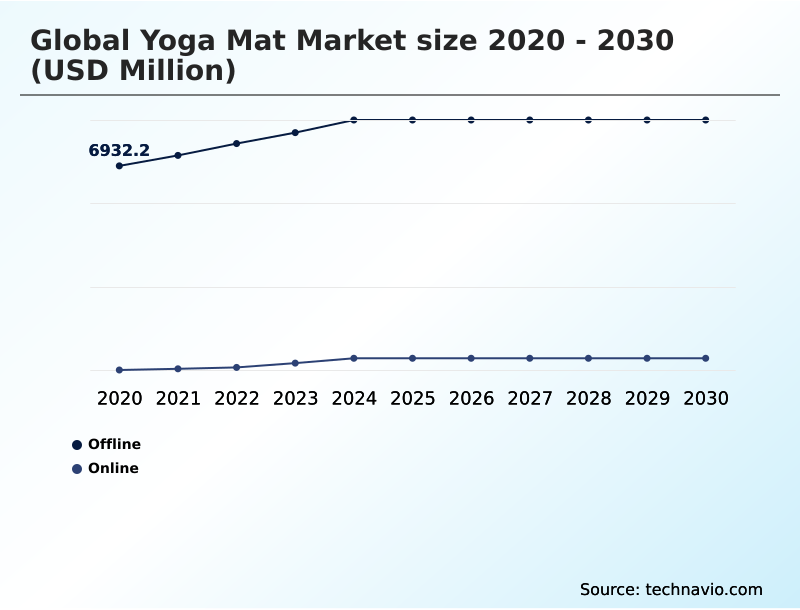
The Offline segment was valued at USD 8.19 billion in 2024 and showed a gradual increase during the forecast period.
Regional Analysis
North America is estimated to contribute 34.9% to the growth of the global market during the forecast period.Technavio’s analysts have elaborately explained the regional trends and drivers that shape the market during the forecast period.
See How Yoga Mat Market Demand is Rising in North America Get Free Sample
The geographic landscape of the yoga mat market is diverse, with regional preferences shaping product development. North America, which accounts for nearly 35% of the market's incremental growth, shows strong demand for luxury yoga gear and sustainable fitness equipment.
In Europe, stringent chemical safety compliance drives innovation in eco-friendly manufacturing and the use of non-toxic workout mat materials.
APAC, the fastest-growing region with a CAGR of 6%, is a major hub for producing mats with heat-bonded layers and tear-resistant fabric.
This region's manufacturing prowess allows for scalable production of the recycled material mat and products using sustainable harvesting practice.
This global dynamic requires brands to adapt, whether offering a portable practice surface with a textured surface grip for urban commuters or an organic cotton yoga rug for traditionalists.
Market Dynamics
Our researchers analyzed the data with 2025 as the base year, along with the key drivers, trends, and challenges. A holistic analysis of drivers will help companies refine their marketing strategies to gain a competitive advantage.
- The modern yoga mat market is defined by niche consumer needs, moving beyond one-size-fits-all solutions. Practitioners are actively researching the best yoga mat for hot yoga, where materials that improve grip with moisture are essential, or a thick yoga mat for joint support to protect sensitive areas during practice.
- This specialization drives demand for an eco-friendly yoga mat without pvc and pushes consumers to compare options like a natural rubber yoga mat vs tpe. For those with active lifestyles, finding a lightweight travel yoga mat carry-on or even a foldable yoga mat for office use is a priority.
- Beginners often seek a yoga mat with alignment lines for beginners to ensure proper form, a feature that manufacturers have found can reduce product return rates by a significant margin compared to standard mats, thereby improving reverse logistics efficiency.
- Queries about how to clean a closed-cell yoga mat highlight a focus on hygiene and longevity, leading to interest in the most durable yoga mat for daily practice.
- The market also caters to specific physical needs with the extra wide and long yoga mat and the yoga mat for sensitive skin hypoallergenic, while instructors seek a professional yoga mat for instructors. From a cork yoga mat benefits and grip to a biodegradable mat for outdoor yoga, consumer choice is increasingly granular and performance-oriented.
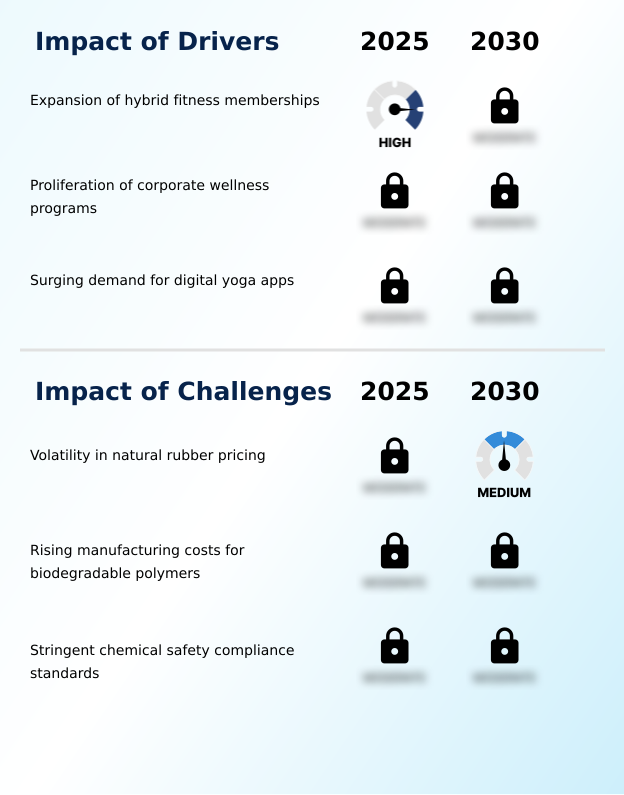
What are the key market drivers leading to the rise in the adoption of Yoga Mat Industry?
- The expansion of hybrid fitness memberships, which combine in-person and digital practices, is a key driver fueling market growth.
- The proliferation of corporate wellness programs and digital fitness platforms is a primary market driver. Companies investing in employee wellness have noted a 15% reduction in stress-related absenteeism, fueling bulk purchases of the durable exercise mat and the studio-quality mat.
- This demand prioritizes the hygienic yoga mat, often featuring advanced cellular structure engineering for easy cleaning. For the individual consumer, especially those using a beginners yoga mat, digital app integration encourages upgrades to equipment with superior ergonomic design.
- This fuels innovation in materials like jute fiber composite and bio-based polyurethane which offer enhanced performance.
- Manufacturers are responding by creating the all-natural yoga mat using water-based adhesives and applying a high-traction coating, ensuring products have the thermal stability needed for various practice environments and are often designed as a washable yoga mat.
What are the market trends shaping the Yoga Mat Industry?
- A key market trend is the adoption of advanced antimicrobial closed-cell technology. This innovation addresses rising consumer demand for improved hygiene and product durability.
- Market innovation is increasingly focused on material science and functional design to create the ideal premium yoga mat. The adoption of sustainable cork material and biodegradable polymers is accelerating, with some new products demonstrating a 40% lower carbon footprint during manufacturing.
- A cork yoga mat offers a unique grip that improves with moisture, while a natural rubber yoga mat with an open-cell structure provides superior traction for intense practices. To enhance user experience, laser-etched alignment systems are becoming standard on the alignment yoga mat, improving postural accuracy for over 80% of practitioners.
- Advanced products now feature a dual-density construction combined with a recycled rubber base and non-toxic dyes to meet consumer demand for performance and sustainability. This shift also influences accessories like the hot yoga towel mat and the design of the lightweight foldable mat.
What challenges does the Yoga Mat Industry face during its growth?
- Volatility in natural rubber pricing presents a significant challenge, directly impacting production costs and profit margins for eco-friendly yoga mats.
- Navigating raw material cost volatility and complex chemical safety regulations presents a significant market challenge. The production of a performance yoga mat or pilates and yoga mat with a phthalate-free formulation and latex-free composition can increase manufacturing expenses by up to 30%. These higher costs impact the pricing of specialized products like the therapeutic yoga mat and extra-long yoga mat.
- Consumers demand a hypoallergenic material with a slip-resistant texture and effective joint support technology, especially at a premium mat thickness. However, balancing these features with the requirements for lightweight travel construction is a design challenge.
- This complexity is compounded in the customizable yoga mat and reversible yoga mat segments, where material compliance must be verified for multiple configurations, creating production hurdles.
Exclusive Technavio Analysis on Customer Landscape
The yoga mat market forecasting report includes the adoption lifecycle of the market, covering from the innovator’s stage to the laggard’s stage. It focuses on adoption rates in different regions based on penetration. Furthermore, the yoga mat market report also includes key purchase criteria and drivers of price sensitivity to help companies evaluate and develop their market growth analysis strategies.
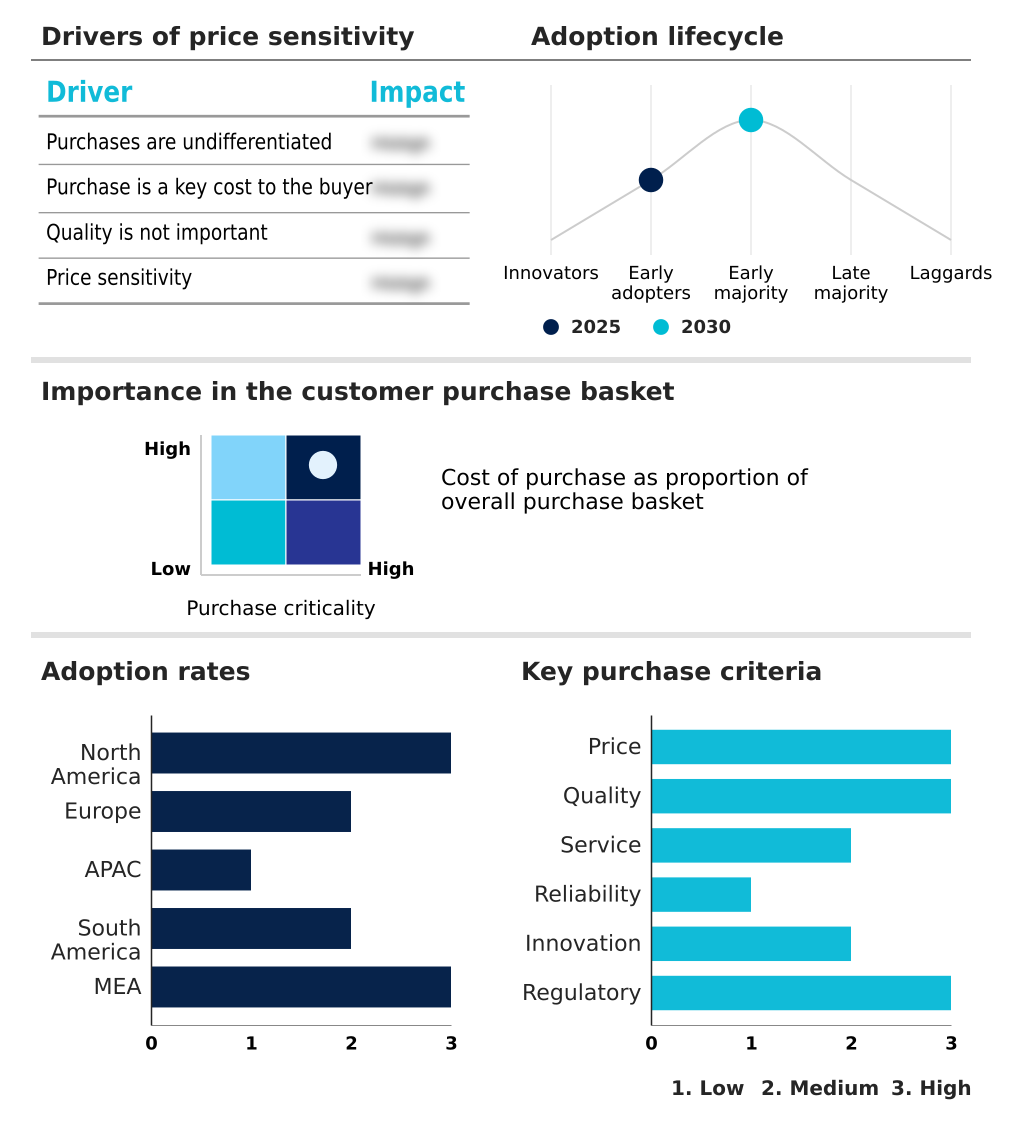
Customer Landscape of Yoga Mat Industry
Competitive Landscape
Companies are implementing various strategies, such as strategic alliances, yoga mat market forecast, partnerships, mergers and acquisitions, geographical expansion, and product/service launches, to enhance their presence in the industry.
Adidas AG - A diverse portfolio of performance yoga mats, ranging from premium studio models to specialized athletic designs, addresses a wide spectrum of practitioner and wellness needs.
The industry research and growth report includes detailed analyses of the competitive landscape of the market and information about key companies, including:
- Adidas AG
- Barefoot Yoga Co.
- Body Solid Inc.
- Decathlon SA
- Gaiam
- Hugger Mugger Yoga Products
- JadeYoga
- La Vie Boheme Yoga
- Liforme Ltd.
- lululemon athletica Inc.
- Manduka LLC
- Merrithew International Inc.
- New Balance Athletics Inc.
- Nike Inc.
- OPTP
- Second Earth Pty Ltd.
- Trimax Sports Inc.
- Yoga Direct LLC
- Yogamatters Ltd.
- YogiKuti Pvt. Ltd.
Qualitative and quantitative analysis of companies has been conducted to help clients understand the wider business environment as well as the strengths and weaknesses of key industry players. Data is qualitatively analyzed to categorize companies as pure play, category-focused, industry-focused, and diversified; it is quantitatively analyzed to categorize companies as dominant, leading, strong, tentative, and weak.
Recent Development and News in Yoga mat market
- In August 2024, Manduka LLC partnered with several luxury hospitality groups in the Middle East to provide premium yoga equipment for their on-site wellness centers and private guest sessions.
- In January 2025, Decathlon SA announced a significant expansion of its eco-friendly fitness equipment line by introducing a new range of mats made from sustainably sourced cork and recycled rubber components to meet rising demand in the European region.
- In February 2025, Nike Inc. introduced a new series of high-grip performance mats designed specifically for high-intensity interval training and yoga fusion classes to capitalize on diversifying fitness habits.
- In May 2025, Trimax Sports Inc. launched a new line of ergonomic mats across the European region designed with a specialized cellular structure that provides enhanced joint support for older practitioners and those in rehabilitation programs.
Dive into Technavio’s robust research methodology, blending expert interviews, extensive data synthesis, and validated models for unparalleled Yoga Mat Market insights. See full methodology.
| Market Scope | |
|---|---|
| Page number | 288 |
| Base year | 2025 |
| Historic period | 2020-2024 |
| Forecast period | 2026-2030 |
| Growth momentum & CAGR | Accelerate at a CAGR of 5.6% |
| Market growth 2026-2030 | USD 3275.9 million |
| Market structure | Fragmented |
| YoY growth 2025-2026(%) | 5.4% |
| Key countries | US, Canada, Mexico, Germany, UK, France, Italy, Spain, The Netherlands, China, India, Japan, South Korea, Australia, Indonesia, Brazil, Argentina, Chile, South Africa, UAE, Turkey, Saudi Arabia and Israel |
| Competitive landscape | Leading Companies, Market Positioning of Companies, Competitive Strategies, and Industry Risks |
Research Analyst Overview
- The yoga mat market is evolving beyond a simple accessory into a technical equipment sector defined by advanced material science. Core innovations include closed-cell construction for hygiene, the use of thermoplastic elastomers (TPE) as a polyvinyl chloride (PVC) free alternative, and high-density cushioning for safety.
- The market is trending toward sustainable cork material and natural rubber grip surfaces, which often feature antimicrobial properties. Products with a moisture-wicking surface are critical for intense practices. The integration of laser-etched alignment systems reflects a move toward functional design. At a boardroom level, the strategic decision to adopt biodegradable polymers is critical.
- While these materials align with corporate sustainability goals, their raw material costs can be up to 50% higher than conventional plastics. This requires a careful balancing of brand image and environmental commitment against production costs and market price points, directly impacting profitability and long-term product strategy.
- This is further complicated by the need for advanced cellular structure engineering and achieving compliance with strict chemical safety standards.
What are the Key Data Covered in this Yoga Mat Market Research and Growth Report?
-
What is the expected growth of the Yoga Mat Market between 2026 and 2030?
-
USD 3.28 billion, at a CAGR of 5.6%
-
-
What segmentation does the market report cover?
-
The report is segmented by Distribution Channel (Offline, and Online), End-user (Personal, and Health clubs), Material (PVC, Rubber, TPE, and Cotton) and Geography (North America, Europe, APAC, South America, Middle East and Africa)
-
-
Which regions are analyzed in the report?
-
North America, Europe, APAC, South America and Middle East and Africa
-
-
What are the key growth drivers and market challenges?
-
Expansion of hybrid fitness memberships, Volatility in natural rubber pricing
-
-
Who are the major players in the Yoga Mat Market?
-
Adidas AG, Barefoot Yoga Co., Body Solid Inc., Decathlon SA, Gaiam, Hugger Mugger Yoga Products, JadeYoga, La Vie Boheme Yoga, Liforme Ltd., lululemon athletica Inc., Manduka LLC, Merrithew International Inc., New Balance Athletics Inc., Nike Inc., OPTP, Second Earth Pty Ltd., Trimax Sports Inc., Yoga Direct LLC, Yogamatters Ltd. and YogiKuti Pvt. Ltd.
-
Market Research Insights
- Market dynamics are increasingly shaped by consumer demand for specialized and sustainable products. The adoption of hybrid fitness models has expanded personal equipment ownership by over 40%, creating robust demand for the travel yoga mat and the studio-quality mat.
- This shift is complemented by corporate wellness initiatives, where investments in employee health can reduce related costs by up to 25%, driving bulk purchases of the hygienic yoga mat and durable exercise mat. Consumers are now more discerning, with searches for the eco-friendly yoga mat and all-natural yoga mat growing faster than for conventional options.
- This has pushed manufacturers toward innovations in the cork yoga mat and natural rubber yoga mat segments, where performance attributes like a non-slip yoga surface and extra-thick cushioning are key differentiators.
We can help! Our analysts can customize this yoga mat market research report to meet your requirements.
 RIA -
RIA - 
