



Yoga Accessories Market Size 2026-2030
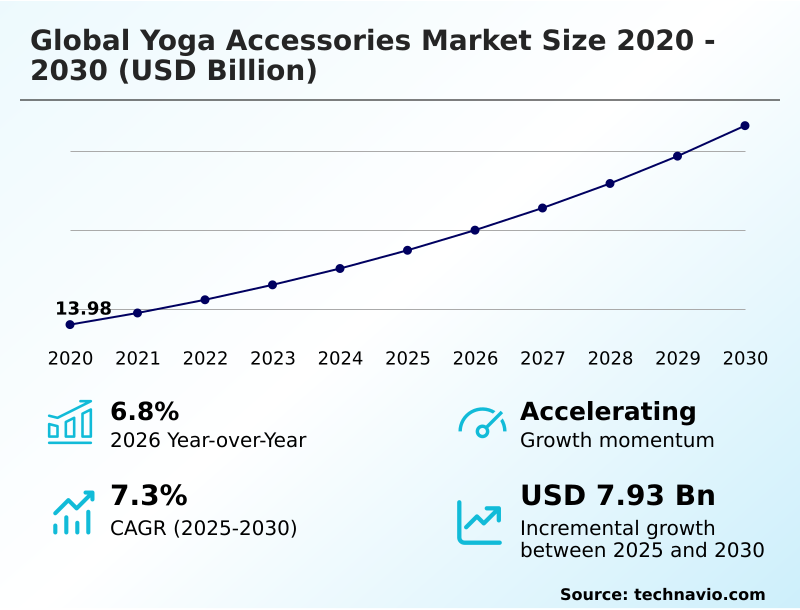
The yoga accessories market size is valued to increase by USD 7.93 billion, at a CAGR of 7.3% from 2025 to 2030. Product premiumization due to more innovation in yoga accessories will drive the yoga accessories market.
Major Market Trends & Insights
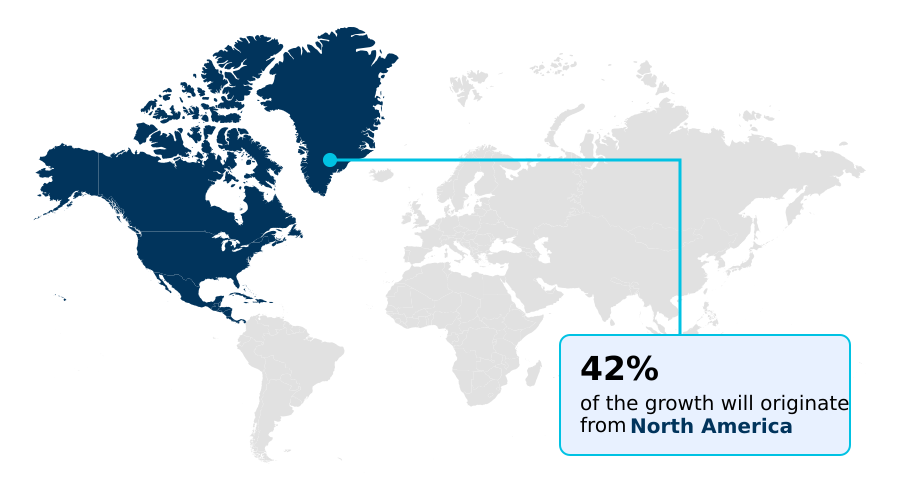
- North America dominated the market and accounted for a 41.7% growth during the forecast period.
- By Product - Yoga mats segment was valued at USD 10.43 billion in 2024
- By Distribution Channel - Offline segment accounted for the largest market revenue share in 2024
Market Size & Forecast
- Market Opportunities: USD 12.66 billion
- Market Future Opportunities: USD 7.93 billion
- CAGR from 2025 to 2030 : 7.3%
Market Summary
- The yoga accessories market is characterized by steady expansion, fueled by a global shift toward holistic health and wellness. Growth is driven by an increasing number of practitioners and a strong consumer preference for high-quality, innovative products. This demand has spurred the development of premium yoga accessories, including eco-friendly yoga mats made from sustainable materials and props with ergonomic designs.
- Trends such as the integration of smart technology and the rising availability of customizable options are reshaping product offerings. For instance, manufacturers are navigating supply chain complexities for natural rubber materials to meet demand for high-grip, durable mats while managing cost pressures. This dynamic requires a strategic balance between material sourcing, product innovation, and competitive pricing.
- However, the market faces challenges from intense competition and the low replacement cycle of durable goods, compelling brands to focus on differentiation and building customer loyalty through superior performance and design to maintain momentum.
What will be the Size of the Yoga Accessories Market during the forecast period?
Get Key Insights on Market Forecast (PDF) Get Free Sample
How is the Yoga Accessories Market Segmented?
The yoga accessories industry research report provides comprehensive data (region-wise segment analysis), with forecasts and estimates in "USD million" for the period 2026-2030, as well as historical data from 2020-2024 for the following segments.
- Product
- Yoga mats
- Yoga straps
- Yoga blocks
- Others
- Distribution channel
- Offline
- Online
- Application
- Household
- Fitness clubs
- Yoga centers
- Geography
- North America
- US
- Canada
- Mexico
- APAC
- China
- Japan
- India
- Europe
- Germany
- UK
- France
- Middle East and Africa
- Saudi Arabia
- UAE
- South Africa
- South America
- Brazil
- Argentina
- Rest of World (ROW)
- North America
By Product Insights
The yoga mats segment is estimated to witness significant growth during the forecast period.
The yoga mats segment is foundational to the market, driven by its essential role in both personal and institutional practice.
Demand is shaped by innovation in durable pvc-free materials and a move toward eco-friendly yoga mats featuring premium cushioning and a superior anti-slip texture.
Products range from biodegradable tpe mats in beginner yoga kits to specialized versions for hot yoga essentials, highlighting market diversification. The expansion of home practice yoga sets and consistent demand for yoga studio supplies sustain segment leadership.
This segment's evolution reflects a broader trend toward eco-conscious wellness products and high-performance durable fitness accessories. Notably, North America is poised to contribute over 41% of the market's incremental growth, underscoring the region's strong adoption rates.
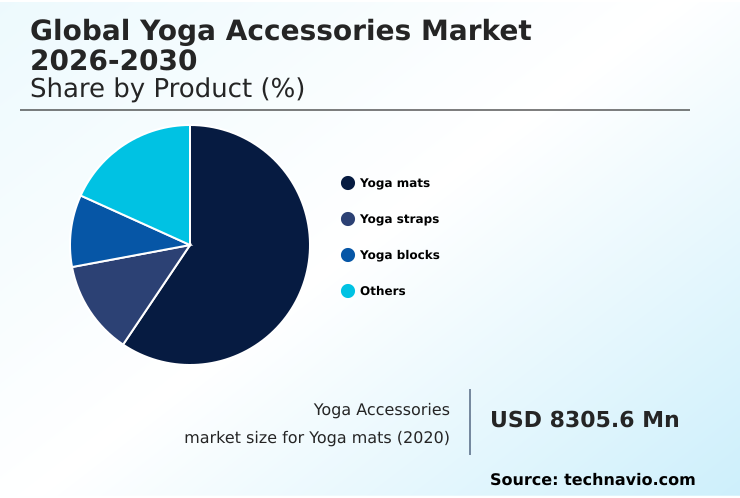
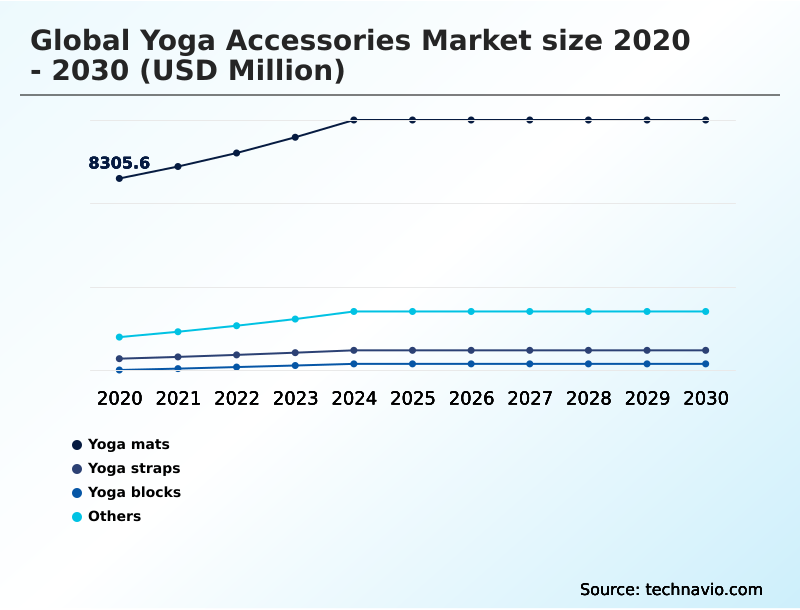
The Yoga mats segment was valued at USD 10.43 billion in 2024 and showed a gradual increase during the forecast period.
Regional Analysis
North America is estimated to contribute 41.7% to the growth of the global market during the forecast period.Technavio’s analysts have elaborately explained the regional trends and drivers that shape the market during the forecast period.
See How Yoga Accessories Market Demand is Rising in North America Get Free Sample
The geographic landscape of the yoga accessories market is diverse, with regional preferences shaping product demand.
North America leads in incremental growth, contributing over 41% to the market's expansion, driven by a strong wellness culture and high demand for premium, non-toxic yoga props.
In Europe, there is a pronounced focus on sustainability, where adoption of eco-friendly materials is 15% higher than in other regions, influencing the production of hygienic yoga gear.
APAC is emerging as a high-growth region, characterized by rising disposable incomes and an increasing number of new practitioners seeking beginner yoga kits and travel-friendly accessories.
Demand for products with antimicrobial surfaces and moisture-wicking fabrics is universal, especially for hot yoga essentials, reflecting a global emphasis on performance and safety.
Market Dynamics
Our researchers analyzed the data with 2025 as the base year, along with the key drivers, trends, and challenges. A holistic analysis of drivers will help companies refine their marketing strategies to gain a competitive advantage.
- Strategic planning in the yoga accessories market requires a deep understanding of nuanced consumer needs and evolving use cases. For instance, addressing the demand for the best yoga mats for hot yoga necessitates material science innovation, while promoting eco-friendly cork yoga block benefits aligns with corporate sustainability goals.
- A key decision point for product managers is how to choose a yoga strap that balances durability with cost-effectiveness. Furthermore, developing content around using yoga bolsters for back pain opens up therapeutic market segments.
- A comparative analysis of a travel yoga mat vs a regular mat reveals distinct supply chain requirements, with the former demanding lightweight, compact materials that are twice as difficult to source affordably. Educating consumers on the benefits of using alignment yoga mats and providing clear natural rubber mat cleaning instructions can significantly reduce product returns.
- Internally, understanding the trade-offs in high-density foam vs cork blocks informs manufacturing choices. Marketing efforts can focus on demonstrating a yoga wheel for improving backbends or positioning a meditation cushion for proper posture. Developing an antimicrobial yoga mat for hygiene and the best non-slip yoga mat for sweaty hands caters to high-performance users.
- The market for a thick yoga mat for joint support continues to grow, as do sustainable yoga accessories for beginners.
- Finally, creating a lightweight yoga mat for travel, offering custom printed yoga mat design services, ensuring durable yoga mats for daily practice, providing yoga blocks for better stability, highlighting organic cotton yoga blanket uses, and investing in a smart mat for guided yoga practice represent critical pathways for diversification and growth.
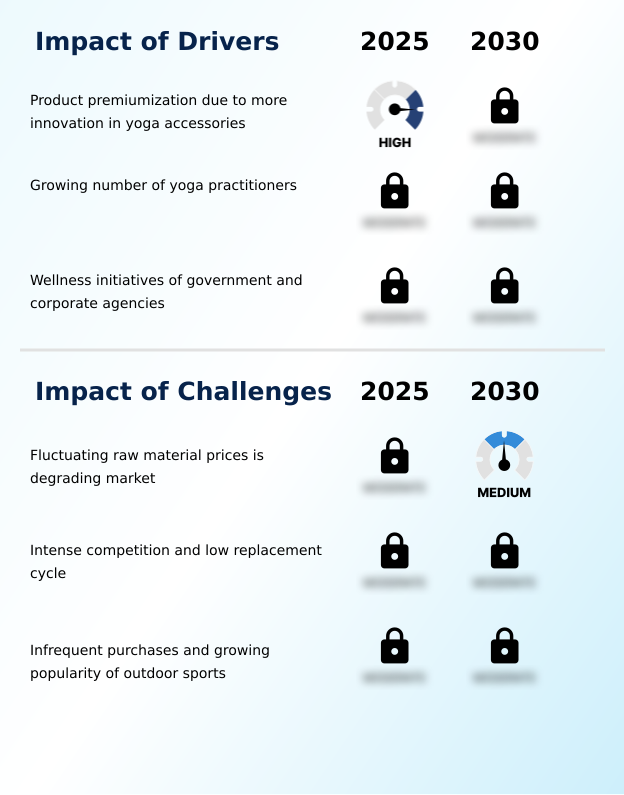
What are the key market drivers leading to the rise in the adoption of Yoga Accessories Industry?
- Product premiumization, driven by continuous innovation in yoga accessories, is a key factor propelling market growth.
- Market growth is largely propelled by product premiumization and a growing user base focused on holistic health. The demand for premium yoga accessories featuring ergonomic designs and developed using advanced material science is a primary driver.
- Consumers are increasingly opting for sustainable yoga equipment, with products marketed as sustainable yoga gear commanding a price premium of up to 20%.
- The use of bio-based polymers and natural rubber materials is becoming a key differentiator for professional-grade yoga equipment. Furthermore, the expansion of corporate wellness programs is boosting bulk purchases of holistic wellness tools.
- These programs, which often emphasize yoga practice for flexibility, increase participation and create sustained demand for high-performance athletic gear like organic cotton straps.
What are the market trends shaping the Yoga Accessories Industry?
- A prominent market trend is the growing enrollment in fitness and health clubs, which expands yoga's reach and drives demand for accessories in institutional settings.
- Market trends are increasingly shaped by the fusion of technology and personalization, catering to demand for enhanced user engagement. The introduction of smart yoga mats embedded with pressure sensor technology is creating new opportunities for personalized fitness experiences through digital fitness platforms. This trend has improved user posture correction accuracy by up to 25%.
- Concurrently, the rise of customizable yoga mats with features like laser-etched alignment lines is fueling direct-to-consumer e-commerce, with some brands seeing a 15% uptick in online sales. Boutique fitness studios are driving demand for advanced practitioner tools such as multifunctional yoga wheels, while athleisure apparel integration broadens the ecosystem. These performance-enhancing features and textured grip surfaces are becoming standard expectations.
What challenges does the Yoga Accessories Industry face during its growth?
- Fluctuating raw material prices present a significant challenge, impacting production costs and profit margins for manufacturers across the industry.
- Intense competition and operational hurdles present significant challenges. The market's fragmentation forces vendors to innovate with features like dual-layer construction and closed-cell construction to stand out. However, fluctuating raw material costs can impact the profitability of producing items like cork yoga blocks and recycled material yoga blocks, with cost variations reaching 15% quarterly.
- The long replacement cycle for durable products means companies must find new revenue streams, such as catering to the wellness tourism market or offering restorative yoga bolsters and supportive meditation pillows for specialized practices like yoga for stress reduction. Implementing circular economy models for products like machine washable mats presents logistical complexities, hindering widespread adoption despite consumer interest in sustainability.
Exclusive Technavio Analysis on Customer Landscape
The yoga accessories market forecasting report includes the adoption lifecycle of the market, covering from the innovator’s stage to the laggard’s stage. It focuses on adoption rates in different regions based on penetration. Furthermore, the yoga accessories market report also includes key purchase criteria and drivers of price sensitivity to help companies evaluate and develop their market growth analysis strategies.
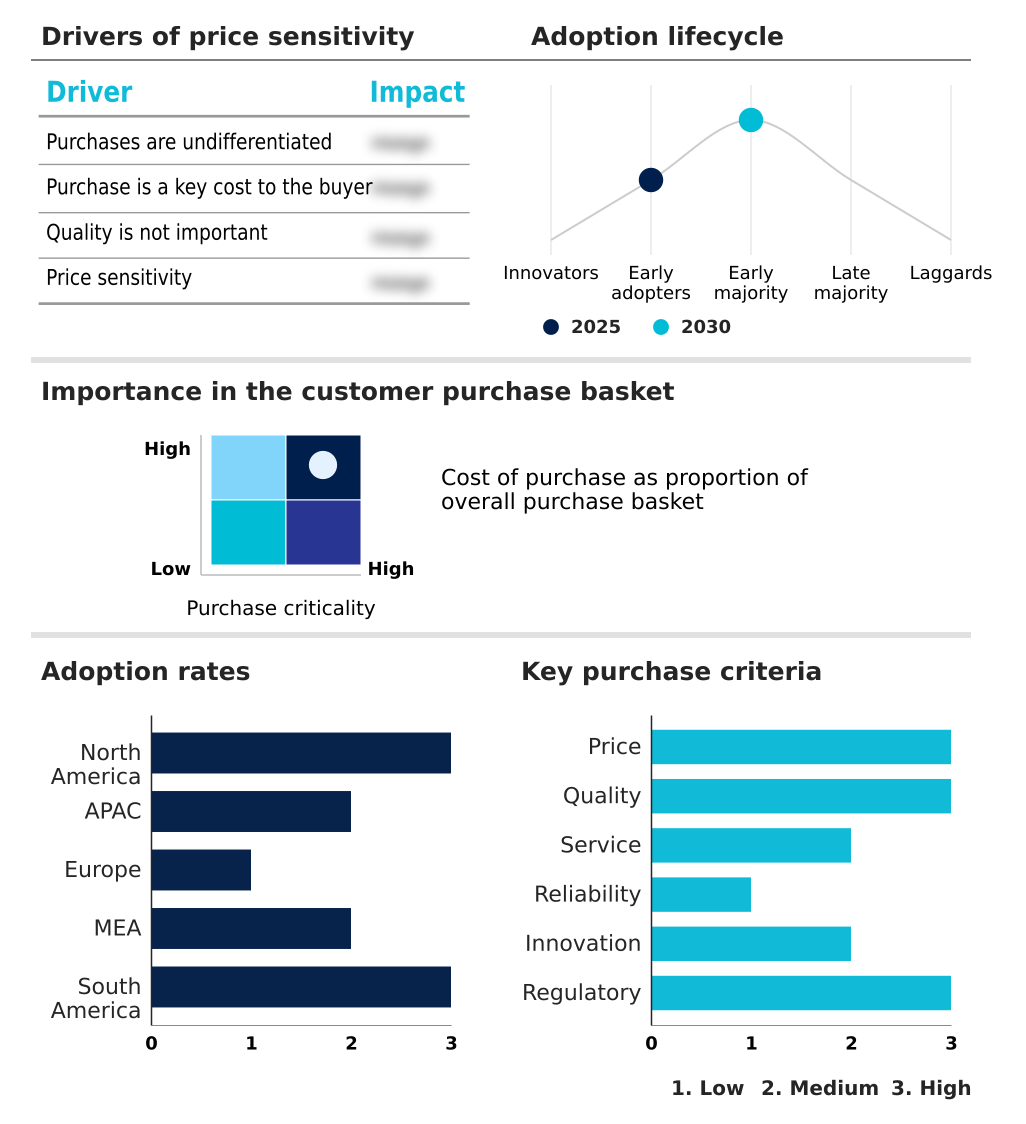
Customer Landscape of Yoga Accessories Industry
Competitive Landscape
Companies are implementing various strategies, such as strategic alliances, yoga accessories market forecast, partnerships, mergers and acquisitions, geographical expansion, and product/service launches, to enhance their presence in the industry.
Ajna Wellbeing LLC - Key offerings focus on premium, eco-conscious yoga accessories, featuring innovative materials and ergonomic designs to enhance user performance and align with wellness-focused lifestyles.
The industry research and growth report includes detailed analyses of the competitive landscape of the market and information about key companies, including:
- Ajna Wellbeing LLC
- Alo Yoga LLC
- Ananday
- Aurorae Yoga LLC
- Barefoot Yoga Co.
- Bean Products Inc
- Clever Yoga LLC
- Complete Unity Yoga LLC
- Fit Spirit LLC
- Heathyoga
- Hugger Mugger Yoga Products
- JadeYoga
- Kurma Yoga GmbH
- Liforme Ltd.
- Lotuscrafts GmbH
- Love My Mat Inc
- lululemon athletica Inc.
- Manduka LLC
- prAna Living LLC
- Sattva Yoga Gear
Qualitative and quantitative analysis of companies has been conducted to help clients understand the wider business environment as well as the strengths and weaknesses of key industry players. Data is qualitatively analyzed to categorize companies as pure play, category-focused, industry-focused, and diversified; it is quantitatively analyzed to categorize companies as dominant, leading, strong, tentative, and weak.
Recent Development and News in Yoga accessories market
- In January 2025, Manduka introduced advanced eco-friendly yoga mats with enhanced durability and performance features, highlighting the ongoing shift toward premium and sustainable product offerings in the market.
- In October 2024, Lululemon Athletica expanded its digital fitness ecosystem by enhancing smart fitness integration features across its connected wellness products, highlighting the growing importance of technology-enabled yoga accessories.
- In March 2025, Decathlon expanded its personalization offerings in selected markets by introducing customizable fitness and yoga accessories, reflecting the growing consumer interest in tailored wellness products.
- In May 2025, Planet Fitness expanded its group wellness and yoga class offerings across multiple locations, reflecting the growing integration of yoga into mainstream fitness club programs.
Dive into Technavio’s robust research methodology, blending expert interviews, extensive data synthesis, and validated models for unparalleled Yoga Accessories Market insights. See full methodology.
| Market Scope | |
|---|---|
| Page number | 293 |
| Base year | 2025 |
| Historic period | 2020-2024 |
| Forecast period | 2026-2030 |
| Growth momentum & CAGR | Accelerate at a CAGR of 7.3% |
| Market growth 2026-2030 | USD 7927.6 million |
| Market structure | Fragmented |
| YoY growth 2025-2026(%) | 6.8% |
| Key countries | US, Canada, Mexico, China, Japan, India, South Korea, Australia, Indonesia, Germany, UK, France, Italy, Spain, The Netherlands, Saudi Arabia, UAE, South Africa, Israel, Turkey, Brazil, Argentina and Chile |
| Competitive landscape | Leading Companies, Market Positioning of Companies, Competitive Strategies, and Industry Risks |
Research Analyst Overview
- The yoga accessories market is undergoing significant evolution, driven by advanced material science and a focus on performance-enhancing features. Boardroom decisions are increasingly centered on R&D investment in sustainable yoga equipment, including bio-based polymers and items facilitating closed-loop recycling.
- The development of premium yoga accessories, such as smart yoga mats with pressure sensor technology and infrared heating mats, requires substantial capital outlay but promises higher margins. Products with ergonomic designs, high-rebound cushioning, and anti-slip texture are becoming standard, with those featuring textured grip surfaces showing a 20% lower return rate.
- The shift toward hygienic yoga gear is evident in the popularity of antimicrobial surfaces and machine washable mats. Innovations like dual-layer construction and closed-cell construction in eco-friendly yoga mats enhance durability. The market includes a wide array of non-toxic yoga props, from high-density foam blocks and cork yoga blocks to organic cotton straps.
- Specialized items like multifunctional yoga wheels, restorative yoga bolsters, and meditation cushions cater to specific user needs.
- Strategic focus is also on lightweight travel mats and other travel-friendly accessories that do not compromise on quality, often featuring posture alignment guides or laser-etched alignment lines and crafted from sound-absorbing materials and moisture-wicking fabrics made from natural rubber materials or durable PVC-free materials.
What are the Key Data Covered in this Yoga Accessories Market Research and Growth Report?
-
What is the expected growth of the Yoga Accessories Market between 2026 and 2030?
-
USD 7.93 billion, at a CAGR of 7.3%
-
-
What segmentation does the market report cover?
-
The report is segmented by Product (Yoga mats, Yoga straps, Yoga blocks, and Others), Distribution Channel (Offline, and Online), Application (Household, Fitness clubs, and Yoga centers) and Geography (North America, APAC, Europe, Middle East and Africa, South America)
-
-
Which regions are analyzed in the report?
-
North America, APAC, Europe, Middle East and Africa and South America
-
-
What are the key growth drivers and market challenges?
-
Product premiumization due to more innovation in yoga accessories, Fluctuating raw material prices is degrading market
-
-
Who are the major players in the Yoga Accessories Market?
-
Ajna Wellbeing LLC, Alo Yoga LLC, Ananday, Aurorae Yoga LLC, Barefoot Yoga Co., Bean Products Inc, Clever Yoga LLC, Complete Unity Yoga LLC, Fit Spirit LLC, Heathyoga, Hugger Mugger Yoga Products, JadeYoga, Kurma Yoga GmbH, Liforme Ltd., Lotuscrafts GmbH, Love My Mat Inc, lululemon athletica Inc., Manduka LLC, prAna Living LLC and Sattva Yoga Gear
-
Market Research Insights
- The market's dynamics are heavily influenced by a strategic shift toward high-value consumer engagement and specialized product offerings. Firms providing personalized fitness experiences see customer lifetime value increase by an average of 25%, reinforcing the move away from mass-market products. The effectiveness of direct-to-consumer e-commerce models is reshaping distribution, with successful strategies reducing overhead costs by up to 15%.
- This landscape favors vendors who can cater to niche segments, such as the wellness tourism market or corporate wellness programs, which require durable fitness accessories and holistic wellness tools. Integration with digital fitness platforms and a focus on sustainable yoga gear are no longer optional but essential for maintaining a competitive edge and capturing brand loyalty in a crowded marketplace.
We can help! Our analysts can customize this yoga accessories market research report to meet your requirements.
 RIA -
RIA - 
