



Addictions Therapeutics Market Size 2024-2028
The addictions therapeutics market size is forecast to increase by USD 10.8 billion at a CAGR of 7.83% between 2023 and 2028.
- The market is experiencing significant growth due to the high consumption of tobacco, nicotine, alcohol, and opioid products. The increasing prevalence of substance use disorders necessitates effective treatment options. One such treatment is the use of medications like Acamprosate for alcohol use disorders and Buprenorphine for opioid use disorders. The market is also witnessing an increase in research and development of novel drugs to address unmet medical needs. Hospital pharmacies, medical stores, and treatment centers are key distribution channels for these therapeutics. The presence of generics further enhances affordability and accessibility, driving market growth. This market analysis report provides a comprehensive study of these trends and the challenges faced by market participants.
What will be the Size of the Market During the Forecast Period?
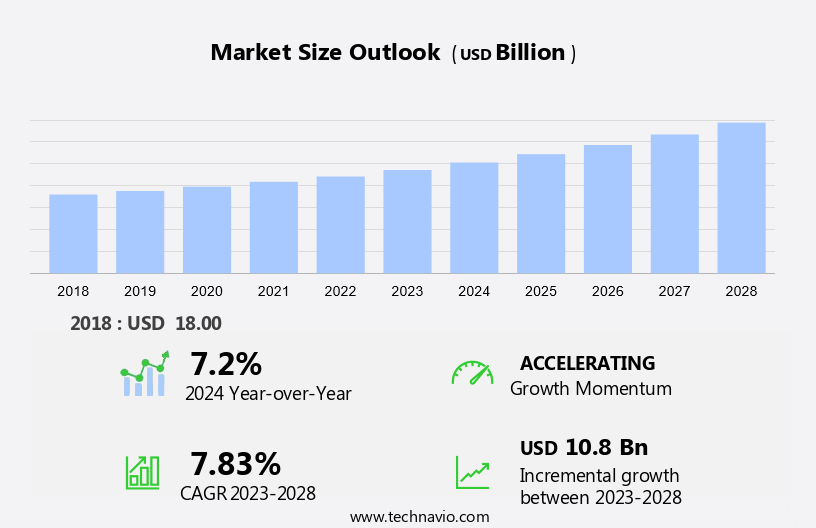
- The market encompasses a range of treatments aimed at addressing Substance Abuse, including Substance Use Disorder (SUD), Tobacco Addiction, Alcohol Addiction, and Drug Addiction. This market is witnessing significant growth due to the increasing awareness of the public health implications of addiction and the availability of advanced therapeutic interventions. Substance addiction treatment is a critical component of public health initiatives. Traditional methods such as Nalaxone and Naltrexone, which work by blocking the opioid receptors in the brain, continue to be effective in managing Opioid Use Disorder. Similarly, Bupropion and Varenicline, which help manage Nicotine Dependence by altering the brain's reward system, have proven successful in Tobacco Addiction treatment.
Moreover, older treatments like Disulfiram, which creates an aversive reaction when the patient consumes alcohol, remain relevant. Methadone, a long-acting opioid agonist, is another essential intervention for Opioid Use Disorder. These treatments, while effective, often require regular in-person visits, which can be a barrier for many individuals seeking help. Enter Digital Technologies and Telecommuting. The integration of technology in addiction treatment has led to the development of innovative solutions. Digital platforms enable Cognitive Behavioral Therapy (CBT), an evidence-based approach to managing addiction, to be delivered remotely. This flexibility is crucial as it allows individuals to access treatment from the comfort of their homes, reducing the stigma associated with seeking help and increasing treatment adherence.
Furthermore, digital technologies offer personalized treatment plans based on individual needs. For instance, mobile applications can help track substance use, provide real-time feedback, and offer motivational messages. Wearable devices can monitor vital signs and alert healthcare providers if there are signs of relapse. These interventions can significantly improve treatment outcomes and reduce the risk of Tobacco-related deaths and other health complications associated with addiction. In conclusion, the market is evolving, with a focus on innovative approaches to substance abuse treatment. Traditional treatments continue to play a crucial role, but the integration of digital technologies and telecommuting is revolutionizing the way addiction is managed.
As we move forward, it is essential to prioritize public health initiatives and invest in research and development to create effective, accessible, and personalized addiction treatment solutions.
How is this market segmented and which is the largest segment?
The market research report provides comprehensive data (region-wise segment analysis), with forecasts and estimates in "USD billion" for the period 2024-2028, as well as historical data from 2018-2022 for the following segments.
- Distribution Channel
- Hospital pharmacy
- Retail pharmacy
- Others
- Type
- Alcohol addiction therapeutics
- Tobacco addiction therapeutics
- Drug addiction therapeutics
- Geography
- North America
- Canada
- US
- Europe
- Germany
- UK
- France
- Asia
- Rest of World (ROW)
- North America
By Distribution Channel Insights
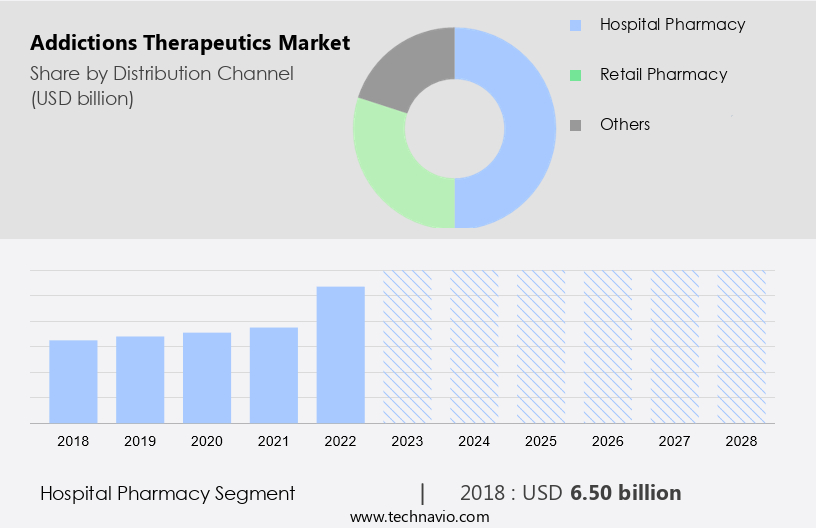
- The hospital pharmacy segment is estimated to witness significant growth during the forecast period.
Addictions therapeutics are essential medications used in the treatment of various addictions, and hospital pharmacies play a pivotal role in their distribution. Hospital pharmacies hold a substantial market share due to their extensive facilities and advanced infrastructure to cater to diverse patient requirements. Hospitals, particularly hospital groups, multi-specialty, or super-specialty hospitals, significantly contribute to the sales in this market. These healthcare institutions benefit from their extensive inpatient and outpatient services, which generate substantial revenue. The demand for addiction therapeutics in hospital pharmacies is increasing due to favorable discounts, improving reimbursement, and a growing number of individuals seeking treatment for drug addiction.
Some common medications used in the market include Varenicline, which is primarily used for treating nicotine addiction. Key players in the market include treatment centers, both inpatient and outpatient, and hospital pharmacies. These treatment centers provide comprehensive care for individuals struggling with various addictions, while hospital pharmacies offer convenient access to essential medications.
Get a glance at the market report of share of various segments Request Free Sample
The Hospital pharmacy segment was valued at USD 6.50 billion in 2018 and showed a gradual increase during the forecast period.
Regional Analysis
- North America is estimated to contribute 46% to the growth of the global market during the forecast period.
Technavio's analysts have elaborately explained the regional trends and drivers that shape the market during the forecast period.
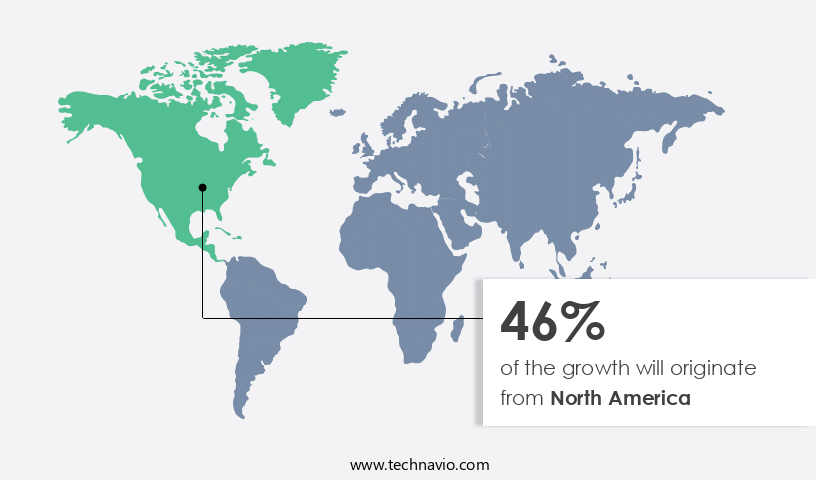
For more insights on the market share of various regions Request Free Sample
In North America, the market holds a significant share due to the high prevalence of substance use disorders, particularly in the United States and Canada. The primary causes of addiction in this region include the excessive consumption of alcohol, tobacco, and opioids. According to studies, adults with mental health issues, disabilities, and substance use disorders are more likely to develop addictions, especially to smoking. Alcohol use disorder arises from the misuse or overconsumption of alcohol, leading to dependency. Prescription drugs, such as opioids, are also contributing factors to the market's growth due to their addictive nature. Both inpatient and outpatient treatment centers, including residential facilities, offer medical care for individuals dealing with addiction.
These centers provide various therapeutic approaches, including prescription drugs and smoking cessation therapy, to help individuals overcome their addictions. The market in North America is expected to continue its growth due to the increasing awareness of substance abuse and the availability of advanced treatment options.
Market Dynamics
Our researchers analyzed the data with 2023 as the base year, along with the key drivers, trends, and challenges. A holistic analysis of drivers will help companies refine their marketing strategies to gain a competitive advantage.
What are the key market drivers leading to the rise in adoption of Addictions Therapeutics Market?
High consumption of alcohol, tobacco, and opioid products is the key driver of the market.
- The market encompasses various treatments for substance use disorders, including alcohol, tobacco, and opioid addiction. Opioid addiction, characterized by the misuse and abuse of prescription pain medications, has become a significant concern due to its increasing prevalence. According to the Organisation for Economic Co-operation and Development (OECD), opioid prescription rates have risen substantially worldwide, with high usage observed in the US and European countries. Naloxone and Naltrexone are among the therapeutic options used for opioid addiction treatment. Tobacco addiction, another major contributor to the market, results in numerous tobacco-related deaths annually. Nicotine replacement products, Bupropion, and Varenicline are commonly used for tobacco cessation therapy.
Alcohol addiction, another prevalent issue, can be treated through various methods such as Cognitive Behavioural Therapy (CBT), Inpatient Treatment Centers, Residential Treatment Centers, and Outpatient Treatment Centers. Methadone, Acamprosate, and Buprenorphine are other therapeutic options for substance addiction treatment. Digital therapeutics, including telecommuting and digital technologies, have emerged as a promising treatment modality for addiction. Substance addiction treatment is a critical aspect of public health, with various treatment types available, including prescription drugs and inpatient, residential, and outpatient therapy. Hospital pharmacies and medical stores serve as essential distribution channels for addiction therapeutics.
What are the market trends shaping the Addictions Therapeutics Market?
Increasing R and D of novel drugs is the upcoming trend in the market.
- The market is experiencing significant growth due to the increasing prevalence of substance use disorders, including alcohol, tobacco, and opioid addiction. Opiant Pharmaceuticals is one company leading the way in innovation, developing nasal Naltrexone, or OPNT002, as a novel therapeutic for alcohol use disorders. This treatment offers advantages over current options by providing rapid and strong increases in plasma levels and effectively blocking opioid receptors. Another challenge in substance use disorders is the high rate of craving and decreased cognitive functioning. Digital therapeutics, such as cognitive behavioral therapy and telecommuting, are also gaining popularity as effective treatment types for addiction.
Inpatient, outpatient, and residential treatment centers, hospital pharmacies, and medical stores continue to be key channels for the distribution of prescription drugs used in addiction treatment, including Buprenorphine, Methadone, Varenicline, and Nicotine Replacement Products. Acamprosate is another promising therapeutic for alcohol use disorder, while Disulfiram is commonly used for alcohol and nicotine addiction treatment. The market for addiction treatment is diverse, encompassing various types of treatment centers and digital technologies, and is a critical component of public health initiatives aimed at reducing tobacco-related deaths and addressing substance abuse.
What challenges does the Addictions Therapeutics Market face during the growth?
The presence of generics is a key challenge affecting market growth.
- The market encompasses various treatments for Substance Addiction, including Alcohol addiction, Drug addiction, and Tobacco addiction. Naloxone, Naltrexone, Buprenorphine, and Methadone are among the prescription drugs utilized in the treatment of Substance Use Disorder. Additionally, Nicotine Replacement Products are popular in Tobacco Addiction Treatment. Digital Therapeutics, such as cognitive behavioral therapy, are also gaining traction in the market. The presence of generic drugs significantly influences the market. With the increase in ANDA approvals, more generic drug manufacturers have entered the market, leading to increased competition. The competition among these manufacturers is primarily based on the lower prices of generic drugs.
According to the US FDA, the presence of a single generic manufacturer reduces the generic average manufacturer price (AMP) by 39% compared to the brand AMP before generic competition. With two competitors, the generic prices are 54% lower than the prices of brand drugs before generic competition. Treatment Centers, including Inpatient Treatment Centers, Residential Treatment Centers, and Outpatient Treatment Centers, are essential in providing medical care for individuals dealing with addiction. Hospital Pharmacies and Medical Stores also play a crucial role in the distribution of these therapeutics. Opioid Addiction Treatment and Nicotine Addiction Treatment are two significant segments of the market.
Acamprosate and Varenicline are other essential drugs used in addiction treatment. Public health initiatives and telecommuting have also influenced the market, allowing for more accessible outpatient therapy. The market for addiction treatment continues to evolve, with a focus on innovative digital technologies to enhance traditional treatment types. De-addiction remains a critical area of focus for healthcare providers and researchers.
Exclusive Customer Landscape
The market forecasting report includes the adoption lifecycle of the market, covering from the innovator's stage to the laggard's stage. It focuses on adoption rates in different regions based on penetration. Furthermore, the market report also includes key purchase criteria and drivers of price sensitivity to help companies evaluate and develop their market growth analysis strategies.
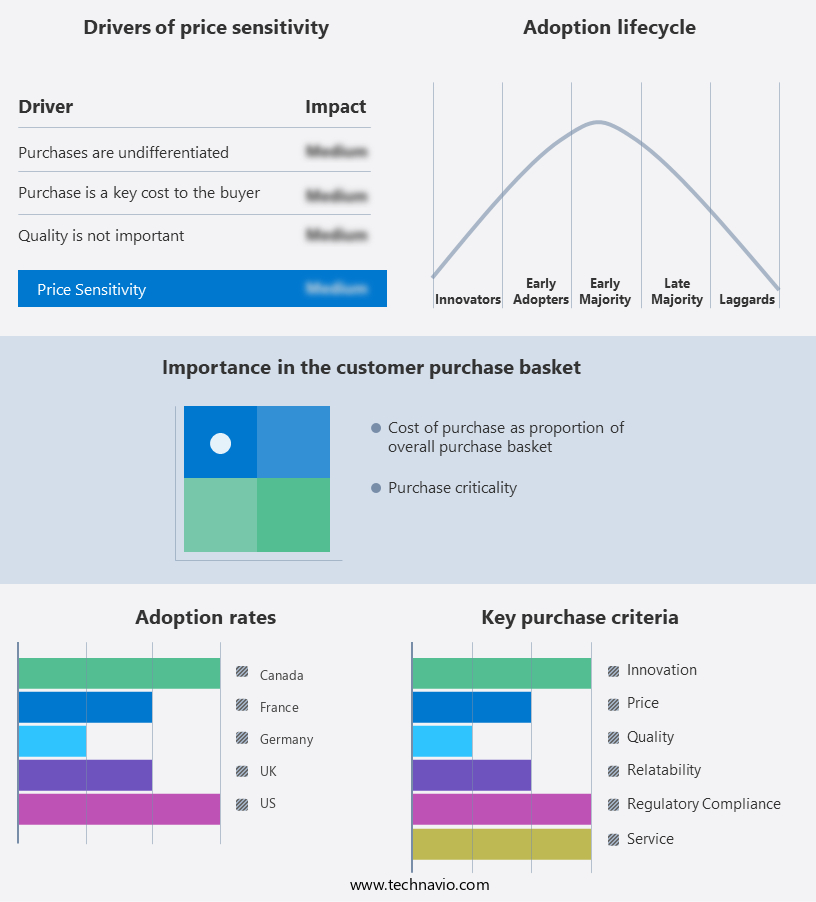
Customer Landscape
Key Companies & Market Insights
Companies are implementing various strategies, such as strategic alliances, market forecast , partnerships, mergers and acquisitions, geographical expansion, and product/service launches, to enhance their presence in the market.
Alkermes Public Ltd. Co. - The company provides a monthly injectable addiction therapeutic solution called Vivitrol. This prescription medication is an extended-release form of naltrexone, an opioid receptor antagonist, which helps individuals overcome opioid and alcohol addictions.
The market research and growth report includes detailed analyses of the competitive landscape of the market and information about key companies, including:
- Alkermes Public Ltd. Co.
- Amneal Pharmaceuticals Inc.
- Aphios Corp.
- Braeburn Inc.
- Emergent BioSolutions Inc.
- GlaxoSmithKline Plc
- Glenmark Pharmaceuticals Ltd.
- Hikma Pharmaceuticals Plc
- Indivior Plc
- Johnson and Johnson Services Inc.
- kaleo Inc.
- Mallinckrodt Plc
- Orexo AB
- Otsuka Holdings Co. Ltd.
- Pfizer Inc.
- Purdue Pharma LP
- Sun Pharmaceutical Industries Ltd.
- Teva Pharmaceutical Industries Ltd.
- Titan Pharmaceuticals Inc.
- Viatris Inc.
Qualitative and quantitative analysis of companies has been conducted to help clients understand the wider business environment as well as the strengths and weaknesses of key market players. Data is qualitatively analyzed to categorize companies as pure play, category-focused, industry-focused, and diversified; it is quantitatively analyzed to categorize companies as dominant, leading, strong, tentative, and weak.
Research Analyst Overview
In the realm of Addiction Therapeutics, various treatments exist to address Substance Use Disorders, including Alcohol, Tobacco, and Drug Addiction. Nalaxone and Naltrexone are essential medications used in the treatment of Opioid Addiction. Bupropion and Varenicline are effective in Tobacco/Nicotine Addiction Treatment. Disulfiram is another important medication for Alcohol Addiction. Digital Therapeutics, such as telecommuting and digital technologies, have emerged as effective treatment modalities. Cognitive Behavioural Therapy, a type of Outpatient Therapy, is widely used in Substance Abuse Treatment. Inpatient Treatment Centers, Residential Treatment Centers, Hospital Pharmacies, and Medical Stores offer Prescription Drugs like Acamprosate, Buprenorphine, and Methadone for De-addiction.
Public Health emphasizes the importance of timely and accessible Medical Care for Addiction Treatment. Smoking Cessation Therapy, a critical component of Tobacco-related Deaths prevention, includes various Treatment Types like Nicotine Replacement Products. Substance Use Disorder treatment encompasses a range of interventions, from Outpatient Therapy to Inpatient Treatment Centers, catering to individual needs. Treatment Centers provide essential services for individuals battling addiction, offering hope and a path towards recovery. Treatment Types include Inpatient Treatment Centers, Residential Treatment Centers, and Outpatient Treatment Centers. Prescription Drugs, such as Naltrexone, Bupropion, and Disulfiram, play a crucial role in the therapeutic process. Digital Technologies, like telecommuting, offer convenience and flexibility, making addiction treatment more accessible.
Cognitive Behavioural Therapy, a type of Outpatient Therapy, is an effective intervention for Substance Abuse. Substance Addiction, including Alcohol, Tobacco, and Drug Addiction, affects millions worldwide, necessitating a comprehensive and accessible approach to treatment.
|
Market Scope |
|
|
Report Coverage |
Details |
|
Page number |
173 |
|
Base year |
2023 |
|
Historic period |
2018-2022 |
|
Forecast period |
2024-2028 |
|
Growth momentum & CAGR |
Accelerate at a CAGR of 7.83% |
|
Market growth 2024-2028 |
USD 10.8 billion |
|
Market structure |
Fragmented |
|
YoY growth 2023-2024(%) |
7.2 |
|
Key countries |
US, Germany, UK, Canada, and France |
|
Competitive landscape |
Leading Companies, Market Positioning of Companies, Competitive Strategies, and Industry Risks |
What are the Key Data Covered in this Market Research and Growth Report?
- CAGR of the market during the forecast period
- Detailed information on factors that will drive the market growth and forecasting between 2024 and 2028
- Precise estimation of the size of the market and its contribution of the market in focus to the parent market
- Accurate predictions about upcoming market growth and trends and changes in consumer behaviour
- Growth of the market across North America, Europe, Asia, and Rest of World (ROW)
- Thorough analysis of the market's competitive landscape and detailed information about companies
- Comprehensive analysis of factors that will challenge the growth of market companies
We can help! Our analysts can customize this market research report to meet your requirements. Get in touch
 RIA -
RIA - 
