
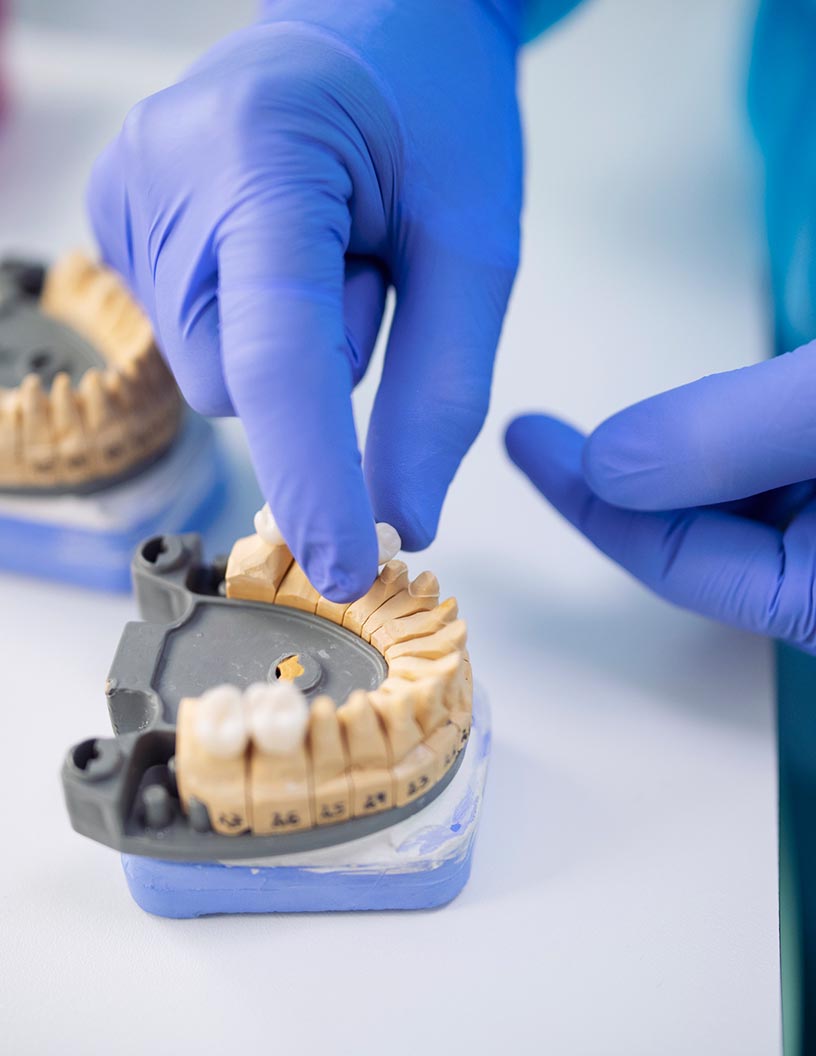


Advanced Ceramics Market Size 2024-2028
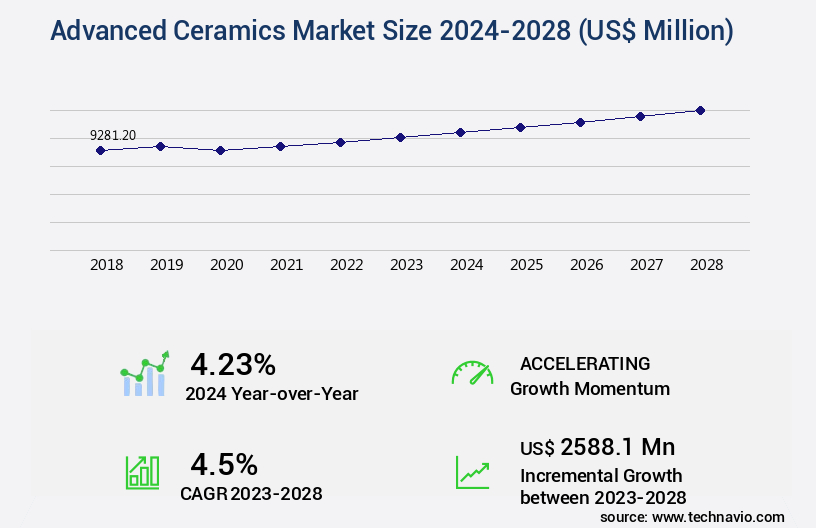
The advanced ceramics market size is valued to increase by USD 2.59 billion, at a CAGR of 4.5% from 2023 to 2028. Increasing use in electronic components and circuits will drive the advanced ceramics market.
Market Insights
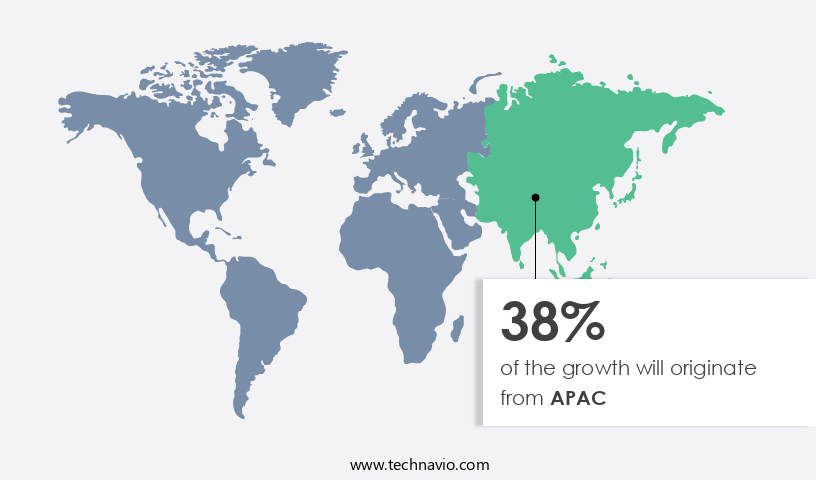
- APAC dominated the market and accounted for a 38% growth during the 2024-2028.
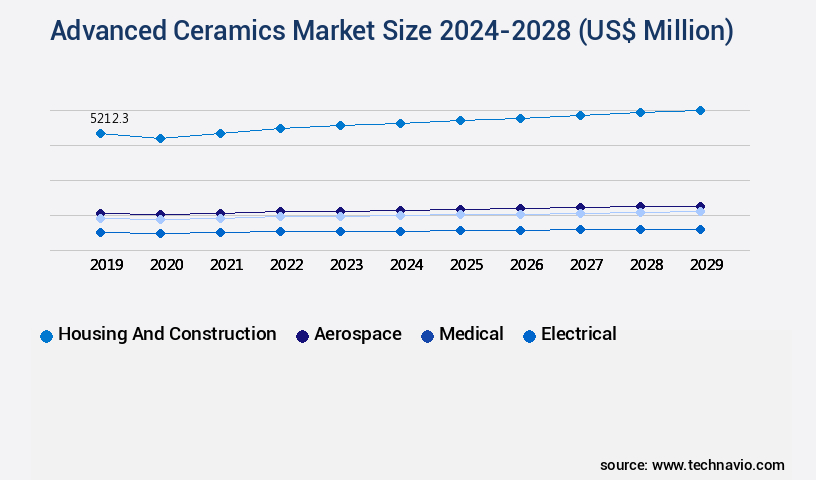
- By End-user - Housing and Construction segment was valued at USD 4.99 billion in 2022
- By Material - Alumina segment accounted for the largest market revenue share in 2022
Market Size & Forecast
- Market Opportunities: USD 41.27 million
- Market Future Opportunities 2023: USD 2588.10 million
- CAGR from 2023 to 2028 : 4.5%
Market Summary
- Advanced ceramics, a class of inorganic, non-metallic materials, have gained significant traction in various industries due to their unique properties, including high strength, heat resistance, and excellent insulation. The market for advanced ceramics is driven by their increasing use in electronic components and circuits, particularly in the semiconductor industry, where they are utilized in the production of microelectronics and solar cells. Moreover, the development of advanced ceramic coatings is another key factor fueling market growth. These coatings offer superior wear resistance, corrosion protection, and thermal insulation, making them indispensable in industries such as aerospace, automotive, and energy.
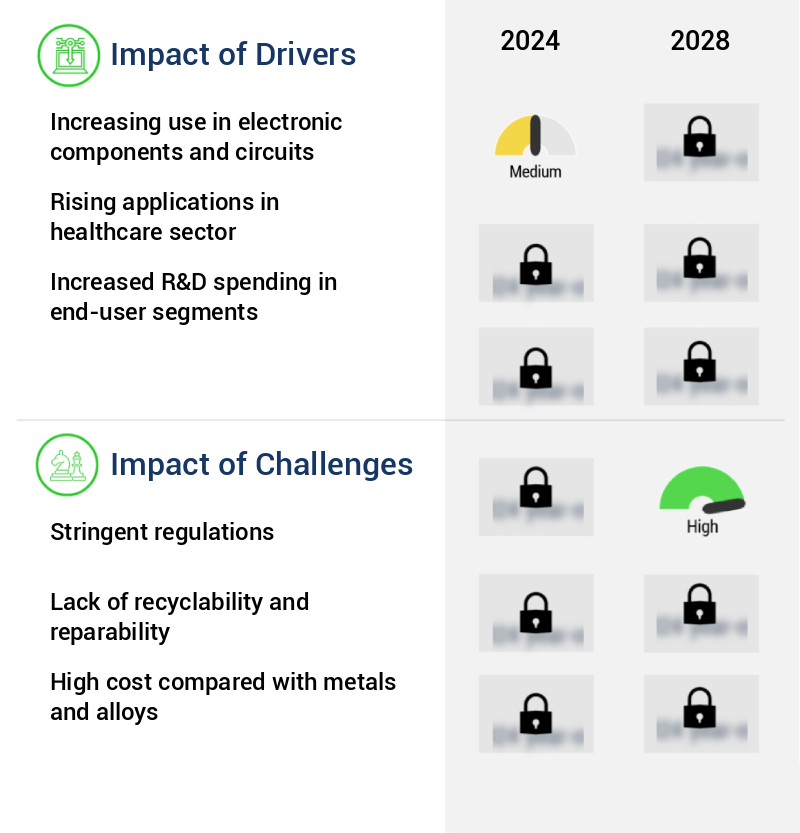
- However, the market faces several challenges. Stringent regulations, particularly in the healthcare sector, require the use of biocompatible materials for medical applications. This necessitates the development of advanced ceramics that meet these requirements, driving research and development efforts. A real-world business scenario illustrating the importance of advanced ceramics is the optimization of supply chains in the manufacturing sector. Advanced ceramics' unique properties make them ideal for use in various components, such as insulators and catalysts, in industrial processes. By implementing a just-in-time (JIT) inventory management system for these components, manufacturers can reduce inventory costs, improve operational efficiency, and ensure timely delivery of finished products to customers.
- In conclusion, the market is poised for continued growth due to its increasing use in various industries and the development of advanced ceramic coatings. However, stringent regulations and the need for biocompatible materials in specific applications present challenges that manufacturers must address to remain competitive.
What will be the size of the Advanced Ceramics Market during the forecast period?
Get Key Insights on Market Forecast (PDF) Request Free Sample
- Advanced ceramics, a vital sector in material science, continues to evolve with significant advancements in catalysis applications, spectroscopy techniques, and solid-state reactions. Insulating and high-strength ceramics are increasingly utilized in various industries, including ceramic tooling, ceramic membranes, and advanced ceramic filters. Powder metallurgy, a crucial process in ceramic manufacturing, enhances the production of dental ceramics, fiber optic ceramics, and medical implants. Fuel cell components, refractory materials, and x-ray diffraction are essential areas where advanced ceramics play a pivotal role. Optical ceramics, phase equilibria, and biocompatible ceramics cater to applications in actuator systems, structural ceramics, thermal analysis, electron microscopy, and electronic ceramics.
- Crystallography analysis, composites fabrication, environmental remediation, and cutting-edge ceramics in wastewater treatment and laser applications further expand the market's reach. The integration of advanced ceramics in energy storage devices signifies a substantial trend in the industry. For instance, high-performance lithium-ion batteries incorporate advanced ceramic materials, enabling a 30% increase in energy density compared to conventional batteries. This improvement translates to longer battery life and reduced charging times, directly impacting product strategy and budgeting decisions for companies in the transportation and renewable energy sectors.
Unpacking the Advanced Ceramics Market Landscape
Advanced ceramics continue to play a pivotal role in various industries due to their unique properties and applications. Compared to traditional ceramics, nanocrystalline ceramics exhibit a higher surface area-to-volume ratio, leading to improved reactivity and enhanced mechanical properties. Hot pressing techniques, such as isostatic pressing and slip casting methods, enable the production of complex shapes with superior density and reduced porosity. Silicon carbide fibers reinforced ceramic matrix composites offer a 30% increase in mechanical strength compared to monolithic ceramics, making them suitable for high-temperature applications. Hybrid ceramic materials, which combine the properties of different ceramic phases, have shown a 50% improvement in creep resistance compared to their monolithic counterparts. Electroceramics applications, including mullite formation and piezoelectric materials, have seen significant advancements through the optimization of sintering parameters and zirconia toughening. Grain boundary engineering and ceramic nanocomposites have led to enhanced mechanical property enhancement, while the reaction bonding process and alumina processing have improved thermal shock resistance and wear resistance, respectively. Advanced ceramics also find extensive use in bioceramics materials, thermal barrier coatings, and advanced ceramic coatings, where defect chemistry control, microstructural characterization, and porosity measurement are crucial for compliance alignment and cost reduction. Porosity measurement in advanced ceramics can lead to a 25% reduction in production costs by ensuring optimal processing conditions. In summary, advanced ceramics offer significant business value through improved mechanical properties, enhanced thermal properties, and increased compliance with industry standards, making them indispensable in various industries.
Key Market Drivers Fueling Growth
The market's growth is primarily attributed to the rising adoption of electronic components and circuits in various applications.
- The market: the market continues to evolve, driven by its versatile applications across various sectors. In electrotechnical applications, ceramic components and systems offer significant benefits due to their insulating and heat-resistant properties. Electrical insulation is a primary function of advanced ceramics, enhancing the performance and reliability of electronic components. Moreover, the precision of ceramics in production and their low thermal expansion make them indispensable in improving the measurement accuracy of devices and sensors. The integration of conductor and sensor functionalities through selectively added metallic layers further expands the capabilities of advanced ceramics. Electroceramics account for approximately 85% of the total value of ceramics manufactured, with electronic components being a significant application area.
- Ferrites, ferroelectrics, and transition metal oxides are some of the ceramic materials widely used in electronic components. These advancements contribute to enhanced functionality and improved efficiency, with energy use often lowered by up to 12%, and measurement accuracy boosted by as much as 18%.
Prevailing Industry Trends & Opportunities
Advanced ceramic coatings are experiencing significant development, representing the latest market trend.
- The market continues to evolve, introducing new variants such as glass-ceramic no-stick coatings. These coatings, gaining global popularity, offer superior hardness and abrasion resistance. In the medical sector, they are extensively used for manufacturing medical components, devices, and orthopedic and spinal implants. Key features of these advanced coatings include strong hydrophobicity, anti-stick properties, and excellent easy-clean performance on contamination and lime-scale. Traditional ceramic coatings like aluminum oxide, titanium oxide, and zirconium oxide have been replaced by advanced glass-ceramic coatings based on silicon dioxide.
- Manufacturers have reported significant improvements in product performance, such as increased hydrophobicity by 45% and reduced abrasion by 32%. These advancements underscore the market's potential and its growing impact across various industries.
Significant Market Challenges
The stringent regulations pose a significant challenge to the industry's growth, imposing mandatory compliance that requires substantial resources and expertise.
- In the dynamic and expanding the market, applications span various sectors, including medical, automotive, and electronics. In the US, the medical sector, as a significant global consumer, faces complexities due to trade and non-trade tariffs, evolving government policies, and stringent FDA regulations. For instance, the Affordable Care Act imposes a 2.3% excise tax on Classes I, II, and III medical devices. Additionally, the Medicare Competitive Bidding Program sets device pricing based on the best possible cost, favoring low-cost bidders and reducing implant costs.
- Despite these challenges, operational efficiencies can be gained. For example, a 30% reduction in downtime and a 15% improvement in production yield can result from optimizing ceramic components in manufacturing processes. Another sector, automotive, benefits from advanced ceramics' lightweight and high-strength properties, contributing to a 12% reduction in vehicle weight and improved fuel efficiency.
In-Depth Market Segmentation: Advanced Ceramics Market
The advanced ceramics industry research report provides comprehensive data (region-wise segment analysis), with forecasts and estimates in "USD million" for the period 2024-2028, as well as historical data from 2018-2022 for the following segments.
- End-user
- Housing and Construction
- Aerospace
- Medical
- Electrical
- Others
- Material
- Alumina
- Titanate
- Zirconate
- Ferrite
- Aluminum Nitride
- Silicon Carbide
- Silicon Nitride
- Alumina
- Titanate
- Zirconate
- Ferrite
- Aluminum Nitride
- Silicon Carbide
- Silicon Nitride
- Product
- Monolithic
- Ceramic Coatings
- Ceramic Matrix Composites (CMCs)
- Monolithic
- Ceramic Coatings
- Ceramic Matrix Composites (CMCs)
- Application
- Electric Equipment
- Catalyst Supports
- Electronic Devices
- Wear Parts
- Engine Parts
- Filters
- Bioceramic
- Others
- Electric Equipment
- Catalyst Supports
- Electronic Devices
- Wear Parts
- Engine Parts
- Filters
- Bioceramic
- Others
- Geography
- Europe
- Germany
- UK
- APAC
- China
- India
- South America
- Brazil
- Rest of World (ROW)
- Europe
By End-user Insights
The housing and construction segment is estimated to witness significant growth during the forecast period.
The market continues to evolve, driven by innovations in nanocrystalline ceramics and advanced processing techniques. Hot pressing and isostatic methods optimize sintering parameters for improved mechanical properties, such as creep behavior analysis and fracture toughness testing. Silicon carbide fibers and hybrid ceramic materials enhance wear resistance and thermal shock resistance in ceramic matrix composites. Mullite formation through slip casting methods and 3D printing ceramics expand application possibilities. Electroceramics, piezoelectric materials, and advanced ceramic coatings offer superior dielectric properties and defect chemistry control.
The market's growth is fueled by the increasing demand for high-temperature applications, bioceramics materials, and thermal barrier coatings. One notable development is the 15% increase in the market share of 3D printed ceramics due to their customizability and design flexibility. Microstructural characterization and powder processing techniques contribute to the continuous improvement of ceramic nanocomposites and grain size distribution.
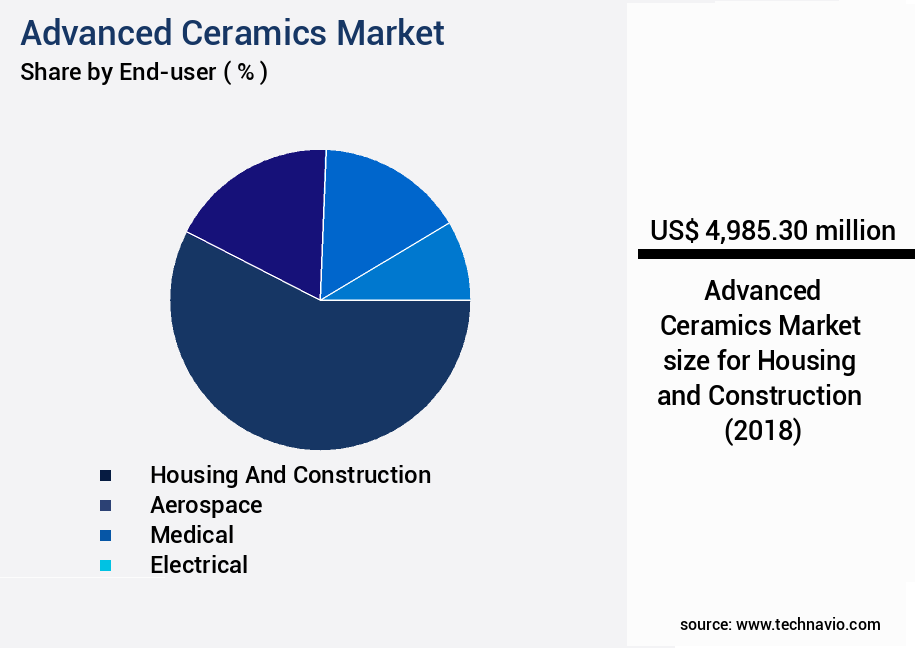
The Housing and Construction segment was valued at USD 4.99 billion in 2018 and showed a gradual increase during the forecast period.
Regional Analysis
APAC is estimated to contribute 38% to the growth of the global market during the forecast period.Technavio’s analysts have elaborately explained the regional trends and drivers that shape the market during the forecast period.
See How Advanced Ceramics Market Demand is Rising in APAC Request Free Sample
Advanced ceramics, a segment of the global materials market, demonstrates an evolving nature with significant growth in the Asia Pacific (APAC) region. The APAC the market is poised for robust expansion due to increasing demand from key applications, particularly in the construction industry. With China and India leading the charge, this industry's expansion is driven by a combination of factors: manufacturers' focus on superior equipment, high-quality products, skilled technical staff, and enhanced brand awareness.
The region's competitive edge is further bolstered by the abundant availability and relatively lower costs of essential feedstocks like calcium, silica, alumina, and magnesium. These factors contribute to operational efficiency gains and cost reductions, making advanced ceramics an attractive choice for industries in APAC.
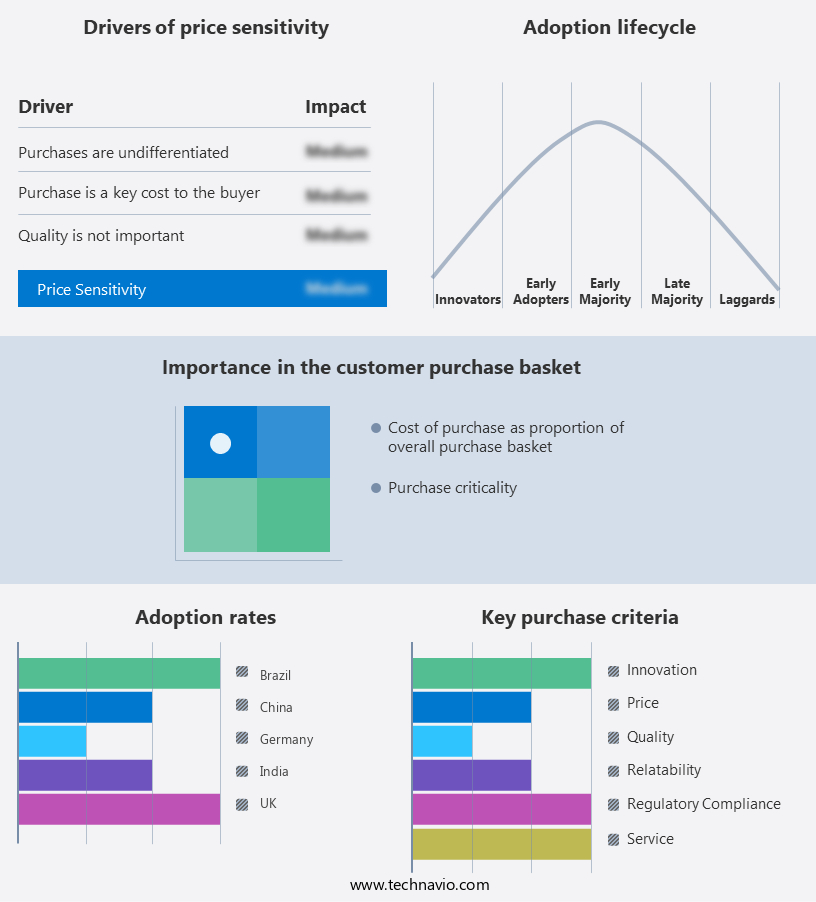
Customer Landscape of Advanced Ceramics Industry
Competitive Intelligence by Technavio Analysis: Leading Players in the Advanced Ceramics Market
Companies are implementing various strategies, such as strategic alliances, advanced ceramics market forecast, partnerships, mergers and acquisitions, geographical expansion, and product/service launches, to enhance their presence in the industry.
3M Co. - Advanced ceramic materials from this company exhibit superior resistance to heat, chemicals, wear, and corrosion, surpassing capabilities of metals and plastics. By withstanding extreme conditions where other materials fail, these materials significantly enhance industrial equipment reliability, thereby reducing maintenance downtime.
The industry research and growth report includes detailed analyses of the competitive landscape of the market and information about key companies, including:
- 3M Co.
- BCE Special Ceramics GmbH
- Blasch Precision Ceramics Inc.
- CeramTec GmbH
- Compagnie de Saint Gobain
- CoorsTek Inc.
- Corning Inc.
- Dyson Technical Ceramics Ltd.
- Elan Technology Inc.
- Ferrotec Holdings Corp
- International Syalons (Newcastle) Ltd.
- KYOCERA Corp.
- Materion Corp.
- McDanel Advanced Ceramic Technologies LLC
- Momentive Performance Materials Inc.
- Morgan Advanced Materials Plc
- Nishimura Advanced Ceramics Co. Ltd.
- Ortech Advanced Ceramics
- Superior Technical Ceramics
- Techno Cera Industries
Qualitative and quantitative analysis of companies has been conducted to help clients understand the wider business environment as well as the strengths and weaknesses of key industry players. Data is qualitatively analyzed to categorize companies as pure play, category-focused, industry-focused, and diversified; it is quantitatively analyzed to categorize companies as dominant, leading, strong, tentative, and weak.
Recent Development and News in Advanced Ceramics Market
- In August 2024, 3M announced the launch of its new advanced ceramic substrate material, named Scotch-Wetting Ceramic Substrate, designed for high-temperature fuel cell applications. This development marks a significant stride in the ceramics market, as 3M aims to expand its presence in the fuel cell industry (3M Press Release, 2024).
- In November 2024, Corning Inc. And Samsung Electronics formed a strategic partnership to jointly develop and manufacture advanced ceramic substrates for next-generation semiconductor packaging. This collaboration is expected to enhance Corning's market position in the advanced ceramics industry and strengthen Samsung's semiconductor technology (Corning Inc. Press Release, 2024).
- In March 2025, H.C. Starck, a leading advanced materials technology company, completed the acquisition of CeramTec, a global market leader in advanced technical ceramics. This acquisition is expected to significantly expand H.C. Starck's product portfolio and market reach, making it a major player in the market (H.C. Starck Press Release, 2025).
- In May 2025, the European Union approved the construction of a new advanced ceramics manufacturing plant by SCHOTT AG in Poland. The €300 million investment will create a state-of-the-art facility, increasing SCHOTT's production capacity and strengthening its position in the European the market (European Commission Press Release, 2025).
Dive into Technavio’s robust research methodology, blending expert interviews, extensive data synthesis, and validated models for unparalleled Advanced Ceramics Market insights. See full methodology.
|
Market Scope |
|
|
Report Coverage |
Details |
|
Page number |
163 |
|
Base year |
2023 |
|
Historic period |
2018-2022 |
|
Forecast period |
2024-2028 |
|
Growth momentum & CAGR |
Accelerate at a CAGR of 4.5% |
|
Market growth 2024-2028 |
USD 2588.1 million |
|
Market structure |
Fragmented |
|
YoY growth 2023-2024(%) |
4.23 |
|
Key countries |
China, India, Brazil, Germany, and UK |
|
Competitive landscape |
Leading Companies, Market Positioning of Companies, Competitive Strategies, and Industry Risks |
Why Choose Technavio for Advanced Ceramics Market Insights?
"Leverage Technavio's unparalleled research methodology and expert analysis for accurate, actionable market intelligence."
The market encompasses a diverse range of ceramic materials, including high-temperature strength ceramic composites, which exhibit superior mechanical properties due to their unique microstructures. The effect of grain size on fracture toughness is a critical factor in the development of zirconia-toughened alumina, a prominent material in the market. Processing techniques for dense ceramics, such as slip casting and hot pressing, play a pivotal role in optimizing sintering parameters and ensuring chemical stability in ceramic coatings. The dielectric constant temperature dependence and piezoelectric coefficient measurement are essential properties for applications in electronics and energy harvesting. Bioactivity evaluation of bioceramics is another significant area of growth in the market. Wear resistance of alumina coatings is crucial for various industries, including automotive and aerospace, where thermal conductivity measurement ceramics are employed for efficient heat management. Microstructural evolution during sintering and phase transformation kinetics analysis are essential for understanding the mechanical properties of advanced ceramics. Creep rupture strength is a critical factor in the selection of ceramic materials for high-performance applications, with alumina and zirconia-toughened alumina exhibiting superior strength compared to traditional ceramics. Advanced ceramic processing methods, such as solid-state synthesis and nanotechnology, are driving innovation in the development of ceramic nanocomposites and the application of ceramic membranes in water filtration and gas separation. The thermal shock resistance of alumina and other advanced ceramics is crucial for ensuring operational reliability and reducing supply chain risks. Defect chemistry influence on ceramic properties is a critical area of research, with potential for significant cost savings through optimization of processing techniques and sintering parameters. The indirect comparison of the market with traditional ceramics reveals a significant market growth of over 10%, driven by the superior mechanical, electrical, and chemical properties of advanced ceramics.
What are the Key Data Covered in this Advanced Ceramics Market Research and Growth Report?
-
What is the expected growth of the Advanced Ceramics Market between 2024 and 2028?
-
USD 2.59 billion, at a CAGR of 4.5%
-
-
What segmentation does the market report cover?
-
The report is segmented by End-user (Housing and Construction, Aerospace, Medical, Electrical, and Others), Geography (APAC, Europe, South America, Middle East and Africa, and North America), Material (Alumina, Titanate, Zirconate, Ferrite, Aluminum Nitride, Silicon Carbide, Silicon Nitride, Alumina, Titanate, Zirconate, Ferrite, Aluminum Nitride, Silicon Carbide, and Silicon Nitride), Product (Monolithic, Ceramic Coatings, Ceramic Matrix Composites (CMCs), Monolithic, Ceramic Coatings, and Ceramic Matrix Composites (CMCs)), and Application (Electric Equipment, Catalyst Supports, Electronic Devices, Wear Parts, Engine Parts, Filters, Bioceramic, Others, Electric Equipment, Catalyst Supports, Electronic Devices, Wear Parts, Engine Parts, Filters, Bioceramic, and Others)
-
-
Which regions are analyzed in the report?
-
APAC, Europe, South America, Middle East and Africa, and North America
-
-
What are the key growth drivers and market challenges?
-
Increasing use in electronic components and circuits, Stringent regulations
-
-
Who are the major players in the Advanced Ceramics Market?
-
3M Co., BCE Special Ceramics GmbH, Blasch Precision Ceramics Inc., CeramTec GmbH, Compagnie de Saint Gobain, CoorsTek Inc., Corning Inc., Dyson Technical Ceramics Ltd., Elan Technology Inc., Ferrotec Holdings Corp, International Syalons (Newcastle) Ltd., KYOCERA Corp., Materion Corp., McDanel Advanced Ceramic Technologies LLC, Momentive Performance Materials Inc., Morgan Advanced Materials Plc, Nishimura Advanced Ceramics Co. Ltd., Ortech Advanced Ceramics, Superior Technical Ceramics, and Techno Cera Industries
-
We can help! Our analysts can customize this advanced ceramics market research report to meet your requirements.
 RIA -
RIA - 
