



AI Ethics In Business Market Size 2025-2029
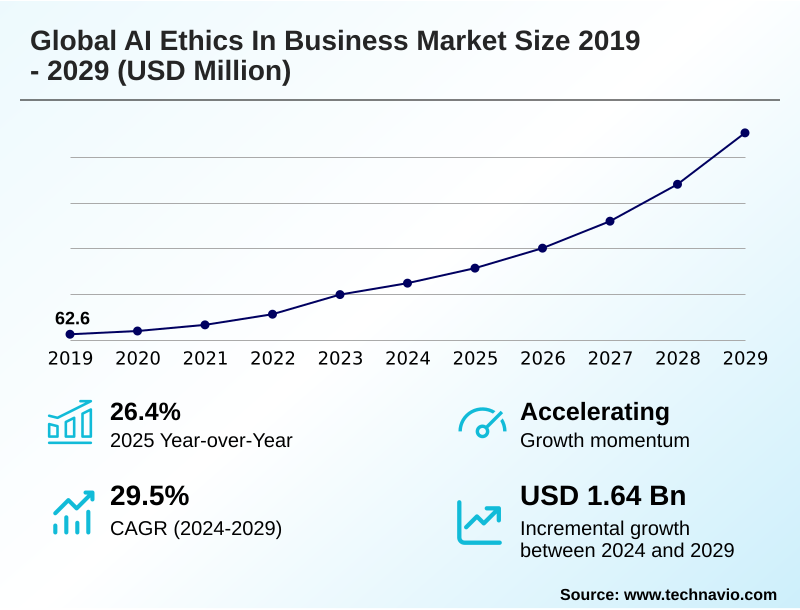
The ai ethics in business market size is valued to increase by USD 1.64 billion, at a CAGR of 29.5% from 2024 to 2029. Increasingly stringent regulatory and compliance mandates will drive the ai ethics in business market.
Major Market Trends & Insights
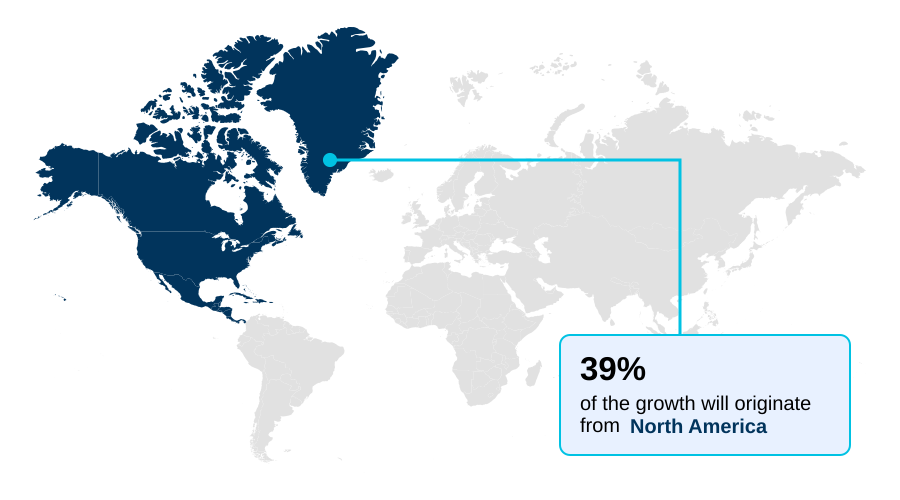
- North America dominated the market and accounted for a 38.6% growth during the forecast period.
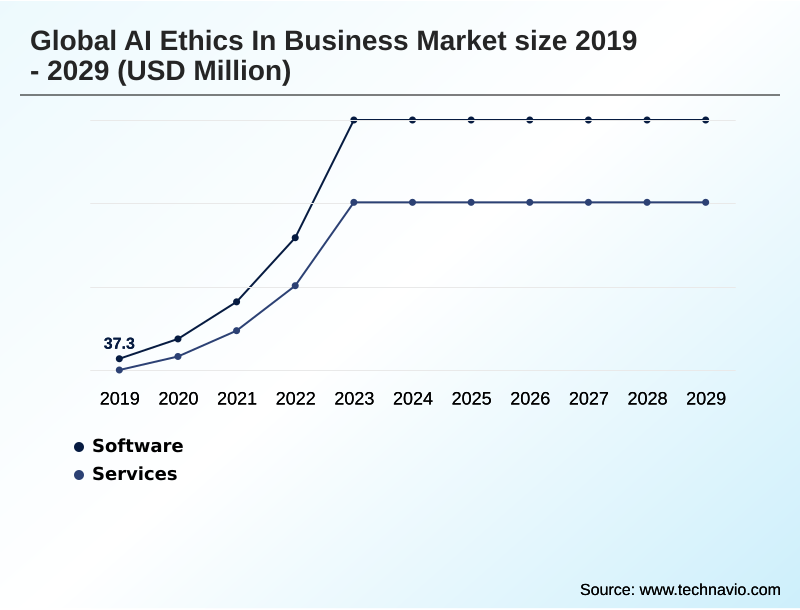
- By Component - Software segment was valued at USD 291.6 million in 2023
- By Deployment - Cloud based segment accounted for the largest market revenue share in 2023
Market Size & Forecast
- Market Opportunities: USD 2.20 billion
- Market Future Opportunities: USD 1.64 billion
- CAGR from 2024 to 2029 : 29.5%
Market Summary
- The ai ethics in business market is rapidly evolving from a niche concern into a critical business function, driven by mounting regulatory pressure and the immense reputational risk of algorithmic failures.
- As organizations integrate artificial intelligence into core operations, the need for robust AI governance platforms and a clear ethical AI framework becomes paramount to ensure fairness, transparency, and algorithmic accountability. This involves a shift toward proactive ethical governance, moving beyond high-level principles to the practical implementation of responsible MLOps, AI auditing services, and continuous AI model monitoring.
- For instance, in financial services, deploying a credit scoring model requires rigorous fairness audits and model validation to prevent discriminatory outcomes, which can lead to severe legal penalties. The challenge is magnified by the complexity of black box models and generative AI risks, such as model hallucinations and data privacy breaches.
- Consequently, investment in explainable AI (XAI), AI guardrails, and tools for regulatory compliance monitoring is no longer optional but essential for sustainable innovation and maintaining enterprise brand equity in the ai ethics in business market.
What will be the Size of the AI Ethics In Business Market during the forecast period?
Get Key Insights on Market Forecast (PDF) Get Free Sample
How is the AI Ethics In Business Market Segmented?
The ai ethics in business industry research report provides comprehensive data (region-wise segment analysis), with forecasts and estimates in "USD million" for the period 2025-2029, as well as historical data from 2019-2023 for the following segments.
- Component
- Software
- Services
- Deployment
- Cloud based
- On premises
- Hybrid
- Application
- Legal and compliance
- Finance and risk management
- HR and talent management
- Product development
- Others
- Geography
- North America
- US
- Canada
- Mexico
- Europe
- Germany
- UK
- France
- APAC
- China
- Japan
- India
- Middle East and Africa
- Saudi Arabia
- UAE
- South Africa
- South America
- Brazil
- Argentina
- Colombia
- Rest of World (ROW)
- North America
By Component Insights
The software segment is estimated to witness significant growth during the forecast period.
The software segment provides the operational backbone for implementing responsible AI principles at scale. It includes a diverse array of tools such as AI governance platforms for centralized portfolio management and automated AI risk assessment.
Essential software categories focus on bias detection and mitigation, using fairness metrics to analyze datasets and model outputs.
Explainable AI (XAI) software addresses the black box problem, generating human-understandable logic for algorithmic decisions, which is critical for model interpretability and building trust.
The proliferation of large language models (LLMs) has spurred demand for specialized AI guardrails and trust layers, with some tools improving bias detection by over 25%.
These AI compliance solutions for managing generative AI risks and ensuring data governance are becoming indispensable for enterprises seeking to innovate responsibly.
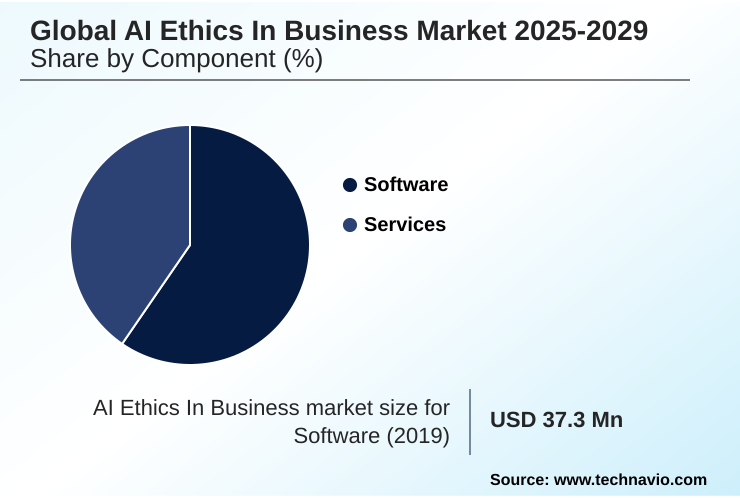
The Software segment was valued at USD 291.6 million in 2023 and showed a gradual increase during the forecast period.
Regional Analysis
North America is estimated to contribute 38.6% to the growth of the global market during the forecast period.Technavio’s analysts have elaborately explained the regional trends and drivers that shape the market during the forecast period.
See How AI Ethics In Business Market Demand is Rising in North America Get Free Sample
The global landscape is characterized by distinct regional approaches to AI ethics.
North America, which accounts for 38.6% of the market's incremental growth, is largely driven by private sector innovation and influential, though voluntary, standards like the NIST AI Risk Management Framework.
This contrasts with Europe, where the legally binding EU AI Act creates a compliance-focused market, mandating conformity assessments and stringent data governance.
The US market alone, valued at USD 196.8 million in 2024, sees companies adopt proactive ethical governance and AI risk assessment strategies to manage liability.
Meanwhile, the APAC region presents a fragmented picture, with China implementing state-led regulations targeting content moderation technology and Singapore promoting industry-led tools for ethical AI by design. This divergence necessitates adaptable AI systems oversight and ethical guardrails for multinational operations.
Market Dynamics
Our researchers analyzed the data with 2024 as the base year, along with the key drivers, trends, and challenges. A holistic analysis of drivers will help companies refine their marketing strategies to gain a competitive advantage.
- Successfully navigating the AI ethics landscape requires a comprehensive strategy that moves beyond theory to concrete action. The role of explainable AI in business is crucial for demystifying complex models and building stakeholder trust. As organizations develop an AI ethics framework, a key challenge is securing budget for AI governance platforms, which are essential for managing a portfolio of models.
- The benefits of ethical AI for businesses are substantial, including enhanced brand reputation and reduced legal risk, yet many struggle with measuring ROI of ethical AI investments. Best practices for responsible AI implementation include integrating ethics into AI product development from the outset and establishing clear AI governance for enterprise applications.
- Given the intricacies of the field, there are significant challenges of operationalizing AI ethics principles, particularly in high-stakes areas like finance, which demands the precise application of fairness metrics to financial algorithms. Companies must develop strategies for mitigating algorithmic bias and ensuring compliance with AI ethics regulations, which is complicated by the need for navigating fragmented AI regulatory frameworks.
- Key activities include demonstrating compliance with AI auditing mandates and implementing tools for AI lifecycle governance. The rise of generative AI introduces further complexity, necessitating the use of AI guardrails for generative models and new methods for managing risks of AI model hallucinations.
- This focus on practical application extends to specific business functions, highlighting the role of AI ethics in HR talent management and the need for developing transparent AI for customer service.
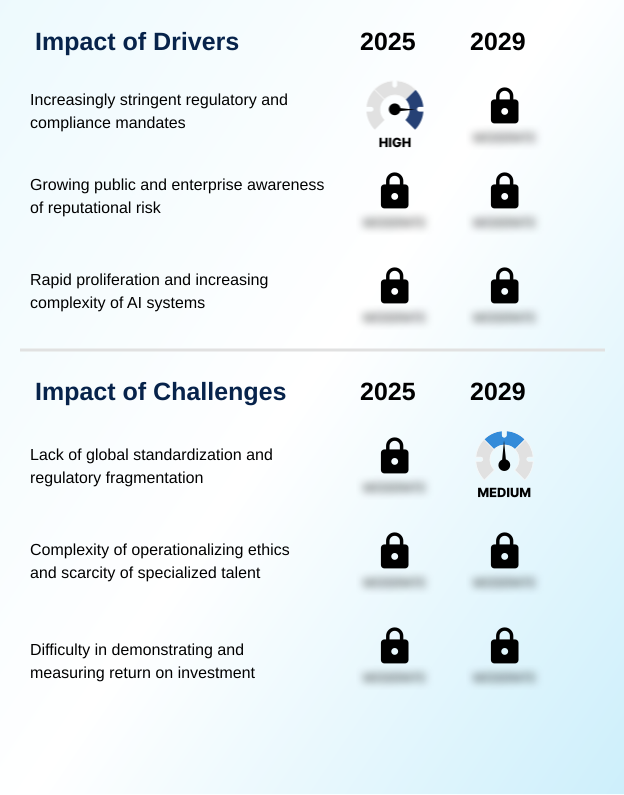
What are the key market drivers leading to the rise in the adoption of AI Ethics In Business Industry?
- Increasingly stringent regulatory frameworks and compliance mandates are a key driver propelling the market's growth.
- The market is powerfully driven by the rapid proliferation of AI across industries and the escalating complexity of deployed models, particularly large-scale deep learning systems.
- This velocity of adoption expands enterprise risk management exposure to a new class of risks that traditional software testing cannot address, creating urgent demand for specialized AI ethics solutions.
- The integration of large language models (LLMs) has introduced a new spectrum of challenges, such as the need for AI safety and security, that organizations are not fully equipped to handle.
- The development of AI guardrails, which can prevent harmful interactions by over 95%, is a direct response.
- This driver is amplified by industry acknowledgments that the increasing capability of models, including those from AI safety research, requires a corresponding increase in the sophistication of ethical oversight and enterprise brand equity.
What are the market trends shaping the AI Ethics In Business Industry?
- A defining market trend is the emergence of specialized governance frameworks and tools. These are designed to address the unique and complex risks introduced by generative AI.
- A dominant market trend is the move toward the practical operationalization of responsible AI, embedding ethical considerations directly into the AI lifecycle. This involves adopting concrete AI governance structures and standardized frameworks, making responsible AI adoption a measurable and auditable AI process.
- Organizations are shifting from high-level corporate AI ethics principles to using tools that enable rigorous model monitoring and management, improving project success rates by over 15%. This trend is underscored by broad industry collaborations focused on developing best practices for AI principles implementation.
- The formalization of roles like Chief AI Ethics Officers and the creation of dedicated teams for AI systems oversight signifies a maturing market where demonstrable accountability is a primary objective. Companies adopting these practices see a 20% faster alignment with emerging regulatory standards.
What challenges does the AI Ethics In Business Industry face during its growth?
- The lack of global standardization and increasing regulatory fragmentation present a key challenge affecting the industry's growth trajectory.
- A primary market challenge is the significant scarcity of qualified talent with the requisite hybrid skill set spanning technology, ethics, and regulation. This talent gap hinders the ability of enterprises to build competent in-house AI governance teams, leading to a heavy reliance on external consultants and AI ethics initiatives.
- Organizations find it difficult to translate abstract concepts like fairness and accountability into scalable technical processes, a problem magnified by the opaque nature of black box models, where achieving full model interpretability remains a hurdle.
- This skills shortage affects both buyers and sellers, with some firms reporting that project timelines are extended by up to 25% due to a lack of specialized staff. While upskilling programs are underway, developing the nuanced expertise needed for effective AI risk management and demonstrating a clear AI value proposition is a long-term endeavor that currently constrains market growth.
Exclusive Technavio Analysis on Customer Landscape
The ai ethics in business market forecasting report includes the adoption lifecycle of the market, covering from the innovator’s stage to the laggard’s stage. It focuses on adoption rates in different regions based on penetration. Furthermore, the ai ethics in business market report also includes key purchase criteria and drivers of price sensitivity to help companies evaluate and develop their market growth analysis strategies.
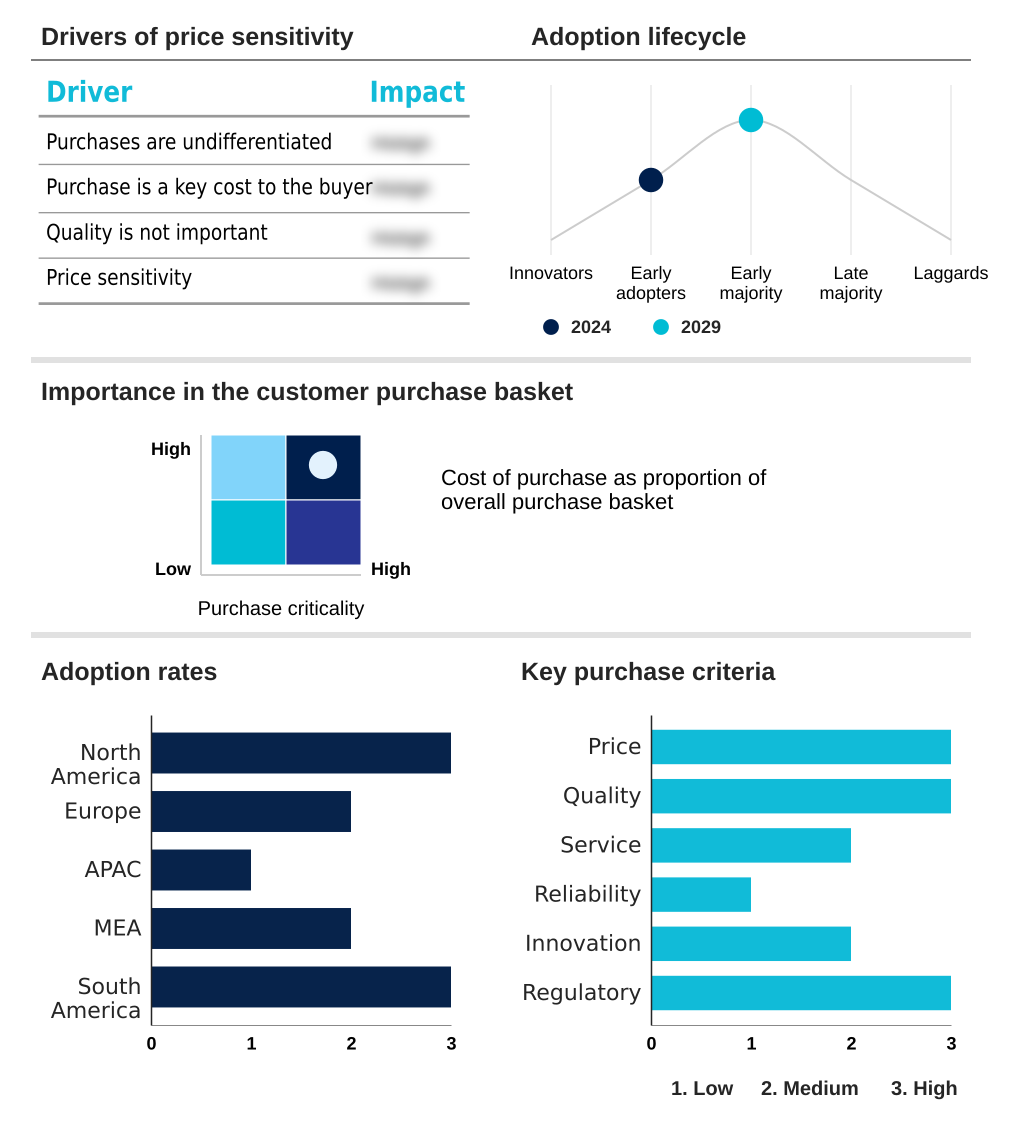
Customer Landscape of AI Ethics In Business Industry
Competitive Landscape
Companies are implementing various strategies, such as strategic alliances, ai ethics in business market forecast, partnerships, mergers and acquisitions, geographical expansion, and product/service launches, to enhance their presence in the industry.
Accenture PLC - Key market offerings include AI governance platforms, specialized consulting for regulatory compliance, and tools for bias detection, transparency, and model validation across the AI lifecycle.
The industry research and growth report includes detailed analyses of the competitive landscape of the market and information about key companies, including:
- Accenture PLC
- Amazon Web Services Inc.
- Anthropic
- Boston Consulting Group Inc.
- Credo AI
- DataRobot Inc.
- Deloitte Touche Tohmatsu Ltd.
- Ernst and Young Global Ltd.
- Fairly AI
- Google LLC
- Holistic AI Inc
- IBM Corp.
- McKinsey and Co.
- Meta Platforms Inc.
- Microsoft Corp.
- OpenAI
- PricewaterhouseCoopers LLP
- Salesforce Inc.
- SAP SE
Qualitative and quantitative analysis of companies has been conducted to help clients understand the wider business environment as well as the strengths and weaknesses of key industry players. Data is qualitatively analyzed to categorize companies as pure play, category-focused, industry-focused, and diversified; it is quantitatively analyzed to categorize companies as dominant, leading, strong, tentative, and weak.
Recent Development and News in Ai ethics in business market
- In September, 2024, Microsoft Corp. announced the launch of its 'Azure AI Compliance Suite,' a new service designed to help organizations automate documentation and reporting to meet the stringent requirements of the EU AI Act for high-risk systems.
- In November, 2024, IBM Corp. and Deloitte Touche Tohmatsu Ltd. formed a strategic alliance to offer an integrated solution combining ethical AI strategy consulting with IBM's watsonx.governance software platform, targeting regulated industries.
- In February, 2025, Salesforce Inc. acquired a specialized AI explainability startup for an undisclosed sum, planning to integrate advanced model interpretation capabilities directly into its Einstein Trust Layer to enhance algorithmic transparency for customers.
- In May, 2025, Anthropic announced it had secured a new round of funding focused on advancing its constitutional AI approach, specifically for developing safer and more steerable models for enterprise applications in finance and healthcare.
Dive into Technavio’s robust research methodology, blending expert interviews, extensive data synthesis, and validated models for unparalleled AI Ethics In Business Market insights. See full methodology.
| Market Scope | |
|---|---|
| Page number | 313 |
| Base year | 2024 |
| Historic period | 2019-2023 |
| Forecast period | 2025-2029 |
| Growth momentum & CAGR | Accelerate at a CAGR of 29.5% |
| Market growth 2025-2029 | USD 1639.5 million |
| Market structure | Fragmented |
| YoY growth 2024-2025(%) | 26.4% |
| Key countries | US, Canada, Mexico, Germany, UK, France, The Netherlands, Italy, Spain, China, Japan, India, South Korea, Australia, Indonesia, Saudi Arabia, UAE, South Africa, Israel, Turkey, Brazil, Argentina and Colombia |
| Competitive landscape | Leading Companies, Market Positioning of Companies, Competitive Strategies, and Industry Risks |
Research Analyst Overview
- The market is rapidly maturing as organizations shift focus from abstract principles to the tangible operationalization of ethical AI. This transition is defined by the adoption of AI governance platforms and a concrete ethical AI framework to manage the entire AI lifecycle governance process.
- Boardrooms now recognize that responsible MLOps, incorporating continuous AI model monitoring and rigorous model validation, is a strategic imperative. The complexity of large language models (LLMs) and their associated generative AI risks, such as model hallucinations and data privacy breaches, has made AI guardrails and robust data governance essential.
- Businesses are leveraging privacy-enhancing technologies and explainable AI (XAI) to address the opacity of black box models and ensure algorithmic transparency. This proactive stance, driven by the need for regulatory compliance monitoring and AI value alignment, can improve audit efficiency by over 30%.
- Key activities include fairness audits, red teaming exercises, and leveraging a hybrid skill set within an AI ethics committee to ensure AI system robustness, manage model risk management, and maintain data sovereignty. This focus is critical for achieving algorithmic accountability and mitigating risks from automated employment decision tools.
What are the Key Data Covered in this AI Ethics In Business Market Research and Growth Report?
-
What is the expected growth of the AI Ethics In Business Market between 2025 and 2029?
-
USD 1.64 billion, at a CAGR of 29.5%
-
-
What segmentation does the market report cover?
-
The report is segmented by Component (Software, and Services), Deployment (Cloud based, On premises, and Hybrid), Application (Legal and compliance, Finance and risk management, HR and talent management, Product development, and Others) and Geography (North America, Europe, APAC, Middle East and Africa, South America)
-
-
Which regions are analyzed in the report?
-
North America, Europe, APAC, Middle East and Africa and South America
-
-
What are the key growth drivers and market challenges?
-
Increasingly stringent regulatory and compliance mandates, Lack of global standardization and regulatory fragmentation
-
-
Who are the major players in the AI Ethics In Business Market?
-
Accenture PLC, Amazon Web Services Inc., Anthropic, Boston Consulting Group Inc., Credo AI, DataRobot Inc., Deloitte Touche Tohmatsu Ltd., Ernst and Young Global Ltd., Fairly AI, Google LLC, Holistic AI Inc, IBM Corp., McKinsey and Co., Meta Platforms Inc., Microsoft Corp., OpenAI, PricewaterhouseCoopers LLP, Salesforce Inc. and SAP SE
-
Market Research Insights
- Market dynamics are shaped by a decisive pivot toward proactive ethical governance and the practical implementation of AI principles. This shift is driven by a heightened awareness of AI's societal implications and the need for operational resilience. Organizations are adopting an auditable AI process to demonstrate AI due diligence, with mature firms reporting a 15% higher rate of consumer trust.
- The complex AI regulatory landscape compels investment in AI compliance solutions and responsible innovation frameworks. Establishing robust AI governance structures and an AI model audit practice has proven to reduce compliance-related incidents by up to 20%.
- The focus on an ethical AI value proposition and sustainable innovation is reinforced by the need for verifiable AI assessments, which can improve project success rates by more than 10% through early risk identification and alignment with corporate AI ethics principles.
We can help! Our analysts can customize this ai ethics in business market research report to meet your requirements.
 RIA -
RIA - 
