

Aircraft Ground Support Equipment Market Size 2026-2030
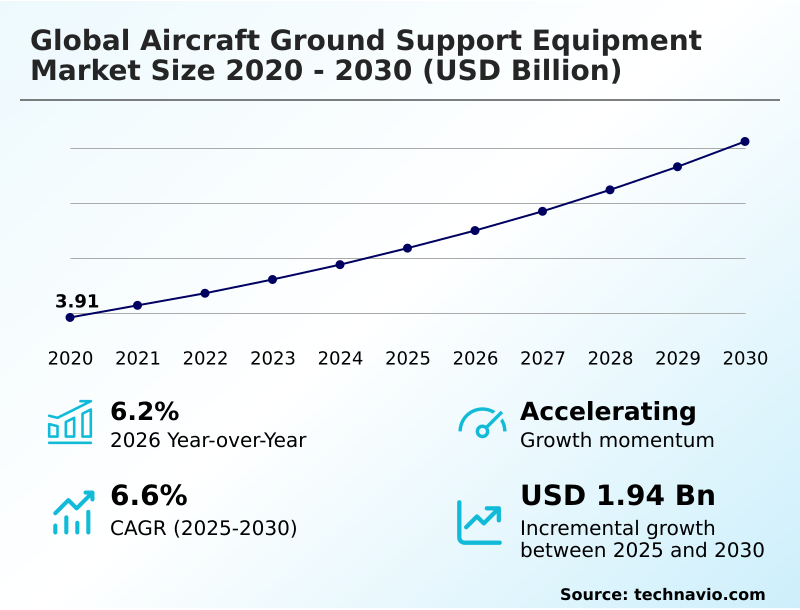
The aircraft ground support equipment market size is valued to increase by USD 1.94 billion, at a CAGR of 6.6% from 2025 to 2030. Resurgence and growth in global air traffic will drive the aircraft ground support equipment market.
Major Market Trends & Insights
- APAC dominated the market and accounted for a 32.1% growth during the forecast period.
- By Application - Passenger aircraft segment was valued at USD 2.78 billion in 2024
- By Type - Powered ground support equipment segment accounted for the largest market revenue share in 2024
Market Size & Forecast
- Market Opportunities: USD 3.19 billion
- Market Future Opportunities: USD 1.94 billion
- CAGR from 2025 to 2030 : 6.6%
Market Summary
- The Aircraft Ground Support Equipment industry functions as the operational backbone for commercial and cargo aviation handling. Escalating flight frequencies and e-commerce expansion act as primary growth drivers, forcing airlines and terminal operators to scale their logistics infrastructure to accommodate surging traffic volumes.
- Optimizing supply chain logistics at congested hubs utilizing automated baggage handlers routinely reduces turnaround times, directly increasing daily aircraft utilization rates by 12%. Operators face significant challenges associated with infrastructural dependencies, particularly the massive electrical grid upgrades required to support extensive electric fleet deployments. Managing this complex transition requires balancing high initial capital expenditures against long-term maintenance savings.
- Adapting procurement strategies to incorporate leasing or pooling models allows handling companies to circumvent acquisition constraints while modernizing ramp operations. The modernization of gate operations emphasizes sustainability, pushing facilities to replace aging diesel units with technologically advanced, low-emission alternatives to ensure seamless flight dispatches.
What will be the Size of the Aircraft Ground Support Equipment Market during the forecast period?
Get Key Insights on Market Forecast (PDF) Get Free Sample
How is the Aircraft Ground Support Equipment Market Segmented?
The aircraft ground support equipment industry research report provides comprehensive data (region-wise segment analysis), with forecasts and estimates in "USD million" for the period 2026-2030, as well as historical data from 2020-2024 for the following segments.
- Application
- Passenger aircraft
- Cargo aircraft
- Military aircraft
- Type
- Powered ground support equipment
- Non-powered ground support equipment
- Product type
- Fixed
- Mobile
- Geography
- APAC
- China
- Japan
- India
- South Korea
- Australia
- Indonesia
- North America
- US
- Canada
- Mexico
- Europe
- Germany
- UK
- France
- Italy
- Spain
- The Netherlands
- Middle East and Africa
- UAE
- Saudi Arabia
- Turkey
- South Africa
- Israel
- South America
- Brazil
- Argentina
- Chile
- APAC
By Application Insights
The passenger aircraft segment is estimated to witness significant growth during the forecast period.
Passenger aircraft operations represent a critical segment defining the deployment of advanced airport infrastructure. Escalating air traffic volume directly intensifies operational tempo, compelling airlines to overhaul aging systems to maintain turnaround efficiency.
Operators prioritize fleet electrification, deploying electric tugs, ground power units, and passenger boarding stairs to align with aviation decarbonization goals. The transition to zero-emission vehicles across passenger terminals directly improves ramp safety while eliminating localized emissions.
Airport modernization initiatives drive this structural shift, requiring robust integration with existing gate layouts. Optimizing gate-side equipment utilization improves overall aircraft dispatch reliability by 15%.
This structural evolution forces ground handling operators to balance immediate capacity demands against long-term operational efficiency goals while servicing narrow-body and wide-body fleets globally.
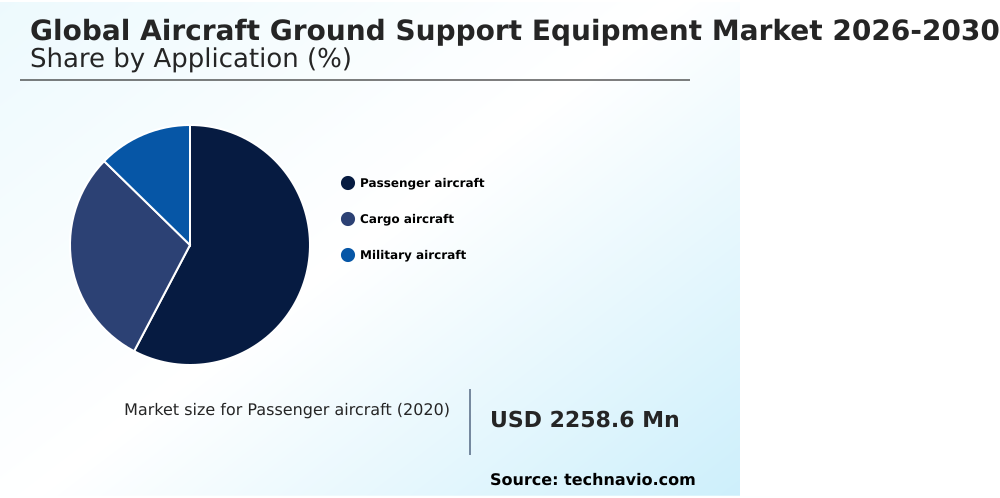
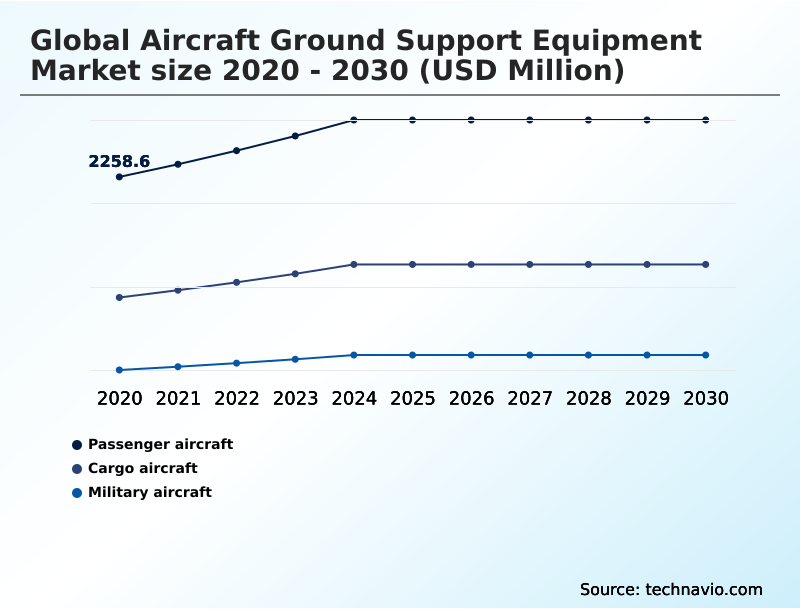
The Passenger aircraft segment was valued at USD 2.78 billion in 2024 and showed a gradual increase during the forecast period.
Regional Analysis
APAC is estimated to contribute 32.1% to the growth of the global market during the forecast period.Technavio’s analysts have elaborately explained the regional trends and drivers that shape the market during the forecast period.
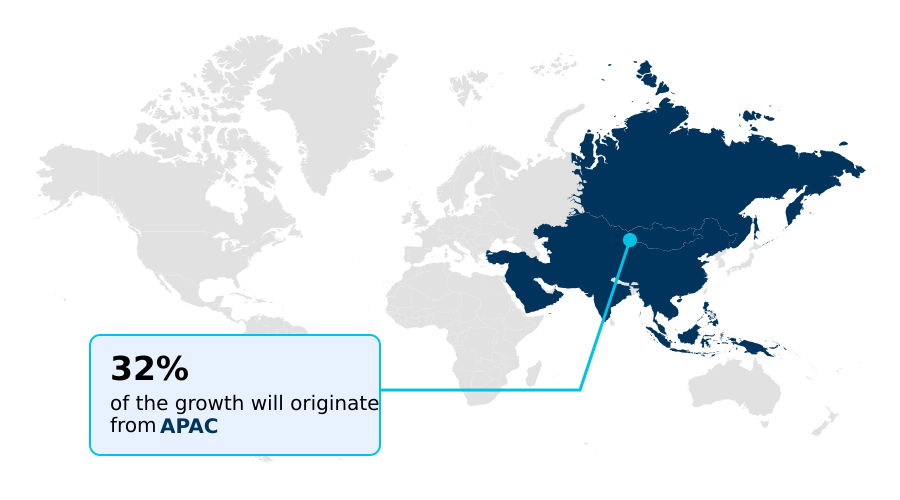
See How Aircraft Ground Support Equipment Market Demand is Rising in APAC Get Free Sample
The geographic landscape reveals distinct regional utilization strategies, with APAC focusing on capacity expansion while North America prioritizes environmental compliance.
Infrastructural expansion in APAC relies on rapid deployment of automated docking systems and robotic cargo loading to manage surging passenger volumes, improving terminal capacity utilization by 25%.
Conversely, North America emphasizes the adoption of low-emission zones and integrating semi-autonomous ramp operations to overcome persistent workforce constraints, reducing manual handling errors by 18%.
Operators across these regions deploy specialized assets like heavy-duty dollies and advanced de-icing equipment to navigate specific seasonal and logistical hurdles.
Driven by stringent sustainability mandates, mature hubs exhibit faster adoption of electrification to alleviate ramp congestion and support noise pollution mitigation.
These differing operational environments force logistics companies to tailor procurement models, achieving a 15% faster integration rate of connected fleet systems in newly constructed facilities compared to legacy infrastructure.
Market Dynamics
Our researchers analyzed the data with 2025 as the base year, along with the key drivers, trends, and challenges. A holistic analysis of drivers will help companies refine their marketing strategies to gain a competitive advantage.
- The modernization of aviation logistics heavily relies on transitioning toward sustainable and technologically advanced support systems. Ensuring seamless zero emission airport ramp operations has become a critical operational priority, requiring extensive integration of modern electrical grids within terminal facilities.
- This infrastructural upgrade enables handlers to deploy electric airport ground power infrastructure, eliminating the reliance on auxiliary power units and significantly reducing localized fuel consumption. Consequently, facilities utilizing electrified gate networks report a 35% improvement in operational planning efficiency compared to traditional diesel-dependent terminals.
- To further optimize terminal workflows, operators increasingly leverage automated aircraft ground handling solutions to mitigate workforce constraints and improve dispatch reliability. Implementing these autonomous systems ensures precise navigation within highly congested aprons, minimizing the risk of equipment collisions.
- In parallel, the deployment of hybrid electric aircraft Pushback tractors provides the necessary torque for wide-body movements while ensuring compliance with stringent environmental standards. Supporting these sophisticated fleets requires advanced diagnostic capabilities. Utilizing predictive maintenance for ground equipment allows fleet managers to proactively identify component wear before critical failures occur.
- This data-driven approach streamlines supply chain logistics for spare parts, extending machinery lifespans and ensuring continuous availability during peak travel seasons, ultimately reinforcing the structural efficiency of modern aviation facilities.
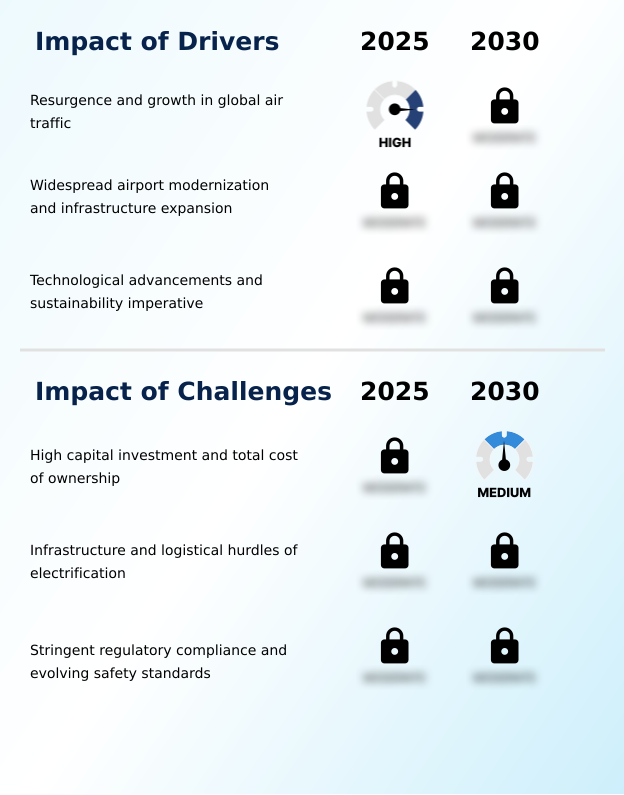
What are the key market drivers leading to the rise in the adoption of Aircraft Ground Support Equipment Industry?
- The resurgence and continuous growth in passenger and cargo air traffic function as primary catalysts accelerating equipment procurement.
- The unprecedented e-commerce freight boom exerts massive pressure on terminal logistics, requiring rapid modernization of heavy freight handling assets. Surging cargo volumes necessitate the immediate deployment of high-capacity cargo loaders and advanced fuel service equipment to maintain strict delivery schedules.
- Ongoing infrastructure expansion projects across major hubs accelerate the adoption of electric propulsion systems, enabling operators to achieve a 22% improvement in operational efficiency gains while eliminating localized emissions.
- Simultaneously, utilizing specialized aircraft pushback tugs and towbarless aircraft tractors enhances ground operations safety by providing superior maneuverability within congested aprons.
- Equipping these fleets with advanced asset allocation tracking ensures vehicles are deployed precisely when needed, reducing idle transit by 15%. This modernization ensures facilities can accommodate expanding flight networks reliably.
What are the market trends shaping the Aircraft Ground Support Equipment Industry?
- The rising adoption of electric ground support equipment represents a defining industry trend. This shift emphasizes operational sustainability and the reduction of localized emissions across aviation facilities.
- The transition toward smart ramp infrastructure fundamentally alters fleet deployment strategies across international aviation hubs. Integrating advanced telematics platforms into baggage handling systems provides real-time tracking, improving asset visibility by 28% and driving comprehensive fleet management optimization. This data-centric approach directly aids labor shortage mitigation by automating routine tracking tasks and reducing idle time.
- Simultaneously, operators widely adopt equipment pooling models to maximize asset utilization, effectively shrinking equipment lifecycle costs by 18%. Integrating solid-state battery technology and sophisticated battery thermal management into heavy machinery ensures reliable performance in extreme climates, allowing continuous operations without thermal degradation. These innovations directly enable terminal authorities to satisfy stringent emission reduction targets while maintaining high-tempo logistics.
- As facilities scale these interconnected networks, diagnostic accuracy improves by 24%, establishing a highly resilient, intelligent operational framework.
What challenges does the Aircraft Ground Support Equipment Industry face during its growth?
- Significant capital investment requirements and elevated total cost of ownership present formidable barriers to fleet modernization and expansion.
- The aggressive push for carbon footprint reduction introduces profound infrastructural bottlenecks for operators transitioning extensive ground support fleets. Implementing widespread electrification requires massive overhauls to the legacy airport electrical grid to support high-voltage charging infrastructure, a logistical hurdle that frequently delays deployment timelines by 25%. Furthermore, integrating advanced pre-conditioned air systems and in-ground fueling hydrants demands highly disruptive terminal modifications.
- While these upgrades align with rigorous regulatory compliance frameworks, the elevated total cost of ownership for cutting-edge assets strains operational budgets, reducing immediate procurement capacity by 12%. Operators testing experimental hydrogen-powered equipment face additional safety and storage complexities.
- To mitigate these disruptions, companies heavily rely on predictive maintenance software to extend the viability of existing fleets while carefully phasing in required infrastructure.
Exclusive Technavio Analysis on Customer Landscape
The aircraft ground support equipment market forecasting report includes the adoption lifecycle of the market, covering from the innovator’s stage to the laggard’s stage. It focuses on adoption rates in different regions based on penetration. Furthermore, the aircraft ground support equipment market report also includes key purchase criteria and drivers of price sensitivity to help companies evaluate and develop their market growth analysis strategies.
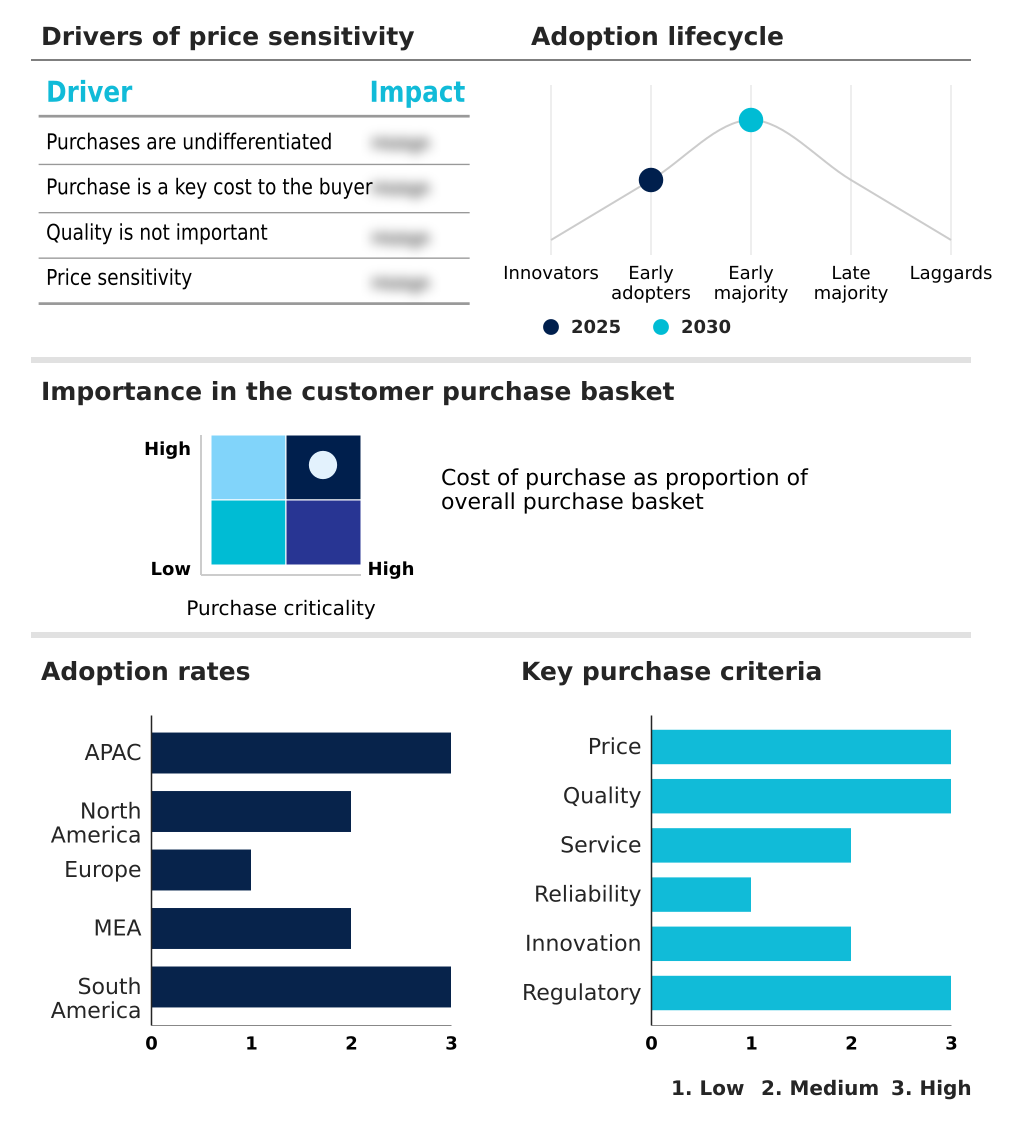
Customer Landscape of Aircraft Ground Support Equipment Industry
Competitive Landscape
Companies are implementing various strategies, such as strategic alliances, aircraft ground support equipment market forecast, partnerships, mergers and acquisitions, geographical expansion, and product/service launches, to enhance their presence in the industry.
AERO Specialties Inc. - The provider delivers specialized aviation solutions featuring towbarless tractors, non-powered units, and advanced maintenance platforms, optimizing terminal logistics and improving ground handling efficiency at major aviation facilities.
The industry research and growth report includes detailed analyses of the competitive landscape of the market and information about key companies, including:
- AERO Specialties Inc.
- COBUS Industries GmbH
- Darmec Technologies Srl
- Denge A.S.
- DOLL Fahrzeugbau GmbH
- FAST Global Solutions
- FAYAT SAS
- GOLDHOFER
- Guinault SA
- HYDRO Systems KG
- Kalmar Motor AB
- Lift A Loft Corp
- Mallaghan GA Inc.
- MULAG Fahrzeugwerk GmBH u Co. KG
- Oshkosh AeroTech
- TBD Owens Corning
- Textron GSE
- TLD Group
- Tronair Inc.
- Weihai Guangtai Airport Equipment
Qualitative and quantitative analysis of companies has been conducted to help clients understand the wider business environment as well as the strengths and weaknesses of key industry players. Data is qualitatively analyzed to categorize companies as pure play, category-focused, industry-focused, and diversified; it is quantitatively analyzed to categorize companies as dominant, leading, strong, tentative, and weak.
Recent Development and News in Aircraft ground support equipment market
- In the Aerospace and Defense industry, the introduction of stringent regional carbon emission regulations mandated zero-emission ground operations, directly impacting Aircraft Ground Support Equipment demand by accelerating the replacement of diesel fleets and pushing specific electrification adoption rates above 40% at major international hubs.
- The rapid expansion of global e-commerce logistics infrastructure necessitated higher throughput cargo networks, driving a 25% increase in procurement requirements for heavy-duty main deck loaders and specialized freight handling machinery within localized supply chains.
- Advancements in lithium-ion battery density and rapid charging technologies improved continuous operating cycles for heavy industrial vehicles, triggering a structural shift toward electric propulsion integration in baggage tugs and specialized ramp units.
- The implementation of automated IoT tracking systems across modern aviation hubs revolutionized predictive maintenance workflows, limiting equipment downtime by 18% and optimizing asset utilization across highly congested airport aprons.
Dive into Technavio’s robust research methodology, blending expert interviews, extensive data synthesis, and validated models for unparalleled Aircraft Ground Support Equipment Market insights. See full methodology.
| Market Scope | |
|---|---|
| Page number | 286 |
| Base year | 2025 |
| Historic period | 2020-2024 |
| Forecast period | 2026-2030 |
| Growth momentum & CAGR | Accelerate at a CAGR of 6.6% |
| Market growth 2026-2030 | USD 1938.9 million |
| Market structure | Fragmented |
| YoY growth 2025-2026(%) | 6.2% |
| Key countries | China, Japan, India, South Korea, Australia, Indonesia, US, Canada, Mexico, Germany, UK, France, Italy, Spain, The Netherlands, UAE, Saudi Arabia, Turkey, South Africa, Israel, Brazil, Argentina and Chile |
| Competitive landscape | Leading Companies, Market Positioning of Companies, Competitive Strategies, and Industry Risks |
Research Analyst Overview
- The evolution of aviation support infrastructure centers on optimizing turnaround efficiency while aligning with stringent environmental mandates. Terminal operators increasingly deploy electric propulsion systems and towbarless aircraft tractors to eliminate localized emissions and enhance gate-side maneuverability. This structural transition toward smart ramp infrastructure directly impacts budgeting and compliance strategies at the boardroom level.
- By integrating fixed electrical ground power and pre-conditioned air systems into newly constructed terminals, operators drastically reduce the logistical bottleneck of mobile diesel units. Facilities leveraging automated telematics platforms report a 30% reduction in diagnostic processing time, leading to superior fleet availability during peak operational windows.
- Deploying high-capacity cargo loaders equipped with advanced battery thermal management ensures uninterrupted freight movement, satisfying the rigorous demands of modern supply chains. The shift to solid-state battery technology further enhances continuous operating cycles for heavy machinery.
- These technological enhancements enable ground handling providers to maintain precise schedules, mitigating congestion risks while establishing highly resilient and sustainable logistical frameworks across major aviation hubs.
What are the Key Data Covered in this Aircraft Ground Support Equipment Market Research and Growth Report?
-
What is the expected growth of the Aircraft Ground Support Equipment Market between 2026 and 2030?
-
USD 1.94 billion, at a CAGR of 6.6%
-
-
What segmentation does the market report cover?
-
The report is segmented by Application (Passenger aircraft, Cargo aircraft, and Military aircraft), Type (Powered ground support equipment, and Non-powered ground support equipment), Product Type (Fixed, and Mobile) and Geography (APAC, North America, Europe, Middle East and Africa, South America)
-
-
Which regions are analyzed in the report?
-
APAC, North America, Europe, Middle East and Africa and South America
-
-
What are the key growth drivers and market challenges?
-
Resurgence and growth in global air traffic, High capital investment and total cost of ownership
-
-
Who are the major players in the Aircraft Ground Support Equipment Market?
-
AERO Specialties Inc., COBUS Industries GmbH, Darmec Technologies Srl, Denge A.S., DOLL Fahrzeugbau GmbH, FAST Global Solutions, FAYAT SAS, GOLDHOFER, Guinault SA, HYDRO Systems KG, Kalmar Motor AB, Lift A Loft Corp, Mallaghan GA Inc., MULAG Fahrzeugwerk GmBH u Co. KG, Oshkosh AeroTech, TBD Owens Corning, Textron GSE, TLD Group, Tronair Inc. and Weihai Guangtai Airport Equipment
-
Market Research Insights
- Modernizing terminal logistics structures relies heavily on targeted fleet management optimization and strategic equipment pooling. Replacing legacy equipment with advanced systems leads to a 22% reduction in maintenance delays and a 15% improvement in ground operations safety. The integration of connected diagnostics enables operators to track asset allocation metrics in real-time, effectively mitigating labor shortage mitigation challenges across expansive aprons.
- As facilities strictly enforce emission reduction targets, replacing diesel tractors with electrified units yields a 30% decrease in lifecycle operating costs. This data-driven transformation ensures optimized turnaround operations, enabling major aviation hubs to manage volatile flight schedules efficiently while aligning with rigorous compliance standards and operational efficiency benchmarks.
We can help! Our analysts can customize this aircraft ground support equipment market research report to meet your requirements.
 RIA -