



Almond Ingredients Market Size 2024-2028
The almond ingredients market size is forecast to increase by USD 7.19 billion, at a CAGR of 10.03% between 2023 and 2028.
- The market is driven by the rising awareness of the health benefits associated with almonds. Consumers' increasing preference for healthier food options, particularly those rich in essential nutrients, fuels the demand for almond ingredients. Furthermore, the convenience of online distribution platforms caters to the evolving consumer behavior, enabling seamless access to almond-based products. However, this market faces challenges from stringent government regulations. Compliance with food safety standards and adherence to labeling requirements can be costly and complex, potentially hindering market growth for some players.
- Companies seeking to capitalize on market opportunities must focus on innovation, ensuring their offerings meet the evolving consumer demand for healthier, convenient, and high-quality almond ingredients. Navigating regulatory challenges requires a deep understanding of the regulatory landscape and a commitment to transparency and compliance.
What will be the Size of the Almond Ingredients Market during the forecast period?

Explore in-depth regional segment analysis with market size data - historical 2018-2022 and forecasts 2024-2028 - in the full report.
Request Free Sample
The market continues to evolve, driven by the diverse applications of almonds across various sectors. Sweet almond varieties are widely used in confectionery, bakery, and dairy products due to their distinct flavor and texture. The demand for almond protein extraction is surging in the health food industry, as consumers seek plant-based alternatives to animal proteins. Almond oil refining and almond flavor compounds are essential components in the fragrance and cosmetics industry. Pharmaceutical grade almonds are increasingly used in the production of functional foods and dietary supplements, while almond hull utilization offers opportunities for waste reduction. Almond paste formulation and almond butter processing cater to the growing demand for plant-based spreads and sauces.
The pharmaceutical and nutraceutical industries utilize almonds for their antioxidant capacity and anti-inflammatory properties. Almond allergen management is a critical concern for manufacturers, with stringent regulations driving the need for specialized processing methods. Sustainable almond farming practices and energy efficiency initiatives are gaining traction, as industry growth is expected to reach 6% annually. For instance, a leading food manufacturer reported a 15% increase in sales by introducing a new line of almond-based products. Almond polyphenol extraction and almond fiber properties are emerging areas of research, offering potential health benefits and functional applications. Almond ingredient sourcing and nutritional profiling are essential considerations for manufacturers, with sensory evaluation playing a crucial role in ensuring product quality.
Almond milk production and packaging are also key areas of focus, as consumer preferences shift towards plant-based alternatives to dairy. Emulsion stability and bitter almond processing are essential aspects of almond ingredient applications, with ongoing research aimed at improving these properties. Quality control measures and sustainable farming practices are essential to maintaining consumer trust and ensuring a consistent supply of high-quality almond ingredients.
How is this Almond Ingredients Industry segmented?
The almond ingredients industry research report provides comprehensive data (region-wise segment analysis), with forecasts and estimates in "USD million" for the period 2024-2028, as well as historical data from 2018-2022 for the following segments.
- Type
- Whole almond
- Almond pieces
- Almond flour
- Almond milk
- Others
- Geography
- North America
- US
- Canada
- Europe
- Germany
- APAC
- China
- India
- Rest of World (ROW)
- North America
By Type Insights
The whole almond segment is estimated to witness significant growth during the forecast period.
Almonds are versatile nuts widely used in various food applications due to their distinctive flavor and nutritional benefits. The sweet almond variety is commonly processed for ingredients such as protein extraction, oil refining, and flavor compounds. Almond protein extraction yields a high-quality, plant-based protein used in food and beverage formulations. Almond oil undergoes refining to produce a pure, light, and flavorless oil used in cooking and cosmetics. Almond flavor compounds are essential for baking and confectionery applications. Almond paste formulation is a popular ingredient in baking, while allergen management is crucial to ensure safety for consumers with nut allergies.
Pharmaceutical-grade almonds are used in the production of dietary supplements and pharmaceuticals. Almond hull utilization is a sustainable practice, reducing waste and increasing efficiency in almond processing. Almond butter processing results in a creamy spread, while waste reduction techniques minimize by-product generation. Almond polyphenol extraction offers antioxidant properties, making it a valuable functional ingredient. Almond ingredient sourcing focuses on quality and sustainability, ensuring traceability and transparency. Functional almond ingredients, such as almond fiber and almond flour, cater to the growing demand for gluten-free and high-fiber products. Almond particle size and antioxidant capacity influence the nutritional and sensory properties of almond-based products.
Almond extract production involves distilling the essence, while sustainable almond farming practices ensure a consistent supply. The almond industry is expected to grow by 5% annually, driven by increasing consumer demand for natural, nutrient-rich ingredients. For example, Kanegrade Ltd. Offers a range of almond ingredients, including whole, coated whole, and meal forms, which are used in various food and beverage applications. These almonds provide essential nutrients like fiber, calcium, and vitamin E, making them a popular choice for health-conscious consumers.
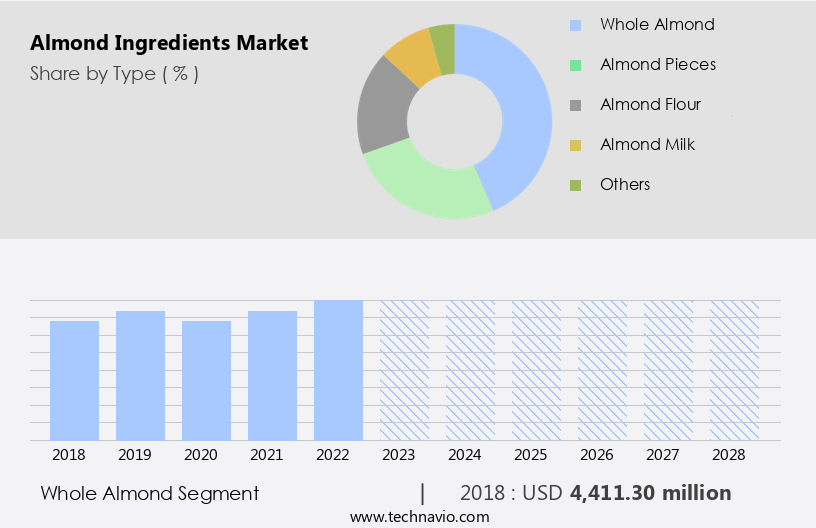
The Whole almond segment was valued at USD 4.41 billion in 2018 and showed a gradual increase during the forecast period.
Regional Analysis
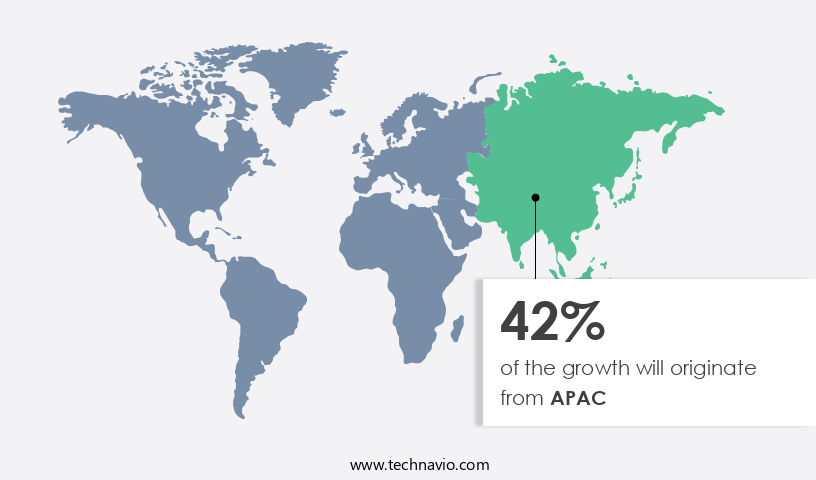
APAC is estimated to contribute 42% to the growth of the global market during the forecast period. Technavio's analysts have elaborately explained the regional trends and drivers that shape the market during the forecast period.
The North American market is experiencing significant growth due to increasing consumer awareness of almonds' health benefits and their versatility in various culinary applications. The US, being one of the largest markets in North America, is witnessing a surge in the production of almonds and the launch of new almond-based products. This trend is expected to positively influence the market during the forecast period. Almond protein extraction, almond oil refining, and almond flavor compounds are some of the key almond ingredients in high demand. Pharmaceutical-grade almonds and almond hull utilization are also gaining popularity in the industry.
Sustainable almond farming practices and energy efficiency in almond processing are essential considerations for market players. Almond allergen management is a critical aspect of the market, with the industry focusing on minimizing cross-contamination risks. Functional almond ingredients, such as almond fiber and almond flour, are increasingly being used in various industries, including food and pharmaceuticals. Almond milk production and packaging almond products are also significant market trends. Nutritional profiling and sensory evaluation of almond ingredients are crucial to ensure product quality and consumer satisfaction. The market for almond ingredients is expected to grow by approximately 5% in the next few years, driven by these trends and increasing consumer demand.
For instance, a leading food manufacturer reported a 15% increase in sales of almond-based products in the last year. The market's evolving patterns include the development of functional almond ingredients, such as almond protein isolates and almond polyphenol extracts, which offer improved emulsion stability and antioxidant capacity. Almond extract production and almond shell activation are other emerging trends in the market. Overall, the market is a dynamic and innovative space, with a focus on quality, sustainability, and consumer preferences.
Market Dynamics
Our researchers analyzed the data with 2023 as the base year, along with the key drivers, trends, and challenges. A holistic analysis of drivers will help companies refine their marketing strategies to gain a competitive advantage.
The market is experiencing significant growth due to the increasing demand for plant-based alternatives and the functional benefits of almonds. In the realm of almond ingredients, various processing methods are under exploration to optimize production and enhance product quality. Almond protein extraction methods are being compared to determine the most efficient and cost-effective approach. Simultaneously, refining processes for almond oil are being optimized to reduce production costs and maintain the desirable nutty flavor. Texture modification techniques for almond butter are being investigated to cater to consumer preferences, while strategies for improving almond flour milling efficiency aim to increase output and minimize wastage. In the realm of almond milk production, cost reduction is a key focus, with research being conducted on innovative processing techniques and sustainable sourcing. Analysis of almond flavor compounds in different varieties is essential for creating consistent and desirable taste profiles. Methods for enhancing almond aroma profiles are also being explored, as are strategies for improving almond emulsion stability to ensure product longevity. Sustainable sourcing of almond ingredients is a priority, with a focus on water conservation through sustainable farming practices. Advanced quality control techniques are being employed to ensure product consistency and safety, while sensory evaluation of almond products across various consumer demographics is crucial for market success. Determination of almond particle size distribution is essential for optimizing functionality in food applications. Effective methods for managing almond allergens are also crucial, as is nutritional profiling of different almond varieties to cater to diverse consumer needs. Functional properties of almond ingredients in food applications are being explored, with innovative applications in cosmetics and pharmaceuticals also under investigation. Energy efficiency improvements in almond processing are essential for reducing environmental impact and ensuring long-term sustainability.
What are the key market drivers leading to the rise in the adoption of Almond Ingredients Industry?
- The significant growth of the market can be attributed to the increasing awareness and understanding of the numerous health benefits associated with consuming almonds.
- The market experiences significant growth due to escalating consumer awareness regarding the numerous health advantages of almonds. Almonds are nutrient-dense, providing essential nutrients like fiber, protein, vitamin E, vitamin B2, phosphorus, manganese, and magnesium. A single ounce of almonds offers approximately 3.5 grams of fiber, 6 grams of protein, and 14 grams of fat. Moreover, almonds are a rich reservoir of antioxidants, which safeguard against oxidative stress and subsequent cell damage, inflammation, and diseases, including cancer. Consumption of almonds enhances the vitamin E levels in plasma and red blood cells and reduces cholesterol levels in the body.
- According to recent market research, the market is projected to expand at a robust rate, with a significant increase in demand from the food and beverage industry. For instance, the sales of almond milk have grown by over 250% in the last five years, indicating the market's immense potential.
What are the market trends shaping the Almond Ingredients Industry?
- Online distribution platforms represent the emerging market trend. This is due to the increasing popularity of digital content consumption.
- The market is witnessing significant growth, with e-commerce emerging as a key distribution channel. Online platforms offer consumers convenience, save time, and provide fast delivery services. This trend is observed in all regions, with companies like Amazon.Com Inc., Walmart, Alibaba Group Holding Ltd., and Innovative Retail Concepts Pvt. Ltd. Gaining prominence as leading online grocery stores. The penetration of e-commerce in the sales of almond ingredients is expected to surge, offering small retailers and companies an opportunity to expand their reach and boost profitability.
- According to recent studies, the market for almond ingredients is currently growing at a robust rate of 15%, and future growth is projected to remain strong, with a projected increase of 20% in the next five years.
What challenges does the Almond Ingredients Industry face during its growth?
- The strict implementation of government regulations poses a significant challenge to the expansion and growth of the industry.
- The market faces regulatory challenges as various government agencies impose stringent guidelines. Compliance with these regulations is mandatory for market players. In the US, for example, food manufacturers, including almond ingredients producers, must adhere to the Food and Drug Administration's (FDA) guidelines, as outlined in the Code of Federal Regulations (CFR) Title 21. The almond ingredients industry is expected to grow significantly, with analysts projecting a 5% annual expansion in the coming years. Despite regulatory hurdles, the market's growth is driven by increasing consumer preference for natural and healthy food options, leading to a surge in demand for almond ingredients in various food and beverage applications.
- For instance, the use of almond milk in the dairy alternative sector has seen a significant rise, contributing to the market's expansion.
Exclusive Customer Landscape
The almond ingredients market forecasting report includes the adoption lifecycle of the market, covering from the innovator's stage to the laggard's stage. It focuses on adoption rates in different regions based on penetration. Furthermore, the almond ingredients market report also includes key purchase criteria and drivers of price sensitivity to help companies evaluate and develop their market growth analysis strategies.
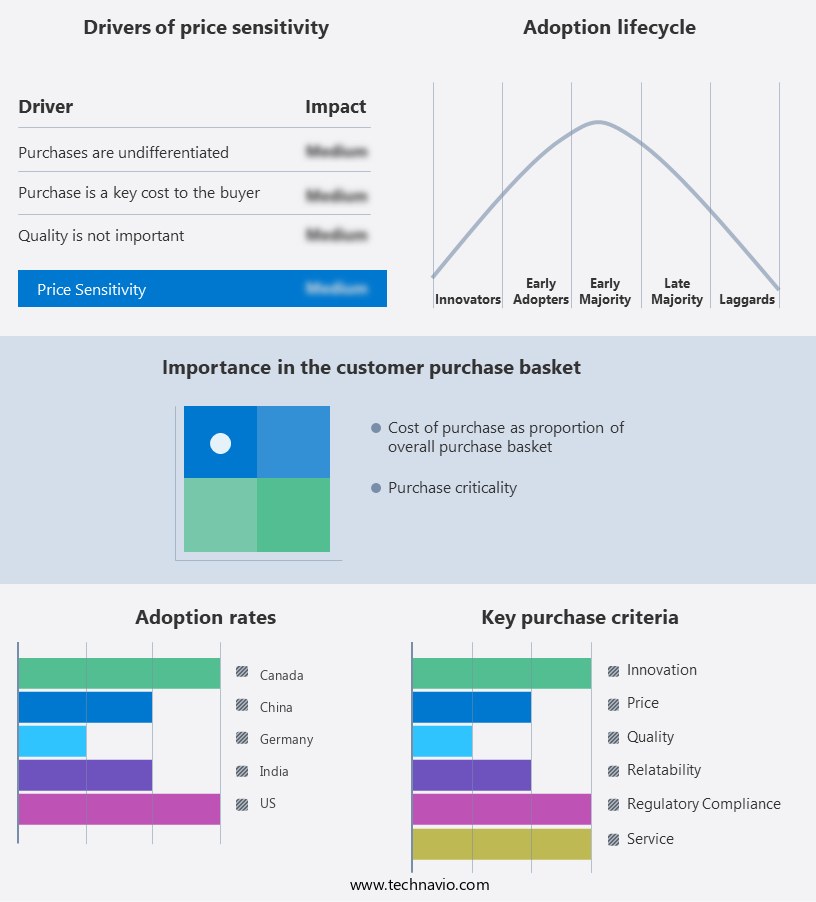
Customer Landscape
Key Companies & Market Insights
Companies are implementing various strategies, such as strategic alliances, almond ingredients market forecast, partnerships, mergers and acquisitions, geographical expansion, and product/service launches, to enhance their presence in the industry.
Barry Callebaut AG - This company specializes in providing high-quality almond ingredients for various applications.
The industry research and growth report includes detailed analyses of the competitive landscape of the market and information about key companies, including:
- Barry Callebaut AG
- Blue Diamond Growers
- Borges International Group SLU
- Chocoladefabriken Lindt and Sprungli AG
- ConnOils LLC
- Dohler GmbH
- ETChem
- Harris Woolf California Almonds
- Kanegrade Ltd.
- Max River Pty Ltd.
- Modern Ingredients
- Olam Group Ltd.
- Royal Nut Co.
- Sanitarium Health Food Co.
- Savencia SA
- The Hershey Co.
- The J.M Smucker Co.
- The Wonderful Co. LLC
- Treehouse California Almonds LLC
- Valley Harvest Nut Co.
Qualitative and quantitative analysis of companies has been conducted to help clients understand the wider business environment as well as the strengths and weaknesses of key industry players. Data is qualitatively analyzed to categorize companies as pure play, category-focused, industry-focused, and diversified; it is quantitatively analyzed to categorize companies as dominant, leading, strong, tentative, and weak.
Recent Development and News in Almond Ingredients Market
- In January 2024, Blue Diamond Almonds, a leading almond grower and processor, announced the launch of their new line of organic almond flour and almond protein powder, expanding their product portfolio and catering to the growing demand for organic and health-conscious ingredients (Blue Diamond Almonds Press Release).
- In March 2024, The Almond Board of California and Danone signed a strategic partnership to promote almond milk production and research collaborations, aiming to enhance the sustainability and competitiveness of the almond industry (Reuters).
- In May 2024, BENEO, a global manufacturer of functional ingredients, completed the acquisition of a 75% stake in the Spanish almond ingredient producer, NUTRALIA, marking their entry into the market and expanding their product offerings (BENEO Press Release).
- In April 2025, the European Commission approved the use of almond protein as a novel food ingredient, opening new opportunities for almond ingredient manufacturers to penetrate the European market and cater to the increasing demand for plant-based protein alternatives (European Commission Press Release).
Research Analyst Overview
- The market continues to evolve, with ongoing research and innovation driving new applications across various sectors. For instance, the analysis of almond polyphenols has led to the development of standardized almond flour with improved texture for baked goods. In addition, the natural almond flavors are finding increasing use in beverages, cosmetics, and food products. The industry anticipates a growth of 5% annually, with a focus on sustainable almond supply and processing efficiency to meet the rising demand. One notable example is the 15% increase in sales for a leading food manufacturer due to the introduction of an almond protein isolate in their product line.
- The market also emphasizes safety and labeling transparency, with a growing trend towards organic almond production and traceability of almond ingredient origins. Furthermore, almond waste valorization and the exploration of bioactive compounds are key areas of ongoing research, with potential applications in pharmaceuticals and functional food and beverage products.
Dive into Technavio's robust research methodology, blending expert interviews, extensive data synthesis, and validated models for unparalleled Almond Ingredients Market insights. See full methodology.
|
Market Scope |
|
|
Report Coverage |
Details |
|
Page number |
139 |
|
Base year |
2023 |
|
Historic period |
2018-2022 |
|
Forecast period |
2024-2028 |
|
Growth momentum & CAGR |
Accelerate at a CAGR of 10.03% |
|
Market growth 2024-2028 |
USD 7194.6 million |
|
Market structure |
Fragmented |
|
YoY growth 2023-2024(%) |
8.88 |
|
Key countries |
US, China, Canada, Germany, and India |
|
Competitive landscape |
Leading Companies, Market Positioning of Companies, Competitive Strategies, and Industry Risks |
What are the Key Data Covered in this Almond Ingredients Market Research and Growth Report?
- CAGR of the Almond Ingredients industry during the forecast period
- Detailed information on factors that will drive the growth and forecasting between 2024 and 2028
- Precise estimation of the size of the market and its contribution of the industry in focus to the parent market
- Accurate predictions about upcoming growth and trends and changes in consumer behaviour
- Growth of the market across North America, APAC, Europe, South America, and Middle East and Africa
- Thorough analysis of the market's competitive landscape and detailed information about companies
- Comprehensive analysis of factors that will challenge the almond ingredients market growth of industry companies
We can help! Our analysts can customize this almond ingredients market research report to meet your requirements.
 RIA -
RIA - 
