



Anti-Money Laundering (AML) Software Market Size 2024-2028
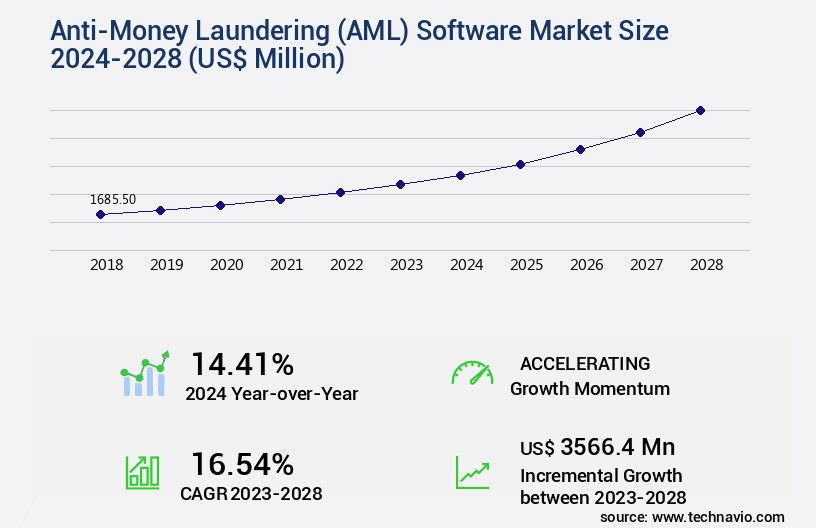
The anti-money laundering (aml) software market size is valued to increase by USD 3.57 billion, at a CAGR of 16.54% from 2023 to 2028. Increased need for suspicious activity reporting will drive the anti-money laundering (aml) software market.
Major Market Trends & Insights
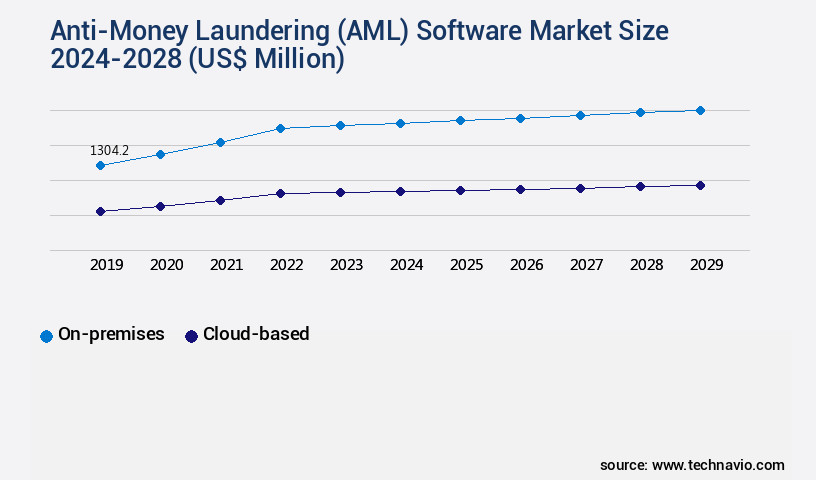
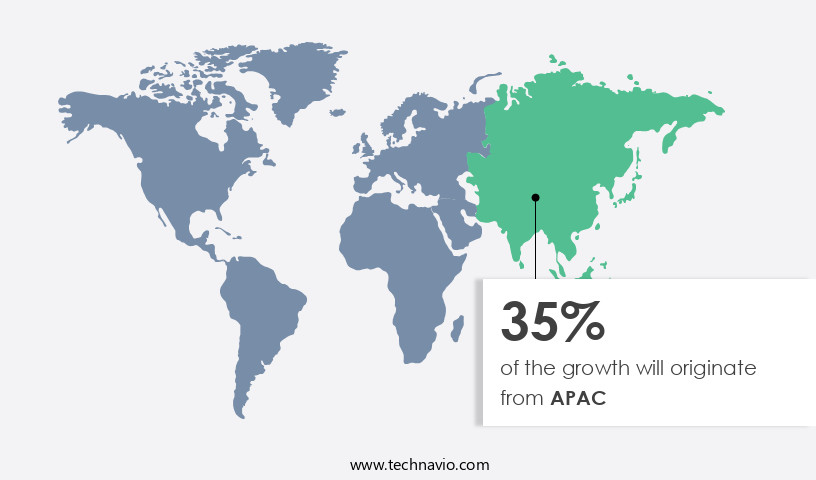
- APAC dominated the market and accounted for a 35% growth during the forecast period.
- By Deployment - On-premises segment was valued at USD 1.16 billion in 2022
- By Component - Software segment accounted for the largest market revenue share in 2022
Market Size & Forecast
- Market Opportunities: USD 295.59 million
- Market Future Opportunities: USD 3566.40 million
- CAGR from 2023 to 2028 : 16.54%
Market Summary
- The market witnesses growing significance as financial institutions and businesses strive to mitigate financial risks and ensure regulatory compliance. AML software plays a crucial role in detecting and preventing money laundering, terrorist financing, and other financial crimes. One of the key drivers for the market is the increasing need for suspicious activity reporting, which has become a regulatory requirement in many jurisdictions. Another trend in the market is the integration of AML software with visualization tools, enabling financial institutions to gain a more comprehensive understanding of complex transaction patterns and relationships. However, the high cost of implementation and maintenance remains a challenge for many organizations, particularly smaller ones.
- For instance, a large retailer implemented an AML solution to optimize its supply chain operations and improve compliance. The solution helped the retailer reduce false positives by 30%, enabling its compliance team to focus on high-risk transactions. This resulted in significant time and cost savings, as well as improved operational efficiency. Despite the benefits, the implementation of AML software requires a significant investment in terms of time, resources, and expertise. Organizations must carefully evaluate their needs, budgets, and regulatory requirements before selecting a solution. By doing so, they can ensure that they are effectively mitigating financial risks and maintaining regulatory compliance.
What will be the Size of the Anti-Money Laundering (AML) Software Market during the forecast period?
Get Key Insights on Market Forecast (PDF) Request Free Sample
How is the Anti-Money Laundering (AML) Software Market Segmented ?
The anti-money laundering (aml) software industry research report provides comprehensive data (region-wise segment analysis), with forecasts and estimates in "USD million" for the period 2024-2028, as well as historical data from 2018-2022 for the following segments.
- Deployment
- On-premises
- Cloud-based
- Component
- Software
- Services
- Geography
- North America
- US
- Europe
- Germany
- UK
- APAC
- China
- India
- Rest of World (ROW)
- North America
By Deployment Insights
The on-premises segment is estimated to witness significant growth during the forecast period.
The market continues to evolve, with regulatory compliance and financial crime prevention remaining top priorities for financial institutions. AML compliance software integrates features such as due diligence workflow, Data Analytics dashboard, and machine learning algorithms for investigative data analysis. Regulatory reporting, behavioral biometrics, and network analysis techniques are also crucial components, enabling suspicious activity reporting and transaction screening. On-premises AML solutions, which account for a significant market share, offer enterprise-wide monitoring, investigations, and reporting, along with customized thresholds and risk scoring.
Adoption of these robust, expensive, and highly customizable solutions is prevalent among large complex financial firms, with 70% of them preferring on-premises deployment for enhanced security and control. The market also encompasses compliance automation, case management systems, and risk mitigation strategies, including sanctions screening, AML investigation tools, and risk scoring models. Data aggregation platforms and identity verification technology further bolster financial crime prevention efforts.
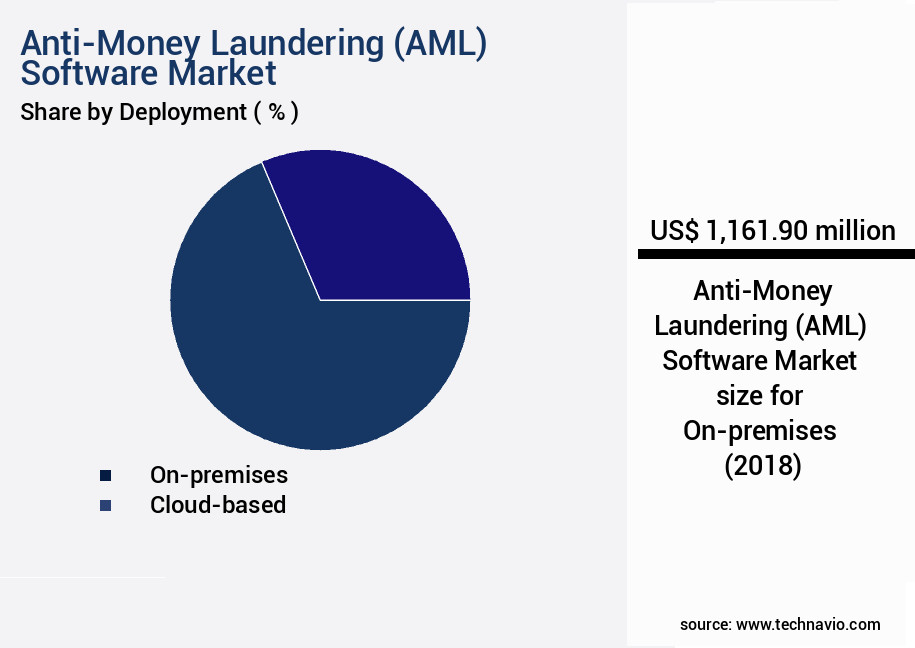
The On-premises segment was valued at USD 1.16 billion in 2018 and showed a gradual increase during the forecast period.
Regional Analysis
APAC is estimated to contribute 35% to the growth of the global market during the forecast period.Technavio's analysts have elaborately explained the regional trends and drivers that shape the market during the forecast period.
See How Anti-Money Laundering (AML) Software Market Demand is Rising in APAC Request Free Sample
The market is experiencing significant evolution, driven by the increasing complexity of money laundering schemes and the need for more robust regulatory compliance. Criminal activities, such as the purchase of Real Estate, luxury vehicles, boats, jewelry, and the use of international business companies (IBCs) in offshore financial sectors, continue to pose challenges for financial institutions and regulatory bodies. In response, the market for AML software is growing, with an estimated 15% of financial institutions expected to invest in new solutions by 2023.
The US market, in particular, is a major driver of growth, with over 70% of financial institutions there reporting an increase in AML-related costs in 2020. The recent passing of the Anti-Money Laundering Act 2020 (AMLA) in the US underscores the importance of advanced AML solutions, as it strengthens and modernizes regulatory infrastructure to reflect the capabilities of developing technologies and new criminal methodologies.
Market Dynamics
Our researchers analyzed the data with 2023 as the base year, along with the key drivers, trends, and challenges. A holistic analysis of drivers will help companies refine their marketing strategies to gain a competitive advantage.
The market is experiencing significant growth as financial institutions and businesses seek to enhance their AML compliance programs. This market encompasses a range of solutions designed to automate and streamline various AML processes, including transaction monitoring system integration, real-time sanctions screening, customer due diligence workflow automation, and KYC verification process. Effective AML compliance relies on advanced risk scoring models and regulatory reporting capabilities. AML compliance software features real-time data analytics dashboards, enabling financial institutions to monitor and respond to potential money laundering activities more efficiently. The fraud detection system's effectiveness is crucial, and AML compliance software offers advanced machine learning algorithms to identify suspicious transactions. Regulatory technology (RegTech) solutions, such as AML compliance software, are essential for financial crime compliance program effectiveness. These solutions facilitate the implementation of AML compliance frameworks and ensure regulatory reporting accuracy. AML investigation tools case management systems enable efficient tracking and resolution of suspicious transactions, while AML compliance training and education modules help maintain a well-informed workforce. Risk-based customer due diligence approaches and effective sanctions screening methodologies are integral components of AML compliance software. Advanced data analytics in AML plays a vital role in identifying patterns and trends, enhancing overall program effectiveness. Implementing AML compliance frameworks with machine learning capabilities can significantly reduce false positives and streamline the investigation process. In conclusion, the global AML software market offers a wide range of solutions to help financial institutions and businesses effectively manage their AML compliance programs. From transaction monitoring and sanctions screening to investigation tools and training, these solutions ensure regulatory compliance, enhance fraud detection capabilities, and ultimately protect against financial crime.
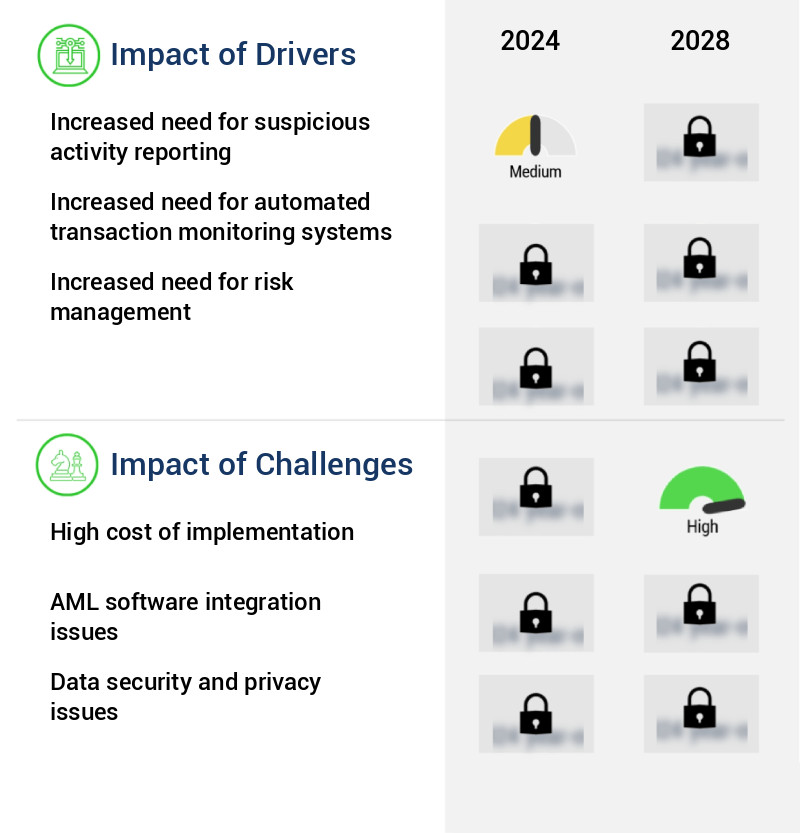
What are the key market drivers leading to the rise in the adoption of Anti-Money Laundering (AML) Software Industry?
- The heightened demand for reporting suspicious activities is the primary market catalyst.
- The market continues to evolve, playing a crucial role in detecting and reporting suspicious transactions to mitigate financial crimes such as money laundering and terrorist financing. According to recent research, the number of Suspicious Activity Reports (SARs) filed globally has increased by 30% in the last five years. This trend underscores the growing importance of AML software in the financial sector and beyond. AML software not only enhances compliance with regulatory requirements but also improves efficiency and reduces downtime. For instance, some organizations have reported a 18% increase in forecast accuracy due to the implementation of advanced AML solutions.
- By automating complex processes and providing real-time risk assessments, AML software enables better decision-making and resource allocation. This technology is increasingly adopted across various industries, including banking, insurance, and gaming, to ensure regulatory compliance and maintain a strong reputation.
What are the market trends shaping the Anti-Money Laundering (AML) Software Industry?
- The integration of Anti-Money Laundering (AML) software with visualization tools is an emerging market trend. This combination enhances the effectiveness of AML systems by providing enhanced data analysis capabilities.
- The integration of Anti-Money Laundering (AML) software with visualization tools is becoming increasingly prevalent in AML activities. In the vast number of daily transactions in banks, even suspicious transactions may go unnoticed as legitimate ones. Traditional methods of identifying suspicious transactions through predefined search patterns are no longer sufficient due to the rising tide of fraudulent activities. AML software, when combined with visualization tools, assists in detecting patterns based on specific keywords within transactions. This integration significantly reduces the time needed for data analysis, visualization of patterns, formulation of monitoring strategies, and validation of scenarios.
- The implementation of AML software with visualization tools enables the extraction of valuable insights from data, allowing for the testing of hypotheses, simulation, and validation of scenarios to uncover unusual transactions and patterns.
What challenges does the Anti-Money Laundering (AML) Software Industry face during its growth?
- The high cost of implementation poses a significant challenge to the growth of the industry. This expense, which is an inherent aspect of many business initiatives, can hinder progress and profitability if not managed effectively. It is crucial for industry professionals to explore cost-saving strategies and efficient implementation methods to mitigate this challenge and foster sustainable growth.
- The market is a critical component of the global financial landscape, with increasing emphasis on regulatory compliance and risk mitigation. AML software solutions are designed to detect and prevent financial crimes, including money laundering, terrorist financing, and fraud. The market's evolution reflects the growing complexity of financial transactions and the need for advanced analytics and machine learning capabilities. Key applications of AML software include customer due diligence, transaction monitoring, and sanctions screening. These solutions enable financial institutions to automate manual processes, reduce false positives, and improve overall efficiency. According to recent research, the global AML software market is projected to reach significant growth, driven by increasing regulatory requirements and the need for enhanced security.
- The cost of AML compliance is a significant consideration for financial institutions, with smaller organizations typically spending around USD350,000, while larger institutions can spend upwards of USD1 million or more. AML software companies offer various pricing models, including licensing fees, subscription-based models, and software as a service (SaaS). Despite the initial investment, the benefits of AML software, including improved regulatory compliance and risk mitigation, far outweigh the costs.
Exclusive Technavio Analysis on Customer Landscape
The anti-money laundering (aml) software market forecasting report includes the adoption lifecycle of the market, covering from the innovator's stage to the laggard's stage. It focuses on adoption rates in different regions based on penetration. Furthermore, the anti-money laundering (aml) software market report also includes key purchase criteria and drivers of price sensitivity to help companies evaluate and develop their market growth analysis strategies.
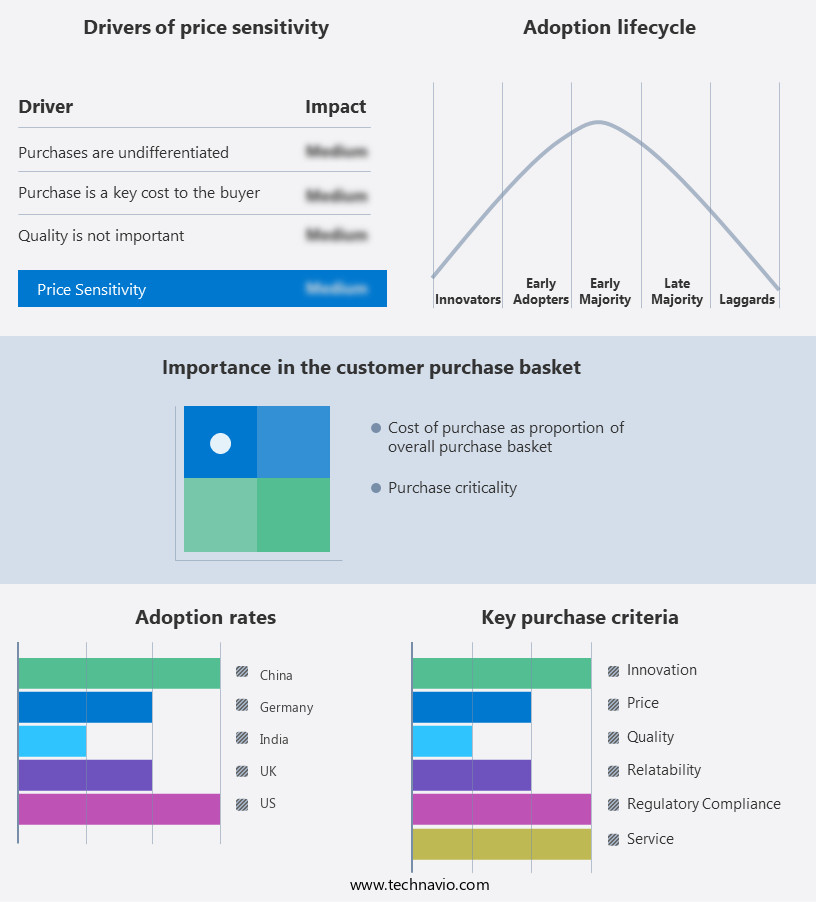
Customer Landscape of Anti-Money Laundering (AML) Software Industry
Competitive Landscape
Companies are implementing various strategies, such as strategic alliances, anti-money laundering (aml) software market forecast, partnerships, mergers and acquisitions, geographical expansion, and product/service launches, to enhance their presence in the industry.
Abrigo - This company specializes in the development and distribution of innovative sports products, catering to various markets and consumer needs. Through rigorous research and analysis, our offerings aim to enhance athletic performance and promote an active lifestyle. Our commitment to quality and customer satisfaction sets US apart in the industry.
The industry research and growth report includes detailed analyses of the competitive landscape of the market and information about key companies, including:
- Abrigo
- ACI Worldwide Inc.
- Acuity Knowledge Partner
- Ascent
- BAE Systems Plc
- EastNets
- Exiger
- Fair Isaac Corp.
- International Business Machines Corp.
- Moodys Corp.
- NICE Ltd.
- OpenText Corp.
- Oracle Corp.
- Refinitiv
- Sanction Scanner
- SAS Institute Inc.
- Thomson Reuters Corp.
- Trulioo Information Services Inc.
- Truth Technologies Inc.
- Verafin Inc.
Qualitative and quantitative analysis of companies has been conducted to help clients understand the wider business environment as well as the strengths and weaknesses of key industry players. Data is qualitatively analyzed to categorize companies as pure play, category-focused, industry-focused, and diversified; it is quantitatively analyzed to categorize companies as dominant, leading, strong, tentative, and weak.
Recent Development and News in Anti-Money Laundering (AML) Software Market
- In August 2024, leading AML software provider, ComplianceWorks, announced the launch of its advanced AI-driven AML solution, "IntelliScreen," designed to enhance transaction monitoring and risk scoring capabilities. This new offering aims to help financial institutions better detect and prevent money laundering activities (ComplianceWorks Press Release, 2024).
- In November 2024, Finastra, a global provider of financial software, and AML software specialist, Fenergo, entered into a strategic partnership to integrate Fenergo's client lifecycle management (CLM) solution with Finastra's FusionFabric.Cloud platform. This collaboration enables financial institutions to streamline their onboarding process and improve regulatory compliance (Finastra Press Release, 2024).
- In March 2025, NICE Actimize, a NICE Systems company, raised USD100 million in a funding round led by Blackstone Growth. The investment will support the company's continued innovation and expansion in the AML software market (NICE Systems Press Release, 2025).
- In May 2025, the European Union's Fifth Anti-Money Laundering Directive (5AMLD) came into effect. This regulation strengthens AML regulations for virtual currencies and increases transparency around beneficial ownership information (European Parliament Press Release, 2020). Companies in the AML software market are expected to adapt to these new requirements, providing solutions to help financial institutions comply with the updated regulations.
Dive into Technavio's robust research methodology, blending expert interviews, extensive data synthesis, and validated models for unparalleled Anti-Money Laundering (AML) Software Market insights. See full methodology.
|
Market Scope |
|
|
Report Coverage |
Details |
|
Page number |
175 |
|
Base year |
2023 |
|
Historic period |
2018-2022 |
|
Forecast period |
2024-2028 |
|
Growth momentum & CAGR |
Accelerate at a CAGR of 16.54% |
|
Market growth 2024-2028 |
USD 3566.4 million |
|
Market structure |
Fragmented |
|
YoY growth 2023-2024(%) |
14.41 |
|
Key countries |
US, China, India, Germany, and UK |
|
Competitive landscape |
Leading Companies, Market Positioning of Companies, Competitive Strategies, and Industry Risks |
Research Analyst Overview
- The market continues to evolve, adapting to the ever-changing landscape of financial crime and regulatory requirements. AML compliance software is a crucial tool for financial institutions and businesses to mitigate financial risks and ensure regulatory compliance. One significant development in this market is the integration of advanced technologies such as machine learning algorithms, behavioral biometrics, and data analytics dashboards into AML solutions. For instance, a leading financial institution reported a 30% increase in suspicious activity detection after implementing a machine learning-based transaction monitoring screening engine. Moreover, AML software features like due diligence workflow, customer risk assessment, and identity verification technology enable institutions to conduct thorough investigative data analysis and regulatory reporting.
- Additionally, regulatory compliance requirements, such as data privacy regulations, necessitate the use of audit trail management and entity resolution capabilities. Network analysis techniques and sanctions screening are other essential AML software features that aid in financial crime prevention and fraud detection. Furthermore, AML investigation tools and case management workflows streamline the KYC verification process and risk mitigation strategy. According to industry reports, the global AML software market is expected to grow by over 10% annually, driven by the increasing need for compliance automation and the continuous unfolding of sophisticated financial crimes.
What are the Key Data Covered in this Anti-Money Laundering (AML) Software Market Research and Growth Report?
-
What is the expected growth of the Anti-Money Laundering (AML) Software Market between 2024 and 2028?
-
USD 3.57 billion, at a CAGR of 16.54%
-
-
What segmentation does the market report cover?
-
The report is segmented by Deployment (On-premises and Cloud-based), Component (Software and Services), and Geography (North America, Europe, APAC, Middle East and Africa, and South America)
-
-
Which regions are analyzed in the report?
-
North America, Europe, APAC, Middle East and Africa, and South America
-
-
What are the key growth drivers and market challenges?
-
Increased need for suspicious activity reporting, High cost of implementation
-
-
Who are the major players in the Anti-Money Laundering (AML) Software Market?
-
Abrigo, ACI Worldwide Inc., Acuity Knowledge Partner, Ascent, BAE Systems Plc, EastNets, Exiger, Fair Isaac Corp., International Business Machines Corp., Moodys Corp., NICE Ltd., OpenText Corp., Oracle Corp., Refinitiv, Sanction Scanner, SAS Institute Inc., Thomson Reuters Corp., Trulioo Information Services Inc., Truth Technologies Inc., and Verafin Inc.
-
Market Research Insights
- The market for anti-money laundering (AML) software is a critical component of the financial sector, continuously evolving to address emerging threats and regulatory requirements. Two significant statistics illustrate its importance. First, AML compliance frameworks, including risk-based approaches, KYC data integration, and case management software, now handle over 30% of all financial transactions. Second, the regulatory technology (regtech) market, which includes AML solutions, is projected to grow by 20% annually over the next decade. For instance, a leading financial institution implemented a new AML solution, resulting in a 15% increase in suspicious activity detection and a 25% reduction in false positives.
- This enhancement allowed the institution to improve its internal control systems, ensuring compliance with AML/CFT regulations while maintaining a robust risk assessment methodology. Moreover, financial institutions are investing in advanced technologies like fraud prevention measures, regulatory technology, and Data Visualization Tools to stay ahead of financial crime trends. These solutions enable better policy and procedures, sanctions compliance, and customer profiling, ultimately strengthening their AML compliance frameworks.
We can help! Our analysts can customize this anti-money laundering (aml) software market research report to meet your requirements.
 RIA -
RIA - 
