


Argon Market Size 2026-2030
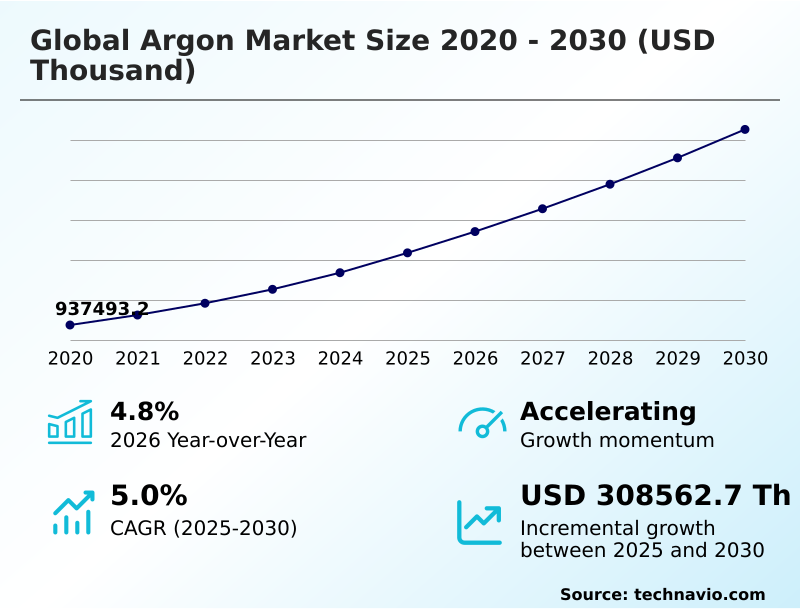
The argon market size is valued to increase by USD 308.56 million, at a CAGR of 5% from 2025 to 2030. Escalation in semiconductor fabrication and advanced microelectronics production will drive the argon market.
Major Market Trends & Insights
- APAC dominated the market and accounted for a 53.5% growth during the forecast period.
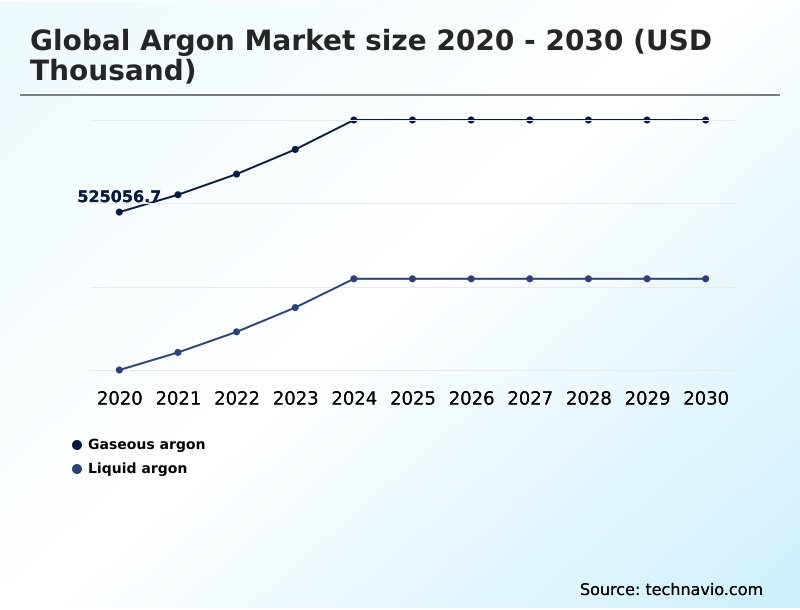
- By Product - Gaseous argon segment was valued at USD 590.75 million in 2024
- By Type - Standard grade segment accounted for the largest market revenue share in 2024
Market Size & Forecast
- Market Opportunities:
- Market Future Opportunities: USD 308.56 million
- CAGR from 2025 to 2030 : 5%
Market Summary
- The Argon Market operates as an essential foundational layer for precision manufacturing and advanced metallurgy worldwide. Industrial consumers increasingly integrate automated gas delivery systems to optimize usage and eliminate manual cylinder handling bottlenecks.
- For example, large-scale metal fabrication facilities implementing central cryogenic manifolds have reduced shielding gas waste by 22% compared to traditional standalone cylinder networks, driving substantial supply chain optimization. The rapid escalation in semiconductor fabrication acts as a primary driver; microchip foundries require continuous volumes of ultra-pure inert gas to prevent wafer oxidation during highly sensitive photolithography and etching cycles.
- Conversely, structural exposure to basic oxygen steelmaking presents a formidable challenge. Because the raw feedstock is recovered entirely as a secondary byproduct of colossal cryogenic air separation units attached to primary steel mills, any downturn in blast furnace output severely constricts downstream supply capabilities.
- End-users must navigate this structural constraint by securing localized micro-bulk storage to insulate operations against sudden wholesale disruptions, ensuring continuous yield stability across their respective heavy industrial portfolios.
What will be the Size of the Argon Market during the forecast period?
Get Key Insights on Market Forecast (PDF) Get Free Sample
How is the Argon Market Segmented?
The argon industry research report provides comprehensive data (region-wise segment analysis), with forecasts and estimates in "USD thousand" for the period 2026-2030, as well as historical data from 2020-2024 for the following segments.
- Product
- Gaseous argon
- Liquid argon
- Type
- Standard grade
- High-purity grade
- Ultra-high-purity grade
- Application
- Steel and metal production
- Metal fabrication and welding
- Industrial and chemical processing
- Electronics and semiconductor
- Others
- Geography
- APAC
- China
- Japan
- South Korea
- India
- Indonesia
- Australia
- North America
- US
- Mexico
- Canada
- Europe
- Germany
- France
- Italy
- UK
- Spain
- The Netherlands
- Middle East and Africa
- South Africa
- Turkey
- Saudi Arabia
- UAE
- Israel
- South America
- Brazil
- Argentina
- Colombia
- APAC
By Product Insights
The gaseous argon segment is estimated to witness significant growth during the forecast period.
Gaseous argon distribution optimizes localized point-of-use operations across decentralized manufacturing environments and precision analytical laboratories.
By providing agile delivery mechanisms, this segment minimizes capital expenditure compared to bulk liquid installations, ensuring uninterrupted workflows for subsea pipeline welding and offshore wind foundation fabrication.
Cylinders equipped with integrated regulators enhance gas transfer efficiency by 15% during intricate directed energy deposition sequences. Furthermore, advanced analytical sectors rely on compressed gaseous formats to calibrate atmospheric pressure ionization mass spectrometry equipment and validate catalytic deoxygenation reactors.
Window fabricators utilize targeted cylinder manifolds for insulated glass units, achieving superior thermal transmittance reduction without heavy cryogenic storage. Quality control facilities increasingly employ localized getter alloy purifiers to finalize purity thresholds at the cylinder valve, standardizing high-end performance.
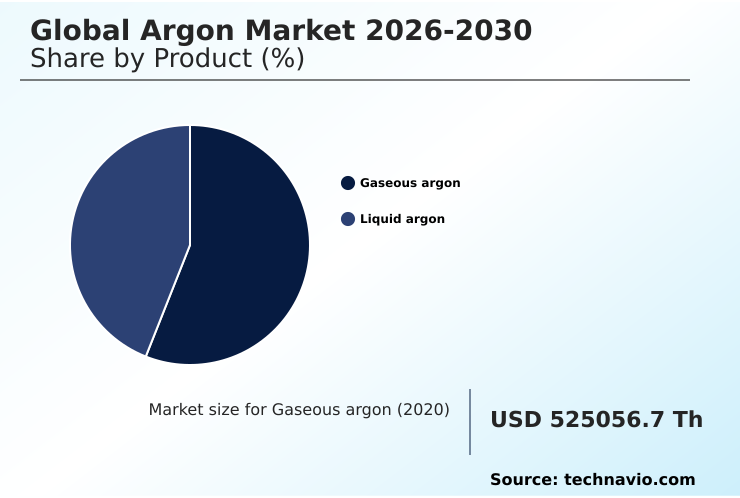
The Gaseous argon segment was valued at USD 590.75 million in 2024 and showed a gradual increase during the forecast period.
Regional Analysis
APAC is estimated to contribute 53.5% to the growth of the global market during the forecast period.Technavio’s analysts have elaborately explained the regional trends and drivers that shape the market during the forecast period.
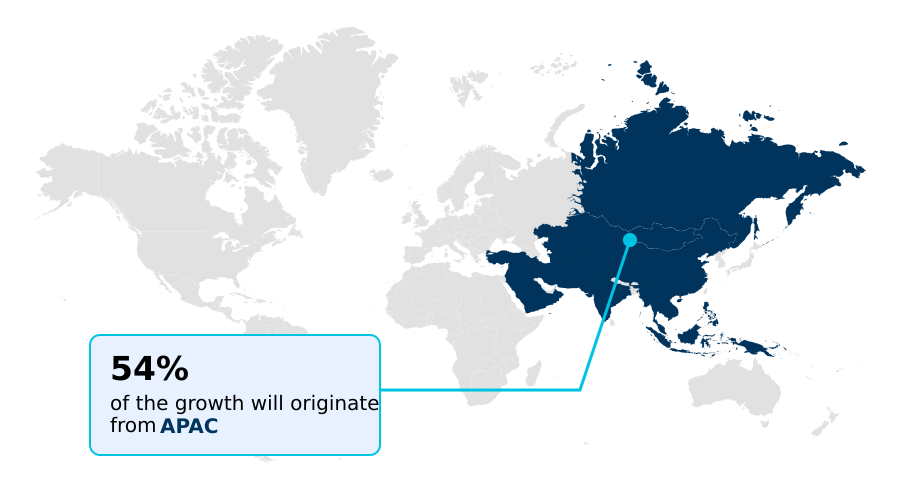
See How Argon Market Demand is Rising in APAC Get Free Sample
The geographic distribution of the Argon Market reveals distinct consumption variations, with APAC leading production capacity due to expansive primary steel and electronics manufacturing.
Facilities in APAC have increased output efficiency by 25% compared to European plants, leveraging massive cryogenic fractional distillation units tied to heavy metallurgy.
This region heavily utilizes argon oxygen decarburization to refine stainless steel and powers Czochralski crystal growth and extreme ultraviolet lithography for semiconductor dominance.
Conversely, North America and Europe focus on precision fabrication, where laser powder bed fusion and strictly controlled additive manufacturing atmospheres reduce aerospace component defect rates by 18%.
Furthermore, stringent building energy performance standards across Europe mandate high-volume architectural glazing insulation, achieving a 32% improvement in residential thermal retention.
Across all regions, the baseline demand for gas tungsten arc welding and automated gas metal arc welding maintains robust volumetric continuity.
Market Dynamics
Our researchers analyzed the data with 2025 as the base year, along with the key drivers, trends, and challenges. A holistic analysis of drivers will help companies refine their marketing strategies to gain a competitive advantage.
- The Argon Market fundamentally underpins advanced fabrication methodologies and specialized industrial operations across the supply chain. As industries transition toward higher precision and stricter environmental compliance, the continuous delivery of specialized atmospheric gases becomes a critical operational requirement. Facilities deploying centralized distribution systems frequently observe a 20% enhancement in workflow continuity compared to decentralized, manual cylinder replacement methods.
- This supply chain optimization is highly evident in microelectronics, where semiconductor manufacturing ultra pure argon is absolutely vital for maintaining uncontaminated environments during complex chemical vapor deposition and etching cycles. Simultaneously, the heavy equipment sector relies on continuous robotic welding argon shielding gas to eliminate porosity and guarantee structural integrity in automated vehicle assembly lines.
- In the construction domain, the widespread integration of architectural glass argon insulation units significantly lowers thermal conductivity, aligning urban development projects with strict energy conservation frameworks. The space technology sector is also experiencing a notable shift, driven by aerospace electric propulsion argon adoption for low Earth orbit satellite maneuvering, providing a scalable alternative to volatile legacy propellants.
- Furthermore, heavy metallurgy depends thoroughly on argon oxygen decarburization stainless steel processes, allowing steelmakers to remove carbon impurities without oxidizing valuable alloying elements. This broad application spectrum ensures steady procurement requirements across diverse manufacturing sectors.
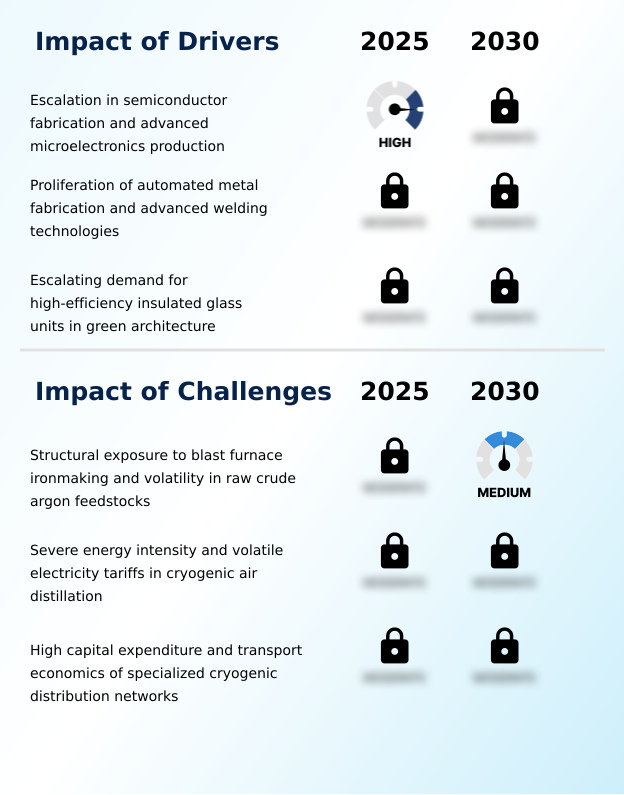
What are the key market drivers leading to the rise in the adoption of Argon Industry?
- An escalation in semiconductor fabrication and advanced microelectronics production serves as a primary catalyst driving sustained structural expansion within this sector.
- The relentless miniaturization of microelectronics compels fabrication facilities to consume unprecedented volumes of ultra high purity gas.
- During rigorous semiconductor wafer processing, extreme cleanliness prevents structural defects; operations such as chemical vapor deposition, physical vapor deposition, and intricate atomic layer deposition depend entirely on this inert barrier.
- By maintaining unreactive ambients during wafer sputter coating and reactive ion etching, manufacturers have elevated microchip production yields by 19%. Furthermore, the heavy manufacturing sector drives substantial baseline demand for industrial shielding gases.
- The widespread implementation of continuous robotic welding automation requires absolute molten metal oxidation prevention to ensure structural joint integrity.
- Upgraded automated gas delivery manifolds in these assembly plants have simultaneously reduced shielding gas waste by 14% and increased continuous arc time by 26%.
What are the market trends shaping the Argon Industry?
- The surging adoption of aerospace propulsion technologies and satellite electric thrusters represents a prominent trend. These advanced applications increasingly require stable, inert propellants to optimize orbital maneuvers and satellite performance.
- The accelerating adoption of noble gas propellants in commercial spaceflight is fundamentally altering traditional consumption paradigms. Satellite operators are transitioning toward economical orbital maneuvers propellant by integrating advanced hall effect thrusters and grid ion propulsion systems, which reduces launch payload expenditures by 22%. In the medical sector, clinical facilities are expanding the use of the electrosurgical coagulation modality.
- Devices utilizing argon plasma coagulation and targeted joule thomson cryoablation have improved superficial hemostasis achievement times by 15%, enhancing outpatient recovery trajectories. Simultaneously, traditional heavy industry is upgrading secondary steelmaking operations. Refineries deploy extensive ladle metallurgy degassing techniques during high-grade stainless steel refining to eliminate nonmetallic inclusions.
- These advanced metallurgical stirring processes have increased alloy batch yield consistency by 28%, securing vital infrastructure materials for stringent engineering requirements.
What challenges does the Argon Industry face during its growth?
- Structural exposure to blast furnace ironmaking and the resulting volatility in raw crude argon feedstocks present significant operational constraints and supply vulnerabilities.
- Structural constraints inherently limit independent supply pipelines because raw feedstock is heavily reliant on primary blast furnace ironmaking. Production volume fluctuates precisely with the operational uptime of the basic oxygen furnace sector, causing unpredictable regional shortages. The extraction process relies on extreme cryogenic air separation, utilizing highly energy-intensive multi stage thermodynamic cycles within towering cryogenic distillation columns.
- Surging electricity tariffs have subsequently increased baseline separation costs by 22%. Furthermore, merchant liquid distribution presents severe logistical bottlenecks. Transporting liquefied product requires expensive vacuum insulated cryogenic tankers, while inevitable thermal heat leaks necessitate constant product boil off mitigation. Suboptimal logistics frequently result in an 11% physical inventory loss during transit.
- Consequently, distributors must deploy sophisticated cylinder asset tracking to guarantee supply continuity for sensitive vacuum argon degassing operations.
Exclusive Technavio Analysis on Customer Landscape
The argon market forecasting report includes the adoption lifecycle of the market, covering from the innovator’s stage to the laggard’s stage. It focuses on adoption rates in different regions based on penetration. Furthermore, the argon market report also includes key purchase criteria and drivers of price sensitivity to help companies evaluate and develop their market growth analysis strategies.
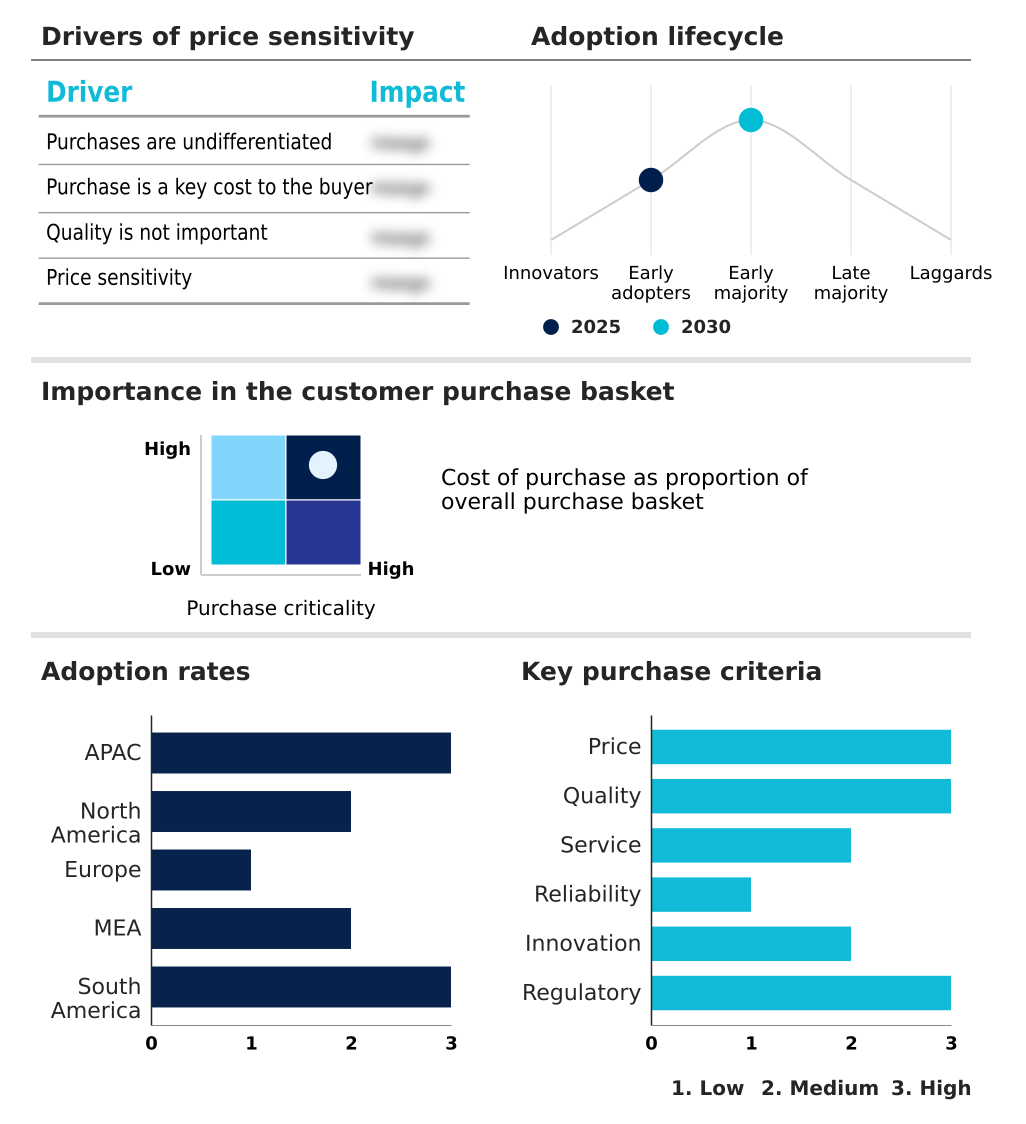
Customer Landscape of Argon Industry
Competitive Landscape
Companies are implementing various strategies, such as strategic alliances, argon market forecast, partnerships, mergers and acquisitions, geographical expansion, and product/service launches, to enhance their presence in the industry.
Abdullah Hashim Industrial Gases - The provider supplies a comprehensive portfolio of industrial, high-purity, and liquid argon gas mixtures, empowering advanced manufacturing, electronics fabrication, and precision metallurgical processes with reliable inert shielding solutions.
The industry research and growth report includes detailed analyses of the competitive landscape of the market and information about key companies, including:
- Abdullah Hashim Industrial Gases
- Air Liquide SA
- Air Water Inc.
- ATAMAN Kimya AS
- Buzwair Industrial Gases Factories
- Chengdu Taiyu Industrial Gases
- Coregas Pty Ltd.
- Dubai Industrial Gases LLC
- Ellenbarrie Industrial Gases
- Gujarat State Fertilizers
- Gulfcryo
- Hangzhou Hangyang Co. Ltd.
- INOX Air Products Pvt Ltd
- Iwatani Corp.
- Nippon Sanso Corp.
- SOL Spa
- Sri Venkateswara Carbonic Gases
- The Gases Co
- Tirupati Oxygen Pvt Ltd
- Universal Industrial Gases Inc.
Qualitative and quantitative analysis of companies has been conducted to help clients understand the wider business environment as well as the strengths and weaknesses of key industry players. Data is qualitatively analyzed to categorize companies as pure play, category-focused, industry-focused, and diversified; it is quantitatively analyzed to categorize companies as dominant, leading, strong, tentative, and weak.
Recent Development and News in Argon market
- In the Diversified Chemicals industry, the shift toward sustainable architectural construction has increased the production of high-performance thermal insulation materials, directly impacting Argon demand for energy-efficient double-pane window filling applications.
- Stringent automotive emission standards have accelerated the adoption of lightweight aluminum and high-strength titanium alloys, which necessitates advanced inert shielding gases for robotic welding automation and defect prevention.
- The expansion of semiconductor fabrication capacities to support advanced computing architectures requires ultra-clean process ambients, driving massive consumption of ultra-high-purity inert carriers during chemical vapor deposition operations.
- The transition from traditional basic oxygen furnaces to electric arc furnaces utilizing recycled scrap metal has heightened the need for precise secondary metallurgical refining, requiring high-volume ladle degassing to remove structural impurities.
Dive into Technavio’s robust research methodology, blending expert interviews, extensive data synthesis, and validated models for unparalleled Argon Market insights. See full methodology.
| Market Scope | |
|---|---|
| Page number | 304 |
| Base year | 2025 |
| Historic period | 2020-2024 |
| Forecast period | 2026-2030 |
| Growth momentum & CAGR | Accelerate at a CAGR of 5% |
| Market growth 2026-2030 | USD 308562.7 thousand |
| Market structure | Fragmented |
| YoY growth 2025-2026(%) | 4.8% |
| Key countries | China, Japan, South Korea, India, Indonesia, Australia, US, Mexico, Canada, Germany, France, Italy, UK, Spain, The Netherlands, South Africa, Turkey, Saudi Arabia, UAE, Israel, Brazil, Argentina and Colombia |
| Competitive landscape | Leading Companies, Market Positioning of Companies, Competitive Strategies, and Industry Risks |
Research Analyst Overview
- The Argon Market demonstrates resilient consumption dynamics driven by the uncompromising demand for atmospheric inertness across high-value engineering sectors. Procurement executives are increasingly structuring multi-year supply agreements to insulate cryogenic air separation facility operations from raw material availability disruptions.
- By decentralizing storage and utilizing intelligent telemetry for bulk cryogenic tanks, enterprise manufacturers have achieved a 28% reduction in unforeseen operational downtime. This strategic shift in supply chain management ensures that vital applications, ranging from chemical vapor deposition to laser powder bed fusion, maintain absolute atmospheric passivity.
- Decision-makers prioritize specialized cryogenic fractional distillation technologies to align with stringent microelectronics contamination thresholds, generating ultra high purity gas to eliminate the risk of catastrophic wafer batch losses. The integration of advanced gas blending systems allows heavy machinery fabricators executing gas tungsten arc welding and argon oxygen decarburization to optimize weld penetration dynamically.
- Consequently, this continuous flow of purified atmospheric elements dictates product quality and limits structural defects across multiple industrial pipelines.
What are the Key Data Covered in this Argon Market Research and Growth Report?
-
What is the expected growth of the Argon Market between 2026 and 2030?
-
USD 308.56 million, at a CAGR of 5%
-
-
What segmentation does the market report cover?
-
The report is segmented by Product (Gaseous argon, and Liquid argon), Type (Standard grade, High-purity grade, and Ultra-high-purity grade), Application (Steel and metal production, Metal fabrication and welding, Industrial and chemical processing, Electronics and semiconductor, and Others) and Geography (APAC, North America, Europe, Middle East and Africa, South America)
-
-
Which regions are analyzed in the report?
-
APAC, North America, Europe, Middle East and Africa and South America
-
-
What are the key growth drivers and market challenges?
-
Escalation in semiconductor fabrication and advanced microelectronics production, Structural exposure to blast furnace ironmaking and volatility in raw crude argon feedstocks
-
-
Who are the major players in the Argon Market?
-
Abdullah Hashim Industrial Gases, Air Liquide SA, Air Water Inc., ATAMAN Kimya AS, Buzwair Industrial Gases Factories, Chengdu Taiyu Industrial Gases, Coregas Pty Ltd., Dubai Industrial Gases LLC, Ellenbarrie Industrial Gases, Gujarat State Fertilizers, Gulfcryo, Hangzhou Hangyang Co. Ltd., INOX Air Products Pvt Ltd, Iwatani Corp., Nippon Sanso Corp., SOL Spa, Sri Venkateswara Carbonic Gases, The Gases Co, Tirupati Oxygen Pvt Ltd and Universal Industrial Gases Inc.
-
Market Research Insights
- The Argon Market delivers critical atmospheric passivity required across high-technology fabrication environments. End-users prioritize stable supply lines to sustain robotic welding automation and ensure optimal semiconductor wafer processing yields. By implementing centralized cryogenic delivery, fabrication plants have improved gas transfer efficiency by 18% and reduced downtime by 24% during uninterrupted molten metal oxidation prevention protocols.
- These infrastructure upgrades optimize merchant liquid distribution across fragmented manufacturing hubs. Advanced facilities mitigate supply fluctuations by deploying intelligent cylinder asset tracking, which increases inventory rotation accuracy by 30%. This robust supply chain modernization guarantees that critical secondary steelmaking operations maintain precise metallurgical control without suffering costly atmospheric contamination events.
We can help! Our analysts can customize this argon market research report to meet your requirements.
 RIA -

