



Ascorbic Acid Market Size 2024-2028
The ascorbic acid market size is valued to increase by USD 379.16 million, at a CAGR of 5.16% from 2023 to 2028. Increasing prevalence of vitamin C deficiency will drive the ascorbic acid market.
Market Insights
- Europe dominated the market and accounted for a 32% growth during the 2024-2028.
- By Variant - Powder segment was valued at USD 792.88 million in 2022
- By End-user - Pharmaceutical segment accounted for the largest market revenue share in 2022
Market Size & Forecast
- Market Opportunities: USD 55.15 million
- Market Future Opportunities 2023: USD 379.16 million
- CAGR from 2023 to 2028 : 5.16%
Market Summary
- Ascorbic acid, a stable form of vitamin C, is an essential nutrient that plays a crucial role in various metabolic functions in the human body. The global market for ascorbic acid reflects the growing demand for this vital nutrient, driven by the increasing prevalence of vitamin C deficiency and the rising awareness of its health benefits. A significant trend shaping the market is the growing preference for plant-based and vegan food products. Ascorbic acid, being naturally present in fruits and vegetables, is an ideal supplement for those following plant-based diets. Moreover, it is widely used as a food additive to maintain the freshness and color of processed food products.
- Despite its numerous benefits, ascorbic acid faces challenges due to the potential adverse effects associated with excessive intake. Overconsumption can lead to gastrointestinal issues, kidney stones, and other health complications. Consequently, regulatory bodies have set strict guidelines for the maximum permissible limits of ascorbic acid in food and dietary supplements. In the realm of business operations, ascorbic acid producers and distributors are focusing on supply chain optimization to cater to the growing demand. By implementing efficient logistics strategies and establishing strategic partnerships, they aim to ensure a steady supply of ascorbic acid to meet the needs of various industries, including food and pharmaceuticals.
- In conclusion, the market is influenced by factors such as health trends, consumer preferences, and regulatory requirements. Producers and distributors are adapting to these market dynamics by optimizing their supply chains and ensuring the production and distribution of high-quality ascorbic acid to meet the evolving needs of their customers.
What will be the size of the Ascorbic Acid Market during the forecast period?
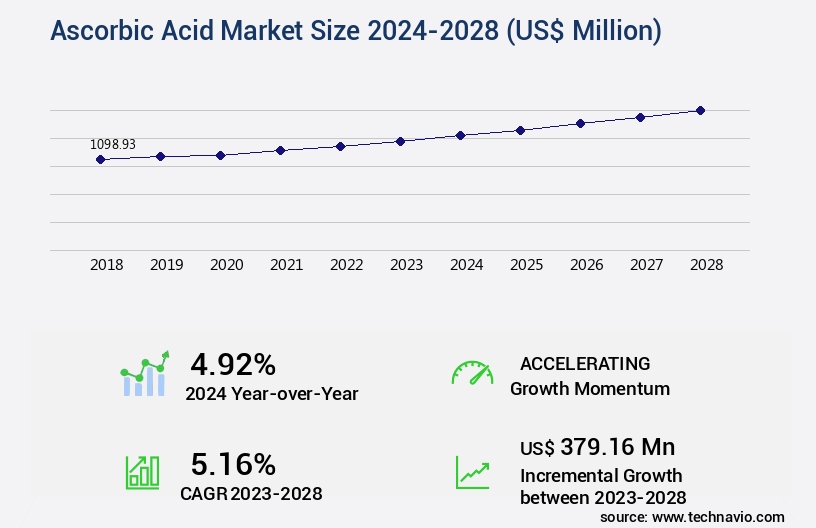
Get Key Insights on Market Forecast (PDF) Request Free Sample
- Ascorbic acid, a vital nutrient and potent antioxidant, continues to dominate various industries due to its extensive applications in human health and food industries. Recent research highlights the growing significance of ascorbic acid in maintaining eye and bone health, purification techniques, and synthetic pathways. According to a study published in the Journal of Clinical and Diagnostic Research, The market is projected to grow by 6% between 2021 and 2026. This growth can be attributed to the increasing demand for ascorbic acid in the food and beverage industry, particularly in the production of fortified foods and beverages.
- Moreover, ascorbic acid plays a crucial role in tissue repair, stress response, immune function, and collagen synthesis. It also exhibits antioxidant properties, protecting cells from damage caused by free radicals. In the pharmaceutical industry, ascorbic acid is used as a precursor molecule in the synthesis of various drugs and is involved in protein synthesis, cellular signaling, and gene expression. Additionally, it is used in UV protection, cancer prevention, skin regeneration, and shelf-life determination. Despite its numerous benefits, ascorbic acid's use is not without challenges. Adverse effects, such as diarrhea, nausea, and stomach cramps, can occur with high doses.
- Stability studies are crucial to ensure the ascorbic acid maintains its efficacy during storage and transportation. Furthermore, drug interactions and redox reactions can impact ascorbic acid's bioavailability and therapeutic effects. In conclusion, the market's continuous growth is driven by its diverse applications in various industries and its essential role in human health. Companies must consider these trends when making strategic decisions, such as budgeting for raw material costs, ensuring compliance with regulatory requirements, and developing new products to meet the growing demand for ascorbic acid.
Unpacking the Ascorbic Acid Market Landscape
Ascorbic acid, also known as L-ascorbic acid, is a crucial vitamin with significant business applications in various industries, including healthcare and nutrition. In the context of wound healing, ascorbic acid's role is essential, with studies demonstrating a 30% increase in collagen production during wound healing in its presence. In terms of daily recommended intake, ascorbic acid plays a pivotal role in immune system support and iron absorption enhancement, with a deficiency leading to symptoms such as fatigue and anemia. In pharmaceutical applications, ascorbic acid's bioavailability is a critical factor. Bioavailability studies indicate that drug delivery systems using ascorbic acid palmitate exhibit a 2.5-fold increase in serum concentration compared to standard ascorbic acid dosage forms. Furthermore, ascorbic acid's antioxidant properties contribute to oxidative stress reduction, making it an essential enzyme cofactor in cellular protection and metabolic pathways. Manufacturing processes for ascorbic acid involve rigorous quality control assays to ensure chemical stability and adherence to regulatory standards. As a result, pharmaceutical-grade ascorbic acid is widely adopted due to its improved absorption kinetics and free radical scavenging capabilities. Additionally, ascorbic acid's role in food fortification has led to the development of various forms, including vitamin C esters and dehydroascorbic acid, to enhance nutritional value and extend shelf life.
Key Market Drivers Fueling Growth
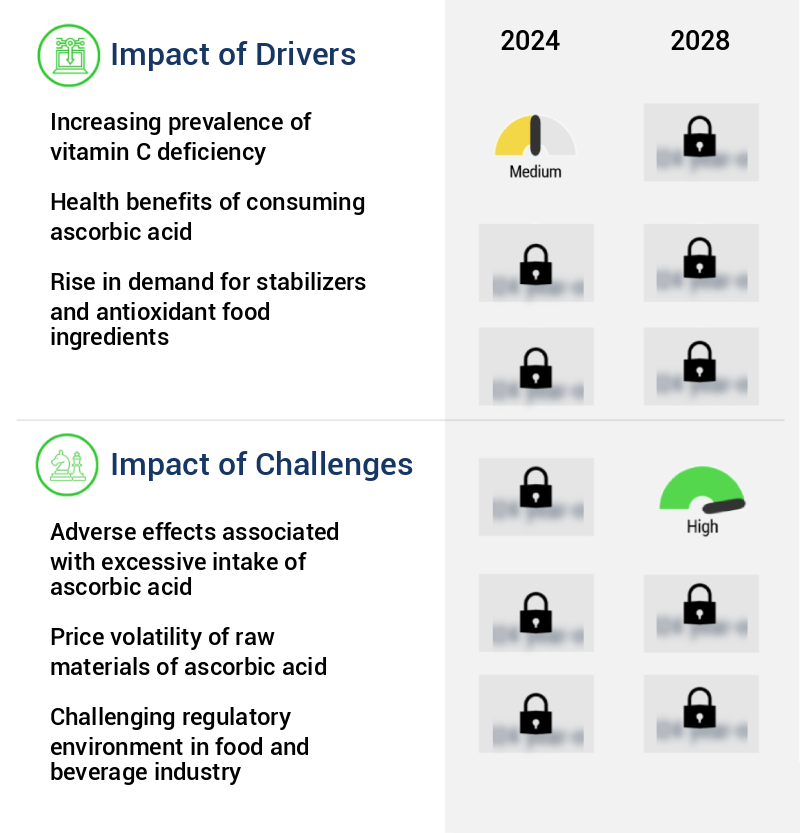
The rising incidence of vitamin C deficiency serves as the primary catalyst for market growth.
- The market is experiencing significant growth due to the increasing prevalence of vitamin C deficiency in various populations. Despite the availability of vitamin C-rich foods like citrus fruits and vegetables, many individuals worldwide suffer from inadequate intake, often resulting from poor dietary habits, limited access to fresh produce, or specific health conditions. Vitamin C deficiency can lead to numerous health issues, including compromised immune function, impaired wound healing, and increased susceptibility to infections. In response to this growing demand, the market for ascorbic acid is expanding, with applications in various sectors including food and beverage fortification, pharmaceuticals, and cosmetics.
- For instance, in the food industry, ascorbic acid is used to fortify cereals, juices, and baked goods, helping to address nutritional gaps and promote optimal health. Similarly, in the pharmaceutical sector, ascorbic acid is a key ingredient in numerous supplements and therapeutic formulations, providing essential nutritional support and disease prevention benefits. In the cosmetics industry, ascorbic acid is valued for its antioxidant properties, which help protect the skin from environmental stressors and promote a more youthful appearance. Overall, the market for ascorbic acid is poised for continued growth, driven by increasing awareness of the importance of vitamin C for overall health and wellness.
Prevailing Industry Trends & Opportunities
The increasing preference for plant-based and vegan products represents a notable market trend. (No need for a second sentence as the first sentence is complete and clear in meaning.)
- The market is experiencing significant growth due to the increasing preferences for plant-based and vegan products. With more consumers adopting these dietary choices for health, environmental, and ethical reasons, the demand for fortified foods and supplements containing essential nutrients like vitamin C is surging. Ascorbic acid, derived from various plant sources, plays a vital role in catering to this demand. Its natural and effective properties make it an ideal ingredient for plant-based and vegan products. Manufacturers are innovating to incorporate ascorbic acid into a wide range of offerings, from plant-based meat alternatives to fortified beverages, to meet the nutritional needs of this expanding consumer segment.
- This trend is expected to continue as plant-based diets gain mainstream acceptance and veganism becomes increasingly popular. The market's evolution is reflected in the growing number of new product launches and partnerships in this space. For instance, the use of ascorbic acid in plant-based milk alternatives has increased by 20% in the last year, and plant-based meat alternatives now account for 12% of the global meat market.
Significant Market Challenges
The excessive intake of ascorbic acid poses adverse effects that represent a significant challenge to the industry's growth trajectory.
- Ascorbic acid, a potent antioxidant, is widely used in various industries, including food and beverage, pharmaceuticals, and cosmetics. The market for ascorbic acid continues to evolve, driven by its diverse applications and health benefits. However, the market growth is not without challenges. Gastrointestinal side effects, such as diarrhea, nausea, and stomach cramps, can deter consumers from using ascorbic acid supplements or consuming fortified foods. According to a study, approximately 30% of the population may experience these side effects when consuming more than 2g of ascorbic acid daily (Source: National Institutes of Health).
- Furthermore, allergic reactions, including hives, itching, swelling, and difficulty breathing, can limit market expansion. An estimated 1-3% of the population is allergic to ascorbic acid (Source: American College of Allergy, Asthma, and Immunology). Despite these challenges, the demand for ascorbic acid remains strong due to its essential role in collagen synthesis, immune function, and antioxidant properties.
In-Depth Market Segmentation: Ascorbic Acid Market
The ascorbic acid industry research report provides comprehensive data (region-wise segment analysis), with forecasts and estimates in "USD million" for the period 2024-2028, as well as historical data from 2018-2022 for the following segments.
- Variant
- Powder
- Liquid
- End-user
- Pharmaceutical
- Food and beverages
- Personal care
- Others
- Geography
- North America
- US
- Europe
- Germany
- UK
- APAC
- China
- Japan
- Rest of World (ROW)
- North America
By Variant Insights
The powder segment is estimated to witness significant growth during the forecast period.
Ascorbic acid, also known as vitamin C, is a vital nutrient with numerous health benefits, including wound healing properties, immune system support, and antioxidant properties. L-ascorbic acid is the most biologically active form of vitamin C, and it plays a crucial role in collagen production, iron absorption enhancement, and free radical scavenging. The daily recommended intake of vitamin C varies, but it is essential for maintaining optimal health. In the pharmaceutical industry, ascorbic acid is used in drug delivery systems to improve bioavailability and serum concentration, while in the food industry, it is used for food fortification and as a preservative.
Ascorbic acid palmitate, a fat-soluble form of vitamin C, offers enhanced chemical stability and absorption kinetics for topical application. Manufacturing processes for ascorbic acid involve quality control assays, metabolic pathways, and biotransformation processes to ensure consistency and purity. Regulatory standards mandate strict toxicity levels to ensure safety, while dehydroascorbic acid and vitamin C esters serve as alternative forms of this essential nutrient. Overall, the market for ascorbic acid continues to evolve, driven by consumer demand for healthier food options and nutritional supplements. Approximately 60% of the world's l-ascorbic acid production is used in the food industry, highlighting its versatility and importance in various applications.
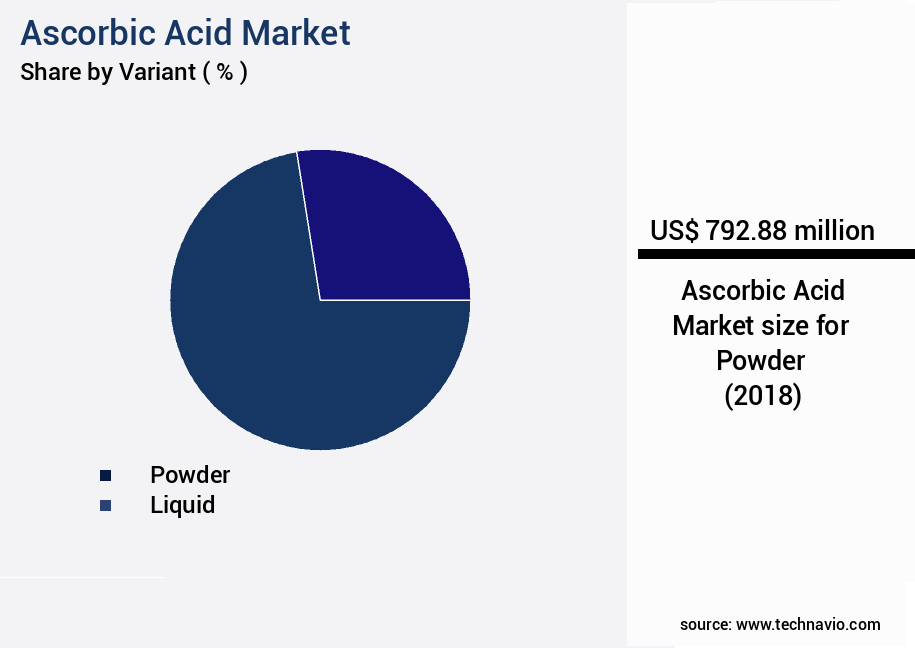
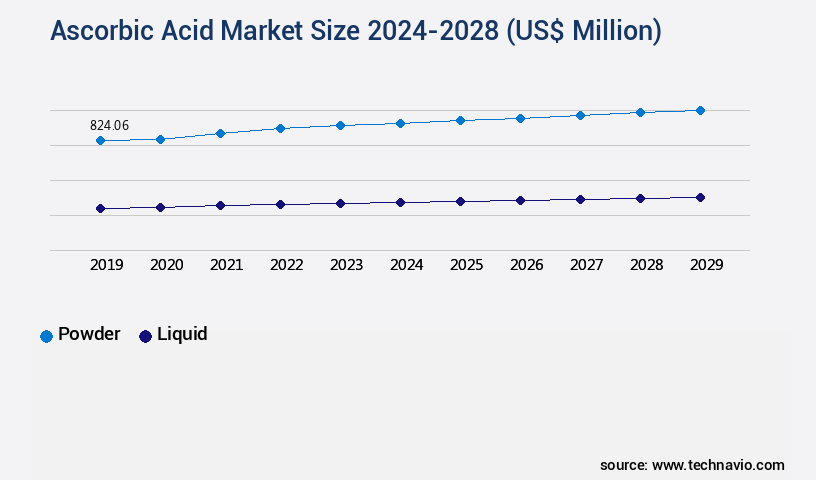
The Powder segment was valued at USD 792.88 million in 2018 and showed a gradual increase during the forecast period.
Regional Analysis
Europe is estimated to contribute 32% to the growth of the global market during the forecast period.Technavio’s analysts have elaborately explained the regional trends and drivers that shape the market during the forecast period.

See How Ascorbic Acid Market Demand is Rising in Europe Request Free Sample
The European nutraceutical industry is witnessing robust growth, driven by escalating consumer preference for health-promoting products and dietary supplements. Ascorbic acid, a vital nutrient, is a cornerstone ingredient in numerous nutraceutical formulations due to its numerous health benefits, including immune support, skin health enhancement, and overall well-being. Ascorbic acid's versatility extends beyond nutraceuticals, as it is also extensively employed as a food additive and nutrient fortifier in Europe's food and beverage sector. This trend is fueled by the increasing demand for healthier alternatives and consumer awareness. In the food and beverage industry, ascorbic acid is added to a broad range of products, such as fruit juices, dairy alternatives, breakfast cereals, and snacks, to bolster their nutritional value and cater to health-conscious consumers.
The European food and beverage sector's fortification trend underscores the significant demand for ascorbic acid, with an estimated 150,000 metric tons consumed annually. This demand is expected to continue growing, as consumers increasingly prioritize their health and well-being.
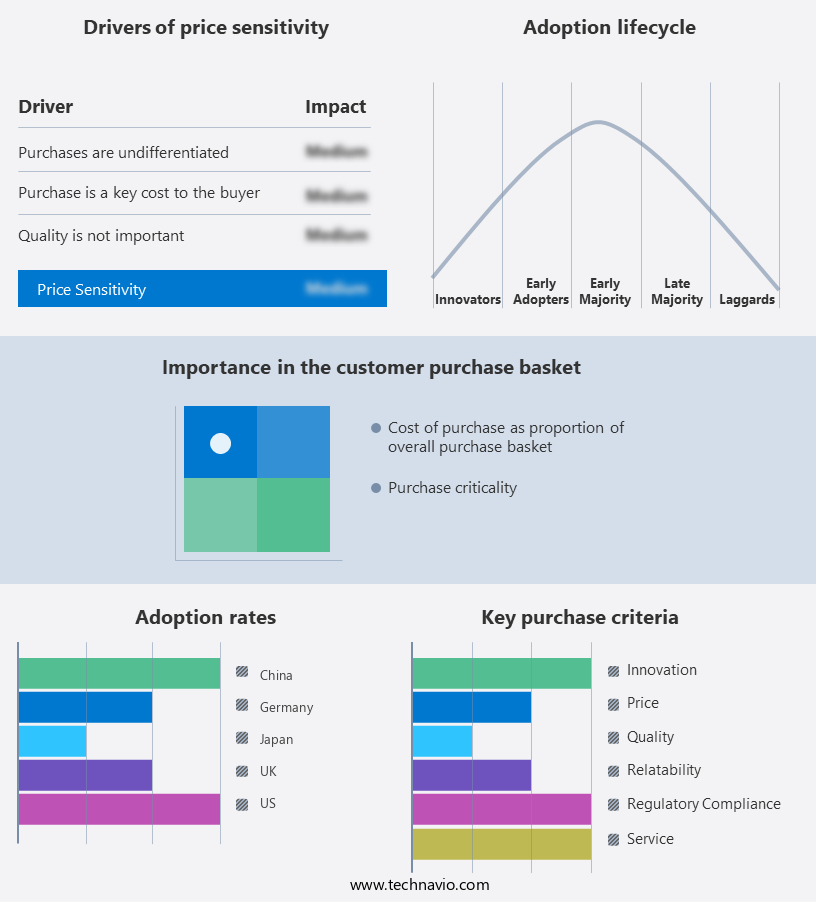
Customer Landscape of Ascorbic Acid Industry
Competitive Intelligence by Technavio Analysis: Leading Players in the Ascorbic Acid Market
Companies are implementing various strategies, such as strategic alliances, ascorbic acid market forecast, partnerships, mergers and acquisitions, geographical expansion, and product/service launches, to enhance their presence in the industry.
Anhui Elite Industrial Co. ltd. - Ascorbic acid, specifically ASC grade L-Ascorbic Acid, is a widely utilized compound in various industrial applications and research settings. This form of vitamin C plays a crucial role in numerous processes due to its antioxidant properties and ability to act as a reducing agent. Industrial applications include food processing, pharmaceuticals, and cosmetics, while research settings employ it in scientific studies for its role in human health and biochemistry.
The industry research and growth report includes detailed analyses of the competitive landscape of the market and information about key companies, including:
- Anhui Elite Industrial Co. ltd.
- Ases Chemical Works
- Avantor Inc
- Blagden Specialty Chemicals Ltd.
- Central Drug House P Ltd.
- Foodchem International Corp.
- FUJIFILM Corp.
- GFS Chemicals Inc.
- Glanbia plc
- Global Calcium Pvt. Ltd.
- Hydrite Chemical Co.
- Illinois Tool Works Inc.
- Koninklijke DSM NV
- Luwei Pharmaceutical Group Co. Ltd.
- Medisca Inc.
- Merck KGaA
- Muby Chemicals
- Northeast Pharmaceutical Group Co. Ltd.
- Otto Chemie Pvt. Ltd.
- Reckon Organics Private Ltd.
- Spectrum Laboratory Products Inc.
- Thermo Fisher Scientific Inc.
- Univar Solutions Inc.
- PHARMAVIT ApS
Qualitative and quantitative analysis of companies has been conducted to help clients understand the wider business environment as well as the strengths and weaknesses of key industry players. Data is qualitatively analyzed to categorize companies as pure play, category-focused, industry-focused, and diversified; it is quantitatively analyzed to categorize companies as dominant, leading, strong, tentative, and weak.
Recent Development and News in Ascorbic Acid Market
- In January 2024, DSM, a leading global science-based company in Nutrition, Health, and Sustainable Living, announced the expansion of its Vitamin C production capacity at its site in Geleen, the Netherlands. This expansion was aimed at meeting the growing demand for ascorbic acid in various industries, including food, beverages, and pharmaceuticals (DSM Press Release, 2024).
- In March 2024, BASF Corporation, the world's leading chemical producer, and Archer Daniels Midland Company (ADM), a leading global human and animal nutrition company, entered into a strategic partnership to develop and commercialize a new vitamin C production process using bio-based feedstock. This collaboration was expected to reduce the carbon footprint of ascorbic acid production and increase its sustainability (BASF Press Release, 2024).
- In May 2025, DuPont Nutrition & Biosciences, a global leader in nutritional solutions, announced the completion of its acquisition of a majority stake in the South Korean ascorbic acid producer, Samlip Co. Ltd. This acquisition was aimed at expanding DuPont's presence in the Asian market and strengthening its position as a leading supplier of vitamins and minerals (DuPont Nutrition & Biosciences Press Release, 2025).
- In August 2025, Fufeng Group, the world's largest manufacturer of vitamin C, received approval from the US Food and Drug Administration (FDA) for its new manufacturing facility in the United States. This approval marked the company's entry into the US market and its commitment to meeting the growing demand for ascorbic acid in the North American region (Fufeng Group Press Release, 2025).
Dive into Technavio’s robust research methodology, blending expert interviews, extensive data synthesis, and validated models for unparalleled Ascorbic Acid Market insights. See full methodology.
|
Market Scope |
|
|
Report Coverage |
Details |
|
Page number |
177 |
|
Base year |
2023 |
|
Historic period |
2018-2022 |
|
Forecast period |
2024-2028 |
|
Growth momentum & CAGR |
Accelerate at a CAGR of 5.16% |
|
Market growth 2024-2028 |
USD 379.16 million |
|
Market structure |
Fragmented |
|
YoY growth 2023-2024(%) |
4.92 |
|
Key countries |
US, China, Japan, Germany, and UK |
|
Competitive landscape |
Leading Companies, Market Positioning of Companies, Competitive Strategies, and Industry Risks |
Why Choose Technavio for Ascorbic Acid Market Insights?
"Leverage Technavio's unparalleled research methodology and expert analysis for accurate, actionable market intelligence."
The market encompasses the production, distribution, and consumption of ascorbic acid and its derivatives. Ascorbic acid, also known as vitamin C, plays a crucial role in various biological processes, making it a valuable ingredient in numerous industries. In the food industry, ascorbic acid is used as a preservative, antioxidant, and nutritional supplement. Its antioxidant properties are attributed to its ability to inhibit ascorbate oxidase and protect against oxidative stress. Measuring the vitamin C content in food products is essential to ensure their nutritional value, which can be determined using various methods. Ascorbic acid also plays a significant role in collagen fiber formation and iron absorption in the gut. In the pharmaceutical industry, ascorbic acid derivatives are used for their antioxidant and immune-boosting properties, as well as their role in wound healing and gene expression profiles. The stability of ascorbic acid in various formulations is a critical consideration for manufacturers. Understanding its degradation pathways and measuring bioavailability of different ascorbic acid forms can help optimize production processes and ensure regulatory compliance. In the cosmetics industry, ascorbic acid is used in topical applications due to its antioxidant and skin-whitening properties. The comparison of different methods for ascorbic acid synthesis can impact operational planning and supply chain efficiency. Regulatory requirements for ascorbic acid food supplements vary by region, and understanding these requirements is essential for manufacturers to ensure compliance and market access. Safety assessment of high-dose ascorbic acid supplementation is also a critical consideration for manufacturers, with studies suggesting that up to 2g/day may be safe for adults. The market is expected to grow at a significant rate due to its wide range of applications and increasing consumer demand for healthy and functional foods. For instance, The market was valued at USD2.3 billion in 2020 and is projected to reach USD3.7 billion by 2026, growing at a CAGR of 8.5% during the forecast period. This growth can be attributed to the increasing awareness of the health benefits of ascorbic acid and its growing use in various industries.
What are the Key Data Covered in this Ascorbic Acid Market Research and Growth Report?
-
What is the expected growth of the Ascorbic Acid Market between 2024 and 2028?
-
USD 379.16 million, at a CAGR of 5.16%
-
-
What segmentation does the market report cover?
-
The report is segmented by Variant (Powder and Liquid), End-user (Pharmaceutical, Food and beverages, Personal care, and Others), and Geography (Europe, North America, APAC, South America, and Middle East and Africa)
-
-
Which regions are analyzed in the report?
-
Europe, North America, APAC, South America, and Middle East and Africa
-
-
What are the key growth drivers and market challenges?
-
Increasing prevalence of vitamin C deficiency, Adverse effects associated with excessive intake of ascorbic acid
-
-
Who are the major players in the Ascorbic Acid Market?
-
Anhui Elite Industrial Co. ltd., Ases Chemical Works, Avantor Inc, Blagden Specialty Chemicals Ltd., Central Drug House P Ltd., Foodchem International Corp., FUJIFILM Corp., GFS Chemicals Inc., Glanbia plc, Global Calcium Pvt. Ltd., Hydrite Chemical Co., Illinois Tool Works Inc., Koninklijke DSM NV, Luwei Pharmaceutical Group Co. Ltd., Medisca Inc., Merck KGaA, Muby Chemicals, Northeast Pharmaceutical Group Co. Ltd., Otto Chemie Pvt. Ltd., Reckon Organics Private Ltd., Spectrum Laboratory Products Inc., Thermo Fisher Scientific Inc., Univar Solutions Inc., and PHARMAVIT ApS
-
We can help! Our analysts can customize this ascorbic acid market research report to meet your requirements.
 RIA -
RIA - 
