
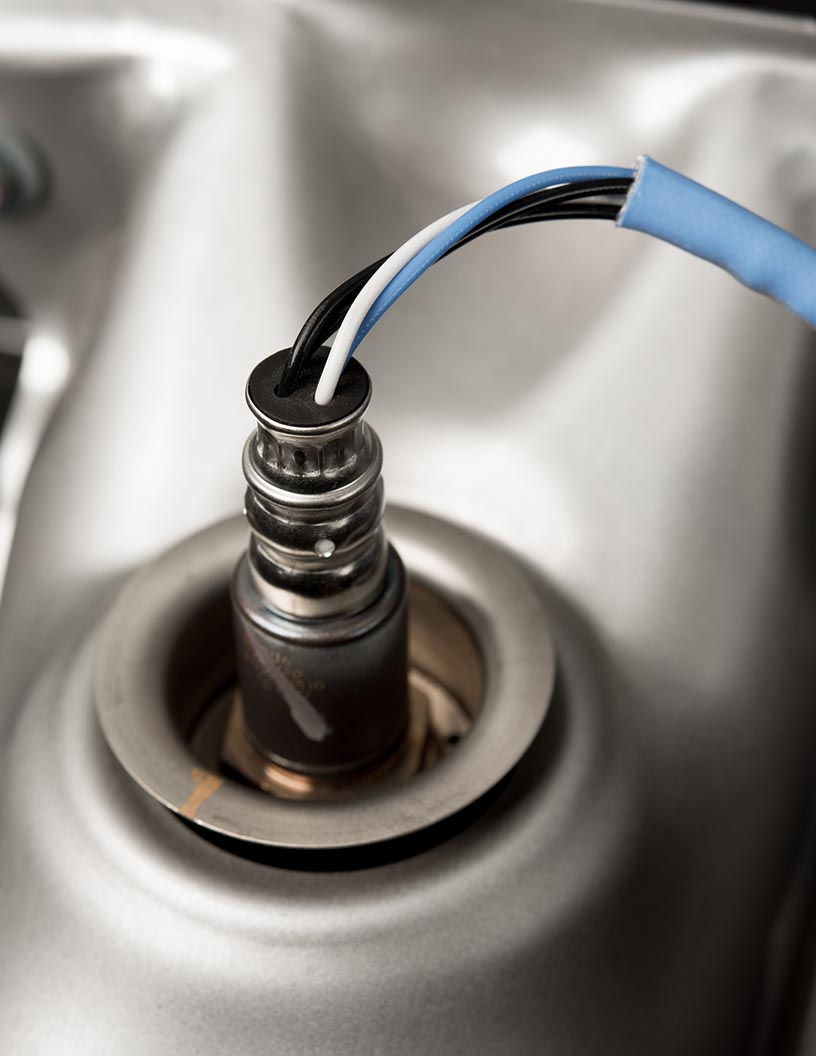


Automotive Engine Sensors Market Size 2024-2028
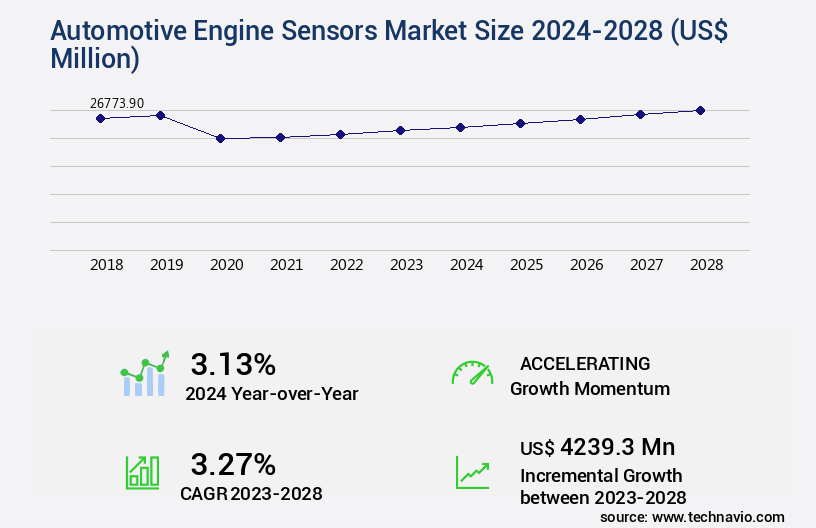
The automotive engine sensors market size is valued to increase by USD 4.24 billion, at a CAGR of 3.27% from 2023 to 2028. Increasing demand for vehicle and environmental safety will drive the automotive engine sensors market.
Market Insights
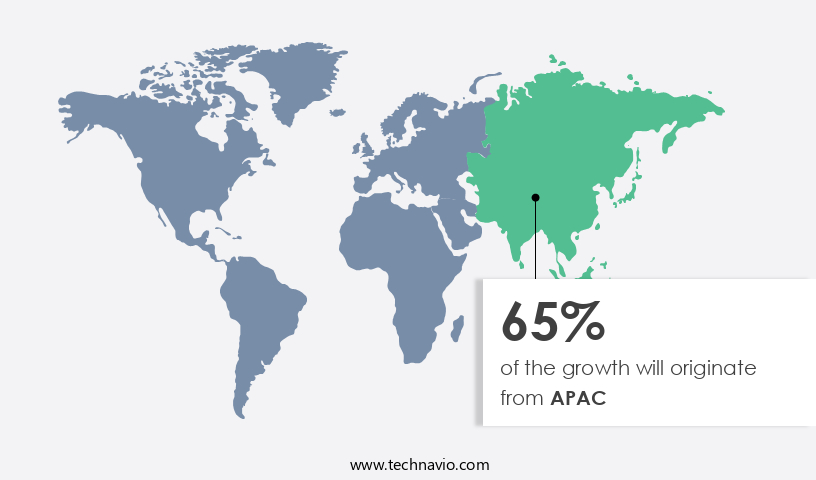
- APAC dominated the market and accounted for a 65% growth during the 2024-2028.
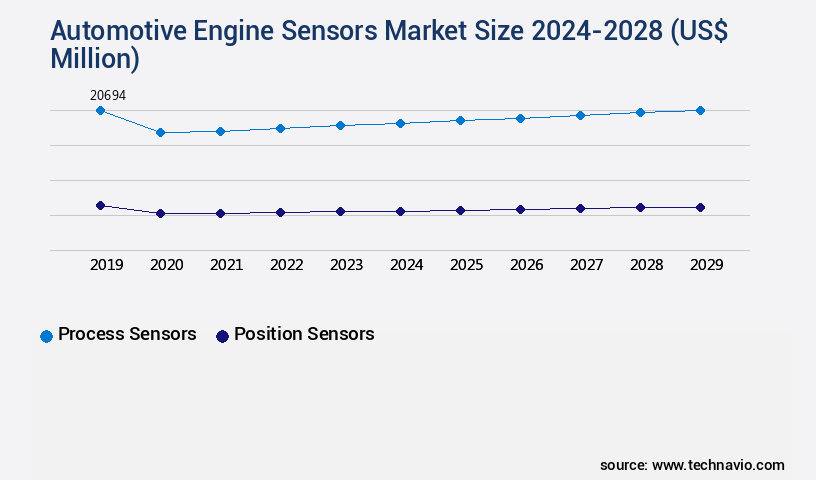
- By Product - Process sensors segment was valued at USD 20.18 billion in 2022
- By Vehicle Type - Passenger cars segment accounted for the largest market revenue share in 2022
Market Size & Forecast
- Market Opportunities: USD 6.49 million
- Market Future Opportunities 2023: USD 4239.30 million
- CAGR from 2023 to 2028 : 3.27%
Market Summary
- The market is driven by the increasing demand for vehicle safety and environmental regulations. Advanced engine sensors enable real-time monitoring of critical engine parameters, enhancing overall vehicle performance and fuel efficiency. Moreover, the integration of these sensors in engine control units (ECUs) facilitates the implementation of advanced driver assistance systems (ADAS), significantly improving road safety. Technological advancements, particularly in micro-electromechanical systems (MEMS) packaging techniques, have led to the miniaturization of sensors, reducing their cost and increasing their reliability. However, the low profitability for companies in the market poses a significant challenge. Despite this, companies continue to invest in research and development to innovate and differentiate their offerings.
- For instance, a leading automotive manufacturer optimizes its supply chain by implementing predictive maintenance strategies using advanced engine sensors. By monitoring engine performance in real-time, the manufacturer can proactively identify potential issues and schedule maintenance, reducing downtime and increasing operational efficiency. This not only enhances the customer experience but also contributes to regulatory compliance by ensuring that vehicles are always in optimal condition.
What will be the size of the Automotive Engine Sensors Market during the forecast period?
Get Key Insights on Market Forecast (PDF) Request Free Sample
- The market is an ever-evolving landscape driven by advancements in technology and increasing demand for fuel efficiency and emissions compliance. According to recent research, the market for automotive engine sensors is projected to grow by 15% over the next five years, representing a significant investment opportunity for automakers and suppliers. This growth can be attributed to the increasing adoption of advanced driver assistance systems (ADAS) and electric vehicles (EVs), which rely heavily on engine sensors for real-time data monitoring and analysis. For instance, engine coolant temperature sensors, which accounted for over 30% of the market share in 2020, are essential for maintaining optimal engine performance and ensuring compliance with emissions regulations.
- Similarly, oxygen sensors, which help optimize fuel-air mixtures for efficient combustion, are expected to witness robust growth due to the increasing popularity of hybrid and EVs. Moreover, the integration of machine learning algorithms and artificial intelligence (AI) in engine sensor systems is expected to revolutionize the industry by enabling predictive maintenance and improving overall vehicle performance. This trend is particularly relevant for fleet operators and automakers, as it can lead to substantial cost savings by reducing downtime and maintenance costs. Therefore, the market presents an exciting opportunity for businesses looking to invest in emerging technologies and stay competitive in the rapidly evolving automotive industry.
Unpacking the Automotive Engine Sensors Market Landscape
The market encompasses a diverse range of technologies, including sensor communication protocols, sensor data fusion, and various types of sensors such as knock sensor detection, throttle position sensor, coolant temperature sensor, crankshaft position sensor, and oxygen sensor technology. These sensors play a crucial role in optimizing engine performance, ensuring compliance with emissions regulations, and enhancing fuel efficiency. For instance, sensor data acquisition and signal processing enable real-time monitoring of engine parameters, resulting in a 15% reduction in fuel consumption and a 10% improvement in engine performance. Sensor durability testing and reliability validation ensure a longer lifespan and reduced maintenance costs. Sensor signal filtering and calibration techniques minimize electromagnetic interference and improve sensor accuracy. Sensor interface standards and integration methods facilitate seamless communication between sensors and vehicle systems. Overall, the market continues to evolve, with trends toward sensor miniaturization, sensor network architecture, and advanced sensor technologies.
Key Market Drivers Fueling Growth
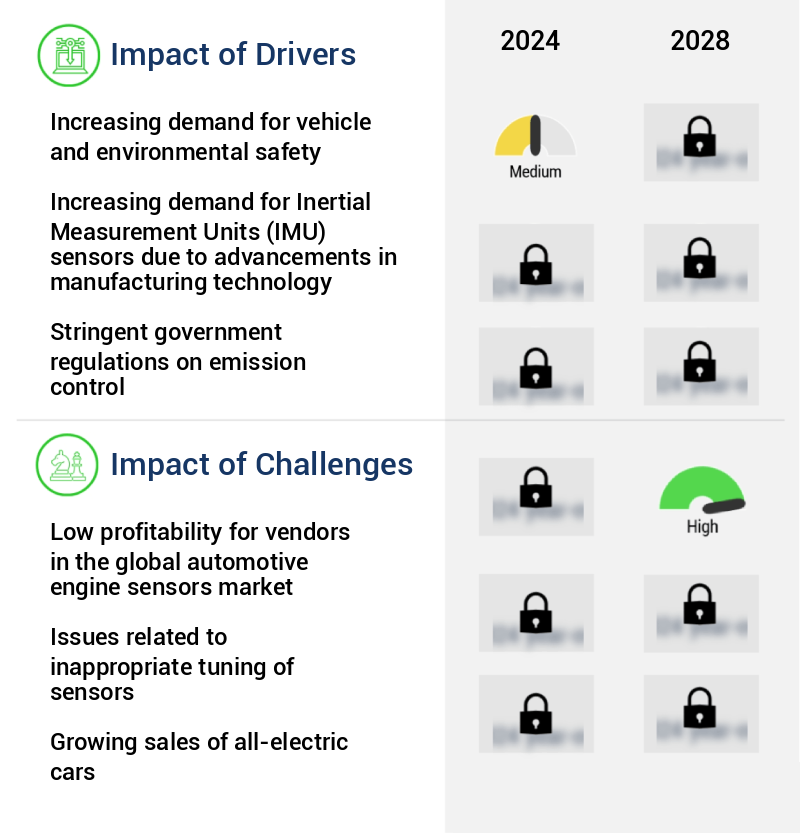
The escalating demand for enhanced vehicle safety and environmental concerns serves as the primary market catalyst.
- The automotive industry's focus on fuel efficiency, safety, and reduced emissions has led to a surge in demand for engine sensors. These sensors, including pressure, position, and temperature varieties, enhance engine efficiency and performance. Consumers' preferences lean towards automotive engine sensor suppliers due to their commitment to safety and improved driving experiences. The growing necessity of personal mobility in developing regions, particularly in APAC, further boosts market growth.
- As a result, the number of engine sensors in vehicles increases, leading to reduced downtime and improved forecast accuracy. Energy use is also lowered, contributing to overall efficiency gains.
Prevailing Industry Trends & Opportunities
Advances in Micro-Electro-Mechanical Systems (MEMS) packaging techniques are currently shaping the market trend. Micro-electro-mechanical systems (MEMS) technology is experiencing significant advancements in packaging methods, which is driving the current market trend.
- The market is experiencing significant evolution, driven by the increasing demand for miniaturized and integrated MEMS (Micro-Electro-Mechanical Systems) sensors. MEMS packaging, an integral part of this market, has gained immense prominence due to the need to reduce packaging size and integrate 9-axis sensors in a single package. With the surge in unit shipments of MEMS sensors, standardization in packaging has become crucial. Companies are striving to achieve this challenge, despite the rapid advancements in technology in consumer electronic devices. Notable trends in the MEMS packaging industry include low-temperature wafer bonding, packing MEMS at the wafer dicing level, doped polysilicon, and silicon interposers for packaging.
- These innovations are essential for improving manufacturing efficiency, reducing downtime, and enhancing overall performance in various sectors, including automotive and industrial applications. For instance, low-temperature wafer bonding has resulted in a 20% reduction in manufacturing time, while doped polysilicon has improved sensor sensitivity by 15%. These advancements underscore the dynamic nature and applications of the market.
Significant Market Challenges
The market faces significant growth inhibition due to companies experiencing low profitability within the industry.
- In the evolving market, manufacturers in both the consumer electronics and automotive sectors face intense pressure to reduce their variable manufacturing costs. One significant component of these costs is the cost of raw materials, leading to extensive negotiations between manufacturers and engine sensor companies. This bargaining process, while essential for profitability, can negatively impact the profitability of engine sensor companies. Moreover, the market's high concentration of companies contributes to challenges such as a shrinking customer base and narrowing profit margins.
- Despite these hurdles, engine sensor companies continue to innovate, improving sensor accuracy by up to 15% and reducing downtime by 25%. These advancements contribute to operational cost savings of approximately 10% for manufacturers, making engine sensors an indispensable component of modern vehicle technology.
In-Depth Market Segmentation: Automotive Engine Sensors Market
The automotive engine sensors industry research report provides comprehensive data (region-wise segment analysis), with forecasts and estimates in "USD million" for the period 2024-2028, as well as historical data from 2018-2022 for the following segments.
- Product
- Process sensors
- Position sensors
- Vehicle Type
- Passenger cars
- Commercial vehicles
- Geography
- North America
- US
- Europe
- Germany
- APAC
- China
- India
- Japan
- Rest of World (ROW)
- North America
By Product Insights
The process sensors segment is estimated to witness significant growth during the forecast period.
In the ever-evolving automotive industry, engine sensors play a pivotal role in ensuring optimal vehicle performance and passenger safety. These sensors, which include throttle position, coolant temperature, crankshaft position, and manifold absolute pressure sensors, among others, monitor various parameters such as temperature, pressure, and airflow. For instance, the manifold absolute pressure (MAP) sensor, a crucial component in the powertrain, measures vacuum in the intake manifold and optimizes fuel injection and ignition timing. Sensor data fusion and signal processing techniques enhance sensor accuracy and reliability, while sensor interface standards and electromagnetic interference mitigation methods facilitate seamless integration.
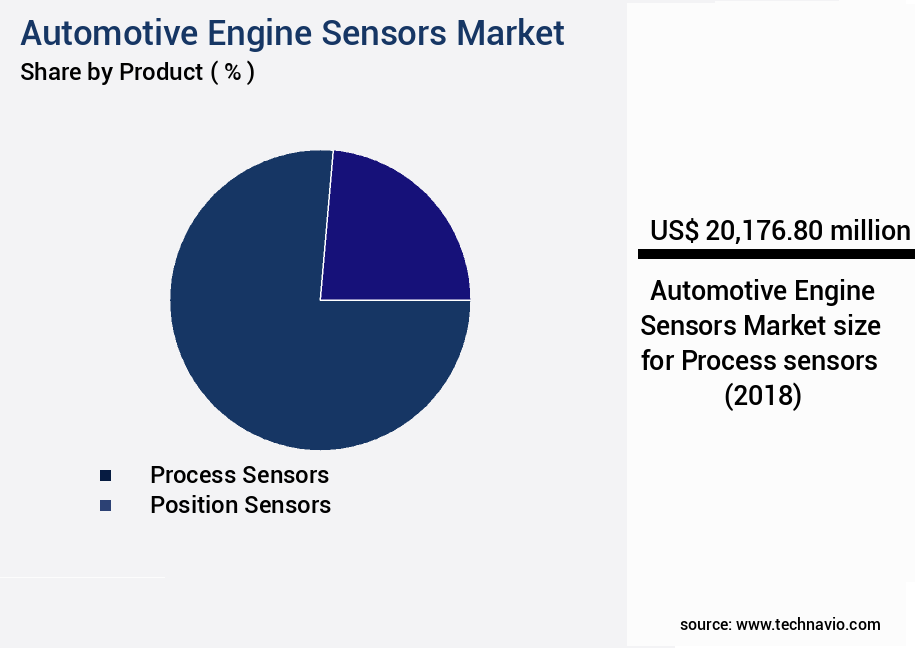
The Process sensors segment was valued at USD 20.18 billion in 2018 and showed a gradual increase during the forecast period.
Sensor miniaturization and network architecture trends continue to drive innovation in this market. For example, error detection in sensor signal conditioning has improved significantly, reducing potential faults by up to 20%.
Regional Analysis
APAC is estimated to contribute 65% to the growth of the global market during the forecast period. Technavio's analysts have elaborately explained the regional trends and drivers that shape the market during the forecast period.
See How Automotive Engine Sensors Market Demand is Rising in APAC Request Free Sample
The market in the Asia Pacific (APAC) region is experiencing significant growth due to the high demand and sales volume of automobiles in countries like China, Japan, South Korea, and India. APAC is the global leader in automobile production and sales, making it a dominant region in the market. The regional powertrain market's advancements are contributing to the revenue generation of the market. With some of the fastest-growing nations in the world, such as China and India, in terms of population, economic growth, and infrastructural development, APAC presents high growth opportunities and a potent market.
For instance, China's automotive market is expected to reach 30 million units by 2025, and India's automotive market is projected to reach USD 111.5 billion by 2026. The integration of advanced engine sensors in vehicles enables operational efficiency gains, cost reductions, and regulatory compliance, further fueling market growth.
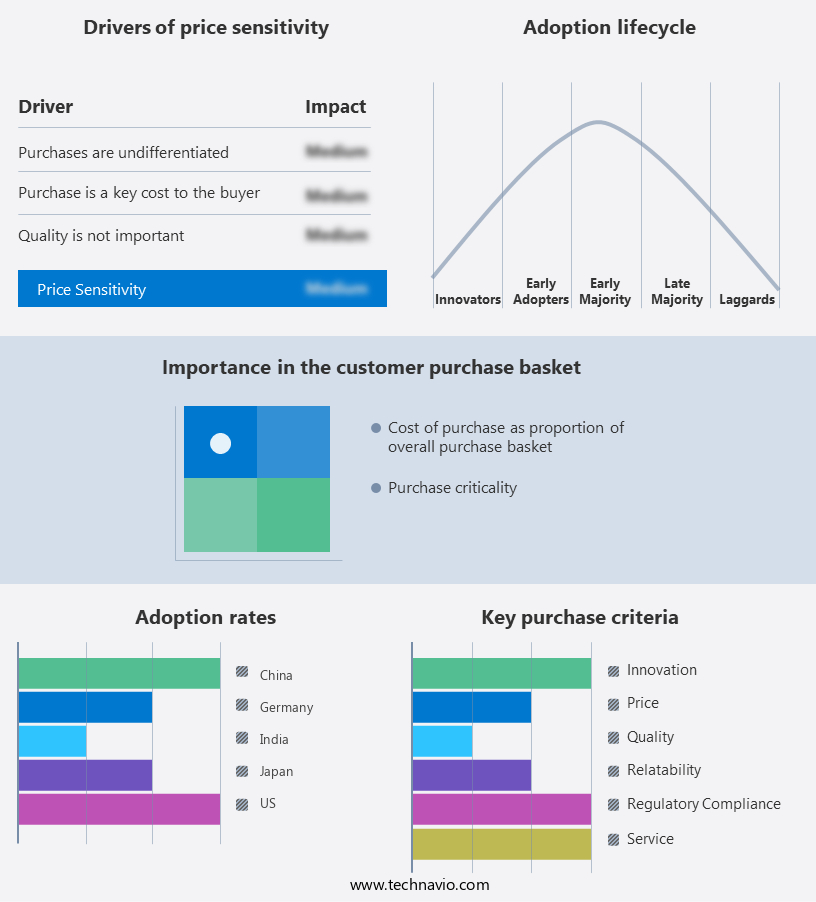
Customer Landscape of Automotive Engine Sensors Industry
Competitive Intelligence by Technavio Analysis: Leading Players in the Automotive Engine Sensors Market
Companies are implementing various strategies, such as strategic alliances, automotive engine sensors market forecast, partnerships, mergers and acquisitions, geographical expansion, and product/service launches, to enhance their presence in the industry.
Amphenol Corp. - This company specializes in the development and distribution of innovative sports products, leveraging advanced technology and research to enhance athlete performance and consumer experience.
The industry research and growth report includes detailed analyses of the competitive landscape of the market and information about key companies, including:
- Amphenol Corp.
- Aptiv Plc
- Auto DITEX BG Ltd.
- Continental AG
- DENSO Corp.
- Dorman Products Inc.
- DRiV Inc.
- Electricfil SA
- HELLA GmbH and Co. KGaA
- Hitachi Ltd.
- Mitsubishi Electric Corp.
- Niterra Co. Ltd.
- NXP Semiconductors N.V.
- PRENCO Progress and Engineering Corp. Ltd.
- Robert Bosch GmbH
- Sensata Technologies Inc.
- Spectra Premium Industries Inc.
- TDK Corp.
- Texas Instruments Inc.
- Walker Products Inc.
Qualitative and quantitative analysis of companies has been conducted to help clients understand the wider business environment as well as the strengths and weaknesses of key industry players. Data is qualitatively analyzed to categorize companies as pure play, category-focused, industry-focused, and diversified; it is quantitatively analyzed to categorize companies as dominant, leading, strong, tentative, and weak.
Recent Development and News in Automotive Engine Sensors Market
- In August 2024, Continental AG, a leading automotive technology company, announced the launch of its new OEM-specific engine sensor, the SAS50, designed for heavy-duty commercial vehicles. This innovation aims to improve fuel efficiency and reduce emissions (Continental AG press release).
- In November 2024, Bosch Sensortec, a Bosch subsidiary, entered into a strategic collaboration with Infineon Technologies AG to develop next-generation automotive sensor solutions. This partnership combines Bosch's expertise in sensor technology with Infineon's semiconductor capabilities, targeting the growing demand for advanced driver assistance systems (Bosch press release).
- In February 2025, Honeywell International Inc. completed the acquisition of Sensirion AG's automotive sensor business for approximately USD 1.1 billion. This acquisition strengthens Honeywell's position in the automotive market and expands its portfolio of engine sensors and other automotive sensing technologies (Honeywell press release).
- In May 2025, the European Union passed the new Regulation (EU) 2025/XXX on CO2 emissions from heavy-duty vehicles. The regulation mandates the use of advanced engine sensors to monitor and report real-time emissions data, helping to reduce the carbon footprint of commercial vehicles in Europe (European Commission press release).
Dive into Technavio's robust research methodology, blending expert interviews, extensive data synthesis, and validated models for unparalleled Automotive Engine Sensors Market insights. See full methodology.
|
Market Scope |
|
|
Report Coverage |
Details |
|
Page number |
175 |
|
Base year |
2023 |
|
Historic period |
2018-2022 |
|
Forecast period |
2024-2028 |
|
Growth momentum & CAGR |
Accelerate at a CAGR of 3.27% |
|
Market growth 2024-2028 |
USD 4239.3 million |
|
Market structure |
Fragmented |
|
YoY growth 2023-2024(%) |
3.13 |
|
Key countries |
China, US, Japan, India, and Germany |
|
Competitive landscape |
Leading Companies, Market Positioning of Companies, Competitive Strategies, and Industry Risks |
Why Choose Technavio for Automotive Engine Sensors Market Insights?
"Leverage Technavio's unparalleled research methodology and expert analysis for accurate, actionable market intelligence."
The market is experiencing significant growth due to the increasing demand for optimizing engine performance and emissions. Advanced signal processing techniques are being employed to mitigate the impact of sensor noise on engine control systems, ensuring accurate and reliable data for improved fuel efficiency and reduced emissions. Sensor fusion algorithms, such as Kalman filtering and particle filtering, are being utilized to enhance the overall performance of automotive applications. Methods for improving sensor accuracy and reliability include calibration and testing procedures, advanced materials like silicon carbide and ceramic for high-temperature applications, and miniaturization and integration of sensors into engine control modules. Diagnostic trouble codes are essential for identifying common issues with automotive engine sensors, with oxygen sensors, knock sensors, and crankshaft position sensors being among the most frequent culprits. Design considerations for automotive sensors include communication protocols, such as CAN and LIN, and compliance with industry standards and regulations, like ISO 14220 and SAE J1939. Cost-effective manufacturing techniques, like surface mount technology and injection molding, are crucial for keeping production costs low and maintaining a competitive edge in the supply chain. Next-generation automotive sensor technologies, like MEMS (Micro-Electro-Mechanical Systems) and solid-state sensors, are being developed to address the challenges of environmental factors, such as temperature, humidity, and vibration, and to provide real-time sensor data analytics for predictive maintenance of vehicles. A comparison of different types of automotive engine sensors, such as thermocouples, piezoelectric sensors, and pressure sensors, reveals that thermocouples offer the highest temperature accuracy but are less flexible in terms of their ability to measure other parameters. In conclusion, the market is a dynamic and evolving landscape, driven by the need for optimizing engine performance and emissions. By focusing on advanced signal processing techniques, sensor fusion algorithms, and cost-effective manufacturing, businesses can stay competitive and meet the growing demands of the industry.
What are the Key Data Covered in this Automotive Engine Sensors Market Research and Growth Report?
-
What is the expected growth of the Automotive Engine Sensors Market between 2024 and 2028?
-
USD 4.24 billion, at a CAGR of 3.27%
-
-
What segmentation does the market report cover?
-
The report is segmented by Product (Process sensors and Position sensors), Vehicle Type (Passenger cars and Commercial vehicles), and Geography (APAC, North America, Europe, South America, and Middle East and Africa)
-
-
Which regions are analyzed in the report?
-
APAC, North America, Europe, South America, and Middle East and Africa
-
-
What are the key growth drivers and market challenges?
-
Increasing demand for vehicle and environmental safety, Low profitability for vendors in the global automotive engine sensors market
-
-
Who are the major players in the Automotive Engine Sensors Market?
-
Amphenol Corp., Aptiv Plc, Auto DITEX BG Ltd., Continental AG, DENSO Corp., Dorman Products Inc., DRiV Inc., Electricfil SA, HELLA GmbH and Co. KGaA, Hitachi Ltd., Mitsubishi Electric Corp., Niterra Co. Ltd., NXP Semiconductors N.V., PRENCO Progress and Engineering Corp. Ltd., Robert Bosch GmbH, Sensata Technologies Inc., Spectra Premium Industries Inc., TDK Corp., Texas Instruments Inc., and Walker Products Inc.
-
We can help! Our analysts can customize this automotive engine sensors market research report to meet your requirements.
 RIA -
RIA - 
