


Aviation Borescope Market Size 2026-2030
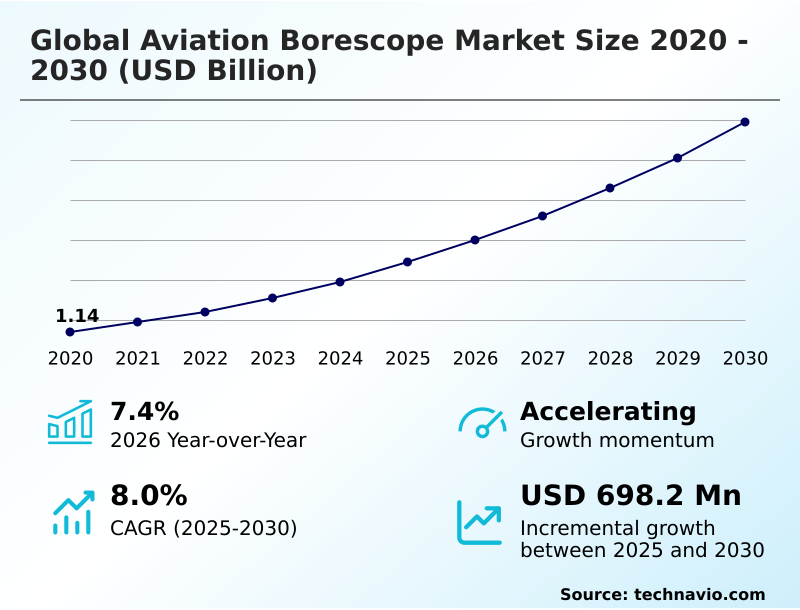
The aviation borescope market size is valued to increase by USD 698.2 million, at a CAGR of 8% from 2025 to 2030. Rapid expansion of global commercial aircraft fleets and increasing air traffic volumes will drive the aviation borescope market.
Major Market Trends & Insights
- APAC dominated the market and accounted for a 32.5% growth during the forecast period.
- By Type - Video borescopes segment was valued at in 2024
- By Application - Aircraft engine inspection segment accounted for the largest market revenue share in 2024
Market Size & Forecast
- Market Opportunities: USD 1.05 billion
- Market Future Opportunities: USD 698.2 million
- CAGR from 2025 to 2030 : 8%
Market Summary
- The aviation borescope market is driven by the non-negotiable requirements for safety and operational efficiency in the aviation industry. The imperative to inspect internal engine components and airframe structures without costly disassembly fuels demand for advanced remote visual inspection tools.
- Key drivers include the expansion of the global aircraft fleet, the extended service life of aging aircraft, and increasingly stringent regulatory mandates for non-destructive testing. A significant trend is the integration of digital technologies, transforming inspection from a manual process into a data-centric one.
- For instance, a maintenance, repair, and overhaul (MRO) provider can now use a connected device to stream live video of potential turbine blade damage to a remote engineering team, receive an immediate airworthiness decision, and digitally log the evidence, all within minutes. This capability drastically reduces aircraft downtime.
- However, the market faces challenges from the high capital cost of advanced systems and a persistent shortage of skilled NDT technicians capable of interpreting the complex data these tools provide.
What will be the Size of the Aviation Borescope Market during the forecast period?
Get Key Insights on Market Forecast (PDF) Get Free Sample
How is the Aviation Borescope Market Segmented?
The aviation borescope industry research report provides comprehensive data (region-wise segment analysis), with forecasts and estimates in "USD million" for the period 2026-2030, as well as historical data from 2020-2024 for the following segments.
- Type
- Video borescopes
- Flexible borescopes
- Rigid borescopes
- Semi-rigid borescopes
- Application
- Aircraft engine inspection
- Airframe inspection
- Component inspection
- FOD inspection
- End-user
- Commercial airplanes
- Military aviation airplanes
- Business aviation airplanes
- Geography
- North America
- US
- Canada
- Mexico
- Europe
- UK
- Germany
- France
- APAC
- China
- Japan
- India
- Middle East and Africa
- Saudi Arabia
- UAE
- South Africa
- South America
- Brazil
- Argentina
- Colombia
- Rest of World (ROW)
- North America
By Type Insights
The video borescopes segment is estimated to witness significant growth during the forecast period.
The market is segmented by offerings where the high-resolution video probe segment is dominant. These instruments, leveraging advanced cmos imaging sensor technology and articulating insertion probe mechanics, are fundamental to modern MRO.
Their ability to perform quantitative defect assessment is displacing legacy methods like flexible fiber-optic imaging. The integration of automated defect recognition, which improves detection of issues like turbine blade thermal coating wear, allows for more consistent data-driven serviceability decisions.
Use of these tools has been shown to reduce certain inspection times by up to 30%, a critical factor in enhancing operational efficiency.
While rigid relay lens system and semi-rigid malleable probe designs serve niche applications like composite material inspection, video systems are central to geared turbofan (gtf) engine diagnostics.
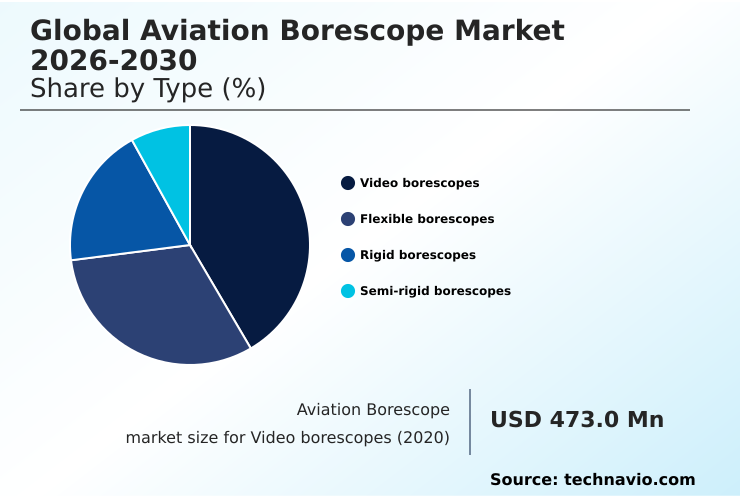
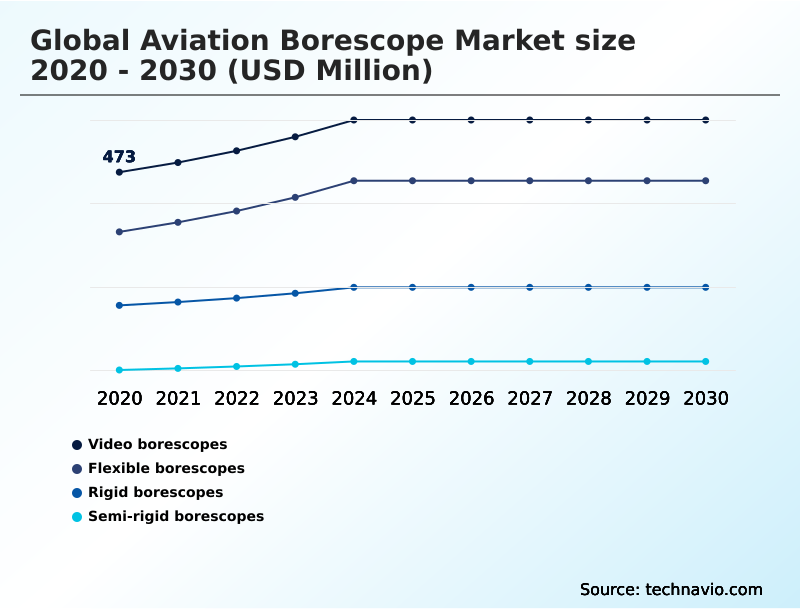
The Video borescopes segment was valued at in 2024 and showed a gradual increase during the forecast period.
Regional Analysis
APAC is estimated to contribute 32.5% to the growth of the global market during the forecast period.Technavio’s analysts have elaborately explained the regional trends and drivers that shape the market during the forecast period.

See How Aviation Borescope Market Demand is Rising in APAC Get Free Sample
The geographic landscape reveals a significant shift, with APAC poised to contribute over 32% of the market's incremental growth, driven by massive fleet expansions.
While North America remains a major market due to its large MRO infrastructure and focus on advanced remote visual inspection (rvi), its growth rate is surpassed by APAC's nearly 10% expansion.
This growth is fueled by the need for comprehensive engine health monitoring, including hot section component analysis and combustion chamber imaging, to manage new and aging aircraft.
Demand for tools to assess airframe structural integrity and perform auxiliary power unit (apu) review is rising globally, but the concentration of new deliveries in Asia is accelerating technology adoption in that region.
Market Dynamics
Our researchers analyzed the data with 2025 as the base year, along with the key drivers, trends, and challenges. A holistic analysis of drivers will help companies refine their marketing strategies to gain a competitive advantage.
- Strategic adoption of advanced visual inspection technologies is becoming a key differentiator in aviation MRO. The use of virtual reality training for visual inspection helps bridge the skills gap, preparing technicians for complex tasks like the in-situ repair of compressor blades and the visual inspection of aging fleet structures.
- On the hardware front, specialized high temperature probes for hot sections are critical for reducing engine cooling times before an examination. For next-generation aircraft, the visual inspection of composite airframes and the internal inspection of 3d printed parts demand new capabilities. RVI solutions for military aircraft sustainment require robust, secure systems.
- Software and connectivity are equally important, with ai software for visual inspection analysis enabling more accurate findings. The integration of wi-fi enabled probes for remote collaboration facilitates faster decision-making. Moreover, visual data integration with maintenance logs supports rvi for airworthiness certification checks and builds comprehensive datasets for predictive models.
- The specific challenges of new engines are also being addressed, with dedicated methods for visual inspection for gtf engine pmc issues. For specific tasks, specialized equipment like small diameter probes for apu inspection, uv inspection for hydraulic system leaks, and tools for fod retrieval from engine core are essential.
- Firms that fully integrate these technologies report up to a 40% improvement in diagnostic accuracy compared to legacy methods.
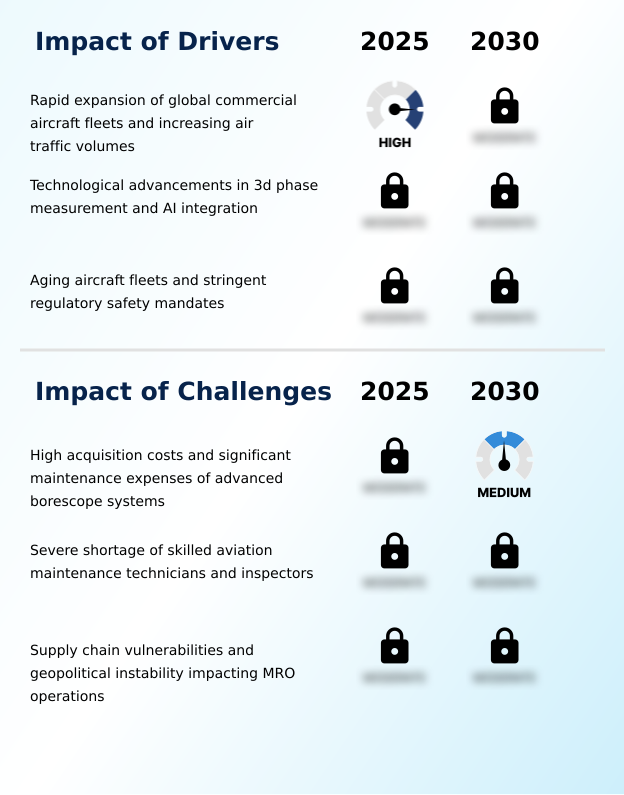
What are the key market drivers leading to the rise in the adoption of Aviation Borescope Industry?
- The rapid expansion of global commercial aircraft fleets, coupled with increasing air traffic volumes, serves as a primary driver for market growth.
- Market expansion is driven by the need for stringent non-destructive testing (ndt) to ensure airworthiness directive compliance and reduce aircraft on ground (aog) reduction scenarios.
- The growth in high-bypass turbofan inspection requirements for new and aging fleets is a significant factor. Advanced technologies like 3d phase measurement and stereo measurement technology offer precise data, facilitating engine teardown avoidance.
- These tools are crucial for on-wing engine examination, enabling the accurate detection of issues such as compressor blade crack detection.
- The high volume of maintenance repair overhaul (mro) activities, spurred by increased flight cycles, has solidified the demand for efficient inspection solutions, with adoption of advanced systems showing a 20% increase in certain MROs.
What are the market trends shaping the Aviation Borescope Industry?
- The integration of artificial intelligence and assisted defect recognition in aviation inspection is a transformative market trend. This development is enhancing the accuracy and efficiency of critical maintenance procedures.
- The market is evolving toward a fully integrated digital MRO ecosystem, driven by predictive maintenance analytics. A primary trend is the adoption of ai-assisted defect recognition to standardize inspections and enable data-driven serviceability decisions, which can reduce turnaround time (tat) optimization by over 25%. The shift to a paperless maintenance workflow is enabled by real-time remote collaboration features.
- Advanced robotic snake-arm inspection and continuum manipulator guidance systems are being trialed for complex tasks. Furthermore, the demand for small-diameter articulating probe technology is rising. These trends converge in the digital twin data protocol, which is transforming asset management by enhancing inspection accuracy by more than 15%.
What challenges does the Aviation Borescope Industry face during its growth?
- The high acquisition costs and significant maintenance expenses associated with advanced borescope systems present a key challenge to widespread market adoption.
- High acquisition costs for systems with advanced features like in-situ blend repair tooling or automated defect recognition (adr) remain a barrier, with nearly 30% of smaller MROs postponing upgrades. The integrity of equipment, from the distal tip micro-camera to the tungsten braided tubing, necessitates costly repairs.
- A shortage of technicians skilled in complex tasks like fatigue crack propagation monitoring and corrosion mapping and analysis further constrains the market. Supply chain disruptions affect the availability of specialized components for working channel instrumentation and tools for ultraviolet (uv) leak detection.
- Ensuring positive tool control verification and managing the quality control of additive manufacturing components add further layers of operational complexity.
Exclusive Technavio Analysis on Customer Landscape
The aviation borescope market forecasting report includes the adoption lifecycle of the market, covering from the innovator’s stage to the laggard’s stage. It focuses on adoption rates in different regions based on penetration. Furthermore, the aviation borescope market report also includes key purchase criteria and drivers of price sensitivity to help companies evaluate and develop their market growth analysis strategies.
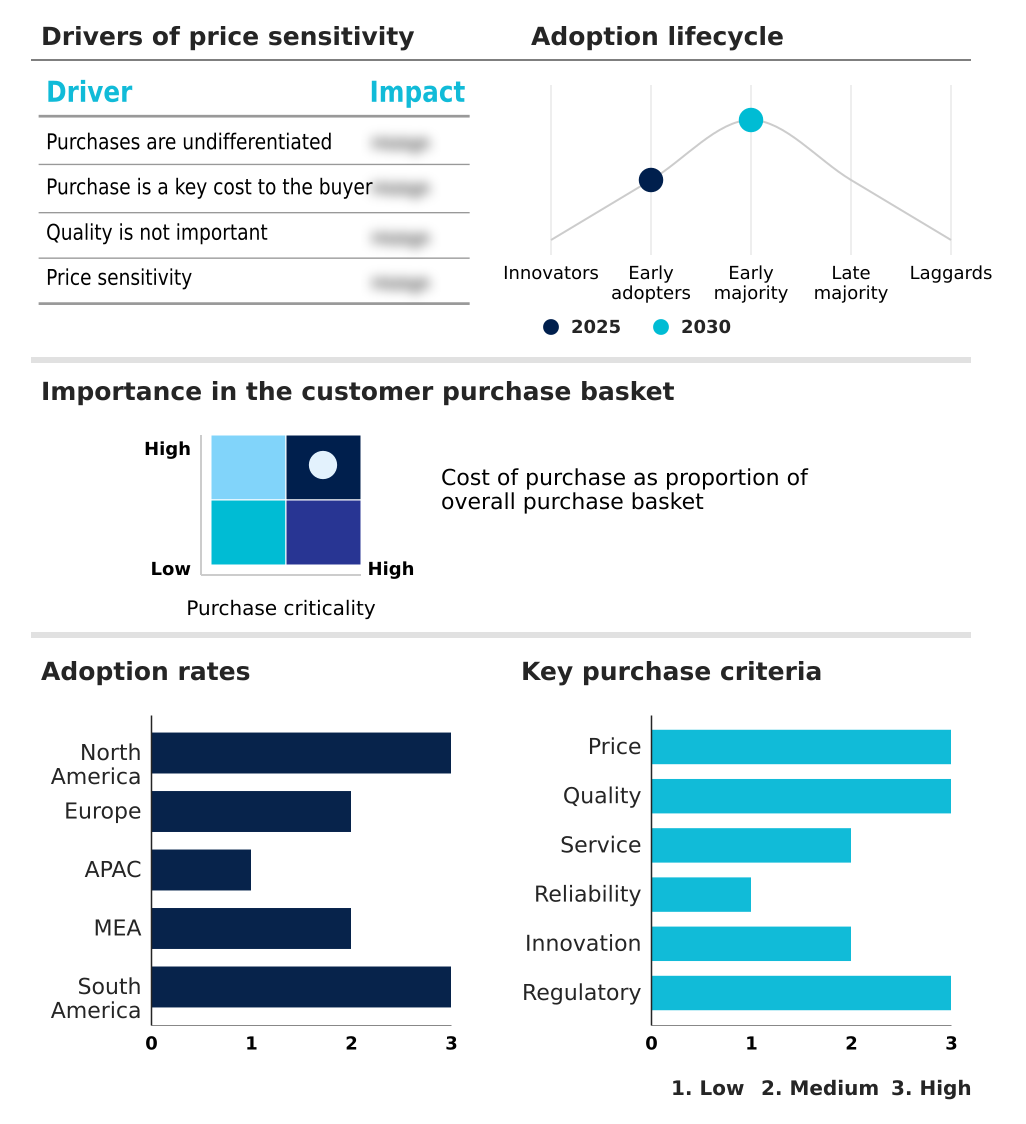
Customer Landscape of Aviation Borescope Industry
Competitive Landscape
Companies are implementing various strategies, such as strategic alliances, aviation borescope market forecast, partnerships, mergers and acquisitions, geographical expansion, and product/service launches, to enhance their presence in the industry.
CAE Inc. - Virtual reality maintenance simulations provide risk-free training for complex engine diagnostics, enhancing technician proficiency on critical non-destructive testing procedures.
The industry research and growth report includes detailed analyses of the competitive landscape of the market and information about key companies, including:
- CAE Inc.
- EFER Endoscopy
- Evident Corp.
- General Electric Co.
- Gradient Lens Corporation
- Guantai Automation Tech. Co. Ltd.
- JME Technologies Inc.
- Lenox Instrument Co.
- Machida Endoscope Co. Ltd.
- Medical Intubation Tech. Corp.
- Oasis Scientific
- PCE Holding GmbH
- Richard Wolf GmbH
- SPI Borescopes LLC
- USA Borescopes LLC
- ViewTech Borescopes
- viZaar industrial imaging AG
- Yateks
Qualitative and quantitative analysis of companies has been conducted to help clients understand the wider business environment as well as the strengths and weaknesses of key industry players. Data is qualitatively analyzed to categorize companies as pure play, category-focused, industry-focused, and diversified; it is quantitatively analyzed to categorize companies as dominant, leading, strong, tentative, and weak.
Recent Development and News in Aviation borescope market
- In October, 2024, Rolls-Royce released updates on its IntelligentEngine program, detailing successful field trials of a collaborative snake robot for on-wing combustion chamber inspections of a Trent XWB engine.
- In January, 2025, Evident Scientific released a case study demonstrating that its AI-enabled industrial videoscopes reduced engine inspection times by approximately 30% during routine A-checks for a major North American airline.
- In March, 2025, a consortium of European maintenance providers announced the standardization of a Digital Twin protocol, mandating that all visual inspection data for leased aircraft be uploaded to a shared cloud environment.
- In March, 2025, CAE Inc. continued its integration of advanced simulation training modules for non-destructive testing (NDT), aiming to improve inspector proficiency with complex remote visual inspection tools.
Dive into Technavio’s robust research methodology, blending expert interviews, extensive data synthesis, and validated models for unparalleled Aviation Borescope Market insights. See full methodology.
| Market Scope | |
|---|---|
| Page number | 297 |
| Base year | 2025 |
| Historic period | 2020-2024 |
| Forecast period | 2026-2030 |
| Growth momentum & CAGR | Accelerate at a CAGR of 8% |
| Market growth 2026-2030 | USD 698.2 million |
| Market structure | Fragmented |
| YoY growth 2025-2026(%) | 7.4% |
| Key countries | US, Canada, Mexico, UK, Germany, France, Italy, Spain, The Netherlands, China, Japan, India, South Korea, Australia, Indonesia, Saudi Arabia, UAE, South Africa, Israel, Turkey, Brazil, Argentina and Colombia |
| Competitive landscape | Leading Companies, Market Positioning of Companies, Competitive Strategies, and Industry Risks |
Research Analyst Overview
- The market's evolution is defined by the integration of sophisticated hardware and software designed to meet stringent safety and efficiency demands. Boardroom decisions on capital expenditure are increasingly influenced by the need to adopt tools featuring 3d phase measurement and ai-assisted defect recognition, which transition inspections from qualitative checks to quantitative analysis.
- A high-resolution video probe with a durable tungsten braided insertion tube and an advanced cmos imaging sensor is now the industry standard. The capability for remote visual inspection (rvi) is enhanced by articulating insertion probe designs and small-diameter articulating probe variants for complex pathways.
- Technologies like stereo measurement technology and automated defect recognition (adr) are pivotal for on-wing engine examination, particularly for hot section component analysis and combustion chamber imaging. These systems are crucial for identifying turbine blade thermal coating wear and compressor blade crack detection. Deployment of these tools has demonstrated up to a 30% reduction in inspection-related downtime.
- The market also includes specialized systems for non-destructive testing (ndt) such as those for in-situ blend repair tooling and foreign object debris (fod) retrieval.
What are the Key Data Covered in this Aviation Borescope Market Research and Growth Report?
-
What is the expected growth of the Aviation Borescope Market between 2026 and 2030?
-
USD 698.2 million, at a CAGR of 8%
-
-
What segmentation does the market report cover?
-
The report is segmented by Type ( Video borescopes, Flexible borescopes, Rigid borescopes, and Semi-rigid borescopes), Application (Aircraft engine inspection, Airframe inspection, Component inspection, and FOD inspection), End-user (Commercial airplanes, Military aviation airplanes, and Business aviation airplanes) and Geography (North America, Europe, APAC, Middle East and Africa, South America)
-
-
Which regions are analyzed in the report?
-
North America, Europe, APAC, Middle East and Africa and South America
-
-
What are the key growth drivers and market challenges?
-
Rapid expansion of global commercial aircraft fleets and increasing air traffic volumes, High acquisition costs and significant maintenance expenses of advanced borescope systems
-
-
Who are the major players in the Aviation Borescope Market?
-
CAE Inc., EFER Endoscopy, Evident Corp., General Electric Co., Gradient Lens Corporation, Guantai Automation Tech. Co. Ltd., JME Technologies Inc., Lenox Instrument Co., Machida Endoscope Co. Ltd., Medical Intubation Tech. Corp., Oasis Scientific, PCE Holding GmbH, Richard Wolf GmbH, SPI Borescopes LLC, USA Borescopes LLC, ViewTech Borescopes, viZaar industrial imaging AG and Yateks
-
Market Research Insights
- The market is shaped by the convergence of technologies aimed at enhancing engine health monitoring and airframe structural integrity. The use of predictive maintenance analytics is crucial for aircraft on ground (aog) reduction and turnaround time (tat) optimization. Within the digital MRO ecosystem, real-time remote collaboration and a paperless maintenance workflow enable data-driven serviceability decisions with over 95% accuracy.
- This is vital for airworthiness directive compliance and engine teardown avoidance. Effective maintenance repair overhaul (mro) depends on quantitative defect assessment for tasks like fatigue crack propagation monitoring and corrosion mapping and analysis. This extends to auxiliary power unit (apu) review, landing gear strut examination, and composite material inspection.
- The focus on asset condition traceability and positive tool control verification is critical, especially for electrical wiring interconnect system (ewis) checks and additive manufacturing quality control, where adoption rates have increased by 20%.
We can help! Our analysts can customize this aviation borescope market research report to meet your requirements.
 RIA -
RIA - 
