



Binder Jetting Market Size 2024-2028
The binder jetting market size is forecast to increase by USD 1.11 billion at a CAGR of 21.4% between 2023 and 2028.
- The market is experiencing significant growth due to several key trends. One of the primary drivers is the increasing defense budgetary allocations towards advanced manufacturing technologies. Another trend is the continuous product innovations In the field of binder jetting, leading to the development of more efficient and cost-effective systems. The market is experiencing significant growth, driven by the increasing adoption of digital manufacturing technologies and the shift towards sustainable and eco-friendly manufacturing processes. Industry 4.0 initiatives, such as smart factories and automation, are fueling the demand for advanced materials and cost-effective production methods. However, the high cost of systems remains a challenge for market growth. Despite this, the market is expected to witness steady progress due to the advantages offered by technology, such as its ability to produce complex geometries and high-quality parts in a short time frame. Overall, the market holds immense potential for growth, driven by these trends and the continuous advancements In the technology.
What will be the Size of the Binder Jetting Market During the Forecast Period?
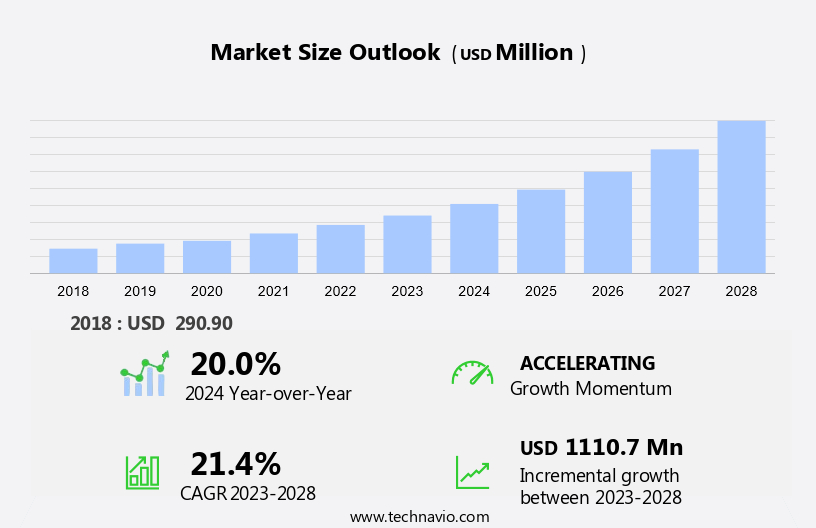
- Binder jetting technology, a key component of additive manufacturing, is gaining traction due to its ability to produce complex geometries and large-scale parts. Moreover, the market is witnessing a trend towards the use of recyclable, biodegradable, and eco-friendly materials, aligning with the circular economy and renewable energy initiatives. The healthcare sector, particularly patient-centric healthcare and medical device innovation, is also adopting the production of customized and biocompatible implants and prosthetics.
- Government investment in research and development, as well as the increasing focus on lean manufacturing, supply chain optimization, and data-driven manufacturing, are further driving the growth of the market. The construction industry is also exploring the potential for sustainable design and waste reduction, while the dental technology sector is benefiting from advancements for cost-effective and precise production of dental restoratives. Overall, the market is poised for continued growth, driven by the convergence of digital manufacturing, sustainability, and advanced materials.
How is this Binder Jetting Industry segmented and which is the largest segment?
The report provides comprehensive data (region-wise segment analysis), with forecasts and estimates in "USD billion" for the period 2024-2028, as well as historical data from 2018-2022 for the following segments.
- Material
- Metal powders
- Ceramics
- Sand
- End-user
- Aerospace and defense
- Automotive
- Healthcare
- Consumer goods
- Others
- Geography
- North America
- Canada
- US
- Europe
- Germany
- UK
- France
- APAC
- China
- India
- Japan
- South America
- Brazil
- Middle East and Africa
- North America
By Material Insights
- The metal powders segment is estimated to witness significant growth during the forecast period.
Binder jetting is a metal 3D printing technology that utilizes a liquid binder to selectively join metal powder particles, creating intricate structures layer by layer. The process begins with spreading a thin layer of metal powder onto a build platform, followed by the precise deposition of binder droplets by printheads. This sequence repeats as the platform lowers and fresh powder is spread, resulting In the gradual formation of the part. Notably, approximately 95% of the unused powder is recycled, contributing to the process's efficiency. Post-processing steps, including sintering and infiltration, are necessary to achieve the desired strength and durability for the final product.
This versatile technology is applicable to various industries, including aerospace, dental, and consumer goods, offering customizable designs, reduced lead times, and lower production costs compared to traditional manufacturing methods. The adoption of eco-friendly binder materials and the recycling of unused powder contribute to sustainability, making it an environmentally sustainable solution for manufacturing industrial parts, architectural objects, and full-color 3D printing of consumer products.
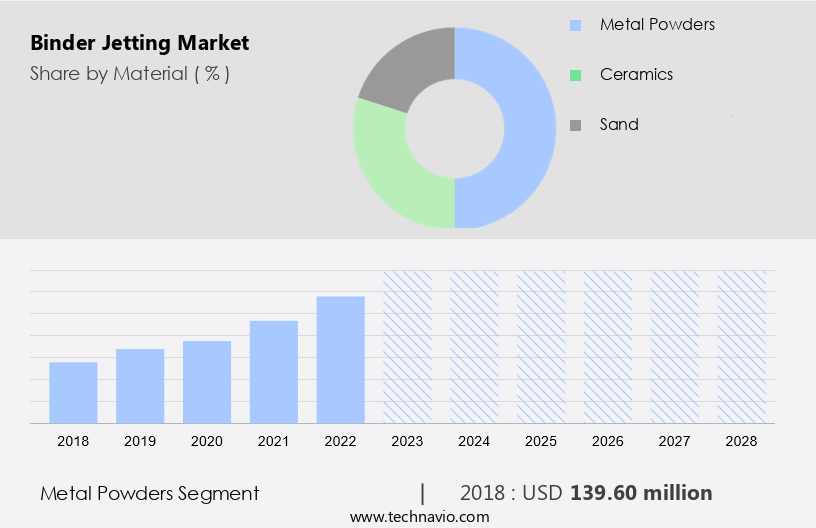
Get a glance at the market report of share of various segments Request Free Sample
The metal powders segment was valued at USD 139.60 million in 2018 and showed a gradual increase during the forecast period.
Regional Analysis
- North America is estimated to contribute 40% to the growth of the global market during the forecast period.
Technavio's analysts have elaborately explained the regional trends and drivers that shape the market during the forecast period.
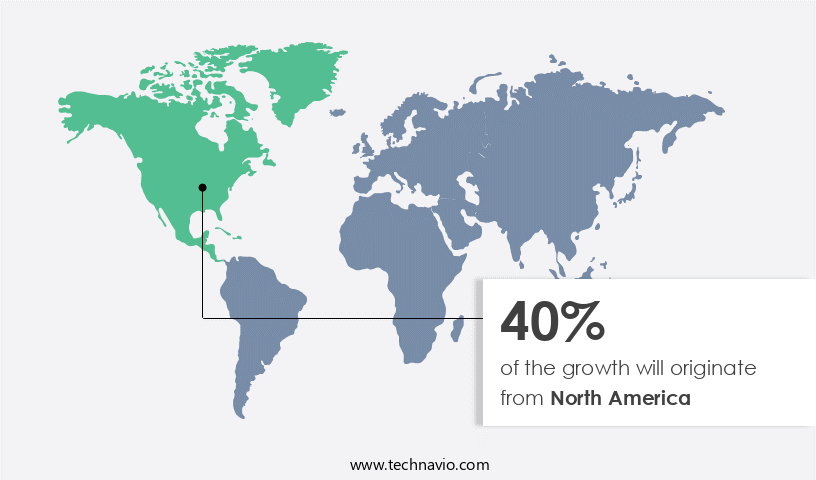
For more insights on the market size of various regions, Request Free Sample
The North American market, specifically the United States, plays a pivotal role In the global binder jetting industry, fueled by continuous innovations and commercializations In the additive manufacturing (AM) sector. Notably, Colibrium Additive launched the full commercial availability of its Series 3 metal binder jet system in September 2024. This large-scale metal binder jet system, one of the biggest In the market, signifies a significant achievement for the company following a rigorous development process. The Series 3 system is poised to revolutionize the AM industry by delivering advanced capabilities for producing metal parts on a large scale. In May 2024, Desktop Metal unveiled a Reactive Safety Kit for its Production System P-1. These developments underscore the growing importance of eco-friendly, customizable, and efficient solutions in various industries, including patient-specific dental applications, urbanization, and consumer goods manufacturing. The adoption of technology, which involves the selective binding of powder particles using a liquid binder, is increasingly gaining traction due to its versatility and ability to produce intricate structures with minimal material waste. This technology is also known for its potential to reduce production lead times, assembly time, and finishing costs compared to traditional manufacturing methods.
Furthermore, the integration of ecologically friendly materials and design changes, such as biodegradable binders and recycled metal powders, is a key trend driving market growth. The market is expected to witness substantial innovations in binder materials, printers, and post-processing techniques, leading to full-scale production capabilities and increased accessibility for small-scale enterprises and pattern shops. Despite the high initial investment and production costs, the benefits of binder jetting, such as precision engineering, customizable designs, and shorter project requirements, are compelling. The technology's ability to produce high-quality metal prints with minimal material waste and efficient production methods makes it an environmentally sustainable solution for various industries. Thus, the market is poised for growth, driven by advancements in technology, eco-friendly innovations, and the increasing demand for customizable and efficient manufacturing solutions.
Market Dynamics
Our researchers analyzed the data with 2023 as the base year, along with the key drivers, trends, and challenges. A holistic analysis of drivers will help companies refine their marketing strategies to gain a competitive advantage.
What are the key market drivers leading to the rise In the adoption of Binder Jetting Industry?
- Increased defense budgetary allocations are a major driver of the binder jetting market. The U.S. Department of Defense's FY 2024 budget stands at USD 849.8 billion up from USD 816.7 billion in FY 2023 highlighting strong investment in advanced manufacturing technologies. Similarly, India's 2024â25 defense budget rose 4.78% to USD 74.78 billion, signaling a global shift toward innovation and sustainability.
- These investments are accelerating the adoption of binder jetting for producing intricate metal components, dental implants, and surgical instruments. The technology supports lightweight, high-strength parts in aerospace and defense with lower assembly time, finishing costs, and material waste.
- As demand for customized, sustainable solutions grows, binder jetting is transforming pre-series manufacturing, pattern shops, and consumer goods production driving efficiency, precision, and full-scale adoption.
What are the market trends shaping the Binder Jetting Industry?
- Product innovation is a key trend shaping the binder jetting market. Growing demand for eco-friendly products and patient-specific solutions especially in dental and aerospace is fueling market expansion. Recent innovations include sustainable binder materials, low-waste printing, and full-color 3D printing, making the technology ideal for complex, customizable parts.
- Binder jetting is increasingly used by small enterprises to produce items like surgical instruments, shop fittings, and architectural components. Its ability to create complex geometries without support structures cuts production time and costs, while streamlined post-processing reduces lead times and finishing expenses.
- Adoption is rising in pre-series manufacturing and pattern shops, as the technology supports rapid design adjustments. With continued investment in metal 3D printers and material innovation, binder jetting is proving to be a sustainable, high-precision alternative to traditional methods.
What challenges does the Binder Jetting Industry face during its growth?
- The binder jetting market faces a major hurdle: high system costs. Basic machines start at over USD 100,000, while advanced models can exceed USD 500,000, making them out of reach for many small businesses. This steep entry cost limits adoption despite the technology's clear benefits such as the ability to produce complex, customizable parts with high precision.
- Industries like aerospace, dental, consumer goods, and architecture value binder jetting for its versatility and speed. To offset costs, innovations in binder materials, post-processing, and production methods are helping reduce expenses and improve efficiency. Eco-friendly binders, faster assembly, and lower finishing costs are making the technology more accessible.Though costly, binder jetting remains a compelling solution for producing intricate, high-quality parts with shorter lead times.
Exclusive Customer Landscape
The binder jetting market forecasting report includes the adoption lifecycle of the market, market growth and forecasting, covering from the innovator's stage to the laggard's stage. It focuses on adoption rates in different regions based on penetration. Furthermore, the binder jetting market report also includes key purchase criteria and drivers of price sensitivity to help companies evaluate and develop their market growth analysis strategies.
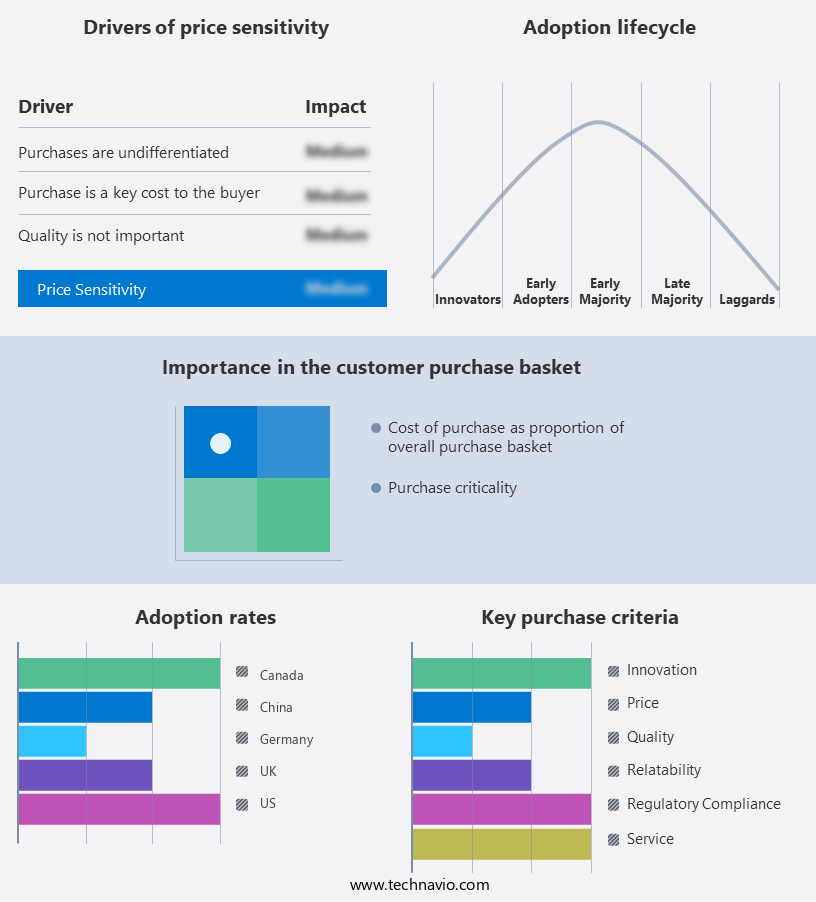
Customer Landscape
Key Companies & Market Insights
Companies are implementing various strategies, such as strategic alliances, binder jetting market forecast, partnerships, mergers and acquisitions, geographical expansion, and product/service launches, to enhance their presence In the industry.
The industry research and growth report includes detailed analyses of the competitive landscape of the market and information about key companies, including:
- Dassault Systemes SE
- Desktop Metal Inc.
- EPTAM Precision
- General Electric Co.
- Hoganas AB
- HP Inc.
- Markforged Holding Corp.
- MATERIALISE NV
- Optomec Inc.
- Proto3000 Inc.
- Roland DG Corp.
- Sandvik AB
- Sculpteo Inc.
- Stratasys Ltd.
- voxeljet AG
- Xjet Ltd.
- Xometry Inc.
Qualitative and quantitative analysis of companies has been conducted to help clients understand the wider business environment as well as the strengths and weaknesses of key industry players. Data is qualitatively analyzed to categorize companies as pure play, category-focused, industry-focused, and diversified; it is quantitatively analyzed to categorize companies as dominant, leading, strong, tentative, and weak.
Research Analyst Overview
The Binder Jetting Market is at the forefront of the future of manufacturing, enabling rapid prototyping, mass customization, and on-demand manufacturing. With advances in binder jetting advancements, material advancements, and hardware advancements, the technology supports 3D printing medical devices, custom manufacturing, and digital fabrication using biocompatible, bio-based, biodegradable, and recyclable materials. It aligns with low-carbon manufacturing, green manufacturing, and sustainable manufacturing goals. Key trends include smart manufacturing, agile manufacturing, digital transformation, and manufacturing automation, enhanced by industrial robotics and software advancements.
Binder jetting enables precision manufacturing for dental technology advancements, construction industries, retail design, and architectural design, producing robust structures and personalized products. With benefits like time savings, cost analysis 3D printing, and scalability through scalable materials, this additive manufacturing solution supports tooling with 3D printing, product prototyping, digital twins, powder metallurgy, and design for manufacturing. 3D printing applications, including 3D printing case studies, showcase its impact on personalized medicine, building design, and manufacturing optimization. Demand for efficient, sustainable materials continues to drive growth in 3D printing services and additive manufacturing trends, fueled by increasing environmental consciousness.
|
Market Scope |
|
|
Report Coverage |
Details |
|
Page number |
212 |
|
Base year |
2023 |
|
Historic period |
2018-2022 |
|
Forecast period |
2024-2028 |
|
Growth momentum & CAGR |
Accelerate at a CAGR of 21.4% |
|
Market growth 2024-2028 |
USD 11.11 billion |
|
Market structure |
Fragmented |
|
YoY growth 2023-2024(%) |
20.0 |
|
Key countries |
US, UK, Germany, China, Canada, France, India, Japan, The Netherlands, and Brazil |
|
Competitive landscape |
Leading Companies, Market Positioning of Companies, Competitive Strategies, and Industry Risks |
What are the Key Data Covered in this Binder Jetting Market Research and Growth Report?
- CAGR of the Binder Jetting industry during the forecast period
- Detailed information on factors that will drive the growth and forecasting between 2024 and 2028
- Precise estimation of the size of the market and its contribution of the industry in focus to the parent market
- Accurate predictions about upcoming growth and trends and changes in consumer behaviour
- Growth of the market across North America, Europe, APAC, South America, and Middle East and Africa
- Thorough analysis of the market's competitive landscape and detailed information about companies
- Comprehensive analysis of factors that will challenge the binder jetting market growth of industry companies
We can help! Our analysts can customize this binder jetting market research report to meet your requirements.
 RIA -
RIA - 
