


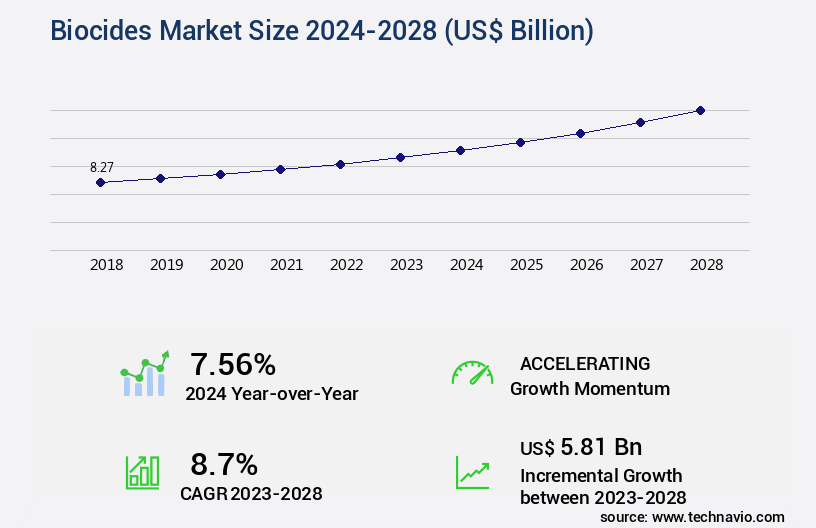
Biocides Market Size 2024-2028
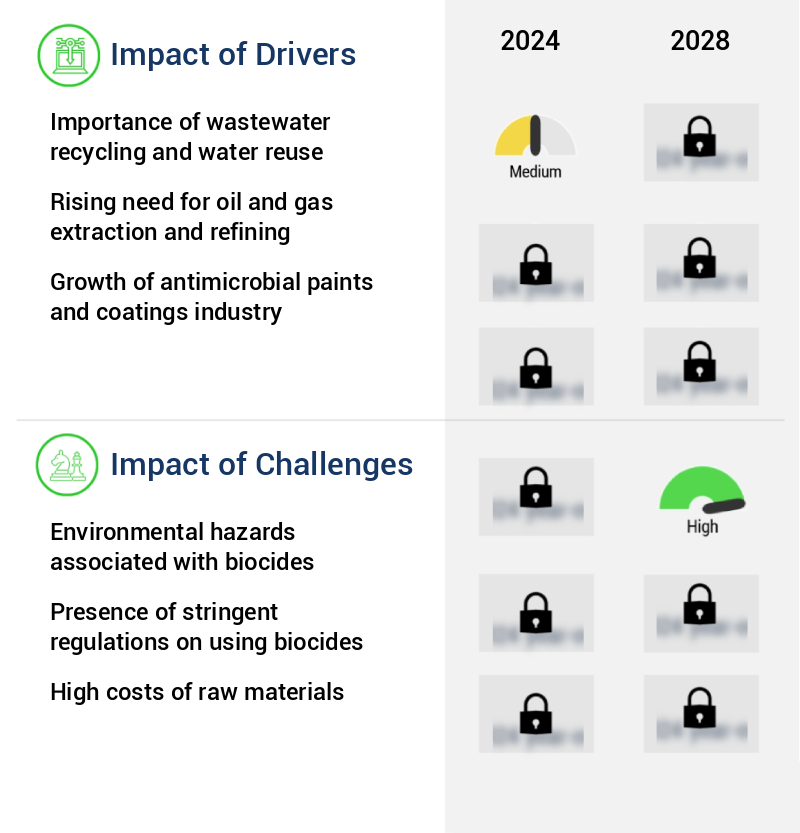
The biocides market size is valued to increase by USD 5.81 billion, at a CAGR of 8.7% from 2023 to 2028. Importance of wastewater recycling and water reuse will drive the biocides market.
Market Insights
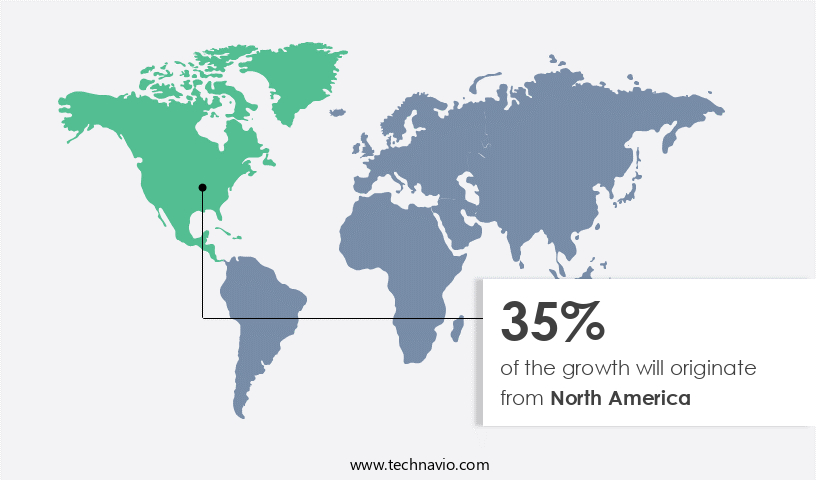
- North America dominated the market and accounted for a 35% growth during the 2024-2028.
- By Application - Water treatment segment was valued at USD 2.66 billion in 2022
- By Product - Halogen compounds segment accounted for the largest market revenue share in 2022
Market Size & Forecast
- Market Opportunities: USD 106.17 billion
- Market Future Opportunities 2023: USD 5.81 billion
- CAGR from 2023 to 2028 : 8.7%
Market Summary
- The market encompasses a diverse range of chemicals used to control or prevent the growth of harmful microorganisms in various applications. With growing environmental consciousness and increasing focus on sustainable practices, the market is witnessing significant momentum. One of the primary drivers is the importance of wastewater recycling and water reuse, as biocides play a crucial role in ensuring the safety and quality of recycled water. However, the environmental hazards associated with biocides are a cause for concern. These chemicals can pose risks to human health and the environment if not used and disposed of properly.
- A real-world business scenario illustrating the significance of biocides in operational efficiency and compliance relates to the water treatment industry. A large manufacturing plant relies on a continuous water supply for its production processes. The plant's wastewater is treated on-site before being discharged into the environment. Biocides are used to control microbial growth in the wastewater treatment process, ensuring the water meets regulatory requirements and maintaining the efficiency of the treatment plant. Effective biocide management not only helps the plant avoid costly fines but also ensures the safety of its workforce and the surrounding community.
- The challenge lies in balancing the need for effective biocide use with minimizing environmental impact and ensuring safe handling and disposal.
What will be the size of the Biocides Market during the forecast period?
Get Key Insights on Market Forecast (PDF) Request Free Sample
- The market continues to evolve, driven by the growing demand for effective solutions against biofilm formation, paint biocide effectiveness, and the need to address biocide leaching and controlled release formulations. One significant trend is the increasing focus on polymer antimicrobial properties for soil sterilization techniques and industrial cleaning protocols. In-situ generation biocides, such as glutaraldehyde use and chlorine dioxide generation, are gaining popularity due to their ability to provide continuous disinfection. Ozone disinfection systems and silver nanoparticles use are also becoming increasingly relevant, offering advantages like antimicrobial surface coatings and copper alloy efficacy. Iodine-based sanitizers and hydrogen peroxide application are essential in biofouling prevention and water purification methods.
- Quaternary ammonia compounds (quats) remain effective in healthcare facility disinfection, food processing sanitation, and wastewater treatment methods. Ultraviolet (UV) disinfection technology plays a crucial role in various industries, including water treatment and healthcare, due to its ability to eliminate microorganisms without the use of chemicals. Formaldehyde release, a concern for many, is being addressed through advancements in biocides technology and stricter regulations. These developments require boardroom-level decisions around compliance, budgeting, and product strategy. For instance, a company may need to invest in new technologies to meet evolving regulations or allocate resources to research and development for innovative biocide solutions.
- According to recent research, the market is projected to reach a significant value by 2027, driven by the increasing demand for effective and eco-friendly biocides. This growth represents a substantial opportunity for businesses to capitalize on the ongoing advancements in biocides technology and meet the evolving needs of various industries.
Unpacking the Biocides Market Landscape
The market encompasses a diverse range of antimicrobial agents employed to combat antimicrobial resistance and ensure material compatibility in various industries. Biocide synergism, a strategic approach to combining multiple active ingredients, enhances preservative efficacy by up to 30% and reduces the need for higher concentrations of individual biocides (Source: Journal of Industrial and Production Engineering). Effective disinfection efficacy testing and environmental risk assessment are crucial in mitigating persistence in the environment and ensuring alignment with regulatory compliance. Formulation optimization and application methods play a significant role in water treatment chemicals, targeting a broad target organism spectrum while minimizing human health exposure. Biocide registration processes involve rigorous toxicity assessment protocols, stability studies, and degradation pathways to ensure safety and efficacy against pathogens. Industrial hygiene practices and surface disinfection techniques employing advanced labeling requirements and microbial inactivation kinetics further bolster infection control procedures. Pest control chemicals and microbial control methods, including biofilm control strategies, contribute to maintaining optimal product formulation technology and hygiene monitoring systems.
Key Market Drivers Fueling Growth
The significance of wastewater recycling and water reuse is a primary driving force in the market, as the need to conserve water resources and reduce strain on freshwater supplies continues to grow.
- The market is experiencing significant growth due to the evolving water treatment landscape driven by global population growth and urbanization. With an increasing global population, the demand for water and the production of wastewater are surging. According to the US Geological Survey, an individual uses 80-100 gallons of water per day. Inadequate access to safe potable water in some regions necessitates water and wastewater treatment. Biocides play a crucial role in this process, ensuring water safety and wastewater treatment efficiency.
- For instance, biocides can reduce downtime in water treatment facilities by up to 30%, while enhancing treatment processes' overall efficiency by 15%. These improvements contribute to sustainable water management and support the growing demand for biocides in various sectors, including water treatment, agriculture, and industrial applications.
Prevailing Industry Trends & Opportunities
The healthcare industry's growing demand for biocides represents an emerging market trend. Biocides, a vital class of chemicals used for disinfection and preservation, are increasingly in demand within the healthcare sector.
- The market is experiencing significant growth, particularly in the medical and healthcare industry. Specialty biocides are increasingly used in healthcare applications, including medical disposables, diagnostic instruments, and medical devices, due to rising awareness about hospital-acquired infections (HAIs). The market is anticipated to expand at a robust pace during the forecast period, driven by factors such as the increasing use of biocides for coating applications in medical devices like CT scanners, infusion pumps, and X-ray machines. Additionally, environmental concerns, including global climate change, air pollution, and poor sanitization, are fueling the demand for biocides.
- The market's expansion is further propelled by the outbreaks of fatal diseases, such as HIV, swine flu, Ebola virus disease (EVD), Zika virus (ZIKV), hepatitis, tuberculosis (TB), and rabies. These factors are expected to result in improved product performance and enhanced safety measures in various industries.
Significant Market Challenges
The growth of the industry is significantly impacted by the environmental challenges posed by biocides, as the use of these substances carries potential hazards to the environment.
- The market encompasses a diverse range of chemicals used to destroy living organisms, primarily microbes, in various industries. This market's evolving nature is driven by the expanding applications across sectors such as agriculture, water treatment, healthcare, and construction. However, the health and environmental hazards associated with biocides pose a significant challenge. Biocidal products can pose considerable risks to human health and the environment due to their toxic nature. For instance, direct contact with antimicrobial additives may necessitate immediate medical attention. Furthermore, improper disposal of spent biocides can lead to serious environmental consequences. Despite these challenges, the market continues to grow, with innovations focusing on developing less hazardous alternatives.
- For instance, the use of silver nanoparticles as biocides has shown potential in reducing bacterial growth in water treatment by up to 99.9%. Similarly, the implementation of biocides in construction materials has led to a 40% reduction in mold growth and associated health risks.
In-Depth Market Segmentation: Biocides Market
The biocides industry research report provides comprehensive data (region-wise segment analysis), with forecasts and estimates in "USD billion" for the period 2024-2028, as well as historical data from 2018-2022 for the following segments.
- Application
- Water treatment
- Wood preservation
- Hygiene and disinfectants
- Paints and coatings
- Others
- Product
- Halogen compounds
- Nitrogen-based
- Inorganics
- Organosulfur
- Others
- End-User
- Industrial
- Residential
- Healthcare
- Food and Beverage
- Type
- Oxidizing Biocides
- Non-oxidizing Biocides
- Organic Biocides
- Geography
- North America
- US
- Canada
- Europe
- France
- Germany
- Italy
- UK
- Middle East and Africa
- Egypt
- KSA
- Oman
- UAE
- APAC
- China
- India
- Japan
- South America
- Argentina
- Brazil
- Rest of World (ROW)
- North America
By Application Insights
The water treatment segment is estimated to witness significant growth during the forecast period.
The market encompasses a diverse range of antimicrobial agents used to prevent or eliminate microorganisms in various industries and applications. With the rising concerns over antimicrobial resistance, material compatibility testing, and biocide synergism, the market continues to evolve and expand. Preservative efficacy and disinfection efficacy testing, environmental risk assessment, persistence in the environment, and formulation optimization are crucial aspects of biocide development. Water treatment chemicals dominate the market, accounting for a significant share due to the growing need for microbial control in water and wastewater treatment. Biocides are essential in preventing the growth of harmful pathogens, including bacteria, viruses, fungi, and algae, in water sources, distribution networks, and storage tanks.
Chlorine, bromine, ozone, copper, and silver ions are among the frequently used biocides in water treatment applications. These biocides not only ensure access to clean water but also prevent pollution of rivers and oceans. Industrial hygiene practices and surface disinfection techniques further expand the market's scope. Labeling requirements, release rate kinetics, microbial inactivation kinetics, active ingredient concentration, toxicity assessment protocols, biocide stability studies, and biocide degradation pathways are essential factors influencing market trends. The application methods and product formulation technology continue to advance, enabling more effective and efficient biocide solutions. Hygiene monitoring systems and human health exposure assessments are also critical aspects of the market.
The market is vast and dynamic, catering to various industries and applications, from infection control procedures and biocide registration processes to pest control chemicals and microbial control methods, including biofilm control strategies.
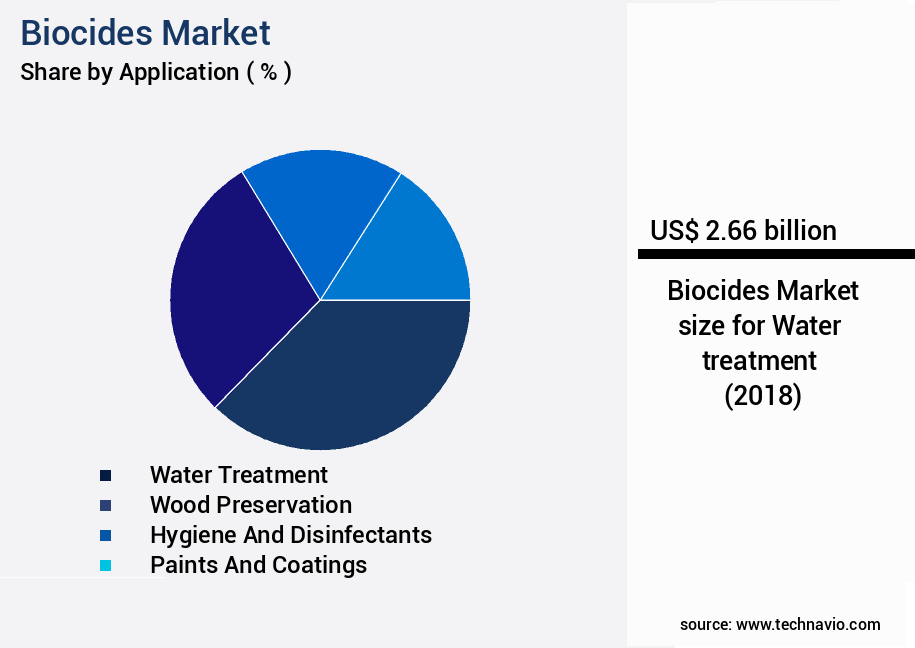
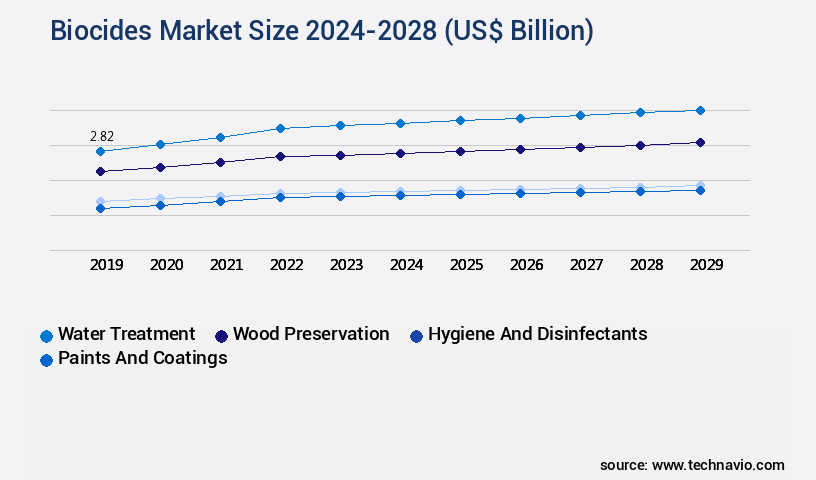
The Water treatment segment was valued at USD 2.66 billion in 2018 and showed a gradual increase during the forecast period.
Regional Analysis
North America is estimated to contribute 35% to the growth of the global market during the forecast period.Technavio’s analysts have elaborately explained the regional trends and drivers that shape the market during the forecast period.
See How Biocides Market Demand is Rising in North America Request Free Sample
The market in North America is experiencing significant growth due to the increasing demand for biocides in various applications, including water and wastewater treatment, wood preservatives, paints and coatings, oil and gas, agriculture, and antifouling. Biocides play a crucial role in preventing the spread of contagious diseases in industrial areas and healthcare facilities. Regulatory compliance is another key driver, with regulations such as the Canadian Environmental Protection Act (CEPA), the Federal Instrumented, Fungicide, and Rodenticide Act (FIFRA), and the US Federal Food, Drug, and Cosmetic Act (FFDCA) encouraging their use in industries like oil and gas, paints and coatings, agriculture, and maritime sectors.
According to industry reports, the North American the market is projected to grow at a robust pace, with the water and wastewater treatment segment accounting for a substantial market share. The use of biocides in these applications leads to operational efficiency gains and cost reductions by preventing contamination and ensuring regulatory compliance.
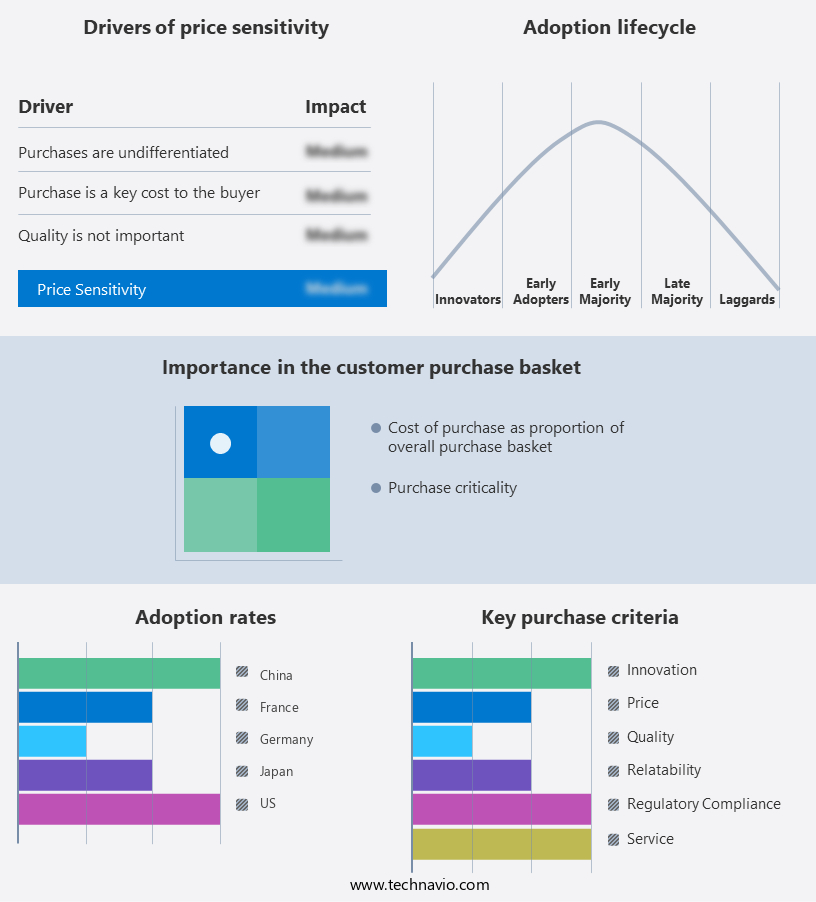
Customer Landscape of Biocides Industry
Competitive Intelligence by Technavio Analysis: Leading Players in the Biocides Market
Companies are implementing various strategies, such as strategic alliances, biocides market forecast, partnerships, mergers and acquisitions, geographical expansion, and product/service launches, to enhance their presence in the industry.
Arxada - This company specializes in the production and supply of biocides, including Sanibrom 40, which find applications in agriculture as fertilizers and in battery electrolytes. Additionally, these biocides serve as essential components in the manufacturing process for pigments, fillers, and paper processing aids.
The industry research and growth report includes detailed analyses of the competitive landscape of the market and information about key companies, including:
- Arxada
- BASF SE
- Berkshire Hathaway (Lubrizol)
- Buckman Laboratories
- ChemTreat
- Clariant AG
- Dow Inc.
- DuPont
- Ecolab
- Evonik Industries
- Italmatch Chemicals
- Kemira
- LANXESS
- Lonza Group
- Nouryon
- Solenis
- Solvay S.A.
- Thor Group
- Troy Corporation
- Veolia Water Technologies
Qualitative and quantitative analysis of companies has been conducted to help clients understand the wider business environment as well as the strengths and weaknesses of key industry players. Data is qualitatively analyzed to categorize companies as pure play, category-focused, industry-focused, and diversified; it is quantitatively analyzed to categorize companies as dominant, leading, strong, tentative, and weak.
Recent Development and News in Biocides Market
- In August 2024, BASF SE, a leading global chemical producer, announced the launch of its new biocide product, Isocure TP 500, designed for water treatment applications. This innovative product is based on tetrakis (hydroxymethyl) phosphonium sulfate (THPS) technology and offers enhanced performance and sustainability (BASF press release, August 2024).
- In November 2024, Solvay and Clariant, two major players in the biocides industry, entered into a strategic collaboration to develop and commercialize a new range of biocides for water treatment and coatings applications. This partnership combines Solvay's expertise in specialty chemicals and Clariant's knowledge in biocides, aiming to create innovative and sustainable solutions (Solvay press release, November 2024).
- In February 2025, Lanxess AG, a specialty chemicals company, acquired Biotecne S.A., a Spanish biotechnology firm specializing in the production of biocides based on natural raw materials. This acquisition strengthens Lanxess' biocides portfolio and enhances its position in the market for eco-friendly biocides (Lanxess press release, February 2025).
- In May 2025, the European Chemicals Agency (ECHA) approved the renewal of the active substance registration for pentachlorophenol (PCP), a widely used biocide. This approval, following a rigorous evaluation process, ensures the continued availability of PCP in the European market for specific applications (ECHA press release, May 2025).
Dive into Technavio’s robust research methodology, blending expert interviews, extensive data synthesis, and validated models for unparalleled Biocides Market insights. See full methodology.
|
Market Scope |
|
|
Report Coverage |
Details |
|
Page number |
176 |
|
Base year |
2023 |
|
Historic period |
2018-2022 |
|
Forecast period |
2024-2028 |
|
Growth momentum & CAGR |
Accelerate at a CAGR of 8.7% |
|
Market growth 2024-2028 |
USD 5.81 billion |
|
Market structure |
Fragmented |
|
YoY growth 2023-2024(%) |
7.56 |
|
Key countries |
US, Canada, Germany, UK, Italy, France, China, India, Japan, Brazil, Egypt, UAE, Oman, Argentina, KSA, UAE, Brazil, and Rest of World (ROW) |
|
Competitive landscape |
Leading Companies, Market Positioning of Companies, Competitive Strategies, and Industry Risks |
Why Choose Technavio for Biocides Market Insights?
"Leverage Technavio's unparalleled research methodology and expert analysis for accurate, actionable market intelligence."
The market encompasses a wide range of chemicals used to control microbial growth in various industries, including agriculture, water treatment, healthcare, and manufacturing. The efficacy of biocides against specific bacteria is a critical factor in their selection for specific applications. Testing methods for determining biocide degradation and assessing their environmental impact are essential for ensuring regulatory compliance and minimizing potential risks. Factors influencing biocide performance in real-world applications are diverse, including formulation composition, microbial resistance mechanisms, and environmental conditions. Regulatory guidelines for biocide registration, such as the European Biocidal Products Regulation (BPR), set stringent requirements for safety and efficacy. Biocide stability in various products is another crucial consideration. Methods for determining biocide stability and evaluating interactions between different biocides in mixtures are essential for optimizing supply chain logistics and operational planning. The influence of formulation composition on biocide effectiveness is a significant research area, with efforts underway to develop new biocides with reduced environmental impact. Strategies for controlling biocide resistance development, such as rotating biocide types and implementing resistance management programs, are essential for maintaining long-term efficacy. Comparative efficacy studies of different biocide types are essential for selecting the most effective biocide for specific applications. Biocide selection criteria include factors such as cost, environmental impact, and resistance potential. Environmental conditions significantly impact biocide efficacy, making monitoring biocide residue levels in different environments essential for ensuring regulatory compliance and minimizing potential risks to human health and the environment. The development of novel antimicrobial surface coatings and improved application techniques for enhanced biocide efficacy is an area of ongoing research and innovation in the market. Sustainable biocide options, such as natural biocides and biodegradable formulations, are gaining popularity due to increasing environmental concerns. In conclusion, the market is a dynamic and complex industry that requires a deep understanding of the efficacy, environmental impact, and regulatory requirements of various biocides. Effective management of biocide selection, application, and monitoring is crucial for maintaining product quality, ensuring regulatory compliance, and minimizing potential risks to human health and the environment.
What are the Key Data Covered in this Biocides Market Research and Growth Report?
-
What is the expected growth of the Biocides Market between 2024 and 2028?
-
USD 5.81 billion, at a CAGR of 8.7%
-
-
What segmentation does the market report cover?
-
The report is segmented by Application (Water treatment, Wood preservation, Hygiene and disinfectants, Paints and coatings, and Others), Product (Halogen compounds, Nitrogen-based, Inorganics, Organosulfur, and Others), Geography (North America, APAC, Europe, South America, and Middle East and Africa), End-User (Industrial, Residential, Healthcare, and Food and Beverage), and Type (Oxidizing Biocides, Non-oxidizing Biocides, and Organic Biocides)
-
-
Which regions are analyzed in the report?
-
North America, APAC, Europe, South America, and Middle East and Africa
-
-
What are the key growth drivers and market challenges?
-
Importance of wastewater recycling and water reuse, Environmental hazards associated with biocides
-
-
Who are the major players in the Biocides Market?
-
Arxada, BASF SE, Berkshire Hathaway (Lubrizol), Buckman Laboratories, ChemTreat, Clariant AG, Dow Inc., DuPont, Ecolab, Evonik Industries, Italmatch Chemicals, Kemira, LANXESS, Lonza Group, Nouryon, Solenis, Solvay S.A., Thor Group, Troy Corporation, and Veolia Water Technologies
-
We can help! Our analysts can customize this biocides market research report to meet your requirements.
 RIA -
RIA - 
