


Biomaterial Testing Equipment Market Size 2026-2030
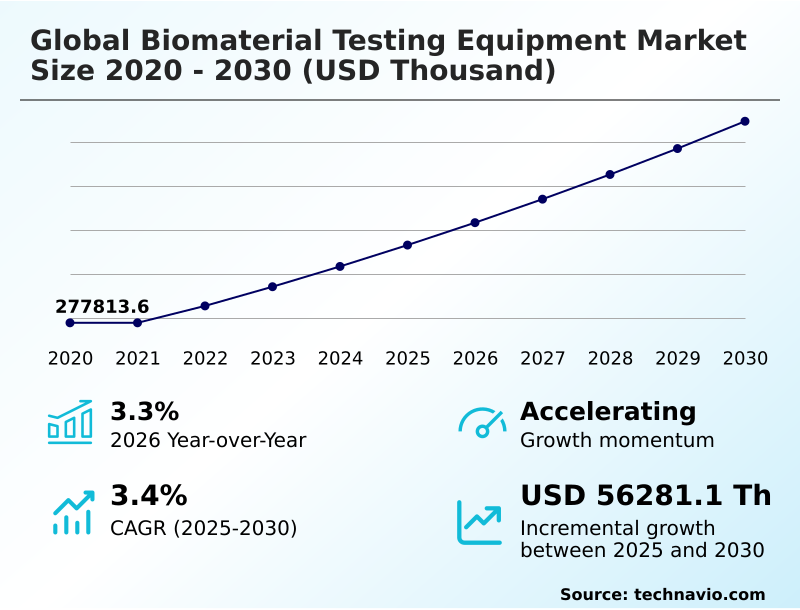
The biomaterial testing equipment market size is valued to increase by USD 56.28 million, at a CAGR of 3.4% from 2025 to 2030. Innovation in regenerative medicine and additive manufacturing will drive the biomaterial testing equipment market.
Major Market Trends & Insights
- North America dominated the market and accounted for a 40.4% growth during the forecast period.
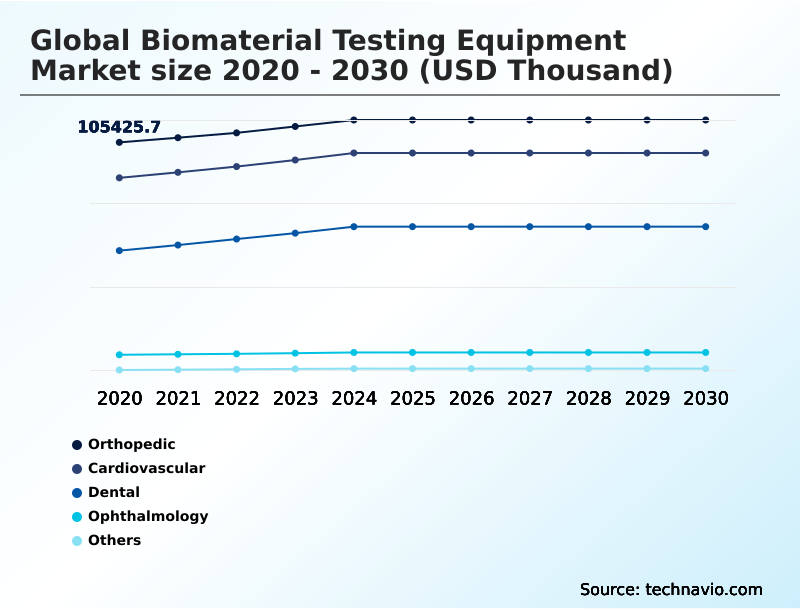
- By Application - Orthopedic segment was valued at USD 115.25 million in 2024
- By Type - Contact segment accounted for the largest market revenue share in 2024
Market Size & Forecast
- Market Opportunities:
- Market Future Opportunities: USD 56.28 million
- CAGR from 2025 to 2030 : 3.4%
Market Summary
- The biomaterial testing equipment market is fundamentally driven by the convergence of advanced materials science and stringent regulatory oversight. As the medical industry moves toward personalized medicine and regenerative therapies, the demand for sophisticated characterization tools intensifies. This requires a shift from basic static tests to dynamic evaluations that simulate physiological conditions, assessing properties like fatigue, creep, and degradation.
- A key business scenario involves validating patient-specific implants created via additive manufacturing, where each unique device must be rapidly tested for mechanical integrity before clinical use. This necessitates equipment capable of high-throughput screening and automated data analysis to ensure both safety and compliance with global standards.
- The complexity of new biomaterials, such as bio-instructive scaffolds and anisotropic tissues, further compels investment in versatile testing platforms. These systems must provide precise, reproducible data for regulatory submissions, which is critical for gaining market access and ensuring patient safety. This intricate balance between innovation and compliance defines the sector's trajectory, pushing for more intelligent and efficient testing solutions.
What will be the Size of the Biomaterial Testing Equipment Market during the forecast period?
Get Key Insights on Market Forecast (PDF) Get Free Sample
How is the Biomaterial Testing Equipment Market Segmented?
The biomaterial testing equipment industry research report provides comprehensive data (region-wise segment analysis), with forecasts and estimates in "USD thousand" for the period 2026-2030, as well as historical data from 2020-2024 for the following segments.
- Application
- Orthopedic
- Cardiovascular
- Dental
- Ophthalmology
- Others
- Type
- Contact
- Contactless
- End-user
- Healthcare
- Manufacturers
- Pharmaceuticals
- Research institutions
- Government agencies
- Geography
- North America
- US
- Canada
- Mexico
- Europe
- Germany
- UK
- France
- APAC
- China
- Japan
- India
- South America
- Brazil
- Argentina
- Middle East and Africa
- Saudi Arabia
- UAE
- South Africa
- Rest of World (ROW)
- North America
By Application Insights
The orthopedic segment is estimated to witness significant growth during the forecast period.
The orthopedic segment is shaped by intense innovation in implant technologies, where the focus on patient-specific solutions necessitates rigorous mechanical characterization.
This drives demand for advanced testing to ensure longevity and biocompatibility, particularly with the rise of additive manufacturing for titanium and PEEK structures.
Validating porous materials designed for osteointegration requires complex multi-axial fatigue testing and indentation testing to simulate physiological wear, a process where new software reduces material waste by over 15%.
Regulatory bodies now mandate comprehensive data on fatigue life analysis and wear debris generation, pushing labs to adopt dynamic systems for orthopedic implant validation.
This includes specialized equipment for hard tissue characterization and assessing the tensile strength and compressive modulus of new composites used in regenerative medicine scaffolds, all while adhering to stringent ISO 13485 alignment.
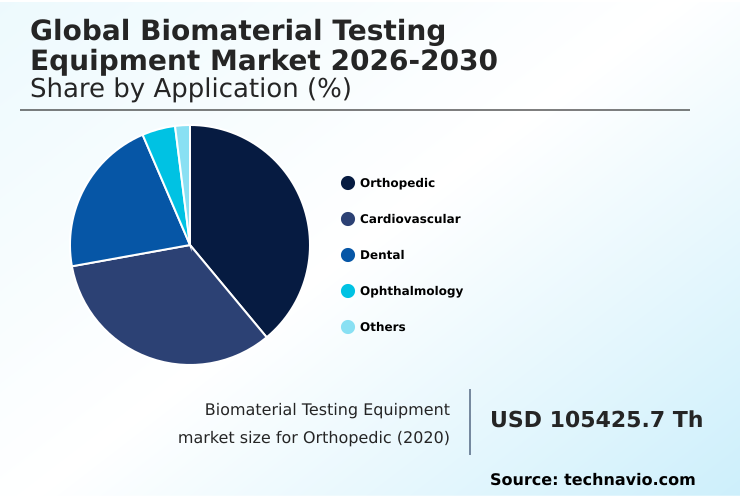
The Orthopedic segment was valued at USD 115.25 million in 2024 and showed a gradual increase during the forecast period.
Regional Analysis
North America is estimated to contribute 40.4% to the growth of the global market during the forecast period.Technavio’s analysts have elaborately explained the regional trends and drivers that shape the market during the forecast period.
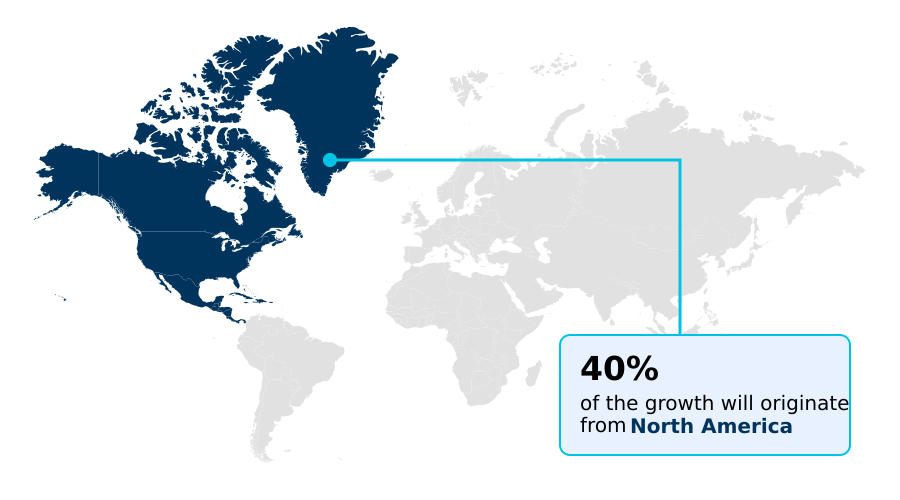
See How Biomaterial Testing Equipment Market Demand is Rising in North America Get Free Sample
The geographic landscape of the market is led by North America, which accounts for over 40% of the opportunity, driven by its advanced research ecosystem and rigorous regulatory standards.
Europe follows, representing more than 28% of the market, with its focus on harmonized standards and high-precision engineering. The APAC region is the fastest-growing territory, fueled by expanding healthcare infrastructure and government-led manufacturing initiatives.
Across these regions, the adoption of advanced systems for ocular implant mechanics and ophthalmic device evaluation is increasing. Furthermore, the use of multifunction tribometers and elastosens bio systems is becoming more common.
This global demand for sophisticated testing, including biocompatibility testing and methods for characterizing soft tissue mechanics, highlights a universal need for reliable data.
This data is essential for both post-market surveillance testing and new product development, ensuring devices meet stringent safety and performance criteria.
Market Dynamics
Our researchers analyzed the data with 2025 as the base year, along with the key drivers, trends, and challenges. A holistic analysis of drivers will help companies refine their marketing strategies to gain a competitive advantage.
- The biomaterial testing equipment market is evolving to address highly specific and complex characterization needs across medical applications. Foundational assessments, such as evaluating drug delivery device activation forces and the fracture toughness of advanced ceramics, are now standard. For orthopedic applications, the focus includes detailed fatigue life analysis of orthopedic implants and wear simulation testing of dental ceramics.
- Validating patient-specific orthopedic device strength is crucial as personalized medicine expands. The cardiovascular sector demands precise radial force measurement for cardiovascular stents and specialized testing for bioresorbable vascular scaffold degradation.
- The rise of regenerative medicine has created a need for advanced techniques, including the mechanical characterization of 3D printed biomaterials and non-contact strain measurement for biological samples, which avoids damaging delicate structures. Research labs are increasingly simulating physiological loads on medical implants and using bioreactor systems for tissue engineering mechanics to mature cell-seeded constructs.
- This requires precise viscoelastic properties measurement of soft tissues and tensile testing of hydrogel scaffolds. The ability to perform in-situ mechanical testing under microscopy provides unprecedented insights. Firms performing quality control for additive manufactured biomaterials report a nearly 25% reduction in validation cycle times compared to firms relying on older, less integrated methods.
- Other key application areas include assessing peel adhesion of wound dressings, creep behavior analysis of polymeric implants, characterizing thermomechanical properties of nitinol, and ensuring biocompatibility evaluation per ISO 10993, highlighting the market's specialized and indispensable nature.
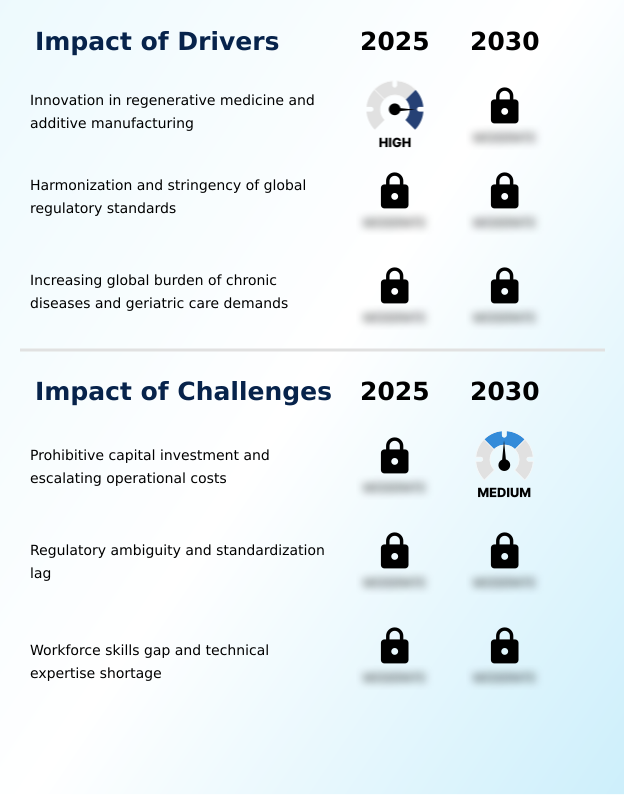
What are the key market drivers leading to the rise in the adoption of Biomaterial Testing Equipment Industry?
- Innovation in regenerative medicine and the adoption of additive manufacturing are key drivers propelling market expansion.
- Market growth is fundamentally driven by advancements in medical science and an increasingly stringent regulatory environment. The rapid innovation in regenerative medicine scaffolds and 3D bioprinting assessment necessitates more sophisticated testing equipment.
- For instance, the transition to additive manufacturing quality control has increased the demand for systems that can validate complex geometries, improving lot-to-lot consistency by over 25%.
- Furthermore, regulatory compliance testing, particularly for ISO 10993 testing and quality management system regulation, mandates exhaustive mechanical data. This pressure is amplified for cardiovascular device testing and dental material characterization.
- The global harmonization of standards means that data from batch release testing must be more robust than ever, with non-compliance risks increasing documentation review times by up to 60%, compelling manufacturers to invest in state-of-the-art validation hardware.
What are the market trends shaping the Biomaterial Testing Equipment Industry?
- The integration of artificial intelligence and automated data analysis is emerging as a transformative market trend. This shift is redefining mechanical characterization workflows and data interpretation standards.
- Market trends are centered on the integration of intelligence and simulation to accelerate validation and enhance data fidelity. The emergence of digital twin model validation, where physical test data calibrates computational models, has been shown to reduce physical prototyping by over 50%. This synergy between in silico clinical trial calibration and advanced testing is transforming product development.
- Concurrently, the decentralization of quality control through point-of-care manufacturing QA is creating a new segment for compact, automated systems. These trends are supported by technologies enabling sophisticated drug delivery device functionality testing and pre-filled syringe analysis.
- The use of automated data analysis with AI is improving the accuracy of failure prediction by nearly 40%, making high-throughput screening and material informatics data generation more powerful for applications like combination product validation.
What challenges does the Biomaterial Testing Equipment Industry face during its growth?
- Prohibitive capital investment and escalating operational costs present a key challenge that affects industry growth.
- The market faces significant challenges related to cost, standardization, and expertise. The high capital investment for equipment compliant with FDA 21 CFR Part 11 and ASTM F3067 standards creates a substantial barrier to entry for startups.
- The total cost of ownership, including calibration and maintenance, can deter smaller labs, where equipment underutilization due to a lack of trained personnel can be as high as 35%. This skills gap makes it difficult to perform complex autoinjector testing and soft tissue mechanics analysis.
- Furthermore, the lag in creating harmonized standards for novel materials used in patient-specific implant validation complicates the regulatory pathway. This ambiguity requires manufacturers to invest in costly, custom validation protocols, with an estimated 15% of submissions facing delays due to non-standard test method inquiries.
Exclusive Technavio Analysis on Customer Landscape
The biomaterial testing equipment market forecasting report includes the adoption lifecycle of the market, covering from the innovator’s stage to the laggard’s stage. It focuses on adoption rates in different regions based on penetration. Furthermore, the biomaterial testing equipment market report also includes key purchase criteria and drivers of price sensitivity to help companies evaluate and develop their market growth analysis strategies.
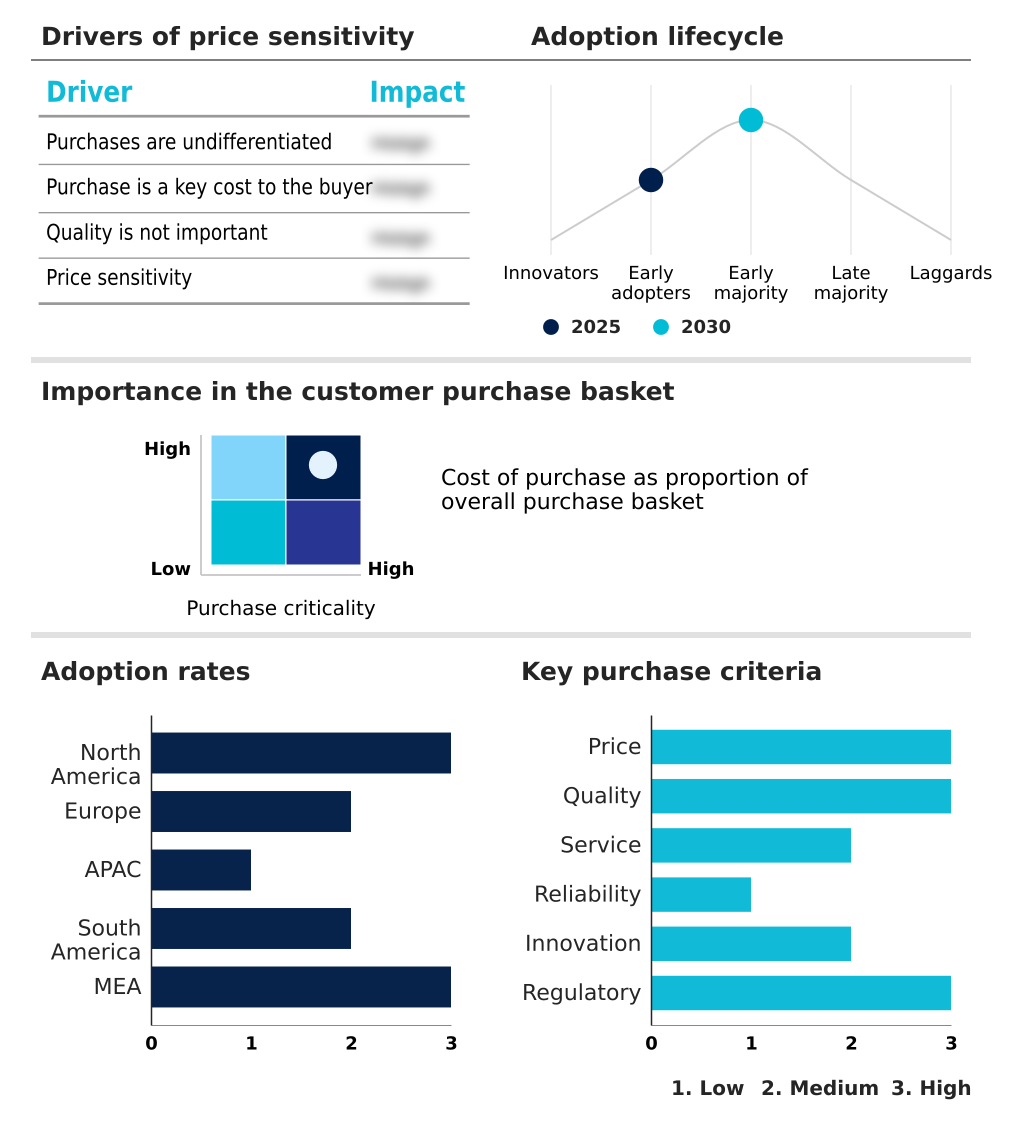
Customer Landscape of Biomaterial Testing Equipment Industry
Competitive Landscape
Companies are implementing various strategies, such as strategic alliances, biomaterial testing equipment market forecast, partnerships, mergers and acquisitions, geographical expansion, and product/service launches, to enhance their presence in the industry.
Applied Test Systems - Providers offer advanced universal and fatigue testing systems engineered for comprehensive biomaterial and medical implant validation, meeting critical industry and regulatory demands.
The industry research and growth report includes detailed analyses of the competitive landscape of the market and information about key companies, including:
- Applied Test Systems
- Biomomentum Inc.
- Illinois Tool Works Inc.
- Industrial Physics
- Intertek Group Plc
- Eurofins Scientific SE
- MAALAB Scientific Pvt. Ltd.
- METS Laboratories
- Presto Group
- Rheolution Inc.
- Rtec Instruments
- Shimadzu Europa GmbH
- Thwing-Albert Instruments
- TUV SUD AG
- Veranex Solutions Inc.
- ZwickRoell GmbH and Co. KG
Qualitative and quantitative analysis of companies has been conducted to help clients understand the wider business environment as well as the strengths and weaknesses of key industry players. Data is qualitatively analyzed to categorize companies as pure play, category-focused, industry-focused, and diversified; it is quantitatively analyzed to categorize companies as dominant, leading, strong, tentative, and weak.
Recent Development and News in Biomaterial testing equipment market
- In May, 2025, Shimadzu Corporation launched the AUTOGRAPH AGS-V Series of tabletop precision universal testing machines, addressing the need for versatile and high-capacity testing in space-constrained laboratory environments.
- In March, 2025, Instron announced a major software update for its Bluehill Universal platform, introducing a machine learning module designed to prevent specimen damage and automatically detect quality deviations in large batches.
- In March, 2025, Eurofins Medical Device Services expanded its US portfolio by acquiring a sterilization facility in San Jose, California, to provide specialized ethylene oxide sterilization and validation services.
- In February, 2025, Eli Lilly committed to a significant capital investment to build four new US manufacturing sites, bolstering production capacity for its portfolio of injectable medicines and requiring extensive quality control infrastructure.
Dive into Technavio’s robust research methodology, blending expert interviews, extensive data synthesis, and validated models for unparalleled Biomaterial Testing Equipment Market insights. See full methodology.
| Market Scope | |
|---|---|
| Page number | 304 |
| Base year | 2025 |
| Historic period | 2020-2024 |
| Forecast period | 2026-2030 |
| Growth momentum & CAGR | Accelerate at a CAGR of 3.4% |
| Market growth 2026-2030 | USD 56281.1 thousand |
| Market structure | Fragmented |
| YoY growth 2025-2026(%) | 3.3% |
| Key countries | US, Canada, Mexico, Germany, UK, France, Italy, Spain, The Netherlands, China, Japan, India, South Korea, Australia, Indonesia, Brazil, Argentina, Chile, Saudi Arabia, UAE, South Africa, Egypt and Turkey |
| Competitive landscape | Leading Companies, Market Positioning of Companies, Competitive Strategies, and Industry Risks |
Research Analyst Overview
- The biomaterial testing equipment market is defined by its critical role in validating the safety and efficacy of next-generation medical devices. A key boardroom-level consideration is the strategic investment in compliant testing infrastructure, as it directly impacts time-to-market and mitigates regulatory risk, with integrated systems reducing documentation workloads for submissions by up to 30%.
- The industry relies on a suite of technologies, from universal testing machines for assessing tensile strength and compressive modulus to advanced systems for dynamic mechanical analysis. Specialized hardware for indentation testing and shear stress analysis is essential for characterizing novel materials. The characterization of device performance is rigorous, involving fatigue life analysis, wear debris generation measurement, and ensuring fracture toughness.
- As materials evolve, so do testing methods for flexural strength, degradation profile analysis, and viscoelastic property measurement. The use of tribometers, texture analyzers, and bioreactors with mechanical sensing is now commonplace. Critical assessments include hemocompatibility testing, thrombogenicity analysis, and full biocompatibility testing. For specific applications, methods like radial compression testing, peel adhesion testers, and bond strength testers are vital.
- Non-contact strain measurement via video extensometry, often within a temperature-controlled bio-bath using low force load cells, is crucial for delicate samples. This includes validation for drug-eluting stents, bioresorbable scaffolds, transcatheter aortic valve implantation, and various implants including ocular, nerve guidance conduit, dural substitute, and skin substitute.
What are the Key Data Covered in this Biomaterial Testing Equipment Market Research and Growth Report?
-
What is the expected growth of the Biomaterial Testing Equipment Market between 2026 and 2030?
-
USD 56.28 million, at a CAGR of 3.4%
-
-
What segmentation does the market report cover?
-
The report is segmented by Application (Orthopedic, Cardiovascular, Dental, Ophthalmology, and Others), Type (Contact, and Contactless), End-user (Healthcare, Manufacturers, Pharmaceuticals, Research institutions, and Government agencies) and Geography (North America, Europe, APAC, South America, Middle East and Africa)
-
-
Which regions are analyzed in the report?
-
North America, Europe, APAC, South America and Middle East and Africa
-
-
What are the key growth drivers and market challenges?
-
Innovation in regenerative medicine and additive manufacturing, Prohibitive capital investment and escalating operational costs
-
-
Who are the major players in the Biomaterial Testing Equipment Market?
-
Applied Test Systems, Biomomentum Inc., Illinois Tool Works Inc., Industrial Physics, Intertek Group Plc, Eurofins Scientific SE, MAALAB Scientific Pvt. Ltd., METS Laboratories, Presto Group, Rheolution Inc., Rtec Instruments, Shimadzu Europa GmbH, Thwing-Albert Instruments, TUV SUD AG, Veranex Solutions Inc. and ZwickRoell GmbH and Co. KG
-
Market Research Insights
- The market's dynamics are shaped by a strategic push toward advanced validation methods that align with evolving regulatory demands. For instance, the use of in silico clinical trial calibration, which leverages precise physical test data, has been shown to shorten product development timelines by over 20%.
- Similarly, implementing digital twin model validation allows for a significant reduction in physical prototyping, directly impacting R&D expenditures. The quality management system regulation now requires a higher level of data integrity, making FDA 21 CFR Part 11 compliance a critical purchasing factor.
- High-throughput screening systems are seeing increased adoption, improving batch release testing efficiency by more than 30% in high-volume manufacturing settings. This focus on efficiency, compliance, and advanced modeling underpins the competitive landscape.
We can help! Our analysts can customize this biomaterial testing equipment market research report to meet your requirements.
 RIA -
RIA - 
