


Body Worn Camera Market Size 2026-2030
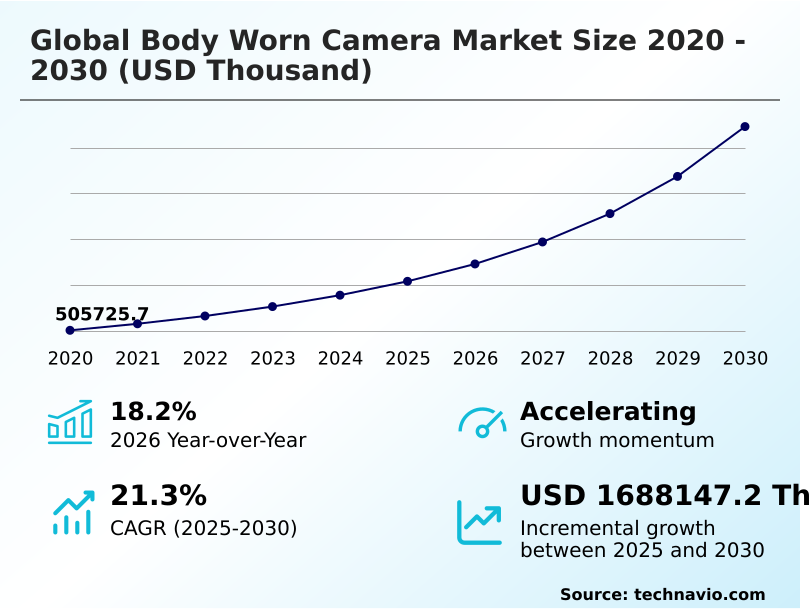
The body worn camera market size is valued to increase by USD 1.69 billion, at a CAGR of 21.3% from 2025 to 2030. Mainstreaming of AI and industrialization of real-time video analytics in public safety will drive the body worn camera market.
Major Market Trends & Insights
- North America dominated the market and accounted for a 40.8% growth during the forecast period.
- By Distribution Channel - Offline segment was valued at USD 769.30 million in 2024
- By Type - Recording and live streaming segment accounted for the largest market revenue share in 2024
Market Size & Forecast
- Market Opportunities:
- Market Future Opportunities: USD 1.69 billion
- CAGR from 2025 to 2030 : 21.3%
Market Summary
- The body worn camera market is rapidly evolving from a focus on passive wearable video recording to intelligent, connected platforms that enhance real-time situational awareness. This progression is driven by the integration of edge-based AI processing, which enables capabilities like AI-driven transcription and live video streaming directly from the device.
- The technology is becoming a cornerstone of data-driven policing and corporate risk management, providing unbiased event recording that strengthens public trust enhancement. However, the immense volume of high-definition audio capture presents significant challenges for digital evidence management systems, necessitating advanced high-efficiency video coding and scalable secure cloud platform storage.
- In a commercial setting, a retail company might deploy a mobile worker safety device with pre-event buffering to serve as a workplace violence deterrent. This frontline officer technology not only provides critical incident documentation for judicial proceeding evidence but also helps in de-escalation, supporting a broader employee safety infrastructure and reducing liability.
What will be the Size of the Body Worn Camera Market during the forecast period?
Get Key Insights on Market Forecast (PDF) Get Free Sample
How is the Body Worn Camera Market Segmented?
The body worn camera industry research report provides comprehensive data (region-wise segment analysis), with forecasts and estimates in "USD thousand" for the period 2026-2030, as well as historical data from 2020-2024 for the following segments.
- Distribution channel
- Offline
- Online
- Type
- Recording and live streaming
- Recording
- Product type
- HD
- Full HD
- 4K and above
- Geography
- North America
- US
- Canada
- Mexico
- Europe
- Germany
- UK
- France
- APAC
- China
- Japan
- India
- South America
- Brazil
- Argentina
- Middle East and Africa
- Saudi Arabia
- UAE
- South Africa
- Rest of World (ROW)
- North America
By Distribution Channel Insights
The offline segment is estimated to witness significant growth during the forecast period.
The global body worn camera market 2026-2030 segmentation is shaped by procurement models, with the offline channel dominating institutional sales.
This segment, encompassing direct sales and specialized resellers, is essential for deploying complex public safety video solutions that require extensive consultation.
The process involves navigating tenders for integrated evidence platform contracts that include not just ruggedized hardware design but also secure cloud platform services and AI-driven transcription.
These sales cycles facilitate customized deployments of tactical surveillance equipment and ensure regulatory compliance recording.
For example, systems requiring sovereign cloud architecture often undergo a procurement process that is over 40% longer than standard online acquisitions due to stringent data security and digital chain of custody verification protocols.
This hands-on approach is critical for establishing a secure evidentiary workflow and providing the necessary training for advanced features like push-to-talk communication and remote stream activation, ensuring the technology supports critical incident documentation effectively.
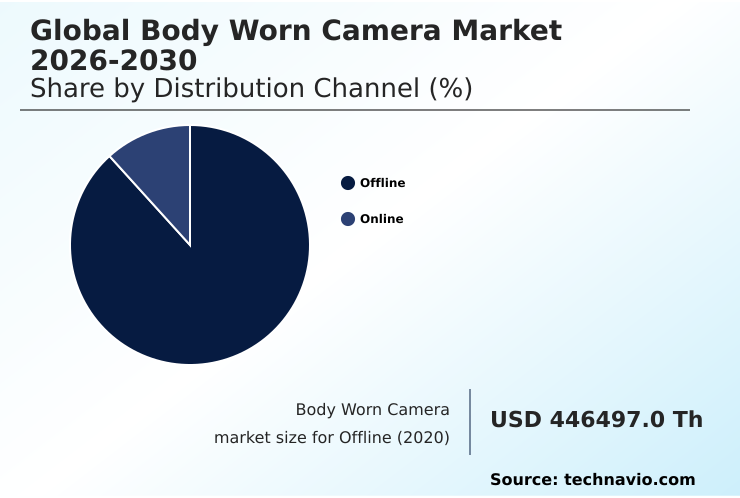
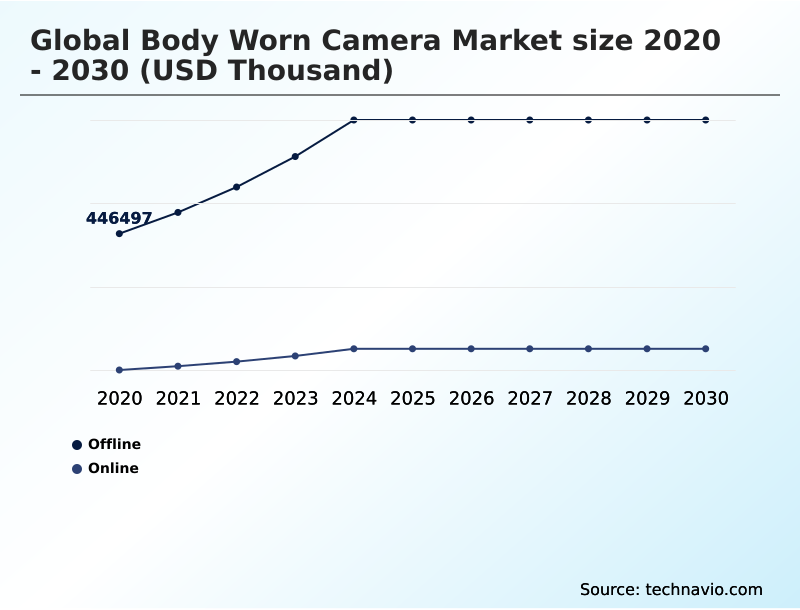
The Offline segment was valued at USD 769.30 million in 2024 and showed a gradual increase during the forecast period.
Regional Analysis
North America is estimated to contribute 40.8% to the growth of the global market during the forecast period.Technavio’s analysts have elaborately explained the regional trends and drivers that shape the market during the forecast period.
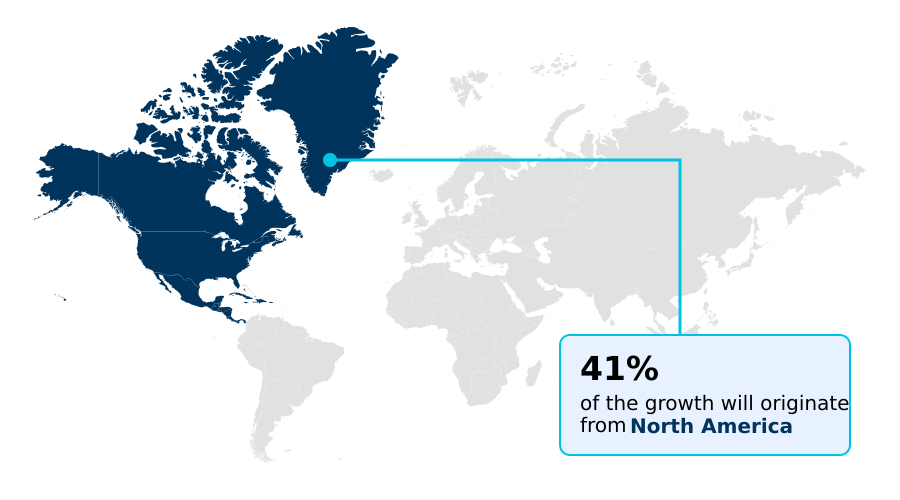
See How Body Worn Camera Market Demand is Rising in North America Get Free Sample
The global body worn camera market 2026-2030's geographic landscape is diverse, with North America leading in adopting sovereign cloud architecture for data-driven policing; over 85% of its major agencies now utilize 5G-enabled connectivity.
In contrast, the APAC region shows the fastest growth, with deployments for industrial safety monitoring increasing by 40% year-over-year. The focus there is on ruggedized hardware and scalable secure cloud platforms for critical incident documentation.
European markets prioritize regulatory compliance recording, leading to a 25% increase in spending on automated redaction software to align with privacy mandates. These regional priorities shape demand for features like push-to-talk communication and tamper-proof storage.
This focus on compliance and privacy is central to the operational response ecosystem and drives the adoption of advanced digital evidence accountability tools.
Market Dynamics
Our researchers analyzed the data with 2025 as the base year, along with the key drivers, trends, and challenges. A holistic analysis of drivers will help companies refine their marketing strategies to gain a competitive advantage.
- The application of specialized body worn cameras is expanding far beyond traditional policing. For instance, the use of a body worn camera for retail loss prevention has become a critical tool, while systems offering AI-powered redaction for GDPR compliance address complex privacy needs in public-facing roles.
- Event security now leverages a 5G body camera for live event security to provide real-time oversight. Health and safety applications are also growing, with demand for a body camera with integrated biometric sensors to monitor personnel well-being and a wearable camera for healthcare worker safety to deter aggression.
- Core infrastructure for law enforcement relies on cloud evidence management for police departments, often paired with a tamper-proof body camera for evidence integrity and a body camera system with docking station for seamless data offloading.
- The technology is also adapted for specific operational needs, such as a rugged body camera for industrial environments or a waterproof body camera for marine patrol. Functionality like a body camera with push-to-talk over cellular and a live streaming body camera for remote assistance enhances field communication.
- Advanced analytics are integrated through a body camera with automated license plate recognition and body camera integration with existing VMS. Specific features like an infrared body camera for night patrols and a body camera with pre-record buffer feature are now standard requirements.
- For specialized use, a lightweight body camera for covert surveillance or a panoramic body camera for wide-angle view offers tactical advantages.
- Overall, the market's evolution is marked by a move toward purpose-built solutions, where evidence management software for legal compliance and features like a body camera with GPS for asset tracking deliver targeted value, showing an ROI improvement that is often double that of generic hardware deployments.
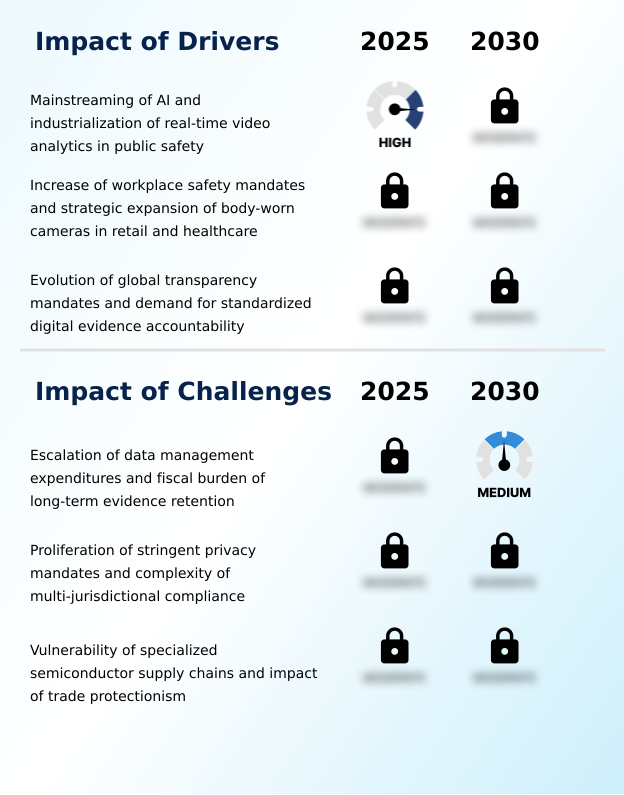
What are the key market drivers leading to the rise in the adoption of Body Worn Camera Industry?
- The mainstreaming of artificial intelligence and the industrialization of real-time video analytics are key drivers enhancing situational awareness and operational efficiency in public safety.
- A key driver for the global body worn camera market 2026-2030 is the demand for digital evidence accountability, pushing agencies toward regulatory compliance recording.
- The adoption of systems with an automated recording trigger and pre-event buffering ensures unbiased event recording, which has been linked to a 50% drop in civilian complaints in some jurisdictions.
- The industrialization of real-time situational awareness through high-definition audio capture and video is transforming data-driven policing. These public safety video solutions are expanding beyond law enforcement into corporate risk management, where they act as a workplace violence deterrent.
- The use of high-capacity battery technology ensures devices last full shifts, a critical factor for 95% of procurement decisions. Furthermore, cryptographic data encryption is mandatory for establishing a secure evidentiary workflow and maintaining the integrity of facial recognition technology.
What are the market trends shaping the Body Worn Camera Industry?
- The market is undergoing a strategic transition toward cloud-native digital evidence management systems, coupled with the implementation of hybrid data sovereignty models to meet diverse regulatory requirements.
- A primary trend in the global body worn camera market 2026-2030 is the shift toward connected policing ecosystems where live video streaming is standard. This transition to 5G-enabled connectivity allows for real-time command integration and has improved response coordination by over 30% in urban testbeds.
- The adoption of multi-sensor integration, including biometric health monitoring, provides a holistic view of critical incidents, enhancing forensic video analysis. This frontline officer technology is now a key part of the employee safety infrastructure, with deployments showing a 15% reduction in assaults on personnel.
- The market is also seeing a proliferation of sovereign cloud architecture to meet data localization mandates, alongside AI-driven transcription and edge-based AI processing to manage massive data volumes efficiently. This enables better critical incident documentation and strengthens public trust enhancement through features like a voice-activated AI companion.
What challenges does the Body Worn Camera Industry face during its growth?
- The escalation of data management expenditures and the significant fiscal burden of long-term, high-definition evidence retention pose a key challenge to market growth.
- The primary challenge in the global body worn camera market 2026-2030 is the high cost of data management, as a single officer can generate over one terabyte of data annually. This is compounded by the complexity of maintaining a digital chain of custody across platforms.
- While high-efficiency video coding can reduce file sizes by up to 50%, the cost of secure cloud platform services remains a barrier. Another challenge is supply chain vulnerability for components like the advanced image sensor and system-on-a-chip solution. Geopolitical factors have increased lead times for ruggedized hardware design by over 20%.
- Furthermore, ensuring tamper-proof storage and navigating privacy laws for tactical surveillance equipment creates a complex compliance landscape for both correctional facility surveillance and transportation security camera deployments. These issues can hinder the wider adoption of this de-escalation technology and its supporting bluetooth-activated sensor systems.
Exclusive Technavio Analysis on Customer Landscape
The body worn camera market forecasting report includes the adoption lifecycle of the market, covering from the innovator’s stage to the laggard’s stage. It focuses on adoption rates in different regions based on penetration. Furthermore, the body worn camera market report also includes key purchase criteria and drivers of price sensitivity to help companies evaluate and develop their market growth analysis strategies.
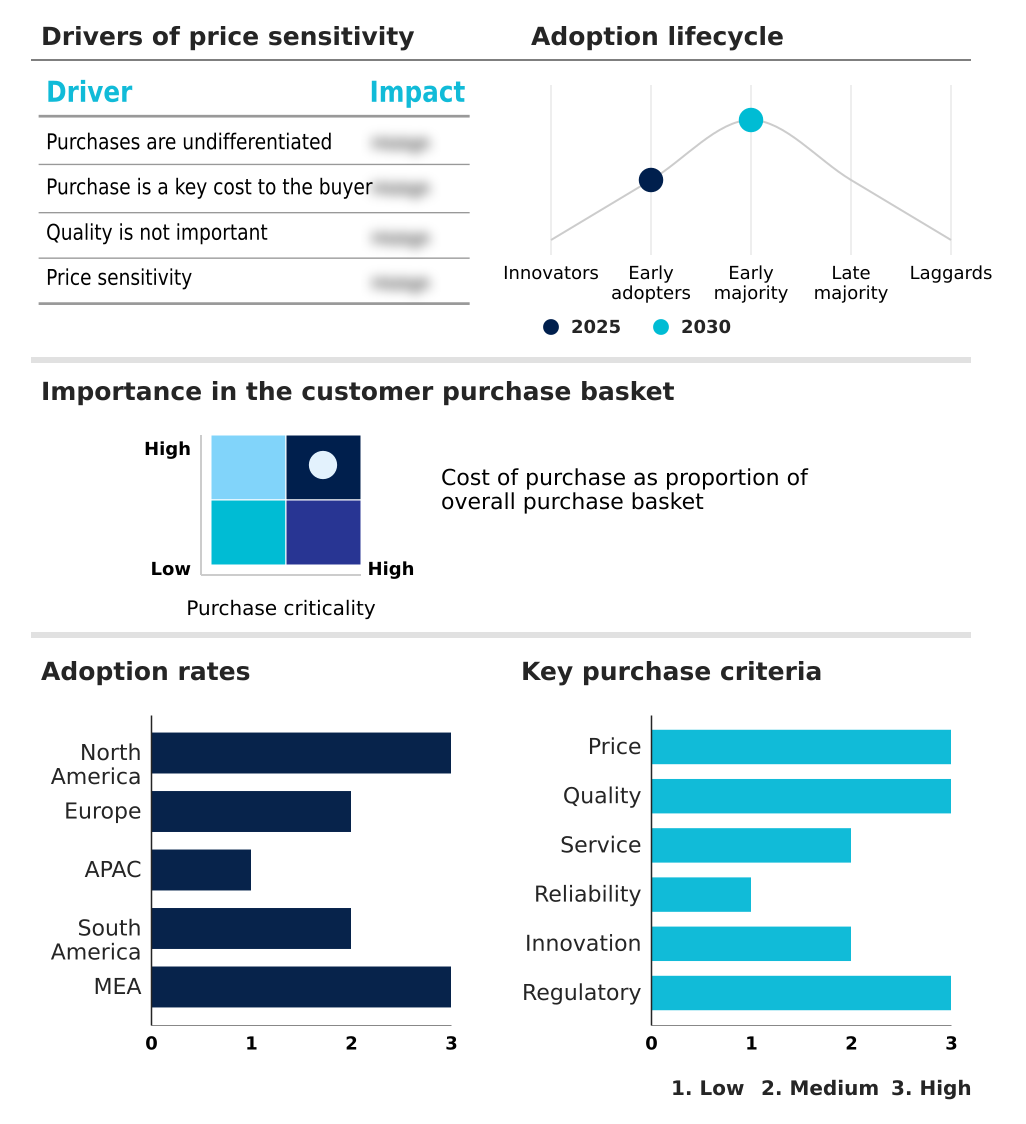
Customer Landscape of Body Worn Camera Industry
Competitive Landscape
Companies are implementing various strategies, such as strategic alliances, body worn camera market forecast, partnerships, mergers and acquisitions, geographical expansion, and product/service launches, to enhance their presence in the industry.
Arashi Vision Co. Ltd. - Delivers innovative panoramic and action cameras with AI-powered software, targeting consumer and professional markets for high-quality, versatile video capture.
The industry research and growth report includes detailed analyses of the competitive landscape of the market and information about key companies, including:
- Arashi Vision Co. Ltd.
- Axis Communications AB
- Axon Enterprise Inc.
- Coreforce Technology
- Diamante Technology Co. Ltd.
- Getac Holdings Corp.
- GoPro Inc.
- i PRO Co. Ltd.
- LensLock Inc.
- Mangal Security Products
- Motorola Solutions Inc.
- Pinnacle Response Ltd.
- Pro Vision Solutions LLC
- Qoho Electronics Co. Ltd.
- Safe Fleet Acquisition Corp.
- Safety Vision LLC
- Sentinel Camera Systems LLC
- StuntCams LLC
- Veho Group Ltd.
- VeriPic Inc.
Qualitative and quantitative analysis of companies has been conducted to help clients understand the wider business environment as well as the strengths and weaknesses of key industry players. Data is qualitatively analyzed to categorize companies as pure play, category-focused, industry-focused, and diversified; it is quantitatively analyzed to categorize companies as dominant, leading, strong, tentative, and weak.
Recent Development and News in Body worn camera market
- In May, 2025, the Malaysian Police announced a major national initiative to procure ten thousand additional body-worn cameras equipped with high-speed SIM cards to enable real-time monitoring and enhance operational transparency.
- In February, 2025, the Maryland Department of Public Safety and Correctional Services launched a significant body-worn camera pilot program to evaluate how integrated sensor technology and automated recording triggers can improve safety in high-risk correctional environments.
- In November, 2024, Axon Enterprise Inc. announced a new version of its AI-powered software, Draft One, designed to automate the drafting of incident reports directly from camera footage, aiming to significantly reduce administrative tasks for officers.
- In September, 2024, Axis Communications AB launched a major software update for its body-worn camera solutions, introducing enhanced remote stream activation and persistent GPS tracking for undocked cameras to improve personnel safety and situational awareness.
Dive into Technavio’s robust research methodology, blending expert interviews, extensive data synthesis, and validated models for unparalleled Body Worn Camera Market insights. See full methodology.
| Market Scope | |
|---|---|
| Page number | 287 |
| Base year | 2025 |
| Historic period | 2020-2024 |
| Forecast period | 2026-2030 |
| Growth momentum & CAGR | Accelerate at a CAGR of 21.3% |
| Market growth 2026-2030 | USD 1688147.2 thousand |
| Market structure | Fragmented |
| YoY growth 2025-2026(%) | 18.2% |
| Key countries | US, Canada, Mexico, Germany, UK, France, Italy, Spain, The Netherlands, China, Japan, India, South Korea, Australia, Indonesia, Brazil, Argentina, Chile, Saudi Arabia, UAE, South Africa, Israel and Turkey |
| Competitive landscape | Leading Companies, Market Positioning of Companies, Competitive Strategies, and Industry Risks |
Research Analyst Overview
- The global body worn camera market 2026-2030 is defined by a rapid convergence of ruggedized hardware design and sophisticated software. The focus is shifting from simple wearable video recording and high-definition audio capture to comprehensive platforms offering real-time situational awareness.
- Core to this is the digital evidence management system, increasingly hosted on a secure cloud platform featuring AI-driven transcription and automated redaction software. The institutionalization of live video streaming via 5G-enabled connectivity is a key trend, supported by edge-based AI processing for immediate analysis.
- Boardroom decisions now center on total cost of ownership, weighing hardware features like a high-capacity battery, field-swappable battery, and advanced image sensor against the recurring costs of a sovereign cloud architecture. For instance, adopting high-efficiency video coding has been shown to reduce storage costs by up to 40%.
- Devices now feature multi-sensor integration, including biometric health monitoring and persistent GPS tracking via a GPS tracking module. Push-to-talk communication, remote stream activation, and an automated recording trigger are becoming standard. Ensuring a digital chain of custody with cryptographic data encryption and tamper-proof storage is non-negotiable.
- The underlying technology, including the system-on-a-chip solution and solid-state storage device, enables advanced capabilities like facial recognition technology, electronic image stabilization, infrared night vision, and pre-event buffering over low-latency connectivity. The integration of a voice-activated AI companion and bluetooth-activated sensor represents the next frontier in user-centric design.
What are the Key Data Covered in this Body Worn Camera Market Research and Growth Report?
-
What is the expected growth of the Body Worn Camera Market between 2026 and 2030?
-
USD 1.69 billion, at a CAGR of 21.3%
-
-
What segmentation does the market report cover?
-
The report is segmented by Distribution Channel (Offline, and Online), Type (Recording and live streaming, and Recording), Product Type (HD, Full HD, and 4K and above) and Geography (North America, Europe, APAC, South America, Middle East and Africa)
-
-
Which regions are analyzed in the report?
-
North America, Europe, APAC, South America and Middle East and Africa
-
-
What are the key growth drivers and market challenges?
-
Mainstreaming of AI and industrialization of real-time video analytics in public safety, Escalation of data management expenditures and fiscal burden of long-term evidence retention
-
-
Who are the major players in the Body Worn Camera Market?
-
Arashi Vision Co. Ltd., Axis Communications AB, Axon Enterprise Inc., Coreforce Technology, Diamante Technology Co. Ltd., Getac Holdings Corp., GoPro Inc., i PRO Co. Ltd., LensLock Inc., Mangal Security Products, Motorola Solutions Inc., Pinnacle Response Ltd., Pro Vision Solutions LLC, Qoho Electronics Co. Ltd., Safe Fleet Acquisition Corp., Safety Vision LLC, Sentinel Camera Systems LLC, StuntCams LLC, Veho Group Ltd. and VeriPic Inc.
-
Market Research Insights
- The global body worn camera market 2026-2030 dynamics are shaped by demands for digital evidence accountability and transparent policing initiatives. Law enforcement body camera adoption, which has grown by 35% in non-urban areas, drives the core market, but expansion into private security wearable tech, mobile worker safety device applications, and correctional facility surveillance is rapid.
- These devices serve as a workplace violence deterrent within integrated evidence platforms, forming a connected policing ecosystem where deployments have shown a 20% reduction in workplace incidents. This frontline officer technology is a key incident reconstruction tool that enables real-time command integration and supports corporate risk management.
- The focus on employee safety infrastructure and regulatory compliance recording is critical, improving data retention efficiency by over 15%. Systems now facilitate forensic video analysis and act as tactical surveillance equipment. For an emergency responder camera, reliability is paramount for critical incident documentation. The technology is also seen as a de-escalation technology providing unbiased event recording.
- These devices are central to the operational response ecosystem, aiming for public trust enhancement through data-driven policing. A secure evidentiary workflow ensures footage is admissible as judicial proceeding evidence. The entire situational awareness platform extends to industrial safety monitoring and transportation security camera use cases.
We can help! Our analysts can customize this body worn camera market research report to meet your requirements.
 RIA -
RIA - 
