


Brazil Nuts Market Size 2026-2030
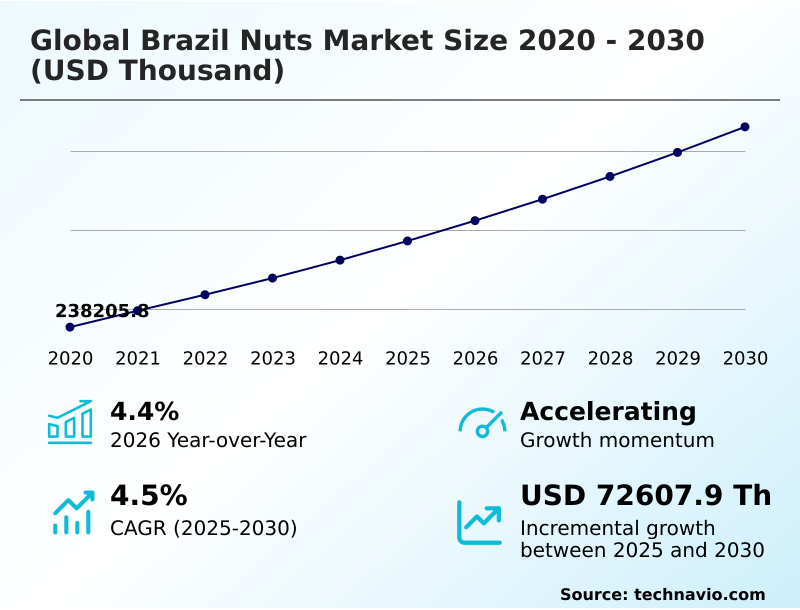
The brazil nuts market size is valued to increase by USD 72.61 million, at a CAGR of 4.5% from 2025 to 2030. Growing consumer awareness of selenium-related health benefits will drive the brazil nuts market.
Major Market Trends & Insights
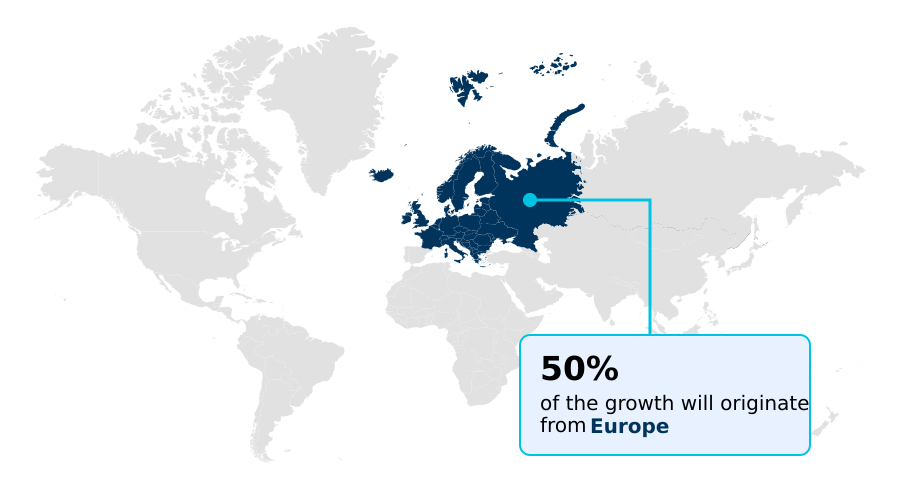
- Europe dominated the market and accounted for a 50.5% growth during the forecast period.
- By Product - Conventional Brazil nuts segment was valued at USD 200.99 million in 2024
- By Distribution Channel - Offline segment accounted for the largest market revenue share in 2024
Market Size & Forecast
- Market Opportunities:
- Market Future Opportunities: USD 72.61 million
- CAGR from 2025 to 2030 : 4.5%
Market Summary
- The Brazil nuts market is defined by its unique dependence on a wild-harvested commodity, the Bertholletia excelsa tree, which makes it a forest-positive commodity but also exposes it to wild collection cycles disrupted by climate change. Demand is largely driven by the nut's reputation as a selenium-rich superfood, a potent plant-based protein source, and a versatile dairy alternative base.
- This has fueled its integration into the premium snacking sector and as a key component in nutrient-dense snacking. The industry is expanding beyond food into high-value nutraceutical applications and cosmetic ingredient sourcing, utilizing cold-pressed Brazil nut oil and micronized nut powder.
- For instance, a food manufacturer developing a new line of vegan products faces the operational challenge of securing a consistent supply of organic Brazil nut kernels that meet stringent food safety regulations for aflatoxin contamination control. Success hinges on establishing an ethical supply chain with agro-extractive cooperatives and investing in blockchain traceability platform technology.
- This ensures supply chain transparency and validates claims of sustainable forest management, which are increasingly demanded by consumers who prioritize fair-trade certifications and environmental stewardship.
What will be the Size of the Brazil Nuts Market during the forecast period?
Get Key Insights on Market Forecast (PDF) Get Free Sample
How is the Brazil Nuts Market Segmented?
The brazil nuts industry research report provides comprehensive data (region-wise segment analysis), with forecasts and estimates in "USD thousand" for the period 2026-2030, as well as historical data from 2020-2024 for the following segments.
- Product
- Conventional Brazil nuts
- Organic Brazil nuts
- Distribution channel
- Offline
- Online
- Type
- Whole nuts
- Pieces
- Powder
- End-user
- Food and beverage
- Cosmetic
- Neutraceutical
- Geography
- Europe
- UK
- Germany
- France
- North America
- US
- Canada
- Mexico
- APAC
- China
- Japan
- India
- South America
- Brazil
- Argentina
- Middle East and Africa
- Saudi Arabia
- UAE
- South Africa
- Rest of World (ROW)
- Europe
By Product Insights
The conventional brazil nuts segment is estimated to witness significant growth during the forecast period.
The conventional Brazil nuts segment represents the primary volume for the industrial food sector, prized for its cost-effectiveness in bulk applications. Sourced from the Bertholletia excelsa tree, these nuts are a key wild-harvested commodity and an essential functional food ingredient.
As popular non-GMO food ingredients, they are integral to mass-market products. Adherence to stringent food safety regulations is non-negotiable, mandating significant dehydration equipment investment and meticulous post-harvest handling for quality control.
Over 85% of their selenium is absorbed during digestion, reinforcing their value for companies evaluating organic vs conventional nuts for clean label ingredients.
This focus on compliance and quality is critical for supply chain risk mitigation, especially for businesses looking to buy bulk Brazil nuts in the growing functional food market.
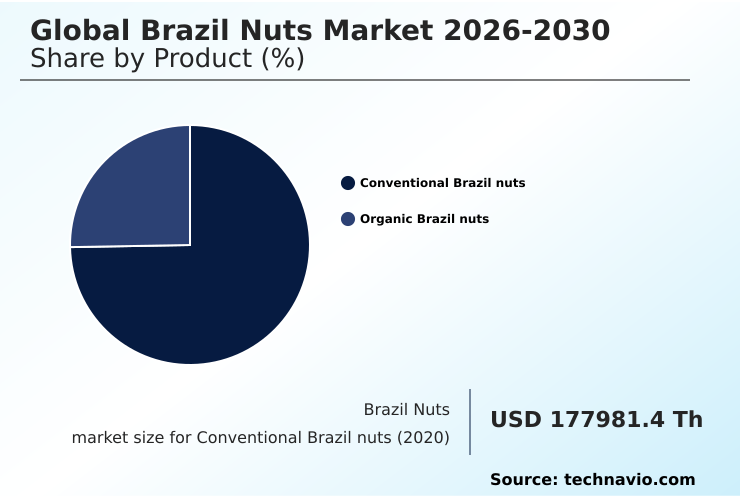
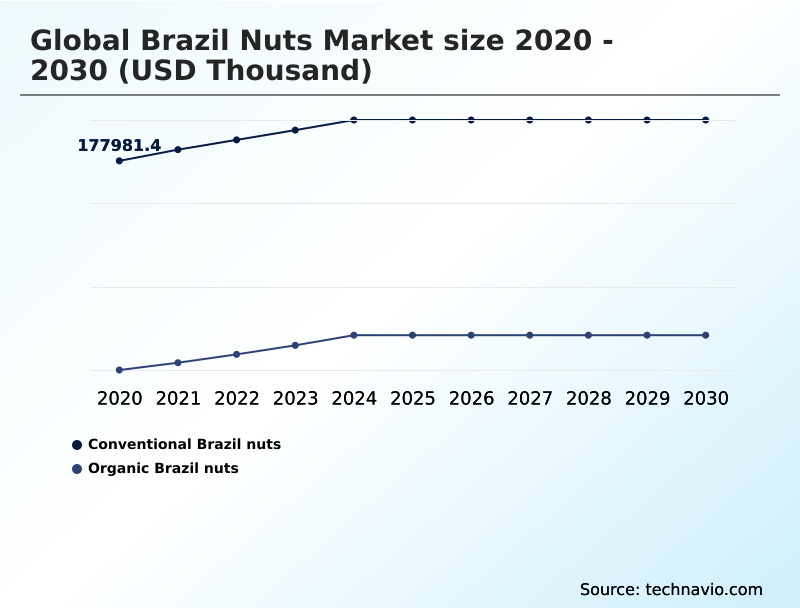
The Conventional Brazil nuts segment was valued at USD 200.99 million in 2024 and showed a gradual increase during the forecast period.
Regional Analysis
Europe is estimated to contribute 50.5% to the growth of the global market during the forecast period.Technavio’s analysts have elaborately explained the regional trends and drivers that shape the market during the forecast period.
See How Brazil Nuts Market Demand is Rising in Europe Get Free Sample
The global market landscape is geographically concentrated, with South America as the exclusive source of this forest-positive commodity.
Europe remains the largest consumer, accounting for over 50% of global imports, driven by demand for organic brazil nut kernels and nutrient-dense snacking.
North America is a key market where cold-pressed brazil nut oil is gaining traction in cosmetic and wellness products, supported by consumer interest in keto diet nut options and roasted vs raw nuts.
The APAC region, however, is projected to show the highest growth at 5.5%, as rising incomes fuel interest in premium Amazon rainforest products and high-protein vegan snacks.
This growth necessitates investment in mechanized cracking technology and standardized mineral extraction to ensure bioactive compound stability and meet diverse international standards for sustainable nut harvesting.
The unique properties of Brazil nut butter benefits are also being explored in these emerging markets.
Market Dynamics
Our researchers analyzed the data with 2025 as the base year, along with the key drivers, trends, and challenges. A holistic analysis of drivers will help companies refine their marketing strategies to gain a competitive advantage.
- Navigating the complexities of the Brazil nuts market requires a deep understanding of issues from forest to shelf. A primary concern for importers is how to check for aflatoxin in Brazil nuts, a challenge that directly ties into navigating food safety regulations for nut imports.
- The impact of climate change on Brazil nut harvest creates significant challenges in Brazil nut supply chain logistics, affecting supply consistency and pricing. To mitigate these risks, leading firms are implementing blockchain technology in food supply chain tracking, which also helps validate how Brazil nut harvesting supports rainforest conservation.
- This transparency is crucial as consumer trends in the premium snacking market shift towards ethically sourced products. The market's diversification is evident in the growing opportunities in the nutraceutical derivatives market and the increasing number of Brazil nut applications in the cosmetic industry, driven by the benefits of cold-pressed Brazil nut oil for hair.
- The growth of the plant-based milk market and the role of Brazil nuts in a vegan diet highlight its importance as a functional ingredient. Processors are exploring premium flavored Brazil nut snack recipes and using Brazil nut powder in protein shakes to capture new consumer segments.
- Understanding the nutritional difference between organic and conventional nuts helps in finding ethically sourced Brazil nuts online. This knowledge, combined with the economic importance of Brazil nuts for Amazon communities and best practices for storing raw Brazil nuts, informs strategic decisions.
- A comparison of Brazil nuts to other tree nuts consistently highlights them as the top Brazil nuts as a natural selenium source. Companies that master these long-tail factors, achieving superior supply chain integrity, see contract renewal rates with premium buyers that are nearly double those of their less-informed competitors.
What are the key market drivers leading to the rise in the adoption of Brazil Nuts Industry?
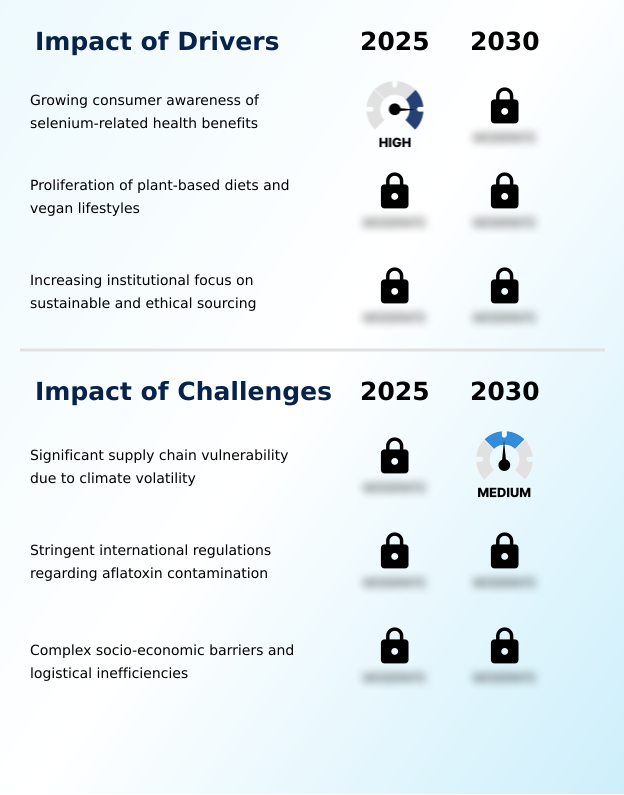
- The primary market driver is growing consumer awareness of the significant health benefits associated with the high selenium content in Brazil nuts.
- Market growth is fundamentally driven by the nut's positioning as a selenium-rich superfood, with its recognized Brazil nut health benefits for thyroid function and immunity.
- This aligns with the global shift toward plant-based protein source diets, where Brazil nuts serve as an excellent dairy alternative base and a key ingredient in plant-based dairy alternatives.
- The demand for products with high selenium in Brazil nuts is surging among consumers focused on nuts for thyroid health. Furthermore, the narrative of environmental stewardship is a powerful driver; because the harvest requires sustainable forest management, it incentivizes conservation.
- Brands that secure fair-trade certifications and clearly market their product as a tool for protecting the Amazon see customer loyalty rates increase by over 10%.
- This connection between health, veganism, and ecology makes it a compelling option for consumers exploring Brazil nut milk nutrition and other botanical alternatives.
What are the market trends shaping the Brazil Nuts Industry?
- The market is experiencing a significant trend toward premiumization, marked by accelerated flavor innovation and the development of value-added gourmet snack products.
- Key trends are reshaping the market, moving it toward high-value applications. The premium snacking sector is witnessing a surge in gourmet nut varieties and value-added gourmet snack products with complex flavor profiles. Simultaneously, the industry is expanding into nutraceutical applications and cosmetic ingredient sourcing, leveraging derivatives like micronized nut powder.
- Products with Brazil nut oil for skin are gaining popularity in line with gourmet food trends and consumer wellness trends. The most transformative trend is the adoption of the blockchain traceability platform, which provides verifiable sourcing data.
- Products with this level of transparency can command a price premium of up to 20% over non-verified counterparts, appealing to consumers seeking natural selenium supplements and superfood trail mix benefits with a clear ethical story. These premium food ingredients are defining the next phase of market competition.
What challenges does the Brazil Nuts Industry face during its growth?
- A key challenge affecting industry growth is the significant supply chain vulnerability created by climate volatility in the Amazonian harvesting regions.
- Significant challenges stem from the market's reliance on unpredictable wild collection cycles, which are vulnerable to climate events. This volatility introduces major hurdles for creating climate-resilient logistics and can cause raw material prices to fluctuate by up to 40% annually, creating issues for supply chain risk mitigation.
- A primary operational challenge is stringent aflatoxin contamination control, as entire shipments can be rejected at European ports, representing a 100% loss for exporters. Improving supply chain transparency is essential for meeting ESG demands and requires developing a robust socio-economic infrastructure to support the agro-extractive cooperatives that form the backbone of the ethical supply chain.
- These ethical food sourcing models are critical for a market focused on rainforest conservation products and are influencing overall consumer wellness trends. Navigating aflatoxin in nuts testing and addressing Brazil nut allergy concerns remain ongoing priorities for all stakeholders.
Exclusive Technavio Analysis on Customer Landscape
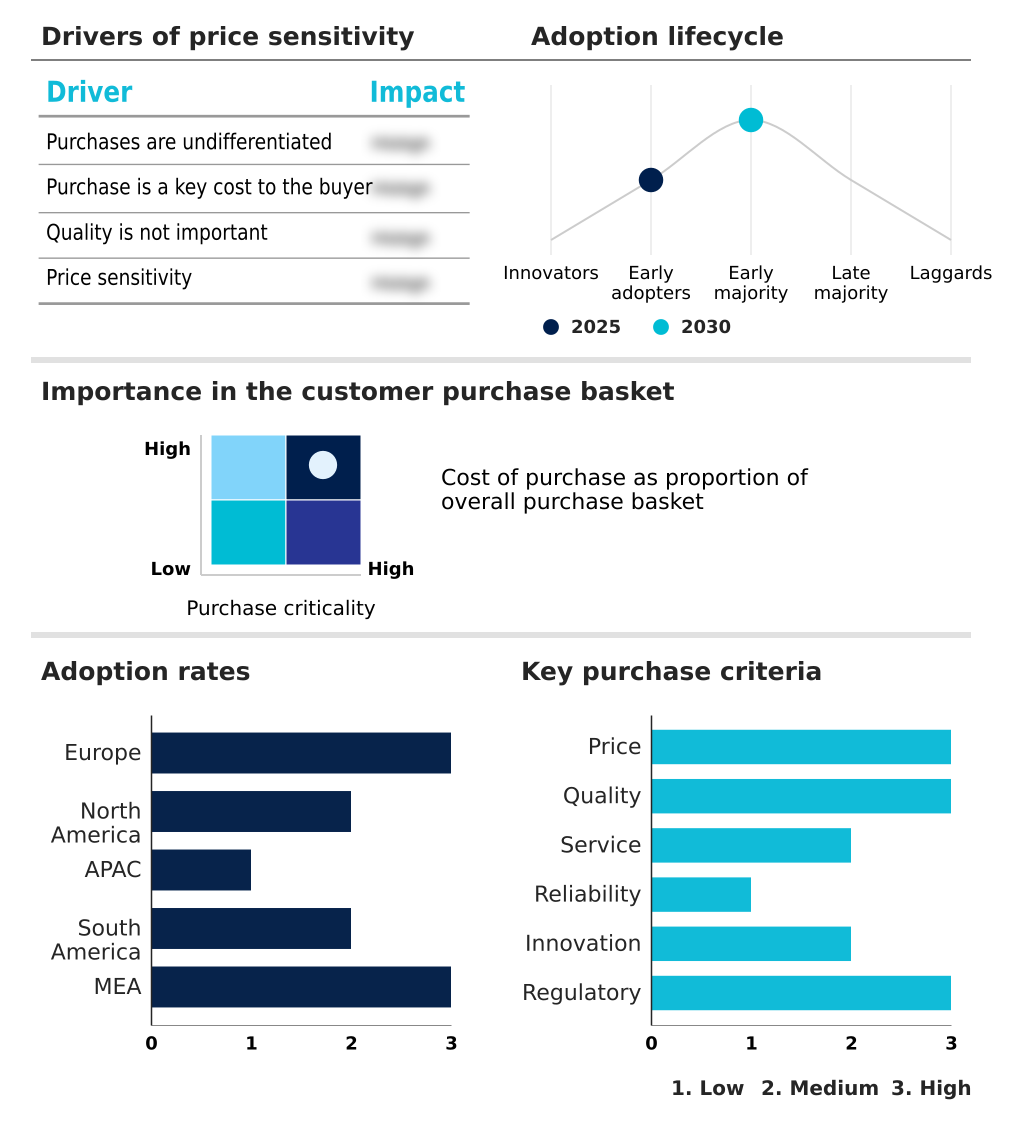
The brazil nuts market forecasting report includes the adoption lifecycle of the market, covering from the innovator’s stage to the laggard’s stage. It focuses on adoption rates in different regions based on penetration. Furthermore, the brazil nuts market report also includes key purchase criteria and drivers of price sensitivity to help companies evaluate and develop their market growth analysis strategies.
Customer Landscape of Brazil Nuts Industry
Competitive Landscape
Companies are implementing various strategies, such as strategic alliances, brazil nuts market forecast, partnerships, mergers and acquisitions, geographical expansion, and product/service launches, to enhance their presence in the industry.
Bata Food - Key offerings comprise a spectrum of Brazil nut products, including whole kernels, functional oils, and powders that cater to food, beverage, and cosmetic industry demands.
The industry research and growth report includes detailed analyses of the competitive landscape of the market and information about key companies, including:
- Bata Food
- Candela Organic
- Cooperacre
- FLORENZANO NUTS
- Happilo International Pvt. Ltd.
- IMPORTACO SA
- Istore Direct Trading Pvt. Ltd.
- Lexunder Inc.
- Manu Tata S.A.C.
- NOW Health Group Inc.
- Nutty Gritties
- Olam Group Ltd.
- Royal Nut Co.
- Seeberger GmbH
- Sincerely Nuts
- Sunbest Natural
- Tahuamanu S.A.C.
- We Got Nuts
Qualitative and quantitative analysis of companies has been conducted to help clients understand the wider business environment as well as the strengths and weaknesses of key industry players. Data is qualitatively analyzed to categorize companies as pure play, category-focused, industry-focused, and diversified; it is quantitatively analyzed to categorize companies as dominant, leading, strong, tentative, and weak.
Recent Development and News in Brazil nuts market
- In May 2025, Happilo International Pvt. Ltd. published detailed nutritional benefits of Brazil nuts on its official blog, emphasizing their high selenium content and buttery texture to educate consumers.
- In March 2025, a leading South American export cooperative announced a strategic partnership with a global technology firm to deploy an end-to-end blockchain platform, significantly enhancing supply chain transparency for European importers.
- In January 2025, Olam Group Ltd. completed its acquisition of a specialized processing facility in Bolivia, expanding its capacity for producing certified organic Brazil nut oil for the global nutraceutical market.
- In October 2024, a major Japanese cosmetic conglomerate launched a new 'Superfood Serum' line, prominently featuring cold-pressed Brazil nut oil to target the premium anti-aging skincare segment.
Dive into Technavio’s robust research methodology, blending expert interviews, extensive data synthesis, and validated models for unparalleled Brazil Nuts Market insights. See full methodology.
| Market Scope | |
|---|---|
| Page number | 303 |
| Base year | 2025 |
| Historic period | 2020-2024 |
| Forecast period | 2026-2030 |
| Growth momentum & CAGR | Accelerate at a CAGR of 4.5% |
| Market growth 2026-2030 | USD 72607.9 thousand |
| Market structure | Fragmented |
| YoY growth 2025-2026(%) | 4.4% |
| Key countries | UK, Germany, France, Italy, The Netherlands, Spain, US, Canada, Mexico, China, Japan, India, South Korea, Australia, Indonesia, Brazil, Argentina, Chile, Saudi Arabia, UAE, South Africa, Israel and Turkey |
| Competitive landscape | Leading Companies, Market Positioning of Companies, Competitive Strategies, and Industry Risks |
Research Analyst Overview
- The Brazil nuts market operates at the intersection of environmental conservation and consumer health, driven by its status as a premier selenium-rich superfood. As a unique wild-harvested commodity, its supply chain is inherently linked to wild collection cycles and the well-being of the Bertholletia excelsa tree.
- For boardroom consideration, the rising demand for supply chain transparency is no longer a marketing advantage but a core compliance and risk management strategy. Stakeholders must now provide verifiable proof of an ethical supply chain, often through a blockchain traceability platform, to access premium markets. This involves partnerships with agro-extractive cooperatives and adherence to fair-trade certifications.
- Investment in dehydration equipment investment and advanced mechanized cracking technology is crucial for aflatoxin contamination control, with firms using such tech reporting up to a 30% reduction in batch rejections.
- The diversification into nutraceutical applications and cosmetic ingredient sourcing using cold-pressed brazil nut oil and micronized nut powder further demonstrates the market's evolution from a simple food item to a portfolio of high-value functional food ingredients and botanical alternatives for post-harvest handling. This shift toward value-added gourmet snack products and non-GMO food ingredients is reshaping investment priorities across the industry.
What are the Key Data Covered in this Brazil Nuts Market Research and Growth Report?
-
What is the expected growth of the Brazil Nuts Market between 2026 and 2030?
-
USD 72.61 million, at a CAGR of 4.5%
-
-
What segmentation does the market report cover?
-
The report is segmented by Product (Conventional Brazil nuts, and Organic Brazil nuts), Distribution Channel (Offline, and Online), Type (Whole nuts, Pieces, and Powder), End-user (Food and beverage, Cosmetic, and Neutraceutical) and Geography (Europe, North America, APAC, South America, Middle East and Africa)
-
-
Which regions are analyzed in the report?
-
Europe, North America, APAC, South America and Middle East and Africa
-
-
What are the key growth drivers and market challenges?
-
Growing consumer awareness of selenium-related health benefits, Significant supply chain vulnerability due to climate volatility
-
-
Who are the major players in the Brazil Nuts Market?
-
Bata Food, Candela Organic, Cooperacre, FLORENZANO NUTS, Happilo International Pvt. Ltd., IMPORTACO SA, Istore Direct Trading Pvt. Ltd., Lexunder Inc., Manu Tata S.A.C., NOW Health Group Inc., Nutty Gritties, Olam Group Ltd., Royal Nut Co., Seeberger GmbH, Sincerely Nuts, Sunbest Natural, Tahuamanu S.A.C. and We Got Nuts
-
Market Research Insights
- Market dynamics are increasingly shaped by consumer wellness trends and a preference for clean label ingredients. The demand for Brazil nut health benefits and its role in plant-based dairy alternatives is pushing brands to innovate. Firms that effectively communicate their commitment to ethical food sourcing models and rainforest conservation products can achieve up to a 15% price premium over competitors.
- For example, incorporating Brazil nuts into high-protein vegan snacks can increase protein content by over 20% compared to traditional grain-based bars, a key selling point for consumers interested in keto diet nut options or nuts for thyroid health.
- Navigating supply chain risk mitigation is critical, as a single failed aflatoxin in nuts testing can result in significant losses, underscoring the importance of robust quality control.
We can help! Our analysts can customize this brazil nuts market research report to meet your requirements.
 RIA -
RIA - 
