



Breast Cancer Therapeutics Market Size 2024-2028
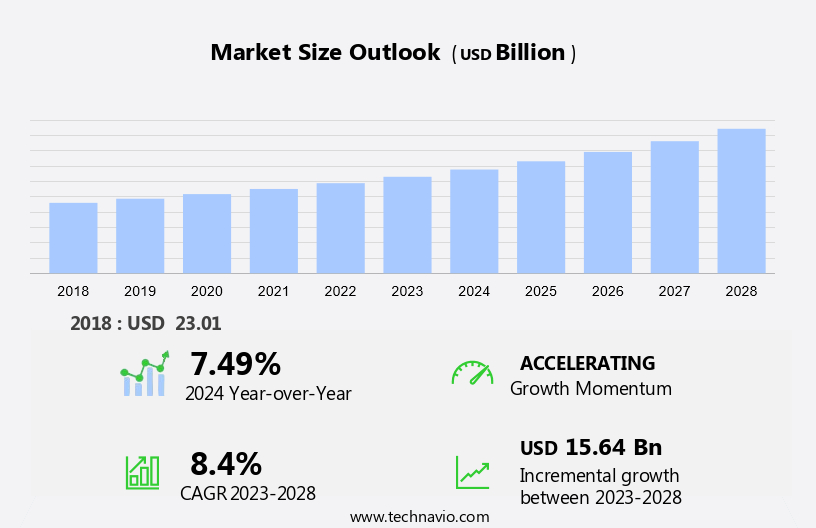
The breast cancer therapeutics market size is forecast to increase by USD 15.64 bn at a CAGR of 8.4% between 2023 and 2028.
What will be the Size of the Breast Cancer Therapeutics Market During the Forecast Period?
How is this Breast Cancer Therapeutics Industry segmented and which is the largest segment?
The breast cancer therapeutics industry research report provides comprehensive data (region-wise segment analysis), with forecasts and estimates in "USD billion" for the period 2024-2028, as well as historical data from 2018-2022 for the following segments.
- Disease Type
- Invasive breast cancers
- Ductal carcinoma in situ
- Therapy
- Targeted therapy
- Hormonal therapy
- Chemotherapy
- Geography
- North America
- Canada
- US
- Europe
- Germany
- UK
- Asia
- China
- Rest of World (ROW)
- North America
By Disease Type Insights
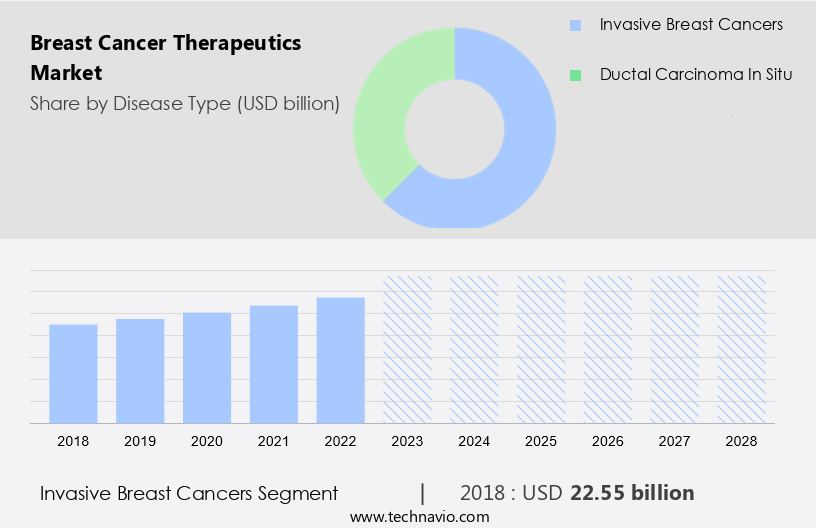
The invasive breast cancers segment is estimated to witness significant growth during the forecast period. Invasive ductal carcinoma, also known as infiltrating ductal carcinoma, is the most prevalent type of breast cancer, accounting for approximately 80% of diagnoses. This form of cancer arises when cancerous cells invade the fibrous or fatty tissue of the breast beyond the milk ducts. Symptoms include breast swelling, skin irritation, pain, nipple discomfort, redness, and nipple discharge, among others. Risk factors include genetics, hormonal imbalances, obesity, alcohol intake, and prior radiation therapy. Hormonal therapies, such as tamoxifen and aromatase inhibitors, chemotherapy, radiation therapy, targeted therapies, including Herceptin for HER2-positive tumors, and immunotherapies are common treatments. Early detection through breast cancer awareness campaigns, screening programs, and regular self-examinations contribute to improved survival probabilities and reduced morbidity.
The development of oncology drugs and therapeutics, including proteins and biosimilars, continues to advance treatment options. Government support, hospital visits, and recovery rates are crucial aspects of breast cancer care. Hormonal therapy, obesity, and family history are significant factors in cancer type analysis. Hospital pharmacies and online pharmacies provide access to medications.
Get a glance at the market report of various segments Request Free Sample
The Invasive breast cancers segment was valued at USD 22.55 bn in 2018 and showed a gradual increase during the forecast period.
Regional Analysis
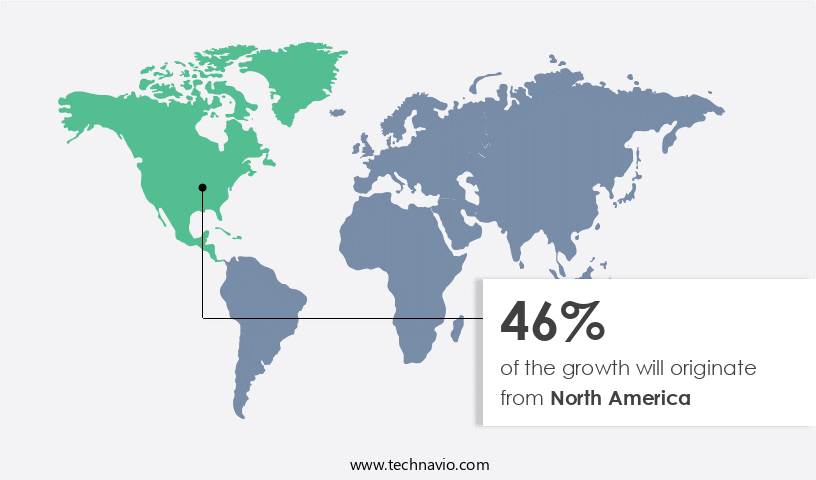
North America is estimated to contribute 46% to the growth of the global market during the forecast period. Technavio’s analysts have elaborately explained the regional trends and drivers that shape the market during the forecast period.
For more insights on the market size of various regions, Request Free Sample
The North American the market is experiencing significant growth due to the availability of reimbursement schemes in countries like the US and Canada. In the US, the Centers for Medicare & Medicaid Services (CMS) covers the treatment and diagnosis of breast cancer, including Trastuzumab and IBRANCE. CMS also introduced value-based care models to manage therapeutic costs. Approximately 264,000 breast cancer cases are diagnosed in women and 2,400 cases in men annually In the US. Breast cancer therapeutics include chemotherapy, radiation therapy, hormone therapy, targeted therapy, and immunotherapy. Hormonal therapies, such as Herceptin, play a crucial role in treating breast cancer, especially in early stages.
Obesity, alcohol intake, hormonal problems, menopause, family history, and cancer type are significant factors influencing breast cancer risk. The market for oncology drugs and therapeutics, including proteins, is expanding due to advancements in technology, such as artificial intelligence, which aids in breast cancer diagnosis and treatment. The high cost of these therapeutics necessitates ongoing government support and hospital visits for recovery. Breast cancer can manifest as lumps, red patches, pain, swelling, lymph node involvement, and breathing problems. Early detection through screening programs and timely treatment can significantly improve survival probabilities and reduce morbidity.
Market Dynamics
Our researchers analyzed the data with 2023 as the base year, along with the key drivers, trends, and challenges. A holistic analysis of drivers will help companies refine their marketing strategies to gain a competitive advantage.
What are the key market drivers leading to the rise In the adoption of Breast Cancer Therapeutics Industry?
- Rising prevalence of breast cancer is the key driver of the market.Breast cancer is the most frequently diagnosed cancer among women globally, with the second highest mortality rate. In the US, approximately 278,000 new cases and 50,000 deaths occur annually. The therapeutic approach for breast cancer includes chemotherapy, radiation therapy, hormone therapy, targeted therapy, and immunotherapy. Oncology drugs, such as proteins, play a significant role In these therapies. Early detection through breast cancer awareness and screening programs is crucial, yet the risk of breast cancer remains constant. Factors contributing to breast cancer include hormonal imbalances, obesity, alcohol intake, menopause, family history, and cancer type. Hormonal therapies, such as Herceptin, and biosimilars are essential treatments for breast cancer.
The market for breast cancer therapeutics is dynamic, with ongoing research and development in artificial intelligence and cancer cell analysis. Patients undergo surgical tumor removal, receive medications, and visit hospitals for treatments and recovery. Breast cancer can manifest as lumps, red patches, pain, swelling, lymph node involvement, and breathing problems. The disease can spread to the brain, bones, and other organs. Genes, specifically the presence of a positive HER2 receptor, influence the progression of breast cancer. Government support and access to hospital pharmacies and online pharmacies facilitate the delivery of these essential treatments.
What are the market trends shaping the Breast Cancer Therapeutics market?
- Emerging novel therapeutics is the upcoming market trend.Breast cancer therapeutics are advancing with innovative approaches such as combination therapies, vaccines, PARP inhibitors, and CDK inhibitors. For instance, the combination of ZEJULA and KEYTRUDA, a PARP inhibitor and an anti-PD-1 immunotherapy respectively, has shown promising results in Phase I/II clinical trials for treating triple-negative breast cancer. KEYTRUDA, developed by Merck, inhibits the PD-1 protein in lymphocytes, while ZEJULA, manufactured by TESARO, breaks DNA strands in tumor cells. Another example is Atezolizumab, a PD-L1 inhibitor by F. Hoffmann La Roche Ltd, which is a fully humanized, engineered monoclonal antibody. These therapeutic approaches, including hormone therapy, chemotherapy, radiation therapy, targeted therapy, and immunotherapy, are transforming breast cancer treatment.
Hormone therapy, which targets hormonal imbalances, has shown significant improvements in survival probabilities, particularly for early-stage breast cancer. Mortality rates have decreased due to advancements in breast cancer awareness, screening programs, and early detection. However, challenges remain, including morbidity, brain metastasis, and the development of resistance to certain treatments. The use of artificial intelligence and gene analysis is also becoming increasingly important in cancer type analysis and personalized treatment plans. Obesity, alcohol intake, hormonal problems, menopause, family history, and cancer type are all factors that influence breast cancer risk and treatment options. The oncology drugs/therapeutics market continues to expand, with hospital visits and recovery rates increasing.
Government support and the availability of medications through hospital pharmacies and online pharmacies are also critical factors in improving patient access to these life-saving treatments.
What challenges does the Breast Cancer Therapeutics Industry face during its growth?
- High cost of treatment is a key challenge affecting the industry growth.Breast cancer therapeutics encompass a range of approaches, including chemotherapy, radiation therapy, hormone therapy, targeted therapy, and immunotherapy. These oncology drugs and therapeutics are often derived from proteins and can be costly, limiting access and increasing the financial burden for patients. For instance, Avastin (bevacizumab) and KADCYLA, indicated to treat breast cancer, cost approximately USD50,000 and USD115,974 per treatment episode, respectively. Emerging targeted therapies, such as monoclonal antibodies, further contribute to the high costs. Early detection through breast cancer awareness and screening programs is crucial for improving survival probabilities, especially for those diagnosed with early-stage breast cancer. However, morbidity remains a concern, with symptoms including lumps, nipple changes, red patches, pain, swelling, lymph node involvement, and breathing problems.
Hormonal therapies, such as hormone problem treatments during menopause and obesity, can also impact breast cancer risk. The government supports various initiatives to increase access to these treatments, but the high costs remain a challenge. Patients may seek treatments through hospital visits, hospital pharmacies, or online pharmacies for affordability. Genetic factors, including family history and cancer type analysis, also play a role in breast cancer development and treatment.
Exclusive Customer Landscape
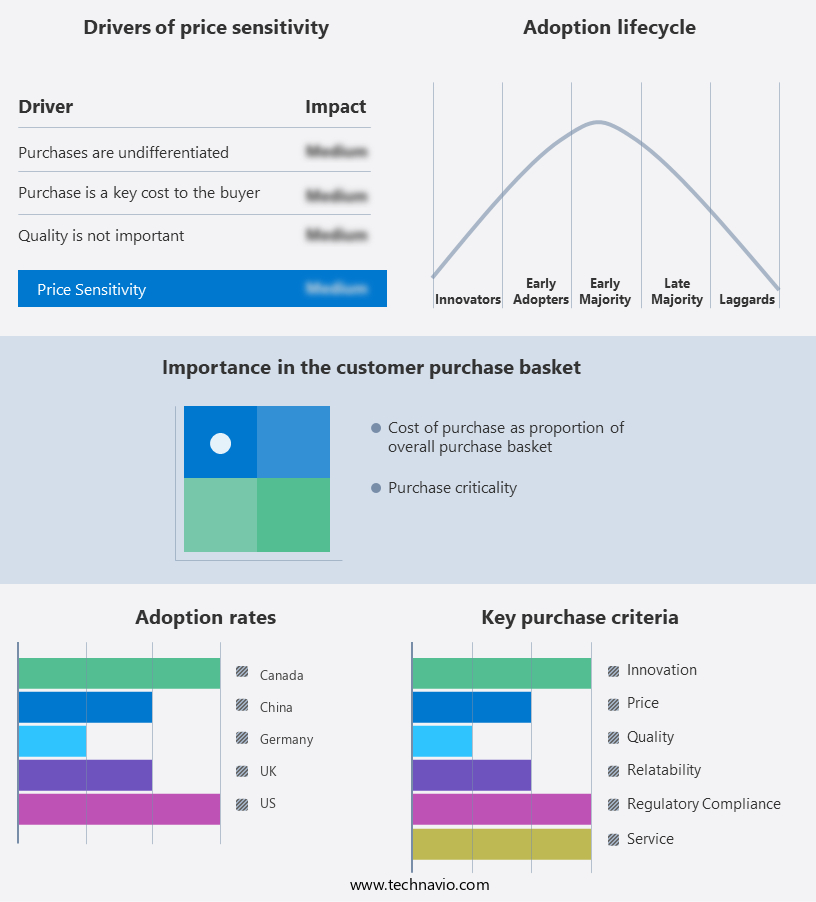
The breast cancer therapeutics market forecasting report includes the adoption lifecycle of the market, covering from the innovator’s stage to the laggard’s stage. It focuses on adoption rates in different regions based on penetration. Furthermore, the breast cancer therapeutics market report also includes key purchase criteria and drivers of price sensitivity to help companies evaluate and develop their market growth analysis strategies.
Customer Landscape
Key Companies & Market Insights
Companies are implementing various strategies, such as strategic alliances, breast cancer therapeutics market forecast, partnerships, mergers and acquisitions, geographical expansion, and product/service launches, to enhance their presence In the industry.
AbbVie Inc. - The market encompasses various anti-neoplastic agents, including Ibrutinib. This medication is formulated as hard gelatin capsules, tablets, film-coated tablets, and suspension for oral administration. Ibrutinib functions as a crucial therapeutic option, contributing significantly to the breast cancer treatment landscape. It is essential to note that this discussion is focused on the therapeutic class and its role withIn the broader context of breast cancer treatments, without making any direct references to specific companies or their products.
The industry research and growth report includes detailed analyses of the competitive landscape of the market and information about key companies, including:
- AbbVie Inc.
- Amgen Inc.
- AstraZeneca Plc
- Bristol Myers Squibb Co.
- Clovis Oncology Inc.
- Daiichi Sankyo Co. Ltd.
- Eisai Co. Ltd.
- Eli Lilly and Co.
- Exelixis Inc.
- F. Hoffmann La Roche Ltd.
- GlaxoSmithKline Plc
- Merck and Co. Inc.
- Novartis AG
- PerkinElmer Inc
- Pfizer Inc.
- Puma Biotechnology Inc.
- Sanofi SA
- Teva Pharmaceutical Industries Ltd.
- Viatris Inc.
Qualitative and quantitative analysis of companies has been conducted to help clients understand the wider business environment as well as the strengths and weaknesses of key industry players. Data is qualitatively analyzed to categorize companies as pure play, category-focused, industry-focused, and diversified; it is quantitatively analyzed to categorize companies as dominant, leading, strong, tentative, and weak.
Research Analyst Overview
The market encompasses a range of treatments designed to combat this prevalent form of cancer in females. The therapeutic approaches include chemotherapy, radiation therapy, hormone therapy, targeted therapy, and immunotherapy. These oncology drugs and therapeutics aim to inhibit the growth and spread of breast cancer cells, which originate from the milk ducts and milk-producing lobules In the breast. Breast cancer is a significant health concern, with a substantial number of diagnoses and associated morbidity and mortality rates. Early detection through screening programs is crucial for improving survival probabilities. The disease can manifest as lumps, red patches, pain, swelling, or other symptoms, and may metastasize to bones, lymph nodes, or other organs, such as the brain.
Chemotherapy, a systemic treatment, uses medications to destroy rapidly dividing cells, including cancer cells. Radiation therapy, on the other hand, utilizes high-energy radiation to damage the DNA of cancer cells, inhibiting their growth and multiplication. Hormone therapy targets the hormonal imbalances that contribute to breast cancer growth, particularly in postmenopausal women. Targeted therapy and immunotherapy represent newer therapeutic approaches. Targeted therapy focuses on specific proteins or genes that contribute to cancer growth, while immunotherapy harnesses the power of the immune system to attack cancer cells. Proteins such as Herceptin, which targets the HER2 receptor, have revolutionized breast cancer treatment, particularly for those with a positive HER2 receptor.
Biosimilars, which are similar but not identical to existing biologic drugs, are increasingly being used In the market due to their cost-effectiveness and comparable efficacy. The market is also witnessing the emergence of artificial intelligence and advanced analytics to improve diagnosis and treatment planning. Breast cancer can significantly impact a patient's quality of life, leading to hospital visits, extended recovery periods, and potential complications such as breathing problems, obesity, alcohol intake, hormonal imbalances, menopause, and family history. Government support and public awareness campaigns are essential for promoting early detection and improving access to effective treatments. In conclusion, the market is characterized by a diverse range of treatments and ongoing research and innovation.
The ultimate goal is to improve patient outcomes, reduce morbidity and mortality, and enhance the overall quality of life for those affected by this disease.
|
Market Scope |
|
|
Report Coverage |
Details |
|
Page number |
168 |
|
Base year |
2023 |
|
Historic period |
2018-2022 |
|
Forecast period |
2024-2028 |
|
Growth momentum & CAGR |
Accelerate at a CAGR of 8.4% |
|
Market growth 2024-2028 |
USD 15.64 billion |
|
Market structure |
Fragmented |
|
YoY growth 2023-2024(%) |
7.49 |
|
Key countries |
US, Canada, Germany, UK, and China |
|
Competitive landscape |
Leading Companies, Market Positioning of Companies, Competitive Strategies, and Industry Risks |
What are the Key Data Covered in this Breast Cancer Therapeutics Market Research and Growth Report?
- CAGR of the Breast Cancer Therapeutics industry during the forecast period
- Detailed information on factors that will drive the growth and forecasting between 2024 and 2028
- Precise estimation of the size of the market and its contribution of the industry in focus to the parent market
- Accurate predictions about upcoming growth and trends and changes in consumer behaviour
- Growth of the market across North America, Europe, Asia, and Rest of World (ROW)
- Thorough analysis of the market’s competitive landscape and detailed information about companies
- Comprehensive analysis of factors that will challenge the breast cancer therapeutics market growth of industry companies
We can help! Our analysts can customize this breast cancer therapeutics market research report to meet your requirements.
 RIA -
RIA - 
