


Bring Your Own Device Market Size 2025-2029
The bring your own device (BYOD) market size is forecast to increase by USD 155.76 billion at a CAGR of 19.3% between 2024 and 2029.
- The market is experiencing significant growth, driven by the reduction in hardware costs for enterprises and the increasing adoption in Small and Medium Enterprises (SMEs). This trend is transforming the corporate landscape, enabling employees to use their personal devices for work purposes, thereby enhancing productivity and flexibility. However, the market faces infrastructure constraints and connectivity issues as a challenge. With the proliferation of diverse devices and operating systems, ensuring seamless integration and security becomes a complex task for organizations. Moreover, regulatory hurdles impact adoption, as companies grapple with data privacy and compliance requirements. Another trend is the increasing adoption of BYOD in Small and Medium-sized Enterprises (SMEs), as they seek to remain competitive and provide their employees with the latest digital technology and software
- To capitalize on the market opportunities and navigate these challenges effectively, businesses must invest in robust IT infrastructure, implement stringent security policies, and leverage cloud-based solutions for device management and data protection. However, infrastructure constraints and connectivity issues continue to pose challenges, requiring organizations to invest in strong solutions, including digital tools and software, to ensure seamless integration and security of these devices in the corporate network. By addressing these issues, organizations can successfully harness the benefits of the BYOD trend, including cost savings, improved employee satisfaction, and enhanced business agility.
What will be the Size of the Bring Your Own Device (BYOD) Market during the forecast period?

- The market is witnessing significant activity and trends as mobile device usage in businesses continues to expand. Companies are implementing mobile device policies to manage the integration of personal devices into their networks, prioritizing BYOD security solutions to mitigate risks. The mobile device lifecycle, including compliance, health, and performance, is a critical concern for businesses, necessitating the adoption of application usage tracking, mobile device analytics, and biometric authentication. Intellectual property, client data, and confidential business information are all potential targets for cybercriminals.
- Mobile device insurance, device upgrades, repair, and training are essential components of effective BYOD program management. Zero trust security, device ownership, and deployment are key considerations for businesses embarking on BYOD initiatives. Mobile device replacement and device support are also vital aspects of maintaining employee productivity and ensuring seamless performance. The use of these devices for accessing essential company data is expected to increase during the forecast period, as more industries embrace digital transformation. The adoption of BYOD solutions in North America is anticipated to continue at a rapid pace due to the convenience and flexibility they offer. Employees can work from anywhere, at any time, using their preferred devices, while businesses can maintain data security and ensure business continuity.
How is this Bring Your Own Device (BYOD) Industry segmented?
The bring your own device (BYOD) industry research report provides comprehensive data (region-wise segment analysis), with forecasts and estimates in "USD million" for the period 2025-2029, as well as historical data from 2019-2023 for the following segments.
- End-user
- Retail
- Healthcare
- Government
- Energy and utilities
- Others
- Deployment
- On-premises
- Cloud
- Sector
- Large enterprises
- Small and medium enterprises (SMEs)
- Geography
- North America
- US
- Canada
- Europe
- France
- Germany
- UK
- APAC
- China
- India
- Japan
- South Korea
- South America
- Brazil
- Rest of World (ROW)
- North America
By End-user Insights
The retail segment is estimated to witness significant growth during the forecast period. The market is experiencing significant growth in the business sector, particularly in industries with a mobile workforce, such as retail. The trend towards a digital workplace and flexible work arrangements has led to an increase in the use of personal devices for work purposes. This shift is driven by the user experience benefits, including increased productivity and employee satisfaction. Retailers, for instance, are leveraging BYOD to create a more interactive in-store experience, collect customer data, and reduce device acquisition costs. BYOD enables employees to use their own devices for work-related tasks, promoting familiarity and saving on hardware deployment costs.
The adoption of BYOD also raises device security risks, necessitating endpoint security and mobile device security measures. Multi-factor authentication and geo-location tracking enhance security and productivity. Enterprise mobility management and device lifecycle management are essential for managing the entire device lifecycle, from provisioning to decommissioning. The cost savings associated with BYOD adoption are significant, particularly in terms of wireless network infrastructure and device security risks. However, implementing a successful BYOD strategy requires careful planning and execution, including user behavior analytics and application whitelisting to maintain a work environment.
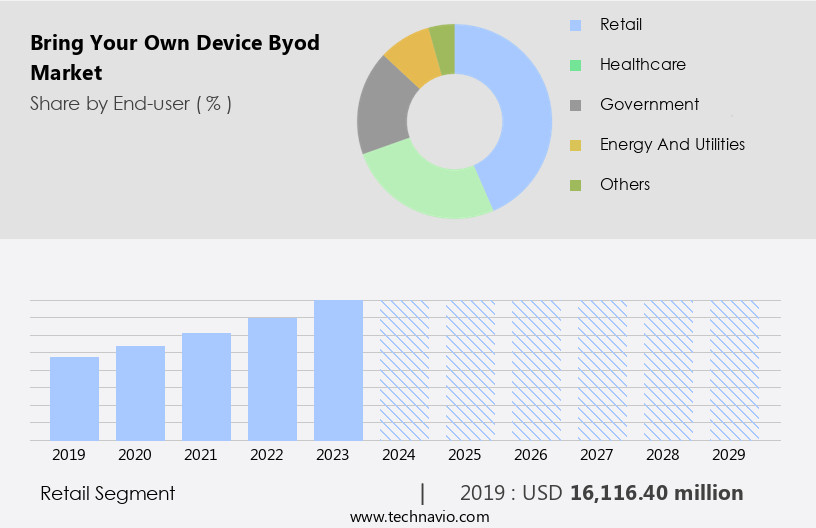
The Retail segment was valued at USD 16.12 billion in 2019 and showed a gradual increase during the forecast period. Device inventory management is crucial in this context, ensuring hardware compatibility and software compatibility with enterprise applications. User authentication and security policies are essential to protect sensitive business data, leading to the adoption of mobile device management (MDM) solutions. Cloud storage and virtual private networks (VPNs) facilitate secure remote access to enterprise resources. Mobile app security and application management are essential components of a robust enterprise mobility strategy. Data loss prevention and digital transformation are key drivers, with data encryption and compliance management ensuring data security. Mobile threat detection and mobile application development are ongoing priorities to maintain a strong security posture.
Regional Analysis
APAC is estimated to contribute 35% to the growth of the global market during the forecast period. Technavio's analysts have elaborately explained the regional trends and drivers that shape the market during the forecast period.

The market in North America is experiencing notable growth due to the increasing adoption of mobile devices for business use. BYOD companies have established a strong presence in this region, driven by the need to provide employees with flexible access to essential business information. The expansion of BYOD is anticipated to continue at a rapid pace, fueled by the widespread use of smartphones and tablets, social media, mobile technology, advanced analytics, cloud computing, and the Internet of Things (IoT) in industries such as manufacturing, retail, finance, healthcare, and government. User experience is a key consideration in the BYOD market, requiring device inventory management, user authentication, and mobile device management solutions. The IT and automotive segments are major contributors to the BYOD market, with the latter expected to grow rapidly with the advent of 5G connections.
Virtual private networks (VPNs) enable secure remote access, while device wiping ensures data security. User behavior analytics and application management help maintain security policies and compliance. Cloud storage and software compatibility are essential for digital workplaces, while hardware compatibility and endpoint security address device-specific concerns. Productivity enhancement is a significant benefit of BYOD, with mobile app security, data loss prevention, and mobile threat detection essential for securing sensitive information. Mobile application development and remote access facilitate digital transformation, while data encryption and enterprise mobility strategy support data breach prevention. Employee satisfaction is a critical factor in the success of BYOD programs, making cloud-based platforms and geo-location tracking valuable tools for managing a mobile workforce.
Device lifecycle management, application whitelisting, workforce mobility, and mobile device security are essential components of enterprise mobility management. Endpoint security and mobile device adoption are crucial for cost savings and wireless network infrastructure, while security posture assessment and mobile device forensics address device security risks. Multi-factor authentication ensures robust security, making it a vital aspect of the evolving BYOD landscape.
Market Dynamics
Our researchers analyzed the data with 2024 as the base year, along with the key drivers, trends, and challenges. A holistic analysis of drivers will help companies refine their marketing strategies to gain a competitive advantage.
What are the Bring Your Own Device (BYOD) market drivers leading to the rise in the adoption of Industry?
- The significant reduction in hardware costs is a primary factor fueling market growth for enterprises. The market is gaining momentum as businesses seek to reduce hardware costs by allowing employees to use their personal devices for enterprise data access. This IT policy, which includes smartphones, tablets, and laptops, offers advantages such as increased productivity and innovation. However, implementing a successful BYOD strategy requires careful consideration. User experience is a critical factor in a successful BYOD implementation. Device inventory management, user authentication, and mobile device management are essential components. Virtual private networks (VPNs) ensure secure data transmission, while device wiping and user behavior analytics help maintain security. Cloud storage and device provisioning facilitate seamless access to enterprise data.
- Hardware compatibility and security policies are crucial elements of a well-designed BYOD strategy. User behavior analytics provide valuable insights into potential security risks, enabling proactive measures. Ensuring hardware compatibility and adhering to stringent security policies are essential to mitigate potential vulnerabilities. The BYOD market is driven by the need for cost savings and the desire to increase productivity and innovation. Successfully implementing a BYOD policy requires a focus on user experience, security, and device management. By addressing these areas, businesses can reap the benefits of this IT trend while minimizing risks.
What are the Bring Your Own Device (BYOD) market trends shaping the Industry?
- The adoption of Bring Your Own Device (BYOD) policies is becoming increasingly prevalent in Small and Medium Enterprises (SMEs), representing a significant market trend. This approach enables employees to use their personal devices for work purposes, enhancing productivity and flexibility within organizations. The market is experiencing significant growth due to the increasing adoption of digital workplaces and flexible work arrangements by Small and Medium Enterprises (SMEs). BYOD enables employees to use their personal devices for work purposes, leading to increased productivity and cost savings for businesses. However, this trend also presents new challenges, such as mobile app security, application management, data loss prevention, and mobile threat detection. To address these concerns, businesses are implementing enterprise mobility strategies that prioritize digital transformation, data encryption, and mobile application development. These solutions help ensure data security while enabling a more and work experience for employees.
- Mobile app security is a critical concern, as sensitive business data is increasingly being accessed and transmitted via mobile devices. Application management and data loss prevention solutions help mitigate these risks by controlling access to corporate data and ensuring that only authorized applications are used. Mobile threat detection is another essential component of enterprise mobility strategies, as mobile devices are vulnerable to various threats, including malware, phishing, and unsecured Wi-Fi networks. Mobile application development is also a key area of focus, as custom-built applications can help streamline business processes and improve employee productivity. In , the BYOD trend is here to stay, and SMEs are increasingly adopting enterprise mobility solutions to stay competitive and meet the evolving needs of their customers.
How does Bring Your Own Device (BYOD) market faces challenges during its growth?
- The growth of the industry is significantly hindered by the challenges posed by infrastructure constraints and connectivity issues. The market continues to gain traction as remote work becomes increasingly prevalent. However, challenges persist in ensuring data breach prevention, employee satisfaction, and workforce mobility. A cloud-based platform is crucial for enabling remote access and productivity enhancement, but software compatibility and compliance management remain significant hurdles. Mobile device security, including application whitelisting and geo-location tracking, is essential to mitigate risks.
- Infrastructure constraints and connectivity issues, particularly in emerging economies, pose challenges to the seamless operation of enterprise mobile devices. Despite these challenges, the market is driven by the need for increased productivity and workforce mobility. Employers must prioritize mobile device security to protect sensitive data and maintain compliance with industry regulations.
Exclusive Customer Landscape
The bring your own device (BYOD) market forecasting report includes the adoption lifecycle of the market, covering from the innovator's stage to the laggard's stage. It focuses on adoption rates in different regions based on penetration. Furthermore, the bring your own device (BYOD) market report also includes key purchase criteria and drivers of price sensitivity to help companies evaluate and develop their market growth analysis strategies.

Customer Landscape
Key Companies & Market Insights
Companies are implementing various strategies, such as strategic alliances, bring your own device (byod) market forecast, partnerships, mergers and acquisitions, geographical expansion, and product/service launches, to enhance their presence in the industry.
Accenture PLC - The company provides a bring-your-own-device solution, including the ALE SIP Device, enabling users to utilize their preferred devices for communication.
The industry research and growth report includes detailed analyses of the competitive landscape of the market and information about key companies, including:
- Accenture PLC
- ALE International
- AT and T Inc.
- BlackBerry Ltd.
- Broadcom Inc.
- Capgemini Service SAS
- Cisco Systems Inc.
- Cloud Software Group Inc.
- Forcepoint LLC
- Fortinet Inc.
- HCL Technologies Ltd.
- Hewlett Packard Enterprise Co.
- Honeywell International Inc.
- International Business Machines Corp.
- Ivanti Software Inc.
- Microsoft Corp.
- Oracle Corp.
- Tata Consultancy Services Ltd.
- Tech Mahindra Ltd.
- Verizon Communications Inc.
Qualitative and quantitative analysis of companies has been conducted to help clients understand the wider business environment as well as the strengths and weaknesses of key industry players. Data is qualitatively analyzed to categorize companies as pure play, category-focused, industry-focused, and diversified; it is quantitatively analyzed to categorize companies as dominant, leading, strong, tentative, and weak.
Recent Development and News in Bring Your Own Device (Byod) Market
- In February 2024, Microsoft announced the integration of its Intune mobile device management solution with Apple's Device Enrollment Program (DEP), allowing businesses to easily manage and secure Apple devices in their Bring Your Own Device (BYOD) environments (Microsoft Press Release, 2024). This collaboration significantly expanded the compatibility of Microsoft's Intune platform and addressed the growing demand for managing a diverse range of devices in corporate networks.
- In May 2025, IBM and VMware joined forces to offer a new cloud-based mobile device management solution, integrating IBM's MaaS360 with VMware Workspace ONE. This strategic partnership aimed to provide a unified endpoint management solution for businesses, enabling them to manage and secure all their devices, including laptops, desktops, smartphones, and tablets, from a single console (IBM Press Release, 2025).
- In October 2024, VMware secured a strategic investment of USD 250 million from BlackRock, a leading global investment firm, to accelerate its growth in the digital workspace market, including its BYOD offerings. This significant funding round underscored the increasing demand for secure and efficient BYOD solutions in the enterprise sector (VMware Press Release, 2024).
Research Analyst Overview
The market continues to evolve, shaping the digital workplace landscape with its flexibility and adaptability. This market dynamic is increasingly prevalent across various sectors, enabling a mobile workforce and remote work arrangements. The integration of user experience, device inventory, user authentication, and virtual private networks ensures secure access to cloud storage and applications. Mobile device management (MDM) and user behavior analytics facilitate device provisioning and application management, while data loss prevention and digital transformation drive data encryption and compliance management. Enterprise mobility strategy, mobile threat detection, and mobile application development are crucial components, enhancing productivity and ensuring endpoint security.
Remote access, data breach prevention, and employee satisfaction are key considerations in the ongoing evolution of this market. A cloud-based platform, software compatibility, and geo-location tracking further expand its reach. Security policies, hardware compatibility, and compliance management address device security risks, while application whitelisting and workforce mobility promote cost savings. The continuous unfolding of market activities includes the adoption of wireless network infrastructure, security posture assessment, mobile device forensics, and enterprise mobility management. Device lifecycle management, endpoint security, and mobile device adoption further underscore the importance of this market in today's digital landscape.
Dive into Technavio's strong research methodology, blending expert interviews, extensive data synthesis, and validated models for unparalleled Bring Your Own Device (BYOD) Market insights. See full methodology.
|
Market Scope |
|
|
Report Coverage |
Details |
|
Page number |
227 |
|
Base year |
2024 |
|
Historic period |
2019-2023 |
|
Forecast period |
2025-2029 |
|
Growth momentum & CAGR |
Accelerate at a CAGR of 19.3% |
|
Market growth 2025-2029 |
USD 155.76 billion |
|
Market structure |
Fragmented |
|
YoY growth 2024-2025(%) |
15.9 |
|
Key countries |
US, Japan, Canada, Germany, India, UK, China, South Korea, France, and Brazil |
|
Competitive landscape |
Leading Companies, Market Positioning of Companies, Competitive Strategies, and Industry Risks |
What are the Key Data Covered in this Bring Your Own Device (BYOD) Market Research and Growth Report?
- CAGR of the Bring Your Own Device (BYOD) industry during the forecast period
- Detailed information on factors that will drive the growth and forecasting between 2025 and 2029
- Precise estimation of the size of the market and its contribution of the industry in focus to the parent market
- Accurate predictions about upcoming growth and trends and changes in consumer behaviour
- Growth of the market across North America, APAC, Europe, South America, and Middle East and Africa
- Thorough analysis of the market's competitive landscape and detailed information about companies
- Comprehensive analysis of factors that will challenge the bring your own device (BYOD) market growth of industry companies
We can help! Our analysts can customize this bring your own device (BYOD) market research report to meet your requirements.