


CAM Software Market Analysis North America, Europe, APAC, Middle East and Africa, South America - US, China, UK, Germany, Japan - Size and Forecast 2024-2028

CAM Software Market Analysis North America, Europe, APAC, Middle East and Africa, South America - US, China, UK, Germany, Japan - Size and Forecast 2024-2028

Published: Jul 2024 169 Pages SKU: IRTNTR75492

Market Overview at a Glance

$1.92 B
Market Opportunity
9.15%
CAGR
7.4
YoY growth 2023-2024(%)

CAM Software Market Size 2024-2028 

The cam software market size is forecast to increase by USD 1.92 billion at a CAGR of 9.15% between 2023 and 2028.

  • The market is experiencing significant growth due to the increasing demand for automation in manufacturing industries. Cloud-based CAM solutions are gaining popularity as they offer flexibility and accessibility, enabling remote working and real-time collaboration. However, high implementation costs remain a challenge for small and medium-sized enterprises (SMEs).
  • To tackle this, companies are providing affordable solutions and financing options. Moreover, the integration of advanced technologies like AI, machine learning, and IoT is spurring innovation, boosting productivity and efficiency. The market is poised for steady growth, creating opportunities for both new entrants and established players. Companies that focus on delivering cost-effective, user-friendly, and tech-driven solutions are likely to gain a competitive advantage.

What will be the CAM Software Market Size During the Forecast Period?
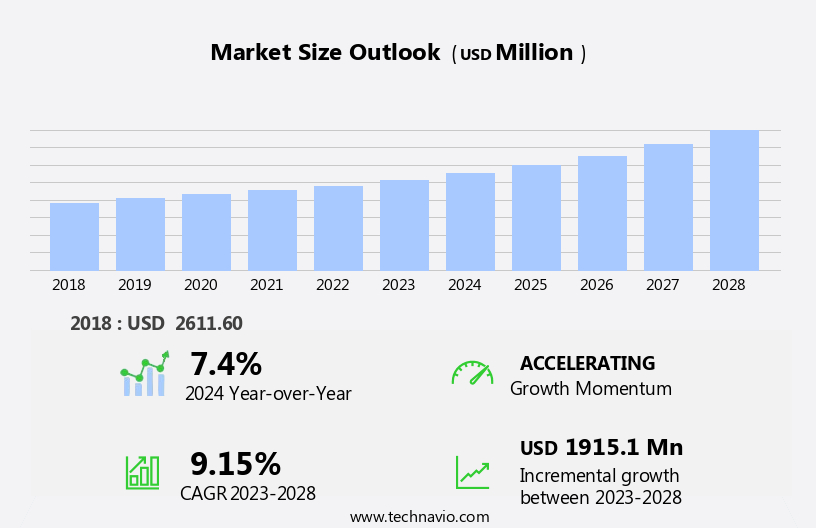
CAM Software Market Size

 Request Free Sample

  • The Computer-Aided Manufacturing (CAM) software market is a significant segment of the computer software industry, catering to machinery, robotics, and material processing in manufacturing organizations. CAM solutions enable designers, engineers, machinists, and enterprises to optimize production processes for CNC machines, enhancing tooling accuracy, reducing material waste, and improving energy efficiency. These software solutions play a crucial role in the manufacturing process by designing components, managing material requirements, and ensuring consistency in raw materials. 
  • Market dynamics include the increasing adoption of CAM software to achieve higher production speeds, improved tooling accuracy, and reduced energy consumption. The integration of cloud technologies in CAM solutions offers flexibility and accessibility, allowing organizations to streamline their manufacturing processes and enhance collaboration between teams.
  • The market is expected to grow, driven by the continuous advancements in CNC machine tools and the increasing demand for efficient and cost-effective manufacturing solutions.

How is this CAM Software Industry segmented and which is the largest segment?

The cam software industry research report provides comprehensive data (region-wise segment analysis), with forecasts and estimates in "USD billion" for the period 2024-2028, as well as historical data from 2018-2022 for the following segments.

  • End-user
    • Aerospace and defense industry
    • Shipbuilding industry
    • Machine tool industry
    • Automotive industry
    • Others
  • Deployment
    • On-premise
    • Cloud-based
  • Geography
    • North America
      • US
    • Europe
      • Germany
      • UK
    • APAC
      • China
      • Japan
    • Middle East and Africa
    • South America

By End-user Insights

  • The aerospace and defense industry segment is estimated to witness significant growth during the forecast period.

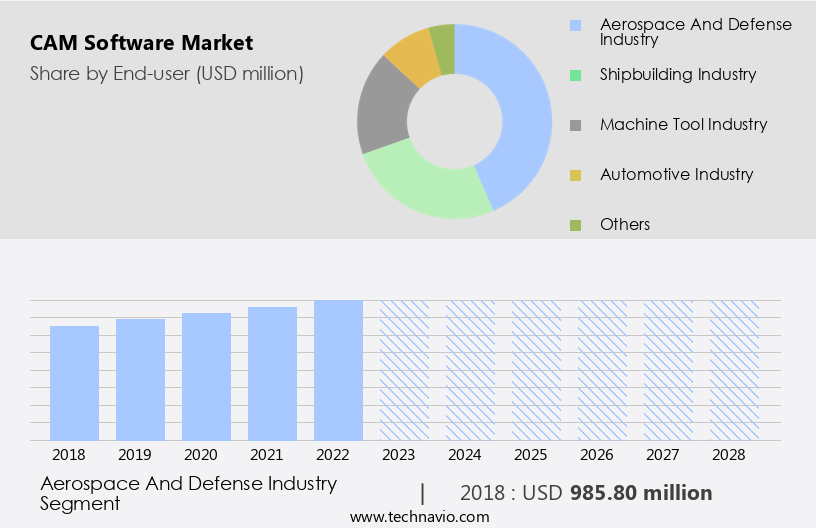
The market holds significant potential In the manufacturing sector, particularly In the aerospace and defense industry. In 2023, this end-user segment accounted for a substantial market share due to the automation of manufacturing processes, productivity gains, and stringent quality requirements in aerospace and defense production. CAM software enables precise control over milling, cutting, roughing, and other manufacturing processes, ensuring adherence to industry standards. Leading aerospace and defense companies heavily invest in and adopt CAM software to optimize production and create high-quality products. The market's growth is driven by the increasing use of advanced technologies like additive manufacturing, CNC machining, and robotics In the sector. The adoption of cloud technologies and automated manufacturing processes further enhances the efficiency and flexibility of CAM software In the aerospace and defense industry.
CAM Software Market Size

Get a glance at the  CAM Software Industry report of share of various segments Request Free Sample

The Aerospace and defense industry segment was valued at USD 985.80 million in 2018 and showed a gradual increase during the forecast period.

Regional Analysis

  • North America is estimated to contribute 30% to the growth of the global market during the forecast period.

Technavio's analysts have elaborately explained the regional trends and drivers that shape the market during the forecast period.
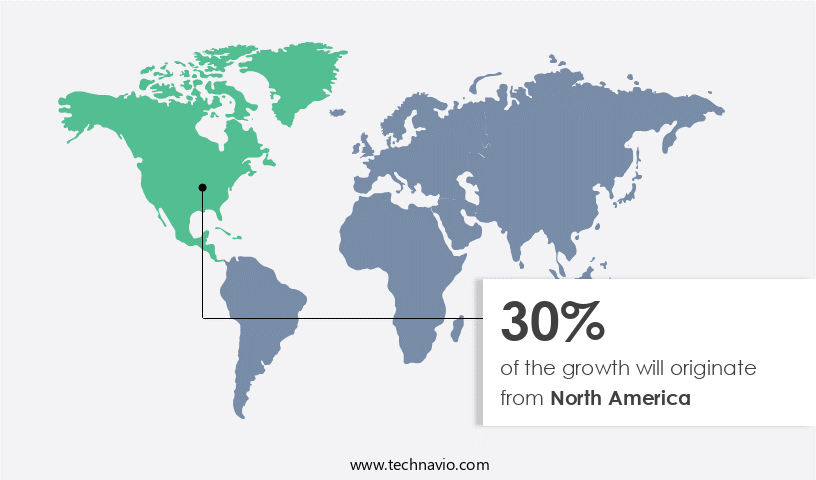
CAM Software Market Share by Geography

For more insights on the market share of various regions, Request Free Sample

The market in North America is experiencing significant growth due to the region's robust manufacturing sector, particularly in industries such as automotive, aerospace, and defense. Companies like GE and Boeing are utilizing CAM software to optimize production processes, increase automation, and ensure precision. The expansion of the market is also driven by advancements in related technologies, including additive manufacturing, CNC machining, and robotics. These technologies require sophisticated CAM software to manage and schedule manufacturing operations efficiently. The market is expected to continue growing as industrialization advances and emerging economies adopt modern manufacturing processes. Cloud-based CAM solutions are becoming increasingly popular due to their flexibility and cost-effectiveness.

Market Dynamics

Our cam software market researchers analyzed the data with 2023 as the base year, along with the key drivers, trends, and challenges. A holistic analysis of drivers will help companies refine their marketing strategies to gain a competitive advantage.

What are the key market drivers leading to the rise In the adoption of CAM Software Industry?

Increasing demand for automation is the key driver of the market.

  • The Computer-Aided Manufacturing (CAM) software market is witnessing significant growth due to the increasing demand for automated and efficient manufacturing processes. CAM software plays a crucial role in optimizing production workflows by automating tasks such as toolpath generation, CNC machine programming, and simulation. This results in reduced manual intervention, increased accuracy, and shorter lead times. CAM software is essential for various industries, including machining, robotics, and machinery, to enhance their manufacturing capabilities and improve production speeds. Materials requirements, production speeds, raw material consistency, tooling accuracy, waste reduction, energy efficiency, and automation trends are key factors driving the growth of the market.
  • The market is also witnessing the adoption of cloud-based solutions, which offer benefits such as cost savings, IT infrastructure reduction, and scalability. Leading organizations In the manufacturing sector, including machinists, designers, engineers, and architects, are increasingly adopting CAM software to streamline their manufacturing processes and improve productivity. The market is witnessing mergers and acquisitions, partnership collaborations, and client wins, as leading players seek to expand their offerings and reach new clientele. CAM software solutions are used across various industries, including automobile manufacturing, aerospace and defense, shipbuilding, and fabrication. Technological innovations, such as machine learning and smart packaging, are also driving the growth of the market.
  • Large enterprises are increasingly focusing on optimized manufacturing processes and deploying cloud-supported CAM software to achieve faster production processes, improved design quality, and real-time data visibility and control over production activities. The market is expected to continue its growth trajectory, driven by the increasing demand for automated production and the need for efficient manufacturing processes.

What are the market trends shaping the CAM Software Industry?

Cloud-based CAM software is the upcoming market trend.

  • Cloud-based Computer-Aided Manufacturing (CAM) software is experiencing significant growth In the US market due to its numerous advantages. These benefits include remote access, real-time collaboration, and cost efficiency. Leading CAM software providers, such as Autodesk, offer cloud-based services that enable users to access their CAM tools from any location with an internet connection. The National Institute of Standards and Technology (NIST) supports this trend, highlighting the cost savings, flexibility, and improved collaboration capabilities that cloud-based CAM software provides for small- and medium-sized enterprises. The manufacturing industry's shift towards automation and industrialization is driving the demand for CAM software. Machinery, robotics, and materials requirements are crucial elements of the manufacturing process that CAM software can optimize.
  • Production speeds, raw material consistency, tooling accuracy, waste reduction, energy efficiency, and automation are key areas where CAM software can add value. Key trends In the market include the adoption of cloud-supported solutions, mergers and acquisitions, and partnership collaborations. The market is also witnessing the integration of machine learning (ML) and smart packaging techniques to enhance manufacturing capabilities. The automobile, aerospace and defense, shipbuilding, and machine tools industries are some of the major sectors adopting CAM software to streamline their manufacturing processes and improve production efficiency. In terms of growth strategies, both organic and inorganic approaches are being employed.
  • Organizations are investing in training and education for their machinists, designers, and engineers to maximize the benefits of CAM software. They are also focusing on optimizing manufacturing processes and reducing production costs through automated CNC programming and machining simulation. Inorganic growth strategies include acquisitions and partnerships to expand market reach and enhance product offerings. Overall, the market is expected to continue its growth trajectory, driven by technological innovations, the increasing adoption of cloud computing, and the need for faster production processes. The market is also witnessing the emergence of new players, offering flexible subscription-based models and automated CNC programming solutions, further fueling its growth.

What challenges does the CAM Software Industry face during its growth?

High implementation costs is a key challenge affecting the industry growth.

  • The Computer-Aided Manufacturing (CAM) software market encompasses computer software utilized in machinery, robotics, and automation industries for optimizing production processes. This software assists organizations in managing materials requirements, enhancing production speeds, ensuring raw material consistency, improving tooling accuracy, and reducing waste while increasing energy efficiency. The automation trend in industrialization, particularly in emerging economies, is driving the demand for CAM solutions. In the manufacturing sector, CAM software is increasingly being adopted by automobile manufacturers, aerospace and defense industries, shipbuilding, and fabricators to streamline their manufacturing cycles. Technological innovations in CNC machines, milling, cutting, and other manufacturing processes are enabling faster production processes and optimized manufacturing practices.
  • Cloud-based CAM solutions are gaining popularity due to their cost-effectiveness, flexibility, and scalability. These solutions offer real-time data visibility and control over production activities, enabling automated production and predictive maintenance. However, the high initial investment required for CAM software deployment remains a challenge for smaller businesses. Key trends In the market include the adoption of cloud computing services, machine learning, and smart packaging techniques. Large enterprises are focusing on optimized manufacturing processes and deploying CAM solutions on both cloud and on-premises. The ecosystem of CAM software includes leading players like Autodesk, PlanGrid, and construction software providers, offering design, engineering, and product design solutions.
  • Despite the challenges, the benefits of CAM software, such as increased efficiency, productivity, and cost savings, make it an essential tool for organizations seeking to remain competitive in today's manufacturing landscape.

Exclusive Customer Landscape

The CAM software market forecasting report includes the adoption lifecycle of the market, covering from the innovator's stage to the laggard's stage. It focuses on adoption rates in different regions based on penetration. Furthermore, the CAM software market report also includes key purchase criteria and drivers of price sensitivity to help companies evaluate and develop their market growth analysis strategies.
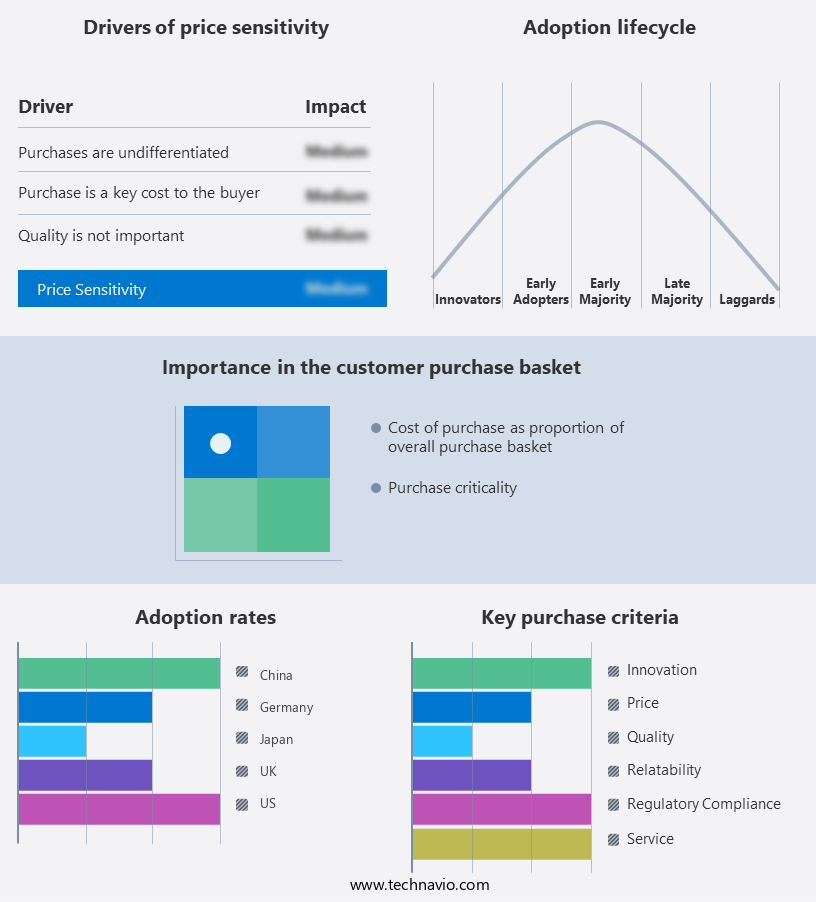
CAM Software Market Share by Geography

 Customer Landscape

Key Companies & Market Insights

Companies are implementing various strategies, such as strategic alliances, cam software market forecast, partnerships, mergers and acquisitions, geographical expansion, and product/service launches, to enhance their presence In the industry.

3D Systems Corp. - The company provides CAM (Computer-Aided Manufacturing) software solutions, enabling users to generate NC (Numerical Control) programs, facilitate data integration, and ensure seamless application integration. This advanced technology streamlines the manufacturing process, enhancing productivity and efficiency for US businesses.

The industry research and growth report includes detailed analyses of the competitive landscape of the market and information about key companies, including:

  • 3D Systems Corp.
  • Autodesk Inc.
  • Bricsys NV
  • Camnetics Inc.
  • CNC Software LLC
  • Constellation Software Inc.
  • Dassault Systemes SE
  • GRZ Software LLC
  • HCL Technologies Ltd.
  • Hexagon AB
  • MecSoft Corp.
  • Modern Machine Shop
  • OPEN MIND Technologies AG
  • PTC Inc.
  • SCHOTT SYSTEME GmbH
  • Siemens AG
  • Sigma TEK
  • SolidCAM GmbH
  • WiCAM GmbH
  • ZWSOFT CO. LTD.

Qualitative and quantitative analysis of companies has been conducted to help clients understand the wider business environment as well as the strengths and weaknesses of key industry players. Data is qualitatively analyzed to categorize companies as pure play, category-focused, industry-focused, and diversified; it is quantitatively analyzed to categorize companies as dominant, leading, strong, tentative, and weak.

Research Analyst Overview

Unraveling the Dynamics of the Computer-Aided Manufacturing (CAM) Software Market: Trends, Growth Factors, and Strategies The Computer-Aided Manufacturing (CAM) software market encompasses a range of solutions designed to optimize manufacturing processes by automating the creation, modification, and optimization of toolpaths for machining operations. This sector is fueled by the ongoing industrialization trend and the increasing adoption of advanced technologies in various industries. CAM software plays a pivotal role in enhancing manufacturing capabilities by ensuring raw material consistency, tooling accuracy, and waste reduction. The software enables organizations to achieve higher production speeds, energy efficiency, and automation, making it an essential component of modern manufacturing processes.

The market is experiencing significant growth due to the increasing demand for automation and the need for organizations to remain competitive. This growth is driven by various factors, including the emergence of emerging economies, the rise of cloud-based solutions, and the increasing adoption of advanced technologies such as robotics and machine learning (ML). The manufacturing industry, which includes sectors such as automotive, aerospace and defense, shipbuilding, and fabrication, is a significant contributor to the market. These industries require high levels of precision, efficiency, and productivity, making CAM software an indispensable tool. One of the key trends In the market is the increasing adoption of cloud-based solutions.

Cloud deployment offers several advantages, including scalability, faster deployment, and lower costs. Cloud-based CAM solutions enable organizations to access their manufacturing processes from anywhere, making it easier to collaborate and manage production activities in real-time. Another significant trend In the market is the increasing use of machine learning (ML) and other enabling technologies. ML algorithms help optimize manufacturing processes by analyzing data and providing insights to improve efficiency, reduce downtime, and enhance product quality. The market is highly competitive, with numerous organizations offering solutions tailored to various industries and manufacturing processes. Growth strategies In the market include organic growth, such as product innovation and training and education, as well as inorganic growth strategies, such as acquisitions and partnership collaborations.

The market is expected to continue growing as organizations seek to optimize their manufacturing processes and remain competitive. The market is driven by the increasing demand for automation, the adoption of advanced technologies, and the need for greater efficiency and productivity. In conclusion, the Computer-Aided Manufacturing (CAM) software market is a dynamic and growing sector, driven by the ongoing trend towards industrialization and the increasing adoption of advanced technologies. The market offers significant opportunities for organizations looking to optimize their manufacturing processes, reduce costs, and improve productivity. The future of the market is bright, with continued innovation and the integration of advanced technologies such as machine learning (ML) and cloud computing set to drive growth and transform the manufacturing landscape.

CAM Software Market Scope

Report Coverage

Details

Page number

169

Base year

2023

Historic period

2018-2022

Forecast period

2024-2028

Growth momentum & CAGR

Accelerate at a CAGR of 9.15%

Market growth 2024-2028

USD 1.92 billion

Market structure

Fragmented

YoY growth 2023-2024(%)

7.4

Key countries

US, China, UK, Germany, and Japan

Competitive landscape

Leading Companies, Market Positioning of Companies, Competitive Strategies, and Industry Risks

Request Free Sample

What are the Key Data Covered in this CAM Software Market Research and Growth Report?

  • CAGR of the CAM Software industry during the forecast period
  • Detailed information on factors that will drive the CAM Software growth and forecasting between 2024 and 2028
  • Precise estimation of the size of the market and its contribution of the industry in focus to the parent market
  • Accurate predictions about upcoming growth and trends and changes in consumer behaviour
  • Growth of the market across North America, Europe, APAC, Middle East and Africa, and South America
  • Thorough analysis of the market's competitive landscape and detailed information about companies
  • Comprehensive analysis of factors that will challenge the CAM software market growth of industry companies

We can help! Our analysts can customize this CAM software market research report to meet your requirements. 

Get in touch

1 Executive Summary

  • 1.1 Market overview
    • Executive Summary - Chart on Market Overview
    • Executive Summary - Data Table on Market Overview
    • Executive Summary - Chart on Global Market Characteristics
    • Executive Summary - Chart on Market by Geography
    • Executive Summary - Chart on Market Segmentation by End-user
    • Executive Summary - Chart on Market Segmentation by Deployment
    • Executive Summary - Chart on Incremental Growth
    • Executive Summary - Data Table on Incremental Growth
    • Executive Summary - Chart on Company Market Positioning

2 Market Landscape

  • 2.1 Market ecosystem
    • Parent Market
    • Data Table on - Parent Market
  • 2.2 Market characteristics
    • Market characteristics analysis
  • 2.3 Value chain analysis
    • Value Chain Analysis

3 Market Sizing

  • 3.1 Market definition
    • Offerings of companies included in the market definition
  • 3.2 Market segment analysis
    • Market segments
  • 3.3 Market size 2023
    • 3.4 Market outlook: Forecast for 2023-2028
      • Chart on Global - Market size and forecast 2023-2028 ($ million)
      • Data Table on Global - Market size and forecast 2023-2028 ($ million)
      • Chart on Global Market: Year-over-year growth 2023-2028 (%)
      • Data Table on Global Market: Year-over-year growth 2023-2028 (%)

    4 Historic Market Size

    • 4.1 Global CAM Software Market 2018 - 2022
      • Historic Market Size - Data Table on Global CAM Software Market 2018 - 2022 ($ million)
    • 4.2 End-user segment analysis 2018 - 2022
      • Historic Market Size - End-user Segment 2018 - 2022 ($ million)
    • 4.3 Deployment segment analysis 2018 - 2022
      • Historic Market Size - Deployment Segment 2018 - 2022 ($ million)
    • 4.4 Geography segment analysis 2018 - 2022
      • Historic Market Size - Geography Segment 2018 - 2022 ($ million)
    • 4.5 Country segment analysis 2018 - 2022
      • Historic Market Size - Country Segment 2018 - 2022 ($ million)

    5 Five Forces Analysis

    • 5.1 Five forces summary
      • Five forces analysis - Comparison between 2023 and 2028
    • 5.2 Bargaining power of buyers
      • Bargaining power of buyers - Impact of key factors 2023 and 2028
    • 5.3 Bargaining power of suppliers
      • Bargaining power of suppliers - Impact of key factors in 2023 and 2028
    • 5.4 Threat of new entrants
      • Threat of new entrants - Impact of key factors in 2023 and 2028
    • 5.5 Threat of substitutes
      • Threat of substitutes - Impact of key factors in 2023 and 2028
    • 5.6 Threat of rivalry
      • Threat of rivalry - Impact of key factors in 2023 and 2028
    • 5.7 Market condition
      • Chart on Market condition - Five forces 2023 and 2028

    6 Market Segmentation by End-user

    • 6.1 Market segments
      • Chart on End-user - Market share 2023-2028 (%)
      • Data Table on End-user - Market share 2023-2028 (%)
    • 6.2 Comparison by End-user
      • Chart on Comparison by End-user
      • Data Table on Comparison by End-user
    • 6.3 Aerospace and defense industry - Market size and forecast 2023-2028
      • Chart on Aerospace and defense industry - Market size and forecast 2023-2028 ($ million)
      • Data Table on Aerospace and defense industry - Market size and forecast 2023-2028 ($ million)
      • Chart on Aerospace and defense industry - Year-over-year growth 2023-2028 (%)
      • Data Table on Aerospace and defense industry - Year-over-year growth 2023-2028 (%)
    • 6.4 Shipbuilding industry - Market size and forecast 2023-2028
      • Chart on Shipbuilding industry - Market size and forecast 2023-2028 ($ million)
      • Data Table on Shipbuilding industry - Market size and forecast 2023-2028 ($ million)
      • Chart on Shipbuilding industry - Year-over-year growth 2023-2028 (%)
      • Data Table on Shipbuilding industry - Year-over-year growth 2023-2028 (%)
    • 6.5 Machine tool industry - Market size and forecast 2023-2028
      • Chart on Machine tool industry - Market size and forecast 2023-2028 ($ million)
      • Data Table on Machine tool industry - Market size and forecast 2023-2028 ($ million)
      • Chart on Machine tool industry - Year-over-year growth 2023-2028 (%)
      • Data Table on Machine tool industry - Year-over-year growth 2023-2028 (%)
    • 6.6 Automotive industry - Market size and forecast 2023-2028
      • Chart on Automotive industry - Market size and forecast 2023-2028 ($ million)
      • Data Table on Automotive industry - Market size and forecast 2023-2028 ($ million)
      • Chart on Automotive industry - Year-over-year growth 2023-2028 (%)
      • Data Table on Automotive industry - Year-over-year growth 2023-2028 (%)
    • 6.7 Others - Market size and forecast 2023-2028
      • Chart on Others - Market size and forecast 2023-2028 ($ million)
      • Data Table on Others - Market size and forecast 2023-2028 ($ million)
      • Chart on Others - Year-over-year growth 2023-2028 (%)
      • Data Table on Others - Year-over-year growth 2023-2028 (%)
    • 6.8 Market opportunity by End-user
      • Market opportunity by End-user ($ million)
      • Data Table on Market opportunity by End-user ($ million)

    7 Market Segmentation by Deployment

    • 7.1 Market segments
      • Chart on Deployment - Market share 2023-2028 (%)
      • Data Table on Deployment - Market share 2023-2028 (%)
    • 7.2 Comparison by Deployment
      • Chart on Comparison by Deployment
      • Data Table on Comparison by Deployment
    • 7.3 On-premises - Market size and forecast 2023-2028
      • Chart on On-premises - Market size and forecast 2023-2028 ($ million)
      • Data Table on On-premises - Market size and forecast 2023-2028 ($ million)
      • Chart on On-premises - Year-over-year growth 2023-2028 (%)
      • Data Table on On-premises - Year-over-year growth 2023-2028 (%)
    • 7.4 Cloud-based - Market size and forecast 2023-2028
      • Chart on Cloud-based - Market size and forecast 2023-2028 ($ million)
      • Data Table on Cloud-based - Market size and forecast 2023-2028 ($ million)
      • Chart on Cloud-based - Year-over-year growth 2023-2028 (%)
      • Data Table on Cloud-based - Year-over-year growth 2023-2028 (%)
    • 7.5 Market opportunity by Deployment
      • Market opportunity by Deployment ($ million)
      • Data Table on Market opportunity by Deployment ($ million)

    8 Customer Landscape

    • 8.1 Customer landscape overview
      • Analysis of price sensitivity, lifecycle, customer purchase basket, adoption rates, and purchase criteria

    9 Geographic Landscape

    • 9.1 Geographic segmentation
      • Chart on Market share by geography 2023-2028 (%)
      • Data Table on Market share by geography 2023-2028 (%)
    • 9.2 Geographic comparison
      • Chart on Geographic comparison
      • Data Table on Geographic comparison
    • 9.3 North America - Market size and forecast 2023-2028
      • Chart on North America - Market size and forecast 2023-2028 ($ million)
      • Data Table on North America - Market size and forecast 2023-2028 ($ million)
      • Chart on North America - Year-over-year growth 2023-2028 (%)
      • Data Table on North America - Year-over-year growth 2023-2028 (%)
    • 9.4 Europe - Market size and forecast 2023-2028
      • Chart on Europe - Market size and forecast 2023-2028 ($ million)
      • Data Table on Europe - Market size and forecast 2023-2028 ($ million)
      • Chart on Europe - Year-over-year growth 2023-2028 (%)
      • Data Table on Europe - Year-over-year growth 2023-2028 (%)
    • 9.5 APAC - Market size and forecast 2023-2028
      • Chart on APAC - Market size and forecast 2023-2028 ($ million)
      • Data Table on APAC - Market size and forecast 2023-2028 ($ million)
      • Chart on APAC - Year-over-year growth 2023-2028 (%)
      • Data Table on APAC - Year-over-year growth 2023-2028 (%)
    • 9.6 Middle East and Africa - Market size and forecast 2023-2028
      • Chart on Middle East and Africa - Market size and forecast 2023-2028 ($ million)
      • Data Table on Middle East and Africa - Market size and forecast 2023-2028 ($ million)
      • Chart on Middle East and Africa - Year-over-year growth 2023-2028 (%)
      • Data Table on Middle East and Africa - Year-over-year growth 2023-2028 (%)
    • 9.7 South America - Market size and forecast 2023-2028
      • Chart on South America - Market size and forecast 2023-2028 ($ million)
      • Data Table on South America - Market size and forecast 2023-2028 ($ million)
      • Chart on South America - Year-over-year growth 2023-2028 (%)
      • Data Table on South America - Year-over-year growth 2023-2028 (%)
    • 9.8 US - Market size and forecast 2023-2028
      • Chart on US - Market size and forecast 2023-2028 ($ million)
      • Data Table on US - Market size and forecast 2023-2028 ($ million)
      • Chart on US - Year-over-year growth 2023-2028 (%)
      • Data Table on US - Year-over-year growth 2023-2028 (%)
    • 9.9 China - Market size and forecast 2023-2028
      • Chart on China - Market size and forecast 2023-2028 ($ million)
      • Data Table on China - Market size and forecast 2023-2028 ($ million)
      • Chart on China - Year-over-year growth 2023-2028 (%)
      • Data Table on China - Year-over-year growth 2023-2028 (%)
    • 9.10 UK - Market size and forecast 2023-2028
      • Chart on UK - Market size and forecast 2023-2028 ($ million)
      • Data Table on UK - Market size and forecast 2023-2028 ($ million)
      • Chart on UK - Year-over-year growth 2023-2028 (%)
      • Data Table on UK - Year-over-year growth 2023-2028 (%)
    • 9.11 Germany - Market size and forecast 2023-2028
      • Chart on Germany - Market size and forecast 2023-2028 ($ million)
      • Data Table on Germany - Market size and forecast 2023-2028 ($ million)
      • Chart on Germany - Year-over-year growth 2023-2028 (%)
      • Data Table on Germany - Year-over-year growth 2023-2028 (%)
    • 9.12 Japan - Market size and forecast 2023-2028
      • Chart on Japan - Market size and forecast 2023-2028 ($ million)
      • Data Table on Japan - Market size and forecast 2023-2028 ($ million)
      • Chart on Japan - Year-over-year growth 2023-2028 (%)
      • Data Table on Japan - Year-over-year growth 2023-2028 (%)
    • 9.13 Market opportunity by geography
      • Market opportunity by geography ($ million)
      • Data Tables on Market opportunity by geography ($ million)

    10 Drivers, Challenges, and Opportunity/Restraints

    • 10.1 Market drivers
      • 10.2 Market challenges
        • 10.3 Impact of drivers and challenges
          • Impact of drivers and challenges in 2023 and 2028
        • 10.4 Market opportunities/restraints

          11 Competitive Landscape

          • 11.1 Overview
            • 11.2 Competitive Landscape
              • Overview on criticality of inputs and factors of differentiation
            • 11.3 Landscape disruption
              • Overview on factors of disruption
            • 11.4 Industry risks
              • Impact of key risks on business

            12 Competitive Analysis

            • 12.1 Companies profiled
              • Companies covered
            • 12.2 Market positioning of companies
              • Matrix on companies position and classification
            • 3D Systems Corp.
              • 3D Systems Corp. - Overview
              • 3D Systems Corp. - Business segments
              • 3D Systems Corp. - Key news
              • 3D Systems Corp. - Key offerings
              • 3D Systems Corp. - Segment focus
            • 12.4 Autodesk Inc.
              • Autodesk Inc. - Overview
              • Autodesk Inc. - Product / Service
              • Autodesk Inc. - Key news
              • Autodesk Inc. - Key offerings
            • 12.5 Camnetics Inc.
              • Camnetics Inc. - Overview
              • Camnetics Inc. - Product / Service
              • Camnetics Inc. - Key offerings
            • 12.6 CNC Software LLC
              • CNC Software LLC - Overview
              • CNC Software LLC - Product / Service
              • CNC Software LLC - Key offerings
            • 12.7 Constellation Software Inc.
              • Constellation Software Inc. - Overview
              • Constellation Software Inc. - Product / Service
              • Constellation Software Inc. - Key offerings
            • 12.8 Dassault Systemes SE
              • Dassault Systemes SE - Overview
              • Dassault Systemes SE - Product / Service
              • Dassault Systemes SE - Key news
              • Dassault Systemes SE - Key offerings
            • 12.9 GRZ Software LLC
              • GRZ Software LLC - Overview
              • GRZ Software LLC - Product / Service
              • GRZ Software LLC - Key offerings
            • 12.10 HCL Technologies Ltd.
              • HCL Technologies Ltd. - Overview
              • HCL Technologies Ltd. - Business segments
              • HCL Technologies Ltd. - Key news
              • HCL Technologies Ltd. - Key offerings
              • HCL Technologies Ltd. - Segment focus
            • 12.11 Hexagon AB
              • Hexagon AB - Overview
              • Hexagon AB - Business segments
              • Hexagon AB - Key news
              • Hexagon AB - Key offerings
              • Hexagon AB - Segment focus
            • 12.12 MecSoft Corp.
              • MecSoft Corp. - Overview
              • MecSoft Corp. - Product / Service
              • MecSoft Corp. - Key offerings
            • 12.13 OPEN MIND Technologies AG
              • OPEN MIND Technologies AG - Overview
              • OPEN MIND Technologies AG - Product / Service
              • OPEN MIND Technologies AG - Key offerings
            • 12.14 Siemens AG
              • Siemens AG - Overview
              • Siemens AG - Business segments
              • Siemens AG - Key news
              • Siemens AG - Key offerings
              • Siemens AG - Segment focus
            • 12.15 Sigma TEK
              • Sigma TEK - Overview
              • Sigma TEK - Product / Service
              • Sigma TEK - Key offerings
            • 12.16 SolidCAM GmbH
              • SolidCAM GmbH - Overview
              • SolidCAM GmbH - Product / Service
              • SolidCAM GmbH - Key offerings
            • 12.17 ZWSOFT CO. LTD.
              • ZWSOFT CO. LTD. - Overview
              • ZWSOFT CO. LTD. - Key offerings

            13 Appendix

            • 13.1 Scope of the report
              • 13.2 Inclusions and exclusions checklist
                • Inclusions checklist
                • Exclusions checklist
              • 13.3 Currency conversion rates for US$
                • Currency conversion rates for US$
              • 13.4 Research methodology
                • Research methodology
              • 13.5 Data procurement
                • Information sources
              • 13.6 Data validation
                • Data validation
              • 13.7 Validation techniques employed for market sizing
                • Validation techniques employed for market sizing
              • 13.8 Data synthesis
                • Data synthesis
              • 13.9 360 degree market analysis
                • 360 degree market analysis
              • 13.10 List of abbreviations
                • List of abbreviations

              Research Methodology

              Technavio presents a detailed picture of the market by way of study, synthesis, and summation of data from multiple sources. The analysts have presented the various facets of the market with a particular focus on identifying the key industry influencers. The data thus presented is comprehensive, reliable, and the result of extensive research, both primary and secondary.

              INFORMATION SOURCES

              Primary sources

              • Manufacturers and suppliers
              • Channel partners
              • Industry experts
              • Strategic decision makers

              Secondary sources

              • Industry journals and periodicals
              • Government data
              • Financial reports of key industry players
              • Historical data
              • Press releases

              DATA ANALYSIS

              Data Synthesis

              • Collation of data
              • Estimation of key figures
              • Analysis of derived insights

              Data Validation

              • Triangulation with data models
              • Reference against proprietary databases
              • Corroboration with industry experts

              REPORT WRITING

              Qualitative

              • Market drivers
              • Market challenges
              • Market trends
              • Five forces analysis

              Quantitative

              • Market size and forecast
              • Market segmentation
              • Geographical insights
              • Competitive landscape

              Interested in this report?

              Get your sample now to see our research methodology and insights!

              Download Now

              Frequently Asked Questions

              CAM Software market growth will increase by $ 1915.1 mn during 2024-2028 .

              The CAM Software market is expected to grow at a CAGR of 9.15% during 2024-2028 .

              CAM Software market is segmented by End-user( Aerospace and defense industry, Shipbuilding industry, Machine tool industry, Automotive industry, Others) Deployment( On-premise, Cloud-based)

              3D Systems Corp., Autodesk Inc., Bricsys NV, Camnetics Inc., CNC Software LLC, Constellation Software Inc., Dassault Systemes SE, GRZ Software LLC, HCL Technologies Ltd., Hexagon AB, MecSoft Corp., Modern Machine Shop, OPEN MIND Technologies AG, PTC Inc., SCHOTT SYSTEME GmbH, Siemens AG, Sigma TEK, SolidCAM GmbH, WiCAM GmbH, ZWSOFT CO. LTD. are a few of the key vendors in the CAM Software market.

              North America will register the highest growth rate of 30% among the other regions. Therefore, the CAM Software market in North America is expected to garner significant business opportunities for the vendors during the forecast period.

              US, China, UK, Germany, Japan

              • Increasing demand for automationAn important factor driving the global CAM software market is the requirement for effective and automated manufacturing processes. For factories is the driving factor this market.
              • CAM software is essential for optimizing processes is the driving factor this market.
              • lowering mistakes is the driving factor this market.
              • and boosting production. Manufacturers can optimize production workflows and reduce manual intervention by using CAM software to automate processes like toolpath generation is the driving factor this market.
              • CNC machine programming is the driving factor this market.
              • and simulation. 3D Systems Corp. offers CAM software is the driving factor this market.
              • which is used to develop NC programs is the driving factor this market.
              • data integration is the driving factor this market.
              • and application integration. As a result is the driving factor this market.
              • lead times are shortened is the driving factor this market.
              • accuracy is enhanced is the driving factor this market.
              • and output is increased. For instance is the driving factor this market.
              • Autodesk is the driving factor this market.
              • the leading vendor of CAM software is the driving factor this market.
              • claims that its CAM solutions aid manufacturers in achieving productivity increases of up to 30% and programming time reductions of 50%. Hence is the driving factor this market.
              • the increasing demand for automation is a driver which can drive the growth of the market in focus during the forecast period. is the driving factor this market.

              The CAM Software market vendors should focus on grabbing business opportunities from the Aerospace and defense industry segment as it accounted for the largest market share in the base year.
