



Candle Market Size 2026-2030
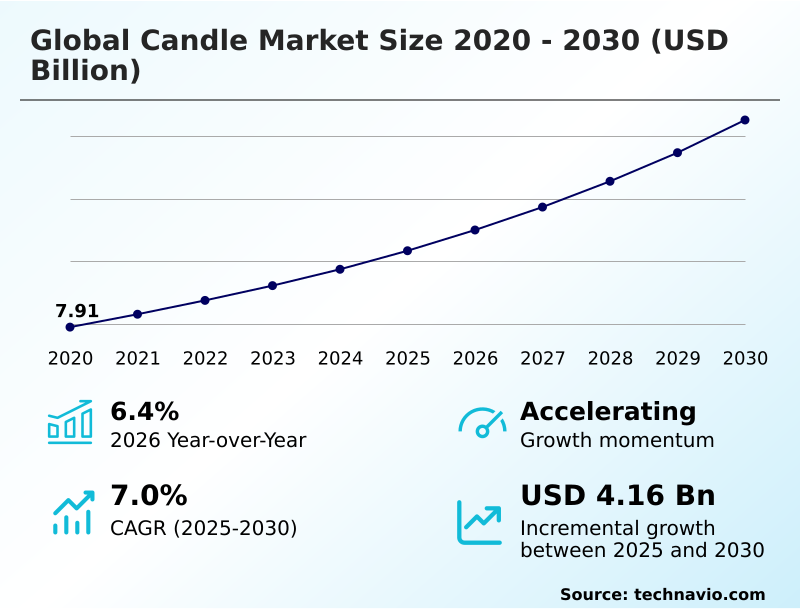
The candle market size is valued to increase by USD 4.16 billion, at a CAGR of 7% from 2025 to 2030. Increasing consumer focus on mental wellness and stress relief will drive the candle market.
Major Market Trends & Insights
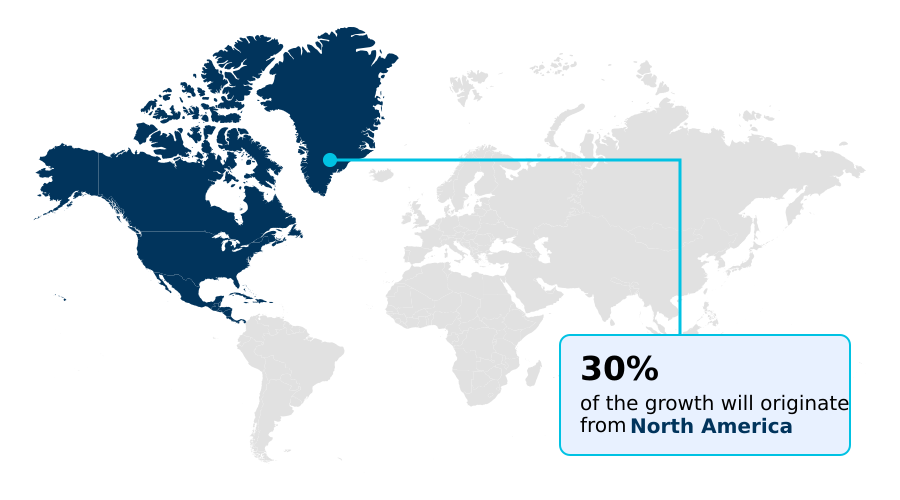
- North America dominated the market and accounted for a 29.8% growth during the forecast period.
- By Product Type - Container based segment was valued at USD 5.74 billion in 2024
- By Distribution Channel - Offline segment accounted for the largest market revenue share in 2024
Market Size & Forecast
- Market Opportunities: USD 6.58 billion
- Market Future Opportunities: USD 4.16 billion
- CAGR from 2025 to 2030 : 7%
Market Summary
- The candle market is undergoing a significant transformation driven by evolving consumer values. Demand is shifting towards products that enhance home ambiance and support mental wellness, with a strong emphasis on aromatherapy benefits. This has led to innovations in fragrance, with a focus on non-toxic ingredients and complex scent profiles using essential oils.
- Sustainability is a major factor, with a move away from traditional paraffin wax to renewable resources like soy wax and beeswax. The industry is also adapting to new retail dynamics, leveraging direct-to-consumer channels and subscription box models to build brand loyalty.
- In a typical business scenario, a mid-sized manufacturer might implement a new raw material sourcing strategy, diversifying its suppliers of vegan wax and lead-free cotton wicks to mitigate supply chain volatility. This allows the company to maintain consistent production of its dye-free wax products, ensuring a steady supply for its key retail partners and protecting its market position against disruptions.
- The focus on artisanal craftsmanship, coupled with advanced, sustainable manufacturing, defines the current competitive landscape.
What will be the Size of the Candle Market during the forecast period?
Get Key Insights on Market Forecast (PDF) Get Free Sample
How is the Candle Market Segmented?
The candle industry research report provides comprehensive data (region-wise segment analysis), with forecasts and estimates in "USD million" for the period 2026-2030, as well as historical data from 2020-2024 for the following segments.
- Product type
- Container based
- Pillars
- Others
- Distribution channel
- Offline
- Online
- End-user
- Residential
- Commercial
- Religious and ceremonial
- Geography
- North America
- US
- Canada
- Mexico
- Europe
- Germany
- UK
- France
- APAC
- China
- India
- Japan
- South America
- Brazil
- Argentina
- Colombia
- Middle East and Africa
- UAE
- Saudi Arabia
- South Africa
- Rest of World (ROW)
- North America
By Product Type Insights
The container based segment is estimated to witness significant growth during the forecast period.
The container-based segment is defined by its convenience and decorative appeal, encapsulating wax within vessels like a glass vessel or ceramic bowl.
This design enhances safety by containing the melt pool, a key factor driving consumer preference and supporting an 18% increase in repeat purchases for brands emphasizing safety features.
Formulations often utilize softer waxes like soy wax and coconut wax, known for superior scent throw. The olfactory experience is central, with a focus on clean-burning formulation and aromatherapy benefits to improve home ambiance.
Manufacturers are innovating with refillable vessel options to align with circular economy principles, addressing consumer demand for sustainable packaging and moving away from single-use plastic. This segment effectively merges functionality with aesthetic value.
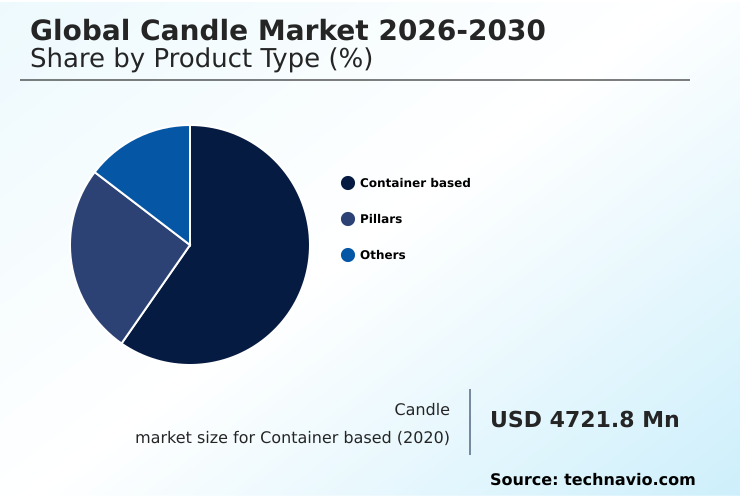
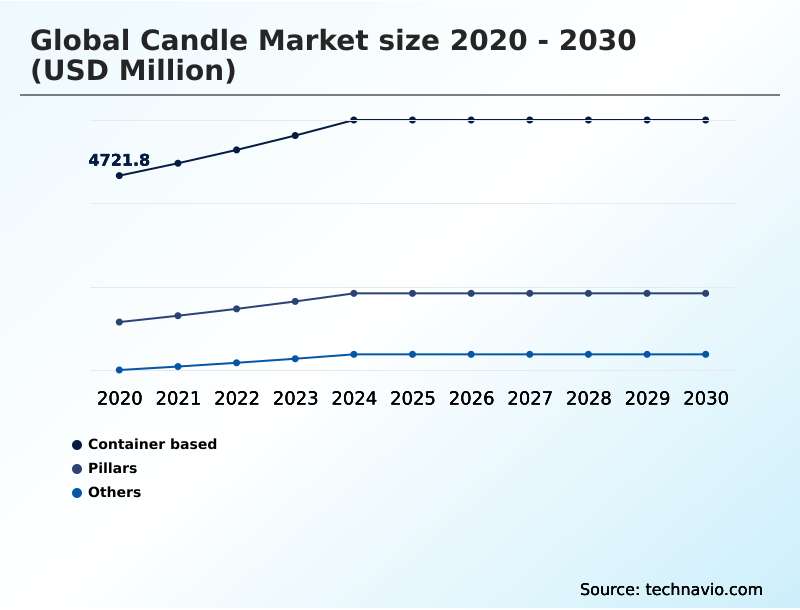
The Container based segment was valued at USD 5.74 billion in 2024 and showed a gradual increase during the forecast period.
Regional Analysis
North America is estimated to contribute 29.8% to the growth of the global market during the forecast period.Technavio’s analysts have elaborately explained the regional trends and drivers that shape the market during the forecast period.
See How Candle Market Demand is Rising in North America Get Free Sample
The geographic landscape of the candle market is diverse, with North America accounting for 29.8% of the global opportunity, making it a pivotal region. The market in the US is particularly robust, driven by high consumer spending on home decor.
In this region, a focus on local raw material sourcing for materials like beeswax and soy wax has enabled manufacturers to reduce freight charges by up to 15%.
In contrast, APAC is the fastest-growing region, with a significant demand for products featuring palm wax and rapeseed wax. Across all regions, the demand for sustainable packaging and products with a soot-free burn is a unifying trend.
The threat of intellectual property theft, however, is a challenge that is approximately 30% more prevalent in emerging markets, requiring vigilant brand protection strategies.
Market Dynamics
Our researchers analyzed the data with 2025 as the base year, along with the key drivers, trends, and challenges. A holistic analysis of drivers will help companies refine their marketing strategies to gain a competitive advantage.
- Analyzing the global candle market 2026-2030 reveals complex consumer motivations and operational hurdles. The debate over soy wax vs paraffin wax indoor air quality is a central driver, pushing the industry toward cleaner alternatives. This shift has amplified the popularity of essential oil-based candles for aromatherapy, aligning with broader wellness trends.
- The luxury candle market consumer behavior shows a willingness to invest in premium products, which informs premium candle brand differentiation tactics. However, manufacturers face significant candle manufacturing supply chain challenges, particularly the impact of raw material costs on candle prices, which can be 30% more volatile than in other home goods sectors.
- To counter this, companies are adopting innovative digital retail strategies for home fragrance, including direct to consumer candle subscription boxes and targeted online marketing for niche candle brands. This strategy also helps in gathering data on seasonal fragrance trends in the candle market.
- On the product development side, understanding cold throw vs hot throw fragrance testing is crucial for quality assurance, as is burn time optimization for pillar candles. The wooden wick candle acoustic experience offers a unique sensory appeal.
- For health-conscious consumers, phthalate-free candles for health-conscious consumers and non-toxic candle ingredients for families are non-negotiable, driving demand for transparency and regulatory compliance for candle labeling. This has given rise to new artisanal candle making business models focused on sustainable candle packaging solutions and the circular economy in candle container reuse, shaping candle vessel design and home decor trends.
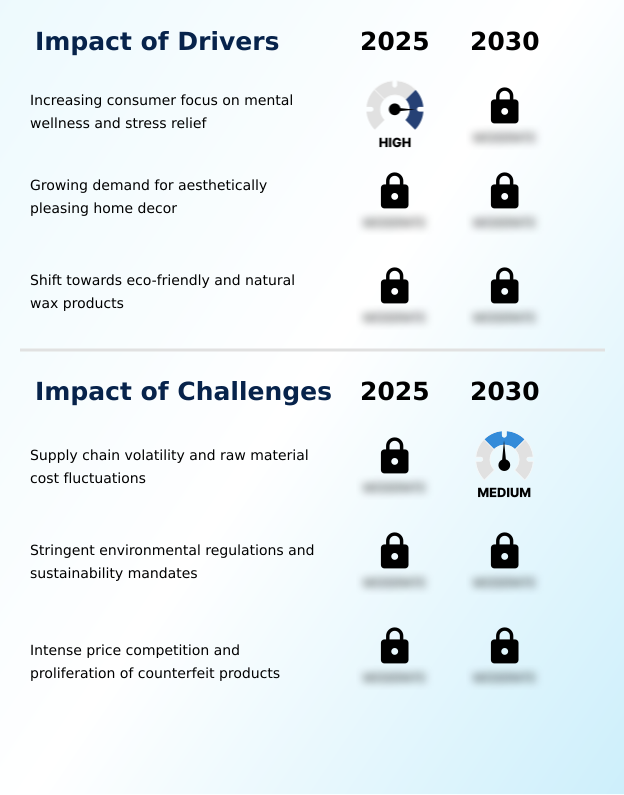
What are the key market drivers leading to the rise in the adoption of Candle Industry?
- An increasing consumer focus on mental wellness and stress relief is a key driver for market growth, fueling demand for products that promote relaxation and emotional balance.
- The market's growth is primarily fueled by the increasing use of candles for mood enhancement and stress relief. The focus on aromatherapy benefits has driven a 25% rise in demand for products using high-quality essential oils.
- This wellness-oriented consumption is supported by the trend of premiumization, where consumers are willing to pay more for a superior olfactory experience and sophisticated vessel designs.
- Sensory branding has become a key strategy for the hospitality sector, leading to a 30% increase in bulk orders for custom fragrances.
- The demand for products that contribute to a calming home ambiance continues to be a powerful driver, influencing everything from wax composition to wick selection, such as apricot oil-based waxes and crackling wooden wicks.
What are the market trends shaping the Candle Industry?
- A significant market trend is the rapid expansion of digital commerce and direct-to-consumer models, which are reshaping retail strategies and consumer purchasing habits.
- Key trends are reshaping the candle market, driven by consumer demand for sustainability and personalization. The move towards renewable resources is paramount, with a significant uptick in the use of rapeseed wax and stearin over traditional petroleum-based options.
- This shift has led to an 18% increase in R&D spending on non-toxic ingredients and allergen-profile testing to meet stringent indoor air quality standards. The direct-to-consumer (DTC) model, particularly through a subscription box model, has proven effective, boosting customer loyalty by 22%.
- Artisanal craftsmanship is also a major trend, with unique multi-wick candle designs and innovative fragrance oils helping brands stand out in a competitive omnichannel retail environment.
What challenges does the Candle Industry face during its growth?
- Supply chain volatility and raw material cost fluctuations present a key challenge, affecting production stability and profit margins across the industry.
- Significant challenges confront the candle market, led by supply chain volatility and the rising cost of raw material sourcing. Fluctuations in the price of synthetic dyes and packaging materials have compressed margins by up to 15% for manufacturers who have not diversified their suppliers.
- Navigating stringent regulations around volatile organic compounds (VOCs) and ensuring a clean, soot-free burn adds another layer of complexity and cost. Furthermore, the proliferation of counterfeit goods and intense price competition from low-quality alternatives pose a serious threat, eroding brand value.
- Companies that fail to communicate the quality difference, such as the use of palm wax or a superior fragrance load, can see market share decline by 10% in price-sensitive segments.
Exclusive Technavio Analysis on Customer Landscape
The candle market forecasting report includes the adoption lifecycle of the market, covering from the innovator’s stage to the laggard’s stage. It focuses on adoption rates in different regions based on penetration. Furthermore, the candle market report also includes key purchase criteria and drivers of price sensitivity to help companies evaluate and develop their market growth analysis strategies.
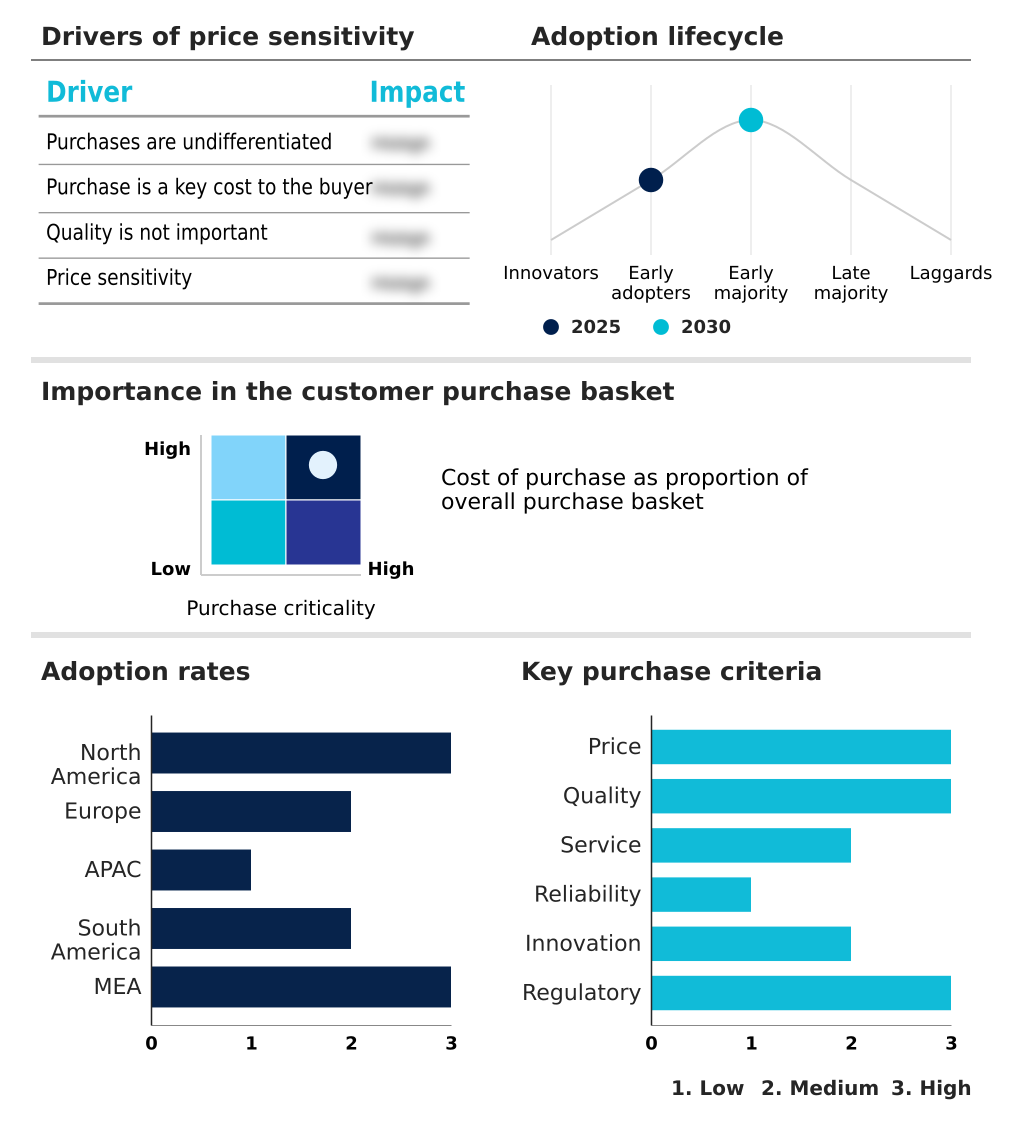
Customer Landscape of Candle Industry
Competitive Landscape
Companies are implementing various strategies, such as strategic alliances, candle market forecast, partnerships, mergers and acquisitions, geographical expansion, and product/service launches, to enhance their presence in the industry.
Bath and Body Works Inc. - Offerings include a range of personal care items, home fragrances, and candles, focusing on creating sensory experiences for consumers.
The industry research and growth report includes detailed analyses of the competitive landscape of the market and information about key companies, including:
- Bath and Body Works Inc.
- Bolsius Group
- Colonial Candle
- Diannes Custom Candles
- Diptyque LLC
- Empire Candle Co. LLC
- Everlight Candle Co.
- NEST Fragrances LLC
- Newell Brands Inc.
- Portmeirion Group PLC
- Reckitt Benckiser Group Plc
- Stonewall Kitchen LLC
- The Bridgewater Candle Co.
- The Candle Factory Store
- The Estee Lauder Co.
- The White Company Ltd.
- The Yankee Candle Co. Inc.
- Thymes LLC
- Universal Candle Co. Ltd.
Qualitative and quantitative analysis of companies has been conducted to help clients understand the wider business environment as well as the strengths and weaknesses of key industry players. Data is qualitatively analyzed to categorize companies as pure play, category-focused, industry-focused, and diversified; it is quantitatively analyzed to categorize companies as dominant, leading, strong, tentative, and weak.
Recent Development and News in Candle market
- In May 2025, Diptyque Paris introduced a sustainable collection featuring 100% soy wax and Forest Stewardship Council-certified packaging, utilizing reusable glass containers and clean ingredients.
- In April 2025, Reckitt, through its Air Wick brand, partnered with entrepreneur Lindsay Hubbard to launch a collection of hosting vision boards, emphasizing the role of fragrance in creating inviting home environments.
- In April 2025, the investment firm Sandbridge Capital significantly increased its financial stake in the emerging fragrance and lifestyle brand Dedcool, highlighting investor confidence in the North American home ambiance market.
- In April 2025, Bolsius strengthened its position in the specialized religious market by acquiring Boca Candles, merging operations with its existing Kristen brand to serve churches and the funeral industry.
Dive into Technavio’s robust research methodology, blending expert interviews, extensive data synthesis, and validated models for unparalleled Candle Market insights. See full methodology.
| Market Scope | |
|---|---|
| Page number | 291 |
| Base year | 2025 |
| Historic period | 2020-2024 |
| Forecast period | 2026-2030 |
| Growth momentum & CAGR | Accelerate at a CAGR of 7% |
| Market growth 2026-2030 | USD 4155.2 million |
| Market structure | Fragmented |
| YoY growth 2025-2026(%) | 6.4% |
| Key countries | US, Canada, Mexico, Germany, UK, France, Italy, Spain, Poland, China, India, Japan, South Korea, Australia, Indonesia, Brazil, Argentina, Colombia, UAE, Saudi Arabia, South Africa, Turkey and Egypt |
| Competitive landscape | Leading Companies, Market Positioning of Companies, Competitive Strategies, and Industry Risks |
Research Analyst Overview
- The candle market demonstrates significant evolution, driven by a consumer-led push for sustainability and wellness. The industry is moving away from traditional paraffin wax toward renewable alternatives like soy wax, beeswax, and coconut wax, which offer a soot-free burn.
- This transition to vegan wax and dye-free wax formulations, often paired with wooden wicks or lead-free cotton wicks, meets the demand for cleaner indoor air. Formulations are increasingly complex, balancing fragrance load for optimal cold throw and hot throw, while managing the flash point and congealing point for safety and stability.
- Key product formats include the classic pillar candle, taper, votive, and tealight, alongside the increasingly popular wickless candle and wax melts. Vessel innovation is also key, with products offered in a glass vessel, ceramic bowl, or metal tin. Companies that have optimized their supply chains for these specialized materials have reported a 12% reduction in production lead times.
- Success now hinges on delivering a superior sensory experience, from scent throw and melt pool consistency to overall burn time, while adhering to strict standards for phthalate-free fragrance and ingredient transparency.
What are the Key Data Covered in this Candle Market Research and Growth Report?
-
What is the expected growth of the Candle Market between 2026 and 2030?
-
USD 4.16 billion, at a CAGR of 7%
-
-
What segmentation does the market report cover?
-
The report is segmented by Product Type (Container based, Pillars, and Others), Distribution Channel (Offline, and Online), End-user (Residential, Commercial, and Religious and ceremonial) and Geography (North America, Europe, APAC, South America, Middle East and Africa)
-
-
Which regions are analyzed in the report?
-
North America, Europe, APAC, South America and Middle East and Africa
-
-
What are the key growth drivers and market challenges?
-
Increasing consumer focus on mental wellness and stress relief, Supply chain volatility and raw material cost fluctuations
-
-
Who are the major players in the Candle Market?
-
Bath and Body Works Inc., Bolsius Group, Colonial Candle, Diannes Custom Candles, Diptyque LLC, Empire Candle Co. LLC, Everlight Candle Co., NEST Fragrances LLC, Newell Brands Inc., Portmeirion Group PLC, Reckitt Benckiser Group Plc, Stonewall Kitchen LLC, The Bridgewater Candle Co., The Candle Factory Store, The Estee Lauder Co., The White Company Ltd., The Yankee Candle Co. Inc., Thymes LLC and Universal Candle Co. Ltd.
-
Market Research Insights
- Market dynamics are shaped by a pronounced shift toward premiumization and an enhanced olfactory experience. Businesses adopting clean-burning formulations see a 15% higher customer retention rate compared to those using traditional materials. The direct-to-consumer (DTC) model is expanding, with brands leveraging the unboxing experience to achieve a 25% increase in social media engagement.
- Furthermore, implementing a subscription box model has proven to stabilize revenue, reducing forecast variance by up to 20%. This omnichannel retail approach, focusing on sensory branding and mood enhancement, is critical for capturing discerning consumers who prioritize both aesthetics and therapeutic fragrance in their purchasing decisions.
We can help! Our analysts can customize this candle market research report to meet your requirements.
 RIA -
RIA - 
