


Chlorine Dioxide Disinfectant Market Size 2024-2028
The chlorine dioxide disinfectant market size is forecast to increase by USD 276.59 million at a CAGR of 5.9% between 2023 and 2028.
- The market is witnessing significant growth due to several key factors. Increased government regulations mandating stringent disinfection practices in healthcare facilities, particularly in hospitals, are driving market growth. The rising awareness about the prevalence and transmission of infectious diseases, including COVID-19, is also fueling the demand for effective disinfectants, with chlorine dioxide gaining popularity due to its broad-spectrum antimicrobial properties. Additionally, the availability of alternatives to chlorine dioxide disinfectants, such as hydrogen peroxide and quaternary ammonia, is posing challenges to market growth as they offer similar disinfection capabilities. However, the unique advantages of chlorine dioxide, such as its ability to penetrate biofilms and leave no residual chemicals, make it a preferred choice for many applications.
What will the size of the market be during the forecast period?

- Chlorine disinfectants have long been a staple in sanitation and hygiene practices, particularly in public facilities such as swimming pools and water treatment plants. These antimicrobial agents effectively eliminate pathogens that cause waterborne diseases, ensuring clean water for various applications. Chlorine dioxide, a powerful oxidizing agent, has gained popularity due to its ability to disinfect without leaving taste profiles or forming trihalomethanes, like organochlorine compounds. Chlorine dioxide is effective against a broad spectrum of pathogens, making it an ideal choice for industrial activities, including poultry processing and wastewater treatment. Its use in electrolytic disinfection enhances its efficiency and safety.
- In water treatment, chlorine dioxide plays a crucial role in maintaining water quality by eliminating bacteria, viruses, and parasites. However, it's essential to consider the potential environmental impact of using chemicals for disinfection. Chlorine dioxide can react with organic matter and form harmful by-products, contributing to pollution if not properly managed. Therefore, it's crucial to adhere to disinfection practices that ensure safe drinking water while minimizing the risk of industrial waste and waterborne diseases.
How is this market segmented and which is the largest segment?
The market research report provides comprehensive data (region-wise segment analysis), with forecasts and estimates in "USD million" for the period 2024-2028, as well as historical data from 2018-2022 for the following segments.
- Type
- Liquid
- Gas
- Solid
- Application
- Water treatment
- Food and beverages
- Healthcare
- Others
- Geography
- North America
- US
- Europe
- Germany
- UK
- APAC
- China
- India
- South America
- Middle East and Africa
- North America
By Type Insights
- The liquid segment is estimated to witness significant growth during the forecast period.
Chlorine dioxide, a potent chlorine disinfectant, plays a crucial role in maintaining sanitation and hygiene in various sectors, including public facilities, water treatment plants, and swimming pools. Its application ensures the elimination of pathogens, thereby contributing to clean water and effective disinfection practices. Industrial activities, such as poultry processing, also utilize chlorine dioxide for wastewater treatment to prevent health risks associated with waterborne diseases and healthcare-associated infections (HAIs). The oxidation process employed by chlorine dioxide results in minimal formation of disinfection byproducts (DBPs), making it an attractive alternative to traditional chlorine-based disinfectants. Advancements in membrane technologies, including membrane filtration, reverse osmosis (RO), and membrane bioreactors (MBRs), have enabled smart delivery systems for chlorine dioxide, enhancing its application scope.
Furthermore, the automotive sector also employs chlorine dioxide for industrial wastewater treatment, ensuring freshwater availability. Despite its benefits, water scarcity remains a significant challenge, necessitating water conservation efforts and the development of more efficient disinfection solutions.
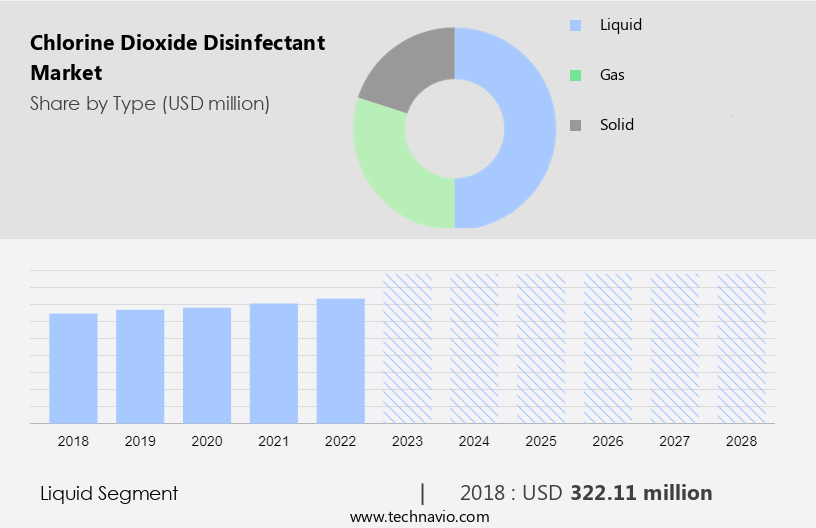
Get a glance at the market report of share of various segments Request Free Sample
The liquid segment was valued at USD 322.11 million in 2018 and showed a gradual increase during the forecast period.
Regional Analysis
- North America is estimated to contribute 32% to the growth of the global market during the forecast period.
Technavio's analysts have elaborately explained the regional trends and drivers that shape the market during the forecast period.
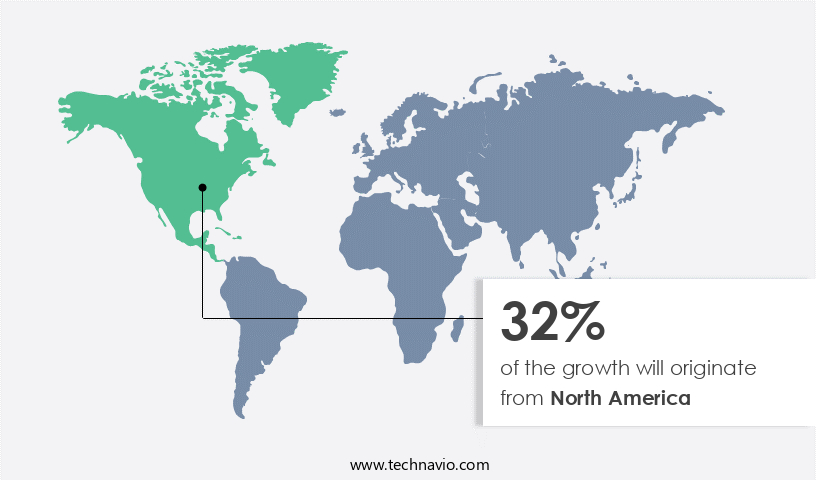
For more insights on the market share of various regions Request Free Sample
The market in North America is projected to dominate the global industry landscape due to the increasing focus on sustainable practices and the growing demand for clean water. With population growth and rapid industrialization, there is a significant need for effective water treatment solutions to ensure the safety and quality of water supplies. Chlorine dioxide, as a potent biocide, plays a crucial role in water treatment by eliminating waterborne diseases and contaminants, including bacteria and viruses. Strict environmental regulations aimed at reducing water pollution and industrial waste are also driving the market's expansion in the region. In addition, the increasing demand for water reuse in various industries, such as food and beverage and electric power generation, is further fueling the market's growth.
However, concerns over the toxic effects of organochlorine compounds, including chlorine dioxide, and health hazards associated with their use are potential challenges that market participants must address. The fast food industry's growing demand for clean water and stringent regulations in industrial water treatment is expected to provide significant opportunities for market growth. Electric vehicles increasing popularity and the shift towards renewable energy sources may also impact the market's trajectory in the future.
Market Dynamics
Our researchers analyzed the data with 2023 as the base year, along with the key drivers, trends, and challenges. A holistic analysis of drivers will help companies refine their marketing strategies to gain a competitive advantage.
What are the key market drivers leading to the rise in the adoption of the Chlorine Dioxide Disinfectant Market?
Increased government regulations regarding disinfection in hospitals is the key driver of the market.
- Chlorine disinfectants, such as Chlorine Dioxide, play a crucial role in maintaining sanitation and hygiene in various sectors including public facilities, water treatment plants, swimming pools, and industrial activities. With a growing focus on water quality and disinfection practices, Chlorine Dioxide has emerged as an effective disinfection solution for eliminating pathogens like bacteria, viruses, and fungi. In the healthcare sector, the increasing number of cases of healthcare-associated infections (HAIs) has led regulatory bodies like the Centers for Disease Control and Prevention (CDC), the Occupational Safety and Health Administration (OSHA), and the US Environmental Protection Agency (EPA) to enforce regulations on disinfection.
- Chlorine Dioxide is used to sterilize tools, surfaces, and medical and lab equipment in hospitals to reduce the risk of HAIs. This oxidation process is also employed in water treatment, including wastewater treatment, to ensure clean water for various industries, including tourism and poultry processing, as well as for safe drinking water. Chlorine Dioxide is also used in industrial wastewater treatment, water conservation, and freshwater availability initiatives. Its use in membrane technologies like membrane filtration, reverse osmosis (RO), and membrane bioreactors (MBRs) has further increased its popularity due to smart delivery systems and its ability to minimize the formation of disinfection byproducts (DBPs).
What are the market trends shaping the Chlorine Dioxide Disinfectant Market?
Rising awareness about infectious diseases is the upcoming trend in the market.
- Chlorine disinfectants have long been utilized in various sectors, including sanitation and hygiene, to ensure clean water and maintain effective disinfection practices. Public facilities such as swimming pools and water treatment plants rely on chlorine disinfectants to eliminate pathogens and ensure water quality. Industrial activities, including poultry processing, also utilize chlorine disinfectants to control microorganisms and prevent the spread of waterborne diseases. Chlorine dioxide, a potent oxidizing agent, is gaining popularity as an effective disinfection solution due to its ability to eliminate a wide range of pathogens, including bacteria, viruses, and parasites. This is particularly important in the context of the COVID-19 pandemic, which has highlighted the critical role that disinfection plays in disease prevention.
- Membrane technologies, such as membrane filtration, reverse osmosis (RO), and membrane bioreactors (MBRs), are increasingly being used in water treatment to ensure clean water and reduce the formation of disinfection byproducts (DBPs). Chlorine dioxide, which does not form DBPs, is an attractive alternative to traditional chlorine disinfectants. The importance of clean water extends beyond public health initiatives. The tourism industry, for instance, relies on clean water for recreational activities such as swimming and water sports. Chlorine dioxide disinfectants are also used in the automotive sector for wastewater treatment and in the production of antimicrobial agents. Water scarcity is a growing concern, and the need for water conservation has led to the development of smart delivery systems for chlorine dioxide disinfectants.
What challenges does the Chlorine Dioxide Disinfectant Market face during its growth?
Availability of alternatives to chlorine dioxide disinfectants is a key challenge affecting the market growth.
- Chlorine disinfectants have long been utilized for sanitation and hygiene applications in various sectors, including public facilities, water treatment plants, and swimming pools, to ensure water quality and maintain effective disinfection practices against pathogens. Chlorine Dioxide, a potent oxidizing agent, has gained popularity due to its ability to effectively eliminate bacteria, viruses, and other contaminants. However, the use of chlorine disinfectants, including Chlorine Dioxide, can lead to the formation of disinfection byproducts (DBPs), which may pose health concerns. Membrane technologies, such as membrane filtration, reverse osmosis (RO), and membrane bioreactors (MBRs), have emerged as viable alternatives to chlorine disinfection.
- Membrane processes and UV radiation are particularly noteworthy, as they can effectively remove bacteria, viruses, protozoa, and other chemical contaminants. UV irradiation is capable of inactivating viruses, bacteria, and protozoan parasites, while membrane processes utilize a membrane barrier to filter or remove particles from water. Industrial activities, including poultry processing and wastewater treatment, also contribute to water contamination. Chlorine-treated wastewater from these industries can impact freshwater availability and contribute to health concerns, such as waterborne diseases and healthcare-associated infections (HAI). tourism industry, which relies on clean water for recreational activities, is also affected by these issues. Membrane processes and UV radiation offer potential solutions for addressing these challenges.
Exclusive Customer Landscape
The market forecasting report includes the adoption lifecycle of the market, covering from the innovator's stage to the laggard's stage. It focuses on adoption rates in different regions based on penetration. Furthermore, the market report also includes key purchase criteria and drivers of price sensitivity to help companies evaluate and develop their market growth analysis strategies.
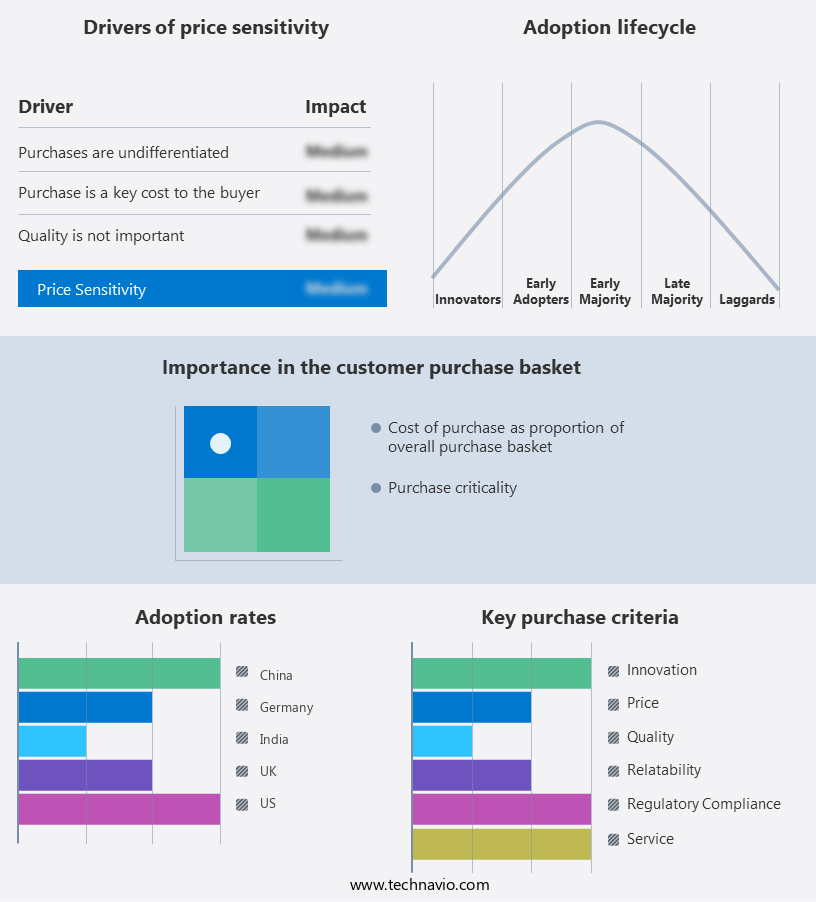
Customer Landscape
Key Companies & Market Insights
Companies are implementing various strategies, such as strategic alliances, market forecast, partnerships, mergers and acquisitions, geographical expansion, and product/service launches, to enhance their presence in the market. The market research and growth report includes detailed analyses of the competitive landscape of the market and information about key companies, including:
- Accepta Ltd.
- AquaPulse Systems
- Beckart Environmental International Ltd.
- DuPont de Nemours Inc.
- Ecolab Inc.
- Feedwater Ltd.
- Grundfos Holding AS
- Kemin Industries Inc.
- Kurita Water Industries Ltd.
- Lanxess AG
- Lenntech BV
- Nitto Denko Corp.
- ProMinent GmbH
- Quip Labs
- Scotmas Group Ltd.
- SVS Aqua Technologies
- The Lubrizol Corp.
- VASU CHEMICALS LLP
- Veolia Environnement SA
- Xylem Inc.
Qualitative and quantitative analysis of companies has been conducted to help clients understand the wider business environment as well as the strengths and weaknesses of key market players. Data is qualitatively analyzed to categorize companies as pure play, category-focused, industry-focused, and diversified; it is quantitatively analyzed to categorize companies as dominant, leading, strong, tentative, and weak.
Research Analyst Overview
Chlorine disinfectants continue to play a crucial role in ensuring cleanliness and hygiene in various sectors, including sanitation, public facilities, and water treatment plants. In swimming pools and water treatment plants, chlorine disinfectants are widely used for disinfection practices to eliminate pathogens and maintain water quality. Industrial activities, such as poultry processing, also rely on chlorine disinfectants to control bacteria and ensure safe production. Chlorine dioxide, a type of chlorine disinfectant, is gaining popularity due to its effectiveness against a broad spectrum of pathogens. It is particularly useful in water treatment, including wastewater treatment, to remove contaminants and ensure safe water for domestic and industrial use.
Furthermore, membrane technologies, such as membrane filtration, reverse osmosis (RO), and membrane bioreactors (MBRs), are increasingly being used in conjunction with chlorine disinfectants to enhance water treatment processes and reduce disinfection byproducts (DBPs). Chlorine dioxide is also used in smart delivery systems for efficient and targeted disinfection. Water scarcity and the need for effective disinfection solutions have led to the growth of the market. The market is also driven by public health initiatives to prevent waterborne diseases and healthcare-associated infections (HAIs). The tourism industry, automotive sector, and chemicals industry are other significant end-users of chlorine disinfectants. Chlorine dioxide is also used as an antimicrobial agent in various applications, including industrial wastewater treatment and freshwater availability. However, concerns over taste profiles and the formation of disinfection byproducts (DBPs) during the use of chlorine disinfectants may limit market growth.
|
Market Scope |
|
|
Report Coverage |
Details |
|
Page number |
171 |
|
Base year |
2023 |
|
Historic period |
2018-2022 |
|
Forecast period |
2024-2028 |
|
Growth momentum & CAGR |
Accelerate at a CAGR of 5.9% |
|
Market Growth 2024-2028 |
USD 276.59 million |
|
Market structure |
Fragmented |
|
YoY growth 2023-2024(%) |
4.9 |
|
Key countries |
US, China, India, Germany, and UK |
|
Competitive landscape |
Leading Companies, Market Positioning of Companies, Competitive Strategies, and Industry Risks |
What are the Key Data Covered in this Market Research and Growth Report?
- CAGR of the market during the forecast period
- Detailed information on factors that will drive the market growth and forecasting between 2024 and 2028
- Precise estimation of the size of the market and its contribution of the market in focus to the parent market
- Accurate predictions about upcoming market growth and trends and changes in consumer behaviour
- Growth of the market across North America, Europe, APAC, South America, and Middle East and Africa
- Thorough analysis of the market's competitive landscape and detailed information about companies
- Comprehensive analysis of factors that will challenge the growth of market companies
We can help! Our analysts can customize this market research report to meet your requirements. Get in touch
 RIA -
RIA - 
