



Cloud Robotics Market Size 2024-2028
The cloud robotics market size is forecast to increase by USD 13.24 billion at a CAGR of 26.35% between 2023 and 2028.
- The market is experiencing significant growth, driven primarily by the rising potential of telepresence robots. These robots enable remote operation and interaction, offering advantages in industries such as healthcare, education, industrial and manufacturing robots.. However, the market also faces challenges, including the lack of technical expertise required for implementation and integration of cloud robotics systems. This can hinder adoption and implementation, particularly for smaller businesses or organizations with limited resources. To capitalize on market opportunities, companies should focus on providing user-friendly solutions and offering support services to help customers navigate the technical complexities of cloud robotics.
- Additionally, collaborations and partnerships with technology providers and system integrators can help bridge the gap in expertise and accelerate market penetration. Overall, the market presents a strategic landscape of growth opportunities and challenges, requiring companies to balance innovation and support to effectively serve customers and compete in the market.
What will be the Size of the Cloud Robotics Market during the forecast period?
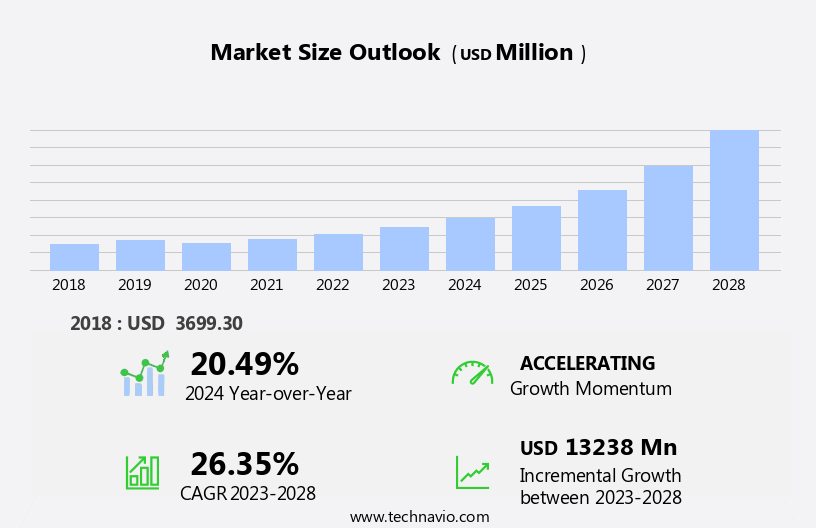
- The market continues to evolve, driven by the integration of various technologies and their applications across diverse sectors. Mobile robots, task automation, enhanced safety, and robotic ethics are at the forefront of this dynamic landscape. These innovations enable reduced risk through remote control, deep learning, data analytics, and predictive maintenance. Robotic software, including open-source solutions, artificial intelligence, human-robot collaboration, and robotic process automation, are transforming industries. Object recognition, natural language processing, computer vision, and data privacy are essential components of advanced robotic systems. Robotic integration, path planning, edge computing, and improved quality are critical aspects of robotic hardware development.
- The ongoing unfolding of market activities reveals evolving patterns in smart cities, efficiency gains, and regulatory compliance. Robotic security and regulatory compliance are increasingly important considerations in the deployment of industrial and service robots. Cloud robotics platforms are revolutionizing the way robots are designed, built, and operated, offering significant cost savings and increased productivity. The future of robotics is characterized by continuous innovation and integration of these technologies, shaping a more efficient, safe, and productive world.
How is this Cloud Robotics Industry segmented?
The cloud robotics industry research report provides comprehensive data (region-wise segment analysis), with forecasts and estimates in "USD million" for the period 2024-2028, as well as historical data from 2018-2022 for the following segments.
- Application
- Industrial
- Services industry
- Product
- Software
- Hardware
- Services
- Deployment Type
- Public Cloud
- Private Cloud
- Hybrid Cloud
- End-User
- Manufacturing
- Healthcare
- Logistics
- Retail
- Technology Specificity
- Industrial Robotics
- Service Robotics
- Collaborative Robotics
- Geography
- North America
- US
- Mexico
- Europe
- France
- Germany
- Italy
- Spain
- UK
- Middle East and Africa
- UAE
- APAC
- Australia
- China
- India
- Japan
- South Korea
- South America
- Brazil
- Rest of World (ROW)
- North America
By Application Insights
The industrial segment is estimated to witness significant growth during the forecast period.
The industrial robot market encompasses robots utilized in various sectors including automotive, metals and machinery, electrical and electronics, chemicals, rubbers and plastics, food and beverages, glass and ceramics, paper and printing, textiles and apparel, and more. These robots are predominantly employed for applications such as material handling, assembling and disassembling, welding and soldering, cutting, deburring, grinding, painting, sealing, bonding, and clean room processes. SMEs are a significant driving force behind the growth of this market. Manufacturers are increasingly adopting smart manufacturing methods that integrate robotics, automation, artificial intelligence (AI), and cloud computing. Industrial robots facilitate cost savings and productivity gains through automation of repetitive tasks, while enhancing safety and ensuring regulatory compliance.
Robotic services, including autonomous navigation, predictive maintenance, and remote control, are further augmenting the market's expansion. The integration of deep learning, data analytics, and open-source robotics into cloud robotics platforms is enabling advanced capabilities such as object recognition, natural language processing, computer vision, and human-robot collaborative robots. The market trends also include the development of smart cities, efficiency gains through robotic process automation, and the integration of edge computing and robotic hardware for improved quality and service robots. Additionally, robotic security and data privacy are becoming increasingly important considerations in the market.
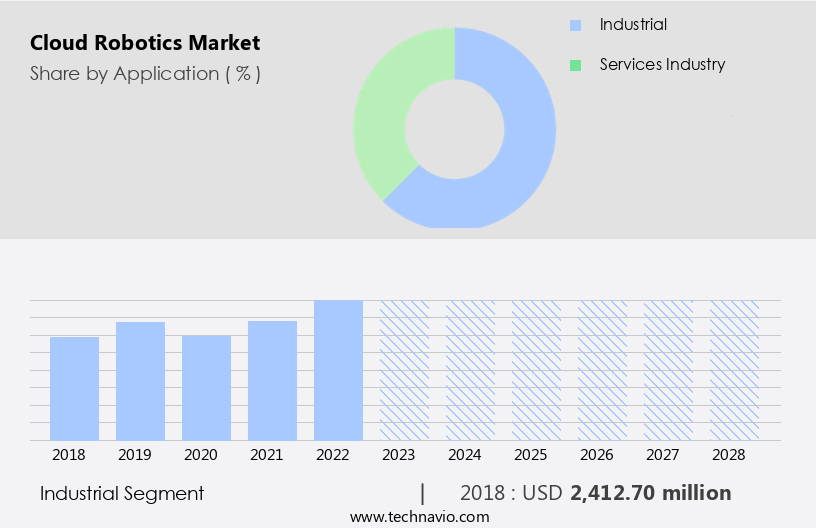
The Industrial segment was valued at USD 2.41 billion in 2018 and showed a gradual increase during the forecast period.
Regional Analysis
APAC is estimated to contribute 46% to the growth of the global market during the forecast period.Technavio's analysts have elaborately explained the regional trends and drivers that shape the market during the forecast period.

The robotics market in APAC is experiencing significant growth due to government initiatives to fund robotics innovations and the entry of international companies into markets like China, Japan, South Korea, Australia, Taiwan, India, and Hong Kong. While the medical sector will drive the majority of robot demand, cloud robotics is poised to expand in various non-manufacturing industries, including hospitality and tourism, agriculture, and education and research. In Japan, the aging population has led to increased robot adoption in sectors such as surgical healthcare, hospitality, and tourism. Cloud robotics, which involves using cloud computing for robot control, data analytics, and predictive maintenance, is a key trend driving efficiency gains and reduced risk in various industries.
Robotic services, including autonomous navigation, task automation, and human-robot collaboration, are also gaining popularity. Robotic hardware, software, and integration are essential components of cloud robotics platforms, which enable enhanced safety, improved quality, and regulatory compliance. Additionally, deep learning, object recognition, natural language processing, and computer vision are critical technologies in robotics, while data privacy and security are paramount concerns. Robotic ethics and open-source robotics are also emerging areas of focus. Edge computing and path planning are essential for optimizing robot performance and reducing latency. Overall, the robotics market is evolving rapidly, with advancements in artificial intelligence, machine learning, and the Internet of Things driving innovation and growth.
Market Dynamics
Our researchers analyzed the data with 2023 as the base year, along with the key drivers, trends, and challenges. A holistic analysis of drivers will help companies refine their marketing strategies to gain a competitive advantage.
The Global Cloud Robotics Market, projected to grow significantly, thrives with cloud robotics for manufacturing and AI-driven robotic systems. Cloud robotics market trends 2024 highlight collaborative robots with cloud and real-time robotic data processing. Robotics for warehouse automation and cloud robotics for logistics drive demand, per cloud robotics market forecast. Edge computing for robotics leverages cloud robotics with 5G connectivity, while robotics for smart factories enhances efficiency. Cloud robotics for healthcare and robotic process automation ensure scalability. Cloud robotics for retail, sustainable robotic solutions, and cloud robotics supply chain optimize performance. Robotics for industrial IoT, advanced cloud robotics technologies, cloud robotics for global markets, robotics for operational efficiency, and cloud robotics for B2B sectors fuel growth through 2028.
What are the key market drivers leading to the rise in the adoption of Cloud Robotics Industry?
- The primary advantage of cloud robotics, which includes enhanced computational capabilities, flexible deployment, and economical costs, is the key driver propelling the growth of the market.
- Cloud robotics is gaining traction as end-users seek to overcome limitations of industrial and service robots, such as cost, computational capacity, storage, size, power supply, motion mode, and working environment. By adopting cloud computing, robotic systems can access the vast computational power, storage, and communications resources found in modern data centers. This not only reduces overheads associated with maintenance and software updates but also enables the offloading of intensive processing tasks to the cloud. Furthermore, cloud robotics enhances data privacy by ensuring that sensitive information is processed and stored securely in the cloud.
- Robotic integration with edge computing allows for real-time decision making and improved quality, while regulatory compliance and robotic security are also prioritized through cloud-based solutions. Robotic platforms that leverage cloud robotics offer advanced path planning capabilities, making them ideal for complex manufacturing processes and service robots in various industries.
What are the market trends shaping the Cloud Robotics Industry?
- Telepresence robots are gaining increasing popularity in the business world, representing a significant market trend. This technology enables remote participation in professional settings as if the user is physically present.
- Cloud Robotics, a fusion of machine learning and the Internet of Things (IoT), is revolutionizing robotic services by enabling autonomous navigation and increased productivity through cloud computing. Robotic standards are being set to facilitate seamless integration of cloud robotics into industrial robotic deployments. Advanced machine learning algorithms enable robots to learn and adapt to new environments, reducing the need for manual programming. Cloud computing provides cost savings by eliminating the need for on-premises hardware and infrastructure. Robots can access real-time data and analytics from the cloud, enabling them to make informed decisions and optimize performance.
- Autonomous navigation and remote monitoring are also facilitated through cloud robotics, allowing for increased efficiency and flexibility in manufacturing and logistics applications. The market for cloud robotics is expected to grow significantly due to the benefits it offers. Robotic services are becoming increasingly essential for industries seeking to improve productivity and reduce costs. Cloud robotics is poised to play a key role in this trend, with its ability to provide advanced capabilities and scalability at a lower cost than traditional robotic systems. In conclusion, recent research indicates that cloud robotics is a promising technology that is gaining traction in various industries.
- Its ability to enable machine learning, autonomous navigation, and increased productivity through cloud computing is driving its adoption. As more companies explore the benefits of cloud robotics, we can expect to see widespread deployment in manufacturing, logistics, and other sectors.
What challenges does the Cloud Robotics Industry face during its growth?
- The absence of technical expertise poses a significant challenge to the industry's growth trajectory. Cloud robotics, a technology that enables robots to be controlled and managed through the internet, is revolutionizing task automation across various industries. Mobile robots, a significant component of cloud robotics, offer enhanced safety and reduced risk by performing repetitive and dangerous tasks. However, the adoption of cloud robotics faces a challenge due to the technical expertise required to operate and maintain the robots. End-users need to understand the robots' functioning and periodic servicing to ensure smooth operations. This lack of technical knowledge often deters potential adopters, as they view the downtime required for maintenance as a significant loss. Robotic companies are addressing this issue by providing remote control, deep learning, data analytics, and predictive maintenance through cloud robotics platforms.
- These enhanced services enable end-users to monitor and manage their robots from anywhere, reducing the need for on-site maintenance and minimizing downtime. Despite these efforts, not all companies offer these services, making it essential for end-users to assess potential providers carefully. In conclusion, while cloud robotics offers numerous benefits, the lack of technical expertise among end-users remains a significant challenge. Robotic companies must continue to innovate and provide enhanced services to overcome this hurdle and drive market growth.
Exclusive Customer Landscape
The cloud robotics market forecasting report includes the adoption lifecycle of the market, covering from the innovator's stage to the laggard's stage. It focuses on adoption rates in different regions based on penetration. Furthermore, the cloud robotics market report also includes key purchase criteria and drivers of price sensitivity to help companies evaluate and develop their market growth analysis strategies.

Customer Landscape
Key Companies & Market Insights
Companies are implementing various strategies, such as strategic alliances, cloud robotics market forecast, partnerships, mergers and acquisitions, geographical expansion, and product/service launches, to enhance their presence in the industry.
ABB Ltd. - The company specializes in cloud robotics technology, providing innovative solutions through offerings like ABB Ability. Our products are designed to enhance industrial automation and optimize business processes. By leveraging advanced algorithms and machine learning, we deliver robust and adaptive systems that streamline operations and improve efficiency. Our commitment to cutting-edge research and development ensures our clients remain at the forefront of technological advancements. Our cloud robotics solutions are engineered for seamless integration, allowing businesses to easily adopt and scale as needed. By focusing on user experience and reliability, we empower our clients to make data-driven decisions and drive operational excellence.
The industry research and growth report includes detailed analyses of the competitive landscape of the market and information about key companies, including:
- ABB Ltd.
- Amazon Web Services
- C3.ai
- CloudMinds
- Fanuc Corporation
- Google Cloud
- Hitachi Ltd.
- Huawei Technologies
- IBM Corporation
- Intel Corporation
- Kuka AG
- Microsoft Corporation
- NVIDIA Corporation
- Omron Corporation
- Ortelio Ltd.
- Rockwell Automation
- Siemens AG
- Universal Robots
- Wipro Limited
- Yaskawa Electric
Qualitative and quantitative analysis of companies has been conducted to help clients understand the wider business environment as well as the strengths and weaknesses of key industry players. Data is qualitatively analyzed to categorize companies as pure play, category-focused, industry-focused, and diversified; it is quantitatively analyzed to categorize companies as dominant, leading, strong, tentative, and weak.
Recent Development and News in Cloud Robotics Market
- In January 2024, Google announced the launch of its new cloud robotics platform, "Google Robotics," designed to provide businesses with advanced robotics solutions using Google Cloud services (Google, 2024). This offering aims to simplify the integration of robotics and artificial intelligence (AI) in various industries, marking a significant stride in the market.
- In March 2025, Amazon Web Services (AWS) and Microsoft Azure entered into a strategic partnership to collaborate on cloud robotics solutions, combining AWS RoboMaker and Microsoft Azure Robotics (Microsoft, 2025). This alliance is expected to accelerate the adoption of cloud robotics in manufacturing, logistics, and other sectors, as both tech giants bring their unique strengths to the table.
- In July 2024, SoftBank Robotics, a leading robotics company, raised a USD1.1 billion funding round led by Foxconn Technology Group (Bloomberg, 2024). The investment is aimed at expanding SoftBank Robotics' presence in the market and accelerating the development of its Pepper and NAO robots, which utilize cloud services for advanced AI capabilities.
Research Analyst Overview
The robotic market is experiencing significant growth and innovation, driven by the adoption of robotic solutions in various industries. Robotic training and education are becoming essential components of workforce development, fostering a robust robotic ecosystem. The future of robotics is shaped by digital twins and virtual simulations, enabling remote and cloud-based robotics. Robotic startups and venture capital investments continue to fuel innovation, addressing the challenges of robotic deployment and development. Robotic trends include the integration of artificial intelligence and machine learning, as well as the use of digital twins for predictive maintenance and optimization.
The robotic cloud and remote robotics are transforming industries, offering scalable and cost-effective solutions for businesses. Robotic research and development are advancing rapidly, creating new opportunities for robotic applications and a growing robotic workforce. The robotic market is poised for continued disruption and innovation, shaping the future of manufacturing, logistics, healthcare, and beyond.
Dive into Technavio's robust research methodology, blending expert interviews, extensive data synthesis, and validated models for unparalleled Cloud Robotics Market insights. See full methodology.
|
Market Scope |
|
|
Report Coverage |
Details |
|
Page number |
167 |
|
Base year |
2023 |
|
Historic period |
2018-2022 |
|
Forecast period |
2024-2028 |
|
Growth momentum & CAGR |
Accelerate at a CAGR of 26.35% |
|
Market growth 2024-2028 |
USD 13238 million |
|
Market structure |
Fragmented |
|
YoY growth 2023-2024(%) |
20.49 |
|
Key countries |
US, China, Germany, Japan, UK, Australia, India, France, Brazil, UAE, Rest of World (ROW), Saudi Arabia, France, South Korea, Mexico, Italy, and Spain |
|
Competitive landscape |
Leading Companies, Market Positioning of Companies, Competitive Strategies, and Industry Risks |
What are the Key Data Covered in this Cloud Robotics Market Research and Growth Report?
- CAGR of the Cloud Robotics industry during the forecast period
- Detailed information on factors that will drive the growth and forecasting between 2024 and 2028
- Precise estimation of the size of the market and its contribution of the industry in focus to the parent market
- Accurate predictions about upcoming growth and trends and changes in consumer behaviour
- Growth of the market across APAC, Europe, North America, Middle East and Africa, and South America
- Thorough analysis of the market's competitive landscape and detailed information about companies
- Comprehensive analysis of factors that will challenge the cloud robotics market growth of industry companies
We can help! Our analysts can customize this cloud robotics market research report to meet your requirements.
 RIA -
RIA - 
