


Commercial Aircraft Emergency Generators Market Analysis North America, Europe, APAC, South America, Middle East and Africa - US, Canada, China, Germany, France - Size and Forecast 2024-2028

Commercial Aircraft Emergency Generators Market Analysis North America, Europe, APAC, South America, Middle East and Africa - US, Canada, China, Germany, France - Size and Forecast 2024-2028

Published: Feb 2024 150 Pages SKU: IRTNTR72678

Market Overview at a Glance

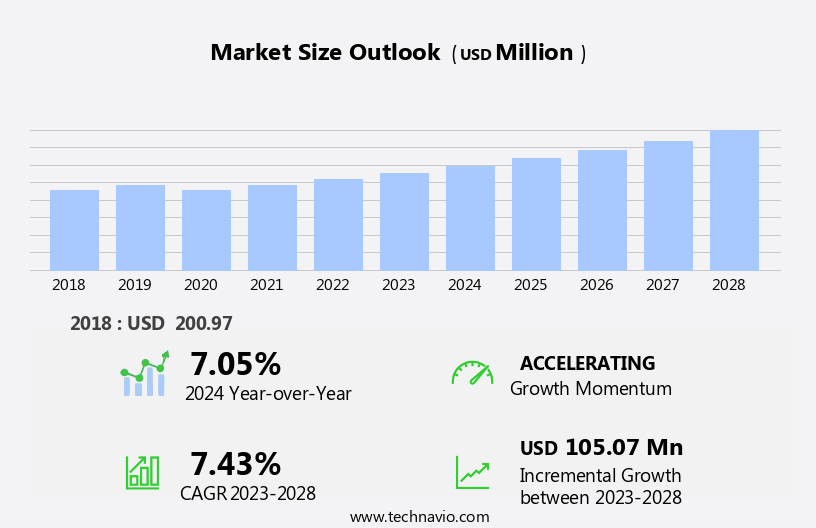
$105.07 Mn
Market Opportunity
7.43%
CAGR
7.05
YoY growth 2023-2024(%)

Commercial Aircraft Emergency Generators Market Size 2024-2028

The commercial aircraft emergency generators market size is forecast to increase by USD 105.07 million at a CAGR of 7.43% between 2023 and 2028.

  • The market is witnessing significant growth due to several key factors. The increasing demand for new generation aircraft is driving market growth, as these aircraft require advanced emergency power systems to ensure safe operations. Additionally, there is a rising focus on increasing the efficiency and performance of aircraft electrical systems, leading to the adoption of innovative technologies such as fuel cell systems as replacements for traditional Rotary Air Starting (RAT) units. This shift towards more efficient and reliable emergency power solutions is expected to boost market growth In the coming years. Furthermore, the growing importance of safety and regulatory compliance In the aviation industry is also fueling the demand for advanced emergency power systems.
  • Overall, the market is poised for robust growth, driven by these key trends and market dynamics.

  • What will be the Size of the Commercial Aircraft Emergency Generators Market During the Forecast Period?
    Commercial Aircraft Emergency Generators Market Size

     Request Free Sample

  • The market is experiencing significant growth due to the increasing demand for reliable power backup systems in modern aircraft. With stringent passenger safety regulations in place, the importance of uninterrupted power supply to critical systems during power failures has become paramount. DC generators, fuel-efficient generators, and advanced starter generators are gaining popularity In the aviation sector, driven by the need for fuel consumption reduction and eco-friendly technologies. Aviation technology continues to evolve, with a focus on seamless operations and lifecycle cost management. Retrofit applications for power backup systems are increasingly common as older aircraft are upgraded to meet regulatory requirements and passenger demand.
  • Aircraft deliveries continue to increase, driving the need for efficient engine start-up processes and backup power sources during air traffic congestion. The market for commercial aircraft emergency generators is expected to grow, with a focus on fuel-efficient, fuel-consumption reducing, and advanced aviation technologies. The aviation sector's safety standards demand continuous power supply to critical systems, making emergency power systems an essential component of commercial air travel.

  • How is this Commercial Aircraft Emergency Generators Industry segmented and which is the largest segment?

    The commercial aircraft emergency generators industry research report provides comprehensive data (region-wise segment analysis), with forecasts and estimates in "USD million" for the period 2024-2028, as well as historical data from 2018-2022 for the following segments.

    • Application
      • Narrow-body aircraft
      • Wide-body aircraft
      • Regional aircraft
    • Channel
      • OEM
      • Aftermarket
    • Geography
      • North America
        • Canada
        • US
      • Europe
        • Germany
        • France
      • APAC
        • China
      • South America
        • Middle East and Africa

        By Application Insights

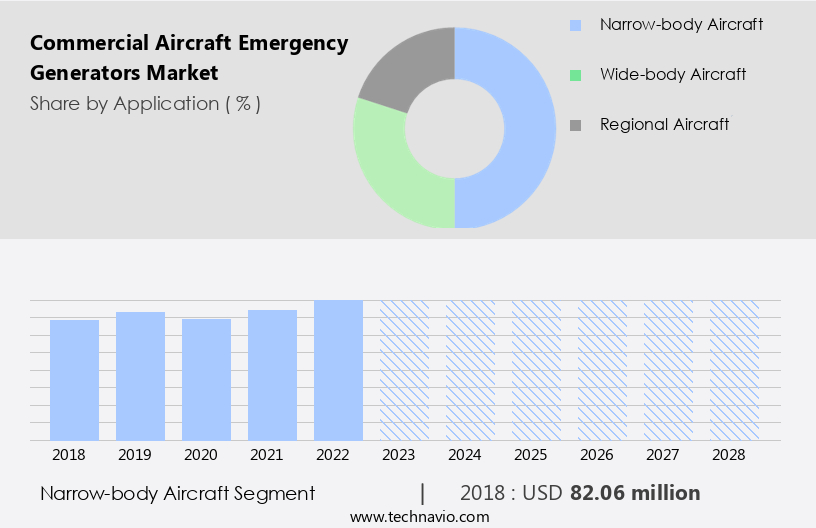
        The narrow-body aircraft segment is estimated to witness significant growth during the forecast period. Narrow-body aircraft, characterized by single-aisle cabins enabling up to 6-abreast seating and twin-engine setup at the wings, are driving growth In the commercial aviation sector. Efficiency-focused airline operations in both emerging and developed economies, influenced by average load factors and seasonality, are fueling demand. Aircraft Original Equipment Manufacturers (OEMs) are responding by delivering upgraded versions and investing in new narrow-body aircraft, while low-cost carriers (LCCs) modernize their fleets to maintain competitiveness. Aircraft power systems, including reliable and efficient generators, are a critical focus area for OEMs, addressing challenges in power consumption, distribution, and management. Innovations in generator design, performance, and functionality, along with advancements in aircraft electrical systems and battery technology, are shaping the future of aircraft power.

        Aviation safety regulations continue to emphasize the importance of stable power supplies for navigation systems, avionics power supply, and aircraft maintenance. The aviation industry is witnessing trends towards energy efficiency, electric propulsion, and aviation technology, including green aviation, sustainable aviation, and renewable energy aviation. Aircraft certification, aircraft production, and aircraft engine technology are also undergoing significant changes. Aviation investment In these areas is expected to continue, driven by the need for improved aircraft performance and components, as well as aviation safety and regulations. Aerospace engineering and aircraft electrification are key areas of focus for OEMs and investors alike.

        Commercial Aircraft Emergency Generators Market Size

        Get a glance at the market report of various segments Request Free Sample

        The Narrow-body aircraft segment was valued at USD 82.06 million in 2018 and showed a gradual increase during the forecast period.

        Regional Analysis

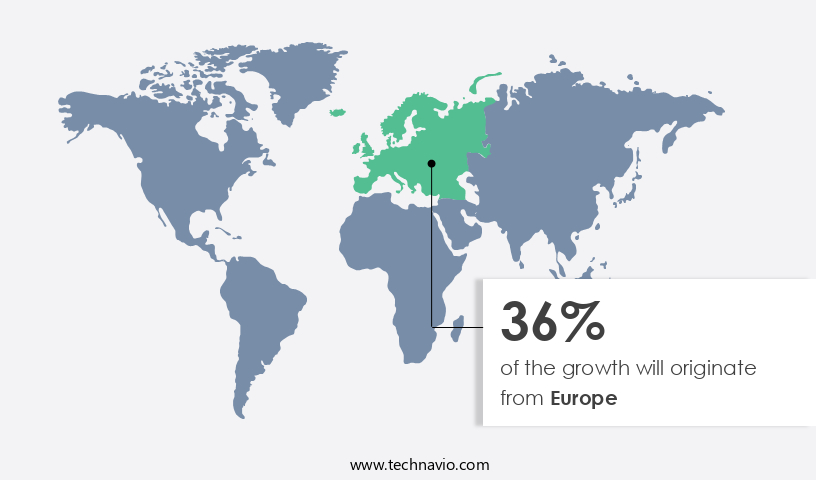
        Europe is estimated to contribute 36% to the growth of the global market during the forecast period. Technavio’s analysts have elaborately explained the regional trends and drivers that shape the market during the forecast period.
        Commercial Aircraft Emergency Generators Market Share by Geography

        For more insights on the market size of various regions, Request Free Sample

        The commercial aircraft industry in North America, driven primarily by the United States, is a mature market with a strong focus on aircraft power systems. Aircraft power solutions, including efficient and reliable generators, are essential for ensuring stable power supplies to aircraft electrical systems, avionics, navigation systems, and aircraft batteries. The increasing demand for aircraft production, driven by the resurging US economy and growing air travel, necessitates the development of innovative and lightweight generator technologies. These advancements aim to enhance aircraft performance, reduce power consumption, and improve overall aircraft efficiency. The aviation industry is also exploring renewable energy avenues for sustainable aviation, which is expected to influence future aircraft design and certification.

        Aircraft power management and generator reliability are critical aspects of aviation safety regulations. Tier-1 and Tier-2 suppliers In the region are investing in research and development to meet the evolving demands of major commercial aircraft manufacturers, such as Boeing Co. And Bombardier Inc., and stay competitive In the global market. The future of aircraft power systems lies in advanced generator design, aviation innovation, and energy efficiency, including electric propulsion and aircraft battery technology.


        Market Dynamics

        Our researchers analyzed the data with 2023 as the base year, along with the key drivers, trends, and challenges. A holistic analysis of drivers will help companies refine their marketing strategies to gain a competitive advantage.

        What are the key market drivers leading to the rise In the adoption of Commercial Aircraft Emergency Generators Industry?

        • Growing demand for new generation aircraft is the key driver of the market.The global commercial aviation sector is experiencing substantial expansion, driven by rising air traffic, both domestically and internationally. Emerging economies In the Asia Pacific region, including India, China, and Indonesia, are spearheading this growth. The increasing demand for air travel In these countries is leading to an escalating need for narrow-body aircraft, thereby fueling the growth of the market. These generators play a crucial role in ensuring aircraft power safety and reliability during emergencies. Aircraft power innovation and efficiency are key trends In the market, with a focus on lightweight generators and advanced aircraft power management systems. The aviation industry is also investing in sustainable aviation solutions, such as renewable energy aviation and aircraft electrification, to address the challenges of aircraft power consumption and distribution.

          Aviation safety regulations continue to emphasize the importance of stable power supplies for navigation systems, avionics power supply, and aircraft maintenance. Aircraft generator maintenance and generator functionality are critical aspects of aircraft electrical systems, and generator reliability is a top priority for aircraft manufacturers and operators. The future of aircraft power systems lies in advanced generator technology, aircraft battery systems, and electric propulsion, which will enable greater energy efficiency and performance. The aviation market is expected to continue its growth trajectory, with the supply chain focusing on aircraft components, aviation technology, and aerospace engineering to meet the evolving demands of the industry.

        What are the market trends shaping the Commercial Aircraft Emergency Generators market?

        • Rising focus on increasing efficiency and performance of aircraft electrical systems is the upcoming market trend.The global aerospace industry is focusing on enhancing aircraft power safety and efficiency by investing in reliable aircraft power solutions. Innovations in aircraft power technology include lightweight generators and improved generator performance, aiming to address the challenges of aircraft power consumption and distribution. Aviation power systems are evolving to meet the demands of aviation safety regulations and the increasing use of navigation systems, avionics, and aircraft maintenance. The aviation industry trends indicate a shift towards electric propulsion, aircraft battery technology, and aircraft electrification, which require stable power supplies and generator reliability. The aviation market is witnessing significant investment in aircraft production, aircraft engine technology, and aerospace engineering to meet the demands for energy efficiency and sustainable aviation through renewable energy aviation.

          Aircraft design and certification processes are prioritizing flight efficiency and aircraft performance, making generator functionality and aircraft power management crucial components of the aviation industry.

        What challenges does the Commercial Aircraft Emergency Generators Industry face during its growth?

        • Replacement of RAT with fuel cell technology is a key challenge affecting the industry growth.The market plays a crucial role in ensuring aircraft power safety and reliability. Innovations in aircraft power technology focus on efficiency and performance to reduce consumption and improve generator functionality. However, the aviation industry faces challenges in aircraft power distribution and maintenance, necessitating the need for stable power supplies and reliable aircraft power solutions. Aviation power systems are subject to stringent safety regulations, including those related to navigation systems, aircraft maintenance, and avionics power supply. Aircraft battery systems and generator maintenance are essential components of aircraft power management. The future of aircraft power systems lies in advanced generator design, renewable energy aviation, and aircraft electrification.

          Airbus SE is at the forefront of aviation power trends, having conducted extensive research on fuel cell technology as a potential replacement for traditional auxiliary power units and RATs. The integration of fuel cells as a multifunctional emergency power source could significantly impact the market dynamics. The aviation industry's investment in aircraft production, aircraft engine technology, and aerospace engineering continues to drive the need for efficient and reliable aircraft power systems. The focus on energy efficiency, electric propulsion, and aircraft battery technology is shaping the future of the aviation market and the aircraft supply chain.

        Exclusive Customer Landscape

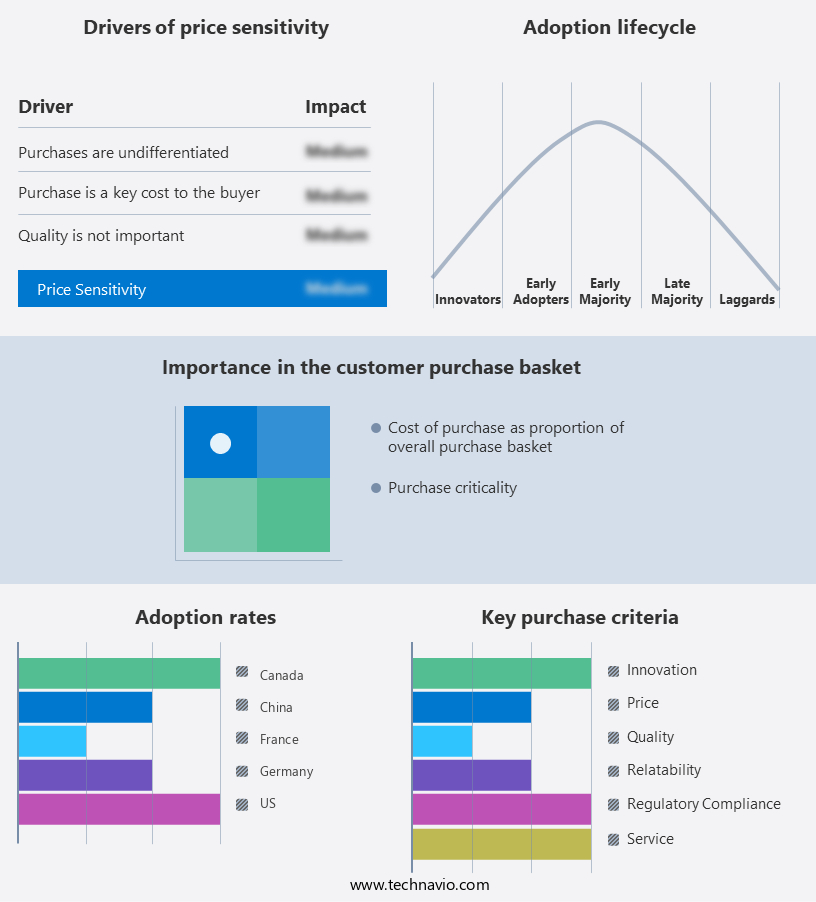
        The commercial aircraft emergency generators market forecasting report includes the adoption lifecycle of the market, covering from the innovator’s stage to the laggard’s stage. It focuses on adoption rates in different regions based on penetration. Furthermore, the commercial aircraft emergency generators market report also includes key purchase criteria and drivers of price sensitivity to help companies evaluate and develop their market growth analysis strategies.
        Commercial Aircraft Emergency Generators Market Share by Geography

         Customer Landscape

        Key Companies & Market Insights

        Companies are implementing various strategies, such as strategic alliances, commercial aircraft emergency generators market forecast, partnerships, mergers and acquisitions, geographical expansion, and product/service launches, to enhance their presence In the industry.

        ATGI - Advanced Technologies Group Inc. Provides commercial aircraft emergency generators, including the High Powered Ram Air Turbine (HP-RAT), which generates over 60kw of power at an airspeed of 250 knots. This innovative technology, developed by Advanced Technologies Group Inc., ensures uninterrupted power supply during aircraft emergencies. The HP-RAT is designed to meet the stringent requirements of the aviation industry, offering reliable and efficient power solutions for commercial aircraft.

        The industry research and growth report includes detailed analyses of the competitive landscape of the market and information about key companies, including:

        • ATGI
        • General Electric Co.
        • Honeywell International Inc.
        • RTX Corp.
        • Safran SA

        Qualitative and quantitative analysis of companies has been conducted to help clients understand the wider business environment as well as the strengths and weaknesses of key industry players. Data is qualitatively analyzed to categorize companies as pure play, category-focused, industry-focused, and diversified; it is quantitatively analyzed to categorize companies as dominant, leading, strong, tentative, and weak.

        Research Analyst Overview

        Commercial aircraft operate in an environment where a stable and reliable power supply is essential for ensuring the safety and efficiency of operations. The demand for innovative and efficient aircraft power solutions continues to grow, driven by the increasing complexity of avionics systems and the need for reduced fuel consumption. Aircraft power systems have evolved significantly over the years, with a focus on improving performance, reliability, and efficiency. Lightweight generators have gained popularity due to their ability to reduce overall aircraft weight and improve fuel economy. These generators are designed to provide stable power to electrical systems, ensuring the proper functioning of navigation systems, avionics, and other critical components.

        The aviation industry is constantly seeking ways to address the challenges associated with aircraft power distribution and management. Aviation safety regulations require that aircraft electrical systems be designed to ensure a reliable power supply at all times. Generator functionality and reliability are critical factors in meeting these requirements. Aircraft battery systems have also gained attention as a potential solution for reducing aircraft power consumption and improving efficiency. Battery technology has advanced significantly in recent years, with a focus on increasing energy density and improving charging efficiency. However, challenges remain in terms of weight, cost, and the need for efficient charging systems.

        The aviation industry is also exploring the potential of renewable energy sources for powering aircraft. Green aviation and sustainable aviation are becoming increasingly important areas of focus, with research and development efforts focused on developing electric propulsion systems and other renewable energy technologies. Aircraft certification is a critical aspect of the aviation industry, and power systems must meet strict safety and performance standards. Aviation regulations require that all aircraft components, including power systems, undergo rigorous testing and certification processes to ensure they meet these standards. The aviation market is a dynamic and complex industry, with ongoing trends and challenges shaping the future of aircraft power systems.

        Aviation investment and manufacturing continue to be significant drivers of innovation and growth in this sector. Aerospace engineering and aircraft design are also critical areas of focus, with a focus on developing more efficient and sustainable aircraft power systems. In conclusion, the market is a critical area of focus for the aviation industry, with a need for innovative and efficient power solutions that meet strict safety and performance standards. The market is driven by ongoing trends and challenges, including the need for reduced fuel consumption, improved reliability, and the exploration of renewable energy sources. The future of aircraft power systems is likely to be shaped by continued innovation and investment in advanced technologies and sustainable solutions.


        Market Scope

        Report Coverage

        Details

        Page number

        150

        Base year

        2023

        Historic period

        2018-2022

        Forecast period

        2024-2028

        Growth momentum & CAGR

        Accelerate at a CAGR of 7.43%

        Market growth 2024-2028

        USD 105.07 million

        Market structure

        Concentrated

        YoY growth 2023-2024(%)

        7.05

        Key countries

        US, Canada, China, Germany, and France

        Competitive landscape

        Leading Companies, Market Positioning of Companies, Competitive Strategies, and Industry Risks

        Request Free Sample

        What are the Key Data Covered in this Commercial Aircraft Emergency Generators Market Research and Growth Report?

        • CAGR of the Commercial Aircraft Emergency Generators industry during the forecast period
        • Detailed information on factors that will drive the growth and forecasting between 2024 and 2028
        • Precise estimation of the size of the market and its contribution of the industry in focus to the parent market
        • Accurate predictions about upcoming growth and trends and changes in consumer behaviour
        • Growth of the market across North America, Europe, APAC, South America, and Middle East and Africa
        • Thorough analysis of the market’s competitive landscape and detailed information about companies
        • Comprehensive analysis of factors that will challenge the commercial aircraft emergency generators market growth of industry companies

        We can help! Our analysts can customize this commercial aircraft emergency generators market research report to meet your requirements.

        Get in touch


        1 Executive Summary

        • 1.1 Market overview
          • Exhibit 01: Executive Summary – Chart on Market Overview
          • Exhibit 02: Executive Summary – Data Table on Market Overview
          • Exhibit 03: Executive Summary – Chart on Global Market Characteristics
          • Exhibit 04: Executive Summary – Chart on Market by Geography
          • Exhibit 05: Executive Summary – Chart on Market Segmentation by Application
          • Exhibit 06: Executive Summary – Chart on Market Segmentation by Channel
          • Exhibit 07: Executive Summary – Chart on Incremental Growth
          • Exhibit 08: Executive Summary – Data Table on Incremental Growth
          • Exhibit 09: Executive Summary – Chart on Vendor Market Positioning

        2 Market Landscape

        • 2.1 Market ecosystem
          • Exhibit 10: Parent market
          • Exhibit 11: Market Characteristics

        3 Market Sizing

        • 3.1 Market definition
          • Exhibit 12: Offerings of vendors included in the market definition
        • 3.2 Market segment analysis
          • Exhibit 13: Market segments
        • 3.3 Market size 2023
          • 3.4 Market outlook: Forecast for 2023-2028
            • Exhibit 14: Chart on Global - Market size and forecast 2023-2028 ($ million)
            • Exhibit 15: Data Table on Global - Market size and forecast 2023-2028 ($ million)
            • Exhibit 16: Chart on Global Market: Year-over-year growth 2023-2028 (%)
            • Exhibit 17: Data Table on Global Market: Year-over-year growth 2023-2028 (%)

          4 Historic Market Size

          • 4.1 Global commercial aircraft emergency generators market 2018 - 2022
            • Exhibit 18: Historic Market Size – Data Table on global commercial aircraft emergency generators market 2018 - 2022 ($ million)
          • 4.2 Application Segment Analysis 2018 - 2022
            • Exhibit 19: Historic Market Size – Application Segment 2018 - 2022 ($ million)
          • 4.3 Channel Segment Analysis 2018 - 2022
            • Exhibit 20: Historic Market Size – Channel Segment 2018 - 2022 ($ million)
          • 4.4 Geography Segment Analysis 2018 - 2022
            • Exhibit 21: Historic Market Size – Geography Segment 2018 - 2022 ($ million)
          • 4.5 Country Segment Analysis 2018 - 2022
            • Exhibit 22: Historic Market Size – Country Segment 2018 - 2022 ($ million)

          5 Five Forces Analysis

          • 5.1 Five forces summary
            • Exhibit 23: Five forces analysis - Comparison between 2023 and 2028
          • 5.2 Bargaining power of buyers
            • Exhibit 24: Chart on Bargaining power of buyers – Impact of key factors 2023 and 2028
          • 5.3 Bargaining power of suppliers
            • Exhibit 25: Bargaining power of suppliers – Impact of key factors in 2023 and 2028
          • 5.4 Threat of new entrants
            • Exhibit 26: Threat of new entrants – Impact of key factors in 2023 and 2028
          • 5.5 Threat of substitutes
            • Exhibit 27: Threat of substitutes – Impact of key factors in 2023 and 2028
          • 5.6 Threat of rivalry
            • Exhibit 28: Threat of rivalry – Impact of key factors in 2023 and 2028
          • 5.7 Market condition
            • Exhibit 29: Chart on Market condition - Five forces 2023 and 2028

          6 Market Segmentation by Application

          • 6.1 Market segments
            • Exhibit 30: Chart on Application - Market share 2023-2028 (%)
            • Exhibit 31: Data Table on Application - Market share 2023-2028 (%)
          • 6.2 Comparison by Application
            • Exhibit 32: Chart on Comparison by Application
            • Exhibit 33: Data Table on Comparison by Application
          • 6.3 Narrow-body aircraft - Market size and forecast 2023-2028
            • Exhibit 34: Chart on Narrow-body aircraft - Market size and forecast 2023-2028 ($ million)
            • Exhibit 35: Data Table on Narrow-body aircraft - Market size and forecast 2023-2028 ($ million)
            • Exhibit 36: Chart on Narrow-body aircraft - Year-over-year growth 2023-2028 (%)
            • Exhibit 37: Data Table on Narrow-body aircraft - Year-over-year growth 2023-2028 (%)
          • 6.4 Wide-body aircraft - Market size and forecast 2023-2028
            • Exhibit 38: Chart on Wide-body aircraft - Market size and forecast 2023-2028 ($ million)
            • Exhibit 39: Data Table on Wide-body aircraft - Market size and forecast 2023-2028 ($ million)
            • Exhibit 40: Chart on Wide-body aircraft - Year-over-year growth 2023-2028 (%)
            • Exhibit 41: Data Table on Wide-body aircraft - Year-over-year growth 2023-2028 (%)
          • 6.5 Regional aircraft - Market size and forecast 2023-2028
            • Exhibit 42: Chart on Regional aircraft - Market size and forecast 2023-2028 ($ million)
            • Exhibit 43: Data Table on Regional aircraft - Market size and forecast 2023-2028 ($ million)
            • Exhibit 44: Chart on Regional aircraft - Year-over-year growth 2023-2028 (%)
            • Exhibit 45: Data Table on Regional aircraft - Year-over-year growth 2023-2028 (%)
          • 6.6 Market opportunity by Application
            • Exhibit 46: Market opportunity by Application ($ million)
            • Exhibit 47: Data Table on Market opportunity by Application ($ million)

          7 Market Segmentation by Channel

          • 7.1 Market segments
            • Exhibit 48: Chart on Channel - Market share 2023-2028 (%)
            • Exhibit 49: Data Table on Channel - Market share 2023-2028 (%)
          • 7.2 Comparison by Channel
            • Exhibit 50: Chart on Comparison by Channel
            • Exhibit 51: Data Table on Comparison by Channel
          • 7.3 OEM - Market size and forecast 2023-2028
            • Exhibit 52: Chart on OEM - Market size and forecast 2023-2028 ($ million)
            • Exhibit 53: Data Table on OEM - Market size and forecast 2023-2028 ($ million)
            • Exhibit 54: Chart on OEM - Year-over-year growth 2023-2028 (%)
            • Exhibit 55: Data Table on OEM - Year-over-year growth 2023-2028 (%)
          • 7.4 Aftermarket - Market size and forecast 2023-2028
            • Exhibit 56: Chart on Aftermarket - Market size and forecast 2023-2028 ($ million)
            • Exhibit 57: Data Table on Aftermarket - Market size and forecast 2023-2028 ($ million)
            • Exhibit 58: Chart on Aftermarket - Year-over-year growth 2023-2028 (%)
            • Exhibit 59: Data Table on Aftermarket - Year-over-year growth 2023-2028 (%)
          • 7.5 Market opportunity by Channel
            • Exhibit 60: Market opportunity by Channel ($ million)
            • Exhibit 61: Data Table on Market opportunity by Channel ($ million)

          8 Customer Landscape

          • 8.1 Customer landscape overview
            • Exhibit 62: Analysis of price sensitivity, lifecycle, customer purchase basket, adoption rates, and purchase criteria

          9 Geographic Landscape

          • 9.1 Geographic segmentation
            • Exhibit 63: Chart on Market share by geography 2023-2028 (%)
            • Exhibit 64: Data Table on Market share by geography 2023-2028 (%)
          • 9.2 Geographic comparison
            • Exhibit 65: Chart on Geographic comparison
            • Exhibit 66: Data Table on Geographic comparison
          • 9.3 North America - Market size and forecast 2023-2028
            • Exhibit 67: Chart on North America - Market size and forecast 2023-2028 ($ million)
            • Exhibit 68: Data Table on North America - Market size and forecast 2023-2028 ($ million)
            • Exhibit 69: Chart on North America - Year-over-year growth 2023-2028 (%)
            • Exhibit 70: Data Table on North America - Year-over-year growth 2023-2028 (%)
          • 9.4 Europe - Market size and forecast 2023-2028
            • Exhibit 71: Chart on Europe - Market size and forecast 2023-2028 ($ million)
            • Exhibit 72: Data Table on Europe - Market size and forecast 2023-2028 ($ million)
            • Exhibit 73: Chart on Europe - Year-over-year growth 2023-2028 (%)
            • Exhibit 74: Data Table on Europe - Year-over-year growth 2023-2028 (%)
          • 9.5 APAC - Market size and forecast 2023-2028
            • Exhibit 75: Chart on APAC - Market size and forecast 2023-2028 ($ million)
            • Exhibit 76: Data Table on APAC - Market size and forecast 2023-2028 ($ million)
            • Exhibit 77: Chart on APAC - Year-over-year growth 2023-2028 (%)
            • Exhibit 78: Data Table on APAC - Year-over-year growth 2023-2028 (%)
          • 9.6 South America - Market size and forecast 2023-2028
            • Exhibit 79: Chart on South America - Market size and forecast 2023-2028 ($ million)
            • Exhibit 80: Data Table on South America - Market size and forecast 2023-2028 ($ million)
            • Exhibit 81: Chart on South America - Year-over-year growth 2023-2028 (%)
            • Exhibit 82: Data Table on South America - Year-over-year growth 2023-2028 (%)
          • 9.7 Middle East and Africa - Market size and forecast 2023-2028
            • Exhibit 83: Chart on Middle East and Africa - Market size and forecast 2023-2028 ($ million)
            • Exhibit 84: Data Table on Middle East and Africa - Market size and forecast 2023-2028 ($ million)
            • Exhibit 85: Chart on Middle East and Africa - Year-over-year growth 2023-2028 (%)
            • Exhibit 86: Data Table on Middle East and Africa - Year-over-year growth 2023-2028 (%)
          • 9.8 US - Market size and forecast 2023-2028
            • Exhibit 87: Chart on US - Market size and forecast 2023-2028 ($ million)
            • Exhibit 88: Data Table on US - Market size and forecast 2023-2028 ($ million)
            • Exhibit 89: Chart on US - Year-over-year growth 2023-2028 (%)
            • Exhibit 90: Data Table on US - Year-over-year growth 2023-2028 (%)
          • 9.9 China - Market size and forecast 2023-2028
            • Exhibit 91: Chart on China - Market size and forecast 2023-2028 ($ million)
            • Exhibit 92: Data Table on China - Market size and forecast 2023-2028 ($ million)
            • Exhibit 93: Chart on China - Year-over-year growth 2023-2028 (%)
            • Exhibit 94: Data Table on China - Year-over-year growth 2023-2028 (%)
          • 9.10 Germany - Market size and forecast 2023-2028
            • Exhibit 95: Chart on Germany - Market size and forecast 2023-2028 ($ million)
            • Exhibit 96: Data Table on Germany - Market size and forecast 2023-2028 ($ million)
            • Exhibit 97: Chart on Germany - Year-over-year growth 2023-2028 (%)
            • Exhibit 98: Data Table on Germany - Year-over-year growth 2023-2028 (%)
          • 9.11 France - Market size and forecast 2023-2028
            • Exhibit 99: Chart on France - Market size and forecast 2023-2028 ($ million)
            • Exhibit 100: Data Table on France - Market size and forecast 2023-2028 ($ million)
            • Exhibit 101: Chart on France - Year-over-year growth 2023-2028 (%)
            • Exhibit 102: Data Table on France - Year-over-year growth 2023-2028 (%)
          • 9.12 Canada - Market size and forecast 2023-2028
            • Exhibit 103: Chart on Canada - Market size and forecast 2023-2028 ($ million)
            • Exhibit 104: Data Table on Canada - Market size and forecast 2023-2028 ($ million)
            • Exhibit 105: Chart on Canada - Year-over-year growth 2023-2028 (%)
            • Exhibit 106: Data Table on Canada - Year-over-year growth 2023-2028 (%)
          • 9.13 Market opportunity by geography
            • Exhibit 107: Market opportunity by geography ($ million)
            • Exhibit 108: Data Tables on Market opportunity by geography ($ million)

          10 Drivers, Challenges, and Trends

          • 10.1 Market drivers
            • 10.2 Market challenges
              • 10.3 Impact of drivers and challenges
                • Exhibit 109: Impact of drivers and challenges in 2023 and 2028
              • 10.4 Market trends

                11 Vendor Landscape

                • 11.1 Overview
                  • 11.2 Vendor landscape
                    • Exhibit 110: Overview on Criticality of inputs and Factors of differentiation
                  • 11.3 Landscape disruption
                    • Exhibit 111: Overview on factors of disruption
                  • 11.4 Industry risks
                    • Exhibit 112: Impact of key risks on business

                  12 Vendor Analysis

                  • 12.1 Vendors covered
                    • Exhibit 113: Vendors covered
                  • 12.2 Market positioning of vendors
                    • Exhibit 114: Matrix on vendor position and classification
                  • 12.3 ATGI
                    • Exhibit 115: ATGI - Overview
                    • Exhibit 116: ATGI - Product / Service
                    • Exhibit 117: ATGI - Key offerings
                  • 12.4 General Electric Co.
                    • Exhibit 118: General Electric Co. - Overview
                    • Exhibit 119: General Electric Co. - Business segments
                    • Exhibit 120: General Electric Co. - Key news
                    • Exhibit 121: General Electric Co. - Key offerings
                    • Exhibit 122: General Electric Co. - Segment focus
                  • 12.5 Honeywell International Inc.
                    • Exhibit 123: Honeywell International Inc. - Overview
                    • Exhibit 124: Honeywell International Inc. - Business segments
                    • Exhibit 125: Honeywell International Inc. - Key news
                    • Exhibit 126: Honeywell International Inc. - Key offerings
                    • Exhibit 127: Honeywell International Inc. - Segment focus
                  • 12.6 RTX Corp.
                    • Exhibit 128: RTX Corp. - Overview
                    • Exhibit 129: RTX Corp. - Business segments
                    • Exhibit 130: RTX Corp. - Key news
                    • Exhibit 131: RTX Corp. - Key offerings
                    • Exhibit 132: RTX Corp. - Segment focus
                  • 12.7 Safran SA
                    • Exhibit 133: Safran SA - Overview
                    • Exhibit 134: Safran SA - Business segments
                    • Exhibit 135: Safran SA - Key news
                    • Exhibit 136: Safran SA - Key offerings
                    • Exhibit 137: Safran SA - Segment focus

                  13 Appendix

                  • 13.1 Scope of the report
                    • 13.2 Inclusions and exclusions checklist
                      • Exhibit 138: Inclusions checklist
                      • Exhibit 139: Exclusions checklist
                    • 13.3 Currency conversion rates for US$
                      • Exhibit 140: Currency conversion rates for US$
                    • 13.4 Research methodology
                      • Exhibit 141: Research methodology
                      • Exhibit 142: Validation techniques employed for market sizing
                      • Exhibit 143: Information sources
                    • 13.5 List of abbreviations
                      • Exhibit 144: List of abbreviations

                    Research Methodology

                    Technavio presents a detailed picture of the market by way of study, synthesis, and summation of data from multiple sources. The analysts have presented the various facets of the market with a particular focus on identifying the key industry influencers. The data thus presented is comprehensive, reliable, and the result of extensive research, both primary and secondary.

                    INFORMATION SOURCES

                    Primary sources

                    • Manufacturers and suppliers
                    • Channel partners
                    • Industry experts
                    • Strategic decision makers

                    Secondary sources

                    • Industry journals and periodicals
                    • Government data
                    • Financial reports of key industry players
                    • Historical data
                    • Press releases

                    DATA ANALYSIS

                    Data Synthesis

                    • Collation of data
                    • Estimation of key figures
                    • Analysis of derived insights

                    Data Validation

                    • Triangulation with data models
                    • Reference against proprietary databases
                    • Corroboration with industry experts

                    REPORT WRITING

                    Qualitative

                    • Market drivers
                    • Market challenges
                    • Market trends
                    • Five forces analysis

                    Quantitative

                    • Market size and forecast
                    • Market segmentation
                    • Geographical insights
                    • Competitive landscape

                    Interested in this report?

                    Get your sample now to see our research methodology and insights!

                    Download Now

                    Frequently Asked Questions

                    Commercial Aircraft Emergency Generators market growth will increase by $ 105.07 mn during 2024-2028 .

                    The Commercial Aircraft Emergency Generators market is expected to grow at a CAGR of 7.43% during 2024-2028 .

                    Commercial Aircraft Emergency Generators market is segmented by Application( Narrow-body aircraft, Wide-body aircraft, Regional aircraft) Channel( OEM, Aftermarket, APAC, South America, Middle East and Africa)

                    ATGI, General Electric Co., Honeywell International Inc., RTX Corp., Safran SA are a few of the key vendors in the Commercial Aircraft Emergency Generators market.

                    Europe will register the highest growth rate of 36% among the other regions. Therefore, the Commercial Aircraft Emergency Generators market in Europe is expected to garner significant business opportunities for the vendors during the forecast period.

                    US, Canada, China, Germany, France

                    • Growing demand for new generation aircraftThe global commercial aviation industry is growing in tandem with the increase in air traffic. Both international and domestic air traffic is expanding at a significant pace. Emerging economies in APAC is the driving factor this market.
                    • such as India is the driving factor this market.
                    • China is the driving factor this market.
                    • and Indonesia is the driving factor this market.
                    • are driving the growth of the global commercial aviation market. APAC is witnessing significant growth in domestic and international air travel is the driving factor this market.
                    • which is fueling the need for more narrow-body aircraft. Thus is the driving factor this market.
                    • these developments are driving the growth of the global commercial aircraft emergency generators market during the forecast period. China is the driving factor this market.
                    • India is the driving factor this market.
                    • and countries across Southeast Asia are reporting a significant rise in air passenger traffic. China leads the regions commercial aviation industry at present and is expected to overtake the US by 2024. APAC is expected to cater to more than half of the worlds passenger traffic by 2035. This will create significant demand for commercial aircraft in the region over the next 20 years. Boeing Co. and Airbus SE is the driving factor this market.
                    • two of the biggest commercial aircraft manufacturers globally is the driving factor this market.
                    • have been receiving bulk orders for commercial airplanes from the APAC region. The growing demand for narrow-body aircraft can be attributed to increasing air destinations in countries such as China and India. An increasing number of Tier-2 and Tier-3 cities are being enabled with air connectivity is the driving factor this market.
                    • and fleet operators mostly deploy narrow-body aircraft on such routes. Factors such as improving socio-economic conditions is the driving factor this market.
                    • better social infrastructure is the driving factor this market.
                    • and increasing affordability for air travel are driving the growth of the commercial aviation sector in APAC. Moreover is the driving factor this market.
                    • aircraft manufacturers are investing in their manufacturing facilities. For instance is the driving factor this market.
                    • in October 2022 is the driving factor this market.
                    • Boeing Co. invested $5 million over the next five years to expand the advanced manufacturing innovation center in St. Louis is the driving factor this market.
                    • which will positively impact the growth of the market in North America. The growing investments in the aircraft sector is fueling the demand for new generation aircraft is the driving factor this market.
                    • which is the driving factor this market.
                    • in turn is the driving factor this market.
                    • will fuel the growth of the global commercial aircraft emergency generators market during the forecast period. is the driving factor this market.

                    The Commercial Aircraft Emergency Generators market vendors should focus on grabbing business opportunities from the Narrow-body aircraft segment as it accounted for the largest market share in the base year.
