


Compound Feed Market Size 2024-2028
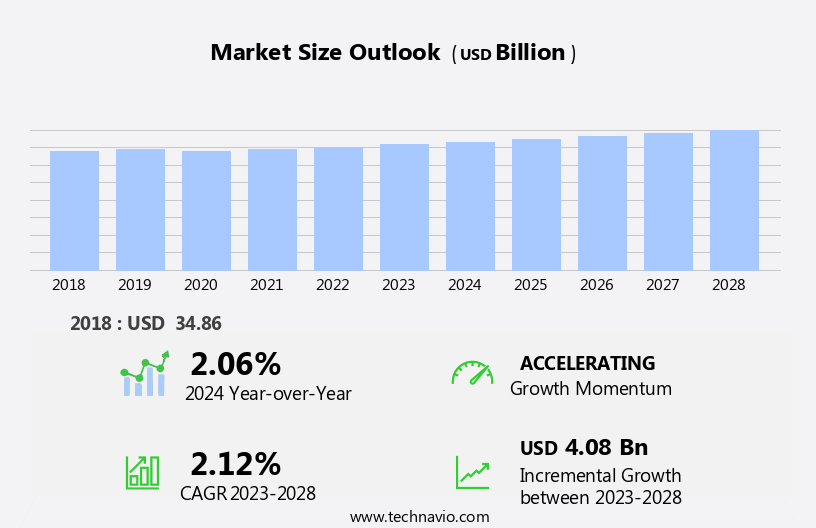
The compound feed market size is forecast to increase by USD 4.08 billion at a CAGR of 2.12% between 2023 and 2028.
- The market is experiencing significant growth due to several key factors. One of the primary drivers is the increasing demand for meat worldwide. This trend is particularly prominent in North America, where the demand for poultry and livestock feed is on the rise. Another trend shaping the market is the emergence of private-label brands, which are gaining popularity among consumers due to their affordability and perceived quality.
- Additionally, there is a growing consumer inclination towards vegan food, which is expected to create opportunities for alternative protein sources in the market. Overall, these trends are fueling market growth and presenting new opportunities for market participants.
What will be the Size of the Compound Feed Market During the Forecast Period?
- The market plays a crucial role In the food production chain by supplying nutritionally balanced feed formulations to consumers' livestock, including ruminants and poultry. Compound feed manufacturers formulate these feeds using various sources of protein, functional additives, and raw materials such as cereals, corn, barley, and oats. Livestock breeders rely on these feeds to ensure their animals receive a balanced diet, promoting optimal growth and productivity. Market dynamics are influenced by several factors, including raw material prices, nutritional requirements, and functional additives. The ongoing conflict between Ukraine and Russia has impacted the availability and pricing of certain cereal crops. Developing economies and urbanization trends in the Asia Pacific region have driven demand for compound feed, particularly for poultry-related applications.
- Animal density, early weaning, and European Union regulations also influence the market. Livestock sector growth, driven by the demand for meat, milk, and poultry eggs, continues to fuel market expansion. Grassland degradation and the need for standardized processes further emphasize the importance of compound feed in animal husbandry. The market is expected to remain a significant contributor to the livestock sector's growth, as it continues to adapt to evolving consumer demands and regulatory requirements.
How is this Compound Feed Industry segmented and which is the largest segment?
The compound feed industry research report provides comprehensive data (region-wise segment analysis), with forecasts and estimates in "USD billion" for the period 2024-2028, as well as historical data from 2018-2022 for the following segments.
- Application
- Poultry feed
- Cattles and buffaloes
- Others
- Geography
- North America
- Canada
- US
- Europe
- UK
- France
- APAC
- China
- South America
- Middle East and Africa
- North America
By Application Insights
The poultry feed segment is estimated to witness significant growth during the forecast period. The market is driven by the increasing consumption of poultry meat, which is a major contributor to the meat industry due to its widespread acceptance and lack of religious implications compared to beef and pork. To meet the rising demand for poultry meat, compound feed manufacturers produce large quantities of poultry feed, incorporating essential nutrients, functional additives, and protein sources. Developing economies, particularly in Asia Pacific, are significant markets for poultry feed due to their large populations and urbanization trends. Cereals, such as corn, barley, and oats, serve as primary raw materials for compound feed production. However, geopolitical tensions, such as the Ukraine-Russia war, and raw material price fluctuations can impact the market.
The livestock sector, including cattle, swine, poultry, and aquaculture, relies on compound feed to ensure a balanced diet for farm animals. Regulations, such as those In the European Union, influence the production and use of compound feed. Animal health and welfare, as well as environmental impact, are critical considerations In the compound feed industry. Compound feed manufacturers provide solid and liquid forms of feed, as well as cakes and meals derived from animal by-products and cereal by-products. The market is influenced by various factors, including cereal prices, protein meals, and feed regulations.
Get a glance at the Compound Feed Industry report of share of various segments Request Free Sample
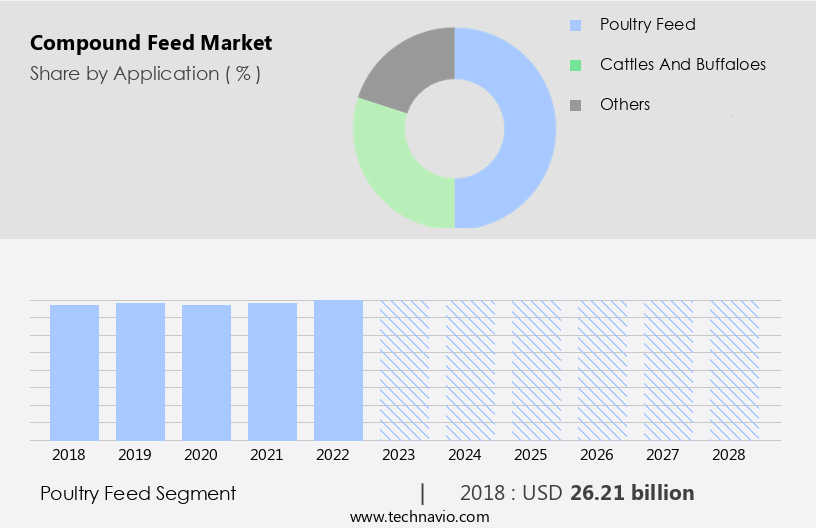
The Poultry feed segment was valued at USD 26.21 billion in 2018 and showed a gradual increase during the forecast period.
Regional Analysis
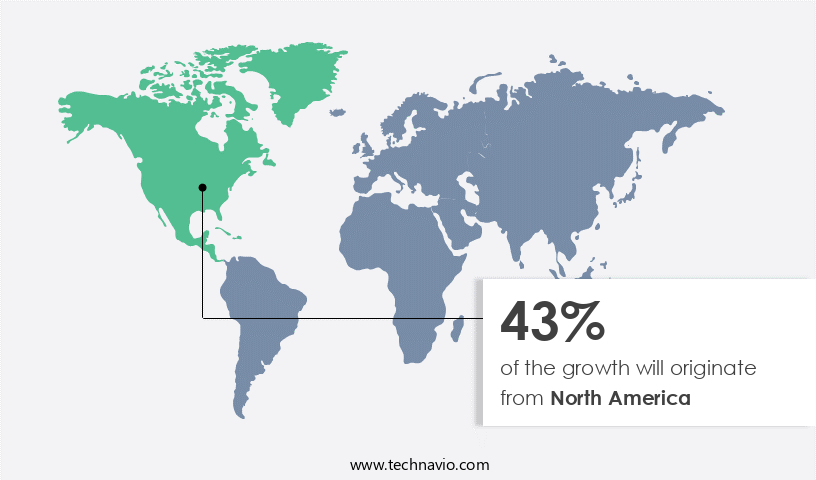
North America is estimated to contribute 43% to the growth of the global market during the forecast period. Technavio's analysts have elaborately explained the regional trends and drivers that shape the market during the forecast period.
For more insights on the market share of various regions, Request Free Sample
The North American the market is experiencing notable expansion due to the increasing livestock population, escalating meat consumption, and heightened focus on meat quality and safety. The ban on antibiotic growth promoters has instigated a surge in demand for alternative feed solutions, primarily for poultry, pork, and cattle, which collectively account for a substantial market share. Cereals, particularly corn, barley, and oats, are the primary feed ingredients, while vitamins are the most frequently used additives. The United States holds a dominant position in the North American market, fueled by free trade agreements and a robust livestock industry, primarily located In the Midwest, South, and East regions.
The market is influenced by various factors, including raw material prices, nutritional requirements, functional additives, protein sources, and animal health considerations. Cereal crops, such as corn and wheat, as well as protein meals derived from soybeans and oilseeds, are essential feed components. Policymakers, retailers, farmers, and environmental impact assessments also play a significant role in shaping the market landscape.
Market Dynamics
Our researchers analyzed the data with 2023 as the base year, along with the key drivers, trends, and challenges. A holistic analysis of drivers will help companies refine their marketing strategies to gain a competitive advantage.
What are the key market drivers leading to the rise In the adoption of Compound Feed Industry?
- Increasing meat production and consumption is the key driver of the market.The market experiences growth due to the escalating demand for meat and livestock products worldwide. Global meat consumption surpassed 93.47 pounds per capita in 2021, and chicken meat production reached over 135 million tons. Population growth is a significant contributor to this trend. Compound feed plays a crucial role in livestock nutrition, enhancing production efficiency, health, and overall performance. Feed manufacturers develop formulations using various protein sources, functional additives, and raw materials like cereals (corn, barley, oats), protein meals (soybean, fish, bone, feather, blood), oils (soybean oil), molasses, supplements (vitamins, antibiotics, antioxidants, amino acids, enzymes, acidifiers), and cereal by-products.
- Market dynamics include the impact of the Ukraine-Russia war on raw material prices, the urbanization trend in developing economies, and European Union regulations on animal feed. The livestock sector encompasses various animal types, including cattle, swine, poultry, and aquaculture, requiring solid or liquid forms of compound feed. Policymakers, retailers, farmers, and environmental impact assessors are key stakeholders In the food supply chain. Adifo Software and Opteinics are among the tools used in livestock nutrition, managing energy fluctuation, metabolic processes, and animal health and welfare.
What are the market trends shaping the Compound Feed Industry?
- Emergence of private-label brands is the upcoming market trend. The market is experiencing significant growth due to the rising popularity of private-label brand products. Retailers are increasingly manufacturing and selling their own branded compound feeds, which are priced lower than their branded counterparts. This trend is particularly prominent among price-conscious consumers. The private-label segment has expanded in recent years, offering a wider range of products and larger market share. The nutritional requirements of livestock, including meat animals such as cattle and swine, as well as ruminants and poultry, necessitate the use of compound feeds. Compound feed manufacturers formulate these feeds using a balanced combination of cereals, protein sources, functional additives, and other essential nutrients.
- Raw material prices, particularly for cereals like corn, barley, and oats, can impact the cost of production. The market is influenced by various factors, including the Ukrainian-Russian war's impact on cereal crops, the urbanization trend in developing economies, and European Union regulations on animal feed. In the Asia Pacific region, the livestock sector is expanding, leading to increased demand for animal feed. Compound feed comes in both solid and liquid forms and includes feed cereals, cakes & meals, animal by-products, and protein-rich feeds. Functional additives, such as vitamins, minerals, antibiotics, antioxidants, amino acids, enzymes, and acidifiers, are often added to enhance animal health and welfare.
- Animal health and welfare, as well as environmental impact, are critical considerations In the market. Adifo Software and Opteinics are among the companies offering livestock nutrition solutions, while policymakers, retailers, and farmers work together to ensure the quality and sustainability of animal products. The market's growth is driven by the need for efficient, standardized processes to meet the nutritional demands of various animal types, including cattle, swine, poultry, and aquaculture. Energy fluctuation and metabolic processes also play a role In the formulation of compound feeds, which consist of carbohydrates, fat, protein, fiber, and other essential nutrients. Despite the challenges, the market offers opportunities for startups and small-scale farmers to enter the animal feed industry, providing access to protein-rich feeds made from cereal by-products, oilseed meals, molasses, and supplements. The market's continued growth is expected to be influenced by the evolving regulatory landscape, changing consumer preferences, and advancements in feed ingredients and production techniques.
What challenges does the Compound Feed Industry face during its growth?
- Growing consumer inclination toward vegan food is a key challenge affecting the industry growth. The market plays a crucial role In the food production chain, catering to the nutritional requirements of various livestock species, including ruminants, swine, poultry, and aquaculture. Consumers' growing preference for high-quality meat, milk, eggs, and livestock products fuels the demand for animal feed, which is essential for maintaining a balanced diet and optimal animal health and welfare. Compound feed manufacturers formulate feed using raw materials such as cereals, corn, barley, oats, protein sources, and functional additives. The market dynamics are influenced by various factors, including raw material prices, environmental impact, animal density, early weaning, European Union regulations, and urbanization trends In the Asia Pacific region. The livestock sector, including farm animals, is subject to animal feed regulations, which ensure the quality and safety of animal products. Feed manufacturers produce both solid and liquid forms of compound feed, using feed cereals, cakes & meals, animal by-products, and various supplements, vitamins, antibiotics, antioxidants, amino acids, enzymes, and acidifiers. The market is driven by the need to meet the nutritional needs of livestock, optimize production techniques, and minimize the environmental impact of animal husbandry.
- Policymakers, retailers, and farmers rely on feed manufacturers to provide animal protein meals, fish meals, bone meals, feather meals, and blood meals, which are essential for the growth and development of livestock. The market is also influenced by energy fluctuation and metabolic processes, which impact the carbohydrates, fat, protein, and fiber content of animal feed. Animal health and welfare are critical concerns for consumers, who prefer high-quality animal products. Compound feed plays a vital role in ensuring animal health and productivity, as it provides the necessary nutrients for optimal growth and development. Adifo Software and Opteinics are examples of companies that provide livestock nutrition solutions to help farmers optimize their animal feed formulations and minimize costs.
Exclusive Customer Landscape
The compound feed market forecasting report includes the adoption lifecycle of the market, covering from the innovator's stage to the laggard's stage. It focuses on adoption rates in different regions based on penetration. Furthermore, the compound feed market report also includes key purchase criteria and drivers of price sensitivity to help companies evaluate and develop their market growth analysis strategies.
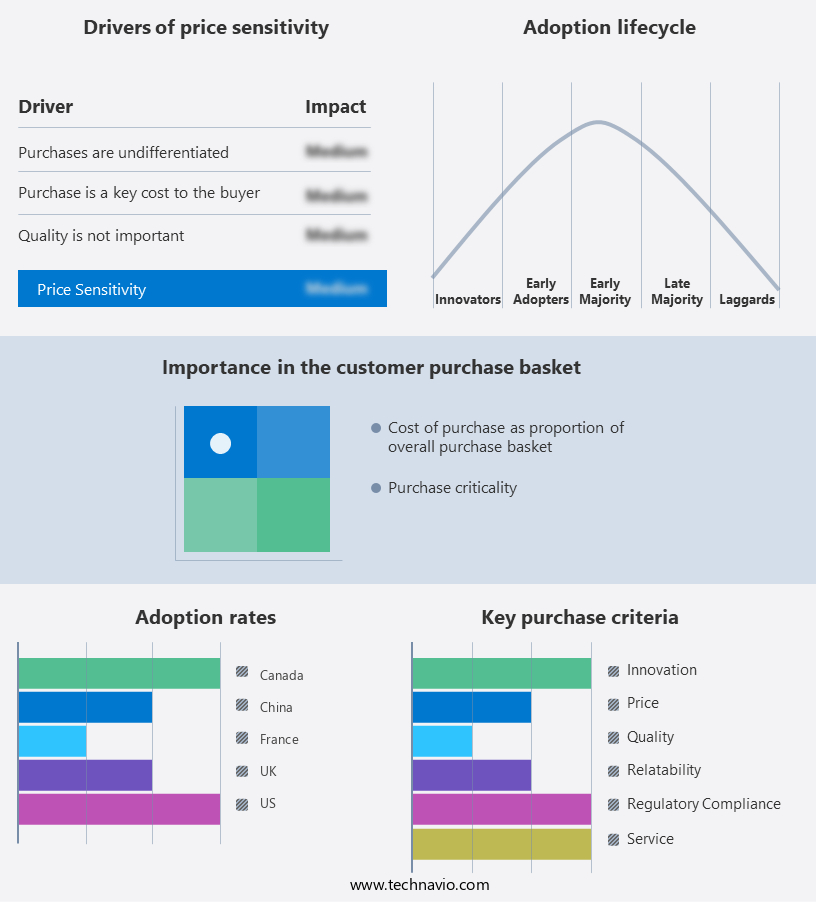
Customer Landscape
Key Companies & Market Insights
Companies are implementing various strategies, such as strategic alliances, compound feed market forecast, partnerships, mergers and acquisitions, geographical expansion, and product/service launches, to enhance their presence in the industry.
Alltech Inc. - The company specializes in producing compound feed formulations incorporating INTEGRAL A, BIO-MOS, and BIOPLEX nutritional additives. These ingredients enhance animal nutrition, contributing to optimal growth and health. INTEGRAL A functions as a phytase enzyme, improving nutrient availability.
The industry research and growth report includes detailed analyses of the competitive landscape of the market and information about key companies, including:
- Alltech Inc.
- Arabian Agricultural Services Co.
- Archer Daniels Midland Co.
- Associated British Foods Plc
- BRF SA
- Cargill Inc.
- Charoen Pokphand Foods PCL
- De Heus Voeders BV
- Elanco Animal Health Inc.
- Feed One Co. Ltd.
- ForFarmers NV
- Godrej Agrovet Ltd.
- Guangdong Haid Group Co. Ltd.
- Hueber Feed, LLC.
- Kent Nutrition Group Inc.
- Land O Lakes Inc.
- New Hope Group.
- NOR-FEED
- Nutreco N.V.
- Tyson Foods Inc.
- Weston Milling
Qualitative and quantitative analysis of companies has been conducted to help clients understand the wider business environment as well as the strengths and weaknesses of key industry players. Data is qualitatively analyzed to categorize companies as pure play, category-focused, industry-focused, and diversified; it is quantitatively analyzed to categorize companies as dominant, leading, strong, tentative, and weak.
Research Analyst Overview
The market plays a crucial role In the food production chain, catering to the nutritional requirements of various livestock species. Consumers' demand for meat, milk, and eggs drives the production of compound feed, which is essential for maintaining a balanced diet for animals. Compound feed manufacturers formulate these feeds using a combination of raw materials, including cereals, protein sources, and functional additives. Livestock breeders rely on compound feed manufacturers to provide standardized processes that ensure consistent nutrient content and quality. The prices of raw materials, such as cereals and protein meals, significantly impact the cost of production for compound feed manufacturers.
Cereals, including corn, barley, and oats, are widely used In the production of compound feed. The market is influenced by various factors, including the nutritional needs of different livestock species. For instance, ruminants, such as cattle and swine, require different nutrient profiles compared to poultry and aquaculture species. The use of functional additives, such as vitamins, minerals, antibiotics, and enzymes, is common in compound feed formulations to enhance animal health and productivity. The market is also affected by geopolitical events, such as the Ukraine-Russia war, which can disrupt the supply of cereals and other raw materials. Developing economies are significant consumers of compound feed, and urbanization trends In these regions are expected to drive demand for animal protein products.
The livestock sector, including farm animals, is a significant contributor to the global food supply chain. The European Union has implemented regulations to ensure the safety and quality of animal feed and animal products. The regulations cover various aspects, including the use of animal by-products, protein-rich compound feeds, and food refuse as feed ingredients. Compound feed manufacturers use various production techniques to produce solid and liquid forms of feed. Feed cereals, cakes & meals, and animal by-products are common ingredients in compound feed formulations. The use of Adifo software and Opteinics in livestock nutrition helps optimize feed formulations and improve animal performance.
The market is subject to energy fluctuation and metabolic processes in animals. Carbohydrates, fat, protein, and fiber are essential nutrients for animals, and their metabolism affects the efficiency of feed conversion. Animal health and welfare are critical considerations In the market, and animal products are subject to various regulations to ensure their quality and safety. The market is dynamic and complex, with various stakeholders, including policymakers, retailers, farmers, and environmental groups, influencing its development. The use of protein-rich compound feeds, such as fish meals, bone meals, feather meals, and blood meals, is common In the livestock industry. The prices of raw materials, such as cereals, protein meals, and soybean oil, significantly impact the cost of production for compound feed manufacturers.
The market plays a vital role In the food production chain by providing essential nutrients to various livestock species. The market is influenced by various factors, including the nutritional needs of different livestock species, raw material prices, geopolitical events, and regulations. Compound feed manufacturers use various production techniques and ingredients to produce high-quality feed that meets the nutritional requirements of animals while minimizing the environmental impact.
|
Market Scope |
|
|
Report Coverage |
Details |
|
Page number |
143 |
|
Base year |
2023 |
|
Historic period |
2018-2022 |
|
Forecast period |
2024-2028 |
|
Growth momentum & CAGR |
Accelerate at a CAGR of 2.12% |
|
Market growth 2024-2028 |
USD 4.08 billion |
|
Market structure |
Fragmented |
|
YoY growth 2023-2024(%) |
2.06 |
|
Key countries |
US, UK, China, Canada, and France |
|
Competitive landscape |
Leading Companies, Market Positioning of Companies, Competitive Strategies, and Industry Risks |
What are the Key Data Covered in this Compound Feed Market Research and Growth Report?
- CAGR of the Compound Feed industry during the forecast period
- Detailed information on factors that will drive the growth and forecasting between 2024 and 2028
- Precise estimation of the size of the market and its contribution of the industry in focus to the parent market
- Accurate predictions about upcoming growth and trends and changes in consumer behaviour
- Growth of the market across North America, Europe, APAC, South America, and Middle East and Africa
- Thorough analysis of the market's competitive landscape and detailed information about companies
- Comprehensive analysis of factors that will challenge the compound feed market growth of industry companies
We can help! Our analysts can customize this compound feed market research report to meet your requirements.
 RIA -
RIA - 
