



Customs Audit Market Size 2025-2029
The customs audit market size is forecast to increase by USD 6.51 billion, at a CAGR of 8.7% between 2024 and 2029.
- The market is experiencing significant growth, driven by the increasing demand for efficient supply chain operations and the emergence of new customs regulations such as voluntary disclosure programs. These initiatives aim to streamline customs processes and mitigate potential risks, making customs audits an essential component of international trade. However, the market faces challenges, including the growing concern over cybersecurity breaches. As global trade becomes increasingly digital, the risk of data breaches and information theft increases, necessitating robust cybersecurity measures to protect sensitive data during customs audits.
- Companies seeking to capitalize on market opportunities must prioritize compliance with evolving customs regulations and invest in advanced cybersecurity solutions to mitigate risks and maintain a competitive edge. Navigating these challenges requires a strategic approach, with a focus on transparency, efficiency, and innovation.
What will be the Size of the Customs Audit Market during the forecast period?
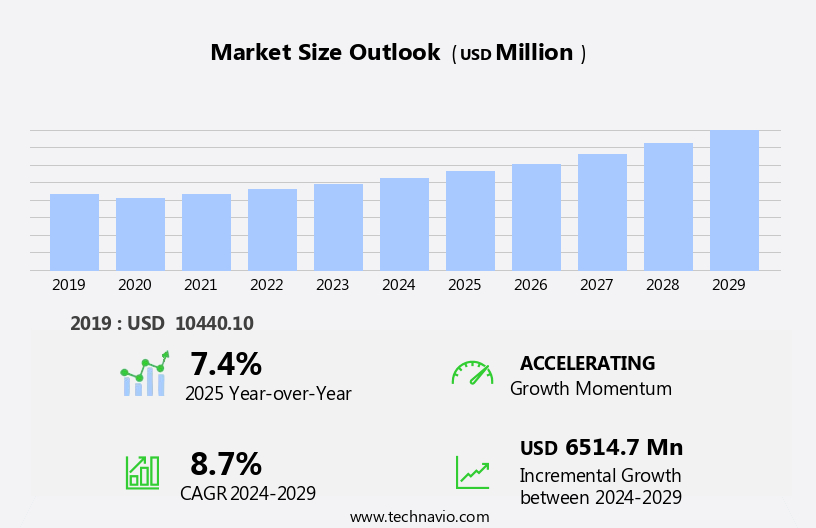
Explore in-depth regional segment analysis with market size data - historical 2019-2023 and forecasts 2025-2029 - in the full report.
Request Free Sample
The market is characterized by continuous evolution and dynamic market activities. Entities involved in international trade are subject to a complex web of regulations, including supply chain management, free trade agreements, trade data, export regulations, customs valuation, rules of origin, internal controls, and trade agreements. These regulations are not static but rather unfold with the ongoing unfolding of market activities and evolving patterns. Customs compliance plays a crucial role in this landscape, with entities seeking to adhere to regulations and mitigate risks associated with sanctions compliance, anti-dumping duties, trade remedies, and other trade measures. Customs brokers, freight forwarders, and trade finance providers are key players in facilitating international trade, while customs technology and automated systems enable efficient customs clearance.
Bonded warehousing, duty drawback, and inventory management are essential aspects of customs compliance, allowing entities to minimize duties and taxes and optimize their supply chain operations. Trade data and analytics are increasingly important tools for monitoring and responding to changing regulations and market conditions. Export controls and import regulations also shape the market, with entities needing to navigate the intricacies of tariff classification, customs investigations, and countervailing duties. Documentary credits and free trade zones offer additional complexities, requiring a deep understanding of the customs landscape and the ability to adapt to changing regulations and market conditions.
In this context, compliance audits are a critical component of risk management strategies, enabling entities to identify and address potential compliance issues and minimize the risk of penalties and disruptions to their international trade operations. The market is a dynamic and evolving landscape, requiring ongoing attention and adaptation to ensure compliance and optimize international trade operations.
How is this Customs Audit Industry segmented?
The customs audit industry research report provides comprehensive data (region-wise segment analysis), with forecasts and estimates in "USD million" for the period 2025-2029, as well as historical data from 2019-2023 for the following segments.
- Service
- Customs audit services
- Customs advisory services
- Type
- Financial audit
- Operational audit
- Compliance audit
- Risk management audit
- Others
- Geography
- North America
- US
- Canada
- Europe
- France
- Germany
- UK
- APAC
- Australia
- China
- India
- Japan
- South America
- Brazil
- Rest of World (ROW)
- North America
By Service Insights
The customs audit services segment is estimated to witness significant growth during the forecast period.
The market encompasses various entities that play a crucial role in international trade, including sanctions compliance, anti-dumping duties, trade remedies, customs broker, letters of credit, bonded warehousing, duty drawback, inventory management, supply chain management, free trade agreements, trade data, export regulations, customs valuation, rules of origin, internal controls, trade agreements, freight forwarder, trade finance, compliance audits, import regulations, data analytics, export controls, duty rates, risk management, customs compliance, countervailing duties, documentary credits, free trade zones, tariff classification, customs technology, automated systems, and customs investigations. In developed economies like the US and the UK, the customs audit services segment has reached maturity.
However, emerging markets in Asia Pacific present lucrative opportunities for growth. Companies cater to diverse industries, such as automotive, chemical, energy, mining, pharmaceuticals, retail, and hi-tech, providing customs audit services to ensure regulatory compliance and facilitate smooth importation. The market is highly competitive, with new players entering the scene, primarily logistics companies catering to various sectors. Third-party logistics (3PL) companies and shippers have expanded their expertise in audit services. With low industry barriers, new entrants continue to join The market. Companies evaluate imported goods and prepare the necessary documentation for customs audits, ensuring regulatory compliance and minimizing potential risks.
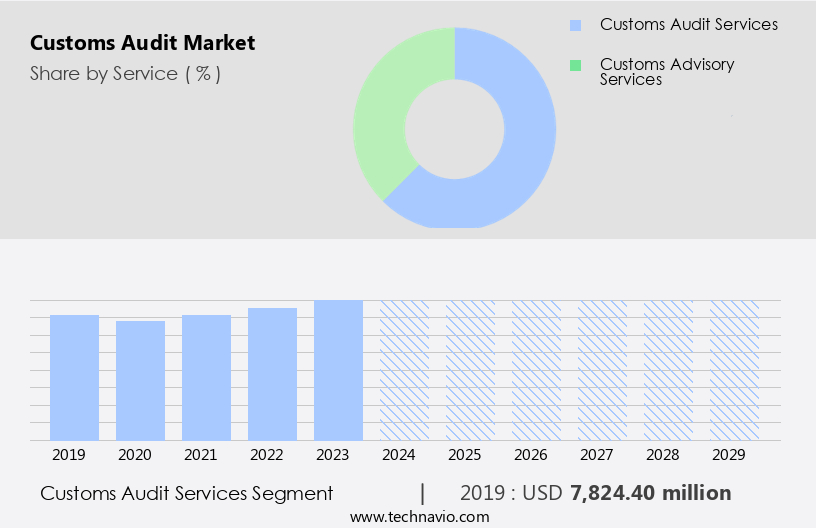
The Customs audit services segment was valued at USD 7.82 billion in 2019 and showed a gradual increase during the forecast period.
Regional Analysis
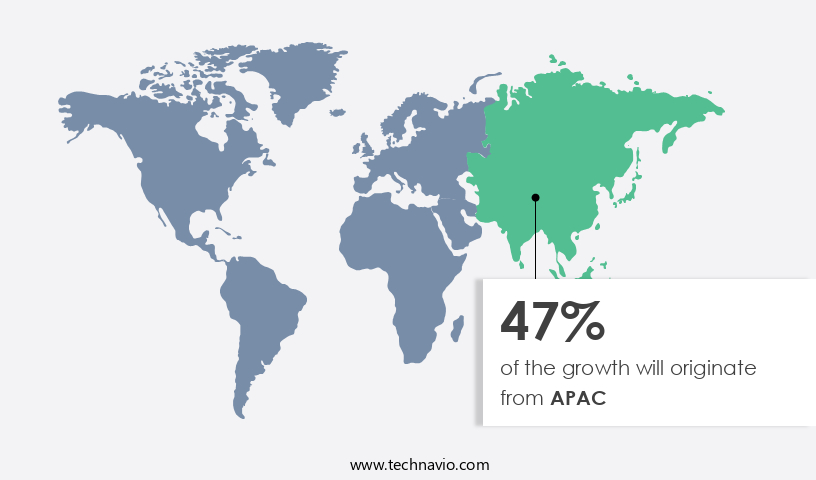
APAC is estimated to contribute 47% to the growth of the global market during the forecast period. Technavio's analysts have elaborately explained the regional trends and drivers that shape the market during the forecast period.
The market in North America is experiencing significant growth due to increasing regulatory requirements and global initiatives aimed at enhancing security. After the implementation of the Trade Act and the Security and Accountability for Every Port Act following 9/11, it is mandatory for transporters to comply with electronic customs requirements. In the coming years, more global customs initiatives are expected to be announced and implemented in North America. These initiatives include free trade agreements, customs technology, automated systems, and customs investigations. Compliance with these regulations is essential for businesses involved in importing and exporting goods, leading to a surge in demand for customs audit services.
Inventory management, supply chain management, and trade finance are crucial aspects of international trade that intersect with the market. Customs valuation, rules of origin, and tariff classification are key elements of customs compliance, which is essential for businesses to minimize duty rates and avoid penalties. Export regulations, customs brokerage, and freight forwarding are also integral to the customs audit process. Internal controls, risk management, and data analytics are increasingly important for businesses to ensure compliance with customs regulations and minimize the risk of customs investigations. Countervailing duties, anti-dumping duties, and trade remedies are also significant factors influencing the market.
Bonded warehousing, duty drawback, and free trade zones offer opportunities for businesses to reduce costs and optimize their supply chain. Trade data, inventory management, and supply chain management are essential for businesses to effectively navigate the complex customs regulations and optimize their operations. Export controls, customs technology, and automated systems are also critical for businesses to ensure compliance and minimize the risk of penalties and delays. The market is expected to continue growing as businesses seek to navigate the evolving regulatory landscape and optimize their international trade operations.
Market Dynamics
Our researchers analyzed the data with 2024 as the base year, along with the key drivers, trends, and challenges. A holistic analysis of drivers will help companies refine their marketing strategies to gain a competitive advantage.
The market is a critical segment of the international trade industry, focusing on ensuring compliance with customs regulations and optimizing trade processes for businesses. Customs audits help mitigate risks, prevent penalties, and improve trade efficiency. Customs audit services encompass various aspects, including classification, valuation, origin determination, free trade agreement verification, and trade compliance consulting. These audits are essential for importers and exporters, particularly those engaging in complex global supply chains. Customs audit providers leverage advanced technologies like AI and machine learning to analyze data and provide actionable insights. The market is driven by increasing global trade volumes, stringent customs regulations, and the growing need for trade compliance. Additionally, the market benefits from the implementation of free trade agreements and the rising trend of outsourcing customs audit functions.
What are the key market drivers leading to the rise in the adoption of Customs Audit Industry?
- The escalating need for efficient supply chains serves as the primary market catalyst.
- Companies are increasingly globalizing their supply chains to reduce operational costs, leading to an increase in the movement of goods across borders. This globalization brings about various indirect taxes and obligations that must be complied with, including customs reporting and documentation, customs and excise duties, and value-added tax (VAT) or goods and services tax (GST) reporting. Export licensing and compliance obligations are also crucial considerations. To manage these indirect taxes effectively in the global marketplace, companies can employ various strategies. Customs brokers can help navigate complex customs regulations and ensure compliance with various trade remedies, such as anti-dumping duties and trade sanctions.
- Bonded warehousing allows for the storage, production, and export of goods without paying import duties until they leave the warehouse. Duty drawback programs enable companies to recover import duties paid on imported materials that are subsequently exported or used in the production of exported goods. Effective inventory management is also essential for managing indirect taxes. Companies can implement systems to track and monitor their inventory, ensuring that they are only paying taxes on goods that are actually being sold and not on inventory that is sitting in storage. By managing indirect taxes efficiently, companies can save significant costs and streamline their global supply chain operations.
What are the market trends shaping the Customs Audit Industry?
- New customs regulations, such as voluntary disclosure, are increasingly becoming mandatory in the market. This trend signifies a shift towards greater transparency and compliance in international trade.
- Customs audits play a crucial role in global supply chain management, particularly in the context of free trade agreements and export regulations. The market is driven by the increasing complexity of international trade, with a focus on customs valuation, rules of origin, and internal controls. Voluntary disclosure regulations encourage companies to adopt robust internal processes to ensure compliance and mitigate potential penalties. These regulations allow firms to voluntarily report violations to customs authorities and receive lenient treatment or reduced administrative penalties. This trend emphasizes the importance of senior management involvement in addressing significant issues and implementing formal customs audit processes.
- The market is expected to grow as companies seek to minimize risks and optimize their international trade operations.
What challenges does the Customs Audit Industry face during its growth?
- Cybersecurity breaches pose a significant challenge to the industry's growth, as concerns regarding data security and privacy continue to mount. Companies must prioritize robust cybersecurity measures to mitigate risks and protect their digital assets, ensuring trust with customers and stakeholders.
- The market is a critical component of international trade, involving freight forwarders, trade finance, and compliance with import regulations. With the increasing digitalization of customs processes, data analytics plays a significant role in ensuring regulatory compliance and managing duty rates. However, this shift to technology brings cybersecurity challenges, as customs audit firms handle sensitive client information. Cybercrimes in this sector can range from economic gain to political motives, making robust IT security infrastructure essential. As service providers navigate these complexities, they must prioritize risk management and adhere to export controls and evolving regulations.
- The stakes are high, as a breach could lead to significant financial and reputational damage. Therefore, investing in advanced technology and cybersecurity measures is a strategic priority for customs audit firms.
Exclusive Customer Landscape
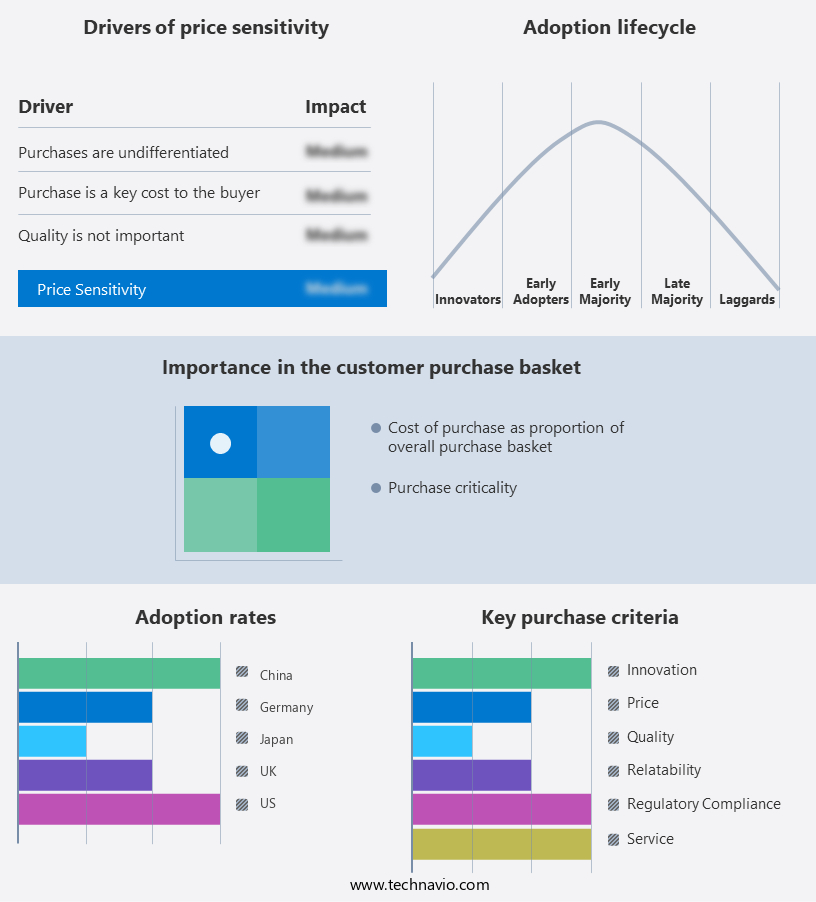
The customs audit market forecasting report includes the adoption lifecycle of the market, covering from the innovator's stage to the laggard's stage. It focuses on adoption rates in different regions based on penetration. Furthermore, the customs audit market report also includes key purchase criteria and drivers of price sensitivity to help companies evaluate and develop their market growth analysis strategies.
Customer Landscape
Key Companies & Market Insights
Companies are implementing various strategies, such as strategic alliances, customs audit market forecast, partnerships, mergers and acquisitions, geographical expansion, and product/service launches, to enhance their presence in the industry.
Baker Tilly International - Expertly navigating complex foreign trade regulations, our customs audit services ensure compliance with customs, excise, and related laws.
The industry research and growth report includes detailed analyses of the competitive landscape of the market and information about key companies, including:
- Baker Tilly International
- BDO International Ltd.
- Crowe LLP
- Customs Support Group B.V.
- Deloitte Touche Tohmatsu Ltd.
- Descartes Systems Group Inc.
- Ernst and Young Global Ltd.
- Forvis Mazars
- Grant Thornton International Ltd.
- HLB International Ltd.
- KPMG International Ltd.
- Livingston International Inc.
- Moore Global Network Ltd.
- Nexia
- PKF International
- PricewaterhouseCoopers LLP
- RSM International Ltd.
- The Customs People
- The Maurice Ward Group
- Tradenet Services Pte. Ltd.
Qualitative and quantitative analysis of companies has been conducted to help clients understand the wider business environment as well as the strengths and weaknesses of key industry players. Data is qualitatively analyzed to categorize companies as pure play, category-focused, industry-focused, and diversified; it is quantitatively analyzed to categorize companies as dominant, leading, strong, tentative, and weak.
Recent Development and News in Customs Audit Market
- In January 2024, global consulting firm PwC announced the launch of its new Customs Audit as a Service (CAas) platform, designed to help businesses streamline their customs processes and mitigate risks through advanced analytics and AI technology (PwC Press Release).
- In March 2024, KPMG International entered into a strategic partnership with Trade Technologies, a leading provider of global trade automation solutions, to expand its customs brokerage and audit services offerings (KPMG Press Release).
- In April 2025, Deloitte announced the acquisition of ComplianceQuest, a leading provider of end-to-end customs compliance and audit software, significantly enhancing Deloitte's global trade offerings (Deloitte Press Release).
- In May 2025, the European Commission approved the EU Customs Union Modernization Regulation, which includes measures to strengthen customs controls and enhance cooperation between EU member states (European Commission Press Release). This regulatory development is expected to drive increased demand for customs audit services in the region.
Research Analyst Overview
- In the dynamic world of global trade, customs audits play a pivotal role in ensuring compliance with border control regulations. Post-clearance audits, a critical component of trade compliance management, help businesses identify and rectify potential issues with import documentation, certificate of origin, commercial invoice, packing list, and other required documents. Border control agencies utilize inspection certificates and customs bonds to mitigate risks associated with non-compliant imports. International trade law mandates a thorough examination of customs declarations, air waybills, and bills of lading to enforce customs duty payments and maintain supply chain security. Trade policy and international trade data are essential for businesses to navigate the complexities of global trade.
- Customs brokers, licensed professionals, facilitate the process by managing customs declarations and ensuring adherence to trade compliance management systems. Trade intelligence and risk assessment tools, including compliance software and trade policy updates, help businesses stay informed and minimize potential disruptions. Cargo insurance, a vital aspect of international trade, offers protection against damages or losses during transportation. Trade facilitation initiatives, such as entry summary filings and port operations optimization, streamline the customs clearance process and reduce the time and cost involved. Liquidated damages, a consequence of non-compliance, underscore the importance of adhering to customs regulations and export documentation requirements.
- In summary, the market is characterized by stringent border control measures, the increasing use of technology for compliance and risk management, and the need for businesses to stay informed about international trade law and regulations.
Dive into Technavio's robust research methodology, blending expert interviews, extensive data synthesis, and validated models for unparalleled Customs Audit Market insights. See full methodology.
|
Market Scope |
|
|
Report Coverage |
Details |
|
Page number |
202 |
|
Base year |
2024 |
|
Historic period |
2019-2023 |
|
Forecast period |
2025-2029 |
|
Growth momentum & CAGR |
Accelerate at a CAGR of 8.7% |
|
Market growth 2025-2029 |
USD 6514.7 million |
|
Market structure |
Fragmented |
|
YoY growth 2024-2025(%) |
7.4 |
|
Key countries |
US, UK, Germany, China, Canada, France, Japan, India, Brazil, and Australia |
|
Competitive landscape |
Leading Companies, Market Positioning of Companies, Competitive Strategies, and Industry Risks |
What are the Key Data Covered in this Customs Audit Market Research and Growth Report?
- CAGR of the Customs Audit industry during the forecast period
- Detailed information on factors that will drive the growth and forecasting between 2025 and 2029
- Precise estimation of the size of the market and its contribution of the industry in focus to the parent market
- Accurate predictions about upcoming growth and trends and changes in consumer behaviour
- Growth of the market across North America, Europe, APAC, South America, and Middle East and Africa
- Thorough analysis of the market's competitive landscape and detailed information about companies
- Comprehensive analysis of factors that will challenge the customs audit market growth of industry companies
We can help! Our analysts can customize this customs audit market research report to meet your requirements.
 RIA -
RIA - 
