



Digital Education Content Market Size 2026-2030
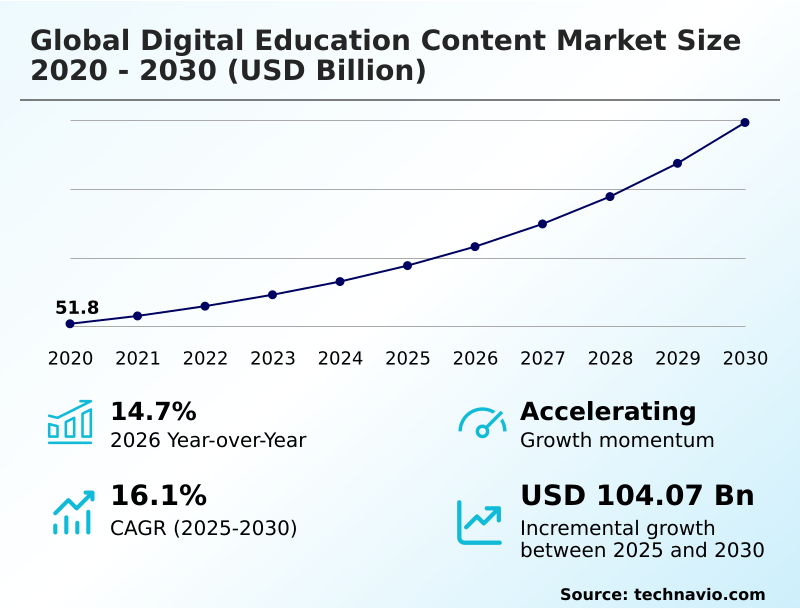
The digital education content market size is valued to increase by USD 104.07 billion, at a CAGR of 16.1% from 2025 to 2030. Integration of AI technologies will drive the digital education content market.
Major Market Trends & Insights
- North America dominated the market and accounted for a 36.1% growth during the forecast period.
- By End-user - K-12 segment was valued at USD 50.60 billion in 2024
- By Delivery Mode - Web-based content segment accounted for the largest market revenue share in 2024
Market Size & Forecast
- Market Opportunities: USD 146.37 billion
- Market Future Opportunities: USD 104.07 billion
- CAGR from 2025 to 2030 : 16.1%
Market Summary
- The digital education content market is defined by a strategic shift toward dynamic, technology-driven learning ecosystems. Key drivers include the integration of AI technologies, which enable personalized learning pathways and adaptive content delivery, enhancing learner engagement. A prominent trend is the focus on corporate upskilling and reskilling programs, where organizations leverage digital platforms to maintain a competitive workforce.
- For instance, a multinational corporation might deploy a learning management system with curriculum-aligned materials and virtual laboratories to ensure its engineering team remains current with industry standards, addressing compliance training needs efficiently. However, the market faces challenges related to maintaining learner engagement and retention in self-directed environments.
- Additionally, ensuring data privacy and the credential credibility of digital certifications remain critical concerns for both learners and employers. Success in this landscape depends on creating secure, engaging, and outcome-oriented digital education solutions that cater to the evolving demands of academic institutions, corporations, and individual learners seeking flexible and effective lifelong learning opportunities.
What will be the Size of the Digital Education Content Market during the forecast period?
Get Key Insights on Market Forecast (PDF) Get Free Sample
How is the Digital Education Content Market Segmented?
The digital education content industry research report provides comprehensive data (region-wise segment analysis), with forecasts and estimates in "USD million" for the period 2026-2030, as well as historical data from 2020-2024 for the following segments.
- End-user
- K-12
- Higher education
- Delivery mode
- Web-based content
- Mobile applications
- Offline accessible content
- Content type
- Video lectures and multimedia
- Digital textbooks
- Interactive content
- Assessments and practice tests
- Others
- Geography
- North America
- US
- Canada
- Mexico
- APAC
- China
- India
- Japan
- Europe
- Germany
- UK
- France
- South America
- Brazil
- Argentina
- Middle East and Africa
- South Africa
- Saudi Arabia
- UAE
- Rest of World (ROW)
- North America
By End-user Insights
The k-12 segment is estimated to witness significant growth during the forecast period.
The K-12 segment is undergoing a significant transformation, driven by the shift toward interactive content and hybrid learning models.
Educational systems are moving away from static materials to embrace dynamic digital resources, including augmented reality content and gamification elements, which have been shown to increase student engagement by over 15%.
This transition is supported by advanced learning analytics that enable data-driven instruction and personalized student performance tracking. The focus is on providing curriculum-aligned materials that support various learning styles and foster digital skills development.
As institutions adopt these technologies, there is a greater emphasis on improving educational outcomes and facilitating peer-to-peer learning, preparing students for a digitally integrated future and improving learner engagement and retention.
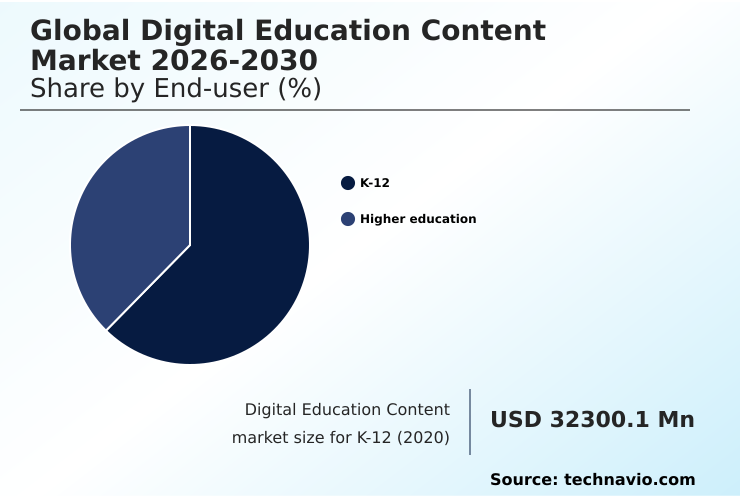
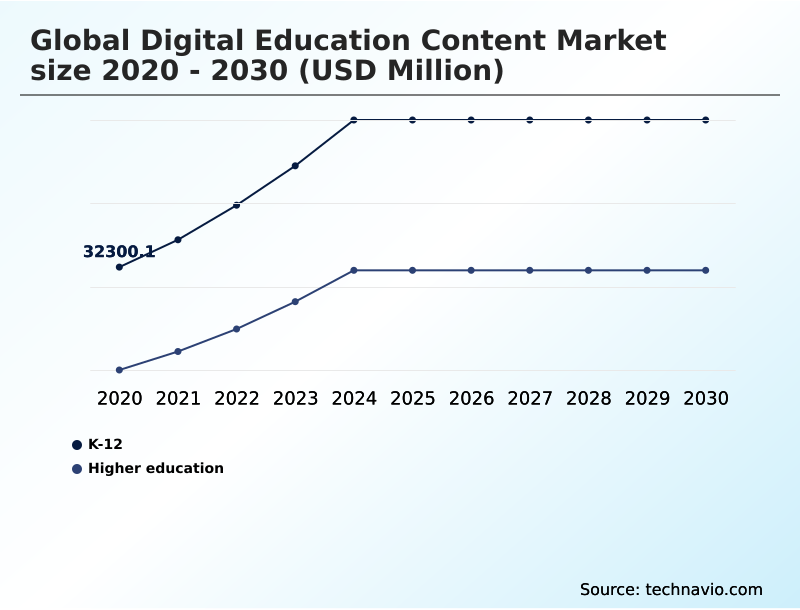
The K-12 segment was valued at USD 50.60 billion in 2024 and showed a gradual increase during the forecast period.
Regional Analysis
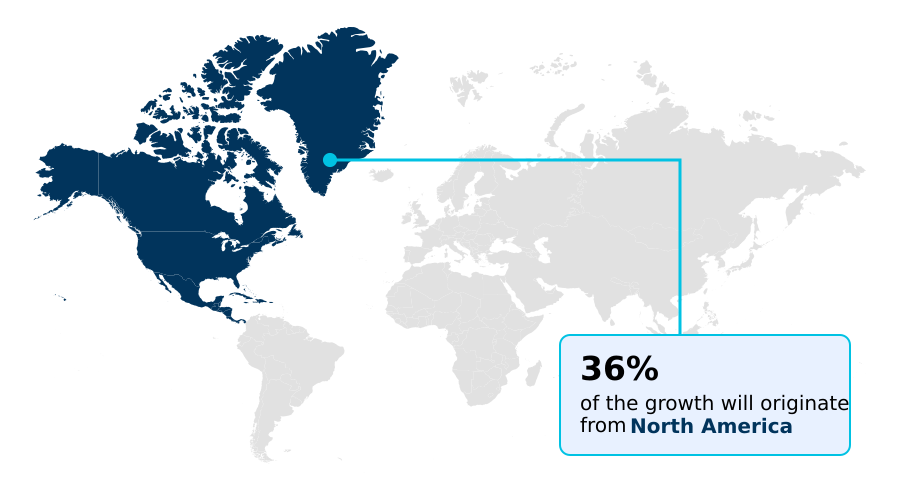
North America is estimated to contribute 36.1% to the growth of the global market during the forecast period.Technavio’s analysts have elaborately explained the regional trends and drivers that shape the market during the forecast period.
See How Digital Education Content Market Demand is Rising in North America Get Free Sample
The geographic landscape of the market is characterized by varied adoption rates and regional dynamics.
North America, which accounts for over 36% of the market's incremental growth, benefits from advanced infrastructure and high investment in corporate training initiatives that utilize sophisticated learning management systems.
In contrast, APAC is the fastest-growing region, with a CAGR of 16.6%, driven by widespread mobile applications and a focus on digital inclusion. This region's expansion is fueled by government programs promoting open educational resources.
Europe shows steady adoption focused on lifelong learning and compliance training, while emerging markets in South America and the Middle East and Africa are expanding access through offline accessible content and mobile optimization.
These regional differences highlight the importance of localized strategies in curriculum design and learner-centric experiences.
Market Dynamics
Our researchers analyzed the data with 2025 as the base year, along with the key drivers, trends, and challenges. A holistic analysis of drivers will help companies refine their marketing strategies to gain a competitive advantage.
- The evolution of digital education platforms hinges on the successful integration of advanced technologies to create holistic learning environments. A key consideration is the impact of AI on personalized learning paths, which tailors content to individual user needs, significantly boosting engagement. The benefits of gamification in corporate training are increasingly recognized for enhancing motivation and knowledge retention.
- This is complemented by trends in mobile learning application design, which prioritize on-the-go access and micro-learning modules. To refine these offerings, platforms are increasingly using learning analytics to improve student engagement, tracking progress to identify areas for improvement. The future of AI-powered student support systems lies in providing real-time, contextual assistance.
- The challenges of implementing virtual reality in education, such as cost and scalability, are being addressed through more accessible hardware and software. The effectiveness of microlearning for professional development is evident in its ability to deliver just-in-time knowledge. Simultaneously, designing offline accessible content for remote learners ensures educational equity.
- Integrating interactive content for skill development, especially through augmented reality in science classes, creates immersive experiences. For higher education, social learning platforms are becoming integral. The importance of open educational resources in K-12 is growing, offering cost-effective, quality content.
- Strategies for effective upskilling and reskilling programs now focus on measurable outcomes, supported by personalizing assessments with adaptive testing technology, which can improve course completion rates by over 20% compared to static tests. The role of digital textbooks in hybrid learning continues to expand, while comparing synchronous vs asynchronous learning outcomes helps optimize instructional design.
- Behind the scenes, robust security measures for learning management systems and a focus on best practices for creating accessible digital content are paramount. Finally, companies are keen on measuring ROI of corporate digital education to justify investments, and the use of generative AI for course creation is accelerating content development.
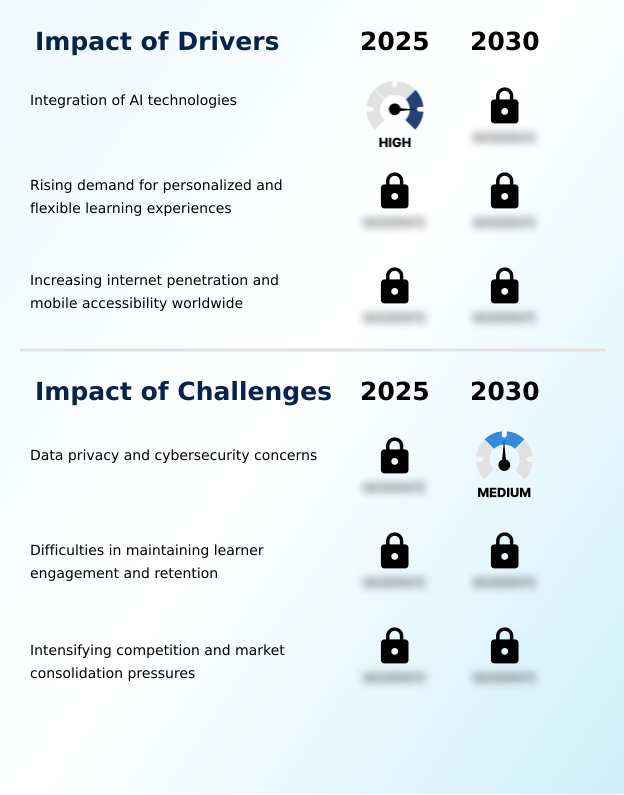
What are the key market drivers leading to the rise in the adoption of Digital Education Content Industry?
- The integration of AI technologies is a primary driver for the market, enabling personalized learning and enhancing educational outcomes.
- The primary driver propelling the market is the integration of AI-powered learning, which facilitates personalized learning and adaptive content delivery. Technologies such as generative AI and natural language processing are being used to create learner-centric experiences and skills-based content.
- Platforms that provide real-time performance feedback have been shown to improve learner scores by an average of 15%. Moreover, AI-driven personalized learning pathways can accelerate skill acquisition by up to 40%, making continuous skill development more efficient.
- This technological shift is enabling providers to offer more effective workforce development solutions, automate administrative support, and deliver highly customized, self-directed learning at scale, thereby improving knowledge acquisition.
What are the market trends shaping the Digital Education Content Industry?
- The adoption of microlearning formats is an emerging trend. This approach delivers content in short, focused modules to improve knowledge retention.
- Key trends shaping the market include the adoption of microlearning formats and the integration of gamification elements to boost learner engagement. Platforms are increasingly delivering content through mobile applications, which supports on-demand access for corporate training initiatives focused on upskilling and reskilling. These gamified platforms report a 30% higher daily user engagement rate compared to non-gamified counterparts.
- Furthermore, microlearning modules have demonstrated a 17% better knowledge retention rate, making them highly effective for professional development programs. This shift toward bite-sized, interactive content reflects a broader move to accommodate flexible learning experiences and improve educational outcomes through more engaging and efficient delivery methods, which also enhances peer-to-peer learning.
What challenges does the Digital Education Content Industry face during its growth?
- Data privacy and cybersecurity concerns represent a significant challenge, impacting user trust and platform adoption.
- Key market challenges center on maintaining learner engagement and retention and addressing data privacy concerns. Ensuring assessment integrity and the credential credibility of remote examinations is a significant hurdle, as providers must balance accessibility with security. Platforms that incorporate robust community features and peer-to-peer learning opportunities have demonstrated 25% lower student dropout rates.
- However, the operational cost of complying with stringent data protection regulations has increased overhead by over 10% for many providers. This creates a difficult trade-off between investing in user experience design to combat disengagement and allocating resources to cybersecurity and compliance to build and maintain user trust in their instructional design.
Exclusive Technavio Analysis on Customer Landscape
The digital education content market forecasting report includes the adoption lifecycle of the market, covering from the innovator’s stage to the laggard’s stage. It focuses on adoption rates in different regions based on penetration. Furthermore, the digital education content market report also includes key purchase criteria and drivers of price sensitivity to help companies evaluate and develop their market growth analysis strategies.
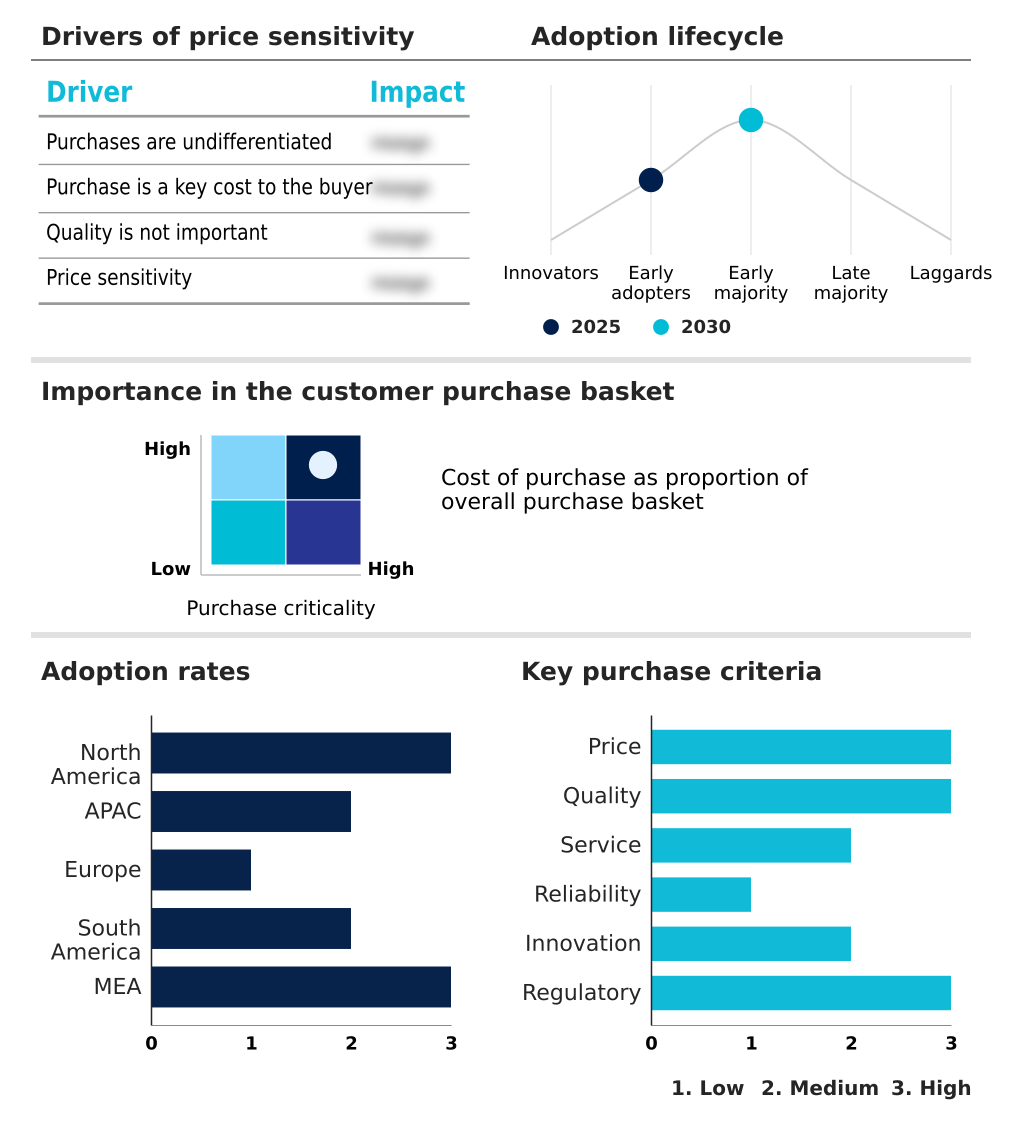
Customer Landscape of Digital Education Content Industry
Competitive Landscape
Companies are implementing various strategies, such as strategic alliances, digital education content market forecast, partnerships, mergers and acquisitions, geographical expansion, and product/service launches, to enhance their presence in the industry.
2U Inc. - Offers university-partnered online degrees and professional certificates, advancing higher education and workforce development through its comprehensive digital platform.
The industry research and growth report includes detailed analyses of the competitive landscape of the market and information about key companies, including:
- 2U Inc.
- Cambridge University Press
- Cengage Learning Inc.
- Chegg Inc.
- City and Guilds Group
- Coursera Inc.
- D2L Corp.
- Duolingo Inc.
- Guild Education Inc
- Hurix System Pvt. Ltd.
- Integra Software Services Ltd.
- Kaplan Inc.
- Pearson Plc
- Pluralsight LLC
- Skillsoft Corp.
- Sorting Hat Technologies Ltd.
- Totara Learning Solutions Ltd.
- Udacity Inc.
- Udemy Inc.
- Vedantu Innovations Pvt. Ltd.
Qualitative and quantitative analysis of companies has been conducted to help clients understand the wider business environment as well as the strengths and weaknesses of key industry players. Data is qualitatively analyzed to categorize companies as pure play, category-focused, industry-focused, and diversified; it is quantitatively analyzed to categorize companies as dominant, leading, strong, tentative, and weak.
Recent Development and News in Digital education content market
- In September 2024, Coursera introduced eight professional certificates, one degree pathway, and multiple generative AI certifications and specialization courses aligned with current industry skill requirements.
- In October 2024, Pearson released its Generative AI Foundations Certification, achieving strong monthly growth and appealing to learners across various professional backgrounds.
- In February 2025, McGraw Hill launched an updated digital platform designed to support early literacy through AI-driven personalized learning pathways for K-12 students.
- In April 2025, Duolingo expanded its language course offerings by launching 148 new courses, significantly increasing accessibility for speakers of numerous interface languages.
Dive into Technavio’s robust research methodology, blending expert interviews, extensive data synthesis, and validated models for unparalleled Digital Education Content Market insights. See full methodology.
| Market Scope | |
|---|---|
| Page number | 299 |
| Base year | 2025 |
| Historic period | 2020-2024 |
| Forecast period | 2026-2030 |
| Growth momentum & CAGR | Accelerate at a CAGR of 16.1% |
| Market growth 2026-2030 | USD 104070.6 million |
| Market structure | Fragmented |
| YoY growth 2025-2026(%) | 14.7% |
| Key countries | US, Canada, Mexico, China, India, Japan, South Korea, Australia, Indonesia, Germany, UK, France, Italy, Spain, The Netherlands, Brazil, Argentina, Chile, South Africa, Saudi Arabia, UAE, Israel and Turkey |
| Competitive landscape | Leading Companies, Market Positioning of Companies, Competitive Strategies, and Industry Risks |
Research Analyst Overview
- The digital education content market is evolving from static digital textbooks to dynamic ecosystems powered by AI-powered learning and real-time performance feedback. The integration of generative AI and machine learning algorithms is central to this shift, enabling the creation of personalized, adaptive content delivery at scale.
- Boardroom decisions increasingly center on adopting learning management systems with sophisticated learning analytics and skills intelligence integration to measure the return on investment for upskilling and reskilling programs. For example, the use of generative AI for course creation has been shown to reduce content development timelines by up to 50%.
- Key offerings now include everything from vocational training materials and curriculum-aligned materials to interactive content such as virtual laboratories and augmented reality content. The focus is on providing tangible outcomes through digital credentials with proven assessment integrity and credential credibility, especially for remote examinations.
- As hybrid learning models become standard, the demand for high-quality, cloud-enabled platforms that support both synchronous learning and asynchronous elements, including offline accessible content and social learning tools, continues to accelerate. Success now depends on offering flexible, data-driven creation tools that support compliance training and continuous professional growth.
What are the Key Data Covered in this Digital Education Content Market Research and Growth Report?
-
What is the expected growth of the Digital Education Content Market between 2026 and 2030?
-
USD 104.07 billion, at a CAGR of 16.1%
-
-
What segmentation does the market report cover?
-
The report is segmented by End-user (K-12, and Higher education), Delivery Mode (Web-based content, Mobile applications, and Offline accessible content), Content Type (Video lectures and multimedia, Digital textbooks, Interactive content, Assessments and practice tests, and Others) and Geography (North America, APAC, Europe, South America, Middle East and Africa)
-
-
Which regions are analyzed in the report?
-
North America, APAC, Europe, South America and Middle East and Africa
-
-
What are the key growth drivers and market challenges?
-
Integration of AI technologies, Data privacy and cybersecurity concerns
-
-
Who are the major players in the Digital Education Content Market?
-
2U Inc., Cambridge University Press, Cengage Learning Inc., Chegg Inc., City and Guilds Group, Coursera Inc., D2L Corp., Duolingo Inc., Guild Education Inc, Hurix System Pvt. Ltd., Integra Software Services Ltd., Kaplan Inc., Pearson Plc, Pluralsight LLC, Skillsoft Corp., Sorting Hat Technologies Ltd., Totara Learning Solutions Ltd., Udacity Inc., Udemy Inc. and Vedantu Innovations Pvt. Ltd.
-
Market Research Insights
- The digital education content market is shaped by the demand for flexible learning experiences and measurable educational outcomes. Platforms integrating personalized learning pathways report a 25% higher course completion rate compared to static content models.
- Corporate training initiatives are increasingly adopting on-demand formats and mobile optimization to facilitate continuous skill development, with some organizations reducing employee onboarding time by up to 40%. The emphasis on workforce development is driving investments in professional certificates and online degree programs that align with industry needs.
- This learner-centric approach, supported by robust course authoring tools and curriculum design, ensures that content delivery is both effective and scalable, meeting the needs of a global audience seeking self-directed learning opportunities.
We can help! Our analysts can customize this digital education content market research report to meet your requirements.
 RIA -
RIA - 
